

- 1.1k Views
- 13 Min Read
- (1) Comment
East Africa represents the pinnacle of the safari experience, offering a diverse tapestry of ecosystems that range from the vast, golden savannahs of the Serengeti and Maasai Mara to the dense, mist-shrouded rainforests of Bwindi Impenetrable National Park. Combining Kenya, Tanzania and Uganda safari into a single itinerary allows travelers to witness the “Great Migration,” encounter the “Big Five,” and participate in the world’s most intimate wildlife experience: mountain gorilla trekking.
Kenya: The Cradle of the Safari
Kenya is often regarded as the birthplace of the modern safari. The Maasai Mara National Reserve is the crown jewel, famous for the annual migration of over 1.5 million wildebeest and zebras. Beyond the Mara, Amboseli National Park offers the quintessential view of African elephants against the backdrop of Mount Kilimanjaro, the highest peak in Africa. For those interested in conservation, the Laikipia Plateau provides a unique opportunity to see rare species like the Grevy’s zebra and reticulated giraffe in private conservancies that prioritize community-led wildlife protection.
Kenya stands as one of the world’s most profound destinations for wildlife conservation and immersive natural experiences. The country’s diverse geography allows for a spectrum of encounters, ranging from the classic savanna spectacles of the Maasai Mara to the pioneering scientific efforts at the Ol Pejeta Conservancy.
Combining Kenya, Tanzania, and Uganda Safari of a Lifetime
The Maasai Mara National Reserve is widely regarded as the crown jewel of African safari destinations. It is celebrated for its high-density predator sightings, particularly lions, leopards, and cheetahs, and serves as the stage for the annual Great Migration, where millions of wildebeest and zebra traverse the plains. In contrast, the Ol Pejeta Conservancy in the Laikipia region offers a more specialized conservation experience. It is home to the largest population of black rhinos in East Africa and serves as the global sanctuary for the last two remaining northern white rhinos, Najin and Fatu.
Beyond the traditional game drive, the Laikipia Plateau and the Namunyak Community Conservancy provide a more intimate connection with the landscape. These areas are renowned for walking safaris, which allow travelers to observe the finer details of the bush—from tracking footprints to identifying medicinal plants—while engaging with indigenous Samburu pastoralists. This interaction offers a vital cultural context, highlighting the symbiotic relationship between local communities and the wildlife they protect.
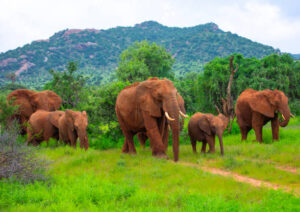
For those drawn to iconic vistas, Amboseli National Park is unparalleled. Situated at the base of Mount Kilimanjaro, the park is famous for its large herds of elephants that wander against the backdrop of the mountain’s snow-capped peak. The park’s unique ecosystem, fed by underground springs from the mountain, supports a rich variety of birdlife and mammals, making it a photographer’s paradise.
Beyond its aesthetic appeal, Amboseli is scientifically significant due to the Amboseli Elephant Research Project, which stands as the longest-running study of wild elephants in Africa. This long-term research has fostered a deep understanding of elephant social structures, allowing visitors to witness a population that includes individuals of all ages—from newborn calves to matriarchs in their 60s and large, mature bulls. The park’s ecosystem, characterized by a network of swamps and marshes fed by underground water from Kilimanjaro, ensures that these animals have access to vital resources even during the dry season, making them highly visible to observers.
The park also serves as a model for community-based conservation. By integrating local Maasai communities into the tourism and conservation framework, the region has successfully mitigated human-wildlife conflict and protected the elephants from the poaching crises that have impacted other parts of East Africa. This collaborative approach has created a secure environment where elephants can exhibit natural behaviors, such as wallowing in mud to protect their skin or grazing in large, social groups, providing enthusiasts with an intimate and ethically grounded wildlife experience.
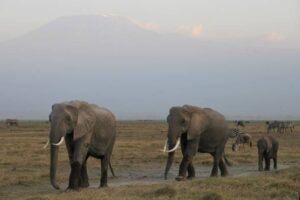
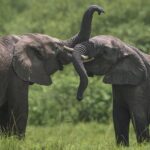
Combining Kenya, Tanzania, and Uganda Safari of a Lifetime: Kenya, Amboseli: Elephants walking through Amboseli National Park. Kibo, Africa’s highest mountain in the Kilimanjaro massif, can be seen in the background. Amboseli is located southeast of Nairobi not far from the Kenyan border with Tanzania and is best known for its many elephants.
Adventure seekers often gravitate toward Hell’s Gate National Park. Unlike many other protected areas in Kenya, Hell’s Gate allows visitors to cycle through the dramatic volcanic landscape, passing towering cliffs and geothermal vents. This rare opportunity to traverse the wilderness on two wheels provides a visceral experience of the Great Rift Valley’s geological power.
Tanzania: The Land of Giants
Tanzania stands as a colossus of the natural world, a nation defined by its vast, untamed landscapes and the sheer scale of its biological diversity. Often referred to as the “Land of Giants,” it encompasses ecosystems that have shaped the course of human history and the evolution of life itself. At the heart of this wilderness is the Serengeti, a sprawling savanna that serves as the stage for the Great Migration, where millions of wildebeest, zebras, and gazelles traverse the plains in an ancient, rhythmic cycle of survival.
The crown jewel of this region is the Ngorongoro Conservation Area, a UNESCO World Heritage site that commands awe through its geological grandeur. The Ngorongoro Crater, formed by the collapse of a massive volcano millions of years ago, remains the world’s largest inactive, intact volcanic caldera. Measuring approximately 610 meters in depth and covering 260 square kilometers, this “natural enclosure” creates a unique micro-environment where wildlife density reaches extraordinary levels.
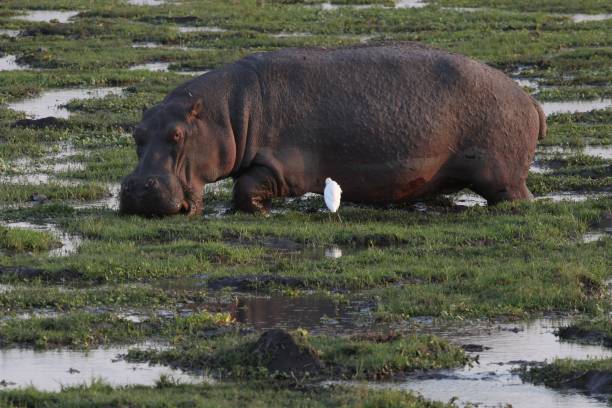
Within these steep, forested walls, one can find a thriving population of the endangered black rhinoceros, alongside hippopotamuses, African buffalo, and one of the highest concentrations of lions in Africa. The crater floor, sitting at an elevation of 1,800 meters, serves as a sanctuary where predator-prey dynamics play out in a confined, visible theater.
Beyond the volcanic highlands, Tanzania’s narrative is deeply rooted in the origins of humanity. Olduvai Gorge, located within the conservation area, is widely regarded as the “seat of humanity.” Research pioneered by Louis and Mary Leakey in the 1950s revealed fossilized remains of Homo habilis and Paranthropus boisei, providing critical insights into the developmental complexities of early hominids. The geological history of the area, characterized by volcanic ash deposits and seismic shifts, has preserved a record of evolution spanning nearly two million years.
To conclude a journey through Tanzania’s wild interior, travelers often turn toward the coast to the spice island of Zanzibar. This archipelago offers a profound cultural contrast to the rugged plains of the Serengeti. Stone Town, a historic center of trade and cultural exchange, features a labyrinth of winding alleys and architecture that reflects a fusion of African, Arab, Indian, and European influences. The turquoise waters of the Indian Ocean provide a serene backdrop, marking the end of an expedition that begins in the prehistoric cradle of the savanna and ends in the vibrant, historical heart of the Swahili Coast.
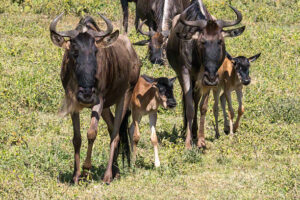
Combining Kenya, Tanzania, and Uganda Safari of a Lifetime: Blue wildebeests (Connochaetes taurinus) walking with calves in Serenegti, Tanzania.
Uganda: The Pearl of Africa
Uganda, a landlocked nation situated in the heart of the East African plateau, is frequently referred to as the “Pearl of Africa.” This evocative moniker was famously popularized by Sir Winston Churchill in his 1907 travelogue, My African Journey, where he was struck by the country’s magnificent geography, climate, and biodiversity. Unlike the vast, open savannahs that characterize much of its neighbors, Uganda offers a dramatic, verdant contrast, defined by a complex tapestry of tropical forests, snow-capped mountains, and massive freshwater lakes.
The crown jewel of Uganda’s ecological wealth is the Bwindi Impenetrable National Park. This ancient, dense rainforest—whose name in the local dialect signifies a “dark, complex, and ferocious place”—is a sanctuary for nearly half of the world’s remaining mountain gorilla population. Trekking through the steep, mist-covered slopes of Bwindi to encounter a habituated gorilla family is widely regarded as a profound, life-changing experience. The park’s unique ecosystem, which survived the massive tectonic shifts that formed the Western Rift, also supports a staggering array of other primates, including chimpanzees, L’Hoest’s monkeys, and olive baboons.
Beyond the gorillas, Uganda’s biodiversity is further exemplified by Kibale Forest National Park, which is globally recognized as a premier destination for chimpanzee tracking. The country’s commitment to conservation is evident in its network of over ten national parks, which protect a significant portion of Africa’s biological diversity.
The nation’s geography is dominated by the presence of the River Nile, the world’s longest river. At Murchison Falls National Park, the raw power of the Nile is on full display as the river is forced through a narrow gorge—measuring only 6 meters in width—before plummeting 45 meters in a thunderous, misty cascade. This spectacle, combined with the country’s moderate equatorial climate and the warmth of its diverse cultural communities, cements Uganda’s status as a unique and essential destination within the African continent.
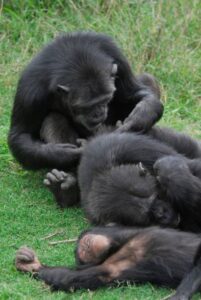
Combining Kenya, Tanzania, and Uganda Safari of a Lifetime: Rescue Chimpancees ( Pan troglodytes ) from Uganda are brought to the Sweetwater Rehabilitation Center in Northen Kenya.
Planning the Circuit Combining Kenya, Tanzania, and Uganda Safari of a Lifetime
To maximize this circuit, travelers should consider the seasonality of the Great Migration and the permit requirements for gorilla trekking. The dry seasons (June to October and January to February) are generally considered the best times for game viewing across all three countries. Logistics are best managed by flying between regional hubs like Nairobi, Kilimanjaro, and Entebbe to minimize travel time and maximize time in the field.
The Ultimate East African Safari: A Combined Journey Through Kenya, Tanzania, and Uganda
Embarking on a safari that spans Kenya, Tanzania, and Uganda offers the most comprehensive wildlife experience on the African continent. By combining these three nations, travelers can witness the vast savannahs of the Serengeti and Maasai Mara, the geological wonder of the Ngorongoro Crater, and the profound, intimate experience of tracking mountain gorillas in the dense rainforests of Uganda.
To experience these diverse ecosystems without feeling rushed, a minimum of 18 to 21 days is highly recommended. This duration allows for adequate travel time between regions and ensures that you are not spending your entire holiday in transit.
Recommended Itinerary Breakdown Combining Kenya, Tanzania, and Uganda Safari
Kenya (Days 1–6): The Savannah Icons
Begin your journey in Nairobi, visiting the Sheldrick Wildlife Trust to see rescued elephants. Proceed to the Maasai Mara National Reserve, world-renowned for its high density of big cats and the annual Great Migration. Spend at least four days here to maximize your chances of seeing the “Big Five.”
Tanzania (Days 7–14): The Great Plains and Craters
Cross the border into Tanzania to explore the Serengeti National Park, which offers vast, open plains that are perfect for spotting cheetahs and leopards. Continue to the Ngorongoro Crater, a UNESCO World Heritage site that acts as a natural enclosure for a massive population of wildlife. Conclude your Tanzanian leg with a relaxing stay in Zanzibar to recover from the dusty safari trails.
Uganda (Days 15–21): The Primate Kingdom
Fly into Uganda for the highlight of the trip: gorilla trekking in Bwindi Impenetrable National Park. This experience requires a permit, which should be booked months in advance. Spend your final days exploring the lush landscapes of Queen Elizabeth National Park or Kibale Forest for chimpanzee tracking.
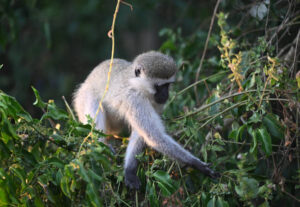
Combining Kenya, Tanzania, and Uganda Safari: A view of monkey at Rwakobo National Park, one of Uganda’s leading safari centers, is one of the largest natural habitats on the continent in Kirihura, Uganda
Best Time to Visit
The optimal time for this multi-country safari is during the dry seasons: from June to October and January to February. During these months, vegetation is sparse, making wildlife easier to spot, and the risk of malaria is generally lower.
Estimated Costs When Combining Kenya, Tanzania, and Uganda Safari
- Mid-Luxury: Expect to budget between $8,000 and $12,000 per person. This includes comfortable tented camps, mid-range lodges, and group-style transport with professional guides.
- Luxury: Costs typically range from $15,000 to $25,000+ per person. This tier features fly-in safaris to minimize travel time, stays at exclusive high-end lodges like the Four Seasons Serengeti or Giraffe Manor, and private, customized game drives.
Essential Planning Tips for Combining Kenya, Tanzania, and Uganda Safari
Combining Kenya, Tanzania, and Uganda safari into a single East African expedition offers an unparalleled opportunity to witness the continent’s most diverse ecosystems, from the vast savannahs of the Serengeti to the dense, mist-covered forests of Bwindi Impenetrable National Park. Planning such an ambitious multi-country journey requires meticulous attention to logistics, health, and timing to ensure a seamless experience.
Essential Planning Tips:
- Visas: Obtain an East Africa Tourist Visa if possible, though note that it does not cover all border re-entries.
- Health: Consult a travel clinic regarding yellow fever vaccinations and malaria prophylaxis.
- Gear: Invest in a high-quality telephoto lens (at least 300mm) and neutral-colored clothing to blend into the environment.
When coordinating a safari across these three nations, the primary logistical challenge is managing the vast distances and varying entry requirements. While Kenya and Tanzania share a well-established northern safari circuit, incorporating Uganda necessitates air travel to bridge the gap between the savannah ecosystems and the primate-rich forests of the west. Utilizing regional flight hubs—such as Nairobi’s Jomo Kenyatta International Airport, Kilimanjaro International Airport, and Entebbe International Airport—is essential to maximize time spent on game drives rather than in transit.
For wildlife enthusiasts, the timing of your visit is critical. The Great Migration, which moves between the Serengeti and the Masai Mara, is best viewed between July and September, while the dry seasons in Uganda (December to February and June to August) provide the most favorable conditions for gorilla trekking. Because these peak times often overlap, travelers should prioritize their “must-see” events and build their itinerary around them. It is highly recommended to engage a reputable local tour operator who specializes in cross-border logistics, as they can navigate the complexities of multi-country visa requirements, such as the East African Tourist Visa, which covers Kenya, Rwanda, and Uganda, though Tanzania currently requires a separate entry permit.
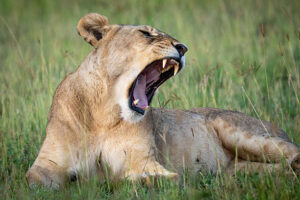
Combining Kenya, Tanzania, and Uganda Safari: Lioness at Serengeti , Tanzania.
Health and preparation are paramount. A yellow fever vaccination is mandatory for travel between these countries, and malaria prophylaxis is strongly advised for all regions. Because you will be transitioning from high-altitude volcanic craters in Tanzania to the humid, dense rainforests of Uganda, packing must be versatile. Layered, neutral-colored clothing is essential, along with sturdy hiking boots for trekking and warm gear for the chilly mornings in the Ngorongoro Highlands.
Finally, when Combining Kenya, Tanzania, and Uganda Safari, consider the pace of your journey. Attempting to see too much in a short timeframe can lead to “safari fatigue.” A minimum of 14 to 21 days is recommended to truly appreciate the distinct character of each country—the Big Five focus of the Serengeti and Masai Mara, and the unique primate conservation efforts in Uganda. By balancing the intensity of game drives with the relaxation of a coastal extension in Zanzibar or a quiet lodge stay, you ensure that your once-in-a-lifetime adventure remains both restorative and exhilarating.
Leave a comment:
You must be logged in to post a comment.

Comment 01
Astute Africa Safaris,
06 June, 2026REF: Crafting Your Bespoke African Safari Experience with Astute Africa Safaris
Jambo,
Thank you for your interest in exploring the wonders of Africa with Astute Africa Safaris. We pride ourselves on creating immersive, tailor-made journeys that align perfectly with your personal interests, pace, and travel aspirations.
Because every safari is a unique narrative, we do not believe in “one-size-fits-all” pricing. To ensure we provide you with an accurate and competitive quotation that reflects the specific lodges, wildlife experiences, and logistical arrangements you desire, we invite you to connect with our team for a personalized consultation.
Please contact us at info@astuteafricasafaris.com, Whatsapp +254762663272 or fill the inquiry form with a few details regarding your preferred travel dates, group size, and specific interests (e.g., photography, luxury relaxation, or adventure trekking). Once we have these details, we will curate a comprehensive proposal designed specifically for you.
We look forward to the possibility of helping you plan an unforgettable journey.
Warm regards,
Team Astute Africa Safaris