

- 240 Views
- 5 Min Read
- (0) Comment
The historical perception of the “Big Five”—the lion, leopard, rhinoceros, elephant, and Cape buffalo—has undergone a radical paradigm shift. Originally coined by big-game hunters to describe the most dangerous animals to track and kill on foot, these species have evolved into the cornerstone of modern African ecotourism. This transition represents a fundamental change in conservation philosophy, moving from a model of extractive exploitation to one of sustainable economic valuation through non-consumptive wildlife tourism. By shifting the focus from the value of a carcass to the value of a living animal, conservationists have successfully incentivized local communities and governments to protect these iconic species as vital assets for long-term prosperity.
The economic impact of this transformation is quantifiable. In many African nations, the presence of the Big Five acts as a primary driver for international tourism revenue, which supports the management of protected areas and provides employment for thousands of local residents. The mathematical model for this shift can be expressed by comparing the revenue generated by a single trophy hunt versus the lifetime value of a living animal in a tourism context. If Rh represents the one-time revenue from a hunt and Rt represents the annual revenue from tourism, the conservation success is achieved when:∑i=1nRt(1+r)i>Rh where n is the lifespan of the animal and r is the discount rate. This economic reality has forced a re-evaluation of land-use policies, leading to the expansion of private conservancies and community-led wildlife management areas that prioritize biodiversity over traditional agriculture or hunting concessions.
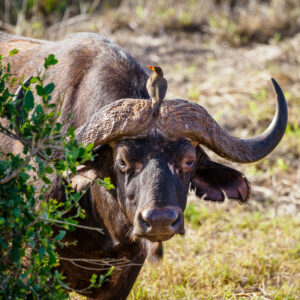
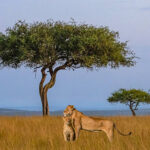
One of the big five as spotted at Masai Mara
Furthermore, the narrative surrounding the Big Five has been reclaimed by local conservationists who emphasize the intrinsic, cultural, and ecological value of these animals. This shift has fostered a sense of national pride and global responsibility, moving away from colonial-era hunting tropes toward a narrative of stewardship. By leveraging the global popularity of these species, conservation organizations have been able to secure funding for anti-poaching initiatives and habitat restoration, ensuring that the Big Five remain the “treasures” of the African wilderness for future generations.
The African Big Five: A Comprehensive Overview
The term “Big Five” was originally coined by big-game hunters to describe the five most difficult and dangerous animals to hunt on foot in Africa. Today, these species—the African elephant, Cape buffalo, leopard, rhinoceros, and lion—represent the pinnacle of African wildlife conservation and ecotourism. Understanding their biology and social structures is essential for their continued protection in the wild.
The African Elephant (Loxodonta africana)
The African elephant is the world’s largest land mammal. Historically, they roamed across most of sub-Saharan Africa, though their range has been fragmented by habitat loss and poaching. They possess a complex social structure led by a matriarch, consisting of related females and their offspring. Their gestation period is the longest of any mammal, lasting approximately 22 months. They are highly intelligent, displaying empathy and complex communication through infrasound.
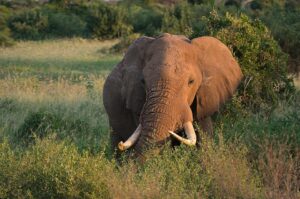
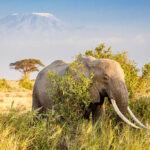
Elephant; Top on the list of the big five
The Cape Buffalo (Syncerus caffer)
Often called “the widowmaker,” the Cape buffalo is known for its unpredictable temperament. Unlike domestic cattle, they have never been domesticated. They live in large, fluid herds that provide protection against predators. Their gestation period is roughly 11 to 12 months. Socially, they exhibit a democratic decision-making process where the direction of herd movement is determined by the alignment of individuals’ bodies.
The Leopard (Panthera pardus)
Leopards are the most elusive of the Big Five. Historically, they occupied vast swathes of Africa and Asia, but they are now restricted to smaller, isolated pockets. Unlike the other four, leopards are solitary and territorial. They are masters of stealth and are famous for hauling heavy prey into trees to avoid kleptoparasitism. Their gestation period is approximately 90 to 105 days, and they typically give birth to two to three cubs.
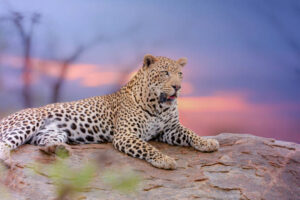
leopard portrait in African wilderness
The Rhinoceros (Black and White Rhino)
Rhinos have a deep evolutionary history dating back millions of years. They are primarily solitary, except for mothers with calves. The gestation period for a rhino is quite long, typically around 15 to 16 months. Their social life is defined by scent marking and territorial boundaries. Conservation efforts remain critical as they face constant threats from illegal poaching for their horns.
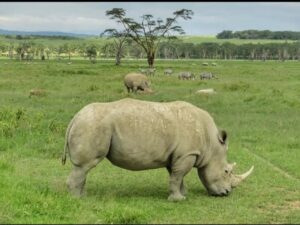
Rhino, one of the big five that in most areas is guarded 24hrs due to poachers
The Lion (Panthera leo)
Lions are the only truly social cats, living in groups called prides. A pride typically consists of related females, their cubs, and a small coalition of males. Their history is tied to the vast savannas of Africa, where they act as apex predators. The gestation period for a lioness is about 110 days. Their social structure is highly cooperative, with females often hunting together and sharing the responsibility of cub-rearing.
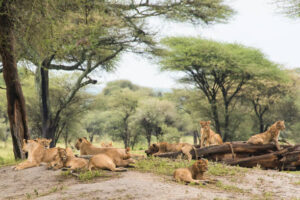
Pride of lions topping among the big five commonly found in all parks and reserves
Conclusion on the Big Five
The Big Five—comprising the African elephant, Cape buffalo, leopard, rhinoceros, and lion—represent the pinnacle of African wildlife, each species playing a critical role in maintaining the ecological balance of their respective habitats. From the complex, matriarchal social structures of elephants and the cooperative pride dynamics of lions to the solitary, elusive nature of leopards, these animals exhibit a remarkable range of evolutionary adaptations. Their gestation periods, which vary significantly from the approximately 110-day cycle of the lion to the nearly 22-month duration of the elephant, reflect the diverse reproductive strategies required to ensure survival in the harsh African wilderness. Ultimately, the long-term survival of these iconic species depends on the continued success of conservation efforts, habitat preservation, and the mitigation of human-wildlife conflict to ensure they remain a permanent fixture of the African landscape.
Historically, these animals were categorized by big-game hunters as the most difficult and dangerous species to track and hunt on foot, a legacy that has shifted in the modern era toward a focus on ecotourism and protection. Their way of life is dictated by the availability of resources, with species like the rhino and buffalo serving as essential grazers that shape the vegetation of the savanna, while apex predators like the lion and leopard regulate population densities. As we look toward the future, the integration of scientific monitoring and community-led conservation initiatives remains the most effective path to safeguarding the biological heritage of these five magnificent creatures.
Leave a comment:
You must be logged in to post a comment.