

- 1.0k Views
- 8 Min Read
- (1) Comment
A Kenya safari offers more than just wildlife viewing; it provides a profound opportunity to engage with the Maasai traditions, one of East Africa’s most iconic ethnic groups. Known for their vibrant shukas and deep-rooted traditions, the Maasai maintain a semi-nomadic lifestyle centered around cattle, which they believe were gifted to them by Enkai, their god. Visitors engaging in cultural tourism often visit community-run manyattas, where they learn that the Maasai social structure is strictly organized by age-sets and gender roles, with men primarily responsible for the protection and grazing of livestock, while women manage the construction of traditional homes (manyattas), milking, and beadwork artistry.
Maasai Traditions, supplements the wildlife safaris with rich cultural activities
The Path of the Moran and Initiation Rites
The transition from boyhood to manhood is marked by the Moran (warrior) stage. Central to this is the circumcision ceremony, or Emuratta, which is a rite of passage that tests a young man’s courage. During the festive season surrounding this event, the initiate must remain stoic; any sign of pain is considered a disgrace to his family. Following recovery, these young men enter the Moran stage, where they live in a communal manyatta, tasked with protecting the community and their herds from predators and rivals. This period of warriorhood is essential before they can eventually transition into the status of junior and senior elders, a process that involves further ceremonies and the accumulation of wisdom and livestock.
Marriage and Social Integration
Marriage in Maasai culture is a significant social contract, often arranged to strengthen ties between clans. A suitor must provide a dowry, typically consisting of cattle, to the bride’s family as a sign of respect and compensation for the loss of her labor. Once married, women take on the responsibility of maintaining the household and raising children, while men focus on community leadership and decision-making within the council of elders. For travelers, participating in these cultural exchanges—whether through traditional dance, beadwork workshops, or guided bush walks—offers a rare glimpse into a society that balances ancient heritage with the pressures of the modern world.
The Intersection of Maasai Traditions, Tourism, and Conservation
The Maasai people, a semi-nomadic pastoralist group native to Kenya and Tanzania, have maintained a profound connection to their ancestral lands and wildlife for centuries. Historically, their culture was defined by warrior pastoralism, where young men underwent rigorous training in the bush to develop survival skills and a deep communion with nature. Today, this traditional knowledge is increasingly recognized as a vital asset in modern conservation efforts. By leveraging their ancestral wisdom, the Maasai are playing a central role in protecting biodiversity, particularly through community-led initiatives that integrate their traditional lifestyle with sustainable economic development.
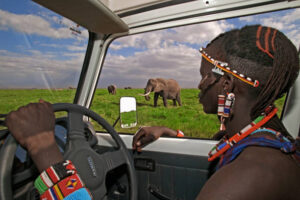
Embracing the maasai traditions has produced some of the best tour guides
Integrating Maasai Traditions with Modern Conservation
The Maasai have historically lived in balance with wildlife, viewing themselves as custodians of the landscape. As traditional grazing lands have faced pressure from population growth and agricultural expansion, the Maasai have adopted innovative conservation models. Organizations like the Maasai Wilderness Conservation Trust have pioneered programs that provide financial compensation for livestock lost to predators, effectively turning potential human-wildlife conflict into a partnership.
Furthermore, the Maasai are increasingly involved in the management of private conservancies, which allow them to preserve their traditional way of life while ensuring that the land remains in its natural state. The Maasai are reclaiming their role as environmental stewards by utilizing their traditional ecological knowledge to manage wildlife corridors and eradicate poaching, thereby ensuring that their cultural heritage and the surrounding ecosystems thrive in tandem.
The Maasai traditions and Wildlife: A Historical Perspective on Coexistence
For generations, the Maasai people of East Africa have maintained a complex, symbiotic relationship with the wildlife of the savanna. Traditionally, Maasai culture is deeply rooted in pastoralism, where cattle are the primary measure of wealth and social status. Historically, this lifestyle necessitated a strategy of coexistence with wild predators, such as lions and hyenas, which were viewed as competitors for grazing land and threats to livestock. The Maasai developed sophisticated traditional ecological knowledge, including the use of thorn-bush enclosures known as bomas and the practice of herding, to mitigate these risks. This cultural framework allowed for a balance where wildlife was respected, and in some cases, revered, while simultaneously protecting the pastoral livelihood that defined their existence.
The transition from traditional coexistence to modern human-wildlife conflict has been driven by significant socio-economic and environmental changes. As human populations have expanded and land use patterns have shifted toward permanent settlement and agriculture, the traditional migratory corridors for wildlife have been fragmented. This reduction in space forces wildlife into closer proximity with human settlements, leading to increased incidents of livestock predation and crop destruction.
Consequently, the Maasai traditions of coexistence are increasingly challenged by the loss of communal grazing lands and the resulting economic pressure, which has transformed historical tolerance into modern conflict. To address these challenges, contemporary conservation efforts are increasingly integrating traditional Maasai knowledge with modern scientific management to restore the balance that once defined the relationship between the pastoralists and the wild.
The Social Structure and Traditional Roles in Maasai Society
The Maasai traditions (society) is organized around a strictly defined age-set system and patriarchal structure, where every individual has a clear role to play to ensure the survival and prosperity of the community. This social fabric is maintained through a division of labor that is deeply rooted in their pastoralist lifestyle, where cattle are the primary measure of wealth and status. The society is structured to ensure that the protection of the community, the management of livestock, and the maintenance of the household are handled by specific groups based on age, gender, and initiation status.
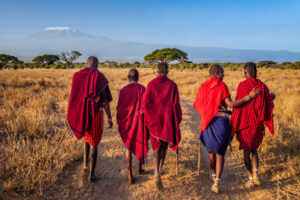
Maasai Traditions; Group of Maasai warriors going back to village, central Kenya, Africa. Mount Kilimanjaro on background, Southern Kenya, Africa. Maasai tribe inhabiting southern Kenya and northern Tanzania, and they are related to the Samburu.
Roles of Men and Elders
In Maasai traditions and culture, men are the primary decision-makers and protectors of the community. Once a man transitions from the status of a warrior to an elder, he assumes the responsibility of guiding the community, settling disputes, and making critical decisions regarding grazing lands and livestock management. Elders are the custodians of Maasai tradition and law, ensuring that the cultural values are passed down to the younger generations. Their authority is absolute in matters of village governance and inter-tribal relations.
The Role of the Moran (Warriors) in enhancing the Maasai Traditions
The Moran, or warriors, represent the most iconic age-set in Maasai society. These young men, typically between the ages of 15 and 30, are tasked with the protection of the community, the defense of livestock from predators and cattle raiders, and the physical security of the village. During their time as Moran, they live in a separate manyatta (warrior village) where they undergo rigorous training in endurance, hunting, and traditional combat. This period is essential for building the physical and mental strength required to eventually transition into the role of an elder.
The Role of Women
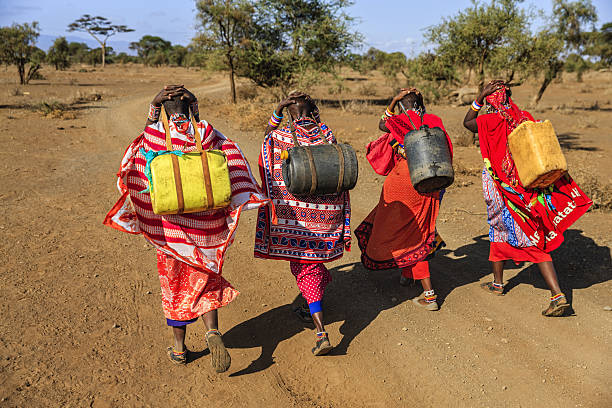
Maasai women are the backbone of the household and are responsible for the daily maintenance of the village. Their duties include building and repairing the manyattas (traditional houses), milking the cows, fetching water and firewood, and preparing food for the family. While men hold the formal decision-making power, women exert significant influence within the domestic sphere and are highly respected for their role in child-rearing and maintaining the social cohesion of the family unit. They are also renowned for their intricate beadwork, which serves as a vital form of cultural expression and a source of income for the community.
The Role of Children
Children in Maasai traditions are integrated into the labor force from a young age. Boys are typically tasked with herding smaller livestock, such as goats and sheep, which teaches them the foundational skills of pastoralism and animal husbandry. Girls assist their mothers with domestic chores, learning the skills necessary to manage a household. This early involvement ensures that the knowledge required to sustain the Maasai way of life is transferred seamlessly from one generation to the next, maintaining the equilibrium of their society.
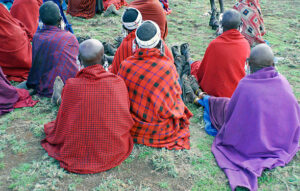
Maasai Traditions; Social gathering in a Masai village: women, dressed in red and blue shukkas
Experiencing Authentic Maasai traditions and Culture on a Kenyan Safari
Kenya offers unparalleled opportunities to engage with the Maasai traditions, an indigenous ethnic group renowned for their distinctive customs, vibrant attire, and deep connection to the land. To experience these traditions first-hand, travelers should prioritize visiting community-run conservancies rather than commercialized roadside villages. The most authentic interactions occur in areas like the Mara North Conservancy or the Amboseli ecosystem, where sustainable tourism models ensure that the Maasai community directly benefits from your visit. By engaging in guided bush walks led by Maasai warriors, visitors can learn about traditional medicinal plants, tracking techniques, and the historical significance of their pastoralist lifestyle.
To ensure a respectful and meaningful experience of Maasai Traditions, it is recommended to book your cultural visit through reputable eco-lodges that partner directly with local Maasai community elders to facilitate authentic, non-exploitative cultural exchanges. When planning your itinerary, look for programs that include visits to a manyatta (traditional homestead) where you can observe beadwork demonstrations, traditional song and dance performances, and learn about the social structure of the Maasai society. Always remember to ask for permission before taking photographs, as this is a vital aspect of cultural etiquette in Maasai communities.
Leave a comment:
You must be logged in to post a comment.



Comment 01
Astute Africa Safaris,
05 May, 2026REF: Crafting Your Bespoke African Safari Experience with Astute Africa Safaris
Jambo,
Thank you for your interest in exploring the wonders of Africa with Astute Africa Safaris. We pride ourselves on creating immersive, tailor-made journeys that align perfectly with your personal interests, pace, and travel aspirations.
Because every safari is a unique narrative, we do not believe in “one-size-fits-all” pricing. To ensure we provide you with an accurate and competitive quotation that reflects the specific lodges, wildlife experiences, and logistical arrangements you desire, we invite you to connect with our team for a personalized consultation.
Please contact us at info@astuteafricasafaris.com, Whatsapp +254762663272 or fill the inquiry form with a few details regarding your preferred travel dates, group size, and specific interests (e.g., photography, luxury relaxation, or adventure trekking). Once we have these details, we will curate a comprehensive proposal designed specifically for you.
We look forward to the possibility of helping you plan an unforgettable journey.
Warm regards,
Team Astute Africa Safaris