

- 1.4k Views
- 42 Min Read
- (1) Comment
An East African cultural safaris is about much more than watching elephants cross the savannah, photographing lions beneath acacia trees or witnessing the Great Wildebeest Migration. It is also an opportunity to discover the people whose histories, livelihoods, knowledge and traditions are closely connected to the landscapes that travellers come to explore.
From the Maasai communities of southern Kenya and northern Tanzania to the Samburu and Rendille of northern Kenya, from the Turkana communities around Lake Turkana to the pastoralists of Tanzania, the Batwa communities of the Great Lakes region and the Swahili people of Zanzibar, East Africa holds an extraordinary diversity of living cultures.
These cultures are not relics of the past. They continue to evolve as communities respond to education, changing economies, modern technology, environmental pressures, tourism and conservation.
A meaningful cultural safari offers an opportunity to listen to community members, understand local traditions, learn about livelihoods and discover how people navigate the opportunities and challenges of living alongside wildlife.
For some communities, tourism provides income through guiding, accommodation, cultural experiences, handicrafts, conservation employment and community enterprises. In suitable locations, tourism can also help support wildlife corridors, rangeland management, forest protection and environmental education. However, these benefits are not automatic. They depend on fair agreements, local participation, responsible visitors and genuine community decision-making.
At Astute Africa Safaris, cultural experiences can be incorporated into tailor-made Kenya, Tanzania and Uganda safari itineraries, with Rwanda and Zanzibar considered where the itinerary and available local partnerships make them suitable.
Whether you are planning a family holiday, a wildlife photography trip, a luxury safari, a cultural expedition or a multi-country East African adventure, exploring the human stories behind the landscapes can make your journey more rewarding.
1. Why cultural immersion belongs on an East African safari

Wildlife destinations are often presented through their animals and scenery. Yet the surrounding communities also have histories, livelihoods, place names, land-use traditions and knowledge that help explain how these landscapes have been inhabited and managed.
A well-organised cultural experience can help travellers understand:
-
Living traditions: clothing, music, dance, beadwork, oral history, architecture, food and celebrations, where communities choose to share them.
-
Traditional livelihoods: livestock keeping, fishing, farming, pastoral mobility, craft-making and trading.
-
Local ecological knowledge: knowledge of seasonal rainfall, water sources, pasture, medicinal plants and animal behaviour.
-
Community conservation: how local people participate in wildlife monitoring, habitat management, forest protection and tourism.
-
Contemporary realities: education, employment, changing land ownership, drought, access to services and the pressures affecting traditional livelihoods.
-
Responsible travel: how tourism spending can support local enterprises and why community consent and fair compensation matter.
Cultural immersion does not mean entering a village without permission or expecting people to perform their traditions for visitors. It means arranging a respectful encounter in which local hosts determine what they wish to share.
The best experiences give visitors an opportunity to ask questions, hear different perspectives and understand that a community is made up of individuals with varied interests, ambitions and opinions.
2. The Maasai: pastoral heritage, beadwork and the wildlife landscapes of Kenya and Tanzania

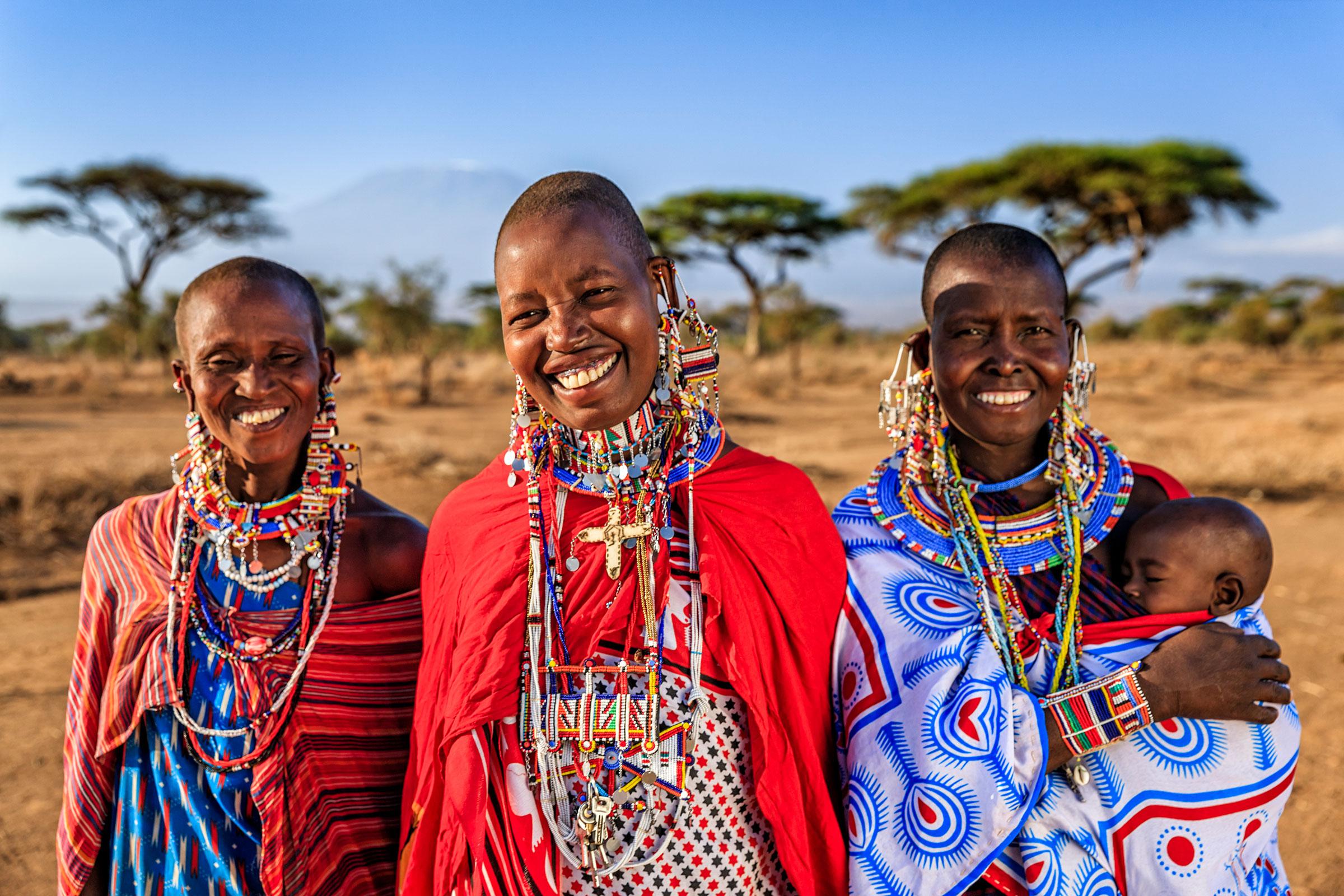
The Maasai are among East Africa’s best-known pastoral communities. Their cultural heritage is closely associated with cattle keeping, distinctive beadwork, age-set traditions, oral knowledge and the open grasslands of southern Kenya and northern Tanzania.
Their homelands include landscapes around the Maasai Mara, Amboseli, parts of the wider Rift Valley and areas bordering Tanzania’s Serengeti ecosystem. The relationship between Maasai communities and these landscapes is an important part of the cultural identity of many safari destinations.
However, Maasai people do not all live in the same way. Some households continue to depend heavily on livestock, while others combine pastoralism with farming, business, education, salaried employment or tourism. Cultural practices and community priorities vary across locations and generations.
Understanding Maasai traditions
A community-led cultural visit may introduce visitors to several aspects of Maasai life.
Beadwork and personal adornment

Beadwork is an important art form and a means of cultural expression. Colours, designs and ornaments can communicate aspects of identity, age, social relationships or ceremonial significance, although meanings vary. Visitors may have the opportunity to observe beadwork, meet local artisans or purchase handmade pieces directly from their makers.
Buying from the people who create the work can support household incomes and small businesses, particularly women-led enterprises.
Music, dance and oral traditions
Song, rhythmic movement, storytelling and spoken histories can help communicate community values and collective memory. Some organised cultural visits include traditional singing or dancing, while others focus on conversation, craft-making and everyday life.
Visitors should ask before recording performances and should not assume that sacred or private ceremonies are available for tourism.
Manyattas and traditional homesteads
Some cultural experiences introduce visitors to traditional Maasai homestead designs, commonly associated with the term manyatta. Hosts may explain building materials, household arrangements, the role of livestock and how homes respond to local environmental conditions.
A visit should not suggest that every Maasai family lives in a traditional homestead. Contemporary housing and lifestyles differ considerably between households.
Livestock and pastoral knowledge
Cattle have longstanding economic, cultural and social significance in Maasai society. Livestock provide milk, meat and income, while herds also shape decisions about grazing, water, mobility and household security.
Learning about these relationships helps visitors understand why access to grazing land and reliable water remains important in wildlife areas.
Maasai communities and conservation

In some parts of Kenya and Tanzania, Maasai landowners and community organisations participate in conservancies, wildlife monitoring, habitat protection and tourism partnerships.
These arrangements can create income through land leases, accommodation, guiding, employment and conservation-related activities. They can also help maintain open landscapes and wildlife movement between protected areas.
The benefits, however, depend on the terms of each arrangement. Tourism income may be distributed unevenly, and communities can face difficult decisions involving grazing access, land subdivision, agriculture, wildlife and development. Research on the Mara–Serengeti landscape highlights the importance of local participation and the risk of cultural tourism becoming commercialised without delivering lasting benefits.
For visitors, the most valuable question is not simply whether a lodge is described as eco-friendly. Ask how local landowners participate in decisions, whether community members are fairly paid and what the tourism partnership actually contributes.
Where to experience Maasai culture
Consider arranging a locally hosted cultural experience in suitable areas around:
-
Maasai Mara and neighbouring conservancies, Kenya: combine wildlife viewing with community-led experiences, beadwork or discussions about pastoral livelihoods.
-
Amboseli and the surrounding ecosystem, Kenya: learn about the relationship between livestock, elephants, water, land use and Mount Kilimanjaro’s wider landscape.
-
Northern Tanzania’s Maasai-inhabited areas: explore pastoral traditions and the relationship between communities and the Serengeti ecosystem where responsible cultural visits are available.
The experience should be selected according to the community’s consent, the quality of the host partnership and the visitor’s interests rather than the assumption that every village offers the same activities.
3. The Samburu: cultural heritage and community conservation in northern Kenya

The Samburu are a pastoral community of northern Kenya, culturally and linguistically related to the Maasai but with their own distinct identity, traditions and history.
Their cultural landscape is associated with areas around Samburu, Buffalo Springs and Shaba national reserves, as well as community conservancies and the wider northern rangelands.
A Samburu cultural experience can offer a different perspective on East African pastoral life, particularly the importance of livestock, family networks, traditional knowledge and adapting to an arid environment.
What visitors can learn
Depending on the host and location, visitors may learn about:
-
Traditional beadwork, clothing and personal adornment.
-
Livestock keeping and the management of seasonal grazing.
-
Community storytelling, songs and dance.
-
Traditional homestead design and household livelihoods.
-
The role of local guides, scouts and community enterprises in conservation.
The Samburu are not simply a cultural attraction beside a national reserve. Their communities live within a wider landscape where wildlife, livestock, tourism and access to water and pasture interact.
Samburu culture and wildlife conservation

Community conservancies in northern Kenya demonstrate how local governance and tourism can contribute to wildlife protection and community livelihoods. Initiatives in the broader Samburu region include conservation employment, community-led monitoring and partnerships intended to maintain wildlife habitat across community lands.
Some conservancies offer specialist experiences beyond conventional game drives. For example, the wider Namunyak landscape is associated with the community-owned Reteti Elephant Sanctuary, which cares for orphaned and rescued elephant calves and supports local involvement in elephant conservation.
These initiatives can help create employment and give local residents a greater role in conservation. At the same time, their long-term success depends on sound management, funding, ecological needs and community priorities.
Recommended cultural safari areas
Consider the Samburu region when planning a northern Kenya safari that combines wildlife, cultural learning and landscapes different from the country’s southern savannahs.
Depending on access and availability, a tailor-made itinerary could include Samburu National Reserve, Buffalo Springs, a community conservancy and a locally arranged cultural visit. The wider northern circuit may also include Laikipia or areas around Lake Turkana.
4. The Turkana: heritage and livelihoods around Lake Turkana

Northern Kenya’s Lake Turkana region presents a different cultural and environmental setting from the grasslands of the Maasai Mara. The lake’s dramatic volcanic landscapes, desert-like surroundings, fishing settlements and pastoral communities offer opportunities to understand life in a challenging dryland environment.
The Turkana are a pastoral community whose traditional livelihoods have included livestock keeping, alongside fishing, trading and other economic activities in different locations. Many households adapt their livelihoods to the availability of water, pasture, market access and changing environmental conditions.
Understanding Turkana culture
A respectful, locally arranged visit may explore:
-
Livestock and their importance to household livelihoods.
-
Traditional knowledge of dryland environments and water sources.
-
Beadwork, adornment, oral traditions and community identity.
-
Fishing and lakeshore livelihoods where relevant.
-
How families adapt to drought, changing economic opportunities and modern education.
It is important to recognise that the Turkana are not a uniform group with one lifestyle. Communities living near the lake, in settlements and in more pastoral areas may have very different daily experiences.
Tourism and conservation in the Lake Turkana region

The region’s ecological and archaeological significance offers opportunities for responsible tourism, including landscape exploration, cultural interpretation, birdwatching and learning about the area’s ancient human history.
Tourism can create work for local guides, drivers, accommodation providers, craft makers and other small businesses. However, tourism infrastructure and visitor numbers are more limited in many remote locations than in established safari destinations, and journeys may require careful planning.
The challenges faced by local communities can include drought, water insecurity, limited services, economic pressures and competition over resources. These challenges should be discussed as contemporary realities rather than romanticised as part of an exotic travel experience.
Best for: Travellers interested in remote landscapes, cultural learning, dryland environments and a less conventional northern Kenya expedition.
A visit should be planned with local guidance and an appropriate operator, with realistic expectations about journey times, accommodation, services and the availability of specific cultural experiences.
5. The Rendille: pastoral traditions of northern Kenya

The Rendille are a pastoral community of northern Kenya, with a cultural identity closely associated with arid and semi-arid environments. Camels have played an important role in Rendille pastoral livelihoods, particularly because of their adaptation to dry conditions and their value as a source of milk, transport and household wealth.
Rendille communities are part of a wider region that includes different pastoral groups, shared rangelands, trading relationships and, at times, tensions over access to resources.
Cultural traditions and everyday life
Where a community has agreed to host visitors, a Rendille cultural experience may introduce travellers to:
-
Camel keeping and the importance of livestock in dry environments.
-
Traditional clothing, adornment and craft-making.
-
Oral history, community identity and local knowledge.
-
How households respond to changing rainfall, pasture and water availability.
-
The relationship between livestock mobility and the wider landscape.
The purpose is to understand the practical knowledge that helps people live in an arid region, not to treat traditional ways of life as something unchanged or belonging only to the past.
Rendille communities, wildlife and tourism

In parts of northern Kenya, pastoral communities share landscapes with elephants, predators and other wildlife. Community-based tourism and conservation partnerships can create alternatives or additional sources of income beyond livestock, but opportunities vary by location.
The relationship between conservation and pastoralism is complex. Wildlife can attract visitors and support jobs, but animals can also compete with livestock for water and grazing or cause losses. Drought can intensify these pressures.
Tourism works best when communities have a meaningful say in land management and when any restrictions, benefits and responsibilities are negotiated fairly.
Best for: Travellers seeking deeper insight into northern Kenya’s pastoral cultures and arid landscapes, especially as part of a wider Samburu–Laikipia–Lake Turkana expedition.
Because Rendille cultural tourism is less widely established than some Maasai cultural experiences, arrange any visit in advance and confirm the host community’s willingness to receive visitors.
6. Other communities of Kenya: a wider cultural safari
Kenya’s cultural diversity extends far beyond the Maasai, Samburu, Turkana and Rendille. Depending on the route, interests and availability of suitable hosts, a cultural itinerary may also introduce visitors to other communities.

The El Molo and communities around Lake Turkana
The El Molo are a small community historically associated with the southeastern shores of Lake Turkana and fishing traditions. Their heritage provides insight into the relationship between people, lakeshore resources and a demanding environment.
Because small communities may face particular pressures concerning representation and privacy, cultural visits should only be arranged with local consent and care. Avoid assuming that a community is available for tourism simply because it is mentioned in a guidebook.
The Borana
Borana communities live in northern Kenya and neighbouring parts of Ethiopia. Pastoralism, livestock and the management of rangelands are important themes in many Borana livelihoods.
In appropriate areas, visitors can learn about pastoral knowledge, local history and the challenges of managing water and pasture in dryland environments.
The Kikuyu and other communities of central Kenya
Cultural experiences in central Kenya may introduce travellers to agricultural traditions, food, craft-making, oral history and the region’s social and historical development.
These experiences can complement a wildlife itinerary around the Aberdare region or Mount Kenya, provided that the host experience is locally organised and relevant to the route.
The coastal Mijikenda communities
The Mijikenda encompass several related communities along Kenya’s coast. Their heritage includes distinctive architectural, social and spiritual traditions, including the historic kaya forests, which hold cultural significance and conservation value.
Where appropriate access is permitted, heritage visits can help visitors understand how cultural identity and the protection of forest landscapes may intersect. Sacred areas should not be treated as ordinary sightseeing stops; access must follow local guidance and applicable rules.
The wider lesson is that Kenya’s cultural safari opportunities are not limited to pastoralism. Agricultural communities, fishing communities, coastal societies, forest heritage and urban cultures can all enrich a traveller’s understanding of the country.
7. Tanzania: Maasai heritage, Hadzabe traditions, Datoga crafts and Swahili culture

Tanzania offers a broad range of cultural experiences that can be combined with wildlife viewing in the Serengeti, Ngorongoro area, Tarangire, Lake Eyasi and other destinations.
The country is home to many communities, languages and ways of life. The most suitable cultural experience depends on the region, the interests of the traveller and the wishes of the people hosting the visit.
Maasai communities in Tanzania
Maasai communities live across parts of northern Tanzania, including landscapes near the Serengeti and Ngorongoro conservation area.
A locally arranged visit may introduce travellers to pastoral traditions, beadwork, livestock, oral history and contemporary community perspectives on conservation and tourism.
As in Kenya, it is important not to assume that all Maasai communities share identical customs or benefit equally from tourism.
Hadzabe: hunter-gatherer heritage around Lake Eyasi

The Hadzabe, also commonly known as the Hadza, are an Indigenous hunter-gatherer community associated with the Lake Eyasi region of northern Tanzania. Their language, foraging knowledge and relationship with the surrounding environment are of considerable cultural interest.
Some visits in the area introduce travellers to aspects of traditional foraging, tracking and the use of local resources. These encounters must be approached carefully.
Hadzabe people should not be presented as living fossils or as people whose lives exist for visitors’ entertainment. Communities have contemporary concerns, including access to land, resource pressures and the future of their livelihoods. A responsible experience recognises their autonomy and avoids pressuring people to perform activities they do not wish to share.
Datoga: metalworking and pastoral heritage

The Datoga are a pastoral community in northern Tanzania, with some groups known for metalworking and craft traditions. Depending on the host and location, a visit may offer insight into traditional skills, livestock-based livelihoods, adornment and local exchange.
Metalworking and other craft traditions provide a useful way to understand how cultural knowledge is passed between generations and how traditional skills can continue to support livelihoods.
Any demonstration should be arranged with the artisans themselves, with fair payment for their time and work.
Chagga heritage around Mount Kilimanjaro

The Chagga communities of the Kilimanjaro region offer a cultural perspective shaped by mountain agriculture, coffee cultivation, local food, settlement history and the environmental conditions of the mountain’s fertile slopes.
A cultural visit can complement a Kilimanjaro climbing holiday or a northern Tanzania safari. Travellers may be able to learn about coffee production, local food traditions and the relationship between farming, water and mountain ecosystems.
This is a particularly useful addition for visitors who want to understand the communities around a major natural landmark rather than experiencing the mountain only as a climbing destination.
Swahili culture on the Tanzanian coast

The Swahili coast reflects centuries of exchange across the Indian Ocean, connecting East African coastal communities with maritime trade, architecture, language, cuisine, religion and artistic traditions.
In coastal Tanzania, cultural experiences may include historic settlements, traditional food, fishing livelihoods, dhow heritage and local craft-making.
The coast offers a valuable contrast with inland wildlife destinations: cultural immersion here is shaped by the sea, trading networks and urban history as much as by the natural environment.
Connecting culture with conservation in Tanzania
Tanzania’s cultural landscapes include pastoral areas, mountain agricultural communities, coastal environments and wildlife ecosystems.
Tourism can provide income and employment while encouraging protection of heritage sites and natural resources. However, conservation decisions can also affect access to land and resources, so cultural tourism should not be presented as an automatic solution to local challenges.
For a rewarding experience, combine wildlife viewing with locally hosted cultural visits and ask how the activity is managed, who receives the fees and what visitors are permitted to do.
8. Uganda: cultural heritage, forests, mountains and community tourism

Uganda adds another dimension to East African cultural travel. Its landscapes include tropical forests, mountain ranges, lakes, savannahs and fertile agricultural regions, alongside many distinct communities and cultural traditions.
A Uganda safari can combine wildlife viewing with cultural experiences linked to local food, farming, music, craft-making, oral history, forest heritage and contemporary community life.
The Batwa: forest heritage and conservation

The Batwa are Indigenous communities historically associated with forest environments in parts of the Great Lakes region, including southwestern Uganda.
Some tourism experiences near forested protected areas introduce visitors to aspects of Batwa heritage, forest knowledge, traditional skills and the historical relationship between communities and their environments.
This subject requires particular sensitivity. The establishment of protected areas and restrictions on forest access have profoundly affected some Batwa communities, and cultural tourism cannot by itself resolve issues involving land, rights, livelihoods or social inclusion.
A responsible visit should be developed with Batwa participation and consent, recognise the community’s contemporary priorities and ensure that hosts are fairly compensated. Visitors should avoid treating a short cultural presentation as a complete representation of Batwa life.
The Karamojong: pastoral culture in northeastern Uganda

The Karamojong are pastoral and agro-pastoral communities of northeastern Uganda. Livestock, local identity, community relationships and adaptation to dryland conditions are important themes in the region.
A cultural visit may provide insight into traditional homesteads, livestock keeping, food, music, craft-making and how households respond to environmental and economic changes.
The wider Karamoja region also illustrates why cultural tourism needs to be contextual. Drought, livelihood insecurity, access to services and historical conflict have affected communities in different ways. Visitors should avoid reducing people to stereotypes about pastoralism or conflict.
Bagisu heritage around Mount Elgon

The Bagisu, also known as the Gisu, are associated with the Mount Elgon region in eastern Uganda. One widely recognised cultural tradition is Imbalu, a male circumcision initiation practice that has important social and cultural significance.
Because initiation traditions can be private or governed by specific cultural rules, visitors should attend only events or activities that are openly and appropriately made available to outsiders. Photography, participation and access should follow the host community’s guidance.
The Mount Elgon area can also introduce travellers to mountain agriculture, local food, coffee-growing communities and the relationship between farming and forested landscapes.
Uganda’s cultural tourism and conservation connection
In Uganda, community tourism can complement wildlife and forest conservation by creating livelihoods through guiding, accommodation, craft-making, cultural interpretation and local enterprises.
Around some protected areas, visitor spending can help support community projects and strengthen the economic links between tourism and conservation. The results vary by destination and management arrangement, so claims about benefits should be verified for each specific experience.
For a multi-interest safari, cultural activities can be paired with gorilla trekking in Bwindi or Mgahinga, wildlife viewing in Queen Elizabeth National Park or Murchison Falls, or a journey through the Mount Elgon region. Cultural visits should be chosen based on genuine local partnerships rather than added as generic stops.
9. Rwanda: cultural traditions, community livelihoods and conservation

Rwanda’s cultural experiences offer a way to explore the country’s traditions, agricultural heritage, performance arts, craft-making and community life alongside its mountain forests, lakes and savannah landscapes.
For travellers visiting Volcanoes National Park, Nyungwe National Park or Akagera National Park, cultural activities can add historical and social context to a wildlife-focused itinerary.
Intore dance, music and traditional arts

Intore dance is a well-known Rwandan performance tradition involving rhythmic movement, music and distinctive costumes. Depending on the venue and host, visitors may have opportunities to watch a performance and learn about its cultural significance.
Rwanda also has traditions of basketry, craft-making, storytelling and locally prepared food. These experiences can introduce travellers to skills and artistic practices that continue to hold meaning in contemporary life.
A cultural performance is most valuable when hosts explain its context, rather than presenting it only as entertainment.
Community experiences near Volcanoes National Park

The region around Volcanoes National Park is known internationally for mountain gorilla conservation. Cultural visits in the wider area can help visitors learn about farming livelihoods, local enterprises, traditional skills and the lives of communities living near a major wildlife destination.
Some established experiences present aspects of local heritage and traditional life, but the quality and organisation of visits vary. Travellers should check who operates the experience, whether local people lead it and how payments are distributed.
The history of forest conservation in the Great Lakes region also illustrates a wider challenge: protecting habitats can affect people who historically depended on those environments. Tourism and conservation initiatives should therefore be assessed not only by their ecological achievements but also by their relationship with surrounding communities.
Cultural tourism and Rwanda’s conservation economy
Rwanda’s tourism sector includes gorilla trekking, forest tourism, savannah safaris and other nature-based experiences. Community participation can take place through employment, local businesses, cultural activities and benefit-sharing arrangements.
For visitors, the practical lesson is to look for clear information about how tourism revenue supports conservation and local livelihoods. Do not assume that every cultural experience near a national park directly funds wildlife protection.
A combined Rwanda itinerary could include gorilla trekking, a locally hosted cultural experience, time in Kigali and a visit to another landscape such as Akagera or Nyungwe, depending on travel duration and interests.
10. Zanzibar: Swahili heritage, coastal livelihoods and marine conservation

Zanzibar provides a distinct cultural dimension to an East African holiday. Its history has been shaped by Swahili coastal life and centuries of exchange across the Indian Ocean, creating a rich heritage of language, architecture, cuisine, craftsmanship and maritime traditions.
For travellers combining a Kenya or Tanzania safari with a beach holiday, Zanzibar offers the chance to move from savannah wildlife landscapes to historic towns, fishing villages, spice-growing areas and coral-rich coastal environments.
Stone Town and Swahili heritage

Stone Town’s historic streets, carved wooden doors, buildings and urban layout reflect a long history of cultural exchange. A guided walk can introduce visitors to Swahili language and traditions, architecture, trade, food and the island’s complex history.
The best tours go beyond a checklist of landmarks and explain the people and historical processes that shaped the town. Visitors should also recognise that Zanzibar is a living place where people work, worship, study and conduct everyday business.
Fishing, seaweed farming and coastal livelihoods

Along parts of Zanzibar’s coast, fishing, seaweed farming, small-scale trade and tourism support local livelihoods. Their importance varies by village and household.
Community-based coastal experiences may offer insight into traditional fishing practices, local food, boat-making, seaweed production or other livelihoods where hosts choose to share them.
These encounters can help visitors understand that the Indian Ocean is not merely a backdrop for a beach holiday. It is also a source of food, income, cultural identity and ecological value.
Tourism, coral reefs and marine conservation

Zanzibar’s tourism economy depends partly on healthy coastal and marine environments. Coral reefs, seagrass beds, mangroves and marine life support biodiversity and, in different ways, coastal livelihoods.
Responsible tourism can support local employment and create economic incentives for protecting marine environments. However, coastal tourism can also increase pressure on water supplies, waste management, shorelines and marine habitats.
Visitors can make better choices by selecting operators that follow wildlife interaction rules, respect marine protected areas, manage waste responsibly and explain how their activities relate to local conservation.
Best cultural combination: A northern Tanzania wildlife safari followed by a few days in Zanzibar can provide an especially varied journey, bringing together inland wildlife, local cultural experiences, Swahili heritage and coastal ecology.
11. How cultural tourism supports wildlife conservation

One of the most important reasons to include cultural experiences in a safari is that they can help visitors understand the people who live alongside wildlife and the role local communities can play in protecting natural habitats.
Across East Africa, wildlife is not confined to national parks. Animals may move across community lands, private conservancies, pastoral rangelands, forests, agricultural areas and corridors connecting protected habitats.
People living in these landscapes may bear some of the costs of wildlife protection while receiving only part of the economic benefits generated by tourism. Community participation is therefore an important consideration in long-term conservation.
The main ways tourism can contribute
1. Employment and local businesses
Tourism can create opportunities for local guides, trackers, drivers, camp staff, cooks, artisans, boat operators, cultural interpreters and small business owners.
When these opportunities are accessible to residents and offer fair pay, tourism can provide an additional source of income alongside livestock keeping, farming, fishing and other livelihoods.
2. Income for community landowners
In some community conservancies, tourism operators enter into agreements with landowners to use land for accommodation, wildlife viewing or other activities.
Such agreements may generate payments that help households diversify income while maintaining habitat. The arrangements differ, so visitors should not assume that every conservancy shares revenue in the same way.
3. Funding for conservation activities
Depending on the destination and its financial model, tourism income can contribute to ranger employment, wildlife monitoring, habitat management, anti-poaching efforts and conservation education.
These activities can help support wildlife populations, but their effectiveness depends on management quality, funding stability and local cooperation.
4. Supporting traditional ecological knowledge
Local people may have detailed knowledge of rainfall, pasture, water sources, wildlife movements, plants and seasonal changes. Community-led conservation can combine this knowledge with scientific monitoring and formal wildlife management.
Neither form of knowledge should be treated as a substitute for the other. Effective conservation depends on understanding the ecological and social conditions of each landscape.
5. Encouraging heritage protection
Tourism may help support traditional crafts, cultural interpretation, historic buildings, local food traditions and the transmission of knowledge between generations.
This is most effective when communities decide what should be shared and control how their cultural heritage is presented.
Research on Kenyan community conservation describes the importance of community-owned land management in maintaining habitats and creating economic opportunities. At the same time, studies of pastoral landscapes highlight the risks created by competing land uses, fragmented wildlife corridors and insufficient local participation.
Why tourism revenue alone is not enough
A community may live beside an internationally recognised wildlife destination yet still experience poverty, livestock losses, restricted access to resources or limited access to public services.
Tourism may be seasonal, and income can decline sharply during economic downturns or travel disruptions. Some households benefit directly through employment or land payments, while others receive little.
Responsible conservation tourism should therefore be assessed through several questions:
-
Are community members involved in decisions about their land and resources?
-
Are payments transparent and fairly distributed?
-
Are local people employed and able to develop skills?
-
Are wildlife habitats and movement corridors maintained?
-
Can communities continue essential livelihoods, subject to applicable conservation and land-use rules?
-
Are grievances, wildlife losses and disagreements addressed fairly?
These questions help distinguish meaningful community partnerships from marketing claims that use the words eco-tourism or community-based tourism without explaining what they mean.
12. Living alongside wildlife: understanding human–wildlife conflict

The relationship between people and wildlife in East Africa is complex. Many communities value the natural world and possess generations of knowledge about the environments in which they live. Yet living alongside wildlife can involve real economic costs and risks.
Human–wildlife conflict occurs when interactions between people and wild animals cause harm to people, livestock, crops, property or wildlife itself.
Understanding these challenges is essential to an honest cultural safari. Conservation should not be described as effortless coexistence, and local people should not be expected to absorb the costs of protecting wildlife without a meaningful voice or fair support.
Livestock predation
Lions, leopards, hyenas and other carnivores can kill livestock, particularly where grazing areas overlap with predator habitat.
For a pastoral household, the loss of a cow, goat, sheep or other animal can have serious financial and social consequences. Livestock may provide food, income, savings and security, making losses more significant than the market price of the animal alone.
Possible approaches to reducing risk include stronger livestock enclosures, improved herding practices, predator monitoring, suitable grazing management and rapid reporting of incidents. The most appropriate response depends on the species, terrain, community priorities and available resources.
Crop damage and property loss
In farming landscapes, elephants and other wildlife can damage crops or infrastructure. A single incident can threaten household food supplies and income, particularly where families have limited financial reserves.
Measures such as early-warning systems, suitable barriers, community monitoring and land-use planning may reduce some risks. No single intervention works everywhere, and responses need to be designed for local conditions.
Competition for water and pasture
During drought, wildlife and livestock may depend on the same remaining water sources and grazing areas.
This pressure can increase the likelihood of encounters between people and animals. It can also intensify disagreements over access to land and water between different land users.
In pastoral areas, seasonal mobility and negotiated grazing arrangements can be important livelihood strategies. Fragmenting rangelands or blocking wildlife corridors may create problems for both people and animals.
Road safety and wildlife encounters
Wild animals may cross roads or move close to settlements, farms and tourism infrastructure. Vehicle collisions and unsafe encounters can injure people and animals.
Visitors should follow speed limits, respect park regulations, remain inside vehicles where required and never approach or feed wild animals.
Why human–wildlife conflict matters to tourism
When communities repeatedly experience wildlife-related losses without adequate support, they may have fewer reasons to tolerate wildlife on their land. This can undermine conservation and create tensions around tourism.
Tourism can help when it generates tangible, fairly distributed benefits and supports effective conflict-reduction measures. But it cannot replace public policy, community rights, adequate compensation arrangements or sound land-use planning.
The broader challenge is to create landscapes where conservation benefits are shared and local people are not expected to carry disproportionate costs.
13. Practical ways communities and conservation organisations can reduce conflict

Approaches differ between savannah, dryland, forest and coastal ecosystems, but several strategies can help reduce conflict when adapted to local needs.
| Approach | How it may help | Important consideration |
|---|---|---|
| Improved livestock enclosures | Reduce opportunities for predators to reach livestock at night | Design and maintenance must suit local predators and materials |
| Community wildlife scouts | Help monitor wildlife, report incidents and communicate risks | Scouts need appropriate training, equipment and community trust |
| Early-warning systems | Alert residents to certain wildlife movements or potential encounters | Warnings must be reliable and reach people in time |
| Grazing and land-use planning | Reduce some resource pressures and protect important habitat | Plans should involve the people who depend on the land |
| Wildlife corridors | Help animals move between habitats and reduce some forms of isolation | Landowners need fair agreements and meaningful participation |
| Fair compensation or insurance schemes | Help eligible households recover some losses | Eligibility, funding and payment procedures must be transparent |
| Community education | Improve understanding of animal behaviour and safety | It should complement, not replace, practical support |
No intervention guarantees that conflict will disappear. Effective programmes require monitoring, community participation, adequate resources and willingness to change approaches when evidence shows that they are not working.
The role of community conservancies
In parts of northern Kenya, community conservancies provide examples of how local institutions can combine conservation, security, natural-resource management and tourism.
Some conservancies employ local rangers, coordinate wildlife monitoring, develop grazing plans and establish tourism partnerships. The specific activities and results vary by conservancy.
For travellers, visiting such an area can provide an opportunity to learn directly from local guides about the realities of conservation, including successes, trade-offs and ongoing challenges.
The goal is not to portray communities as either obstacles to wildlife or perfect conservationists. They are people making decisions about their land, livelihoods and futures in changing circumstances.
14. How to choose a responsible cultural safari

A cultural experience can be a brief introduction or a central part of a longer journey. What matters most is how it is organised and whether the community genuinely wants to host visitors.
Before booking, consider the following.
Choose community participation over appearances alone. Ask who leads the experience, who receives the payment and whether local people determine what is shared.
Ask about consent and photography. Visitors should request permission before photographing people, homes, ceremonies or cultural objects. Some activities may not be open to photography at all.
Look for clear information about fees. A reputable operator should be able to explain the price and, where known, how the payment supports the host, guide, community enterprise or conservation initiative.
Avoid intrusive or staged encounters. A village visit should not pressure people to perform rituals, display private aspects of life or change normal activities to satisfy visitors.
Buy crafts fairly. Where possible, purchase directly from artisans or recognised community enterprises. Respect the prices set by the people making the products.
Understand that cultures are contemporary. People may use mobile phones, attend school, run businesses, work in tourism and maintain selected traditions at the same time. Modern life does not make a cultural experience less meaningful.
Respect sacred and private spaces. Religious sites, initiation traditions, burial places and other sensitive locations may have access restrictions. Follow local guidance and do not assume that payment entitles you to enter.
Consider the wider conservation relationship. If an experience is advertised as conservation-focused, ask what it actually supports. Distinguish between a cultural visit, a conservation activity and a tourism business that operates near a protected area.
Give the experience enough time. Rushing through multiple communities in one day can turn cultural learning into a checklist. A smaller number of thoughtful encounters is often more rewarding.
15. Sample East African cultural safari itineraries
The following sample itineraries illustrate how cultural experiences can complement wildlife viewing and other activities. They are planning concepts, not guaranteed packages: the precise sequence, travel times, accommodation and availability of community visits must be confirmed when booking.

Itinerary 1: Maasai culture and classic Kenya safari
7 days · Kenya · Wildlife and cultural immersion
Suggested route: Nairobi → Maasai Mara → Amboseli → Nairobi
-
Day 1: Arrive in Nairobi, explore local heritage or a suitable cultural enterprise.
-
Days 2–4: Travel to the Maasai Mara for wildlife viewing and a pre-arranged Maasai cultural experience.
-
Days 5–6: Continue to Amboseli for elephant viewing, scenery and a locally hosted experience where available.
-
Day 7: Return to Nairobi for departure or an extension.
Best for: First-time safari travellers, couples and families seeking wildlife, culture and iconic scenery.

Itinerary 2: Northern Kenya pastoral cultures and conservation
8–10 days · Samburu, Laikipia and northern Kenya
Suggested route: Nairobi → Laikipia → Samburu region → optional Lake Turkana extension
-
Days 1–2: Travel to Laikipia for wildlife viewing and an introduction to conservation and community land management.
-
Days 3–5: Explore the Samburu region, including wildlife viewing and a locally arranged cultural visit.
-
Days 6–7: Learn about pastoral livelihoods and community conservation through an appropriate local partnership.
-
Optional extension: Add Lake Turkana for a more remote expedition, subject to road conditions, logistics and suitable local hosts.
Best for: Repeat safari travellers, photographers and visitors interested in pastoral cultures, dryland ecology and conservation.
Planning note: Lake Turkana is not a quick add-on to the Samburu circuit. Allow additional travel time and confirm transport and accommodation before finalising the itinerary.

Itinerary 3: Tanzania wildlife, heritage and mountain landscapes
8–10 days · Northern Tanzania
Suggested route: Arusha → Tarangire → Serengeti → Ngorongoro area → Lake Eyasi or Kilimanjaro region
-
Days 1–2: Begin with Tarangire and its wildlife landscapes.
-
Days 3–5: Explore the Serengeti with game drives and time to appreciate the ecosystem.
-
Days 6–7: Visit the Ngorongoro area and arrange an appropriate community experience.
-
Days 8–10: Add a carefully organised cultural visit around Lake Eyasi or a Chagga heritage experience near Kilimanjaro.
Best for: Travellers who want wildlife viewing alongside pastoral, craft or agricultural heritage.
Planning note: Lake Eyasi and Kilimanjaro are different extensions. Choose one according to interests, travel time and the availability of responsible local experiences.

Itinerary 4: Uganda’s forests, wildlife and cultural heritage
8–10 days · Western and southwestern Uganda
Suggested route: Entebbe → Queen Elizabeth National Park → Bwindi or Mgahinga → Lake Bunyonyi
-
Days 1–2: Arrive and travel towards western Uganda.
-
Days 3–4: Explore Queen Elizabeth National Park and its wildlife landscapes.
-
Days 5–7: Visit the Bwindi or Mgahinga region, with gorilla trekking if booked and permitted, and a suitable community-led cultural experience.
-
Days 8–9: Spend time around Lake Bunyonyi or another appropriate nearby destination.
-
Day 10: Return towards Entebbe, allowing sufficient transfer time.
Best for: Wildlife enthusiasts, primate travellers and visitors interested in forest heritage and community livelihoods.
Planning note: Confirm permits, travel times and the identity of the local organisation leading any cultural visit.

Itinerary 5: Rwanda culture, gorillas and conservation
5–7 days · Rwanda
Suggested route: Kigali → Volcanoes National Park region → optional Akagera or Nyungwe extension
-
Day 1: Explore Kigali’s history and contemporary culture.
-
Days 2–3: Travel to the Volcanoes region for a planned cultural experience and gorilla trekking if permits are available.
-
Days 4–5: Explore another cultural or nature-based activity in the region.
-
Optional extension: Add Akagera for savannah wildlife or Nyungwe for forest experiences, allowing sufficient time for transfers.
Best for: Travellers seeking a compact combination of culture, nature and conservation.
Planning note: A longer itinerary is needed to combine the Volcanoes region with both Akagera and Nyungwe comfortably.

Itinerary 6: Tanzania safari and Zanzibar cultural coast
10–12 days · Wildlife, heritage and beach
Suggested route: Arusha → Tarangire → Serengeti or Ngorongoro area → Zanzibar
-
Days 1–2: Begin in northern Tanzania and visit Tarangire.
-
Days 3–6: Explore the Serengeti and/or Ngorongoro area.
-
Days 7–8: Fly to Zanzibar, subject to flight schedules, and discover Stone Town with a local guide.
-
Days 9–11: Enjoy coastal experiences, local food and marine activities with responsible operators.
-
Day 12: Depart or extend the beach stay.
Best for: Couples, honeymooners, families and travellers who want wildlife, cultural discovery and time by the ocean.
Planning note: Domestic flights, seasonal schedules and the number of nights needed in each area should be checked before booking.
16. When is the best time for a cultural safari in East Africa?

Cultural visits are possible throughout much of the year, but the best timing depends on the destination, weather, road conditions, wildlife objectives and the availability of local hosts.
| Destination | Planning considerations |
|---|---|
| Maasai Mara and Amboseli, Kenya | Cultural visits can be combined with wildlife safaris year-round, subject to local availability and seasonal conditions. |
| Samburu and northern Kenya | Dryland conditions, heat, water availability and road access can influence the experience and logistics. |
| Lake Turkana | Remote travel requires careful planning, suitable transport and attention to weather and road conditions. |
| Northern Tanzania | Cultural visits can be combined with safari seasons, but routes and wildlife objectives affect the best itinerary. |
| Uganda | Forest, mountain and savannah activities may have different seasonal considerations; check road conditions and activity requirements. |
| Rwanda | Gorilla trekking, forest activities and cultural visits should be planned around permit availability and destination-specific conditions. |
| Zanzibar | Coastal weather, sea conditions and the type of activity influence the best time for heritage tours, boat trips and marine experiences. |
Do not plan a cultural visit around an assumption that a particular ceremony will take place on a fixed date. Some traditions are governed by community decisions, family events, religious calendars or other circumstances. Confirm what is available rather than asking a community to arrange a ceremony for visitors.
17. How much does a cultural safari cost?
There is no single price for cultural tourism in East Africa. Costs depend on the destination, the host organisation, the activity, the length of the visit, transport requirements and whether the experience is part of a larger safari.
A short cultural visit near a major safari destination will generally have different logistics from a remote expedition to Lake Turkana or a multi-country itinerary.
The main cost components can include:
-
Cultural experience or community visit fees.
-
Local guide or cultural interpreter fees.
-
Transport and driver-guide services.
-
Accommodation and meals.
-
Park or conservancy entry fees where applicable.
-
Domestic flights for multi-region or multi-country trips.
-
Special permits or activity fees where required.
What should you ask before paying?
Ask whether the quoted fee includes transport, guiding and any required entrance charges. Find out whether the experience is private or shared, how long it lasts and what the host actually offers.
If the visit is advertised as community-based or conservation-focused, ask how payments support the host, community enterprise or conservation programme. Not every cultural fee funds wildlife protection, and it is better to have an accurate explanation than a broad promise.
For a personalised quotation, provide your preferred countries, travel dates, number of travellers, accommodation level and cultural interests. Astute Africa Safaris can then help determine which experiences fit your safari and budget.
18. How to make your cultural safari meaningful for local communities

The quality of a cultural safari is measured not only by what travellers learn, but also by how the encounter affects the people hosting them.
Consider these practical principles when booking your trip.
Listen before taking photographs. Ask permission, respect refusals and follow any restrictions on photography, video or audio recording.
Pay fairly for people’s time and knowledge. Cultural interpretation is skilled work. A guide, artisan or community host should not be expected to provide an unpaid experience simply because tourism is taking place in their home area.
Buy locally made products where possible. Beadwork, baskets, textiles and other crafts can provide income and help sustain traditional skills. Ask about the maker and the materials used.
Respect the right to say no. Not every person, ceremony or aspect of community life is available to visitors. Cultural consent is more important than completing an itinerary.
Avoid stereotypes. Maasai, Samburu, Turkana, Rendille, Hadzabe, Batwa and other communities are not interchangeable. Each has its own history and contemporary circumstances.
Ask about conservation claims. If a tour promises to protect wildlife or fund schools, healthcare or community projects, ask which organisation is involved and how the benefit is delivered.
Allow time for conversation. A slower experience with a knowledgeable local host may teach you more than several rushed village stops.
Recognise that communities have their own priorities. Tourism should complement local ambitions rather than determine how people must live, dress or maintain their traditions.
Responsible cultural travel is ultimately about respect, fair exchange and genuine learning.
19. Plan your East African cultural safari with Astute Africa Safaris

An East African cultural safaris becomes richer when it combines wildlife, cultural discovery and an understanding of the people connected to each destination.
Astute Africa Safaris can help you plan a tailor-made journey that brings together wildlife viewing and appropriate cultural experiences across Kenya, Tanzania and Uganda, with Rwanda and Zanzibar considered for suitable extensions.
Depending on your interests, your itinerary might include a Maasai cultural visit in the Mara region, Samburu heritage in northern Kenya, a locally hosted experience around Lake Turkana, cultural and craft traditions in northern Tanzania, forest-related heritage in Uganda, Rwandan music and dance, or Swahili history and coastal livelihoods in Zanzibar.
We can help you consider the practical details that make a difference, including journey times, accommodation preferences, wildlife activities, cultural interests and the availability of locally organised experiences.
Our approach is to listen to the traveller, understand the journey and design the itinerary around the experience they want.
Whether you prefer a luxury safari, a mid-budget holiday, a family adventure, a cultural expedition or a safari-and-beach combination, the itinerary should reflect your interests while respecting the communities and environments you visit.
Plan a safari that connects you with East Africa’s wildlife, people and living heritage.
Explore Astute Africa Safaris and enquire about a personalised cultural safari.
Frequently asked questions about East African cultural safaris
1. What is a cultural safari in East Africa?
A cultural safari combines wildlife viewing with opportunities to learn about local communities, traditions, livelihoods, history, food, crafts and contemporary life. Activities may include community-led visits, guided heritage walks, craft demonstrations and conversations about conservation.
The exact experience depends on the destination and what local hosts choose to share.
2. Where can I experience Maasai culture in East Africa?
Maasai cultural experiences are available in selected areas of southern Kenya and northern Tanzania, including destinations around the Maasai Mara, Amboseli and the wider Serengeti ecosystem. Availability and the format of visits vary, so it is best to arrange an experience with an established local host.
3. Can I visit Samburu, Turkana and Rendille communities on one trip?
It may be possible to combine some of these communities in a longer northern Kenya itinerary, but the distances are significant and cultural visits require advance arrangements.
A Samburu and Laikipia itinerary is more straightforward than adding remote areas around Lake Turkana. The route should be designed around road conditions, accommodation, local permissions and realistic travel times.
4. How do cultural safaris support conservation?
They can generate income for local guides, artisans, accommodation providers and community enterprises. In some locations, tourism partnerships also contribute to community conservancies, habitat management and conservation employment.
The benefits vary, however. A cultural visit should not automatically be described as conservation funding unless that connection is established.
5. How do East African communities live alongside dangerous wildlife?
Communities use a range of strategies, depending on their environment and livelihoods. These can include livestock enclosures, herding practices, local knowledge of animal behaviour, early-warning systems and community wildlife monitoring.
Even with these measures, conflict can occur. Livestock predation, crop damage, competition for water and pasture, and safety risks can create substantial costs for households. Effective coexistence requires community participation, suitable prevention measures and fair support for people affected by wildlife.
6. Which communities can I learn about in Tanzania?
Depending on the destination, visitors may learn about Maasai pastoral traditions, Hadzabe hunter-gatherer heritage around Lake Eyasi, Datoga craft traditions, Chagga agricultural heritage near Kilimanjaro and Swahili coastal culture.
These are distinct communities, and the availability and suitability of cultural visits should be confirmed before travel.
7. What cultural experiences are available in Uganda?
Uganda offers a wide range of cultural experiences, including Batwa heritage experiences in some southwestern destinations, Karamojong pastoral culture in the northeast, Bagisu traditions around Mount Elgon and cultural activities involving local food, crafts, music and agriculture.
Experiences should be arranged with appropriate community participation, particularly where histories of displacement or restricted access to land are relevant.
8. Can I combine Rwanda’s cultural attractions with gorilla trekking?
Yes. Depending on permit availability and your travel dates, a Rwanda itinerary can combine gorilla trekking in the Volcanoes region with cultural experiences, Kigali’s heritage attractions and other nature-based destinations.
Allow enough time for transfers and remember that gorilla trekking requires the appropriate permit.
9. What cultural experiences can I enjoy in Zanzibar?
Zanzibar offers Swahili heritage, historic architecture in Stone Town, local food, craft-making, maritime history and experiences related to fishing and coastal livelihoods. Marine activities can also help travellers understand the relationship between tourism, reefs and local livelihoods.
Choose responsible local operators and follow guidance concerning cultural sites and marine environments.
10. Are cultural safaris suitable for families with children?
Many cultural experiences can be suitable for families, particularly guided heritage walks, craft-making, food experiences and short community visits. The suitability of an activity depends on the ages of the children, the host’s arrangements and the length of the visit.
Families should ask in advance about walking distances, facilities, photography rules and whether activities are appropriate for younger visitors.
11. What should I wear on a cultural village visit?
Comfortable, modest clothing is a good general starting point. Requirements vary by community and setting, particularly at religious or ceremonial sites. Follow the guidance of your local host, and bring sun protection, comfortable footwear and water where appropriate.
12. How can I ensure my cultural visit is ethical?
Choose experiences that are organised with community consent, offer fair compensation, explain the role of local hosts and respect restrictions on photography and participation.
Ask who receives the fee, what the visit involves and whether the community has a role in deciding how its heritage is represented.
13. Is a cultural safari suitable for luxury travellers?
Yes. A cultural safari can be combined with high-quality lodges, private guides, carefully planned transfers and wildlife viewing. Luxury should improve comfort and the quality of the experience without turning community members into an attraction or overriding their wishes.
14. How many days should I allow for a cultural safari?
A cultural experience can be included in a short safari, but a broader cultural journey across multiple regions or countries usually needs more time. Seven to ten days can accommodate selected cultural and wildlife experiences in one region, while a multi-country journey may require two weeks or longer.
Remote northern Kenya destinations require additional travel time.
15. Can Astute Africa Safaris customise a cultural itinerary?
Yes. Astute Africa Safaris can help plan a personalised safari based on your destinations, dates, budget, accommodation preferences, wildlife interests and cultural priorities. Specific community visits must be checked for availability and arranged appropriately with local hosts.
Explore: East Africa Visa Requirements
Explore: Booking Terms and Conditions
Leave a comment:
You must be logged in to post a comment.
Comment 01
Astute Africa Safaris,
05 May, 2026REF: Crafting Your Bespoke African Safari Experience with Astute Africa Safaris
Jambo,
Thank you for your interest in exploring the wonders of Africa with Astute Africa Safaris. We pride ourselves on creating immersive, tailor-made journeys that align perfectly with your personal interests, pace, and travel aspirations.
Because every safari is a unique narrative, we do not believe in “one-size-fits-all” pricing. To ensure we provide you with an accurate and competitive quotation that reflects the specific lodges, wildlife experiences, and logistical arrangements you desire, we invite you to connect with our team for a personalized consultation.
Please contact us at info@astuteafricasafaris.com, Whatsapp +254762663272 or fill the inquiry form with a few details regarding your preferred travel dates, group size, and specific interests (e.g., photography, luxury relaxation, or adventure trekking). Once we have these details, we will curate a comprehensive proposal designed specifically for you.
We look forward to the possibility of helping you plan an unforgettable journey.
Warm regards,
Team Astute Africa Safaris