

- 1.4k Views
- 35 Min Read
- (1) Comment
Africa is more than a continent of extraordinary wildlife, sweeping savannahs and unforgettable safari experiences. It is also the setting for one of humanity’s greatest stories: the evolution of our species, the cradle of mankind, the development of early technologies, the movement of ancient populations and the emergence of diverse cultures and civilisations.
From the fossil-rich landscapes surrounding Lake Turkana in northern Kenya to the prehistoric stone-tool sites of the Great Rift Valley, Africa preserves remarkable evidence of the environments in which early humans lived and adapted. In Tanzania, Olduvai Gorge and Laetoli provide further insights into human evolution. Uganda and Rwanda offer complementary journeys through ancient rock art, royal heritage, archaeology, museums and living cultural traditions.
For travellers, exploring these places is an opportunity to experience Africa beyond the traditional wildlife safari. A heritage journey can combine museum visits, archaeological discoveries, geological formations, local knowledge and wilderness exploration.
Kenya offers a particularly compelling combination. Travellers can explore prehistoric sites such as Olorgesailie and Koobi Fora, discover the dramatic landscapes of the Great Rift Valley, and extend their journeys into the country’s northern deserts and semi-arid wilderness areas. The Chalbi Desert, Marsabit and Lake Turkana reveal a different side of Kenya, where volcanic terrain, remote settlements, pastoral traditions and immense open spaces create extraordinary travel experiences.
These desert journeys are complementary adventures rather than archaeological evidence in themselves. The scientific significance of human origins rests on fossil discoveries, archaeological materials and the wider body of research into human evolution.
At Astute Africa Safaris, such journeys can be tailored around a traveller’s interests, available time, preferred comfort level and desire to combine heritage, culture, wildlife and remote landscapes.

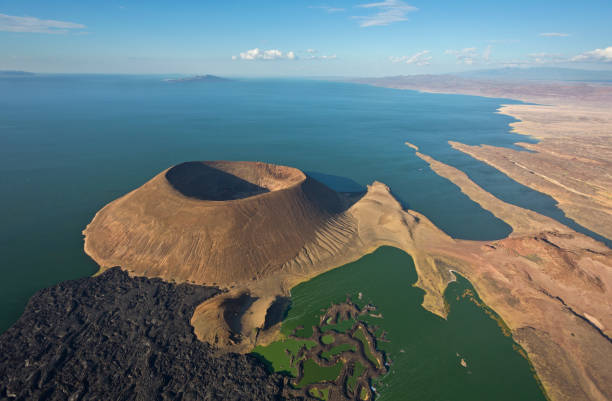
Lake Turkana and its surrounding volcanic landscapes offer a striking introduction to northern Kenya’s geological and prehistoric heritage.
1. What does the Cradle of humankind mean?
The expression Cradle of Humankind is commonly used to describe parts of Africa that preserve exceptionally important evidence of human evolution. It reflects the continent’s central role in the scientific investigation of our origins.
It should not, however, be understood as the name of one single place where every stage of human evolution occurred. Human evolution unfolded over millions of years, across different environments and populations. Fossils, stone tools, ancient sediments and other discoveries from several parts of Africa contribute to the wider picture.
Eastern Africa is especially important because geological processes have exposed and preserved deposits containing fossils and archaeological evidence from different periods.
Researchers study these discoveries to understand how early human relatives walked, used tools, obtained food, adapted to changing climates and interacted with their environments.
Why is Africa important to human origins?
Africa contains fossil evidence of numerous early hominins, including species that lived long before modern humans appeared. These discoveries help researchers reconstruct the branching history of our evolutionary family rather than a simple, uninterrupted line from one species to another.
Important evidence includes:
-
Fossils: Bones and teeth that help researchers identify ancient species and study anatomical changes.
-
Stone tools: Objects that reveal technological abilities, resource use and changes in behaviour.
-
Ancient landscapes: Sediments, lake deposits and geological formations that preserve evidence of past environments.
-
Animal and plant remains: Evidence that helps scientists reconstruct the ecosystems in which ancient populations lived.
-
Archaeological sites: Places where material remains are studied in their original geological and geographical context.
These discoveries show why the history of humankind cannot be understood through fossils alone. The environment, climate, available resources and changing behaviour of ancient populations are all important.
Human evolution is a scientific story still developing
New discoveries and revised interpretations continue to change scientific understanding. Different hominin species sometimes lived during overlapping periods, and researchers continue to investigate the relationships between them.
For visitors, this makes a heritage journey particularly rewarding. Rather than simply seeing an exhibition or visiting a historical site, travellers can gain an appreciation of how scientific knowledge develops through evidence, careful investigation and debate.
2. Kenya: A remarkable destination for human-origins journeys
Kenya is one of East Africa’s most compelling destinations for travellers interested in prehistoric archaeology, geology and ancient landscapes.
Its heritage attractions range from museums and relatively accessible prehistoric sites near Nairobi to remote fossil-bearing landscapes around Lake Turkana. These destinations are not interchangeable: each offers a different experience, level of access and historical perspective.

Olorgesailie preserves important evidence of early stone-tool technology and changing prehistoric environments.
2.1 Lake Turkana: A landscape central to human evolution
Lake Turkana, located in northern Kenya, is one of the most important regions for studying human evolution and ancient environments.
Its striking appearance is part of its appeal. The lake’s green-blue waters contrast with surrounding volcanic hills, exposed sediments, rocky shorelines and dry plains. The region can feel almost otherworldly, particularly when the landscape is viewed across the immense horizon.
Scientifically, the wider Lake Turkana basin is significant because its fossil-bearing deposits preserve evidence of ancient hominins, animals and changing environments. These discoveries have contributed substantially to research into the evolutionary history of humans and their relatives.
The Lake Turkana National Parks are recognised as a UNESCO World Heritage property. Sibiloi National Park and the Koobi Fora region are particularly important in this context.
What makes Lake Turkana special?
Visitors interested in the region can learn about:
-
The fossil record of early hominins and other mammals.
-
Stone tools and evidence of prehistoric activity.
-
Ancient lake environments and geological changes.
-
Volcanic formations and exposed sedimentary landscapes.
-
The ecology of a major desert lake.
-
The cultures and contemporary livelihoods of communities living in the wider region.
Lake Turkana is also an ecological destination. Its waters and islands support wildlife and birdlife, while the surrounding arid environment has its own distinctive plant and animal communities.
A visit is not simply a conventional game-drive safari. The attraction lies in the combination of scientific heritage, geology, remoteness and landscape.
2.2 Koobi Fora: Exploring a globally important fossil region
Koobi Fora lies on the eastern side of Lake Turkana, within Sibiloi National Park. It is one of the world’s best-known palaeoanthropological research regions.
Fossils recovered from the wider area have helped researchers investigate early hominins, including Homo habilis, Homo erectus and members of other hominin groups. The deposits also contain animal fossils and evidence of ancient environmental conditions.
Koobi Fora is particularly valuable because it preserves a long record of geological and environmental change. This enables scientists to examine human evolutionary evidence in the context of the ecosystems in which ancient populations lived.
For visitors, a well-planned excursion can provide insight into the relationship between fossil discoveries, archaeological research and the landscapes that preserve them.
Important planning consideration: Koobi Fora is remote. A visit requires advance planning for transport, accommodation, access arrangements and any applicable park or site requirements. It should not be advertised as a simple day trip from Nairobi.
2.3 Sibiloi National Park: Prehistory in a remote wilderness
Sibiloi National Park combines globally significant prehistoric heritage with a rugged, arid environment.
The park’s landscape includes open plains, fossil-bearing sediments and views towards Lake Turkana. Its remoteness is part of its character, although it also makes logistical planning more demanding than for many established safari destinations.
Sibiloi is especially suitable for travellers who want a more immersive exploration of northern Kenya, rather than a brief introduction to archaeology.
Potential interests include:
-
Prehistoric and palaeontological heritage.
-
Geological formations and desert scenery.
-
Wildlife and birdlife.
-
Photography of remote landscapes.
-
Learning about local communities and their relationship with the environment.
Visits should be arranged with attention to current access, road conditions, park regulations and suitable local guiding.

Sibiloi National Park brings together prehistoric significance, geological history and northern Kenya’s remote wilderness.
2.4 Olorgesailie Prehistoric Site: An accessible introduction near Nairobi
For travellers with limited time, Olorgesailie is one of the most useful prehistoric destinations to consider.
Located along Magadi Road in Kenya’s southern Rift Valley, the site is known for its extensive accumulation of Acheulean stone tools, including hand axes. Archaeological and geological evidence from Olorgesailie has helped researchers understand prehistoric technology, changing environments and early human behaviour.
Unlike the remote Lake Turkana region, Olorgesailie can be considered for a road excursion from Nairobi, depending on current access, road conditions and the time available.
A visit may include:
-
Exploring the prehistoric site and its interpretation facilities.
-
Learning how stone tools were made and used.
-
Understanding how geological deposits preserve archaeological evidence.
-
Observing the surrounding Rift Valley landscape.
-
Combining the excursion with other suitable southern Rift Valley experiences, if practical.
Olorgesailie is an excellent option for educational travellers, families with older children, students and visitors interested in prehistoric archaeology.
It is also useful for travellers who want a heritage-focused experience without committing to a lengthy expedition into northern Kenya.
2.5 Nairobi National Museum: Start your journey with context
A visit to the Nairobi National Museum can provide a valuable introduction to Kenya’s natural history, archaeology and human evolution.
Museum displays allow visitors to explore discoveries and scientific interpretations before travelling to the landscapes where some of the evidence was found.
This sequence can make subsequent visits to Olorgesailie or Lake Turkana more meaningful because travellers arrive with a clearer understanding of the significance of fossils, stone tools and geological formations.
Exhibitions can change, so confirm the current displays and opening arrangements before planning your visit.

A museum visit can introduce travellers to the scientific evidence behind Kenya’s prehistoric landscapes.
2.6 Other Kenyan archaeological and heritage sites worth considering
Kenya’s heritage extends well beyond the principal human-origins destinations.
| Destination | Main interest | Best suited to |
|---|---|---|
| Kariandusi Prehistoric Site | Stone tools and prehistoric archaeology | Travellers exploring the Rift Valley |
| Hyrax Hill Museum and Prehistoric Site | Archaeological remains and evidence of past settlement | Travellers visiting the Nakuru region |
| Thimlich Ohinga | Ancient dry-stone-walled settlement | Travellers interested in settlement history |
| Gedi Ruins | Medieval Swahili town and Indian Ocean trade | Visitors combining coastal holidays with heritage |
| Fort Jesus, Mombasa | Coastal history and fortification architecture | Travellers exploring the Kenyan coast |
| Lamu Old Town | Swahili architecture, maritime heritage and living traditions | Culture-focused coastal travellers |
These destinations illustrate different chapters of Kenya’s past. They should not all be described as human-evolution sites: some concern much later settlement, trade, architecture and cultural development.
The National Museums of Kenya provides information on many of these attractions and their heritage significance.
3. Kenya’s desert and semi-arid wilderness safaris
A heritage journey through Kenya can be extended into some of the country’s most dramatic arid and semi-arid environments.
This creates an opportunity to explore the relationship between geology, climate, wildlife and contemporary ways of life.
The distinction is important: a desert safari complements a human-origins journey through landscape and cultural experience; it does not, by itself, establish a connection to human evolution.
Northern Kenya is not one uniform desert. Its environments include salt flats, dry plains, rocky mountains, volcanic formations, seasonal water sources and the shores of Lake Turkana.

The Chalbi Desert offers a dramatic expedition landscape of open horizons, dry terrain and striking geological contrasts.
3.1 Chalbi Desert: An expedition into northern Kenya
The Chalbi Desert is one of Kenya’s most distinctive arid landscapes. Its open terrain and expansive horizons offer an experience very different from the country’s better-known savannah safaris.
A journey through the region may appeal to photographers, experienced adventure travellers, small private groups and visitors seeking destinations beyond the standard safari circuit.
Depending on the route and local arrangements, a desert expedition can offer opportunities to appreciate:
-
The visual contrasts between salt flats, rocky terrain and distant hills.
-
The effects of aridity and changing water availability.
-
The relationship between settlements, livestock and limited natural resources.
-
Landscape photography in vast, sparsely populated environments.
-
Encounters with local cultural traditions arranged respectfully through knowledgeable local partners.
The experience is principally about landscapes, wilderness and culture. It should not be marketed as a fossil safari unless a specific, verified heritage visit is included.
Road conditions, water supplies, vehicle suitability, fuel planning and accommodation availability are important considerations. Travellers should use an operator familiar with the region.
3.2 Marsabit: Mountain scenery in an arid region
Marsabit offers a fascinating contrast with the surrounding dry country.
The wider area includes a forested mountain environment, volcanic terrain and arid lowlands. This variation makes it a rewarding destination for travellers interested in the relationship between geography, climate and ecosystems.
A journey through Marsabit can complement a northern Kenya expedition by adding a different landscape to the route.
Depending on the itinerary, visitors may be interested in:
-
Exploring the area’s distinctive mountain environment.
-
Observing contrasts between forested slopes and dry surrounding terrain.
-
Learning about pastoral livelihoods and local settlement patterns.
-
Photographing volcanic and arid landscapes.
-
Connecting with a longer journey towards the Chalbi Desert or Lake Turkana.
Marsabit should not be presented as a substitute for Koobi Fora or Olorgesailie. Its value in this article is as a complementary wilderness destination.
3.3 Loiyangalani and the eastern shores of Lake Turkana
Loiyangalani is a useful reference point for journeys around the southeastern part of Lake Turkana.
The surrounding region combines lake scenery, arid landscapes and culturally diverse communities. It can provide a base or stopping point for selected northern Kenya itineraries, subject to accommodation and transport arrangements.
Travellers may be interested in the lake’s changing colours, shoreline landscapes, local cultural heritage and the wider environmental challenges facing communities in this dry region.
Cultural visits should be organised with local consent and clear expectations. Travellers should not assume that traditional ceremonies, homes or community activities are available for tourism on demand.
Where suitable and open to visitors, the Loiyangalani Desert Museum may offer additional context on regional cultures. Confirm current opening and access arrangements before including it in a booking.
3.4 Samburu: Semi-arid wilderness and wildlife
Samburu provides a more conventional wildlife-safari experience within a dry northern Kenyan landscape.
Compared with the Chalbi Desert expedition, a Samburu safari is generally a better fit for travellers who want scheduled game drives, wildlife viewing and established safari accommodation.
The region is known for wildlife adapted to dry-country environments, including Grevy’s zebra, reticulated giraffe and gerenuk, alongside other species found in the wider ecosystem.
A Samburu extension can work well for travellers who want to combine wildlife with a wider interest in northern Kenya’s geography and cultures.
It is important, however, to keep the distinction clear:
-
Olorgesailie and Koobi Fora: prehistoric archaeology and human-origins evidence.
-
Chalbi Desert: arid landscapes and expedition travel.
-
Marsabit: mountain, forest and dry-country contrasts.
-
Lake Turkana: fossil heritage, geology, ecology and cultural landscapes.
-
Samburu: wildlife and semi-arid safari experiences.
These destinations can complement one another, but they serve different travel purposes.
3.5 Why include a desert safari in a heritage holiday?
The value lies in the breadth of the experience.
A traveller might spend time studying prehistoric tools, learning about fossil discoveries and exploring the geological history of the Rift Valley, then continue north to encounter the scale and beauty of Kenya’s arid environments.
Such a journey provides a richer appreciation of how landscapes influence human livelihoods, movement, settlement and adaptation.
It also introduces travellers to parts of Kenya that are often overlooked by visitors who focus exclusively on the Maasai Mara, Amboseli and the Great Migration.
4. Tanzania: Olduvai Gorge, Laetoli and the wider story of human evolution
Tanzania is a natural extension for travellers interested in the prehistoric heritage of East Africa.
Its northern region combines internationally significant archaeological destinations with the landscapes of Ngorongoro and the Serengeti, allowing a heritage-focused journey to be extended into a wildlife safari.

Olduvai Gorge’s exposed geological layers preserve evidence central to research into early humans and ancient environments.
4.1 Olduvai Gorge: A major destination for prehistoric archaeology
Olduvai Gorge, in northern Tanzania, is one of the best-known archaeological and palaeoanthropological sites in the world.
Research at the gorge has contributed to understanding early hominins, stone-tool technology and the environmental conditions in which ancient populations lived.
Its geological layers provide a record of environmental changes over time. Fossils and archaeological discoveries help researchers investigate the relationships between early humans, animals, landscapes and technological development.
For travellers, Olduvai offers a compelling way to connect scientific discoveries with the physical environment in which they were preserved.
A visit should be arranged with attention to the route, access conditions, interpretation facilities and any relevant visitor requirements.
4.2 Laetoli: Ancient footprints and evidence of walking
Laetoli is especially important because of its fossilised hominin footprints, which preserve evidence of bipedal locomotion approximately 3.6 million years ago.
The footprints provide a different type of evidence from bones and stone tools. They offer researchers a rare opportunity to study how ancient hominins moved across the ground.
Laetoli and Olduvai Gorge are related through their contribution to understanding human evolution, but they are not the same site and should not be treated as interchangeable stops.
Travel logistics and access arrangements must be checked separately before promising a visit.
4.3 Ngorongoro Conservation Area: Landscape, wildlife and human history
The Ngorongoro Conservation Area adds a broader environmental dimension to a northern Tanzania heritage itinerary.
Its volcanic landscapes, wildlife and human history allow travellers to consider the relationship between geological processes, ecosystems and people.
It is also a major wildlife destination, making it suitable for combining prehistoric heritage with game drives.
The most effective itinerary gives enough time for both interests rather than squeezing the archaeological visit into an already rushed safari schedule.
4.4 Serengeti National Park: An optional wildlife extension
The Serengeti is not a substitute for a prehistoric archaeological destination. Its value is as a complementary wildlife experience.
Travellers can combine northern Tanzania’s archaeological heritage with wildlife viewing across suitable parts of the Serengeti ecosystem, depending on season, route and available time.
For visitors interested in the Great Wildebeest Migration, the precise location of the herds changes throughout the year. Migration viewing should therefore be planned around current conditions and realistic travel expectations rather than guaranteed dates.
Explore more: Kenya, Tanzania and Uganda safari experiences
5. Uganda: Ancient rock art, archaeology and cultural heritage
Uganda broadens the regional story by introducing travellers to prehistoric art, archaeological sites, royal heritage and the country’s cultural diversity.
Its contribution to a heritage itinerary should be described accurately. Uganda has important palaeontological sites, including Napak, but its better-known visitor experiences may focus on cultural and archaeological heritage rather than a direct equivalent of the Lake Turkana fossil landscape.

Nyero’s ancient rock paintings provide a window into Uganda’s archaeological and cultural heritage.
5.1 Nyero Rock Paintings
The Nyero rock paintings in eastern Uganda are among the country’s notable prehistoric cultural attractions.
Located in the Kumi District area, the rock shelters preserve paintings that form part of Uganda’s documented archaeological heritage. Their authorship and interpretation require care, and visitors should avoid assuming that every detail of their origin is definitively known.
A guided visit can introduce travellers to the paintings, the surrounding rock formations and the importance of preserving cultural sites.
The site is particularly suitable for travellers interested in archaeology, ancient artistic expression and the diversity of East African heritage.
5.2 Kasubi Royal Tombs: The living significance of royal heritage
The Kasubi Royal Tombs in Kampala are an important cultural heritage site associated with the kings of Buganda.
They represent a different chapter of history from the fossil record. The tombs help visitors understand royal traditions, cultural identity, architecture and the continuing significance of heritage within Ugandan society.
Their inclusion can make a regional journey more balanced by combining prehistoric interests with later cultural and political history.
Because the site’s conservation and visitor arrangements can change, confirm current access before scheduling a visit.
5.3 Napak and Uganda’s palaeontological heritage
The Napak area is recognised for fossil hominoids dating to approximately 16–20 million years ago, according to Uganda’s tourism and antiquities authorities.
These fossils concern ancient primate evolution and provide important scientific context. They should not be casually equated with sites containing evidence of the later evolution of modern humans.
Napak is therefore best presented as a specialist palaeontological interest rather than a routine tourist stop. Research access, site permissions, transport and the availability of appropriate interpretation should be established before planning a visit.
5.4 Uganda’s cultural landscapes
Additional heritage experiences may include Uganda’s National Museum, ancient earthworks such as Bigo bya Mugenyi, and selected historic or cultural sites.
For travellers with more time, these can be combined with Uganda’s celebrated wildlife experiences, including gorilla trekking where permits and availability allow.
A heritage journey can thus introduce travellers to several different themes without implying that each attraction has the same scientific significance.
6. Rwanda: Museums, royal history and cultural landscapes
Rwanda offers a valuable cultural extension to a wider East African heritage journey.
Its museums and historic sites help visitors understand the country’s social history, royal traditions, craftsmanship and cultural identity. These experiences complement the human-origins theme without suggesting that Rwanda’s principal tourism attractions are equivalent to Kenya’s Lake Turkana fossil deposits.

Rwanda’s royal heritage offers insight into the country’s cultural history and traditional institutions.
6.1 Ethnographic Museum in Huye
The Ethnographic Museum in Huye is an important place to explore aspects of Rwanda’s cultural history.
Its collections and displays can help visitors understand traditional livelihoods, craftsmanship, material culture and changes in society.
For a traveller interested in the wider story of Africa, the museum provides a useful contrast with the palaeontological and archaeological evidence encountered in Kenya and Tanzania.
6.2 King’s Palace Museum in Nyanza
The King’s Palace Museum introduces visitors to Rwanda’s royal traditions and historical institutions.
Its displays and architecture can help explain the country’s pre-colonial political heritage, cultural practices and the role of royal institutions in historical society.
It is particularly useful for travellers seeking an itinerary that combines archaeology, cultural history and landscape exploration.
6.3 Combining heritage with nature
Rwanda’s cultural attractions can be combined with selected natural destinations according to the length and purpose of the trip.
Travellers might add a visit to Volcanoes National Park, a Lake Kivu experience or another suitable nature excursion. Gorilla trekking requires separate planning and the appropriate permit.
Because international connections, road transfers and activity schedules can take considerable time, a multi-country itinerary should allow realistic travel days rather than treating every country as a brief stopover.
7. Understanding Africa’s heritage beyond human evolution
A comprehensive heritage journey should include more than the story of early humans.
Africa’s history encompasses prehistoric communities, the development of tools and technologies, ancient settlements, kingdoms, trade networks, architecture, spiritual traditions and contemporary cultural life.
These are related fields of interest, but they should not be collapsed into a single historical period.
7.1 Ancient settlements and archaeology
Archaeological sites reveal how people lived, organised settlements, produced tools, exchanged goods and adapted to changing environments.
In Kenya, places such as Thimlich Ohinga and Gedi provide examples of later settlement and architectural heritage. They contribute to an understanding of social organisation and regional history, rather than directly documenting the earliest stages of human evolution.
7.2 Swahili coastal heritage
Kenya’s coast provides another valuable extension for travellers interested in Africa’s cultural connections with the wider world.
Historic coastal settlements reflect centuries of Indian Ocean trade and cultural exchange involving African communities and merchants from across the Indian Ocean region.
Gedi, Lamu and Fort Jesus offer different perspectives on coastal architecture, trade and historical change.
A heritage-focused holiday can therefore continue from the Rift Valley or northern Kenya to the coast, adding a distinct cultural chapter before a beach stay.
7.3 Living cultures and pastoral traditions
The cultures of East Africa are not simply relics of the past. Communities across the region continue to adapt their livelihoods, traditions and social institutions to contemporary circumstances.
In northern Kenya, pastoralism remains an important theme in the relationship between people, livestock, water and dry-country environments.
Respectful visits can help travellers understand how local knowledge, mobility and resource management relate to life in arid environments.
Cultural encounters should be arranged through legitimate local partners, with appropriate consent and fair expectations. Travellers should never assume that people are available to be photographed or that traditional activities are staged for visitors.
8. Six sample itineraries for a Cradle of Humankind and East African heritage holiday
The following are proposed itinerary frameworks, not confirmed packages or guarantees of access. The actual route, transport arrangements, accommodation and activities must be checked against the travel dates and the conditions at each destination.

The Great Rift Valley provides a dramatic setting for combining geological landscapes with Kenya’s prehistoric heritage.
Itinerary 1: Nairobi Prehistory and Rift Valley Heritage

2 days
Best for: Short stays, educational travellers, families with older children and first-time visitors.
Day 1 — Nairobi: Visit the Nairobi National Museum to explore available natural-history, archaeological and human-evolution displays.
Day 2 — Olorgesailie: Travel towards the southern Rift Valley for a guided visit to the prehistoric site, then return to Nairobi if the road and site schedule permit.
Why choose it? This is the most straightforward introduction to Kenya’s prehistoric heritage for travellers who cannot commit to a northern expedition.
Planning note: Confirm current museum exhibitions, site opening arrangements and road conditions before fixing the schedule.
Itinerary 2: Samburu Wilderness and Northern Kenya Landscapes

4 days
Best for: Wildlife enthusiasts, photographers and travellers seeking a dry-country safari.
Day 1: Travel from Nairobi to the Samburu region, allowing for the journey and arrival.
Day 2: Enjoy scheduled game drives and explore the region’s wildlife and semi-arid ecosystem.
Day 3: Continue wildlife viewing or arrange a locally guided cultural experience with appropriate consent.
Day 4: Return to Nairobi, subject to the selected transport arrangement.
Why choose it? Samburu offers an introduction to northern Kenya’s dry landscapes without requiring a full expedition to Lake Turkana.
Important distinction: This is principally a wildlife and cultural safari, not a dedicated human-origins tour.
Itinerary 3: Lake Turkana and the Cradle of Humankind

6–8 days or longer
Best for: Archaeology enthusiasts, researchers, landscape photographers and experienced adventure travellers.
Day 1: Arrive in Nairobi and visit the National Museum if time permits.
Day 2: Begin the journey north, selecting an overnight stop appropriate to the confirmed route.
Day 3: Continue towards the Lake Turkana region, allowing adequate time for the journey.
Day 4: Explore the lake’s landscapes and arrange suitable local cultural experiences.
Day 5: Visit Koobi Fora or another approved heritage location if access and local arrangements permit.
Day 6: Explore additional landscapes or continue towards a suitable overnight base.
Days 7–8: Allow for the return journey or additional exploration, depending on the final route.
Why choose it? This itinerary makes prehistoric heritage the principal reason for travel rather than a brief addition to a conventional wildlife safari.
Planning note: Koobi Fora, Sibiloi and Loiyangalani cannot always be combined conveniently. The route must be designed around actual access, suitable overnight stops, transport and current conditions.
Itinerary 4: Chalbi Desert, Marsabit and Lake Turkana Expedition

7–9 days or longer
Best for: Adventure travellers, photographers, private groups and visitors interested in remote landscapes.
Day 1: Arrive in Nairobi, prepare for the expedition and confirm the route.
Day 2: Travel towards Marsabit.
Day 3: Explore the Marsabit area, subject to available activities and access.
Day 4: Continue towards the Chalbi Desert with an experienced driver-guide.
Day 5: Explore the desert environment and continue towards the Lake Turkana region if road conditions permit.
Day 6: Discover Lake Turkana’s landscapes and arrange appropriate cultural experiences.
Day 7: Allow time for a feasible heritage visit or additional landscape exploration.
Days 8–9: Return with appropriate overnight stops, allowing for the realities of remote travel.
Why choose it? It combines the dramatic environments of northern Kenya with an optional heritage component around Lake Turkana.
Planning note: we do not promise desert camping, camel excursions, fossil-site access or luxury accommodation until the relevant arrangements have been verified.
Itinerary 5: Tanzania’s Human Origins and Northern Safari Circuit

6–8 days
Best for: Travellers interested in archaeology, geological landscapes and wildlife.
Day 1: Arrive in Arusha.
Day 2: Travel into the northern safari circuit.
Day 3: Explore the Ngorongoro region and its landscapes.
Day 4: Visit Olduvai Gorge and its interpretation facilities, subject to arrangements.
Day 5: Continue exploring the Ngorongoro area or other appropriate nearby destinations.
Day 6: Travel towards the Serengeti if included in the confirmed itinerary.
Days 7–8: Enjoy wildlife viewing and return towards Arusha or arrange a suitable onward connection.
Why choose it? It combines a major prehistoric destination with Tanzania’s renowned wildlife landscapes.
Planning note: Laetoli requires separate logistical consideration and may need additional time. We do not promise a visit unless access has been confirmed.
Itinerary 6: East African Heritage, Kingdoms and Nature

12–16 days recommended
Best for: Travellers seeking a broader regional journey through prehistoric heritage, cultural history and nature.
Days 1–3 — Kenya: Explore Nairobi’s museum collections and Olorgesailie, if suitable.
Days 4–7 — Tanzania: Travel to the northern circuit for Olduvai Gorge and a suitable Ngorongoro experience.
Days 8–10 — Uganda: Explore selected Kampala heritage attractions or arrange a longer excursion to Nyero, depending on the route and transport.
Days 11–13 — Rwanda: Visit the Ethnographic Museum and King’s Palace Museum, subject to opening arrangements.
Days 14–16: Allow for additional cultural or nature experiences, international connections and departure arrangements.
Why choose it? This journey explores several distinct dimensions of East African history without claiming that all four countries play identical roles in the study of human evolution.
Planning note: Even 12–16 days requires careful route planning. Travellers may prefer two or three countries for a more relaxed experience, particularly when road journeys, border crossings and museum visits are priorities.
9. How to choose the right heritage safari
Not every traveller needs a long expedition. The most suitable itinerary depends on the purpose of the trip, the traveller’s physical comfort, available time and interest in archaeology, culture or wilderness.
| Traveller’s priority | Suggested starting point | Suggested duration |
|---|---|---|
| Introduction to human evolution | Nairobi National Museum | Half or full day |
| Prehistoric stone tools and archaeology | Olorgesailie | Day trip or overnight extension |
| Remote fossil heritage | Lake Turkana and Koobi Fora | 6–8 days or longer |
| Desert landscapes and expedition travel | Chalbi Desert and Marsabit | 7–9 days or longer |
| Dry-country wildlife safari | Samburu | 3–4 days |
| Tanzania’s prehistoric heritage | Olduvai Gorge and northern circuit | 6–8 days |
| Cultural heritage in Uganda | Kampala and selected heritage sites | 3–5 days or longer |
| Rwanda’s museums and royal history | Kigali, Nyanza and Huye | 3–4 days or longer |
| A wider regional journey | Two or three selected countries | 10–16 days or more |
These durations are starting points rather than fixed guarantees. Remote routes may need extra days, and the most efficient itinerary depends on the chosen transport and the current availability of accommodation and site access.
10. When is the best time to visit?
The best time depends on the destination and the activities included in the itinerary.
Kenya’s Rift Valley heritage sites
Sites closer to Nairobi can be considered throughout the year, subject to operating arrangements and weather. Dry conditions may make road travel easier, but local conditions should always be checked.
Lake Turkana and northern Kenya
Northern Kenya is generally hot and arid. Heat, water availability, road conditions and the distance between services can affect the experience.
The timing of a trip should be chosen around current local conditions, suitable transport and the requirements of the intended route, rather than assuming that one month guarantees access.
Chalbi Desert and Marsabit
Desert travel requires particular attention to heat, water supplies, vehicle suitability and the condition of remote roads. A reputable local operator should assess these conditions before departure.
Tanzania
The best timing depends on the balance between archaeological visits and wildlife viewing. Migration-focused itineraries require separate consideration of herd movements, while access to archaeological locations should be checked independently.
Uganda and Rwanda
Museum visits, cultural heritage and nature experiences can be combined throughout much of the year, but individual attractions, road conditions, conservation activities and permit availability may affect the final schedule.
11. Transport, accommodation and practical planning
A heritage itinerary can range from a comfortable museum-based holiday to a demanding expedition involving long road journeys.
Understanding these differences before booking helps travellers select an experience that suits their expectations.
How do you reach the destinations?
Nairobi and Olorgesailie: A private road transfer is a practical starting point, subject to road and site conditions.
Lake Turkana and Koobi Fora: Access requires advance coordination. Depending on the destination and current arrangements, a journey may involve road transfers, domestic or charter flights, or other locally appropriate transport.
Chalbi Desert and Marsabit: Use an operator with experience in northern Kenya, appropriate vehicles, route knowledge and an emergency plan.
Tanzania’s northern circuit: Arusha is a common starting point for trips towards Ngorongoro and Olduvai Gorge. The precise route depends on the included destinations.
Uganda and Rwanda: International flights and road transfers should be coordinated with museum opening hours, border formalities and any additional wildlife activities.
What accommodation should travellers expect?
Accommodation varies considerably by region.
Nairobi and established safari destinations offer a wider range of hotel and lodge categories. Remote northern Kenya has fewer options, and standards, availability and services may differ significantly from those in the main safari circuits.
Before booking, confirm:
-
The actual accommodation property and room category.
-
Whether meals and drinking water are included.
-
The availability of electricity, communications and other facilities.
-
The distance from the property to the intended activity.
-
Whether overnight stops are appropriate for the selected route.
-
Cancellation and payment conditions.
A luxury safari should not be promised simply because a trip includes a private vehicle. Remote destinations may require a more expedition-oriented approach.
Is the trip suitable for children or older travellers?
Museum visits and shorter excursions may be appropriate for a wide range of ages, depending on individual needs.
Remote desert and fossil-site expeditions require more careful assessment because of heat, rough roads, long travel days, limited facilities and potential delays.
Families should consider travel time, rest stops, children’s comfort and the suitability of accommodation. Older travellers and anyone with mobility concerns should discuss walking surfaces, vehicle access, medical needs and evacuation arrangements in advance.
What should you pack?
For most heritage and wilderness journeys, useful items include:
-
Lightweight, breathable clothing.
-
A wide-brimmed hat and high-factor sun protection.
-
Comfortable walking shoes or sturdy footwear.
-
A reusable water bottle and any operator-recommended water supplies.
-
Personal medication and a small personal first-aid kit.
-
Sunglasses and a camera.
-
Insect protection where appropriate.
-
A light jacket for cooler mornings and evenings.
-
Binoculars for wildlife and landscape observation.
-
Copies of travel documents and relevant insurance information.
For remote expeditions, follow the operator’s specific equipment guidance rather than assuming a standard safari packing list is sufficient.
12. Responsible heritage tourism and local communities
A meaningful heritage journey should protect the places and communities that make the experience possible.
Archaeological and palaeontological sites contain irreplaceable scientific evidence. Removing even a small object, disturbing an excavation area or ignoring site rules can damage information that researchers may need for future study.
Travellers can help protect these destinations by following a few principles.
Protect archaeological materials
Never collect fossils, stone tools, pottery or other archaeological material. Leave objects where they are unless a qualified site professional specifically directs otherwise.
Respect cultural protocols
Ask before taking photographs of people, homes, ceremonies or community activities. Respect requests not to photograph, and follow guidance from local hosts.
Use qualified local guides
Local guides can explain geography, traditions and everyday life in ways that enrich the visitor experience. Work with legitimate providers and agree on the scope of cultural activities before the visit.
Support conservation and local livelihoods
Choose operators and accommodation providers that treat staff fairly, respect community rights and follow applicable conservation requirements.
Where available, locally delivered services can help tourism spending benefit people living in the destinations being visited.
Travel with realistic expectations
Remote regions may have limited infrastructure and unpredictable conditions. Responsible tourism includes accepting that an activity may need to change if access, weather, safety or conservation requirements make it unsuitable.
13. How Astute Africa Safaris can help plan a tailor-made heritage journey
Exploring Africa’s prehistoric and cultural heritage requires a different approach from booking a conventional wildlife safari.
The most rewarding journey is one that matches the traveller’s interests with the right destinations, realistic travel times and appropriate accommodation.
Astute Africa Safaris can develop a proposed itinerary around a traveller’s priorities, whether that means a short prehistoric excursion from Nairobi, a northern Kenya desert expedition, a Tanzania archaeological journey or a broader East African cultural holiday.
Possible planning themes include:
-
Human origins and archaeology: Nairobi, Olorgesailie, Lake Turkana and selected heritage destinations.
-
Northern Kenya wilderness: Chalbi Desert, Marsabit, Lake Turkana and suitable wildlife extensions.
-
Heritage and wildlife in Tanzania: Olduvai Gorge, Ngorongoro and selected northern safari destinations.
-
Culture and history in Uganda: Museums, rock art, royal heritage and other selected cultural sites.
-
Rwanda cultural journeys: Museums, royal history and suitable nature extensions.
-
Combined East African experiences: Selected destinations across two or more countries, with realistic transfer and overnight arrangements.
For remote expeditions, the itinerary should only be finalised after checking access, accommodation, transport, site permissions and any necessary local arrangements.

A well-planned private journey can connect archaeological discoveries, cultural experiences and remote landscapes at a pace suited to the traveller.
Plan a tailor-made East African heritage and desert safari
Discover Kenya’s prehistoric landscapes, explore northern Kenya’s desert wilderness or combine selected heritage destinations with Tanzania, Uganda and Rwanda.
Tell Astute Africa Safaris what interests you most, how many days you have available, when you wish to travel and the level of comfort you prefer. Your proposed itinerary can then be developed around your priorities, with access and logistics checked before arrangements are confirmed.
Start planning your journey:
-
Explore Astute Africa Safaris.
-
Consider a Kenya, Tanzania and Uganda safari.
-
Explore a 10-day Kenya safari itinerary.
-
Discover a Kenya beach and safari holiday.
-
Read the African safari planning guide.
14. Frequently asked questions about the Cradle of Humankind and East African heritage
What is the Cradle of Humankind?
The term describes parts of Africa that preserve exceptionally important evidence of human evolution. Eastern African destinations such as Lake Turkana and Koobi Fora are central to this research, while other African regions also contain major fossil and archaeological sites.
Where can I explore human origins in Kenya?
Important destinations include Lake Turkana, Koobi Fora, Sibiloi National Park, Olorgesailie and the Nairobi National Museum. They offer different experiences, ranging from museum interpretation and shorter excursions to remote expeditions.
Can I visit a prehistoric site on a day trip from Nairobi?
Olorgesailie is a potential day-trip destination from Nairobi, subject to current opening arrangements, road conditions and the time available. Koobi Fora and Lake Turkana require a much more substantial journey.
Can I combine a desert safari with a human-origins tour?
Yes. A northern Kenya itinerary can combine the Chalbi Desert, Marsabit and Lake Turkana, with a prehistoric site visit included where practical and access is confirmed.
The desert experience adds landscape, wilderness and cultural context. It should not be presented as independent proof of human origins.
How many days do I need for a Cradle of Humankind safari?
A short Nairobi-based heritage experience may take one or two days. A Samburu extension can take approximately three or four days, while a Lake Turkana expedition may need six to eight days or longer. A multi-country journey generally requires more time to avoid excessive travel.
What is the difference between Koobi Fora and Olduvai Gorge?
Koobi Fora is in northern Kenya, within the Lake Turkana region, while Olduvai Gorge is in northern Tanzania. Both are significant prehistoric research areas, but they contain different fossil and archaeological records and have their own access arrangements.
Are desert safaris in northern Kenya suitable for families?
Some routes may be suitable for families with older children, depending on the child’s needs, the travel season, accommodation and journey length. Remote expeditions involving heat, rough roads and limited facilities require careful assessment.
Can I book luxury accommodation on a Lake Turkana or Chalbi Desert expedition?
Comfort levels vary by route. Some parts of a wider itinerary may offer established hotels or lodges, while remote sections may have fewer facilities. Accommodation must be checked for the specific dates and route before a luxury standard can be promised.
Can I combine Kenya, Tanzania, Uganda and Rwanda in one holiday?
Yes, depending on the available time, budget and international connections. A more relaxed journey may focus on two or three countries, particularly if archaeological visits and cultural experiences are the main priorities.
What is the best time to visit Lake Turkana?
Lake Turkana lies in a hot, arid region. The best timing depends on local weather, transport access, the planned activities and the availability of suitable accommodation. Confirm current conditions before finalising a departure.
What makes a heritage safari responsible?
Responsible heritage tourism protects archaeological material, respects local customs, obtains consent for photography, uses appropriate local guides and supports conservation and community livelihoods.
Can I combine prehistoric heritage with a conventional wildlife safari?
Yes. Kenya’s Samburu region and Tanzania’s northern safari circuit are examples of wildlife experiences that can complement a heritage itinerary. The right combination depends on the traveler’s interests and available time.
Conclusion: Cradle of Mankind; Discover the deeper story of East Africa
The Cradle of mankind offers travellers an opportunity to explore Africa through a different lens: not only as a destination for spectacular wildlife, but also as a continent whose fossil discoveries, ancient landscapes, archaeological sites and cultural traditions contribute to our understanding of the past.
Kenya is a compelling starting point. From the prehistoric evidence of Olorgesailie to the fossil-rich landscapes of Koobi Fora, the country provides important opportunities to explore human evolution and ancient environments.
Tanzania adds the archaeological significance of Olduvai Gorge and Laetoli. Uganda introduces rock art, palaeontological sites and royal heritage, while Rwanda offers museums and cultural landscapes that broaden the journey into other chapters of East African history.
Northern Kenya’s Chalbi Desert, Marsabit and Lake Turkana can enrich these experiences through their extraordinary scenery, ecological contrasts and living cultures. Their role is complementary: they reveal another dimension of East Africa rather than serving as a substitute for archaeological evidence.
For travellers willing to look beyond the familiar safari circuit, a carefully planned heritage journey can bring together science, culture, geology, wilderness and wildlife in one memorable holiday.
Astute Africa Safaris can help turn these interests into a tailor-made journey, with practical planning, realistic travel times and destination arrangements suited to the experience you want.
Leave a comment:
You must be logged in to post a comment.

Comment 01
Astute Africa Safaris,
05 May, 2026REF: Crafting Your Bespoke African Safari Experience with Astute Africa Safaris
Jambo,
Thank you for your interest in exploring the wonders of Africa with Astute Africa Safaris. We pride ourselves on creating immersive, tailor-made journeys that align perfectly with your personal interests, pace, and travel aspirations.
Because every safari is a unique narrative, we do not believe in “one-size-fits-all” pricing. To ensure we provide you with an accurate and competitive quotation that reflects the specific lodges, wildlife experiences, and logistical arrangements you desire, we invite you to connect with our team for a personalized consultation.
Please contact us at info@astuteafricasafaris.com, Whatsapp +254762663272 or fill the inquiry form with a few details regarding your preferred travel dates, group size, and specific interests (e.g., photography, luxury relaxation, or adventure trekking). Once we have these details, we will curate a comprehensive proposal designed specifically for you.
We look forward to the possibility of helping you plan an unforgettable journey.
Warm regards,
Team Astute Africa Safaris