

- 1.6k Views
- 11 Min Read
- (4) Comments
The concept of a sustainable African safari “Africa guilt free safari” is rooted in the philosophy of regenerative tourism, which seeks to ensure that wildlife viewing and wilderness exploration contribute positively to conservation efforts and the well-being of local communities rather than merely extracting value from the landscape. As noted in authoritative studies on wildlife management, the primary ethical concern for modern travelers is ensuring that their presence supports the long-term viability of ecosystems and the economic empowerment of indigenous populations. A truly sustainable safari experience prioritizes low-impact infrastructure, ethical wildlife interaction protocols, and direct investment in community-led conservation initiatives.
To achieve a guilt-free Africa safari, one must first evaluate the commitment to “conservation-led tourism.” This involves selecting lodges that operate on private concessions or conservancies, which often provide better protection for wildlife than some overcrowded national parks. In these settings, the revenue generated from tourism is frequently reinvested into anti-poaching units, habitat restoration, and educational programs for local schools. Furthermore, a guilt-free safari avoids any activities that involve direct physical contact with wild animals, such as cub petting or walking with lions, which are widely condemned by conservation biologists as exploitative and detrimental to animal welfare.
The environmental footprint of a safari is another critical component. Travelers should seek out camps that utilize renewable energy, such as solar power, and implement sophisticated water recycling systems to minimize their impact on the fragile arid environments of regions like the Okavango Delta or the Serengeti. Additionally, the “guilt-free Africa Safari” label is increasingly tied to the concept of “carbon-offsetting” through verified projects that protect forests or promote clean energy in the host country, effectively balancing the emissions generated by international travel. Ultimately, the most ethical safari is one that fosters a deep, respectful connection between the visitor and the wilderness, ensuring that the experience serves as a catalyst for the preservation of Africa’s natural heritage for future generations.
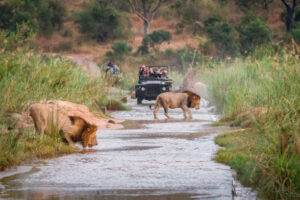
Guilt-Free Africa Safari and how it affects locals
What are the ethical considerations for a guilt-free Africa safari?
The pursuit of a guilt-free Africa safari requires a multidimensional approach that balances economic contribution, environmental stewardship, and the preservation of cultural integrity. Ethical wildlife tourism is fundamentally rooted in the concept of “conservation through utilization,” where the revenue generated by visitors provides the financial incentive for local communities to protect habitats rather than exploit them for agriculture or poaching. To ensure a safari is ethical, travelers must prioritize operators that demonstrate a transparent commitment to local employment, fair wages, and the direct funding of anti-poaching initiatives.
A primary ethical consideration is the avoidance of “human-wildlife conflict” and the maintenance of natural animal behavior. Ethical safaris strictly adhere to codes of conduct that prohibit off-roading, baiting, or crowding animals, which can cause significant stress and alter the ecological balance of a reserve. Furthermore, the “guilt-free Africa safari” traveler must scrutinize the ownership structure of their safari lodge; community-owned conservancies, such as those found in Kenya’s Maasai Mara or Namibia’s communal conservancies, are often cited as the gold standard for ensuring that tourism dollars directly benefit the indigenous populations who live alongside the wildlife.
Environmental sustainability is equally critical. This involves selecting lodges that utilize renewable energy, minimize plastic waste, and manage water resources responsibly in arid regions. The carbon footprint of international travel remains a significant ethical hurdle, which many conscientious travelers mitigate by choosing longer, slower-paced trips that maximize the impact of a single flight, rather than frequent short-haul excursions. Finally, one must avoid any interaction that involves the physical handling of wild animals, such as cub petting or walking with lions, as these practices are widely condemned by conservation biologists for their role in the “canned hunting” industry and the exploitation of captive-bred animals.
Are there specific guidelines for responsible wildlife viewing during guilt-free Africa safari?
Responsible wildlife viewing is a cornerstone of ethical ecotourism, designed to minimize human impact on animal behavior and habitat integrity. The primary objective is to observe animals in their natural state without altering their natural activities, such as hunting, mating, or resting. Experts emphasize that the “golden rule” of safari etiquette is to maintain a respectful distance, as approaching too closely can induce stress, cause animals to abandon their young, or provoke defensive aggression.
Vehicular conduct is strictly regulated in most reputable national parks and private reserves. Drivers are instructed to remain on established tracks to prevent soil erosion and habitat destruction, and they must turn off engines when near sensitive wildlife to reduce noise pollution and exhaust fumes. Furthermore, it is considered poor practice to surround an animal or block its path, as this can trap the creature and force it to flee, potentially leading to injury or the exhaustion of vital energy reserves.
Human behavior within the vehicle is equally critical. Visitors are advised to speak in hushed tones, avoid sudden movements, and refrain from standing up or leaning out of vehicles, as these actions can be perceived as threatening or predatory by the animals. Feeding wildlife is strictly prohibited; doing so creates dependency, alters natural foraging patterns, and can lead to dangerous habituation where animals associate humans with food, often resulting in the animal having to be culled.
Finally, responsible viewing requires patience. Rather than rushing from one sighting to the next, observers are encouraged to spend time watching the natural interactions of a single group, which provides a more profound educational experience and reduces the cumulative stress placed on the animals by constant vehicle traffic.
What role do local communities play in ethical Africa guilt-free safari tourism?
The role of local communities in ethical guilt-free Africa safari tourism is foundational, shifting the paradigm from extractive wildlife viewing to a model of “community-based natural resource management” (CBNRM). In authoritative literature on conservation, it is widely argued that for safari tourism to be truly ethical, local populations must transition from being passive observers or displaced inhabitants to active stakeholders and primary beneficiaries. When communities are granted legal rights to manage their land and wildlife, the economic incentives for poaching decrease, as the value of a living animal—through tourism revenue, employment, and infrastructure development—far outweighs the short-term gain of illegal hunting.

Guilt-Free Africa Safari; Group of African children, from Samburu tribe, using laptop in the village, Kenya, East Africa. The Samburu tribe is one of the more dominating tribes of north-central Kenya
Ethical guilt-free Africa safari tourism relies on the principle of “social license to operate,” which dictates that tourism enterprises must secure the consent and cooperation of local residents. This involves more than just hiring local staff; it requires the equitable distribution of profits, often facilitated through community trusts or conservancies. In regions like Kenya, the success of these models is measured by the community’s ability to influence tourism policies, manage human-wildlife conflict, and preserve cultural heritage alongside biodiversity.
Furthermore, ethical tourism emphasizes the “multiplier effect,” where tourism spending supports local agriculture, craft markets, and education, ensuring that the benefits of the safari industry permeate the broader social fabric rather than remaining concentrated in the hands of foreign-owned tour operators. By integrating traditional ecological knowledge with modern conservation science, local communities act as the most effective stewards of the land, providing a level of long-term surveillance and habitat protection that external agencies cannot replicate.
Environmental and Socio-Economic Impacts of Ethical Safari Tourism
The concept of “ethical guilt-free Africa safari” tourism is predicated on the idea that wildlife viewing can generate the necessary revenue to incentivize local communities to protect, rather than exploit, their natural environment. When managed effectively, this model creates a direct economic link between the preservation of biodiversity and the livelihoods of local populations. By transforming wildlife from a potential liability—such as crop-raiding elephants or predatory threats to livestock—into a valuable economic asset, communities are often motivated to participate in conservation efforts, such as anti-poaching patrols and habitat restoration.
However, the environmental impacts on local communities are complex and frequently involve significant trade-offs. One of the primary benefits is the mitigation of land-use conflicts. In regions like the Maasai Mara or the Okavango Delta, the transition toward community-based conservancies allows for the maintenance of migratory corridors that might otherwise be fragmented by agriculture or permanent settlement. This spatial management helps preserve the ecological integrity of the landscape, which in turn supports the ecosystem services—such as water purification and soil stabilization—upon which local communities rely for their own subsistence.
Conversely, “ethical” tourism can inadvertently place immense pressure on local resources. The infrastructure required to support high-end safari lodges—including water extraction, waste management, and energy consumption—often exceeds the carrying capacity of the local environment. In arid regions, the water requirements for luxury camps can lead to the depletion of local aquifers, directly competing with the needs of pastoralist communities and their livestock. Furthermore, the physical footprint of tourism infrastructure, including road networks and airstrips, can lead to soil compaction and the disruption of local vegetation patterns, which may negatively impact the grazing lands essential to indigenous livelihoods.
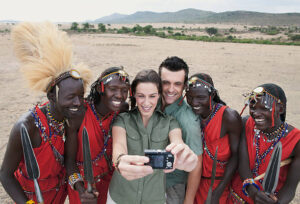
Tourists taking a picture with local Samburu during a Guilt-Free Africa Safari
Socially, the environmental impact is also tied to the “leakage” of economic benefits. If the environmental degradation caused by tourism is not offset by tangible community development, the local population may experience the negative externalities of tourism—such as increased human-wildlife conflict or loss of access to traditional lands—without receiving the promised economic incentives. Therefore, the sustainability of ethical safari tourism depends on a delicate balance: the environmental costs must be strictly managed through rigorous impact assessments, and the economic gains must be equitably distributed to ensure that the community remains a willing steward of the land.
What are the potential negative effects of unethical safari tourism on local ecosystems?
The expansion of safari tourism, while often touted as a tool for conservation, frequently devolves into unethical practices that inflict significant damage on local ecosystems. When tourism is prioritized over ecological integrity, the resulting disturbances can fundamentally alter the behavior, health, and reproductive success of wildlife populations. One of the most pervasive negative effects is the habituation of animals to human presence. As vehicles crowd around predators or rare species, animals may lose their natural fear of humans, which increases their vulnerability to poaching and human-wildlife conflict. Furthermore, the constant presence of off-road vehicles leads to severe soil compaction and the destruction of fragile vegetation, which disrupts the natural succession of plant life and reduces the available forage for herbivores.
The disruption of natural behaviors is perhaps the most insidious consequence of unethical safari practices. Research indicates that high-frequency vehicle traffic can cause stress-induced physiological changes in animals, often measured by elevated glucocorticoid levels. These stress responses can lead to reduced reproductive output and increased susceptibility to disease.
In many instances, the “chasing” of wildlife to provide tourists with better photographs forces animals to abandon hunting or feeding grounds, leading to a net energy deficit that can be fatal for young or vulnerable individuals. Additionally, the improper disposal of waste and the introduction of invasive species through tourist vehicles and infrastructure can degrade the biodiversity of protected areas, creating a feedback loop where the very environment that attracts tourists is systematically dismantled by their presence.
Conclusion about Sustainable African Safari
The concept of a “Guilt-Free Africa Safari” refers to a paradigm shift in the tourism industry, moving away from extractive or exploitative travel toward a model of regenerative, ethical, and sustainable conservation. At its core, the term implies that a traveler can engage in wildlife tourism without contributing to the degradation of local ecosystems, the marginalization of indigenous communities, or the disruption of animal welfare. Instead, the safari experience is designed to be a net positive for the environment and the people living within it.
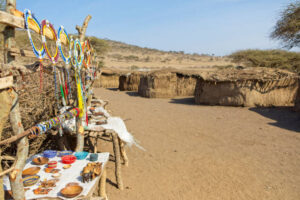
Sustainable African Safari; Local Maasai village with artifacts to sell to tourists.
This approach is grounded in the principles of “Community-Based Natural Resource Management” (CBNRM), which posits that wildlife conservation is only sustainable when local communities derive tangible economic benefits from the presence of wild animals. A “guilt-free Africa” safari typically involves staying at lodges that are carbon-neutral, employ local staff at fair wages, and invest a significant portion of their profits into local schools, clinics, and anti-poaching initiatives. By choosing operators that prioritize “low-impact, high-value” tourism, visitors ensure that their presence helps fund the protection of habitats that might otherwise be converted into agricultural land or subjected to illegal poaching.
Furthermore, the ethical dimension of a guilt-free Africa safari involves strict adherence to non-intrusive wildlife viewing practices. This means avoiding activities that habituate animals to human presence in harmful ways, such as baiting, off-roading in sensitive breeding areas, or supporting facilities that offer “petting” experiences with predators. In essence, the “guilt-free” label serves as a commitment to the “Triple Bottom Line”—people, planet, and profit—ensuring that the traveler’s footprint is not only minimized but actively contributes to the long-term survival of Africa’s biodiversity.
Leave a comment:
You must be logged in to post a comment.

Comments (4)
Astute Africa Safaris,
05 May, 2026REF: Crafting Your Bespoke African Safari Experience with Astute Africa Safaris
Jambo,
Thank you for your interest in exploring the wonders of Africa with Astute Africa Safaris. We pride ourselves on creating immersive, tailor-made journeys that align perfectly with your personal interests, pace, and travel aspirations.
Because every safari is a unique narrative, we do not believe in “one-size-fits-all” pricing. To ensure we provide you with an accurate and competitive quotation that reflects the specific lodges, wildlife experiences, and logistical arrangements you desire, we invite you to connect with our team for a personalized consultation.
Please contact us at info@astuteafricasafaris.com, Whatsapp +254762663272 or fill the inquiry form with a few details regarding your preferred travel dates, group size, and specific interests (e.g., photography, luxury relaxation, or adventure trekking). Once we have these details, we will curate a comprehensive proposal designed specifically for you.
We look forward to the possibility of helping you plan an unforgettable journey.
Warm regards,
Team Astute Africa Safaris
Community-Led Tourism in Kenya: Authentic Experiences for the Conscious Traveler - Astute Africa Safaris,
05 May, 2026[…] of the most profound experiences is participating in the “Manyatta” visits within Maasai or Samburu communities. As […]
Discover the Magic of Tanzania and Kenya Safari Holidays - Astute Africa Safaris,
05 May, 2026[…] safari operators have long pioneered “community-based tourism,” where visitors are frequently invited to visit manyattas (traditional homesteads) to […]
The Kenyan Safari with Maasai Warriors: A Deep Dive into Culture and Conservation - Astute Africa Safaris,
05 May, 2026[…] their role in tourism, Maasai warriors are increasingly involved in community-based conservation initiatives. Historically, the Maasai were pastoralists who occasionally viewed […]