

- 983 Views
- 10 Min Read
- (1) Comment
The period spanning July, August, and September (Best time for Kenya safari ) is widely regarded by wildlife biologists, travel experts, and seasoned explorers as the “Golden Window” for visiting Kenya. This timeframe aligns with the dry season, a critical period that fundamentally alters the behavior of wildlife and the accessibility of the landscape. During these months, the scarcity of water forces animals to congregate around permanent water holes and river systems, making them significantly easier to locate and observe.
This predictability is a cornerstone of the safari experience, ensuring that visitors maximize their chances of witnessing the “Big Five” and the complex social dynamics of the savanna.
The primary driver of this peak season is the Great Migration, a natural phenomenon of unparalleled scale. As millions of wildebeest, zebras, and gazelles move from the Serengeti in Tanzania into the Maasai Mara National Reserve, they must navigate the treacherous waters of the Mara River. This event, which typically peaks between July and September, provides the most dramatic wildlife spectacle on Earth, as predators such as Nile crocodiles and lions capitalize on the massive influx of prey.
The dry weather during these months also results in thinner vegetation, which significantly improves visibility for game drives, allowing for unobstructed photography and observation of elusive species like leopards and cheetahs. Furthermore, the cooler temperatures characteristic of these months make the safari experience more comfortable for travelers, as the intense heat of the midday sun is moderated by the high altitude of the Kenyan highlands.
Strategic Advantages of the Dry Season that Makes it Best time for Kenya Safari
Beyond the migration, the dry season offers logistical advantages that are essential for a high-quality safari. Through experience, the lack of rainfall keeps the roads within national parks navigable, allowing safari vehicles to reach remote areas that would be inaccessible during the “long rains” of April and May.
Additionally, the reduced humidity and lower prevalence of mosquitoes during these months contribute to a healthier and more pleasant environment for guests. The combination of high wildlife density, clear skies, and manageable terrain creates a synergy that is simply not present during other times of the year.
What you should know about the weather conditions in Kenya during July, August, and September Making it the best time for Kenya safari?
Traveling to Kenya for a safari during the months of July, August, and September places a visitor in the heart of the “cool-dry” season, which is widely considered the pinnacle of the safari experience. During this period, the country experiences its lowest temperatures and minimal rainfall, as the influence of the southeast monsoon winds brings cooler, drier air across the East African plateau. For the traveler, this means that the vegetation is sparse and the grasses are short, significantly increasing the visibility of wildlife as animals congregate around permanent water sources and rivers making it the best time for Kenya safari.
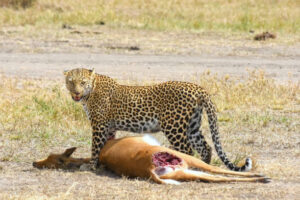
Best time for Kenya safari; African leopard (panthera pardus pardus) proudly posing with prey (a female bohor reedbuck) after expert kill in Masai Mara national park, Kenya
In the high-altitude regions, such as the Masai Mara and the Laikipia Plateau, temperatures can drop significantly, especially during the early morning game drives and late evening hours. It is not uncommon for temperatures to dip to 10∘C (50∘F) or lower before sunrise, necessitating the use of layered clothing, including fleece jackets or windbreakers. As the sun rises, the days typically become clear, bright, and pleasantly warm, with daytime highs often ranging between 20∘C and 25∘C (68∘F–77∘F).
July and August are particularly famous for the Great Migration, where millions of wildebeest and zebras move into the Masai Mara from the Serengeti. The dry weather is a critical factor here, as the lack of rain forces the herds to cross the Mara River, providing one of nature’s most dramatic spectacles. By September, the weather begins to transition; while it remains largely dry, the humidity may start to rise slightly in anticipation of the “short rains” that typically arrive in late October or November.
Travelers should be aware that while the days are generally sunny, the dust levels can be high due to the prolonged lack of precipitation, which may affect those with respiratory sensitivities or camera equipment. Overall, this three-month window offers the most comfortable climate for human activity and the most reliable opportunities for predator-prey interactions, making it the most sought-after time for safari enthusiasts.
How do seasonal weather patterns influence safari experiences in Kenya during late winter and early spring?
The seasonal climate of Kenya is primarily dictated by the movement of the Intertropical Convergence Zone (ITCZ), which creates a distinct bimodal rainfall pattern. In the context of the Northern Hemisphere, “late winter and early spring” (roughly February through April) represents a critical transition period in East Africa. February is typically the tail end of the short dry season, characterized by warm, sunny days and excellent visibility, making it one of the most popular times for wildlife viewing. As the region moves into March and April, the “long rains” begin, fundamentally altering the safari experience.
During the dry transition in February, wildlife congregates around permanent water sources, such as rivers and boreholes, which simplifies the task of spotting predators and large mammals. The vegetation is often sparse, providing less cover for animals, which enhances the photographic opportunities for safari-goers. However, as the long rains commence in late March and April, the landscape undergoes a dramatic transformation. The arid plains of the Maasai Mara and Amboseli turn lush and green, and the abundance of surface water causes wildlife to disperse widely, moving away from the concentrated water holes.
For the safari traveler, this shift presents both challenges and unique rewards. The rains can make dirt roads muddy and difficult to navigate, occasionally limiting access to certain remote areas of the national parks. Conversely, the “green season” offers a spectacular backdrop for photography, with clear, dust-free air and the birth of many ungulate species, which in turn attracts high levels of predator activity. Birdwatching also reaches its zenith during these months, as migratory species are present and many resident birds enter their breeding plumage. Understanding these meteorological shifts is essential for managing expectations regarding animal density and accessibility during a Kenyan safari.
What seasonal wildlife migrations can be observed in Kenya during late winter and early spring?
Kenya’s wildlife dynamics during the period corresponding to late winter and early spring in the Northern Hemisphere (roughly February through April) are defined by the transition from the dry season to the “long rains.” While the famous Great Migration of wildebeest and zebra is primarily associated with the Mara-Serengeti ecosystem later in the year, this specific window offers unique migratory and movement patterns that are critical to the East African ecological cycle.
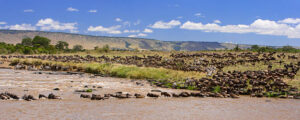
Best time for Kenya safari; Blue Wildebeest (Connochaetes taurinus) group crossing the Mara river in its annual migration to the Serengeti.
Though not the very best time for Kenya safari; During February and March, the vast herds of the Great Migration are typically located in the southern Serengeti and the Ngorongoro Conservation Area in Tanzania, where they congregate for the calving season. However, in Kenya, this period is marked by the movement of various avian species and the localized dispersal of resident mammals. As the heat intensifies in February, many migratory birds from the Palearctic—including various species of eagles, harriers, and storks—begin their return journey northward, passing through the Rift Valley.
The Rift Valley lakes, such as Lake Nakuru and Lake Bogoria, serve as vital stopover points for these avian travelers, alongside the massive resident populations of lesser flamingos that shift between alkaline lakes based on food availability and water levels.
By April, the onset of the “long rains” triggers a significant shift in wildlife behavior. In regions like Amboseli and Tsavo, the arrival of moisture encourages the dispersal of large herbivores, such as elephants, which move away from permanent water sources to exploit the flush of new, nutrient-rich grasses across the plains. This period is also a time of high activity for predators, as the birth of ungulate calves provides a critical food source, influencing the hunting ranges of lions, cheetahs, and hyenas.
Furthermore, the seasonal movement of smaller antelope species and the influx of migratory butterflies and insects, which follow the rainfall patterns, create a dynamic, albeit less publicized, migration compared to the mid-year wildebeest spectacle.
Conservation Efforts for Migrating Animals in Kenya
Kenya serves as a critical node in the global network of migratory species, most notably through the annual Great Migration of wildebeest, zebras, and gazelles between the Serengeti in Tanzania and the Maasai Mara National Reserve. Protecting these animals requires a multi-faceted approach that balances the needs of wildlife with the pressures of human development, agricultural expansion, and climate change. Conservation strategies in Kenya are primarily centered on landscape-level connectivity, community-based management, and the legal protection of migratory corridors.
The most prominent conservation effort is the maintenance of the Mara-Serengeti ecosystem as a transboundary protected area. Because migratory animals do not recognize political borders, Kenya and Tanzania have historically collaborated through the Mara-Serengeti Transboundary Protected Area initiative to ensure that the ecological integrity of the migration route remains intact. Within Kenya, the Kenya Wildlife Service (KWS) manages the Maasai Mara National Reserve, which acts as the northern terminus for the migration. However, because the migration often extends beyond the boundaries of the reserve into private and community-owned lands, the “conservancy model” has become the primary mechanism for protection.
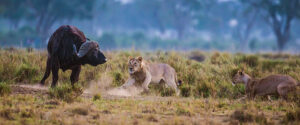
Best time for Kenya safari; It is very early morning and a group of lionesses approach a buffalo trying to attack it. Masai Mara National Reserve, (Panthera leo), (Syncerus caffer).
Conservancies, such as the Mara North Conservancy and Olare Orok Conservancy, are innovative land-management agreements where local Maasai landowners lease their land for wildlife conservation in exchange for direct financial benefits from tourism. This model effectively expands the protected habitat for migrating herds, preventing the fragmentation of land that would otherwise occur through fencing or intensive agriculture. By creating these buffer zones, conservationists ensure that migratory corridors remain open, allowing animals to follow ancestral grazing patterns.
Why July, August, and September is good time to do beach holiday and safari in Kenya
The months of July, August, and September represent the pinnacle of the travel season and best time for Kenya safari, offering a harmonious blend of wildlife spectacle and coastal relaxation. This period coincides with the dry season, characterized by clear blue skies, lower humidity, and cooler temperatures, which are ideal for both inland exploration and seaside leisure.
Simultaneously, the Kenyan coast experiences its most pleasant weather during these months. While the rest of the year can be sweltering, the southeast monsoon winds—known locally as the Kusi—bring a refreshing breeze that moderates the tropical heat. The sea remains calm and clear, providing optimal conditions for snorkeling and diving along the coral reefs of Diani, Watamu, and Lamu. Because the rainfall is at its annual minimum, travelers can enjoy uninterrupted days on the white sandy beaches, making it the perfect conclusion to an adventurous safari circuit.

Best time for Kenya safari; Three friends enjoying a relaxing walk together on the beach on a sunny day
Conclusion on Best time for Kenya safari
In conclusion, determining the optimal time for a Kenyan safari requires balancing the desire for iconic wildlife spectacles with personal preferences regarding weather and crowd density. While the dry season, spanning from late June to October, is widely regarded as the pinnacle for game viewing—coinciding with the dramatic Great Migration in the Maasai Mara—the “green” seasons offer a compelling alternative for those seeking lush landscapes, lower costs, and the vibrant activity of migratory birds.
Ultimately, whether one prioritizes the high-octane drama of predator-prey interactions on the dusty plains or the serene, verdant beauty of the shoulder months, Kenya remains a premier year-round destination, provided travelers align their expectations with the seasonal rhythms of the East African ecosystem.
By carefully selecting your travel window (Best time for Kenya safari) based on these climatic and ecological patterns, you ensure that your safari experience is not merely a trip, but a profound immersion into one of the world’s most resilient and captivating wildernesses.
Leave a comment:
You must be logged in to post a comment.


Comment 01
Astute Africa Safaris,
05 May, 2026REF: Crafting Your Bespoke African Safari Experience with Astute Africa Safaris
Jambo,
Thank you for your interest in exploring the wonders of Africa with Astute Africa Safaris. We pride ourselves on creating immersive, tailor-made journeys that align perfectly with your personal interests, pace, and travel aspirations.
Because every safari is a unique narrative, we do not believe in “one-size-fits-all” pricing. To ensure we provide you with an accurate and competitive quotation that reflects the specific lodges, wildlife experiences, and logistical arrangements you desire, we invite you to connect with our team for a personalized consultation.
Please contact us at info@astuteafricasafaris.com, Whatsapp +254762663272 or fill the inquiry form with a few details regarding your preferred travel dates, group size, and specific interests (e.g., photography, luxury relaxation, or adventure trekking). Once we have these details, we will curate a comprehensive proposal designed specifically for you.
We look forward to the possibility of helping you plan an unforgettable journey.
Warm regards,
Team Astute Africa Safaris