

- 746 Views
- 14 Min Read
- (2) Comments
The allure of an East African safari lies in the profound connection between the traveler and the untamed wilderness. Unlike traditional wildlife viewing in many parts of the world, where visitors remain on designated paths waiting for animals to appear, in the magic of Tanzania and Kenya safari holidays requires the traveler to venture deep into the natural habitat of the fauna. This immersive experience is defined by the vast, rolling plains of the Serengeti and the Maasai Mara, which serve as the stage for one of nature’s most spectacular events: the Great Migration.
In the years as a guide, I emphasizes that the ecological diversity of these regions is unparalleled, providing a sanctuary for the “Big Five”—lion, leopard, elephant, buffalo, and rhinoceros. The magic of these holidays is not merely in the sightings of these majestic creatures, but in the rhythm of the ecosystem. As noted, the geological formation of the Rift Valley has created unique microclimates and landscapes, ranging from the snow-capped peaks of Mount Kilimanjaro to the alkaline waters of Lake Nakuru, which hosts millions of flamingos.
Beyond the wildlife, the cultural tapestry of the region is a vital component of the safari experience. Engaging with indigenous groups, such as the Maasai and the Samburu, offers travelers a glimpse into traditional pastoralist lifestyles that have coexisted with the wildlife for centuries. The preservation of these cultures is as essential to the safari experience as the conservation of the land itself. As documented in The State of Africa: A History of the Continent Since Independence, the political and environmental history of these nations has shaped the modern safari industry, emphasizing the importance of sustainable tourism and community-led conservation efforts.
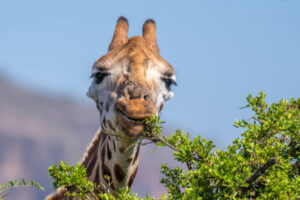
Magic of Tanzania and Kenya Safari Holidays; A Rothschild’s giraffe in Nakuru National Park, Kenya
The logistical reality of a safari involves traversing diverse terrains, from the acacia-dotted savannahs to the dense forests of the Ngorongoro Crater. The crater, often described as a “Garden of Eden,” provides a self-contained ecosystem where wildlife density is among the highest in the world. Whether one chooses a luxury tented camp or a traditional lodge, the experience is designed to minimize the human footprint while maximizing the intimacy of the encounter with nature. The thrill of waking up to the sounds of the African bush and spending the day tracking predators or observing the social dynamics of elephant herds remains the quintessential adventure of a lifetime.
What are the top attractions to explore during a Tanzania and Kenya safari holidays?
A safari holiday in East Africa, specifically across Kenya and Tanzania, offers an unparalleled immersion into some of the world’s most significant ecological zones. These regions are defined by their vast savannahs, volcanic highlands, and the annual Great Migration, which remains one of the most spectacular wildlife phenomena on the planet.
Iconic Wildlife Destinations in Discovering the Magic of Tanzania and Kenya Safari Holidays
In Kenya, the Maasai Mara National Reserve stands as the premier destination for wildlife enthusiasts. Renowned for its high density of predators—including lions, leopards, and cheetahs—the Mara is the northern terminus of the Great Migration. Complementing this is Amboseli National Park, famous for its iconic views of Mount Kilimanjaro and its large herds of free-ranging elephants. For those interested in unique geological features, Lake Nakuru provides a sanctuary for flamingos and rhinoceroses, set against the backdrop of the Great Rift Valley.
Tanzania offers equally profound experiences, most notably the Serengeti National Park. As described in authoritative geographical accounts, the Serengeti’s endless plains provide the primary stage for the migration of over 1.5 million wildebeest and hundreds of thousands of zebras. Adjacent to this is the Ngorongoro Conservation Area, a UNESCO World Heritage site featuring a massive volcanic caldera. This “natural enclosure” supports a dense population of wildlife, including the rare black rhinoceros, in a self-contained ecosystem.
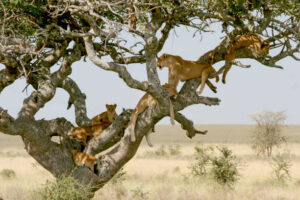
Magic of Tanzania and Kenya Safari Holidays; Alert and threatening lionesses in tree. Photographed at Lake Manyara National Park. Home of the tree climbing lions, Arusha, Tanzania
Beyond the savannahs, the Selous Game Reserve (now Nyerere National Park) in southern Tanzania offers a more rugged, river-based safari experience, while Mount Kilimanjaro remains the ultimate challenge for trekkers seeking to traverse diverse climatic zones from tropical forest to arctic summit. These locations, when combined, represent the pinnacle of African wilderness exploration, offering a blend of biodiversity and dramatic topography that is unmatched globally.
How do the safari experiences differ between Tanzania and Kenya?
In discovering the magic of Tanzania and Kenya safari holidays, the safari experience in East Africa is defined by the shared ecosystem of the Serengeti-Mara, yet Kenya and Tanzania offer distinct logistical and atmospheric environments for the traveler. According to authoritative travel literature, the primary distinction lies in the density of infrastructure and the scale of the landscapes.
Kenya is frequently characterized by its accessibility and the high concentration of safari lodges and camps, particularly within the Maasai Mara National Reserve. Because the infrastructure is more developed, Kenya often provides a more “classic” safari experience, where game drives are highly efficient and the proximity to Nairobi allows for shorter transit times between the capital and the wilderness. The Kenyan experience is often described as more social and accessible, making it ideal for first-time visitors or those with limited time who wish to maximize their wildlife sightings in a shorter window.
Tanzania, by contrast, is often cited for its vast, untamed wilderness and the sheer scale of its national parks, such as the Serengeti and the Selous (Nyerere National Park). The safari experience in Tanzania is generally perceived as more remote and expansive, requiring more time for travel between locations. While Kenya’s Maasai Mara is famous for its high density of big cats and the dramatic river crossings of the Great Migration, Tanzania’s Serengeti offers a sense of solitude and “endless” horizons that are less common in the more compact Kenyan reserves.
Furthermore, Tanzania’s “Northern Circuit“—which includes the Ngorongoro Crater, Lake Manyara, and Tarangire—provides a diverse ecological variety that is distinct from the more focused, high-intensity game viewing typical of the Kenyan Mara.
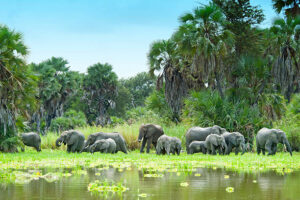
Magic of Tanzania and Kenya Safari Holidays; A herd of African Elephants (Loxodonta) is approaching the shore of Lake Manze to drink water. Shot in wildlife at Lake Manze, Selous Game Reserve, Southern Tanzania.
Ultimately, the choice between the two often comes down to the traveler’s preference for convenience and density versus isolation and scale. Kenya’s infrastructure allows for a seamless, high-frequency wildlife experience, whereas Tanzania offers a more rugged, sprawling adventure that often feels deeper and more removed from the modern world.
While discovering the magic Tanzania and Kenya safari holidays, What cultural experiences can travelers expect on safaris in Tanzania compared to those in Kenya?
The cultural landscape of East African safaris offers distinct experiences shaped by the historical development of tourism and the specific ethnic groups residing near major wildlife corridors. In Kenya, cultural tourism is often highly integrated into the safari circuit, particularly through interactions with the Maasai and Samburu people. According to authoritative anthropological and travel literature,
Kenyan safari operators have long pioneered “community-based tourism,” where visitors are frequently invited to visit manyattas (traditional homesteads) to witness beadwork demonstrations, traditional jumping dances, and discussions regarding pastoralist lifestyles. This model is deeply embedded in the conservancy system, such as those found in the Mara North or Ol Pejeta, where land is leased from local communities, creating a direct economic and cultural link between the traveler and the indigenous inhabitants.
In contrast, Tanzania’s approach to cultural engagement is often described as more understated and geographically dispersed. While the Maasai are also prominent in the Ngorongoro Conservation Area, the Tanzanian experience frequently emphasizes the diversity of its smaller ethnic groups, such as the Hadzabe and Datoga people near Lake Eyasi. The Hadzabe, one of the last remaining hunter-gatherer societies in Africa, offer a starkly different cultural encounter compared to the pastoralist-focused tourism of Kenya.
Travelers in Tanzania are more likely to participate in immersive, small-scale experiences, such as tracking game with Hadzabe hunters or visiting blacksmithing villages of the Datoga, rather than the more structured “cultural village” visits often found on the Kenyan circuit. Furthermore, the influence of Swahili culture is more pronounced in the coastal and inland transit hubs of Tanzania, providing a different linguistic and historical layer to the safari experience compared to the more interior-focused cultural hubs of Kenya.
Ultimately, the choice between the two often comes down to the desired level of structure; Kenya offers a highly refined, accessible, and well-marketed cultural interface, whereas Tanzania provides a more rugged, diverse, and ethnographic-focused engagement with its indigenous populations.
What are the unique cultural festivals or events that travelers can experience on safaris in Tanzania and Kenya?
Tanzania and Kenya possess a profound cultural tapestry woven from the traditions of over 120 ethnic groups in Tanzania and more than 40 in Kenya. For travelers, integrating cultural festivals into a safari itinerary provides a transformative experience that transcends wildlife viewing, offering deep insights into the social, spiritual, and historical foundations of East African life. These events serve as vital mechanisms for preserving oral histories, reinforcing community bonds, and showcasing the vibrant artistic expressions of the region.
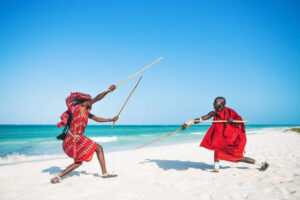
Magic of Tanzania and Kenya Safari Holidays; Two Masai warriors demonstrating traditional stick fighting on Pwani Mchangani beach on Zanzibar island (Tanzania, Africa).
In Tanzania, the cultural landscape is defined by a blend of indigenous, Arab, and Indian influences, particularly along the Swahili Coast. One of the most prominent events is the Sauti za Busara (Sounds of Wisdom) festival held in February in Stone Town, Zanzibar. This festival acts as a premier showcase for African music, featuring traditional Swahili performances and cultural workshops that emphasize unity through artistic expression. Another significant event is the Mwaka Kogwa festival, celebrated in July in Makunduchi, Zanzibar.
This festival marks the Persian New Year and is characterized by unique rituals, including traditional stick fighting, which symbolizes the resolution of past conflicts and the cleansing of the community for the year ahead. Additionally, Tanzania celebrates Union Day on April 26th, a nationwide event commemorating the 1964 merger of Tanganyika and Zanzibar, which is marked by parades and cultural displays across the country.
Kenya’s cultural calendar is equally compelling, often centered around the pastoralist traditions of the Maasai, Samburu, and Turkana peoples. The Lamu Cultural Festival, typically held in November, is a highlight for travelers visiting the coast. It celebrates the unique Swahili heritage of Lamu, a UNESCO World Heritage site, through dhow races, traditional poetry, and henna painting. For those venturing into the interior, the Maasai Mara Cultural Festival offers an immersive look into the life of the Maasai, featuring traditional adumu (jumping dance), beadwork exhibitions, and storytelling sessions that provide context to the wildlife-rich landscapes of the Mara.
Furthermore, the Lake Turkana Cultural Festival in Loiyangalani brings together the diverse tribes of Northern Kenya, such as the El Molo, Rendille, and Gabbra, to celebrate their distinct customs through music, dance, and traditional crafts, serving as a powerful testament to the region’s ethnic diversity. These festivals are not merely spectacles; they are essential community gatherings that allow travelers to engage with the living history of East Africa in a respectful and meaningful way.
What is the best time of year to go on a safari in Tanzania and Kenya?
Determining the optimal time for a safari in East Africa requires an understanding of the region’s complex climatic cycles, which dictate both animal behavior and accessibility. According to authoritative travel literature and ecological studies, the most favorable period for wildlife viewing in Kenya and Tanzania is during the dry season, which generally spans from late June through October.
During these months, the lack of rainfall forces wildlife to congregate around permanent water holes and river systems, making them significantly easier to locate and observe. In the Serengeti of Tanzania and the Masai Mara of Kenya, this period coincides with the Great Wildebeest Migration, a massive movement of ungulates that provides one of the most spectacular wildlife displays on the planet. As noted in comprehensive guides to African travel, the thinning vegetation during the dry season further enhances visibility, allowing for superior photography and game tracking compared to the lush, dense growth of the wet season.
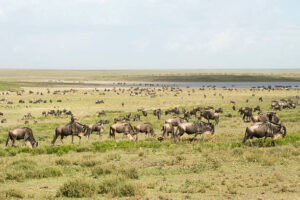
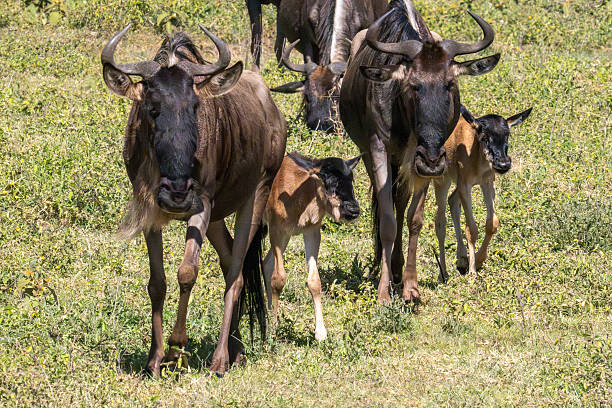
Magic of Tanzania and Kenya Safari Holidays: Wildebeest migration regrouping at Ndutu in Tanzania
While the dry season is widely considered the “peak” time, the “short rains” in November and December and the “long rains” from March to May offer a different, albeit more challenging, experience. During the wet seasons, the landscape transforms into a vibrant green, and the period is often preferred by birdwatchers due to the influx of migratory species and the birth of many young animals. However, travelers should be aware that heavy rains can make some roads impassable, and the dense foliage can make spotting predators more difficult. Ultimately, for the classic safari experience characterized by high concentrations of wildlife and reliable weather, the months of July, August, and September remain the gold standard for both countries.
The Ultimate East African Synthesis: Combining Safari and Shoreline (Beach Holiday)
The “Magic of Tanzania and Kenya safari holidays” experience is widely regarded as one of the most physically and emotionally demanding travel itineraries in the world. As noted in authoritative travel literature, the rhythm of a safari—characterized by 5:00 AM wake-up calls, intense game drives, and the constant vigilance required to track wildlife—creates a profound need for physical recovery. The transition from the dusty, high-octane environment of the Serengeti or the Maasai Mara to the tranquil, turquoise waters of the Indian Ocean is considered the gold standard for luxury travel in East Africa.
When planning this transition, geography and logistics dictate the most seamless pairings. For travelers exploring the northern circuit of Tanzania, the island of Zanzibar is the quintessential choice. As documented in comprehensive regional guides, Zanzibar offers a unique blend of historical depth in Stone Town and world-class beach relaxation on the northern and eastern coasts, such as Nungwi and Kendwa. The island’s proximity to Dar es Salaam and its direct flight connections from Arusha make it the most efficient “cool-down” destination after a grueling week in the bush.
For those focusing on Kenya, the Diani Beach region south of Mombasa remains the premier coastal destination. Unlike the more remote northern islands, Diani provides a sophisticated infrastructure of boutique resorts that cater specifically to the post-safari traveler. The contrast between the arid, golden plains of the Tsavo or Amboseli and the lush, palm-fringed coral reefs of the Kenyan coast provides the “extraordinary contrast” that defines the modern African luxury experience.
Beyond the logistics in the Magic of Tanzania and Kenya Safari Holidays, the psychological benefit of this combination is significant. The “gear shift” from the raw, remote wilderness to the sedentary luxury of an island resort allows travelers to process the intensity of their wildlife encounters. Whether choosing the spice-scented shores of Zanzibar or the pristine sands of Diani, the integration of these two environments ensures that the journey concludes with a period of “uninterrupted R&R,” effectively balancing the thrill of the hunt with the serenity of the sea.
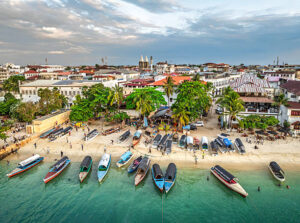
Magic of Tanzania and Kenya safari holidays: Historic Stone Town. Zanzibar. Showing an aerial view of traditional dhow boats moored on the sandy beach next to the vibrant city architecture and inviting clear turquoise waters of the Indian Ocean
Magic of Kenya and Tanzania Safari Holidays: The Enduring Legacy of East African Safaris
The allure of a safari in Tanzania and Kenya represents more than a mere vacation; it is an immersion into the cradle of humanity and the world’s most profound ecological theater. As documented in authoritative geographical and travel literature, the East African landscape—defined by the Great Rift Valley—serves as a sanctuary for the planet’s most significant megafauna. The “magic” often cited in travel narratives is rooted in the tangible reality of the Great Migration, a cyclical phenomenon of survival that underscores the delicate balance of the savannah ecosystem.
Whether traversing the vast, golden plains of the Serengeti or the dramatic, volcanic caldera of the Ngorongoro Crater, the traveler is confronted with a primordial wilderness that remains one of the few places on Earth where the natural order continues largely undisturbed by modern industrialization.
Ultimately, the conclusion of any exploration into the safari experience is that these regions are essential to global biodiversity. The synergy between Kenya’s Maasai Mara and Tanzania’s Serengeti creates a contiguous ecosystem that is vital for the preservation of species such as the African elephant, the black rhinoceros, and the lion. Beyond the wildlife, the cultural heritage of the Maasai and other indigenous groups adds a profound human dimension to the journey, offering a perspective on land stewardship that has persisted for centuries. A safari holiday, therefore, is not merely an act of tourism but an engagement with a living, breathing heritage that demands respect, conservation, and deep reflection on our relationship with the natural world.
Leave a comment:
You must be logged in to post a comment.

Comments (2)
Astute Africa Safaris,
05 May, 2026REF: Crafting Your Bespoke African Safari Experience with Astute Africa Safaris
Jambo,
Thank you for your interest in exploring the wonders of Africa with Astute Africa Safaris. We pride ourselves on creating immersive, tailor-made journeys that align perfectly with your personal interests, pace, and travel aspirations.
Because every safari is a unique narrative, we do not believe in “one-size-fits-all” pricing. To ensure we provide you with an accurate and competitive quotation that reflects the specific lodges, wildlife experiences, and logistical arrangements you desire, we invite you to connect with our team for a personalized consultation.
Please contact us at info@astuteafricasafaris.com, Whatsapp +254762663272 or fill the inquiry form with a few details regarding your preferred travel dates, group size, and specific interests (e.g., photography, luxury relaxation, or adventure trekking). Once we have these details, we will curate a comprehensive proposal designed specifically for you.
We look forward to the possibility of helping you plan an unforgettable journey.
Warm regards,
Team Astute Africa Safaris
Discover the Magic of Tanzania and Kenya Safari Holidays with Astute Africa Safaris - Astute Africa Safaris,
05 May, 2026[…] promises unparalleled wildlife encounters and breathtaking landscapes. When planning your journey (Read a comprehensive guide on Tanzania and Kenya safari holidays), choosing a reputable operator is essential to ensure a seamless and ethical adventure. Astute […]