

- 226 Views
- 6 Min Read
- (0) Comment
Essential Swahili Phrases for Your Kenyan Safari Adventure
Embarking on a safari in Kenya is a transformative experience, but bridging the cultural gap with the local community can turn a great trip into an unforgettable one. Swahili Phrases for Your Kenyan Safari, or Kiswahili, is the lingua franca of East Africa, and even a basic grasp of the language demonstrates respect and genuine interest in the local culture. When you greet a guide, a lodge staff member, or a local artisan in their native tongue, you immediately foster a sense of warmth and mutual appreciation.
By learning a few key phrases, you demonstrate respect for the local culture and heritage, which often leads to warmer hospitality and deeper insights into the wildlife and landscapes you are visiting.
The Essential Swahili Phrases for Your Kenyan Safari (Phrasebook)
To communicate effectively, start with the basics of greeting, which is the cornerstone of Kenyan social etiquette. When you approach a local, always start with a greeting before asking a question.

50 Essential Swahili Phrases for Your Kenyan Safari
Greetings and Politeness
- Jambo: Hello (Common tourist greeting)
- Habari: How are you? / News?
- Habari za asubuhi: Good morning
- Habari za mchana: Good afternoon
- Habari za jioni: Good evening
- Nzuri: Good / Fine
- Asante: Thank you
- Asante sana: Thank you very much
- Karibu: Welcome
- Tafadhali: Please
- Samahani: Excuse me / Sorry
- Hapana: No
- Ndiyo: Yes
- Kwa heri: Goodbye
Safari and Travel Context; Essential Swahili Phrases for Your Kenyan Safari
- Safari: Journey / Trip
- Twende: Let’s go
- Simba: Lion
- Tembo: Elephant
- Twiga: Giraffe
- Chakula: Food
- Maji: Water
- Bei gani?: How much?
- Nataka: I want
- Sawa: Okay / Agreed
- Pole: Sorry (for a misfortune)
Connecting with Locals
- Jina langu ni…: My name is…
- Unaitwa nani?: What is your name?
- Nimefurahi kukutana na wewe: I am happy to meet you
- Tunaweza kupiga picha?: Can we take a photo?
- Wapi…?: Where is…?
- Choo kiko wapi?: Where is the toilet?
- Safari njema: Have a good trip

Learning Swahili Phrases for Your Kenyan Safari to help you communicate with locals.
The most important aspect of using these phrases is the intent behind them. Kenyans are generally very appreciative of visitors who make an effort to speak their language, even if the pronunciation is not perfect. The phrase “Asante sana” (Thank you very much) is the most powerful tool in your vocabulary to show genuine appreciation for the services provided by your guides, drivers, and lodge staff.
Cultural Etiquette Tips
When using these phrases, remember that tone and body language are just as important as the words themselves. In Kenya, it is considered polite to use your right hand when giving or receiving items, and always acknowledge elders with a respectful nod. If you are calculating costs or distances, remember that the local currency is the Kenyan Shilling (KES), and you might find yourself using simple math to estimate your budget, such as Total=Price×Quantity
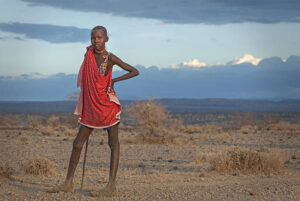
Swahili Phrases for Your Kenyan Safari; A young Masai boy outside standing in the bush. Kenya, Africa.
Understanding Currency Requirements for a Kenya Safari
When planning a safari to Kenya, managing your finances effectively is essential for a seamless travel experience. The official national currency is the Kenyan Shilling (KES). While the local currency is the primary medium of exchange for daily transactions, the US Dollar (USD) is widely recognized and accepted within the tourism sector, particularly for high-end services and safari-specific activities.
Is the US Dollar Accepted?
Yes, the US Dollar is widely accepted throughout Kenya, especially at safari lodges, hotels, and for specific tourist activities such as hot-air balloon safaris. However, there are strict requirements regarding the condition and age of the banknotes. Due to concerns regarding counterfeit currency, it is mandatory to carry US Dollar bills printed in or after 2017, as older notes are generally not accepted by banks or businesses in Kenya. Some sources suggest that while notes from 2006 or later may be accepted in some locations, carrying the most recent series is the safest way to ensure your money is honored without issue.
Recommended Currency Strategy
To ensure you are prepared for all scenarios, a combination of payment methods is recommended:
- Local Currency (KES): It is highly advisable to use Kenyan Shillings for small, everyday purchases such as souvenirs at local markets, bar bills, meals not included in your itinerary, and tipping staff in local establishments.
- US Dollars (USD): Keep a supply of crisp, clean, and recent USD notes for major lodge payments, park fees, or specific excursions. Avoid bringing damaged, torn, or marked bills, as these are frequently rejected.
- Credit Cards: Major credit cards, specifically Visa and Mastercard, are widely accepted in city hotels, large restaurants, and major safari operators. However, they may not be reliable in remote rural areas or smaller camps, where a surcharge may also apply.
- Mobile Money: Kenya has a highly advanced mobile payment ecosystem. Services like M-Pesa are increasingly popular and can be used for secure payments even in relatively remote locations.
Don’t just learn Swahili Phrases for Your Kenyan Safari but also verifying Kenyan Banknotes
To determine if a Kenyan Shilling (KES) banknote is genuine, you should employ a systematic approach involving tactile, visual, and motion-based checks. As of 2026, both the 2019 and 2024 series are in circulation, and the Central Bank of Kenya (CBK) recommends a three-step verification process: “Feel, Look, and Tilt.”
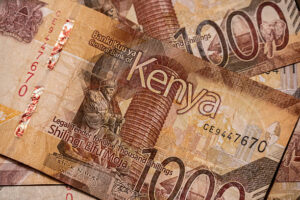
Swahili Phrases for Your Kenyan Safari and currency acceptable by Central Bank of Kenya (“Banki Kuu ya Kenya”)
First, feel the note for tactile features, such as the raised print on the words “Central Bank of Kenya,” the portrait, and the denomination numerals. In the 2024 series, you should specifically run your fingers over the word “KENYA” and the edge bars, which are designed to be raised; these bars correspond to the denomination (e.g., one bar for Sh50, up to four bars for Sh500). Second, look at the note against a light source to verify the watermark and security thread.
Genuine notes feature a multi-toned watermark (a portrait of a prominent figure or a lion’s head in newer series) and a vertical metallic security thread that should appear continuous. Additionally, ensure that the see-through registration motifs on the front and back align perfectly to form a complete pattern or numeral. Finally, tilt the note to observe color-shifting effects.
Higher denominations (Sh200, Sh500, and Sh1000) feature Optically Variable Ink (OVI) that changes color when viewed from different angles, and the 2024 series includes advanced color-changing security threads specific to each denomination. If you suspect a note is counterfeit, do not attempt to use it; instead, report it to the nearest bank or a CBK branch
Practical Tips for Travelers in line with Swahili Phrases for Your Kenyan Safari
- Banking: Banking hours are typically 9 am to 3 pm on weekdays, with limited hours on the first and last Saturday of the month. ATMs are available in major towns and airports, providing a convenient way to withdraw local currency.
- Tipping: Tipping is at your discretion but is customary for good service. In city restaurants where a service charge is not already included, a 10% tip is standard.
- Safety: Use a money belt or secure pouch for your cash, and keep larger sums or extra cards in a hotel safe. Always verify exchange rates through official banks or bureaus rather than street vendors.

Leave a comment:
You must be logged in to post a comment.