

- 1.3k Views
- 27 Min Read
- (2) Comments
What to Wear During an African Safari: The Ultimate Clothing Guide for Every Season and Destination
An African safari is an unforgettable adventure, whether you are watching elephants cross the plains of Amboseli, searching for lions in the Maasai Mara, exploring the endless Serengeti, trekking through Uganda’s tropical rainforests to encounter mountain gorillas, or enjoying a relaxing beach escape in Zanzibar after days of wildlife viewing.
However, one of the most overlooked parts of planning a safari is knowing what to wear.
African safari destinations do not all have the same climate. A cool sunrise game drive in Kenya’s highlands can feel completely different from a hot afternoon in the Serengeti. A gorilla trek in Rwanda’s misty mountains requires different clothing from a sunny day beside the Indian Ocean. Even during a single safari day, you might experience a chilly morning, strong midday sunshine, dusty roads, a brief rain shower and a cool evening around the campfire.
The secret to dressing well for an African safari is not buying an entirely new wardrobe. It is choosing comfortable, breathable, practical clothing that can be layered, adjusted and reused throughout your journey.
This guide by Astute Africa Safaris explains what to wear during an African safari in Kenya, Tanzania, Uganda, Rwanda and Zanzibar, including seasonal differences, morning-to-evening clothing recommendations, gorilla trekking outfits, beachwear, footwear, mosquito protection and essential accessories.
Whether you are planning a family safari, a honeymoon, a luxury wildlife adventure or an affordable African holiday, you will learn how to pack wisely and dress comfortably for the experience ahead.
1. Why choosing the right safari clothing matters

Safari clothing is about much more than appearance. The right outfit helps you remain comfortable and prepared while moving between different environments.
Protection from changing temperatures: Early morning game drives can be surprisingly cold, especially in elevated destinations such as the Ngorongoro Conservation Area, Kenya’s central highlands and Rwanda’s volcanic region. Layered clothing lets you warm up before sunrise and remove extra layers when the day becomes warmer.
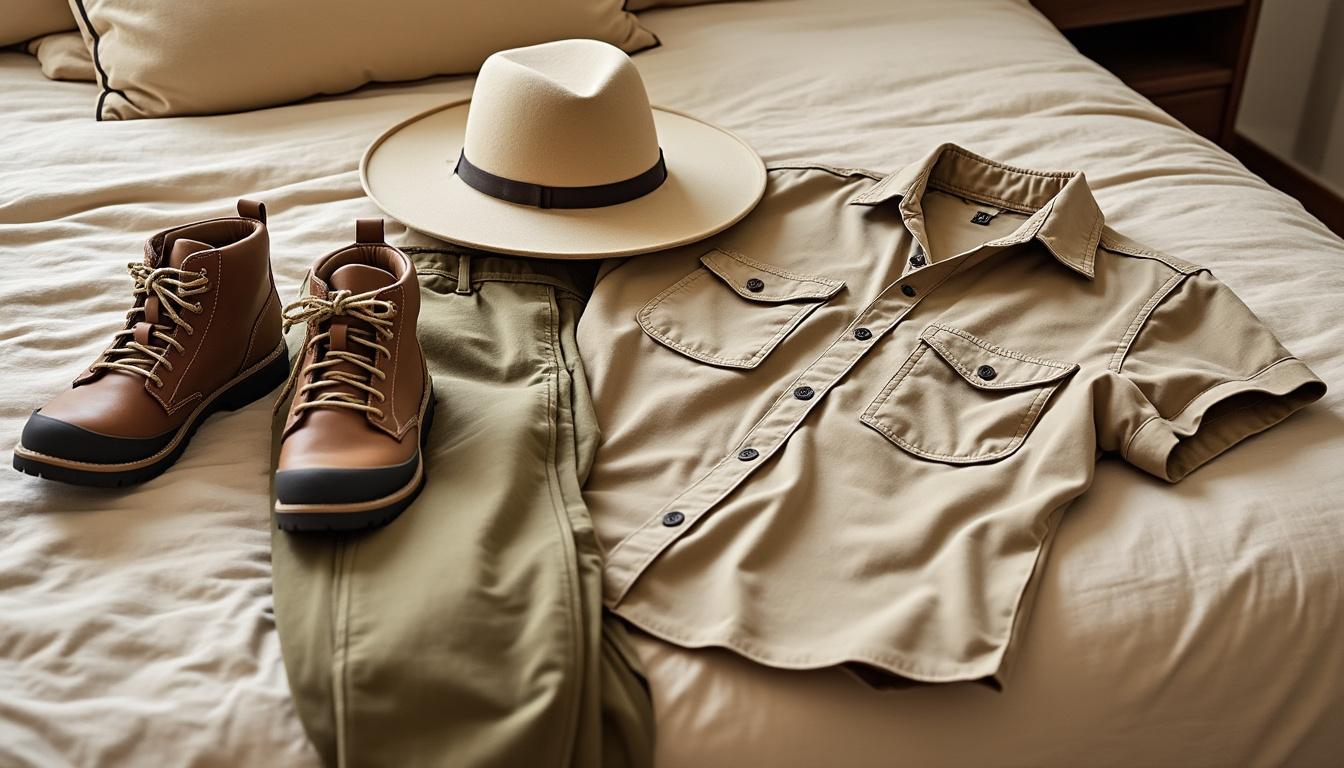
Protection from the sun: Long hours outdoors expose you to intense sunlight. Lightweight long-sleeved shirts, trousers, a broad-brimmed hat, sunglasses and sunscreen help reduce exposure.
Protection from insects: Long trousers and long-sleeved tops provide a useful physical barrier against mosquitoes and other biting insects. Insect repellent offers additional protection, particularly in the evening and in forested or humid areas.
Comfort during wildlife viewing: Dust, wind, vehicle movement and long periods of sitting can make uncomfortable clothing distracting. Breathable fabrics and relaxed-fitting outfits help you enjoy the scenery and photography.
Practicality during walking activities: Walking safaris, chimpanzee tracking and gorilla trekking can involve uneven ground, wet vegetation, mud and steep trails. Appropriate shoes, trousers and rain protection are essential.
Respect for local communities: Clothing suitable for a safari vehicle may not be appropriate for every village, religious site or town. Modest, respectful clothing is particularly important when visiting communities and public areas in Zanzibar.
The Kenya Wildlife Service also recommends adaptable clothing, earth-toned colours, lace-up shoes, hats, sunglasses and insect repellent for visitors to its parks and reserves.
2. The best colours to wear on an African safari

Neutral, earth-toned colours are practical for most traditional wildlife safaris. They are easy to coordinate, generally hide dust better than very light fabrics, and fit naturally into the safari environment.
| Recommended colour | Why it works |
|---|---|
| Khaki | Classic safari colour; practical for dusty game drives |
| Olive green | Versatile for savannah and forest activities |
| Beige and sand | Lightweight-looking, easy to coordinate |
| Brown and tan | Useful for trousers, jackets and outdoor clothing |
| Muted grey | A practical alternative for shirts and travel trousers |
Colours and clothing to use with care
-
Bright white: It shows dust easily and may be less practical for repeated game drives.
-
Very bright colours: They can stand out in photographs and are less suited to traditional wildlife-viewing clothing.
-
Black and dark navy: These can feel hot in direct sunshine, and dark clothing may attract certain biting flies in some areas.
-
Camouflage or military-style clothing: Avoid it. Camouflage clothing may be restricted for civilians in some African countries, so choose ordinary outdoor clothing instead. Check destination-specific rules before travelling.
You do not need to dress from head to toe in khaki. A beige shirt, olive trousers and a neutral fleece are more than sufficient. Comfort, sun protection and suitability for your planned activities matter more than matching every item.
3. What to wear during different times of an African safari day
One of the most useful packing strategies is to prepare for three distinct parts of the day: early morning, midday and evening.

Early morning: approximately 5:30–9:00 a.m.
Warm layers and wind protection
The air can feel cold before sunrise, particularly when travelling in an open vehicle or visiting high-altitude parks.
Wear a T-shirt or breathable base layer, a long-sleeved shirt, a fleece or light jacket, long trousers and closed shoes. A light scarf or neck gaiter can help protect you from wind and dust. During colder months or high-altitude excursions, add a warmer jacket, beanie or light gloves.

Midday and afternoon: approximately 10:00 a.m.–4:00 p.m.
Breathable clothing and sun protection
As the sun rises, temperatures often increase significantly, particularly in open savannah and semi-arid landscapes.
Remove your fleece or heavy jacket. Wear a breathable shirt, lightweight trousers or activity-appropriate shorts, comfortable footwear and a wide-brimmed hat. Keep sunglasses, sunscreen and drinking water accessible. Lightweight long sleeves can be more useful than exposing your arms for the entire day.

Evening and night: approximately 5:00 p.m. onward
Long sleeves, trousers and a warm layer
After sunset, temperatures may fall quickly in inland parks and highland regions. Mosquitoes and other insects may also be more noticeable.
Change into comfortable long trousers and a long-sleeved shirt. Keep a fleece or jacket nearby, particularly for outdoor dinners, night transfers and cool lodge terraces. Apply insect repellent according to its label and use covered footwear when walking around camp.
A useful rule: Dress for the coldest part of the day when leaving for an early game drive, then remove layers as temperatures rise. Keep your jacket in the vehicle rather than leaving it at your accommodation.
These times are illustrative, not fixed schedules. Actual game-drive times and temperatures depend on the park, lodge, season and itinerary.
4. Understanding African safari seasons before you pack

Unlike destinations with four sharply defined seasons, many East African destinations experience alternating wet and dry periods. Rainfall, altitude and location are often more important than the month alone.
Dry seasons
Dry periods commonly bring sunnier weather, less muddy ground and dusty conditions in some wildlife areas. Early mornings may still be cold, particularly at high elevations.
Pack lightweight neutral clothing, a fleece or jacket, comfortable closed shoes, sunglasses, a hat and a light scarf or buff to protect against dust.
Rainy seasons
Rainy periods can bring greener landscapes, dramatic skies and beautiful photography opportunities. They can also mean wet tracks, muddy walking trails, damp clothing and changing travel conditions.
Pack a lightweight waterproof jacket, quick-drying trousers, moisture-managing shirts, extra socks and suitable footwear. For forest trekking, use a proper waterproof outer layer and boots with good grip.
Hot and humid periods
Coastal Kenya, Zanzibar and some lowland parks can become hot and humid. Lightweight, breathable fabrics, sun protection and frequent access to drinking water become particularly important.
Cold highland conditions
The Ngorongoro highlands, mountainous areas of Uganda and Rwanda, and elevated parts of Kenya can be cool even when lower-lying destinations are warm. A warm fleece or insulated jacket is valuable for early departures and trekking.
Seasonal dates are approximate and conditions vary from year to year. For country-specific climate guidance, see the official visitor information from Tourism Uganda
5. What to wear on safari in Kenya, season by season

Kenya offers remarkable climatic diversity. The Maasai Mara and Amboseli have different conditions from the cooler central highlands, the dry northern regions and the warm Indian Ocean coast.
January to March: Generally warm and relatively dry in many safari areas
These months are often warm, with plenty of sunshine in many popular wildlife destinations. However, conditions vary between regions and occasional rain is possible.
What to wear:
-
Lightweight, breathable shirts and trousers.
-
A long-sleeved shirt for sun protection.
-
A light fleece or jacket for early morning drives.
-
A wide-brimmed hat, UV-protective sunglasses and sunscreen.
-
Comfortable walking shoes or trainers.
In warmer parks such as Tsavo, afternoons can be hot. In the Maasai Mara, Laikipia and other elevated regions, mornings can be noticeably cooler.
April to May: The long rains in many parts of Kenya
These months are traditionally associated with Kenya’s long-rains season, although rainfall varies considerably by region. Some roads become muddy, and showers may interrupt game drives or outdoor activities.
What to wear:
-
Quick-drying trousers and shirts.
-
A lightweight waterproof jacket with a hood.
-
Closed shoes with good grip.
-
Extra socks and a spare outfit for wet days.
-
A protective cover for your camera and daypack.
Avoid relying entirely on heavy cotton clothing, which can remain damp for a long time.
June to October: Cooler mornings and generally drier safari conditions
This is an important safari period for destinations such as the Maasai Mara and many other wildlife areas. Morning temperatures can be cool, while afternoons may become warm and dusty.
What to wear:
-
A fleece, sweatshirt or light insulated jacket.
-
A breathable base layer and long-sleeved shirt.
-
Lightweight trousers.
-
Closed shoes.
-
Sunglasses, a hat and a scarf or buff for dust.
If you are heading to the Maasai Mara before sunrise, start with several light layers. You can remove the outer layer once the sun warms the vehicle and grasslands.
November to December: Short rains and changing conditions
Short rains commonly occur during this period, but they do not necessarily mean continuous rainfall. Many days remain warm, and weather can change between destinations.
What to wear:
-
Breathable clothing that dries quickly.
-
A packable rain jacket.
-
A light fleece for early morning.
-
Comfortable shoes suitable for dusty or damp ground.
-
Long sleeves and trousers for evenings.
Special clothing considerations for Kenya’s main safari destinations
| Destination | What to prepare for |
|---|---|
| Maasai Mara National Reserve | Cool dawn drives, warm afternoons, wind and dust |
| Amboseli National Park | Strong sunshine, open landscapes and chilly early starts |
| Tsavo East National Park | Hotter conditions, dust and sun exposure |
| Samburu National Reserve | Hot, dry conditions; lightweight clothing and sun protection |
| Laikipia | Variable highland temperatures and cool mornings |
| Lake Nakuru National Park | Changeable highland weather, cool mornings and possible rain |
Related Astute Africa Safaris guides:
6. What to wear on safari in Tanzania

Tanzania’s safari environments include the Serengeti plains, Tarangire’s baobab landscapes, the Ngorongoro highlands, mountainous Kilimanjaro and the tropical beaches of Zanzibar. The right clothing depends on which of these places you intend to visit.
January to February: Warm weather and relatively drier conditions in many northern safari areas
These months can be hot and sunny on the plains. Early morning drives can nevertheless be cool, especially in the highlands.
Pack breathable shirts, lightweight trousers, a hat, sunglasses and a light jacket for sunrise drives. If your itinerary includes the Ngorongoro Crater rim, carry an extra warm layer.
March to May: Main long-rains period in many northern and eastern areas
Rainfall can be more persistent, although timing and intensity vary by region. Paths can become muddy and some outdoor activities may need to be adjusted.
Pack a waterproof jacket, quick-drying clothes, spare socks and shoes suitable for wet ground. A water-resistant daypack is useful for cameras, phones and personal items.
June to October: Generally drier conditions, with cool early mornings
These months are often favourable for wildlife viewing in many northern safari parks. However, the Ngorongoro highlands can feel cold before sunrise, even when the plains become warm later in the day.
Pack a warm fleece, a light insulated jacket, long trousers, closed shoes and a scarf or buff. Sunglasses and a hat remain important when the sun is strong.
November to December: Short rains and warm conditions
Short showers may occur, and the landscape can become greener. A packable rain jacket and breathable clothing are practical choices.
What to wear in the Serengeti versus Ngorongoro

Serengeti National Park
Expect warm conditions on many daytime game drives, with cooler mornings, wind and dust. Choose lightweight trousers, breathable shirts, a sun hat and a fleece for dawn departures.

Ngorongoro Conservation Area
The crater rim and highlands are generally cooler than the plains. Pack an additional jacket or fleece, long trousers and closed shoes. A thin layer may be insufficient on a cold, windy morning.
If your Tanzania safari includes Zanzibar
Your clothing needs will change significantly when you leave the wildlife parks for the coast.
Pack swimwear, lightweight breathable clothes, sandals, a sun hat, sunglasses and sunscreen. Include loose-fitting clothes that cover your shoulders and knees for Stone Town, villages and other public settings. Reserve swimwear for beaches and swimming pools.
Related Astute Africa Safaris itinerary:
10 Days Kenya and Tanzania Safari
For a longer combined safari, consider the Kenya and Tanzania safari guide.
7. What to wear on safari in Uganda

Uganda is particularly interesting because one holiday can combine warm savannah game drives, boat safaris, tropical forests and mountain gorilla trekking.
A lightweight outfit suitable for Queen Elizabeth National Park may not be enough for a wet trek in Bwindi Impenetrable National Park. Your packing list should reflect the activities you have booked.
December to February: Generally warmer and relatively drier in many regions
These months can be suitable for savannah game drives and forest excursions, although rain remains possible.
Wear breathable shirts, long trousers, comfortable closed shoes and a light fleece for cooler mornings. Carry insect repellent, sunglasses, sunscreen and a compact rain jacket.
March to May: Wetter conditions in many parts of Uganda
Forest trails may become muddy and slippery. Rain can occur even when the day begins with sunshine.
Pack waterproof hiking boots, long trousers, moisture-managing socks, a waterproof jacket and a daypack cover. Bring a spare set of clothes for after your trek.
June to September: Generally drier conditions in many areas
This is often a practical period for combining wildlife viewing with trekking, although conditions vary by location and rain can occur at any time.
Wear breathable safari clothing for vehicle activities and carry a warm layer for early starts. For forest activities, do not leave your waterproof gear behind simply because the weather forecast looks promising.
October to November: A second wetter period in many regions
Prepare for showers, damp trails and variable temperatures. Quick-drying clothing and good footwear become especially useful.
Uganda’s tourism authority notes that rainfall patterns vary, especially in forest and mountain ecosystems, and recommends rainwear, warm layers, neutral safari colours, sunglasses and insect repellent.
What to wear for gorilla trekking in Uganda

Gorilla trekking is physically demanding and takes place in dense vegetation, where the ground may be wet, muddy or uneven.
Wear:
-
Long, comfortable hiking trousers.
-
A long-sleeved shirt to protect your arms.
-
Sturdy, broken-in waterproof hiking boots with good traction.
-
Hiking socks that fit comfortably inside your boots.
-
A lightweight waterproof jacket.
-
Gardening or trekking gloves to protect your hands from vegetation.
-
A hat or cap, depending on the weather.
-
A small backpack with water, snacks where permitted, personal medication and rain protection.
Avoid shorts, open sandals and brand-new boots that may cause blisters. If gaiters are available and appropriate for your trek, they can help keep mud and vegetation away from your socks and lower legs.
Use insect repellent as directed, but follow your guide’s instructions about applying products near wildlife and avoid spraying chemicals onto animals or vegetation.
Recommended related reading: Uganda Wildlife and Gorilla Trekking Safari.
8. What to wear on safari in Rwanda

Rwanda offers a different combination of safari experiences. The cooler volcanic highlands around Volcanoes National Park contrast with the warmer savannah landscapes of Akagera National Park.
The country has a tropical highland climate, and altitude strongly influences temperatures. Rwanda’s official tourism information identifies the main rainy periods as approximately mid-February to May and mid-September to mid-December, with the drier period generally falling from June to mid-September. Conditions can vary locally.
January to mid-February: Variable conditions
Pack lightweight clothing for daytime activities, a warm layer for early mornings and rain protection if you are visiting forested areas.
Mid-February to May: Main rainy season
For gorilla trekking, expect the possibility of muddy trails and wet vegetation.
Pack waterproof boots, long trousers, long sleeves, a waterproof jacket, gloves and spare socks. Keep a change of clothing ready for after the trek.
June to mid-September: Generally drier season
This period can offer easier trail conditions, although rain is still possible. Carry layers for cool mountain mornings and comfortable, breathable clothes for warmer lowland activities.
Mid-September to mid-December: Second rainy season
A light waterproof layer, quick-drying clothing and reliable footwear are useful for both forest excursions and game drives.
What to wear for Rwanda gorilla trekking
Use the same practical principles as for Uganda: sturdy boots, long trousers, long sleeves, gloves, a waterproof jacket and a small daypack. Mountain conditions can change quickly, so avoid relying on a weather forecast alone.
For Akagera game drives, lightweight neutral clothing and a hat are usually more practical than heavy trekking gear.
The key is to pack for both the mountains and the savannah if your itinerary combines these experiences.
9. What to wear in Zanzibar and on the East African coast

After several days of wildlife viewing, many travellers finish their holiday on the coast. Zanzibar, Diani, Watamu, Malindi and Mombasa offer a tropical environment that calls for a different approach to clothing.
January to March: Hot, sunny and humid
Choose lightweight cotton or linen clothing, breathable dresses, loose shirts, shorts, swimwear, sandals, a wide-brimmed hat and sunglasses. Apply sunscreen regularly, especially during boat trips and extended beach activities.
April to May: Generally wetter conditions along much of the coast
Pack lightweight rain protection, quick-drying clothes and sandals suitable for wet conditions. Some days can still be warm and sunny between showers.
June to October: Often drier and relatively comfortable
Breathable clothing remains essential. A light wrap or long-sleeved shirt is useful in breezy conditions, particularly on boat trips and in the evening.
November to December: Warmer conditions with the possibility of short rains
Pack summer clothing and sun protection alongside a compact rain jacket.
Dress respectfully in Stone Town and local communities
Zanzibar has a predominantly Muslim population, and modest dress is appreciated in many public settings.
-
At the beach or hotel pool, normal swimwear is appropriate.
-
When walking through Stone Town, villages or markets, choose clothing that covers your shoulders and knees.
-
Carry a lightweight scarf, sarong or cover-up.
-
Wear comfortable sandals or walking shoes for exploring historic streets.
-
Choose breathable clothing that remains comfortable in humid weather.
Combine safari and beach: Astute Africa Safaris offers a Safari and Beach Holiday in Kenya. You can also explore the best safari and beach combinations in Kenya.
For a multi-country holiday that ends on the coast, pack your safari clothing in a compact, reusable set and keep beachwear in a separate packing cube. This makes it easier to change environments without bringing too much luggage.
10. Mosquito repellent: An essential item for your safari packing list

Mosquito repellent should be part of your safari essentials, particularly if you are visiting areas where mosquitoes transmit malaria or other mosquito-borne illnesses.
Do not assume that you will only encounter mosquitoes in the evening. Exposure varies with location, season, weather and activity, so it is sensible to carry repellent throughout your journey.
How to protect yourself from mosquito bites
-
Pack an effective insect repellent. Choose a registered product containing an effective active ingredient such as DEET, picaridin (also called icaridin) or another locally recommended repellent. Follow its label instructions.
-
Wear long sleeves and long trousers. These provide an additional physical barrier, especially around dusk and in forested environments.
-
Use repellent when appropriate. Apply it to exposed skin according to the product directions. If you are using sunscreen as well, apply sunscreen first and repellent afterwards, following both products’ instructions.
-
Check your accommodation. Mosquito nets, screens and air-conditioned rooms can help reduce exposure, but facilities vary between lodges and camps.
-
Consider clothing treatment where suitable. Permethrin-treated clothing can provide additional protection when used according to the product instructions. Permethrin products intended for clothing should not be applied directly to skin.
-
Seek destination-specific medical advice. Ask a qualified travel-health professional whether malaria prevention medication or other precautions are recommended for your itinerary.
Remember that repellent alone does not prevent every mosquito bite and does not replace recommended malaria prevention measures.
For families travelling with children, check the minimum age and application instructions on the repellent label. Infants and young children may require additional precautions.
11. Why sunglasses are indispensable on safari

Sunglasses are not merely a fashion accessory. They help protect your eyes from ultraviolet radiation and make outdoor activities more comfortable.
Bright sunlight can be intense in open savannahs, deserts, elevated landscapes and on the coast. Dust and wind during game drives can also cause discomfort.
What type of sunglasses should you bring?
-
Choose sunglasses labelled UV400 or 100% UVA/UVB protection.
-
Consider polarized lenses to reduce glare from water, bright roads and vehicle surfaces.
-
Choose a comfortable, secure fit that will not easily slip during bumpy drives.
-
Bring a protective case to prevent scratches.
-
If you wear prescription glasses, pack a suitable prescription pair or prescription sunglasses.
A wide-brimmed hat adds shade to your face and eyes, while sunscreen helps protect exposed skin. These items work best together.
For photography, remember that polarized sunglasses can alter the appearance of reflections on screens and camera displays. Keep them on for eye protection when appropriate, but remove them when checking your camera or composing a photograph through an optical viewfinder.
12. What footwear should you wear during an African safari?

Your footwear should match your activities rather than the price or appearance of the shoe.
| Safari activity | Recommended footwear |
|---|---|
| Vehicle game drives | Comfortable trainers or closed walking shoes |
| Lodge and camp | Sandals or comfortable casual shoes |
| Walking safari | Closed walking shoes or suitable hiking boots, as required by the operator |
| Gorilla and chimpanzee trekking | Sturdy, broken-in hiking boots with good grip |
| Wet-season activities | Water-resistant footwear with appropriate traction |
| Beach holiday | Sandals, flip-flops and comfortable walking shoes |
For most ordinary game drives, you do not need heavy mountaineering boots. Comfortable closed shoes are often sufficient.
For gorilla trekking, however, proper hiking footwear is worth prioritizing. Muddy slopes, wet roots and uneven trails can make unsuitable shoes uncomfortable or unsafe.
Break in new boots before travelling. Carry spare socks and consider blister plasters if you are planning extended walks.
13. The ideal African safari packing checklist
Use this checklist as a starting point for a typical seven- to ten-day East African safari. Adjust quantities according to the length of your trip, laundry availability, activities and luggage allowance.
Your safari packing checklist
Tick items as you pack them.
0/30
Clothing
Sun and insect protection
Footwear and equipment
Health and rainy-weather essentials
Copy checklistReset
How much clothing do you really need?
You do not need a different outfit for every day. Many safari lodges offer laundry services, although availability, charges and turnaround times vary.
A compact wardrobe of coordinated neutral colours can be reused throughout the trip. If your safari includes a light-aircraft transfer, check the actual baggage allowance and soft-bag requirements with your operator or airline before packing.
For a broader guide, read Astute Africa Safaris’ African Safari Packing List Guide.
14. What should families, couples and honeymooners wear?

The basics remain similar, but your clothing choices can be tailored to the type of holiday you are planning.
Families travelling with children
Prioritize comfort, sun protection and easy changes of clothing.
-
Pack lightweight, washable outfits that can be mixed and matched.
-
Bring spare shirts, shorts or trousers for children who get dusty or wet.
-
Choose comfortable closed shoes for activities.
-
Include a warm layer for early morning drives.
-
Pack child-appropriate sunscreen and insect repellent.
-
Keep an extra layer and a change of clothes in the day bag.
Children can feel cold quickly in open safari vehicles before sunrise, even if the afternoon is hot.
Couples and honeymooners
You can dress practically without sacrificing style.
-
Choose coordinated neutral clothing for photographs.
-
Pack lightweight linen or breathable cotton for warm days.
-
Bring a stylish but comfortable jacket for cooler evenings.
-
Include a smart-casual outfit for a lodge dinner or special occasion.
-
Pack resort wear if you are combining safari with the beach.
Formal clothing is rarely necessary for ordinary safari lodge dinners, but a neat, relaxed outfit is suitable for many luxury properties.
Luxury safari travellers
Luxury does not mean formal dress throughout the day. Most wildlife activities require the same practical clothing regardless of accommodation category.
Focus on comfortable fabrics, a good fleece, a waterproof jacket, suitable shoes and sun protection. You may want an additional outfit for a private dinner or an elegant beach resort, but you can leave heavy formalwear at home unless your specific plans require it.
Budget and mid-range safari travellers
You can dress well without buying expensive specialist clothing. Comfortable trainers, ordinary neutral-coloured shirts, lightweight trousers and a practical jacket are often sufficient for vehicle-based safaris.
Spend more attention on footwear for demanding trekking, adequate rain protection and reliable sun and insect protection than on branded safari outfits.
Explore budget versus luxury safari experiences in Kenya and other East African destinations for more guidance on matching your safari style to your budget.
15. Common clothing mistakes to avoid on an African safari

Even experienced travellers can pack poorly when they assume that Africa is hot everywhere, all the time.
Mistake 1: Packing only summer clothes. Early mornings, elevated camps and highland destinations can be cold. Include at least one warm layer.
Mistake 2: Forgetting rain protection. Rainfall can occur outside the main rainy season, especially in forested and mountainous areas.
Mistake 3: Wearing uncomfortable shoes. New shoes, thin sandals or unsuitable trainers can cause problems during extended walks and trekking.
Mistake 4: Leaving insect repellent at home. Carry repellent and follow destination-specific mosquito prevention advice.
Mistake 5: Forgetting sunglasses and sunscreen. Sun exposure can be substantial during long days outdoors.
Mistake 6: Overpacking. Excess luggage can be inconvenient on safari flights and transfers. Check baggage restrictions before departure.
Mistake 7: Buying an expensive safari wardrobe unnecessarily. Most travellers can use comfortable clothing they already own.
Mistake 8: Packing without considering the itinerary. A beach extension, gorilla trek or mountain excursion changes what you need.
Mistake 9: Ignoring local dress expectations. Carry a suitable cover-up for towns, villages and cultural visits, especially in Zanzibar.
Mistake 10: Assuming that all parks have identical weather. Altitude, vegetation, rainfall and proximity to the coast all influence what you should wear.
16. Sample clothing plans for different safari itineraries
The best packing list follows your route. Here are four examples to help you plan.

Itinerary 1: Three-day Maasai Mara safari
Kenya · Vehicle-based wildlife viewing
Pack lightweight shirts, long trousers, a fleece for sunrise drives, closed shoes, a hat, sunglasses and insect repellent. Add a light waterproof jacket if travelling during a rainy period.

Itinerary 2: Ten-day Kenya and Tanzania safari
Multi-country · Savannah and highlands
Choose versatile neutral clothing, a warm jacket for early drives, a waterproof layer, comfortable shoes and a scarf or buff. Include additional warm layers if your route includes the Ngorongoro highlands.
Itinerary 3: Uganda wildlife and gorilla trekking
Savannah · Rainforest · Trekking
Pack two types of outfits: light safari clothing for vehicle activities and a separate trekking set with waterproof boots, gloves, long trousers, long sleeves and a rain jacket.

Itinerary 4: Kenya safari and beach holiday
Wildlife viewing · Tropical coast
Keep your safari wardrobe compact, then add swimwear, breathable beachwear, sandals, sunglasses and a cover-up for cultural visits. This combination calls for the widest range of clothing but need not require a large suitcase.
17. Frequently asked questions about what to wear during an African safari
Can I wear jeans on an African safari?
Yes. Jeans are suitable for some travel days and cooler weather, but they can feel heavy in hot conditions and take longer to dry if they get wet. Lightweight outdoor trousers are usually more versatile.
Do I need special safari clothes?
No. Comfortable, breathable clothing in neutral colours is usually enough for a vehicle-based safari. Specialist hiking clothing and footwear are more important for activities such as gorilla trekking.
Should I wear shorts on safari?
Shorts can be comfortable during hot weather, particularly around a lodge or on some daytime activities. Lightweight long trousers are useful for sun protection and insect protection, and may be required or recommended for guided walks and trekking.
What should I wear on a cold morning game drive?
Wear a base layer, a long-sleeved shirt and a fleece or jacket, together with long trousers and closed shoes. Add a beanie or scarf if the weather is particularly cold. Remove layers as the temperature rises.
Is insect repellent really necessary?
It is a sensible essential, especially in areas where mosquitoes and other biting insects are present. Use an appropriate product as directed and follow medical advice about malaria prevention for your destinations.
Are sunglasses necessary on safari?
Yes. Sunglasses with 100% UVA/UVB protection or a UV400 label help protect your eyes during extended periods outdoors. A wide-brimmed hat and sunscreen provide additional protection.
What should I wear for gorilla trekking in Uganda or Rwanda?
Wear sturdy hiking boots, long trousers, long sleeves, gloves and a waterproof jacket. Forest trails can be muddy, wet and uneven, so good grip and clothing that protects your skin are important.
What should I wear in Zanzibar outside the beach?
Wear breathable clothing that covers your shoulders and knees when visiting Stone Town, villages and public areas. Swimwear is appropriate at the beach or pool, with a cover-up for other settings.
Can I wear bright colours during a safari?
You can, but muted earth tones are often more practical for wildlife viewing and photography. Avoid camouflage clothing where civilian use may be restricted.
How many outfits do I need for a seven-day safari?
A practical starting point is three or four tops, two or three pairs of trousers, a warm layer, a waterproof jacket and enough underwear and socks for your laundry arrangements. Adjust the quantities to your activities and personal needs.
18. Plan your African safari with Astute Africa Safaris

The right safari clothing helps you focus on what matters most: seeing extraordinary wildlife, enjoying beautiful landscapes and creating unforgettable memories.
Whether you are exploring Kenya’s national parks, following wildlife across Tanzania, trekking through Uganda’s rainforests, discovering Rwanda’s volcanic highlands or relaxing on Zanzibar’s beaches, a little preparation makes the experience more comfortable.
At Astute Africa Safaris, the itinerary should determine the packing advice. A family safari, a luxury honeymoon, a multi-country adventure and a gorilla trekking holiday all have different practical requirements.
Explore our safari planning resources:
Ready to plan your African safari? Visit Astute Africa Safaris to explore tailor-made safari holidays and request an itinerary suited to your travel dates, interests, preferred accommodation and budget.
Astute Africa Safaris — local knowledge, personalized travel support and unforgettable East African experiences.
Leave a comment:
You must be logged in to post a comment.
Comments (2)
African Safari: 25 Essential Tips for Your Journey - Astute Africa Safaris,
04 April, 2026[…] Neutral Colors are Essential for an African […]
Astute Africa Safaris,
05 May, 2026REF: Crafting Your Bespoke African Safari Experience with Astute Africa Safaris
Jambo,
Thank you for your interest in exploring the wonders of Africa with Astute Africa Safaris. We pride ourselves on creating immersive, tailor-made journeys that align perfectly with your personal interests, pace, and travel aspirations.
Because every safari is a unique narrative, we do not believe in “one-size-fits-all” pricing. To ensure we provide you with an accurate and competitive quotation that reflects the specific lodges, wildlife experiences, and logistical arrangements you desire, we invite you to connect with our team for a personalized consultation.
Please contact us at info@astuteafricasafaris.com, Whatsapp +254762663272 or fill the inquiry form with a few details regarding your preferred travel dates, group size, and specific interests (e.g., photography, luxury relaxation, or adventure trekking). Once we have these details, we will curate a comprehensive proposal designed specifically for you.
We look forward to the possibility of helping you plan an unforgettable journey.
Warm regards,
Team Astute Africa Safaris