

- 799 Views
- 27 Min Read
- (2) Comments
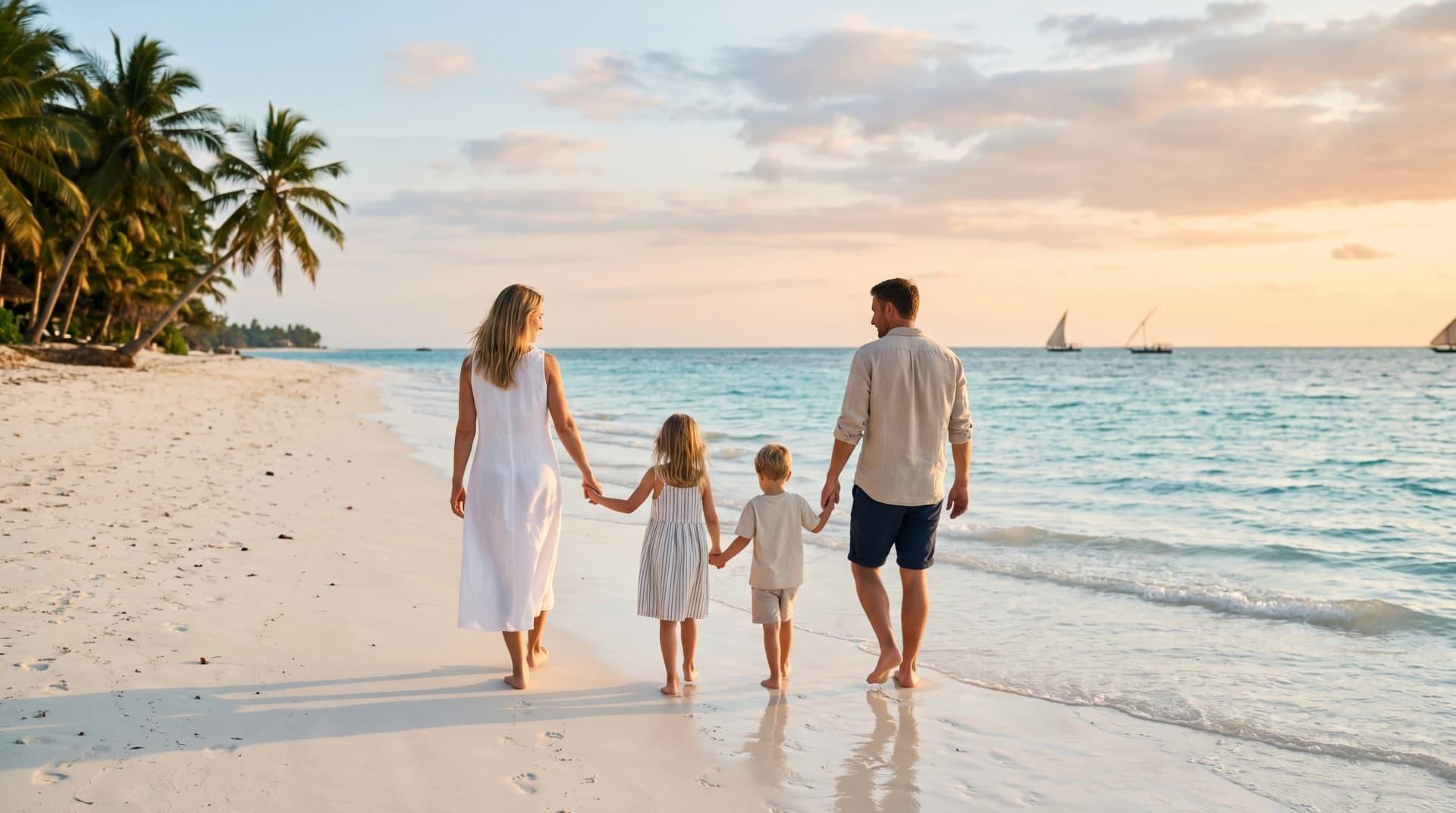
The African wilderness offers families an extraordinary opportunity to experience nature together. Imagine watching elephants cross the plains of Amboseli, looking for lions in Kenya’s Maasai Mara, discovering the endless grasslands of Tanzania’s Serengeti, observing mountain gorillas in Uganda or Rwanda, or ending your holiday on the tropical beaches of Zanzibar.
For families seeking greater comfort, privacy and flexibility, a luxury African safari can combine these experiences with beautiful accommodation, knowledgeable guides, private transportation and carefully planned activities suitable for different ages.
However, the best luxury African safari for families is not necessarily the one with the most expensive lodge or the greatest number of destinations. It is the one that balances wildlife experiences, accommodation, travel time, children’s needs and the family’s budget.
Some families want a first safari with young children. Others are planning a special holiday with teenagers, a multigenerational celebration with grandparents, or an extended journey combining East Africa with Southern Africa. Each requires a different approach.
At Astute Africa Safaris, the planning approach is to listen to the traveller, understand the journey and design the itinerary around the experience they want.
This guide explores luxury family safaris in Kenya, Tanzania, Uganda and Rwanda, beach extensions to Zanzibar and the Kenyan coast, and future safari possibilities in South Africa, Botswana, Zimbabwe, Namibia and Zambia. It also explains indicative costs, accommodation considerations, suggested itineraries, travel seasons, safety and the questions to ask before booking.
Looking for a tailor-made family safari? Your itinerary can be planned around your children’s ages, travel dates, preferred accommodation, wildlife interests, comfort requirements and budget.
1. Is a luxury African safari right for your family?
A luxury safari can be particularly rewarding when your family values personalized service, privacy and the freedom to travel at a comfortable pace.
Unlike a fixed group departure, a private family safari can be arranged around your preferred wake-up times, the length of game drives, children’s meal schedules and the activities that interest each family member.
Luxury for families is about more than stylish interiors. It is about reducing unnecessary stress and making the experience enjoyable for everyone.
A thoughtfully planned family safari may include:
-
A private 4×4 safari vehicle and dedicated guide.
-
Spacious family suites, interconnecting rooms or private villas.
-
Comfortable lodges with suitable child policies.
-
Flexible wildlife-viewing schedules.
-
Domestic flights that replace lengthy road journeys where practical.
-
Meals arranged around children’s needs.
-
Swimming pools and relaxation time where suitable facilities are available.
-
Age-appropriate nature, wildlife and conservation activities.
-
Optional babysitting or children’s programmes where offered.
-
Beach stays after the safari.
-
Airport transfers and coordinated accommodation bookings.
Who benefits most from a private family safari?
Families with toddlers and younger children: Private vehicles, short game drives, manageable transfers and flexible meal times can make travel more comfortable.
Families with school-age children: Wildlife encounters, nature activities, cultural experiences and conservation education can make the holiday both exciting and educational.
Families with teenagers: Big-cat sightings, wildlife photography, selected adventure activities and eligible primate experiences may be especially appealing.
Multigenerational families: A private itinerary can accommodate grandparents, parents and children with different interests, mobility requirements and energy levels.
Families celebrating a special occasion: A luxury safari can be designed around a birthday, graduation, anniversary or family reunion.
A private safari is not automatically the best choice for every budget. Families who are comfortable sharing game drives may find better value in selected lodges with suitable child policies. The right arrangement depends on the ages of the children, the activities planned and the amount of flexibility required.
2. What makes a safari genuinely family-friendly?

A property described as luxurious is not necessarily suitable for every family. Before paying a deposit, confirm the actual facilities, occupancy rules, supervision requirements and minimum ages for activities.
Private safari vehicles
A private vehicle is one of the most useful features for a family safari.
It allows the family and guide to adjust the duration of a game drive, spend additional time watching an animal or return to the lodge when children become tired. This flexibility can be especially valuable for families with younger children.
Confirm whether the quotation includes a private vehicle for all game drives or only private transfers between destinations.
Family suites and interconnecting rooms
Look for accommodation with appropriate sleeping arrangements, sufficient space and a layout that suits your children’s ages.
Possible options include:
-
Two-bedroom family suites.
-
Interconnecting rooms.
-
Family tents with separate sleeping areas.
-
Private villas or exclusive-use houses.
-
Additional beds or cots, subject to availability.
Check the maximum occupancy, bed arrangements, bathroom facilities, balcony safety and supervision requirements. Some properties charge per person, while others price a family suite or private villa as a unit.
Meals and dietary requirements
Ask whether the lodge can provide early dinners, children’s menus, packed breakfasts, suitable snacks, high chairs and meals for specific dietary needs.
If a child has a food allergy or requires a special diet, discuss this with the property before booking and obtain confirmation of what it can accommodate.
Swimming pools and downtime
A swimming pool can be a welcome addition between morning and afternoon game drives. However, parents should check pool safety arrangements and whether children must be supervised at all times.
Downtime is important. A family itinerary should not require everyone to undertake a game drive or excursion every morning and afternoon.
Babysitting and children’s programmes
Some luxury lodges offer babysitting, junior naturalist activities, children’s clubs or supervised conservation experiences. Other camps have limited facilities or do not accept younger children.
Ask about minimum ages, advance booking, supervision, extra charges and whether the service is available throughout your intended stay.
Activity age restrictions
Age requirements may apply to shared game drives, walking safaris, night drives, canoeing, horseback riding and primate experiences.
A child may be allowed to stay at a lodge but not permitted to participate in every activity. Always check the current rules for each specific property, reserve and activity.
3. Best luxury safari destinations for families
The right destination depends on the wildlife you want to see, the ages of your children, your travel dates, the length of your holiday and whether you want a beach extension.

Kenya — a strong choice for a first family safari
Kenya combines the Maasai Mara’s big cats and seasonal migration, Amboseli’s elephants, Laikipia’s conservation experiences and a range of accommodation. Diani, Watamu and Malindi provide beach-extension options.
Best for: First-time safari families, private game drives, varied itineraries and safari-and-beach holidays.

Tanzania — the Serengeti and Ngorongoro
Families can combine Tarangire, the Ngorongoro Conservation Area and the Serengeti, then fly to Zanzibar for beach relaxation. The migration moves throughout the ecosystem, so the right camp depends on the month.
Best for: Families wanting iconic wilderness, big cats and a safari followed by a beach holiday.

Uganda — wildlife, forests and primates
Uganda combines savannah wildlife in parks such as Murchison Falls and Queen Elizabeth with forest experiences around Kibale and Bwindi. Gorilla trekking has a minimum age of 15 under Uganda Wildlife Authority guidance; chimpanzee tracking generally has a minimum age of 12.
Best for: Families seeking a varied nature holiday and eligible teenagers interested in primates.

Rwanda — focused luxury and mountain gorillas
Rwanda offers Kigali, Akagera’s savannah wildlife, Volcanoes National Park and Nyungwe Forest. Mountain gorilla trekking generally requires participants to be at least 15 years old.
Best for: Families wanting a carefully planned primate-focused journey and scenic landscapes.

South Africa — a future expansion destination
South Africa can combine private game reserves, the Greater Kruger region, Cape Town, the Garden Route and coastal experiences. Selected malaria-free reserves may be worth investigating for families, subject to current medical advice and local conditions.
Best for: Families wanting a varied holiday combining wildlife, cities, scenery and beaches.

Botswana — exclusive wilderness
The Okavango Delta, Chobe and selected private concessions offer remarkable wildlife settings. Many remote luxury camps rely on light-aircraft transfers and may have minimum ages for walking or water-based activities.
Best for: Families seeking exclusivity, wilderness and a higher-end fly-in safari.

Zimbabwe — wildlife and Victoria Falls
Hwange National Park and Mana Pools offer different wildlife experiences, while Victoria Falls can add a memorable scenic stop. Activity suitability depends on the children’s ages and the specific excursion.
Best for: Families seeking wildlife, dramatic landscapes and a combination of safari with Victoria Falls.

Namibia — desert scenery and wildlife
Namibia combines dramatic dunes, desert landscapes, Etosha’s wildlife and distinctive lodges. Distances can be considerable, so families should plan road journeys carefully or consider flights where practical.
Best for: Families interested in landscapes, photography, desert experiences and a different style of African journey.

Zambia — specialist wilderness experiences
South Luangwa and the Lower Zambezi offer exceptional wilderness settings. Walking safaris and other specialist activities have age and safety restrictions, while some camps operate seasonally.
Best for: Families with older children or teenagers who want a more specialist wildlife experience.
Zanzibar and the Kenyan coast: the beach dimension
Zanzibar is a beach destination rather than a safari country. It pairs naturally with Tanzania’s northern safari circuit, while the Kenyan coast can work particularly well after a Kenya safari.
-
Diani Beach: Resort relaxation, white sand and selected marine excursions.
-
Watamu: Coastal scenery and marine experiences, subject to sea conditions.
-
Malindi: Beach resorts and local excursions.
-
Zanzibar: Beach stays, Stone Town, spice experiences and selected boat trips.
Allow approximately three to five nights on the coast for a meaningful extension, adjusting the duration to your international flights and preferred pace.
For more East African destination ideas, see East Africa Safari Holidays.
4. Luxury family safari costs: what should you budget?
Safari prices vary significantly between destinations, seasons and properties. In a luxury safari, the accommodation rate may include meals, game drives and some park or conservation fees, while other costs are charged separately.
Published 2026 safari cost guides show a wide range of luxury pricing across Africa, with remote fly-in destinations such as Botswana’s Okavango Delta often costing more than some South African or Namibian options.
The figures below are indicative planning ranges for travel planning, informed by published market guides and the current cost guide on Astute Africa Safaris’ website. They are not live supplier quotes or guaranteed family package prices.
Indicative luxury safari budget by destination
| Destination | Indicative luxury budget per person per day |
|---|---|
| Kenya | US$700–1,800+ |
| Tanzania | US$900–2,500+ |
| Uganda | US$800–1,900+ |
| Rwanda | US$1,000–2,000+ |
| South Africa | US$700–2,000+ |
| Botswana | US$1,200–3,500+ |
| Zimbabwe | US$650–1,500+ |
| Namibia | US$700–1,500+ |
| Zambia | US$900–1,800+ |
Planning basis: broad indicative land-based luxury rates per person per day. Actual inclusions vary; international flights, insurance, visas, gratuities, premium activities and specialist permits may be additional. Exclusive-use villas and the most expensive camps can exceed these ranges. Confirm actual dates, child rates and inclusions before using these figures for a booking decision.
What might a complete family trip cost?
Rather than multiplying an advertised adult rate by the number of family members, start with the family’s actual requirements.
The following are illustrative budget scenarios, not verified package quotations. They show how a family can frame a planning budget for a conventional luxury trip before international flights, with the final amount dependent on child rates, room occupancy, season and transport.
| Example trip | Illustrative family budget |
|---|---|
| 7 days in Kenya for 2 adults and 2 children | US$12,000–25,000 |
| 10 days in Kenya with a beach extension for 2 adults and 2 children | US$16,000–32,000 |
| 10 days in Tanzania with Zanzibar for 2 adults and 2 children | US$20,000–40,000 |
| 14 days combining several safari regions for 2 adults and 2 children | US$28,000–55,000+ |
These ranges are for initial planning only, not prices verified against a set of bookable lodges. They may be too low for peak-season flagship camps, private aircraft, exclusive-use villas or high-cost permit-based activities. Obtain a dated, itemized quotation before relying on them.
What determines the final cost?
Accommodation: A family suite may offer better value than two separate rooms, but the total depends on the property and occupancy rules.
Travel season: School holidays and high-demand wildlife periods can increase rates. Shoulder-season dates may provide more choice or value.
Private vehicle: A dedicated vehicle and guide offer flexibility but may cost more than shared game drives.
Park and conservation fees: These vary by destination, park, season and visitor category.
Domestic flights: Fly-in safaris save road time but add aircraft fares and baggage restrictions.
Children’s rates: Child discounts differ by lodge, age, room type and activity. Some experiences charge adult rates or impose minimum ages.
Meals and drinks: Full board, selected beverages and laundry may be included, but this must be checked.
Beach accommodation: Resorts can be all-inclusive, half-board or bed-and-breakfast, so compare the total cost rather than room rates alone.
International travel and insurance: International airfares, travel insurance, entry requirements and personal expenses may fall outside the safari quotation.
How to get better value without losing the luxury experience
-
Spend two or three nights at selected lodges instead of changing accommodation daily.
-
Choose a family suite or villa where it provides better overall value.
-
Use domestic flights when they meaningfully reduce tiring transfers.
-
Compare peak-season dates with suitable shoulder-season alternatives.
-
Prioritize a private vehicle where your children’s ages make flexibility especially valuable.
-
Combine a premium safari lodge with a comfortable beach resort instead of selecting the most expensive option for every night.
-
Request a clear list of inclusions and exclusions.
For a deeper budgeting breakdown, see Astute Africa Safaris’ African Safari Cost Guide.
5. Luxury family safari itineraries: 7, 10 and 14 days
The sample itineraries below are designed as starting points for tailor-made trips. Accommodation and transport depend on confirmed availability, flight schedules, children’s ages and the time of year.

Itinerary 1: Seven-day Kenya luxury family safari
Best for a first safari
Route: Nairobi – Amboseli – Maasai Mara – Nairobi
Suggested accommodation: Luxury family hotel in Nairobi, family-suitable safari lodge in Amboseli and luxury tented camp in the Maasai Mara.
| Day | Plan | Overnight |
|---|---|---|
| 1 | Arrive in Nairobi, transfer to hotel and rest | Nairobi |
| 2 | Travel to Amboseli by road or suitable flight; afternoon game drive if timing allows | Amboseli |
| 3 | Morning or afternoon wildlife viewing with time to relax | Amboseli |
| 4 | Transfer or fly to the Maasai Mara, subject to schedules | Maasai Mara |
| 5 | Family game drive with a private guide where budget permits | Maasai Mara |
| 6 | Wildlife viewing and an optional age-appropriate lodge activity | Maasai Mara |
| 7 | Return to Nairobi and connect with onward travel if schedules allow | Departure or Nairobi |
Suitable for: Families with school-age children and older children, provided the travel pace and activities match their needs.
Important planning note: This is a compact itinerary. For younger children or international flights departing early, add a Nairobi night or remove one safari region rather than risk a tiring or rushed connection.
Itinerary 2: Ten-day Kenya safari and Diani Beach holiday
Best for safari plus beach
Route: Nairobi – Amboseli – Maasai Mara – Diani Beach

| Day | Plan | Overnight |
|---|---|---|
| 1 | Arrive in Nairobi and rest | Nairobi |
| 2 | Travel to Amboseli | Amboseli |
| 3 | Family safari in Amboseli | Amboseli |
| 4 | Fly or transfer to the Maasai Mara | Maasai Mara |
| 5 | Game drive and wildlife viewing | Maasai Mara |
| 6 | Second full safari day or a relaxed lodge day | Maasai Mara |
| 7 | Transfer to the coast using suitable confirmed connections | Diani |
| 8 | Beach relaxation and resort activities | Diani |
| 9 | Optional marine excursion or relaxed beach day | Diani |
| 10 | Transfer to the departure airport and onward travel | Departure |
Suitable for: Families who want a balance between wildlife and rest.
Accommodation: Luxury safari camps followed by a family-suitable coastal resort.
Planning note: The best flight routing may require a connection or an additional night. Confirm the actual schedule before finalizing the itinerary.
Itinerary 3: Fourteen-day Tanzania safari and Zanzibar
Best for an extended holiday
Route: Arusha – Tarangire – Ngorongoro – Serengeti – Zanzibar

| Day | Plan | Overnight |
|---|---|---|
| 1 | Arrive in Arusha and rest | Arusha |
| 2–3 | Travel to Tarangire and enjoy wildlife viewing | Tarangire |
| 4–5 | Explore the Ngorongoro area and crater, subject to park rules | Ngorongoro area |
| 6–8 | Travel to the Serengeti and enjoy several wildlife-viewing sessions | Serengeti |
| 9 | Fly to Zanzibar using a suitable confirmed connection | Zanzibar |
| 10–12 | Beach relaxation, resort activities and optional excursions | Zanzibar |
| 13 | Final full beach day or optional Stone Town experience | Zanzibar |
| 14 | Transfer to the airport for onward travel | Departure |
Suitable for: Families who want several safari landscapes followed by a relaxing beach stay.
Accommodation: Luxury lodges and tented camps, followed by a beach resort.
Planning note: The Serengeti is extensive. Select the camp’s location according to the season and desired wildlife-viewing area rather than assuming that the migration will be in one particular place.
Other itineraries worth developing
| Duration | Suggested journey | Best suited to |
|---|---|---|
| 7–9 days | South Africa: Cape Town and a private game reserve | Families seeking a mix of city and safari |
| 8–10 days | Uganda: Murchison Falls and Queen Elizabeth National Park | Families interested in savannah wildlife and river experiences |
| 5–8 days | Rwanda: Kigali, Akagera and a suitable mountain-region stay | Families seeking a focused wildlife and scenery trip |
| 8–10 days | Zimbabwe: Hwange and Victoria Falls | Families combining wildlife with a major natural attraction |
| 10–14 days | Namibia: desert landscapes and Etosha | Families interested in scenery and wildlife with careful driving plans |
| 8–12 days | Botswana: Okavango Delta and Chobe | Families seeking exclusive fly-in wilderness, subject to age policies |
| 8–12 days | Zambia: South Luangwa and Lower Zambezi | Families with older children interested in specialist safari experiences |
These are itinerary concepts for future planning, not confirmation of currently bookable packages through Astute Africa Safaris.
6. Choosing a safari according to your children’s ages
The age of each child should influence the destination, lodge, transport and activities you choose.
Toddlers and preschool children
For young children, prioritize comfortable accommodation, manageable transfers, flexible meals and shorter wildlife-viewing sessions.
Ask the lodge about:
-
Minimum ages and whether toddlers are accepted.
-
Cots, family rooms and suitable sleeping arrangements.
-
Private vehicles and shorter game drives.
-
Babysitting availability and supervision arrangements.
-
Swimming-pool safety.
-
Medical access and emergency procedures.
-
Car seats for road transfers, where available.
Avoid building a toddler’s first safari around multiple long drives or a demanding multi-country itinerary.
Primary-school children
Children in this age group may enjoy wildlife identification, birdwatching, animal tracks, conservation stories and suitable cultural experiences.
Ask whether the lodge offers supervised junior naturalist activities or other educational programmes, and whether parents need to accompany children.
A private guide can help make game drives engaging by explaining animal behaviour and adapting the pace to the children’s interests.
Teenagers
Teenagers may be ready for longer game drives, wildlife photography, selected walking activities and eligible primate experiences.
However, the rules still matter. Uganda’s official guidance sets minimum ages of 15 for gorilla tracking and 12 for chimpanzee tracking. Rwanda’s official tourism information sets a minimum age of 15 for gorilla trekking. Check current regulations and activity-specific requirements before booking.
Grandparents and multigenerational groups
For a family travelling with grandparents, consider walking distances, room access, steps, vehicle entry, heat and the availability of rest days.
Ask about accessible rooms, suitable bathrooms, medical support, vehicle arrangements and whether activities can be divided so that different family members can enjoy their preferred pace.
The best multigenerational safari gives everyone shared experiences without expecting every person to participate in every activity.
7. Health, safety and practical travel planning
A luxury safari still takes place in a natural environment. The quality of the accommodation does not eliminate the need to plan carefully.
Wildlife safety
Children should follow the guide’s instructions and remain in designated safe areas. They must not leave a safari vehicle or accommodation area unless expressly permitted and accompanied according to the property’s rules.
Many camps are not fully fenced, and wildlife can move through their grounds. Parents should supervise children closely, particularly after dark and around water, decks and swimming pools.
Malaria and travel-health planning
Malaria risk varies by destination and region. Consult a qualified travel-health professional well before departure about malaria prevention, vaccinations, insect protection and any individual medical considerations.
Do not assume that a destination, season or luxury property removes the need for appropriate precautions.
Travel insurance
Choose a policy that covers the activities planned, medical care, evacuation where appropriate, cancellations and travel disruption. Check age-related restrictions and exclusions for specialist activities.
Car seats and road transfers
If your child requires a car seat, request one in advance and confirm that an appropriate seat is available for the child’s age, height and weight. Do not assume every safari vehicle can provide one.
Domestic flights and luggage
Small aircraft often have strict weight limits and may require soft-sided bags. Confirm the exact baggage allowance and any rules affecting children’s luggage before packing.
Where possible, avoid tight connections between domestic flights and international departures. A buffer night may be worthwhile if missing the international flight would be costly.
Entry requirements and documents
Check passport validity, visas or entry permissions, any documents required when a child travels with one parent or another guardian, and the latest destination-specific requirements for your nationality.
8. Best time to travel on a luxury family safari
The best time depends on your preferred wildlife experiences, school holidays, budget and tolerance for weather variation.
| Destination | Planning considerations |
|---|---|
| Kenya | July–October is popular for the Maasai Mara migration season; January–February can also be attractive in many regions |
| Tanzania | The best timing depends on the Serengeti region, migration movements, Ngorongoro and whether Zanzibar is included |
| Uganda | Consider regional weather, road conditions and current availability of wildlife and primate activities |
| Rwanda | Gorilla permits, weather, trail conditions and the intended combination of parks influence planning |
| South Africa | Seasonality differs between private reserves, Cape Town and coastal destinations |
| Botswana | Water levels, wildlife movements, camp operating seasons and fly-in access affect the experience |
| Zimbabwe | Wildlife season, park conditions and the timing of a Victoria Falls visit influence the route |
| Namibia | Consider temperatures, desert conditions, wildlife-viewing objectives and long driving distances |
| Zambia | Check camp opening dates, seasonal access and the suitability of activities for children |
Families travelling during school holidays should start planning early, particularly if they require adjoining rooms, family villas, specific camps or limited-capacity flights.
For migration-focused travel, remember that wildlife movements are natural events rather than scheduled performances. No responsible operator can guarantee a particular sighting on a particular day.
9. Combining your safari with a beach holiday

A beach extension can be an excellent way to balance early starts and active wildlife viewing with slower days by the sea.
Safari plus Diani Beach
Diani is a natural option after a Kenya safari. Families can enjoy resort facilities, beach time and selected marine excursions.
Suggested stay: Three to five nights.
Most practical for: Kenya itineraries where flight schedules and onward travel make the coast convenient.
Safari plus Watamu
Watamu is worth considering for families interested in coastal scenery and marine experiences. Activity choices should reflect local sea conditions, tides and the children’s ages.
Suggested stay: Three to five nights.
Most practical for: Kenya itineraries with suitable connections to the coast.
Safari plus Malindi
Malindi offers another coastal option for resort relaxation and selected local excursions. Compare individual properties for family facilities, meal arrangements and swimming conditions.
Suggested stay: Three to five nights.
Safari plus Zanzibar
Zanzibar combines well with northern Tanzania’s safari circuit and can be incorporated into wider East African journeys when flight schedules permit.
Families can relax at the beach, explore Stone Town, arrange spice experiences or choose suitable boat trips.
Suggested stay: Four to six nights for a more relaxed beach holiday.
Should your family fly or travel by road?
Flying may be preferable when it substantially reduces journey time or avoids a tiring transfer after several safari days. Road transfers can be suitable when distances are manageable and the journey fits the family’s interests.
Compare the full cost and total travel time, not only the flight fare against the road transfer fee. Include airport transfers, waiting time, luggage restrictions and the possibility of an additional overnight stay.
For a more focused coastal itinerary, explore Astute Africa Safaris’ Kenya Beach and Safari Holiday guide.
10. How to choose suitable luxury safari lodges
Selecting the right accommodation can make a greater difference to a family’s experience than simply choosing the most famous property.
The following are examples of properties to investigate, not guarantees of current availability, child acceptance or suitability for every age group. Confirm current family policies and rates directly before including them in a quotation.
| Destination | Properties to investigate | What to confirm |
|---|---|---|
| Maasai Mara, Kenya | Angama Mara; Mara Plains Camp | Minimum ages, family accommodation and vehicle arrangements |
| Laikipia, Kenya | Segera Retreat | Family occupancy, activity restrictions and transfer options |
| Amboseli, Kenya | Tortilis Camp | Children’s policy, room configuration and access |
| Serengeti, Tanzania | Four Seasons Safari Lodge Serengeti and selected luxury tented camps | Family room options, child rates and activity rules |
| Uganda | Selected luxury lodges in Queen Elizabeth, Murchison Falls and Bwindi regions | Road access, age restrictions and medical arrangements |
| Rwanda | Selected lodges around Volcanoes National Park and Akagera | Child acceptance, family rooms and the suitability of planned activities |
| South Africa | Selected private game-reserve lodges | Child policies, reserve conditions and whether family game drives are available |
| Botswana | Selected Okavango Delta and Chobe camps | Age limits, light-aircraft access and water-activity rules |
| Zimbabwe | Selected Hwange lodges and Victoria Falls hotels | Family rooms, activity suitability and transfer arrangements |
| Namibia | Selected Etosha lodges and desert properties | Room capacity, driving distances and age restrictions |
| Zambia | Selected South Luangwa and Lower Zambezi camps | Seasonal operation, walking-safari rules and minimum ages |
Questions to ask before confirming a lodge
-
Does the property accept children of each age in our family?
-
Is there a family suite, interconnecting room or private villa?
-
Are game drives private or shared?
-
Are there minimum ages for walking safaris and other activities?
-
Can meals be arranged around children’s needs?
-
Are babysitting and supervised children’s programmes available, and at what cost?
-
Is the pool secured, and what supervision is required?
-
What medical assistance and emergency arrangements are available?
-
How long does it take to reach the property from the arrival airport?
-
Which charges are excluded from the quoted rate?
Written confirmation is particularly important when a family’s holiday depends on a specific activity or accommodation configuration.
11. Booking advice: deposits, cancellation terms and timing
For popular luxury camps, peak-season travel, family villas and multi-country journeys, booking several months in advance is sensible. Six to twelve months is a useful planning target for complex or high-demand trips, although availability varies.
Before paying, obtain a written itinerary and itemized quotation covering:
-
Accommodation names, room categories and occupancy.
-
Dates and the ages of all children.
-
Private or shared game drives.
-
Transfers and domestic flights.
-
Meals, drinks and included activities.
-
Park fees, conservation levies and specialist permits.
-
International flights and other exclusions.
-
Deposit requirements and balance-payment deadlines.
-
Cancellation, amendment and refund conditions.
-
What happens if flights, permits or activities are disrupted.
Astute Africa Safaris publishes its Terms and Conditions. Review these alongside the specific quotation and ask for clarification of any condition you do not understand.
Do not assume that a deposit is refundable or that every supplier applies the same cancellation policy. The terms for accommodation, flights and specialist permits may differ, so these should be explained before payment.
12. Frequently asked questions about luxury African family safaris
What is the best African country for a luxury family safari?
Kenya is an excellent starting point for many first-time safari families because it offers classic wildlife, a range of accommodation and the possibility of a beach extension. Tanzania is ideal for families prioritizing the Serengeti and Ngorongoro, while Uganda and Rwanda appeal to families interested in primates and forest experiences. South Africa, Botswana, Namibia, Zambia and Zimbabwe offer different Southern African safari styles.
The best country depends on the children’s ages, travel dates, interests and budget.
How much does a luxury African safari cost for a family of four?
The cost depends on the number of nights, destination, lodge category, children’s rates, private vehicles, flights and included activities. As an initial planning exercise, a seven-day Kenya luxury safari might be budgeted at around US$12,000–25,000 for two adults and two children, excluding international flights. This is an illustrative estimate, not a verified quotation. Obtain a dated proposal for your exact travel dates and family composition.
Is a private safari worth the extra cost?
It can be especially valuable for families with younger children or different activity preferences. A private guide and vehicle provide greater control over game-drive length, departure times and stops. Shared game drives can be a reasonable alternative for families whose children meet the property’s age requirements and who are comfortable with a fixed schedule.
Are luxury safari lodges suitable for toddlers?
Some accept toddlers, while others have minimum age restrictions. Even where toddlers are accepted, certain activities may be restricted. Confirm sleeping arrangements, supervision requirements, private-vehicle options and the lodge’s current child policy before booking.
Can children participate in gorilla trekking?
Uganda and Rwanda generally require gorilla trekkers to be at least 15 years old. Uganda also sets a minimum age of 12 for chimpanzee tracking under its published guidance. Check the latest rules and permit conditions before confirming a family itinerary.
Is Kenya or Tanzania better for a luxury family safari?
Kenya is attractive for the Maasai Mara, Amboseli, Laikipia and the Kenyan coast. Tanzania is particularly compelling for the Serengeti, Ngorongoro and Zanzibar. Both offer outstanding possibilities when the route, accommodation and travel dates are chosen carefully.
Can we combine Kenya, Tanzania and Uganda in one trip?
Yes, a tailor-made itinerary can combine these countries, but the number of transfers and border arrangements needs careful planning. For many families, a longer trip of approximately 14–21 days is more comfortable than trying to fit several countries into one week. The final itinerary should account for flight schedules, children’s ages and time for rest.
Can we combine a safari with Zanzibar or the Kenyan coast?
Yes. Northern Tanzania combines naturally with Zanzibar, while a Kenya safari can be extended to Diani, Watamu or Malindi. Allow several additional nights so that the beach stay feels like a holiday in its own right rather than a brief stop between flights.
Which Southern African destination is best for children?
There is no universal answer. South Africa offers varied safari and non-safari experiences; Namibia offers desert scenery and wildlife; Botswana offers exclusive wilderness; and Zambia and Zimbabwe offer specialist safari experiences. Accommodation policies, activity restrictions, medical considerations and travel times should determine the final choice.
How many days do we need for a luxury family safari?
Seven days can work for a focused safari visiting two main areas. Ten days allows more time for wildlife viewing and relaxation, while 14 days can accommodate a more extensive safari or a safari-and-beach combination. Multi-country trips may require longer depending on the routing.
What should we pack for a luxury safari with children?
Pack lightweight neutral-coloured clothing, comfortable shoes, sun hats, sunscreen, insect repellent, swimwear, personal medication and any essential children’s supplies. Bring binoculars if you have them, and check luggage limits before travelling by small aircraft.
When should we book our family safari?
For peak travel periods, school holidays, popular migration dates and limited-capacity family accommodation, planning six to twelve months ahead is a useful target. Shorter lead times may work for flexible dates, but accommodation and flight choices can be more limited.
Plan your tailor-made luxury African family safari

The best luxury African safari for families is not necessarily the longest itinerary or the most expensive collection of lodges. It is a carefully designed journey that combines memorable wildlife experiences, comfortable accommodation, appropriate activities, manageable travel times and opportunities to relax together.
Whether you are planning a first safari in Kenya, a Serengeti adventure in Tanzania, a wildlife and primate journey in Uganda or Rwanda, or a future Southern African holiday in South Africa, Botswana, Zimbabwe, Namibia or Zambia, the journey should be built around your family’s needs.
Astute Africa Safaris can help you explore suitable destinations, accommodation categories, private transport, domestic flights and possible beach extensions. A tailored proposal should take account of your travel dates, children’s ages, preferred comfort level, interests and budget.
Request a tailor-made family safari quotation
To help plan the right journey, share the following details:
-
Travel dates: Exact dates or preferred month and year.
-
Family composition: Number of adults and children, including each child’s age.
-
Destinations: Countries or wildlife experiences you would most like to include.
-
Holiday duration: Number of days or nights available.
-
Preferred style: Luxury lodge, tented camp, private villa or a combination.
-
Budget: Approximate total budget or preferred per-person range.
-
Additional experiences: Beach holiday, gorilla trekking for eligible travellers, cultural activities or other special interests.
Plan your African safari with local knowledge and personalized travel support. Let Astute Africa Safaris help you shape a family holiday around the experiences that matter most to you.
Explore: East Africa Visa Requirements
Explore: Booking Terms and Conditions
Leave a comment:
You must be logged in to post a comment.
Comments (2)
Defining the Safari Experience: Budget vs. Luxury in Kenya - Astute Africa Safaris,
04 April, 2026[…] Luxury safaris redefine the African wilderness experience through the lens of privacy and bespoke service. These itineraries frequently incorporate “fly-in” segments, utilizing light aircraft to land on private airstrips within or adjacent to exclusive conservancies. This eliminates the fatigue of long-distance driving and allows for immediate immersion into the bush. Accommodations in this tier are often “eco-luxury” camps, which are designed to be semi-permanent or mobile, ensuring minimal environmental impact while providing amenities such as private plunge pools, butler service, and fine dining. […]
Astute Africa Safaris,
05 May, 2026REF: Crafting Your Bespoke African Safari Experience with Astute Africa Safaris
Jambo,
Thank you for your interest in exploring the wonders of Africa with Astute Africa Safaris. We pride ourselves on creating immersive, tailor-made journeys that align perfectly with your personal interests, pace, and travel aspirations.
Because every safari is a unique narrative, we do not believe in “one-size-fits-all” pricing. To ensure we provide you with an accurate and competitive quotation that reflects the specific lodges, wildlife experiences, and logistical arrangements you desire, we invite you to connect with our team for a personalized consultation.
Please contact us at info@astuteafricasafaris.com, Whatsapp +254762663272 or fill the inquiry form with a few details regarding your preferred travel dates, group size, and specific interests (e.g., photography, luxury relaxation, or adventure trekking). Once we have these details, we will curate a comprehensive proposal designed specifically for you.
We look forward to the possibility of helping you plan an unforgettable journey.
Warm regards,
Team Astute Africa Safaris