

- 756 Views
- 12 Min Read
- (1) Comment
Kenya has increasingly become a premier destination for travelers with disabilities, transforming the traditional rugged safari experience into an inclusive adventure. Historically planning a wheelchair accessible safari and holiday in Kenya need special attention. The safari industry for decades focused on off-road mobility that excluded those with limited physical mobility; however, contemporary tourism infrastructure in East Africa has shifted toward universal design principles. Navigating the Kenyan landscape requires careful planning, specifically regarding vehicle modifications, lodge accessibility, and the selection of national parks that offer paved or flat terrain.
Recommended Destinations and Safari Itineraries
While planning a wheelchair accessible safari and holiday in Kenya, the most accessible regions are those that have invested in modern infrastructure. Nairobi serves as the primary hub, offering the most accessible urban environment in East Africa. The Nairobi National Park is unique for its proximity to the city, allowing for game drives on relatively well-maintained tracks. Beyond the capital, the Masai Mara National Reserve is the crown jewel of Kenyan tourism. While the terrain is wild, several high-end conservancies within the Mara have developed specialized safari vehicles with ramps and secure tie-down points for wheelchairs.
Lake Nakuru National Park is highly recommended for its flat topography and the ability to view wildlife, such as rhinos and flamingos, from the comfort of a modified vehicle without needing to traverse steep or uneven ground.
For a balanced itinerary, a 10-day trip is ideal: (Get some ideas and cost)
- Days 1-2: Nairobi (Giraffe Centre and Karen Blixen Museum, which have made significant strides in accessibility).
- Days 3-5: Masai Mara (Focusing on conservancies that offer “tented camps” with wooden boardwalks).
- Days 6-8: Lake Nakuru or Lake Naivasha (Ideal for bird watching and boat safaris, which can be accessed via jetty ramps).
- Days 9-10: Coastal relaxation in Diani Beach, where many resorts now offer beach wheelchairs and accessible swimming pool hoists.
Planning a Wheelchair Accessible Safari and Holiday in Kenya: Elderly couple lover in motion of enjoy the park one of them sitting along wheelchair patients treatment .
Accommodation and Logistics
Planning a wheelchair accessible safari and holiday in Kenya involves selecting accommodation, it is imperative to look for “tented camps” that utilize raised platforms. These structures are often more accessible than traditional stone-built lodges because they rely on wooden decking and ramps rather than stairs. Accordingly, from experience as a guide on East African tourism, the most accessible properties are those that have been audited by organizations specializing in disability travel, ensuring that doorways are wide enough for standard chairs and bathrooms are equipped with grab bars and roll-in showers.
Select safari lodges and tented luxury camps that have integrated universal design principles into their architecture, such as ramped access, widened doorways, and roll-in showers. In major hubs like Nairobi, larger international hotel chains are generally the most reliable for meeting international accessibility standards, often featuring elevators and specifically designated accessible rooms.
To ensure a comfortable experience, travelers should verify the following at each prospective lodge:
- Pathways: Are the walkways between the main lodge and the sleeping quarters paved or compacted?
- Bathroom Facilities: Do the bathrooms feature grab bars and roll-in showers, or are there raised thresholds?
- Common Areas: Is the dining area and viewing deck accessible without the need for assistance over stairs?
To ensure a comfortable experience, when planning wheelchair accessible safari and holiday in Kenya, select accommodation with amenities that allow easy access.
Wheelchair accessible safari and holiday in Kenya; Maasai Mara National Reserve
The Maasai Mara is the crown jewel of Kenyan tourism. Accessibility here is largely dependent on the lodge’s commitment to infrastructure. Many of the newer, high-end tented camps have replaced traditional raised wooden platforms with ground-level concrete or stone pathways. When selecting a lodge, it is essential to prioritize those that offer “tented suites” rather than traditional canvas tents, as the former often feature solid flooring and wider door frames. The use of modified 4×4 Land Cruisers with specialized seating is the standard for game drives, allowing guests to navigate the rugged terrain of the Mara while maintaining stability and comfort.
Lake Nakuru National Park
Lake Nakuru is renowned for its flamingo populations and rhino sanctuary. Because the terrain around the lake can be soft or muddy, accessibility is best managed through lodges located on the periphery of the park that offer paved access to viewing decks. Many lodges in this region have invested in ramps that comply with international accessibility standards, allowing guests to transition from their rooms to dining areas without encountering steps. It is highly recommended to verify that the lodge provides a “level-entry” bathroom, as this is the most common point of failure in older safari accommodations.
Amboseli National Park
Amboseli, famous for its views of Mount Kilimanjaro, features relatively flat, dry terrain, which is naturally more conducive to wheelchair navigation than the dense forests of other regions. Several lodges in the Amboseli ecosystem have been designed with wide, flat corridors and ground-floor rooms that provide direct access to the savannah. The primary challenge in Amboseli is the dust, which can affect mobility equipment; therefore, choosing a lodge with a well-maintained, hard-packed driveway is vital for ensuring that one can move from the vehicle to the lodge entrance with minimal assistance.
Lake Naivasha
Lake Naivasha serves as an ideal “pit-stop” due to its proximity to Nairobi and its relatively gentle topography. The lodges surrounding the lake are often situated on expansive, flat lawns that are easier to navigate than the hilly regions of the Rift Valley. Many resorts here have adapted their facilities to include accessible boat docks, allowing wheelchair users to participate in lake excursions to view hippos and birdlife. When booking, look for properties that explicitly mention “ADA-compliant” or “wheelchair-accessible” room categories, as these are the most reliable indicators of a truly barrier-free experience.
Essential Planning Considerations
The key to a successful wheelchair accessible safari and holiday in Kenya is to pre-trip audit of the specific property. As noted in travel literature regarding African expeditions, no two camps are identical in their accessibility features. Travelers should always request photos of the bathroom facilities and inquire about the distance from the parking area to the main lodge. Furthermore, engaging a specialized tour operator who understands the logistical requirements of wheelchair travel is the most effective way to ensure that your itinerary is seamless, from the moment you arrive at the airport to your final game drive.
Navigating the Savannah: Wheelchair Accessible Safaris in Kenya
The dream of experiencing the untamed beauty of the East African savannah is increasingly becoming a reality for travelers with mobility challenges. Kenya, a pioneer in wildlife conservation and tourism, has made significant strides in ensuring that the majesty of the Masai Mara and the serenity of Lake Nakuru are accessible to all. Central to this transformation is the evolution of safari infrastructure, which has shifted from exclusionary practices to inclusive, adaptive tourism models that prioritize safety, dignity, and immersion in the natural environment.
The Critical Role of Specialized Transportation
For a wheelchair user, transportation is the single most critical component of a successful safari holiday. Unlike standard tourism, where a vehicle is merely a means of transit, the safari vehicle serves as the primary viewing platform for hours at a time. To ensure accessibility, travelers should prioritize the use of custom-fitted 4×4 Land Cruisers. These vehicles are specifically engineered to accommodate mobility aids, often featuring hydraulic lifts or heavy-duty portable ramps that facilitate a seamless transition from the ground to the vehicle interior.
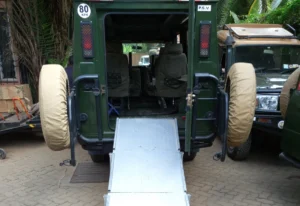
The success of wheelchair accessible safari and holiday in Kenya depends on choice of vehicle
Beyond the hardware, the human element is paramount. It is essential to confirm that the driver-guide is professionally trained in assisting passengers with mobility aids. Navigating the rugged, uneven terrain of the Kenyan bush requires a driver who understands the physics of stability; the “safari experience” often involves traversing bumpy tracks where maintaining balance is vital for both comfort and safety. When selecting a tour operator, one should verify that the vehicle modification does not compromise the structural integrity of the 4×4, as the vehicle must withstand the rigors of off-road driving while providing a stable platform for photography and wildlife observation.
Infrastructure and Inclusive Tourism
The broader landscape of accessible tourism in Kenya involves more than just vehicles. Modern safari lodges and national parks are increasingly integrating universal design principles. This includes the construction of raised boardwalks in sensitive ecological zones, which allow wheelchair users to access prime wildlife viewing points that were previously unreachable. Furthermore, the professionalization of the safari industry has led to a better understanding of the specific needs of travelers with disabilities, ranging from accessible bathroom facilities in remote camps to the availability of specialized equipment for game drives.
As the industry continues to evolve, the focus remains on bridging the gap between the wild, unpredictable nature of the African bush and the requirement for a controlled, accessible environment. By utilizing specialized 4×4 transport and working with operators who prioritize inclusive training (Wheelchair accessible safari and holiday in Kenya), wheelchair users can engage with the Big Five—lion, leopard, rhinoceros, elephant, and buffalo—with the same level of excitement and security as any other traveler.
Wheelchair Accessibility on Kenyan Beaches
Kenya’s coastline, renowned for its turquoise waters and white sands, presents significant challenges for travelers with limited mobility. While the country has made strides in developing infrastructure for national parks and urban centers, the natural topography of many coastal areas—characterized by soft, shifting sand and tidal fluctuations—remains largely inaccessible for standard wheelchairs. According to authoritative travel guides and regional studies, there are currently no beaches in Kenya that offer formal, government-certified “wheelchair accessible” status with specialized equipment like beach-ready wheelchairs or permanent boardwalks that extend to the water’s edge.
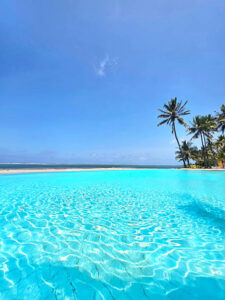
wheelchair accessible safari and holiday in Kenya; Idyllic seascape with palm trees and beach
Challenges and Current Realities
The primary obstacle to beach accessibility in Kenya is the lack of specialized infrastructure. In major coastal hubs like Diani Beach and Watamu, the terrain is often uneven, and the distance between the hard-packed sand near the dunes and the shoreline can be substantial. Most luxury resorts along the Diani strip have invested in private accessibility features, such as paved pathways leading from hotel rooms to pool areas and, in some cases, to the edge of the beach property.
However, these paths rarely extend onto the sand itself. Travelers relying on wheelchairs often find that the most viable way to enjoy the coast is by staying at high-end resorts that provide assistance staff to help navigate the transition from paved areas to the sand, or by utilizing private beach clubs that offer more controlled environments.
Recommended Approaches for Travelers
For those planning a wheelchair accessible safari and holiday in Kenya trip, the consensus among travel experts is to prioritize resorts that explicitly advertise “accessible rooms” and “ground-floor access.” While the beach itself may not be fully accessible, many of the larger, international-chain hotels in Diani have developed internal protocols to assist guests with mobility aids. It is highly recommended to contact the management of specific properties directly to verify the distance from the room to the high-tide mark and to inquire if they have staff available to assist with manual transport across the sand, as motorized beach wheelchairs are not standard equipment in the region.
Future Outlook
While the Kenyan government and tourism boards have begun to emphasize “inclusive tourism” in recent years, these efforts have largely focused on urban accessibility and safari logistics rather than coastal infrastructure. As noted in recent tourism development reports, the focus remains on improving access to historical sites like Fort Jesus in Mombasa, which has undergone renovations to improve accessibility for visitors with disabilities, rather than the natural beach environments.
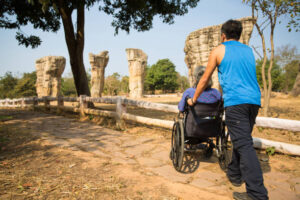
Wheelchair accessible safari and holiday in Kenya: A man takes his old mother on wheelchair.
Essential Tips for a Seamless Experience
- Tidal Awareness: Always consult a tide table. In many parts of the Kenyan coast, the difference between high and low tide is substantial. Low tide provides a vast, hard-packed surface that is ideal for manual or power wheelchairs.
- Equipment Rental: Do not assume that standard beach facilities will have adaptive equipment. Contact your accommodation provider well in advance to ensure they have, or can source, a beach-ready wheelchair.
- Assisted Access: In areas like Watamu, which is known for its marine national park, many boat operators are accustomed to assisting travelers with limited mobility onto glass-bottom boats, allowing for reef viewing without the need for complex transfers.
- Transport Logistics: Ensure that your ground transport is equipped with ramps or lifts. Relying on standard taxis can be difficult, as they often lack the space for a folded wheelchair and the necessary assistance for transfers.
Safety and Environmental Considerations
When visiting the coast, it is vital to remain mindful of the environment. The coral reefs are fragile, and accessibility should never come at the cost of conservation. When engaging in adaptive water activities, ensure that your guides are certified and that they understand the specific safety requirements for adaptive divers or swimmers. The Indian Ocean can have strong currents, so always prioritize locations with calm, protected lagoons, such as those found in Diani or the sheltered bays of Watamu.
Conclusion: Wheelchair Accessible Safari and Holiday in Kenya
The logistical success of a wheelchair-accessible safari in Kenya relies heavily on pre-trip planning and the selection of specialized operators who understand the nuances of terrain management in areas like the Masai Mara and Lake Nakuru. As noted in authoritative travel literature regarding East African wildlife tourism, the integration of accessible transport—typically 4×4 vehicles equipped with ramps or lifts—is the cornerstone of these excursions.
Beyond the vehicle, the transformation of safari lodges to include roll-in showers, ramped entrances, and accessible viewing decks has allowed for a more dignified and immersive experience. In conclusion, while the logistical requirements for an accessible safari remain complex, the combination of professional tour management and improved infrastructure has successfully opened the Kenyan wilderness to a broader demographic, proving that the majesty of the African savanna is an experience that can be made available to all travelers regardless of physical ability.
Leave a comment:
You must be logged in to post a comment.
Comment 01
Astute Africa Safaris,
05 May, 2026REF: Crafting Your Bespoke African Safari Experience with Astute Africa Safaris
Jambo,
Thank you for your interest in exploring the wonders of Africa with Astute Africa Safaris. We pride ourselves on creating immersive, tailor-made journeys that align perfectly with your personal interests, pace, and travel aspirations.
Because every safari is a unique narrative, we do not believe in “one-size-fits-all” pricing. To ensure we provide you with an accurate and competitive quotation that reflects the specific lodges, wildlife experiences, and logistical arrangements you desire, we invite you to connect with our team for a personalized consultation.
Please contact us at info@astuteafricasafaris.com, Whatsapp +254762663272 or fill the inquiry form with a few details regarding your preferred travel dates, group size, and specific interests (e.g., photography, luxury relaxation, or adventure trekking). Once we have these details, we will curate a comprehensive proposal designed specifically for you.
We look forward to the possibility of helping you plan an unforgettable journey.
Warm regards,
Team Astute Africa Safaris