

- 1.2k Views
- 32 Min Read
- (1) Comment
Kenya is famous for its sweeping savannahs, elephants, lions, the Great Wildebeest Migration and beautiful Indian Ocean beaches. Yet another of the country’s greatest treasures is its people: the many ethnic communities whose languages, histories, skills, beliefs, food, music and livelihoods contribute to Kenya’s distinctive identity.
The phrase “42 Kenya Tribes and Culture” is widely used to describe the country’s ethnic diversity. The exact number depends on the classification and recognition framework being used, and Kenya’s communities include numerous subgroups, clans and cultural identities. The National Museums of Kenya describes 44 officially recognized communities in its cultural exhibition, while other official sources use broader descriptions of more than 40 groups.
These communities are not simply remnants of the past. They include farmers, pastoralists, fishers, entrepreneurs, artists, teachers, conservationists, professionals, traders and technology innovators. Many Kenyans combine inherited cultural practices with contemporary education, employment, religion, urban life and international connections.
Understanding Kenya’s cultures helps travellers see the country beyond wildlife sightings. It also helps visitors appreciate the relationships between land, livelihoods, heritage, tourism and conservation.
This guide explores Kenya’s major ethnic communities, their regional identities, cultural expressions, social and economic activities, tourism opportunities, and the challenges that arise where human livelihoods and wildlife share the same landscapes.
1. Understanding 42 Kenya Tribes and Culture: Kenya’s ethnic and linguistic diversity
Kenyan communities are often discussed through three broad language-family groupings: Bantu, Nilotic and Cushitic. These categories are useful starting points for understanding language and history, but they do not fully describe each community’s identity, migration, beliefs or way of life.

Bantu-speaking communities
These include the Kikuyu, Luhya, Kamba, Kisii, Meru, Embu, Mijikenda, Taita, Swahili and several other communities. Their histories encompass farming, crafts, trade, fishing, coastal commerce and diverse contemporary occupations.

Nilotic-speaking communities
These include the Maasai, Luo, Kalenjin, Turkana, Samburu, Teso, Pokot and other peoples. Their varied histories include pastoralism, farming, fishing, trade and settlement across western Kenya, the Rift Valley and northern regions.

Cushitic-speaking communities
These include the Somali, Borana, Rendille, Gabra and other communities. Pastoralism, livestock commerce, long-distance trade and adaptation to arid environments have played important roles in many of their histories.
These are broad linguistic groupings, not rigid descriptions of occupations. A person’s language family does not determine whether they farm, herd livestock, live in a city or participate in tourism.
2. Bantu-speaking communities: farming, craftsmanship, trade and coastal heritage
The Kikuyu: Agriculture, enterprise and central Kenya’s highlands

The Agĩkũyũ, commonly called the Kikuyu, have historically been associated with the fertile central highlands around Mount Kenya and surrounding areas.
Cultural and social life: Family networks, kinship, community cooperation, oral traditions and councils of elders have been important in many Kikuyu social settings. Spiritual traditions associated with Ngai and Mount Kenya form part of the community’s heritage, although religious beliefs and practices vary widely today.
Economic activities: Agriculture has long been central, including the cultivation of maize, beans, vegetables, coffee and tea in suitable areas. Modern livelihoods also include retail, manufacturing, education, professional services, transport, property and entrepreneurship.
Tourism connections: The Mount Kenya region offers opportunities to combine cultural learning with hiking, agricultural experiences, rural accommodation and nature-based travel. Visitors should arrange farm visits with participating hosts rather than assume private farms are open to tourists.
Historical context: Kikuyu communities played important roles in Kenya’s anti-colonial struggle, including the Mau Mau uprising, which was closely connected to land alienation, political exclusion and colonial repression.
The Luhya: Community celebrations, farming and music

The Luhya communities of western Kenya comprise multiple subgroups, including the Bukusu, Maragoli, Wanga, Tiriki, Idakho, Isukha and others. Their languages, ceremonies and local histories differ across the region.
Traditional and contemporary social life includes family gatherings, initiation traditions in some communities, weddings, funerals, music, dance and communal support networks. Isukuti drumming and dance are particularly associated with parts of Luhya cultural heritage.
Farming, livestock keeping, commerce, education and public service have all contributed to regional livelihoods. Local food traditions include ugali, indigenous vegetables, fish in areas connected to Lake Victoria, and chicken at celebrations.
Tourism potential: Cultural performances, locally prepared food, craft experiences and community festivals can provide visitors with meaningful encounters when hosted by local cultural practitioners.
The Kamba: Woodcarving, basketry and dryland adaptation

The Akamba, or Kamba, are strongly associated with Ukambani, particularly Machakos, Kitui and Makueni counties.
Woodcarving, basketry, farming, livestock keeping, trade and other entrepreneurial activities are important parts of Kamba history and contemporary life. Akamba artisans have helped make Kenyan woodcarving known internationally, while craft cooperatives and workshops can connect visitors with the people behind the products.
Traditional music and dance, including Kilumi in some contexts, also express community history, spirituality and social identity.
The semi-arid environment of much of Ukambani has shaped farming choices and water-management practices. Drought, changing rainfall and land pressure can affect household livelihoods.
Tourism potential: Visitors can explore artisan workshops, learn how baskets and carvings are made, and purchase authentic work directly from makers or community enterprises.
The Kisii: Soapstone carving and productive highlands

The Abagusii, or Kisii, primarily inhabit the highlands of Kisii and Nyamira in southwestern Kenya.
Agriculture is central to the region’s economy, with crops including tea, bananas, maize and vegetables. Kisii soapstone carving is a distinctive craft tradition that provides livelihoods for artisans, traders and related businesses.
Family relationships, community networks, ceremonies and clan histories contribute to social identity, while contemporary life includes education, professional employment and business.
Cultural visitors can learn about soapstone production and purchase crafts from established workshops. Responsible purchasing means asking about the maker, the production process and whether the price fairly supports the artisan.
The Meru and Embu: Mount Kenya’s agricultural and cultural landscapes

The Meru and Embu communities live mainly on the eastern and southeastern slopes and foothills of Mount Kenya, with local variations in settlement and livelihoods.
Agriculture includes coffee, tea, bananas, vegetables and other crops suited to local conditions. Miraa, also called khat, is economically significant in parts of Meru, although its cultivation and trade are distinct from the region’s wider agricultural economy.
Family traditions, oral histories, music, community ceremonies and local knowledge of the mountain environment form part of the region’s cultural heritage.
Tourism connections: Farm visits, local food, village-hosted experiences and Mount Kenya trekking extensions can introduce travellers to the relationship between highland farming, forest ecosystems and everyday life.
The Mijikenda: Sacred forests, coastal traditions and heritage

The Mijikenda are a group of nine related coastal communities, including the Giriama, Digo, Duruma, Chonyi, Jibana, Kambe, Kauma, Ribe and Rabai.
Their heritage includes distinct languages, settlement histories, oral traditions and social practices. The Kaya forests—associated with ancestral settlements and spiritual significance—are especially important. Several Kaya forests are recognized as UNESCO World Heritage properties.
Agriculture, fishing, trade, small businesses, crafts and employment linked to coastal towns all contribute to modern livelihoods.
Tourism and conservation: Guided visits to appropriate heritage sites can support local interpretation and conservation. Some sacred spaces have restricted access or specific protocols, so visitors must follow community guidance and respect photography restrictions.
The Swahili: Indian Ocean history, architecture and coastal cuisine

Swahili culture developed through long-standing connections between African coastal communities and Indian Ocean trading networks. Swahili identity is not simply a mixture of foreign influences: it has deep African roots and a distinctive language, history, urban heritage and cultural expression.
Swahili is a Bantu language that has incorporated vocabulary from multiple languages through centuries of contact.
Coastal cuisine includes pilau, biryani, coconut-based dishes, seafood and locally varied preparations. Islamic traditions have influenced architecture, education, religious celebrations and aspects of social life, while practices vary among individuals and families.
Lamu Old Town, Mombasa Old Town and other coastal settlements offer opportunities to understand architecture, maritime history, crafts, cuisine and the connections between East Africa and the wider Indian Ocean.
For a beach extension after a wildlife safari, explore Astute’s Kenya safari and tour itineraries, including possibilities for combining wildlife experiences with Diani, Mombasa, Malindi, Watamu or Lamu.
Other Bantu-speaking communities to include
A comprehensive article should also recognize communities whose histories are less often featured in mainstream safari marketing.
-
Taita: Associated with the Taita Hills, farming, local languages and distinctive highland cultural heritage. The surrounding landscape also offers nature-based travel opportunities.
-
Taveta: A community with longstanding connections to the borderlands around Mount Kilimanjaro, agriculture and cross-border exchange.
-
Mbeere: Associated with parts of Embu County, where farming and adaptation to drier landscapes are important.
-
Tharaka: Known for local traditions and livelihoods shaped by the transition between the Mount Kenya region and the drier eastern lowlands.
-
Pokomo: Traditionally associated with settlements along the Tana River, where riverine farming, fishing and local trade have played important roles.
-
Bajuni: A coastal people with Swahili linguistic and maritime connections, historically associated with islands and coastal settlements in northern Kenya and the wider region.
-
Suba: Communities around parts of the Lake Victoria region with histories of migration, language contact, fishing and farming.
These communities should receive accurate, researched descriptions rather than being included merely to increase the number of names in the article.
3. Nilotic-speaking communities: Pastoral heritage, fishing, agriculture and music
The Maasai: Cattle, identity and community conservation

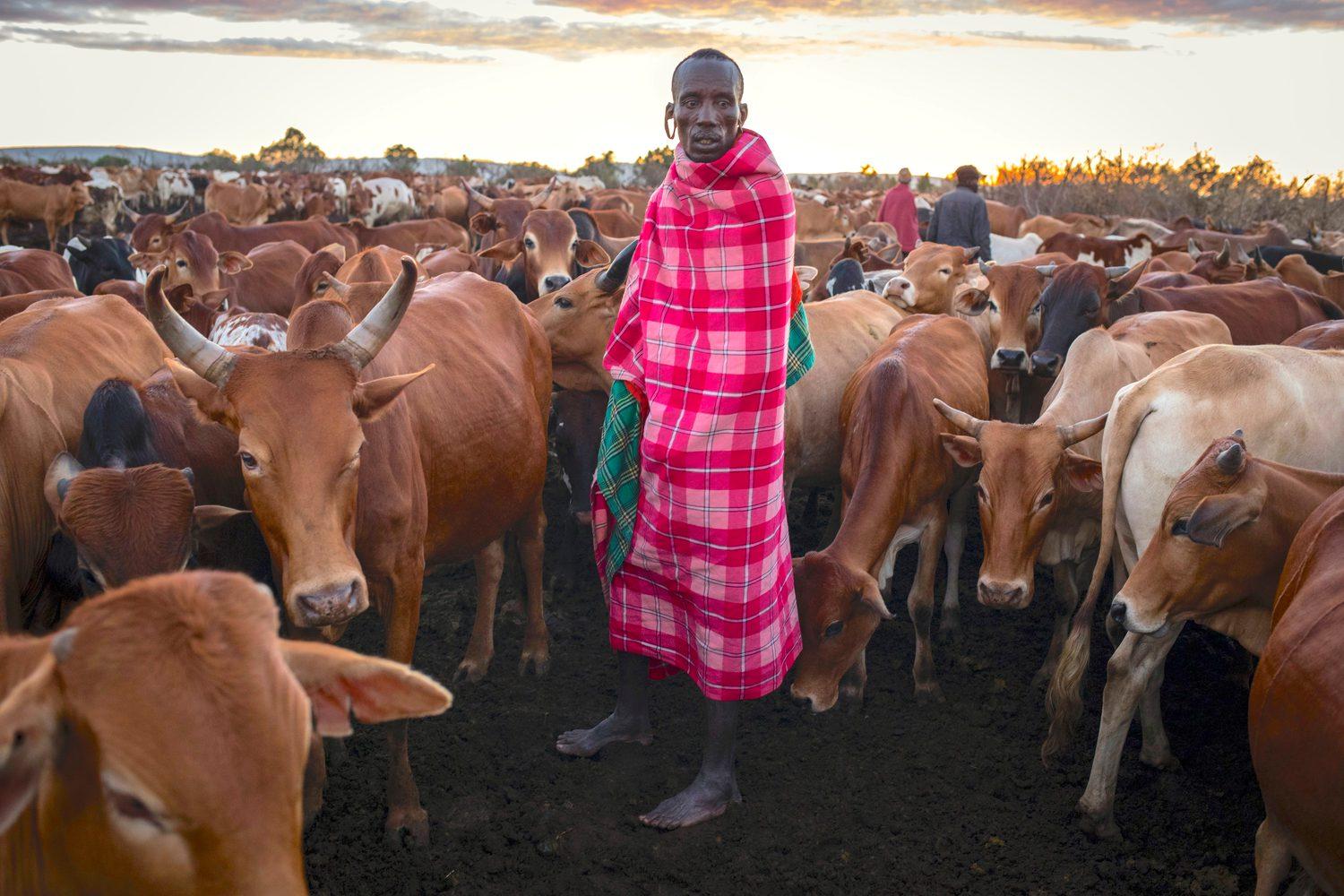
The Maasai are among East Africa’s most widely recognized communities. In Kenya, Maasai communities are especially associated with parts of Narok and Kajiado counties, including landscapes around the Maasai Mara and Amboseli. Maasai communities also live in northern Tanzania.
Cattle have traditionally held important economic, social and cultural value. Livestock provide milk, meat, income and social security, while age-set systems, oral traditions, beadwork, dress and ceremonial practices contribute to cultural identity.
However, Maasai people are not all pastoralists living in traditional settlements. Many also farm, run businesses, work in education and public service, participate in conservation, and live in towns and cities.
The connection with tourism: Cultural visits, beadwork purchases, community-owned accommodation, guiding and conservancy employment can generate income. Community conservancies can also help maintain wildlife habitat beyond national parks and reserves.
The benefits are not automatic. They depend on fair agreements, meaningful community participation, transparent revenue distribution, respect for land rights and locally determined priorities.
The Samburu: Northern Kenya’s pastoral landscapes

The Samburu live mainly in northern Kenya, particularly Samburu County and neighboring areas. Their Maa-related language, pastoral traditions, beadwork, family structures and ceremonial practices reflect a distinctive identity, despite historical and cultural connections with the Maasai.
Livestock remains important, although Samburu households participate in different combinations of trade, education, wage employment, tourism and other livelihoods.
Tourism around Samburu National Reserve and nearby conservancies can provide opportunities for local guides, cultural interpreters, craft producers and hospitality workers.
The region also illustrates how wildlife tourism and pastoral life can overlap. Land use, access to water and grazing, drought and wildlife movements all affect community livelihoods.
The Luo: Lake Victoria, fishing, music and commerce

The Luo are a Nilotic-speaking community concentrated around western Kenya and the eastern shores of Lake Victoria, with related communities and connections across the region.
Fishing, farming, trade, public service, education, music and entrepreneurship have all shaped Luo economic life. Fish and ugali are familiar features of many local food traditions, though diets and livelihoods vary considerably.
Social life includes rich musical traditions, storytelling, family celebrations and funeral customs. These practices continue to evolve with religious change, education, urbanization and contemporary lifestyles.
Tourism potential: Lake Victoria offers opportunities for fishing heritage experiences, local cuisine, lakeside travel, birdwatching and community-guided exploration. Sustainable tourism should complement—not displace—local fishing livelihoods and protect aquatic ecosystems.
The Kalenjin: Highland farming, livestock and athletics

The Kalenjin is a broad identity encompassing several communities, including the Nandi, Kipsigis, Tugen, Keiyo, Marakwet, Sabaot, Terik and Pokot in some historical and linguistic classifications. Classification varies, so the groups should not be treated as interchangeable.
Agriculture and livestock keeping are important in many areas. Tea farming, maize production, dairy enterprises, commerce, education and public service contribute to contemporary livelihoods.
The region is internationally associated with distance running, especially around highland training centers. This sporting legacy is one element of a much broader cultural and economic story.
Mursik, a traditional fermented milk preparation associated with some Kalenjin communities, reflects the relationship between food, livestock and local knowledge.
Tourism potential: Visitors can combine cultural experiences with highland landscapes, running-related travel, farm visits and journeys through the Great Rift Valley.
The Turkana: Livelihoods in a challenging dryland environment

The Turkana primarily inhabit northwestern Kenya, including areas around Lake Turkana. Pastoralism involving goats, sheep, camels and cattle has historically been important, while fishing, commerce, wage employment and other activities also contribute to livelihoods.
Jewelry, leatherwork, body adornment, oral histories and knowledge of dryland environments are important elements of Turkana heritage. Cultural practices vary between families and locations and are not frozen in a single historical period.
Drought, unreliable water supplies, changing grazing conditions and economic pressures can create serious challenges. Some communities also face the consequences of insecurity and competition over resources.
Tourism potential: The Lake Turkana region offers extraordinary landscapes, archaeology, geological features and cultural heritage. Travel should be carefully planned, with suitable local guidance and up-to-date security and transport information.
Other Nilotic communities: Teso, Pokot, Endorois and Ogiek

-
Teso: Found in western Kenya near the Ugandan border, with agricultural livelihoods, local language traditions and cross-border cultural connections.
-
Pokot: Communities in western and northwestern Kenya have histories involving pastoralism, farming, trade and adaptation to varied dryland environments.
-
Endorois: Associated historically with the Lake Bogoria and surrounding areas. Their identity is closely connected to ancestral lands, pastoral livelihoods, heritage and the struggle for recognition of community rights.
-
Ogiek: An Indigenous forest-associated community whose heritage includes deep knowledge of forest ecosystems, honey gathering and other forest-based livelihoods. The community’s experiences also highlight questions of land rights, conservation and the relationship between Indigenous peoples and protected landscapes.
These examples are especially important when discussing cultural heritage and conservation together. Communities are not merely stakeholders to be consulted after conservation decisions are made; their rights, knowledge and livelihoods matter in their own right.
4. Cushitic-speaking communities: Pastoral knowledge, trade and northern Kenya

Northern and northeastern Kenya are home to communities whose histories reflect long-distance movement, pastoralism, trade, cultural exchange and adaptation to arid environments. These landscapes require detailed local knowledge of water sources, seasonal grazing and livestock management.
The Somali: Trade, enterprise and pastoral heritage
Somali communities have longstanding connections across Kenya, Somalia, Ethiopia and the wider Horn of Africa. Northeastern Kenya is an important part of this broader cultural and economic region.
The Somali language, poetry, oral history, Islamic heritage, family networks and hospitality traditions are important cultural expressions. Pastoralism involving camels, goats, sheep and cattle has historically supported many households, while commerce, transport, retail, livestock trading and professional employment are also significant.
Somali entrepreneurs have contributed to markets, logistics, hospitality and other parts of Kenya’s economy. In towns and cities, Somali cultural life reflects both regional heritage and contemporary urban experience.
Tourism connections: Visitors can explore Somali cuisine, local markets and cultural heritage through appropriate local hosts. Respect for religious practices, privacy, dress expectations in particular settings and permission to photograph people is essential.
The Rendille: Camels, mobility and dryland knowledge
The Rendille are particularly associated with Marsabit County and the surrounding northern Kenyan drylands.
Camels have traditionally been important because they provide milk and transport and are well suited to dry environments. Livestock management, family cooperation, oral traditions, beadwork and knowledge of seasonal water and grazing all form part of Rendille heritage.
The Ariaal and other communities in the region illustrate how cultural identities and livelihoods may overlap and change through intermarriage, trade and shared landscapes.
Climate variability, drought, limited infrastructure and competition over water and pasture can affect households. Tourism can contribute through locally led cultural interpretation, accommodation, guiding and craft enterprises, provided benefits reach participating communities.
The Borana: Pastoralism, livestock markets and community institutions
The Borana are part of a wider Cushitic-speaking population living across northern Kenya and southern Ethiopia.
Cattle and other livestock have played important roles in household wealth, food security, social relationships and trade. Community institutions and customary systems have historically helped organize access to resources and resolve disputes, although practices vary and interact with contemporary law and government systems.
The Borana region also illustrates why dryland livelihoods cannot be understood simply as subsistence activities. Livestock markets, regional trade, transport, water management and cross-border relationships connect communities to wider economies.
The Gabra: Camels and adaptation to arid environments
The Gabra are associated with northern Kenya and southern Ethiopia, including landscapes around Marsabit and the Chalbi Desert.
Camel husbandry, pastoral mobility, trade and knowledge of dryland conditions are important in many Gabra livelihoods. Camels can provide milk and transport in environments where other livestock may struggle during difficult seasons.
Tourism in northern Kenya should prioritize local knowledge and community involvement. Visitors should not assume that a community’s traditional livelihood means every household wants to host visitors or display cultural practices.
The El Molo: A distinctive Lake Turkana heritage
The El Molo are a small community associated with the southeastern shores of Lake Turkana. Their history is closely linked to fishing and life around the lake.
The community’s small population and cultural heritage make respectful documentation particularly important. Tourism should not turn a community into a spectacle or treat cultural identity as a performance for outsiders.
Any visit should be arranged with appropriate local guidance, with clear permission for photography and cultural interpretation.
Other northern and northeastern communities
Kenya’s northern cultural landscape includes other groups and overlapping identities, including the Sakuye and several smaller communities with regional histories of pastoralism, trade and settlement.
The article should recognize these identities while avoiding unsupported claims about exact population sizes, fixed cultural boundaries or supposedly universal traditions.
5. How Kenya’s communities differ: A practical comparison
The following table is a starting point for understanding the relationship between geography, livelihoods and cultural heritage. It is not a complete description of every household or member of a community.
| Community or group | Important historical livelihoods | Cultural features and possible visitor interests |
|---|---|---|
| Kikuyu | Farming, trade, enterprise | Highland farming, food, Mount Kenya heritage |
| Luhya | Farming, livestock, trade | Music, dance, communal celebrations |
| Kamba | Farming, livestock, crafts | Woodcarving, basketry, artisan workshops |
| Kisii | Farming, craft production | Soapstone carving, highland agriculture |
| Meru and Embu | Farming, livestock, commerce | Highland landscapes, coffee and tea agriculture |
| Mijikenda | Farming, coastal trade | Kaya heritage, music, coastal traditions |
| Swahili | Maritime commerce, crafts, fishing | Architecture, cuisine, language and coastal history |
| Maasai | Pastoralism, trade | Beadwork, livestock heritage, community conservation |
| Samburu | Pastoralism, trade | Beadwork, pastoral knowledge, northern landscapes |
| Luo | Fishing, farming, commerce | Lake Victoria, food, music and oral history |
| Kalenjin | Farming, livestock | Highland agriculture, sporting heritage |
| Turkana | Pastoralism, fishing, trade | Lake Turkana heritage, beadwork, dryland knowledge |
| Somali | Pastoralism, trade, commerce | Cuisine, poetry, markets and regional history |
| Rendille | Camel and livestock herding | Dryland knowledge, beadwork, pastoral culture |
| Borana and Gabra | Pastoralism, livestock trade | Livestock knowledge, dryland adaptation |
6. Social life: Family, community, language and changing traditions

Culture is not limited to clothing, dances and ceremonial events. It is also found in ordinary daily life: how people welcome guests, share food, raise children, teach skills, resolve disagreements, celebrate milestones and support relatives.
Family and community support
Extended family networks and mutual assistance have been important in many Kenyan communities. Family members may help with farming, school fees, weddings, funerals, emergencies and business ventures.
These relationships continue to change with migration, education, employment, housing patterns and changing family structures. Urban families may maintain strong cultural connections even when relatives live far apart.
Elders and the transfer of knowledge
In many communities, elders have served as custodians of oral histories, customary knowledge, land-related traditions, community rules and cultural practices. Their roles vary according to local institutions, generation and gender.
Today, schools, cultural organizations, museums, artists, researchers and community initiatives also contribute to preserving languages and heritage.
Language and identity
Kenya’s national language, Kiswahili, helps connect people from different backgrounds. English is also an official language, while indigenous languages remain important to family life, storytelling, music, identity and local knowledge.
Many Kenyans use several languages, shifting between them depending on the setting. Language preservation can be supported through oral-history projects, community education, literature, recordings and opportunities for younger generations to learn from fluent speakers.
Religion and cultural change
Christianity, Islam, traditional spiritual systems and other beliefs have influenced Kenya’s social history in different ways. Religious practices are diverse both between and within communities.
Some ceremonies continue in adapted forms; others have changed substantially or are practiced by only some families. A responsible cultural guide should explain these differences rather than suggesting that everyone from one ethnic community follows identical beliefs.
7. Economic activities: How communities support Kenya’s economy

Kenya’s cultural diversity is closely connected to its economic diversity. Communities have developed livelihoods shaped by climate, soils, water, markets, infrastructure, land access and historical trade routes.
Agriculture and food production
Smallholder farming remains important across much of Kenya. Coffee, tea, maize, beans, bananas, vegetables, fruit and livestock products contribute to food supplies and household incomes.
Agricultural traditions also influence regional cuisines, seasonal festivals and local markets. Farm visits can help travellers understand the work behind familiar foods and the challenges of producing crops in changing climatic conditions.
Pastoralism and livestock commerce
Pastoralism remains central to many households in arid and semi-arid areas. Cattle, camels, goats and sheep can provide food, income, social security and assets that can be sold when money is needed.
Pastoral mobility is often an adaptive response to variable rainfall and grazing availability, not simply a lifestyle choice. Restricting access to traditional grazing routes or water sources can affect household resilience.
Fishing and maritime livelihoods
Fishing has historically supported communities around Lake Victoria, Lake Turkana and the Indian Ocean coast. It connects fishers with processors, traders, transport operators, restaurants and local markets.
Sustainable fisheries, healthy aquatic ecosystems and responsible coastal development are important for the long-term security of these livelihoods.
Craftsmanship, fashion and creative industries
Woodcarving, basketry, beadwork, pottery, soapstone carving, textiles, leatherwork, music and contemporary visual arts provide employment and cultural expression.
Crafts are particularly relevant to tourism because visitors can purchase locally made products. However, the best outcomes occur when artisans receive fair compensation and retain control over how their work and cultural designs are represented.
Trade, entrepreneurship and modern professions
Kenya’s ethnic communities participate in all parts of the contemporary economy, including education, medicine, technology, construction, finance, manufacturing, government, tourism and international trade.
Avoid presenting any community as naturally suited to a single occupation or as inherently more entrepreneurial than another. Economic participation reflects many factors, including access to education, infrastructure, land, capital and markets.
8. How cultural tourism benefits Kenyan communities

Cultural tourism allows travellers to learn about the people and histories behind the landscapes they visit. It can also create income outside traditional wildlife-viewing activities.
The benefits depend on how experiences are planned, who controls them and where the money goes.
Employment and local enterprise
Community-based experiences can create work for local guides, interpreters, drivers, cooks, accommodation providers, artists and cultural educators. Purchases from local farmers and craftspeople can spread visitor spending across the local economy.
Cultural preservation and intergenerational learning
When communities choose to share aspects of their heritage, tourism can help fund cultural centers, language projects, craft workshops, festivals and oral-history initiatives.
However, not every cultural practice should be commercialized. Sacred, private or restricted traditions should remain under the control of the people who hold them.
Diversifying safari experiences
Cultural experiences can complement wildlife safaris, hiking, birdwatching and beach holidays. Travellers may learn about livestock management near the Maasai Mara, crafts in Ukambani, Swahili architecture on the coast or fishing livelihoods near Lake Victoria.
For broader context, see Astute’s guide to the impact of safari tourism in Africa, which explores the economic, social and conservation dimensions of wildlife tourism.
What responsible cultural tourism looks like
-
Choose community-hosted experiences with clear local participation.
-
Ask whether the fee supports the guide, host, artisan or community organization.
-
Obtain consent before photographing people, homes, ceremonies or children.
-
Respect dress expectations, religious customs and site-specific restrictions.
-
Buy directly from makers when possible, and ask about materials and production.
-
Avoid experiences that exploit vulnerable people or present communities as exotic attractions.
-
Follow local guidance on sacred spaces, wildlife, environmental protection and visitor behavior.
9. Human–wildlife conflict: When conservation and livelihoods overlap

One of the most important issues in Kenya’s cultural and environmental story is the relationship between communities and wildlife.
Many communities live near national parks, reserves, forests, rivers, wildlife corridors and dispersal areas. These landscapes can support tourism and biodiversity while also providing land, food, water and income for people.
The same overlap can create real costs.
What causes human–wildlife conflict?
Crop damage: Elephants and other wildlife may enter farms and destroy crops, threatening household food supplies and income.
Livestock losses: Predators such as lions, hyenas and leopards may kill livestock, creating financial losses and sometimes retaliatory responses.
Threats to human safety: Encounters with large or dangerous animals can cause injuries, deaths and fear, particularly where people must walk long distances to reach water, grazing areas or farms.
Competition for land and water: Settlement expansion, fencing, agricultural development, drought, habitat fragmentation and changing wildlife movements can intensify pressure on shared resources.
Unequal distribution of tourism benefits: Communities may bear conservation costs without receiving a fair share of tourism revenue, employment opportunities or compensation for losses.
These challenges can affect pastoralist and farming communities differently. There is no single solution suitable for every location.
How communities contribute to coexistence

Approaches may include:
-
Community conservancies and locally agreed land-use arrangements.
-
Improved livestock enclosures and locally appropriate predator-protection measures.
-
Crop-protection systems designed for specific wildlife and landscapes.
-
Early-warning systems and reporting channels for dangerous encounters.
-
Fair, transparent compensation or insurance arrangements where available.
-
Wildlife corridors and land-use planning that consider local livelihoods.
-
Community participation in decisions, tourism revenue and conservation governance.
Kenya’s wildlife policy framework recognizes the importance of community participation and human–wildlife conflict mitigation.
Why tourism operators must take this issue seriously
Tourism businesses should not promote conservation as if wildlife always benefits local people. Responsible conservation recognizes both the ecological value of wildlife and the rights, safety, property and livelihoods of the communities living alongside it.
Travellers can ask operators how local communities participate in conservation, whether community-owned enterprises are involved, and how tourism benefits are distributed.
For travellers interested in wildlife alongside community conservation, Astute’s Kenya safari and tour itineraries provide a starting point for exploring combinations of wildlife, landscapes and cultural experiences.
10. Cultural tourism destinations across Kenya
Kenya’s cultural experiences are spread across the country. The best places to visit depend on the community, the season, the accessibility of local hosts and the type of experience a traveller wants.

Maasai Mara and Narok
Best for: pastoral heritage and community conservation
Learn about Maasai cultural traditions, beadwork and the relationship between pastoral livelihoods and wildlife. Arrange visits through responsible local hosts and distinguish genuine community-led experiences from staged commercial performances.

Samburu and northern Kenya
Best for: pastoral knowledge and dryland landscapes
Combine wildlife viewing with locally arranged cultural experiences, artisan visits and learning about livestock, seasonal water and dryland adaptation.

Kenya’s coast and the Mijikenda Kaya forests
Best for: heritage, architecture and coastal traditions
Explore the coast’s layered history through appropriate guided visits, local cuisine, traditional crafts and heritage sites where access is permitted.

Ukambani
Best for: crafts and rural enterprise
Discover woodcarving, basketry, farming and local markets, with opportunities to buy directly from participating makers.

Lamu and Mombasa
Best for: Swahili heritage and Indian Ocean history
Explore historic streets, architecture, maritime traditions, food and craft markets. Lamu is particularly suitable for travellers who want to pair heritage with a quieter island holiday.

Lake Victoria and western Kenya
Best for: fishing heritage and local food
Explore lakeside livelihoods, local markets, birdlife and food traditions through experiences arranged with residents and knowledgeable guides.
These are suggested regional starting points, not a guarantee that every community offers a formal visitor experience. Confirm access, safety, transport and community hosting arrangements before including a visit in an itinerary.
11. Sample cultural safari itineraries in Kenya
Cultural activities are often most rewarding when they complement a broader journey rather than being rushed into a short visit.

4-day Maasai Mara wildlife and cultural experience
Suggested for first-time visitors
-
Day 1: Travel from Nairobi to the Maasai Mara region.
-
Day 2: Guided wildlife viewing in the reserve.
-
Day 3: Wildlife viewing and a pre-arranged community-hosted experience.
-
Day 4: Return to Nairobi.
Best for travellers who want wildlife and cultural learning in one compact trip.

5-day Amboseli and community conservation journey
Suggested for wildlife and conservation interests
-
Day 1: Travel to Amboseli.
-
Days 2–3: Wildlife viewing and learning about the ecosystem.
-
Day 4: Visit a participating community initiative, where available.
-
Day 5: Return to Nairobi.
Best for travellers interested in elephants, conservation and the relationship between wildlife and surrounding communities.

8-day safari and Swahili coast heritage holiday
Suggested for wildlife, history and relaxation
-
Days 1–3: Explore a suitable Kenyan safari destination.
-
Day 4: Travel to the coast, allowing for transfer time.
-
Days 5–6: Discover Swahili architecture, cuisine and local heritage.
-
Days 7–8: Enjoy the coast and depart.
Best for travellers who want to combine wildlife with cultural heritage and an Indian Ocean beach stay. Flights, road transfers and the selected coastal destination will determine the practical schedule.
For more options, see 10 best Kenya safari and tour itineraries, the ultimate 10-day Kenya safari itinerary and the guide to planning an African safari.
12. Beyond Kenya: The ethnic and cultural diversity of East Africa
Kenya shares centuries of migration, trade, language exchange and cultural connections with its East African neighbours. A wider regional journey can help visitors understand the connections between communities rather than treating national borders as cultural boundaries.

Tanzania: Maasai, Chagga, Sukuma, Hadzabe and other communities
Tanzania has a rich cultural landscape that includes the Maasai, Chagga, Sukuma, Haya, Nyamwezi, Makonde, Iraqw, Hadzabe and many other communities.
-
Maasai: Pastoral heritage and cultural connections with Maasai communities in Kenya.
-
Chagga: Associated with the slopes of Mount Kilimanjaro, with histories of highland farming, trade and distinctive local institutions.
-
Sukuma: One of Tanzania’s major communities, historically associated with the Lake Victoria region, agriculture, livestock and music.
-
Haya: Associated with northwestern Tanzania around Lake Victoria, with agricultural and historical traditions.
-
Hadzabe: An Indigenous community in northern Tanzania whose heritage includes hunting, gathering and detailed knowledge of local ecosystems. Visits require particular sensitivity to community rights and consent.
-
Makonde: Known for distinctive carving traditions and a cultural heritage extending across southern Tanzania and northern Mozambique.
These examples are not a complete list. Tanzania’s many communities have varied histories and contemporary livelihoods.
Travellers can explore cultural experiences as part of Astute’s Tanzania safari and tour itineraries, including possible combinations with wildlife destinations and Zanzibar.
Uganda: Baganda, Banyankole, Basoga, Bakiga, Batwa and others
Uganda’s cultural diversity includes numerous communities with distinct languages, histories, food traditions, music, social institutions and livelihoods.
-
Baganda: Associated with Buganda and the central region, with a prominent history of kingdoms, arts and cultural institutions.
-
Banyankole: Associated particularly with southwestern Uganda, with histories involving cattle keeping, farming and regional commerce.
-
Basoga: Associated with the Busoga region in the east, including agricultural traditions and cultural institutions.
-
Bakiga: Strongly associated with southwestern Uganda’s highlands and varied farming livelihoods.
-
Acholi: Associated with northern Uganda, with distinctive musical, dance and oral traditions and a history shaped by major political and social changes.
-
Langi: Associated with northern-central Uganda, with agricultural and cultural traditions.
-
Batwa: Indigenous forest-associated communities whose histories include deep knowledge of forest environments. Displacement, land access and conservation policies have had significant effects on Batwa communities in different areas.
Cultural experiences can complement gorilla trekking, wildlife viewing, lakeside travel and visits to heritage sites. They should be arranged respectfully, especially where communities have experienced displacement or marginalization.
See Astute’s Uganda safari destinations and travel options for broader trip-planning information and potential combinations with Kenya or Tanzania.
Rwanda: Cultural heritage, farming and living traditions
Rwanda has a shared national language, Kinyarwanda, and a cultural heritage shaped by agriculture, royal history, music, dance, craftsmanship and community life.
The country’s population is commonly discussed in relation to Hutu, Tutsi and Twa identities. These identities have a complex and deeply sensitive history, particularly in the context of colonial classification, political violence and the 1994 genocide against the Tutsi. They should not be treated as three separate, simple cultural tourist categories.
Other important dimensions of Rwandan heritage include traditional dance, including Intore, basketry, pottery, farming, food traditions, historical sites and contemporary arts.
The Batwa, also present in Rwanda, have distinct Indigenous forest-associated histories and have experienced major changes in access to ancestral forest environments.
Tourism connections: Cultural heritage can complement gorilla trekking, national parks, lakeside holidays and historical visits. Sensitive history should be approached through reputable institutions and knowledgeable guides, with respect for the dignity of survivors and communities.
Explore Astute Africa Safaris for tailored East African safari planning and potential Rwanda extensions.
Zanzibar: Swahili culture and Indian Ocean heritage

Zanzibar is part of Tanzania and has a distinctive Swahili cultural identity shaped by African coastal heritage and centuries of Indian Ocean exchange.
Swahili language, Islamic traditions, historic architecture, music, cuisine, maritime trade and local crafts all contribute to Zanzibar’s identity. Its history also includes the slave trade and other difficult chapters that should be addressed honestly when interpreting heritage.
Visitors can explore Stone Town, local food markets, architectural heritage, dhow traditions and community-led cultural experiences, alongside beach holidays.
Zanzibar is particularly attractive as an extension to a Tanzania safari or, with suitable transport planning, a multi-country East African itinerary.
See Astute’s Zanzibar safari and beach holiday itinerary for an example of how wildlife and coastal experiences can be combined.
13. How to experience Kenyan culture respectfully

A rewarding cultural journey begins with curiosity and respect. Travellers should remember that the people they meet are hosts, professionals, families and community members—not exhibits.
Before visiting a community, consider the following:
-
Arrange visits in advance. Work with an appropriate local guide, host or community organization.
-
Ask before taking photographs. Permission should be obtained from individuals, especially for portraits, homes and ceremonies.
-
Respect sacred places. Some forests, shrines, ceremonies and cultural objects have restrictions on entry or photography.
-
Pay fairly. Ask about fees and whether they directly support the host, guide, artist or community organization.
-
Be open to contemporary life. People may wear traditional clothing during particular events and modern clothing at other times.
-
Avoid stereotypes. Do not assume that every member of a community shares the same religion, occupation, beliefs or lifestyle.
-
Listen to local perspectives. Community members should have a say in how their history and cultural practices are explained to visitors.
The aim is not to collect photographs of different ethnic groups. It is to understand the people, landscapes and histories that make East Africa distinctive.
14. Frequently asked questions about Kenya’s tribes and culture
How many tribes are there in Kenya?
The expression 42 tribes of Kenya is widely used, but the precise count varies according to the classification and recognition framework. The National Museums of Kenya’s cultural exhibition refers to 44 officially recognized communities. Kenya is home to more than 40 ethnic communities, alongside many subgroups and overlapping cultural identities.
What are the three major ethnic or linguistic groupings in Kenya?
Kenya’s communities are commonly grouped into Bantu-speaking, Nilotic-speaking and Cushitic-speaking peoples. These categories describe broad linguistic relationships and should not be treated as complete descriptions of culture, occupation or identity.
Which Kenyan communities are traditionally associated with pastoralism?
Maasai, Samburu, Turkana, Rendille, Borana, Gabra, Somali and several Pokot communities have important pastoral histories. However, their livelihoods vary, and many people also farm, trade, work in tourism or pursue other professions.
Which communities are known for traditional crafts?
Examples include Kamba woodcarving and basketry, Kisii soapstone carving, Maasai and Samburu beadwork, and a wide range of coastal, textile, pottery and contemporary artistic traditions. Craft practices are not exclusive to these communities.
Can tourists visit Kenyan communities?
Yes. Visitors can arrange cultural visits, artisan workshops, community-hosted experiences and heritage tours in suitable locations. Availability and access depend on the host community, location, season and local protocols. Visits should be arranged respectfully rather than undertaken on the assumption that every village is open to tourists.
How does tourism benefit local communities?
Tourism can create employment for guides, artisans, cooks, drivers and accommodation providers. It can also support locally owned enterprises, cultural preservation and community conservation. Actual benefits depend on fair payment, local ownership, transparent arrangements and meaningful participation.
What is the connection between culture and human–wildlife conflict?
Communities living near wildlife habitats may experience crop damage, livestock losses, safety risks and competition over water or land. Tourism can support coexistence through community participation, conservation employment and fair benefits, but it does not automatically compensate for the costs of living alongside wildlife.
Can I combine cultural tourism with a Kenya safari and Zanzibar beach holiday?
Yes. A journey can combine wildlife viewing, a locally hosted cultural experience and time on the Indian Ocean coast. The best combination depends on the number of available days, preferred destinations, transport connections and budget.
Can I explore cultures across Kenya, Tanzania, Uganda and Rwanda in one trip?
Yes, with careful planning. A multi-country itinerary can combine selected cultural experiences with wildlife viewing, gorilla trekking or beach time. Allow sufficient time for transfers, border formalities and different destination requirements. Not every country or community needs to be included in one journey.
15. Plan a culturally enriching East African safari with Astute Africa Safaris

Kenya’s cultural heritage is inseparable from its landscapes, wildlife, history and contemporary economy. From the agricultural highlands around Mount Kenya to the pastoral lands of northern Kenya, the shores of Lake Victoria and the historic Swahili coast, each region offers a different perspective on East African life.
A thoughtful itinerary can combine wildlife viewing with locally hosted cultural experiences, artisan workshops, heritage sites, community conservation and coastal relaxation. The most rewarding journeys are those that respect local priorities while helping travellers understand the connections between people, place and nature.
Astute Africa Safaris can help travellers explore suitable combinations of Kenya, Tanzania, Uganda, Rwanda and Zanzibar according to their interests, travel dates, preferred accommodation and budget.
Explore these related guides:
-
10 Best Kenya Safari and Tour Itineraries
-
The Ultimate 10-Day Kenya Safari Itinerary
-
Best Tanzania Safari and Tour Itineraries
-
The Real Impact of Safari Tourism in Africa
-
Cultural Immersion: Experiencing Maasai Traditions
-
How to Plan an African Safari
-
Zanzibar Beach Holiday and Safari
Ready to plan and explore 42 tribes of Kenya and their culture journey? Visit Astute Africa Safaris to discuss a personalized safari combining wildlife, cultural heritage, conservation and beach experiences.
Leave a comment:
You must be logged in to post a comment.

Comment 01
Astute Africa Safaris,
06 June, 2026REF: Crafting Your Bespoke African Safari Experience with Astute Africa Safaris
Jambo,
Thank you for your interest in exploring the wonders of Africa with Astute Africa Safaris. We pride ourselves on creating immersive, tailor-made journeys that align perfectly with your personal interests, pace, and travel aspirations.
Because every safari is a unique narrative, we do not believe in “one-size-fits-all” pricing. To ensure we provide you with an accurate and competitive quotation that reflects the specific lodges, wildlife experiences, and logistical arrangements you desire, we invite you to connect with our team for a personalized consultation.
Please contact us at info@astuteafricasafaris.com, Whatsapp +254762663272 or fill the inquiry form with a few details regarding your preferred travel dates, group size, and specific interests (e.g., photography, luxury relaxation, or adventure trekking). Once we have these details, we will curate a comprehensive proposal designed specifically for you.
We look forward to the possibility of helping you plan an unforgettable journey.
Warm regards,
Team Astute Africa Safaris