
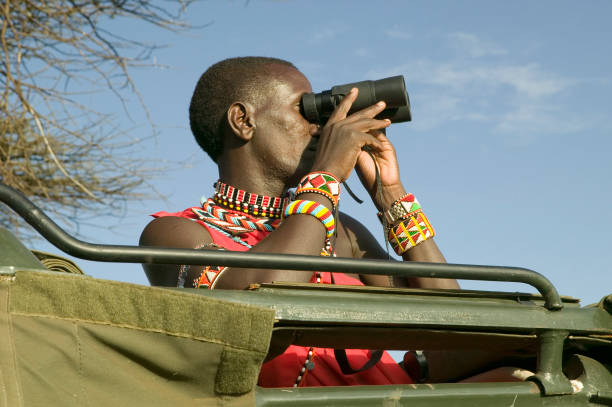

- 919 Views
- 11 Min Read
- (1) Comment
The Kenyan safari with maasai warriors is profoundly transformed when guided by the local Maasai, an indigenous Nilotic ethnic group whose ancestral lands encompass the vast plains of the Maasai Mara. Unlike conventional tourism, a safari led by a Maasai warrior offers an intimate, indigenous perspective on the ecosystem that has been refined over centuries of cohabitation with apex predators and migratory herds.
The Maasai Safari Guide: Why They Are the Premier Choice
The Maasai are widely considered the most authoritative guides in East Africa due to their deep-seated ecological knowledge. As noted in ethnographic studies of East African pastoralists, the Maasai possess an innate ability to “read” the landscape—tracking animals by scent, sound, and subtle changes in vegetation that remain invisible to the untrained eye. Choosing a Maasai guide ensures a symbiotic experience where the guide acts not just as a driver, but as a cultural interpreter who understands the complex social structures of the wildlife they track.
Walking Safaris and Cultural Heritage
Walking safaris with Maasai warriors provide a sensory connection to the savannah that is impossible to achieve from within a vehicle. These walks are rooted in the Maasai’s historical relationship with the land, where they have traversed these plains for generations to graze cattle and protect their herds. This heritage is not merely historical; it is a living practice. Guests are often invited to learn about traditional medicinal plants, tracking techniques, and the spiritual significance of specific landmarks within the Mara.
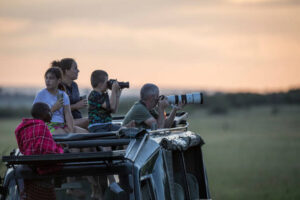
Maasai guide with Tourists enjoying a wildlife game drive in the Mara North Conservancy, Kenya.
The Kenyan Safari with Maasai Warriors: Engaging with Maasai Culture
The Kenyan safari experience, particularly when integrated with the traditional knowledge of Maasai warriors, offers a profound intersection of wildlife conservation and cultural heritage. For centuries, the Maasai have existed in a state of ecological symbiosis with the fauna of the East African savannah, developing an intuitive understanding of the landscape that modern technology often fails to replicate. Engaging with Maasai guides provides travelers with an unparalleled depth of insight into animal behavior, tracking, and the delicate balance of the ecosystem.
Advantages of the Maasai-Led Safari
The primary advantage of a Maasai-led safari is the depth of indigenous ecological knowledge. As noted in ethnographic studies of East African pastoralists, the Maasai possess a sophisticated taxonomy of the natural world, often identifying subtle environmental cues—such as the movement of birds or the specific scent of the air—that signal the presence of predators long before they are visible to the untrained eye. This creates a more immersive and authentic experience, moving beyond the “tourist gaze” to a genuine educational encounter.
Furthermore, these interactions provide direct economic support to local communities, incentivizing the preservation of wildlife corridors rather than their conversion into agricultural land. By valuing their traditional skills, the safari industry helps maintain the cultural dignity and economic viability of Maasai communities in a rapidly modernizing world.
Disadvantages and Ethical Considerations
Despite the benefits, there are significant complexities. One disadvantage is the risk of “cultural commodification,” where the rich, complex history of the Maasai is reduced to a performance for the benefit of tourists. This can lead to the erosion of authentic cultural practices as they are adapted to meet visitor expectations. Additionally, there is the ongoing tension regarding land rights; in some instances, the establishment of protected areas for tourism has historically displaced pastoralist groups, creating a legacy of distrust.
Travelers must also be cognizant of the power imbalance inherent in the safari dynamic, where the economic necessity of the guide may sometimes overshadow the mutual respect required for a truly equitable cultural exchange. Finally, the reliance on tourism as a primary income source can make these communities vulnerable to global economic fluctuations, as seen during periods of travel instability.
Cultural Activities and Community Structure
The Maasai social structure is strictly age-graded, defining the responsibilities of every member of the community. Men, particularly the morans (warriors), are traditionally tasked with the protection of the community and their livestock from predators. Women are the pillars of the household, responsible for the construction of the manyatta (traditional homes), milking cattle, and the creation of intricate beadwork, which serves as a visual language of status and identity.
Regarding rites of passage, the transition from childhood to adulthood is marked by significant ceremonies. While historical practices included circumcision for both boys and girls as a rite of passage into adulthood, modern Maasai society has seen a significant shift. Many communities have moved away from female genital mutilation (FGM) in favor of “alternative rites of passage,” which celebrate the transition to womanhood through education and community mentorship rather than physical cutting, reflecting a dynamic evolution of their cultural heritage.
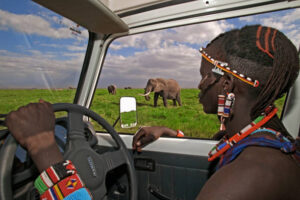
Kenyan Safari with Maasai Warriors as driver guide
Human-Wildlife Conflict and Coexistence
The Maasai have managed human-wildlife conflict for centuries through a philosophy of coexistence. Because their livelihood depends on cattle, the presence of lions and leopards is a constant challenge. Historically, this was managed through the moran system, where warriors would guard the bomas (livestock enclosures) at night. Today, this has evolved into sophisticated conservation models where the Maasai partner with safari operators to create “fenceless” zones, allowing wildlife to roam freely while providing the community with economic incentives to protect, rather than retaliate against, predator.
The Role of Maasai Warriors in Wildlife Conservation and Safari Management
The Maasai people have historically maintained a complex, symbiotic relationship with the wildlife of East Africa. In the context of modern safari tourism in Kenya, particularly within regions like the Maasai Mara, Maasai warriors and community members have transitioned into vital roles as conservationists, trackers, and guides. Their traditional ecological knowledge—often referred to as indigenous knowledge—allows them to interpret the savannah’s ecosystem with a level of precision that complements scientific wildlife management.
By serving as trackers and guides, they provide guests with an intimate understanding of animal behavior, migration patterns, and the delicate balance of the predator-prey dynamic, which fosters a deeper appreciation for conservation among international visitors.
Beyond their role in tourism, Maasai warriors are increasingly involved in community-based conservation initiatives. Historically, the Maasai were pastoralists who occasionally viewed wildlife as competitors for grazing land or threats to livestock. However, contemporary conservation models have integrated the Maasai into the management of conservancies. By participating in anti-poaching patrols and monitoring wildlife populations, they act as the “eyes and ears” of the bush.
Their presence on the land serves as a deterrent to illegal activities, while their deep-rooted cultural respect for the environment is leveraged to promote sustainable land-use practices. This shift has transformed the warrior identity from one of traditional livestock protection to one of environmental stewardship, ensuring that wildlife remains a viable resource for future generations while maintaining the cultural integrity of the Maasai people.
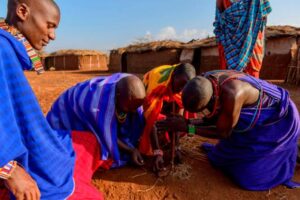
The Kenyan Safari with Maasai Warriors; Maasai, Masai, men lighting a fire by traditional means, Satao Elerai Conservancy, Near Amboseli National Park, Kenya.
What partnerships exist between Maasai communities and conservation organizations for wildlife protection during safaris?
The integration of Maasai communities into wildlife conservation represents a paradigm shift in African ecology, moving away from “fortress conservation”—which historically excluded indigenous peoples—toward community-based natural resource management (CBNRM). In Kenya and Tanzania, Maasai pastoralists have entered into sophisticated partnerships with conservation organizations to protect biodiversity while maintaining their traditional livelihoods.
These partnerships often manifest through the creation of community conservancies. Organizations such as the African Wildlife Foundation (AWF) and the Maasai Wilderness Conservation Trust (MWCT) work directly with local landowners to set aside grazing lands as wildlife corridors. In the Chyulu Hills, for instance, the MWCT employs over 100 local rangers, many of whom are Maasai warriors, to conduct anti-poaching patrols and monitor lion populations. This model is predicated on the understanding that the Maasai possess an intimate, ancestral knowledge of the landscape, which, when combined with modern GPS technology, creates a highly effective monitoring system for endangered species.
A central component of these partnerships is the “predator compensation fund.” Because Maasai culture is deeply tied to cattle herding, the loss of livestock to lions or leopards often leads to retaliatory killings. Conservation organizations mitigate this by providing financial compensation to families who lose livestock to predators, provided the animals were protected according to agreed-upon standards. Furthermore, these partnerships leverage ecotourism as a primary funding mechanism. Revenue generated from safari tourism is directed toward community-owned schools and medical clinics, creating a tangible economic incentive for the community to protect the wildlife that attracts visitors.
In academic literature, this is frequently described as the “co-management” of ecosystems. Scholars note that when Maasai communities are given legal title to their land and a seat at the table in management decisions, the rate of poaching decreases significantly. These partnerships ensure that the “safari experience” is not merely an extractive industry, but a collaborative effort where the Maasai act as stewards of the land, ensuring that wildlife corridors between major parks—such as the connection between Amboseli and Tsavo—remain intact.
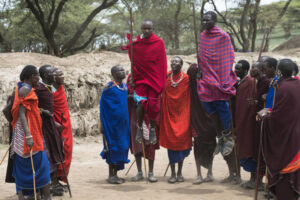
Kenyan Safari with Maasai Warriors; Maasai Warriors Jump During Traditional Dance at Their Village In Maasai Mara Area. Kenya.
What should travelers consider when choosing a safari that includes interactions with Maasai culture?
When planning a safari that incorporates interactions with Maasai communities, travelers must prioritize ethical engagement, cultural sensitivity, and the economic empowerment of the local population. The Maasai, a Nilotic ethnic group inhabiting northern, central, and southern Kenya and northern Tanzania, have a complex history of interaction with the tourism industry. Scholars emphasize that the commodification of Maasai culture—often referred to as “cultural tourism”—requires a critical approach to ensure that the dignity of the community is maintained and that the benefits of tourism are not captured solely by external tour operators.
Travelers should first investigate whether a tour operator has established long-term, transparent relationships with specific villages rather than utilizing “staged” cultural experiences. In many instances, the most authentic interactions occur when the community itself manages the tourism project, ensuring that proceeds support local infrastructure such as schools, clinics, and water projects. It is essential to verify that the tour company practices “community-based tourism,” which prioritizes the agency of the Maasai people in deciding how their culture is presented to outsiders.
Cultural etiquette is paramount. Travelers should be aware that the Maasai have distinct social norms regarding photography, dress, and interaction with elders. It is considered respectful to seek explicit permission before photographing individuals or their homesteads (manyattas). Furthermore, visitors should avoid treating the community as a static museum exhibit; instead, they should engage in active listening and participate in activities—such as traditional beadwork or guided nature walks—that allow for genuine human connection.
Modesty in dress is generally expected, and travelers should follow the guidance of local community leaders regarding participation in rituals or ceremonies to avoid disrupting the sanctity of these events. Finally, travelers should be wary of “tourist traps” where the primary goal is the sale of mass-produced souvenirs, and instead seek out cooperatives where artisans receive fair compensation for their craftsmanship.
Traditional Lifestyle of the Maasai People
The Maasai people, a Nilotic ethnic group inhabiting northern, central, and southern Kenya and northern Tanzania, maintain a traditional lifestyle that is fundamentally defined by semi-nomadic pastoralism. Central to their existence is the cow, which serves as the primary measure of wealth, a source of sustenance, and the focal point of social and ritual life. Their traditional diet consists largely of milk, blood, and meat, reflecting an adaptation to the arid environments of the Great Rift Valley.
The social structure of the Maasai is organized through a sophisticated age-set system, which dictates the roles and responsibilities of individuals throughout their lives. Young men, known as morans or warriors, undergo rigorous rites of passage, including circumcision, which marks their transition from childhood to adulthood and their induction into the warrior class. This warriorhood is characterized by the protection of the community and their livestock from predators and rival groups. Women, meanwhile, are central to the maintenance of the boma—the traditional circular enclosure—and are highly skilled in intricate beadwork, which serves as a visual language to denote age, marital status, and social standing.
The Maasai spiritual life is centered on the deity Enkai (or Engai), who is believed to have gifted all cattle to the Maasai. Traditional religious practice involves the Oloiboni, a spiritual leader or shaman who acts as an intermediary between the people and the divine, providing guidance on matters of health, warfare, and drought. Despite the pressures of modern education, climate change, and land encroachment, the Maasai continue to balance their ancestral customs with the realities of the 21st century, often maintaining their traditional dress, such as the shuka (a vibrant cloth wrap), as a symbol of cultural pride and identity.
Conclusion; Kenyan Safari with Maasai Warriors
The collaboration between Maasai warriors and safari operators represents a unique model of sustainable tourism. While it offers an unmatched window into the natural history of the Mara, it requires a careful, ethical approach that prioritizes the agency and traditional values of the Maasai people over the mere consumption of their culture
Leave a comment:
You must be logged in to post a comment.


Comment 01
Astute Africa Safaris,
05 May, 2026REF: Crafting Your Bespoke African Safari Experience with Astute Africa Safaris
Jambo,
Thank you for your interest in exploring the wonders of Africa with Astute Africa Safaris. We pride ourselves on creating immersive, tailor-made journeys that align perfectly with your personal interests, pace, and travel aspirations.
Because every safari is a unique narrative, we do not believe in “one-size-fits-all” pricing. To ensure we provide you with an accurate and competitive quotation that reflects the specific lodges, wildlife experiences, and logistical arrangements you desire, we invite you to connect with our team for a personalized consultation.
Please contact us at info@astuteafricasafaris.com, Whatsapp +254762663272 or fill the inquiry form with a few details regarding your preferred travel dates, group size, and specific interests (e.g., photography, luxury relaxation, or adventure trekking). Once we have these details, we will curate a comprehensive proposal designed specifically for you.
We look forward to the possibility of helping you plan an unforgettable journey.
Warm regards,
Team Astute Africa Safaris