
- 1.6k Views
- 4 Min Read
- (2) Comments
Introduction to the Great Migration Safari
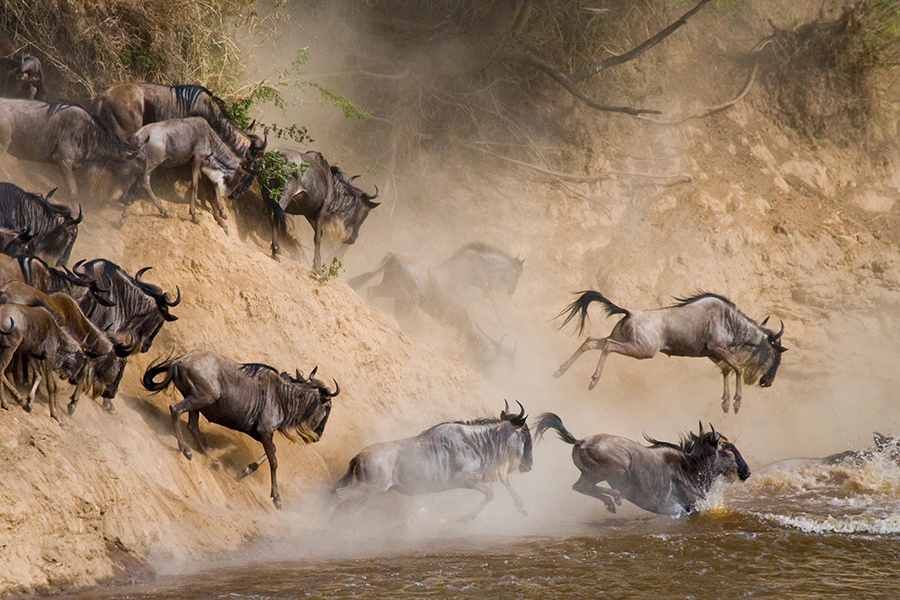
The Great Wildebeest Migration, also known as the Gnu Migration, Serengeti Migration, and Masai Mara Migration, is one of the most remarkable natural phenomena on Earth. This annual event involves over 1.5 million wildebeests, along with thousands of zebras and other herbivores, migrating in search of fresh grazing and water across the Serengeti in Tanzania and the Masai Mara in Kenya.
How Does the Great Migration Work? The migration is a year-round phenomenon characterized by a circular movement of animals driven primarily by weather patterns. The wildebeests follow an age-old route that is triggered by East Africa’s rains. They move from the southern plains of the Serengeti towards the northern regions and back again, covering approximately 3,000 kilometers (1,900 miles) each year.
Can the Migration River Crossings be Predicted? No, river crossings cannot be predicted with certainty. While it is known that wildebeests will attempt to cross rivers during their migration—particularly at critical points like the Mara River—exact timings are unpredictable. Factors such as animal behavior and environmental conditions play significant roles in determining when these crossings occur.
Wildebeest Migration Safari at the Mara River at Maasai Mara
What Time of Year Do the Wildebeest Migrate? Contrary to popular belief that migration occurs only between July and October, it is actually a continuous cycle throughout the year. Key events include calving season from January to March, rutting season in April and May, river crossings typically occurring from June to August, and movements back south starting in November.
Where Does the Great Migration Start? The migration does not have defined start or end points due to its fluid nature. It begins when rains fall in East Africa, prompting wildebeests to seek fresh pastures. The journey takes them through various regions including Lake Ndutu in Tanzania’s Serengeti National Park and into Kenya’s Masai Mara.
Why Do Wildebeest Migrate? The primary driver for migration is food availability linked to rainfall patterns. As new grass grows following rains, wildebeests instinctively move towards these areas for sustenance. Some experts suggest that distant lightning may also influence their movements; however, this remains unproven scientifically.
Month-by-Month Breakdown of Events:
- January: Herds are found near Lake Ndutu in Tanzania.
- February – March: Calving season occurs with over 8,000 calves born daily.
- April: Long rains begin; herds move northwest towards Moru Kopjes.
- May: Herds gather into large columns as they head toward central Serengeti.
- June – July: Animals approach Grumeti River; river crossings become imminent.
- August – September: Peak time for witnessing dramatic river crossings into Masai Mara.
- October: Herds remain mostly within Masai Mara before heading south.
- November – December: Short rains prompt movement back into Serengeti.
Best Time to Go on a Migration Safari The best time for witnessing specific events during the Great Migration largely depends on personal interests:
- For river crossings: July to October
- For calving: January to March
- For rutting: April to May
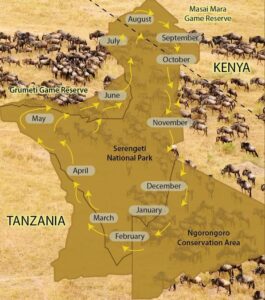
Map of Wildebeest Migration Safari
Travelers should plan well ahead due to high demand during peak seasons.
Tips for Planning Your Safari
- Book Early: Secure accommodations at least a year in advance.
- Choose Locations Wisely: Research optimal viewing spots based on seasonal movements.
- Seek Professional Guidance: Hire knowledgeable guides familiar with wildlife behavior.
- Be Prepared for Long Drives: Expect rough terrain while traveling between viewing areas.
- Practice Patience: Wildlife movements can be unpredictable; allow ample time for sightings.
Planning the Ultimate African Wildebeest Migration Safari Experience
An African safari is a profound immersion into the natural world, representing a complex logistical undertaking that requires careful planning to ensure both safety and a high-quality wildlife experience. Historically, the concept of the “safari”—derived from the Swahili word for “journey”—has evolved from 19th-century colonial expeditions into a sophisticated tourism industry focused on conservation and observation. To maximize the experience, travelers must balance the biological rhythms of the African bush with the practicalities of remote travel, as the success of a safari often depends on the timing of seasonal migrations and the expertise of local guides who interpret animal behavior.
By understanding these elements of the Great Wildebeest Migration and planning accordingly, travelers can enhance their safari experience significantly.
Leave a comment:
You must be logged in to post a comment.


Comments (2)
Wildebeest Migration Between Serengeti and Masai Mara - Astute Africa Safaris,
07 July, 2025[…] While the migration is a continuous event, there are some key differences between the Serengeti and the Masai Mara: […]
The Great Wildebeest Migration Viewing Guide At Serengeti and Maasai Mara (June–October) - Astute Africa Safaris,
05 May, 2026[…] the months of June and July, the herds begin their northward movement from the central and western Serengeti. As the dry season […]