

- 2.3k Views
- 24 Min Read
- (1) Comment
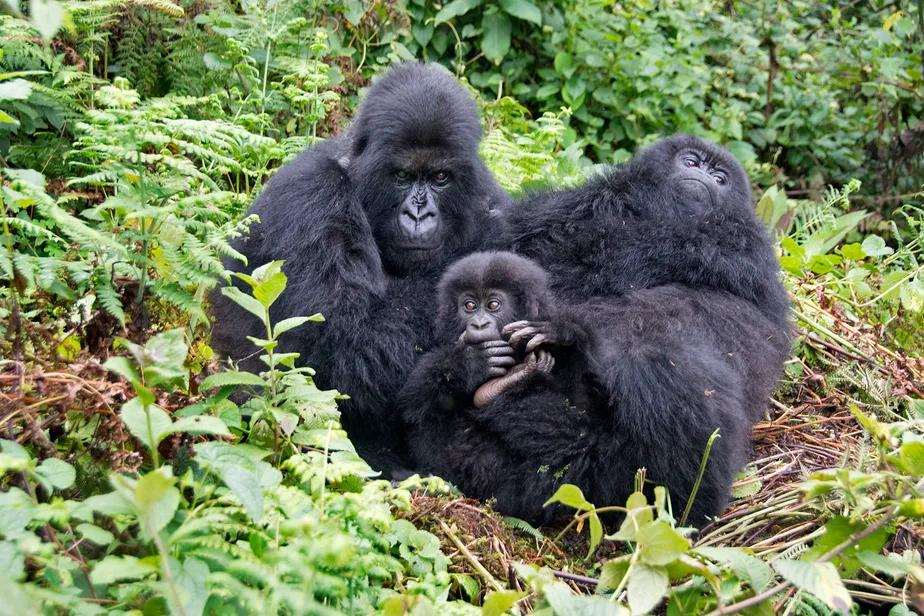
Imagine trekking through an ancient African rainforest. The air is cool and humid, birds call from the canopy, and your guide suddenly signals you to stop. Ahead, a magnificent silverback gorilla rises, vocalises and begins beating its chest with both hands. The sound carries through the forest, creating one of the most memorable moments in African wildlife watching.
But what does this extraordinary behaviour mean? Is the gorilla angry? Is it challenging another male, protecting its family, attracting a mate or simply communicating?
The meaning of gorilla chest-thumping is more complex than a display of strength. Chest-beating is a form of communication that can signal a male’s size and competitive ability, help manage encounters with rivals, and form part of a wider display involving vocalisations and body movements. Researchers have found that the acoustic characteristics of chest beats carry information about a male’s body size.
For travellers planning a gorilla trekking safari in Uganda or Rwanda, understanding this behaviour makes the encounter more meaningful. Instead of seeing only a large, powerful animal, you begin to appreciate the family relationships, communication, intelligence and conservation needs of one of Africa’s most remarkable primates.
This guide by Astute Africa Safaris explores gorilla chest-thumping, gorilla biology, pregnancy and infant development, social behaviour, species and habitats, conservation, and everything you need to know before planning a gorilla trekking adventure.
Quick answers: What travellers want to know about gorillas
| Question | Answer |
|---|---|
| Why do gorillas beat their chests? | To communicate, display their capabilities and influence interactions with other gorillas. |
| Do only silverbacks chest-beat? | No. Gorillas of different ages and sexes may chest-beat, although adult males are particularly well known for dramatic displays. |
| How long is a gorilla’s gestation period? | Approximately 8.5 months. |
| How many babies are usually born? | Usually one infant at a time. |
| How often do female gorillas give birth? | Commonly about every four to six years, though intervals vary. |
| Are gorillas dangerous to humans? | They are powerful wild animals. They generally avoid unnecessary conflict, but can react defensively if threatened or disturbed. |
| Where can visitors trek mountain gorillas? | In Uganda’s Bwindi Impenetrable and Mgahinga Gorilla national parks, and Rwanda’s Volcanoes National Park. |
| How long does a gorilla trek take? | It varies with terrain and gorilla movements; Uganda Wildlife Authority notes that treks can take around 2–7 hours. |
| How long can visitors stay with gorillas? | Standard tracking generally allows up to one hour after the group is located, subject to park rules. |
These details are general guidance. Permit conditions, trekking regulations and availability should be confirmed with the relevant wildlife authority when planning a trip.
1. What is gorilla chest-thumping?
Gorilla chest-thumping, also called chest-beating or chest-drumming, is a display in which a gorilla rapidly strikes its chest with cupped hands, often producing a deep, resonant sound.
The display may be accompanied by standing upright, hooting, vocalising, running, slapping vegetation or moving through the forest. The exact sequence depends on the individual and the situation.
Adult male mountain gorillas are especially famous for this behaviour because their large bodies and developed chest muscles can produce a powerful sound. However, chest-beating is not exclusively an adult male behaviour. Younger gorillas may practise it during play, and the meaning depends on the animal’s age, social circumstances and the surrounding behaviour.
Why is the sound so distinctive?
The gorilla’s chest display is both visual and acoustic. Researchers studying mountain gorillas have found that larger males tend to produce chest beats with lower-frequency acoustic characteristics than smaller males.
This provides useful information to other gorillas, potentially allowing individuals to assess a rival without immediately approaching or engaging in a physical confrontation.
It is an extraordinary example of animal communication: a gorilla can convey information through a short display that travels through dense vegetation.
2. Why do gorillas beat their chests?

Chest-beating does not have one universal meaning. It is best understood in the context of the gorilla’s surroundings and other behaviours.
A. To communicate strength and body size
One of the best-supported explanations is that chest-beating advertises physical characteristics and competitive ability.
A large silverback may use a display to communicate its presence to another male. Because the sound carries through the forest, the display can provide information before the animals come into close contact.
Scientific research on mountain gorillas has linked chest-beat acoustic characteristics to male body size. This is one reason researchers regard chest-beating as an important communication signal rather than simply an aggressive gesture.
B. To discourage rivals and reduce direct confrontation
A silverback may chest-beat when another gorilla group is nearby or when a social situation becomes tense.
The display can form part of a broader demonstration involving vocalisations, posture and movement. By signalling presence and competitive ability, the animal may influence how another gorilla responds.
However, chest-beating does not always mean that a fight is about to happen. Displays can communicate information without progressing to physical aggression.
C. To demonstrate social status
Mountain gorillas typically live in social groups, often led by a dominant adult male. His role may include defending the group, managing interactions and helping protect infants and other members.
Chest-beating can contribute to a display of dominance, especially when social relationships or potential challenges are involved. Nevertheless, it should not be interpreted as proof that every chest-beat is a direct challenge to another animal.
D. To communicate over distance
Rainforests contain thick vegetation that limits visibility. Sounds can travel where visual contact is difficult.
A chest-beat display may therefore help gorillas communicate their presence across the forest. Its acoustic characteristics can provide information to other gorillas even when they cannot see the displaying animal clearly.
E. As part of a larger display
Chest-beating may occur alongside hooting, standing upright, running, slapping the ground or striking vegetation.
These behaviours should be considered together rather than interpreted independently. A chest-beating gorilla that is relaxed and playing is in a different situation from one displaying during a tense encounter.
F. During play and youthful development
Young gorillas may chest-beat as they explore their bodies, interact with other youngsters and practise adult-like behaviours.
A juvenile’s chest-beating may be playful rather than an expression of hostility. This is why age, body language and context matter when interpreting the display.
The key lesson: gorilla chest-thumping is communication, not simply anger. It can convey information about an animal’s size, presence and competitive ability, but the meaning of a particular display depends on the wider situation.
3. Are gorillas angry when they beat their chests?
Not necessarily.
Chest-beating is often portrayed in films and cartoons as a sign that a gorilla is furious and preparing to attack. Real gorilla behaviour is more nuanced.
A gorilla may chest-beat during a display without making physical contact with another animal. It may also do so during play or other social interactions. On the other hand, chest-beating combined with forceful charging, aggressive vocalisations, vegetation smashing or other threatening behaviour may indicate a tense encounter.
Visitors should never assume that a chest-beating gorilla is harmless, nor that it will automatically attack.
During a gorilla trek:
-
Remain calm and follow your ranger’s instructions.
-
Do not approach the gorilla or attempt to attract its attention.
-
Avoid sudden movements, shouting or direct attempts to engage with the animal.
-
Never imitate its display or try to provoke another chest-beating performance.
-
Keep the required distance and allow the gorillas to move freely.
Your guide is trained to manage the encounter and help visitors understand what they are observing without disturbing the animals.
4. What is a silverback gorilla?

A silverback is a mature male gorilla that develops a distinctive area of silver or grey hair across its back as it matures. The silver colouring is a sign of maturity, not a separate species.
Silverbacks are often the most recognisable members of a gorilla family because of their size, muscular build and prominent presence.
What role does a silverback play?
Depending on the group’s structure, a dominant silverback may:
-
Lead the group’s movements and daily activities.
-
Protect group members when threats arise.
-
Help maintain social stability.
-
Intervene during conflicts.
-
Play and interact with younger gorillas.
-
Provide a central social presence for females and their offspring.
Gorilla groups can vary considerably in size and composition. Some contain one dominant silverback, while others may include additional adult males. Not every group follows exactly the same social structure.
How strong is a silverback?
Adult male gorillas are exceptionally muscular and can weigh around 200 kilograms, although size varies by species and individual. They have powerful arms, broad shoulders and large jaws adapted to their way of life.
Their physical strength should be respected. However, popular claims that gorillas can lift a specific number of times their body weight are often unreliable, and strength is difficult to measure using comparisons with human weightlifting.
For safari visitors, the most important point is that gorillas are powerful wild animals whose behaviour should never be manipulated for photographs or entertainment.
5. Gorilla gestation period: How long are gorillas pregnant?

One of the most frequently asked questions about gorillas concerns their pregnancy and reproduction.
The gorilla gestation period is approximately 8.5 months, similar to human pregnancy in broad duration. Female gorillas generally give birth to a single infant, and twins are uncommon.
How long does a gorilla pregnancy last?
A gorilla pregnancy lasts roughly eight and a half months from conception to birth.
During this period, the developing infant grows inside its mother. Following birth, the infant depends heavily on its mother for nourishment, warmth, protection and transport.
Unlike animals that produce large litters, gorillas invest substantial time and care in raising each offspring.
How often do gorillas give birth?
Female gorillas commonly give birth at intervals of approximately four to six years, although reproductive intervals vary with individual circumstances, the survival of previous offspring and the population being studied.
This slow reproductive rate is one reason conservation is so important. Gorilla populations cannot recover quickly when they suffer substantial losses from disease, habitat destruction, poaching or other pressures.
Do gorillas give birth to twins?
Twins are possible but uncommon. A single infant is the normal outcome.
Raising even one infant demands years of maternal care, and twins would require a mother to manage the needs of two highly dependent young at once.
How much does a baby gorilla weigh at birth?
Newborn gorillas are relatively small compared with their adult size. Their precise weight varies, but a newborn mountain gorilla typically weighs around 1.5–2 kilograms.
The infant is born with a strong dependence on its mother and gradually develops the strength and coordination required to cling to her, explore its surroundings and eventually move independently.
How long do baby gorillas stay with their mothers?
Gorilla infants remain closely dependent on their mothers for several years. They nurse, cling to their mothers during movement, learn social behaviour through observation and gradually develop independence.
The mother-infant relationship is therefore much longer than the pregnancy itself. Successful reproduction involves not only giving birth but also raising an infant through its most vulnerable developmental stages.
Why is gorilla reproduction so important for conservation?
Because gorillas reproduce slowly, the death of an adult female or the loss of several infants can have a lasting effect on population growth.
Conservation measures that protect entire family groups, maintain forest habitat and reduce disease risks are therefore essential. Responsible gorilla tourism can contribute to conservation when managed appropriately and when local communities share in its benefits.
6. How gorillas grow: From infant to silverback
A gorilla’s development unfolds over many years. Each stage brings changes in physical ability, independence and social relationships.

Infancy: Birth to around 3–4 years
Infants depend heavily on their mothers for feeding, warmth, protection and transport. They gradually learn to grasp, climb, explore and communicate.

Juvenile stage
Young gorillas become more adventurous, play with other group members and learn social boundaries. Play can include chasing, wrestling, climbing and practising behaviours observed in adults.

Adolescence
Young gorillas grow larger and increasingly independent. Males gradually develop the characteristics of adulthood, while females mature and may eventually reproduce.

Adulthood
Mature males develop the characteristic silver hair on their backs. Depending on their social circumstances, they may lead a group, remain within an existing group or live independently.
Developmental timelines vary, and silverback status is a sign of maturity rather than a precise age label. These stages also help explain why a gorilla family can contain individuals of very different sizes and behaviours.
7. What do gorillas eat? Are they carnivores?

Gorillas are primarily herbivorous. Their diet consists mainly of plant material such as leaves, shoots, stems, bark, roots and fruit, depending on the species, habitat and seasonal availability. They may also consume insects on occasion.
What does a mountain gorilla eat?
Mountain gorillas consume a variety of vegetation, including:
-
Young leaves and shoots.
-
Stems and other soft plant material.
-
Bark and roots.
-
Fruits when available.
-
Certain other plant parts depending on the season.
Their diet is closely linked to the forest environment in which they live.
Do gorillas eat meat?
Gorillas are not active predators in the way lions and leopards are. Their diet is overwhelmingly plant-based, although occasional consumption of insects has been documented.
Why do gorillas spend so much time feeding?
A large body requires substantial energy. Gorillas spend much of their day feeding, resting, moving through their habitat and interacting socially.
Observing a gorilla quietly feeding during a trek can be just as fascinating as watching a silverback chest-beat. Feeding reveals how these animals use their environment and how family members coexist in close proximity.
8. Where do gorillas live? Understanding gorilla species

There are two recognised gorilla species: the eastern gorilla and the western gorilla. Each has two recognised subspecies, giving four gorilla subspecies in total.
| Species or subspecies | General distribution | What makes it distinctive |
|---|---|---|
| Mountain gorilla | High-altitude forests of the Virunga Mountains and Bwindi, in Uganda, Rwanda and the Democratic Republic of the Congo | Thick fur adapted to cooler mountain environments; the main focus of Uganda and Rwanda trekking tourism |
| Eastern lowland gorilla, also called Grauer’s gorilla | Forests of the eastern Democratic Republic of the Congo | The largest gorilla subspecies by typical body size |
| Western lowland gorilla | Lowland tropical forests of west-central Africa | The most widespread gorilla subspecies |
| Cross River gorilla | A restricted forest region along the Nigeria–Cameroon border | One of the most threatened and geographically restricted gorilla populations |
These subspecies occupy different habitats and are affected by different conservation pressures. They should not be treated as interchangeable when discussing tourism or conservation.
Where can tourists see mountain gorillas?
For travellers planning a gorilla trekking holiday in East Africa, the principal destinations are:
-
Bwindi Impenetrable National Park — an extensive rainforest with several gorilla trekking sectors.
-
Mgahinga Gorilla National Park — a smaller park in the Virunga Mountains.
-
Volcanoes National Park — Rwanda’s celebrated mountain gorilla trekking destination.
Uganda Wildlife Authority identifies Bwindi and Mgahinga as Uganda’s two mountain gorilla trekking parks.
9. Gorilla family life and communication beyond chest-thumping

Chest-beating is only one part of gorilla communication. Understanding the wider social system helps visitors appreciate the animals they encounter in the forest.
Vocalisations
Gorillas use a range of sounds, including grunts, hoots and other calls, in social interactions. The meaning depends on context, and sounds may accompany movement or displays.
Grooming and physical contact
Gorillas use touch and close contact in their social relationships. Grooming and other affiliative behaviours can help maintain relationships and reinforce social bonds.
Play
Young gorillas frequently play through chasing, climbing and wrestling. Play helps them develop physical coordination and learn how to interact with other group members.
Protecting infants
Adult gorillas, especially the dominant male in many groups, can play important roles in group protection. A silverback’s presence may help deter threats and support the stability of the group.
What should visitors watch for?
Rather than focusing only on the largest gorilla, look for the full family dynamic:
-
A mother carrying or nursing an infant.
-
Juveniles playing or exploring.
-
A silverback resting while keeping track of the group.
-
Gorillas feeding together.
-
Quiet vocalisations and interactions between individuals.
These small details often turn a short wildlife encounter into a much richer experience.
10. Why do gorillas beat their chests before charging?

A chest-beating display may sometimes occur during a tense interaction, but it does not always precede a charge. Gorillas can use a combination of vocalisations, posture, movement and physical displays to communicate.
A charge may be a warning or a defensive response rather than an attempt to make contact. The context matters, and visitors should never try to predict an animal’s next move based on chest-beating alone.
If a silverback displays while you are trekking:
-
Listen carefully to your ranger.
-
Stay with your trekking group.
-
Avoid running, shouting or making sudden movements.
-
Do not approach the gorilla, block its route or try to photograph it at close range.
-
Follow the guide’s directions about your posture, position and movement.
Never attempt to provoke a chest-beating display. A natural encounter is more valuable than a staged photograph, and the safety of the gorillas and visitors must come first.
11. Gorilla trekking: How to experience these magnificent animals in the wild

Gorilla trekking is a guided wildlife experience in which visitors hike through a forest to locate a habituated gorilla family. It offers an opportunity to observe gorillas in their natural habitat rather than in a zoo or enclosure.
The experience can be physically demanding, but it is also one of the most distinctive wildlife adventures available in East Africa.
What happens on a gorilla trekking day?

Step 1: Morning briefing
Meet your ranger and learn about the trekking rules, safety procedures and behaviour expected around the gorillas.

Step 2: Enter the forest
Follow your ranger through the forest. The route may involve steep slopes, thick vegetation, slippery ground and changes in elevation.

Step 3: Find the gorilla family
The time required varies according to the gorillas’ movements and the terrain. Your ranger guides you towards the assigned habituated group.

Step 4: Observe the gorillas
During standard tracking, viewing time is generally limited to one hour after the gorillas are located. Use this time to observe feeding, family interactions, infant behaviour and, if it occurs naturally, chest-beating.

Step 5: Return from the trek
After the encounter, follow your ranger back to the trailhead. Depending on the trek, you may return in time for lunch or spend much of the day in the forest.
Uganda Wildlife Authority indicates that gorilla treks may take approximately two to seven hours, with one hour of observation once a habituated group is found. Actual trekking duration varies considerably.
Is gorilla trekking difficult?
It can be. Difficulty depends on the terrain, weather, elevation, your fitness and where the gorillas are located that day.
Some treks are relatively manageable, while others involve prolonged uphill hiking, mud, dense vegetation and uneven ground.
You do not need to be a professional mountaineer, but you should be prepared to walk for several hours and discuss any mobility limitations with your safari planner before booking.
What should you pack for gorilla trekking?

Essential items include:
-
Sturdy, waterproof hiking boots with good grip.
-
Long trousers and a long-sleeved top.
-
A lightweight waterproof jacket.
-
Gardening or trekking gloves to protect your hands from vegetation.
-
Drinking water and a small daypack.
-
Insect repellent and sunscreen for use as appropriate.
-
A camera with the flash switched off.
-
Any personal medication you may need.
-
A walking stick, often available locally, if useful.
A porter can help carry your daypack and provide practical assistance on difficult sections of the trail. Hiring a porter can also support livelihoods in communities surrounding the parks.
12. Gorilla trekking in Uganda versus Rwanda: Which should you choose?

Uganda
Bwindi and Mgahinga
-
Two mountain gorilla trekking parks.
-
Excellent for combining gorillas with chimpanzees and savannah wildlife.
-
Bwindi has several trekking sectors, so accommodation and permit allocation must be coordinated.
-
Well suited to longer, multi-park safari holidays.

Rwanda
Volcanoes National Park
-
A well-known mountain gorilla trekking destination.
-
Often attractive for shorter trips based around Kigali.
-
Can be combined with golden monkey trekking and volcanic scenery.
-
Offers opportunities to extend a holiday to Akagera, Nyungwe or Lake Kivu.
Both countries offer exceptional mountain gorilla encounters. Neither guarantees a shorter or easier trek: the actual experience depends on the location of the gorilla family, terrain and weather.
For a more detailed decision, explore Rwanda and Uganda itinerary guides below:
Which destination is best for your budget?
The total cost of a gorilla safari depends on the permit, accommodation, transport, number of days, meals and other activities.
Uganda can be especially appealing to travellers wishing to combine gorilla trekking with a broader wildlife safari. Rwanda may be attractive to visitors who want to focus on gorillas while keeping their itinerary relatively short.
Permit prices and regulations can change. Rather than publishing a price that may become outdated, confirm the applicable permit fee and availability for your travel dates before accepting a quotation.
13. Sample gorilla trekking itineraries with Astute Africa Safaris
These suggested itineraries illustrate how you can turn an interest in gorilla behaviour into a complete East African holiday. They are planning examples rather than confirmations of current permit availability.

Option 1: 3-Day Uganda Gorilla Trekking Safari
Short adventure
Route: Entebbe or Kampala – Bwindi – Entebbe or Kampala
Day 1: Travel to Bwindi, with a flight option where suitable.
Day 2: Gorilla trekking and a relaxed evening at your lodge.
Day 3: Return to Entebbe or Kampala.
Best for: Travellers with limited time whose priority is seeing mountain gorillas.
The route should be adapted to the trekking sector and arrival or departure flight schedules.

Option 2: 4-Day Uganda Wildlife and Gorilla Safari
Wildlife combination
Route: Queen Elizabeth National Park – Bwindi
Day 1: Travel to Queen Elizabeth National Park and enjoy wildlife viewing if time allows.
Day 2: Game drive and Kazinga Channel boat cruise.
Day 3: Travel to Bwindi and prepare for trekking.
Day 4: Gorilla trekking, with onward travel or an overnight extension as required.
Best for: Travellers who want both savannah wildlife and mountain gorillas in a compact itinerary.
Explore the 4-Day Uganda Wildlife and Gorilla Trekking Safari.

Option 3: 7-Day Uganda Primate and Wildlife Safari
Best all-round experience
Route: Entebbe – Kibale – Queen Elizabeth – Bwindi – Entebbe
Days 1–2: Travel to Kibale and trek for chimpanzees.
Days 3–4: Explore Queen Elizabeth National Park with game drives and a boat cruise.
Days 5–6: Travel to Bwindi and trek for mountain gorillas.
Day 7: Return to Entebbe or extend the journey.
Best for: Wildlife lovers wanting chimpanzees, mountain gorillas and classic safari scenery in one holiday.

Option 4: 3-Day Rwanda Gorilla Trekking Safari
Short Rwanda escape
Route: Kigali – Volcanoes National Park – Kigali
Day 1: Arrive in Kigali and travel to the Volcanoes National Park area.
Day 2: Gorilla trekking followed by an afternoon at leisure.
Day 3: Return to Kigali and depart.
Best for: Visitors who want to prioritise mountain gorillas and have limited holiday time.

Option 5: 10–12-Day East African Safari
Extended adventure
Possible route: Uganda or Rwanda – Kenya or Tanzania
Begin with gorilla trekking, then connect to a savannah safari featuring destinations such as the Masai Mara or Serengeti, depending on flights, season and budget.
Best for: International travellers who want both a rare primate encounter and classic African wildlife viewing.
See Astute’s 10 Best Uganda Safari and Tour Itineraries for additional inspiration.
What will a gorilla safari cost?
There is no single price for all gorilla trekking holidays. A short budget-friendly trip and a luxury fly-in safari can have substantially different total costs.
When requesting a quotation, ask for an itemised breakdown covering:
-
Gorilla permits and confirmed trekking dates.
-
Accommodation and meal arrangements.
-
Road transfers or domestic flights.
-
Private guide and safari vehicle.
-
Park fees and any additional activities.
-
Airport transfers and any exclusions.
This helps you compare safari quotations accurately rather than choosing based only on the headline price.
14. When is the best time to go gorilla trekking?

Mountain gorilla trekking is possible throughout the year, but weather can influence trail conditions and comfort.
| Travel period | What to expect |
|---|---|
| June–September | Often a popular period for trekking, with generally drier conditions in much of the region. |
| December–February | Another commonly preferred period, although rain remains possible. |
| March–May | Often wetter, with muddy and slippery trails. |
| October–November | Rain may affect hiking conditions, but forest scenery can be especially lush. |
These are broad seasonal patterns, not guarantees. Mountain forests can experience rain at any time, and conditions differ between locations and years.
The best dates for your trip may also depend on permit availability, lodge availability, flight schedules and the other activities you want to include.
15. Gorilla conservation: Why responsible tourism matters

Mountain gorillas face conservation challenges that include habitat pressure, disease transmission from humans, snares intended for other wildlife and other human-related disturbances.
Because gorillas reproduce slowly, protecting adults and infants is essential to their long-term survival. Conservation programmes therefore combine habitat protection, veterinary and monitoring work, enforcement, research and community engagement.
How can gorilla tourism support conservation?
When responsibly managed, gorilla tourism can generate income that supports protected areas, guides, rangers, accommodation providers and surrounding communities. It can also help demonstrate the economic value of maintaining healthy forests and wildlife.
The benefits depend on effective management and how tourism revenue is distributed. Visitors should choose responsible operators and follow all park rules.
Essential gorilla trekking rules
Before your trip, check the current rules issued by the relevant wildlife authority. Uganda Wildlife Authority’s published guidance includes the following precautions:
-
Do not trek if you have an infectious illness.
-
Keep the prescribed distance from the gorillas.
-
Do not eat, drink or smoke during the viewing encounter.
-
Avoid flash photography.
-
Do not leave litter in the forest.
-
Do not touch, feed or attempt to attract the gorillas.
-
Follow your ranger’s instructions at all times.
Gorillas can catch some human respiratory illnesses, so health precautions are essential. Your visit should never come at the expense of the animals’ welfare.
16. Frequently asked questions about gorillas
Why do gorillas beat their chests with both hands?
Gorillas use chest-beating as a form of communication. It may advertise body size and competitive ability, signal presence or form part of a social display. The meaning depends on the context.
Do female gorillas beat their chests?
Yes. Although the behaviour is particularly associated with adult males, chest-beating is not exclusive to silverbacks. Young gorillas may also chest-beat during play.
How long is the gorilla gestation period?
Approximately 8.5 months. Females generally give birth to one infant at a time.
How many babies can a gorilla have in its lifetime?
The number varies according to the individual’s reproductive lifespan, health and the survival of previous offspring. Females commonly give birth at intervals of about four to six years, so lifetime offspring numbers are relatively low compared with many other mammals.
Do gorillas attack humans?
Gorillas are powerful wild animals and can react defensively if they feel threatened. Responsible trekking, appropriate distance and following ranger instructions help minimise risks.
Can you hear a gorilla chest-beating in the forest?
Yes, chest-beating can produce a resonant sound that carries through the forest. Whether you hear it during your trek depends on the gorillas’ behaviour and circumstances.
How long can you stay with mountain gorillas?
Standard tracking generally permits up to one hour with the gorilla family once located. Special habituation experiences may have different rules, permits and durations.
Can children go gorilla trekking?
Minimum ages are set by the relevant authorities and should be confirmed before booking. Uganda’s published guidance specifies a minimum age of 15 for gorilla tracking. Do not assume that rules are identical across all destinations.
Is gorilla trekking worth the cost?
For many travellers, it is a once-in-a-lifetime wildlife experience. Its value comes from observing wild gorillas in their natural environment and learning about the conservation of an endangered species. Whether it suits your budget depends on your priorities and the overall cost of the holiday.
Can I combine gorilla trekking with a Big Five safari?
Yes. Uganda is particularly suitable for combining mountain gorillas with chimpanzees and savannah wildlife. Rwanda can also be combined with Akagera National Park for a different wildlife experience. Longer trips can connect gorilla trekking with Kenya or Tanzania, subject to travel logistics.
17. Plan your gorilla trekking safari with Astute Africa Safaris

Understanding the meaning of gorilla chest-thumping opens a window into the complex world of these remarkable animals. It is not simply a show of anger or strength: it is part of a communication system shaped by social relationships, competition and life in the forest.
Seeing gorillas in the wild brings these lessons to life. You may witness a silverback displaying, a mother caring for her infant, juveniles playing or a family quietly feeding among the vegetation. Every encounter is different, and that unpredictability is part of what makes gorilla trekking so special.
Astute Africa Safaris can help you plan a personalised gorilla trekking holiday in Uganda or Rwanda, with the option to combine your experience with chimpanzee trekking, wildlife safaris, cultural activities and other East African destinations.
Whether you have three days or two weeks, the itinerary should be designed around your available time, preferred accommodation, budget and trekking goals.
Ready to meet the mountain gorillas?
Plan your East African adventure with local knowledge and personalised travel support.
Tailor-made Uganda and Rwanda gorilla safaris
Gorilla trekking combined with wildlife and chimpanzee experiences
Accommodation and transport options to suit different budgets
Explore the Uganda Gorilla Safari Explore Rwanda Safari ItinerariesVisit Astute Africa Safaris to discuss a personalised itinerary and confirm current permit availability.
Leave a comment:
You must be logged in to post a comment.
Comment 01
Astute Africa Safaris,
05 May, 2026REF: Crafting Your Bespoke African Safari Experience with Astute Africa Safaris
Jambo,
Thank you for your interest in exploring the wonders of Africa with Astute Africa Safaris. We pride ourselves on creating immersive, tailor-made journeys that align perfectly with your personal interests, pace, and travel aspirations.
Because every safari is a unique narrative, we do not believe in “one-size-fits-all” pricing. To ensure we provide you with an accurate and competitive quotation that reflects the specific lodges, wildlife experiences, and logistical arrangements you desire, we invite you to connect with our team for a personalized consultation.
Please contact us at info@astuteafricasafaris.com, Whatsapp +254762663272 or fill the inquiry form with a few details regarding your preferred travel dates, group size, and specific interests (e.g., photography, luxury relaxation, or adventure trekking). Once we have these details, we will curate a comprehensive proposal designed specifically for you.
We look forward to the possibility of helping you plan an unforgettable journey.
Warm regards,
Team Astute Africa Safaris