

- 854 Views
- 8 Min Read
- (1) Comment
Kenya remains the quintessential destination for African wildlife enthusiasts, offering a diverse tapestry of ecosystems ranging from the iconic savannahs of the Maasai Mara to the rugged, arid landscapes of Samburu. As of March, 2026, the Kenyan tourism sector has reached new heights of sustainability and exclusivity, integrating advanced conservation technologies with traditional hospitality. The ultimate Kenya safari tours experience in 2026 is defined by the Great Migration in the Maasai Mara, the red elephants of Tsavo, and the burgeoning private conservancy model that offers intimate wildlife encounters away from the crowds.
The Evolution of Kenya Safari Tours in 2026
The landscape of Kenyan travel has shifted toward “High Value, Low Impact” tourism. This strategy prioritizes the preservation of biodiversity while ensuring that visitors receive a premium, educational experience. In 2026, the integration of electric safari vehicles (e-safaris) has become standard in many premium conservancies, reducing the carbon footprint and noise pollution, allowing for closer, more natural animal sightings.
Top Wildlife Parks and Reserves
1. Maasai Mara National Reserve
The Maasai Mara remains the crown jewel of Kenya’s wildlife areas. Known globally for the Great Wildebeest Migration, which typically occurs between July and October, the Mara is home to the “Big Five”: lion, leopard, elephant, buffalo, and rhino. In 2026, the Mara has expanded its community-led conservancy model, such as Mara North and Olare Motorogi, which limit the number of vehicles per sighting, ensuring a more private viewing experience.
2. Amboseli National Park
Famous for its massive herds of “tuskers” (large elephants) and the stunning backdrop of Mount Kilimanjaro, Amboseli offers some of the best photographic opportunities in Africa. The park’s swamps are a vital water source, attracting a high density of birdlife and hippos.
3. Samburu and Buffalo Springs National Reserves
For those seeking unique species, the northern frontier of Samburu is essential. Here, travelers can find the “Samburu Special Five”: the reticulated giraffe, Grevy’s zebra, Somali ostrich, Beisa oryx, and the gerenuk. The Ewaso Ng’iro river serves as the lifeblood of this arid region.
4. Laikipia Plateau
Laikipia has emerged as a leader in private conservation. It is one of the few places in Kenya where populations of black rhino and African wild dogs are steadily increasing. The region offers diverse activities beyond traditional game drives, including walking safaris, camel treks, and helicopter excursions.
Luxury Lodges and Sustainable Stays
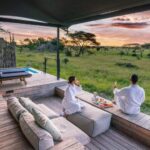
Luxury Kenya safari tours landscape has evolved into a sophisticated blend of high-end hospitality and rigorous environmental stewardship. As of March 2026, the most authoritative selections for ultra-luxe eco-lodges in Kenya include Elsa’s Kopje in Meru, Ol Donyo Lodge in the Chyulu Hills, and Sasaab in Samburu, all of which prioritize sustainable architecture and community-led conservation.
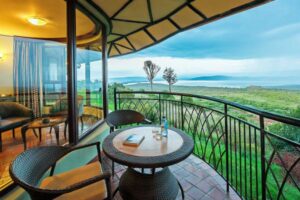
Kenya safari tours, great view of Lake Nakuru from Lake Nakuru Sopa Lodge
The 2026 Kenya safari tours season sees a trend toward “Ultra-Luxe Eco-Lodges.” These establishments combine opulence with a deep commitment to local communities and wildlife protection.
- Angama Mara: Perched on the edge of the Oloololo Escarpment, this lodge offers unparalleled views of the Mara Triangle. Its 2026 upgrades include enhanced wellness centers and private photographic studios.
- Segera Retreat: Located in Laikipia, Segera is a sanctuary for the soul. It focuses on the “4Cs”: Conservation, Community, Culture, and Commerce. The famous Nay Palad Bird Nest offers a unique overnight experience under the stars.
- Sasaab (Samburu): This lodge blends Moroccan and Swahili architecture, providing a cool oasis in the heat of the north. Each tented suite features a private plunge pool overlooking the river.In the arid north, Sasaab offers a Moroccan-inspired aesthetic with a deep commitment to the Samburu community. Nearby, Saruni Samburu is celebrated for its innovative, eco-friendly architecture built into a giant volcanic rock face.
- Eco-Credentials: Saruni Samburu utilizes an eco-friendly design that harvests rainwater and uses solar power, while Sasaab features the “SpaSaab” which uses organic, locally sourced ingredients.
- Key Features: Sightings of the “Samburu Special 5” (Grevy’s zebra, reticulated giraffe, Beisa oryx, Somali ostrich, and gerenuk)
-
Chyulu Hills: Ol Donyo Lodge
Located on the Mbirikani Group Ranch between Tsavo East and Amboseli, Ol Donyo Lodge is a pioneer in community-owned conservation. The land is owned by approximately 4,000 Maasai people, ensuring that tourism revenue directly supports local livelihoods.
- Eco-Credentials: The lodge features “star-beds” on roof terraces for sleeping under the night sky and supports extensive conservation outreach programs.
- Key Features: Private villas with infinity pools and views of Mount Kilimanjaro, plus unique activities like horse riding and mountain biking.
-
Masai Mara: Instinct of the Mara
For travelers seeking the pinnacle of ethical luxury in the Mara, Instinct of the Mara is highlighted for its commitment to sustainable practices without compromising the guest experience.
- Eco-Credentials: This camp focuses on low-impact tourism and ethical wildlife viewing, ensuring that the Great Migration ecosystem remains undisturbed.
A luxury Kenya safari tours is defined by a blend of exclusive wildlife encounters, high-end accommodations, and seamless logistics, often utilizing private charters to minimize travel time between remote regions. The best luxury itineraries typically focus on the “Big Five” in the Maasai Mara, the unique “Special Five” in Northern Kenya (Samburu or Meru), and private conservancies like Lewa or Laikipia, which offer activities beyond traditional game drives such as helicopter excursions, horseback riding, and night drives.
Top Luxury Kenya safari tours Itineraries:
Sample 1: The Ultimate 10-Day Connoisseur Itinerary
This itinerary balances diverse ecosystems with the highest level of exclusivity, utilizing private villas and luxury lodges.
- Days 1-2: Nairobi Arrival. Stay at a boutique hotel like Hemingways Nairobi. Spend time at the Giraffe Center or the Sheldrick Wildlife Trust to see orphaned elephants.
- Days 3-5: Meru National Park. Fly by private charter to Elsa’s Kopje. Activities include guided bush walks to Mughwango Hill for 360-degree views and fishing for catfish and tilapia in the Tana River.
- Days 6-7: Lewa Wildlife Conservancy. Transfer to Sirikoi Lodge. This region is famous for rhino conservation. Luxury experiences here include helicopter excursions over the northern frontiers, quad biking, and horseback riding to get close to giraffes and zebras.
- Days 8-10: Maasai Mara National Reserve. Fly to the Mara for a stay at an ultra-luxury camp like Cottar’s 1920s. Focus on the Great Migration (July–October) and cultural immersion at a Maasai warrior school.
Sample 2: The 5-Day “Best of Kenya” Luxury Express
For travelers with limited time, this itinerary uses flight transfers to maximize time in the field.
- Days 1-2: Amboseli National Park. Known for the best views of Mount Kilimanjaro and massive elephant herds. Stay at a luxury lodge like Tortilis Camp.
- Days 3-5: Maasai Mara. Fly directly from Amboseli to the Mara. Staying within a private concession or the Mara Triangle allows for off-road driving and night games drives, which are restricted in the main national reserve.
Sample 3: The “Slow Safari” & Private Villa Experience
This itinerary focuses on “impactful” travel, staying longer in fewer locations to deeply connect with the landscape.
- Exclusive Use Villas: Instead of standard camps, book exclusive-use properties in the Laikipia plateau. This allows for a completely personalized schedule where meal times and game drive lengths are dictated solely by the guest.
- Bush-to-Beach Extension: Many luxury itineraries conclude with a flight to the coast. A popular high-end addition is a 4-day stay at a private island resort, such as those in the Seychelles or Kenya’s Msambweni beach, for snorkeling and sailing.
Expert Travel Tips for Kenya safari tours
To maximize the value of a Kenya safari, travelers should consider the following logistical and strategic advice:
1. Timing Your Visit: While the Great Migration is a major draw, the “Green Season” (November to May) offers lush landscapes, excellent birdwatching, and lower prices. The probability of seeing newborn animals is higher during this period.
2. Health and Safety: As of 2026, Kenya has streamlined its digital health entry requirements. Travelers should ensure they have updated vaccinations for Yellow Fever and consider malaria prophylaxis, especially for low-lying areas like the coast and the Mara.
3. Packing Essentials:
- Neutral-colored clothing (khaki, olive, beige) to blend into the environment.
- High-quality binoculars (8×42 is the recommended standard).
- A versatile camera lens (e.g., 100-400mm) for wildlife photography.
4. Understanding the Costs of Kenya safari tours: Safari pricing is often calculated per person per night. A luxury safari in 2026 can range from $800 to $2,500 per night. The total cost C can be estimated using the formula: C=(L×D)+F+P Where:
- L = Daily Lodge Rate
- D = Number of Days
- F = International and Internal Flights
- P = Park Fees and Visas
The Impact of Technology on Conservation
In 2026, Kenya utilizes advanced AI-driven monitoring systems to track endangered species. Drones and thermal imaging are used by rangers to combat poaching in real-time. Visitors can often participate in “Citizen Science” programs, where they upload photos of cheetahs or giraffes to databases that help researchers track individual animals and their health.
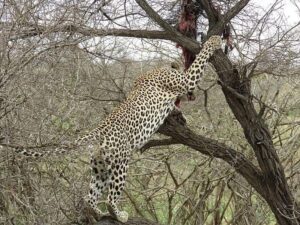
Leopard as spotted at Samburu during a Kenya safari tours
Cultural Immersion in relation to Kenya safari tours
A safari is incomplete without engaging with the local cultures. The Maasai and Samburu people are the traditional guardians of these lands. In 2026, cultural visits have moved away from staged performances toward authentic, reciprocal exchanges. Travelers can visit community-owned projects, such as beadwork cooperatives and schools, ensuring that tourism dollars directly benefit the local population.
Conclusion
Kenya safari tours in 2026 remains a premier destination that successfully balances the thrill of the wild with the comforts of modern luxury. By choosing reputable operators and staying in conservancies, travelers contribute to the long-term survival of one of the world’s most precious ecosystems. Whether it is the roar of a lion at midnight or the sight of a million wildebeest crossing the Mara River, a Kenyan safari tours is a transformative experience that stays with you forever.
Leave a comment:
You must be logged in to post a comment.
Comment 01
Astute Africa Safaris,
05 May, 2026REF: Crafting Your Bespoke African Safari Experience with Astute Africa Safaris
Jambo,
Thank you for your interest in exploring the wonders of Africa with Astute Africa Safaris. We pride ourselves on creating immersive, tailor-made journeys that align perfectly with your personal interests, pace, and travel aspirations.
Because every safari is a unique narrative, we do not believe in “one-size-fits-all” pricing. To ensure we provide you with an accurate and competitive quotation that reflects the specific lodges, wildlife experiences, and logistical arrangements you desire, we invite you to connect with our team for a personalized consultation.
Please contact us at info@astuteafricasafaris.com, Whatsapp +254762663272 or fill the inquiry form with a few details regarding your preferred travel dates, group size, and specific interests (e.g., photography, luxury relaxation, or adventure trekking). Once we have these details, we will curate a comprehensive proposal designed specifically for you.
We look forward to the possibility of helping you plan an unforgettable journey.
Warm regards,
Team Astute Africa Safaris