

- 890 Views
- 9 Min Read
- (2) Comments
Tsavo National Park Safari
Spanning a massive 22,000 square kilometers, Tsavo National Park safari stands as the crown jewel of Kenya’s conservation efforts and the largest protected area in the country. Divided into two distinct sections by the Nairobi-Mombasa railway and highway, Tsavo East and Tsavo West offer a combined wilderness experience that is unparalleled in its scale and raw, untamed beauty. For travelers seeking a remote safari experience far from the crowded circuits of the Maasai Mara, Tsavo provides an authentic encounter with the African bush, characterized by vast horizons, diverse ecosystems, and the iconic sight of dust-bathed wildlife.
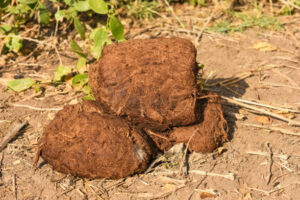
Small pile of elephant dung in Ziwani reserve, Tsavo national park safari, Kenya
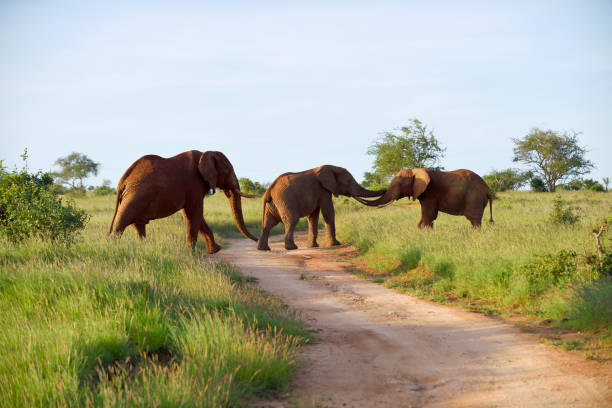
The allure of a Tsavo safari in Kenya begins with the sheer magnitude of the landscape. Tsavo East, often referred to as the “Theatre of the Wild,” is defined by its sprawling, semi-arid plains and the meandering Galana River, which serves as a lifeline for the park’s inhabitants. It is here that visitors are most likely to encounter the legendary red elephants, which owe their distinctive rust-colored appearance to the fine, iron-rich volcanic soil they use for dust baths to protect their skin from the sun and insects. The park’s flat, open terrain makes it an ideal location for spotting large herds of these majestic creatures, as well as lions, leopards, and the elusive fringe-eared oryx.
In contrast, Tsavo West National Park offers a more dramatic, topographically diverse environment. Known for its rugged lava landscapes, the park is home to the Shetani Lava Flow, a stark reminder of the region’s volcanic history that stretches for miles, creating a surreal, moon-like vista. The Mzima Springs, a series of crystal-clear natural pools fed by underground rivers from the Chyulu Hills, provide a lush oasis where hippos and crocodiles can be viewed from an underwater observation chamber. The combination of volcanic craters, dense acacia woodlands, and rocky outcrops makes Tsavo West a photographer’s paradise, offering a starkly different aesthetic from the golden savannahs of the east.
Planning a Tsavo East safari requires an appreciation for the “wild” aspect of the wilderness. Because the park is so vast, wildlife sightings are often exclusive, allowing for a sense of solitude that is increasingly rare in modern tourism. Visitors can explore the Lugard Falls, where the Galana River forces its way through a narrow, jagged rock formation, creating a series of rapids and pools that are as beautiful as they are powerful. The park is also a sanctuary for the endangered black rhino, with the Ngulia Rhino Sanctuary in Tsavo West playing a critical role in the species’ recovery through intensive protection and monitoring programs.
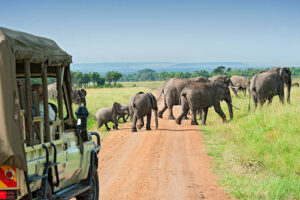
Safari cars are following a large African Elephants in the plains during the Tsavo national park safari.
For those calculating the logistics of their journey, the park’s size necessitates careful planning. If we denote the total area as A=22,000km2, and we consider the split between the two parks, we can estimate the travel time between key points using the average speed v and distance d via the formula t=dv. Given the rugged terrain, maintaining a steady speed is essential for safety and comfort during game drives. Most experts recommend a minimum of three to four days to adequately cover both sections of the park, ensuring that travelers can transition from the arid plains of the East to the volcanic hills of the West without rushing the experience.
The biodiversity within these parks is staggering. Tsavo is home to over 500 species of birds, making it a premier destination for ornithologists. During the migration seasons, the skies above the park are filled with raptors and migratory species, adding another layer of complexity to the safari experience. Whether you are tracking a pride of lions through the tall grass or watching a herd of elephants cross the dusty plains, the sense of scale in Tsavo is humbling. It is a place where the ecosystem dictates the pace of life, and the human presence is merely a guest in a vast, ancient theater of nature.
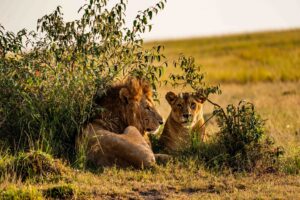
Pride of lions as spotted during Tsavo national park safari
Ultimately, a Tsavo national park safari is about more than just checking animals off a list; it is about immersing oneself in one of the last true wildernesses on Earth. The combination of the red elephants, the volcanic history of the lava landscapes, and the remote safari experiences ensures that every visitor leaves with a profound respect for the resilience of the African bush. As conservation efforts continue to evolve, Tsavo remains a vital stronghold for Kenya’s wildlife, proving that even in an increasingly connected world, there are still corners of the planet where the wild remains untamed and magnificent.
Understanding the Tsavo National Park Safari Experience
Visiting Tsavo National Park, one of Kenya’s largest and oldest protected areas, offers a profound immersion into a raw, expansive wilderness. The experience is defined by a unique rhythm of travel, where the primary objective is to observe wildlife within a landscape characterized by its dramatic, iron-rich red soil and vast horizons. Whether you choose to explore Tsavo East, known for its open savannahs and iconic red-dusted elephants, or Tsavo West, famous for its volcanic landscapes and lush springs, the park provides a sense of seclusion and peace that is often harder to find in more crowded reserves.
What to Expect During Your Tsavo National Park Safari
The Tsavo National park safari experience in Tsavo is structured around several key elements that ensure both comfort and adventure:
- Wildlife Sightings: You can expect to see a diverse array of animals, including the “Big Five.” A major highlight is the famous “red elephants,” which appear crimson due to dust-bathing in the park’s iron-rich soil. You will also likely encounter lions (often lacking manes in this region), giraffes, zebras, buffalo, and various antelope species, as well as hundreds of bird species.
- Game Drives: These are the core of the safari, typically scheduled for early mornings or late afternoons to coincide with peak animal activity. Guides utilize radio communication to share sightings, creating a collaborative effort to locate elusive predators like leopards and cheetahs.
- Landscapes and Landmarks: The park is geologically diverse. In Tsavo West, you can visit the crystal-clear Mzima Springs to view hippos and crocodiles underwater, or explore the surreal Shetani Lava Flows. Tsavo East offers the expansive Yatta Plateau and the Galana River, which serves as a vital lifeline for wildlife.
- Accommodation and Logistics: Lodging ranges from luxury lodges to comfortable camps, many of which offer stunning views of the surrounding wilderness or Mt. Kilimanjaro. Most packages include full-board meals and are supported by professional guides who manage park fees and safety protocols.
- Optional Activities: Beyond standard drives, you may engage in guided nature walks, birdwatching tours, or cultural visits to learn from local communities, allowing for a more personalized connection to the environment.
Ultimately, a Tsavo National Park safari in Tsavo is about shifting your pace to match the land. Whether you are watching the sunset over the savannah or scanning the horizon for movement, the experience is designed to be a meditative and exhilarating encounter with nature in its most untouched form
The Remarkable Utility of Elephant Dung
Elephants are the largest land mammals on Earth, and their biological output is as significant as their physical stature. A single adult elephant consumes between 150 and 250 kilograms of vegetation daily, resulting in the production of up to 100 kilograms of dung per day. Because elephants have relatively inefficient digestive systems, they only process approximately 45% to 50% of the food they ingest. This leaves a massive amount of semi-digested fibrous material, which has led humans to discover a variety of innovative and practical applications for this byproduct.

elephant dung as taken during Tsavo National park safari
Practical and Industrial Applications
One of the most prominent uses for elephant waste is the production of eco-friendly paper. Because the dung is composed of roughly 40% easily accessible cellulose and intact plant fibers, it serves as an excellent substitute for wood pulp. A single elephant can produce enough fiber to create approximately 115 sheets of paper per day, a process that helps mitigate deforestation. Furthermore, the dung is utilized in the energy sector; through the use of biogas digesters, the organic waste is broken down to collect methane and carbon dioxide, which can be used for heating, cooking, or generating electricity.
Medicinal and Survival Uses
In many regions, elephant dung is valued for its traditional medicinal properties. When dried and ignited, the smoke acts as a natural mosquito repellent, which is often considered less offensive than chemical alternatives. Beyond pest control, inhaling the smoldering smoke is a traditional remedy for headaches, toothaches, sinus congestion, and nosebleeds, as the dung contains traces of the various medicinal plants the elephant consumed. In extreme survival scenarios, the liquid squeezed from fresh elephant dung has been documented as a source of emergency hydration, as the material contains very little bacteria.
Culinary and Ecological Significance
Perhaps the most famous, albeit niche, application is the production of Black Ivory Coffee, a luxury product where coffee beans are fermented within the elephant’s digestive tract to remove bitterness and impart a sweet, fruity, chocolate-cherry flavor profile. This process has even been adapted to create specialty beers. Ecologically, elephant dung is vital for biodiversity; as “ecosystem engineers,” elephants transport thousands of seeds over long distances—sometimes up to 65 kilometers—facilitating forest regeneration. The dung also provides a nutrient-rich habitat for insects like dung beetles, which in turn support a wider food web of birds and small mammals. Finally, the material serves as an exceptional compost, enriching soil with semi-digested organic matter that benefits agricultural efforts.
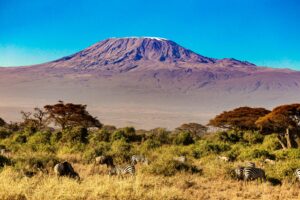
View of Mt. Kilimanjaro during Tsavo National Park safari
Conclusion Summary of a Tsavo National Park Safari
To conclude, a Tsavo National park safari in both Tsavo National Parks, offers an unparalleled journey into the heart of Kenya’s wilderness. By dividing the experience between Tsavo East and Tsavo West, travelers gain access to a diverse range of ecosystems, from the expansive, rugged savannahs and the iconic red-dusted elephants of the East to the volcanic landscapes, Mzima Springs, and the Shetani Lava Flow of the West.
The park is widely recognized as a premier destination for those seeking an authentic, less crowded safari experience compared to other major reserves. Whether you are tracking the Big Five, observing the unique maneless lions, or engaging in birdwatching with over 500 species present, the park provides a holistic adventure. The combination of dramatic geological features, rich biodiversity, and meaningful cultural interactions with local Maasai and Kamba communities makes Tsavo National Park safari a cornerstone of an immersive and comprehensive African safari.
Leave a comment:
You must be logged in to post a comment.



Comments (2)
From Trophies to Treasures: How the Big Five Transformed African Ecotourism and Conservation Narratives - Astute Africa Safaris,
04 April, 2026[…] African elephant is the world’s largest land mammal. Historically, they roamed across most of sub-Saharan […]
Astute Africa Safaris,
05 May, 2026REF: Crafting Your Bespoke African Safari Experience with Astute Africa Safaris
Jambo,
Thank you for your interest in exploring the wonders of Africa with Astute Africa Safaris. We pride ourselves on creating immersive, tailor-made journeys that align perfectly with your personal interests, pace, and travel aspirations.
Because every safari is a unique narrative, we do not believe in “one-size-fits-all” pricing. To ensure we provide you with an accurate and competitive quotation that reflects the specific lodges, wildlife experiences, and logistical arrangements you desire, we invite you to connect with our team for a personalized consultation.
Please contact us at info@astuteafricasafaris.com, Whatsapp +254762663272 or fill the inquiry form with a few details regarding your preferred travel dates, group size, and specific interests (e.g., photography, luxury relaxation, or adventure trekking). Once we have these details, we will curate a comprehensive proposal designed specifically for you.
We look forward to the possibility of helping you plan an unforgettable journey.
Warm regards,
Team Astute Africa Safaris