

- 1.1k Views
- 26 Min Read
- (1) Comment
Kenya is a land of extraordinary geographical and biological diversity, situated astride the equator in East Africa has best tourist attractions in Kenya and Africa. Its landscape, shaped by the tectonic forces of the Great Rift Valley, ranges from snow-capped peaks and volcanic craters to expansive savannahs and pristine Indian Ocean coastlines.
For the traveler seeking the quintessential Kenyan experience, the following 22 destinations represent the pinnacle of the country’s natural, cultural, and urban offerings.
The List of Great Safari Destinations and Must-See and Visit Tourist Attractions in Kenya
The cultural landscape of Kenya is defined by the diverse traditions of its ethnic groups, such as the Maasai, Samburu, Luo, and the Swahili people of the coast. The Maasai, historically renowned as pastoralist warriors, maintain a distinct cultural heritage characterized by their vibrant beadwork, traditional shukas, and nomadic lifestyle centered around cattle. Visitors often engage with these communities through visits to manyattas (traditional homesteads), where they can observe traditional dance, listen to oral histories, and participate in daily pastoral activities. Similarly, the Samburu, who share linguistic and cultural roots with the Maasai, offer deep insights into resilient pastoralist traditions in the arid northern regions.
1. The Maasai Mara National Reserve: An Ecological and Cultural Overview
The Maasai Mara National Reserve, regarded as the best tourist attractions in Kenya is situated in the Narok County of southwestern Kenya, stands as one of the most iconic and ecologically significant wilderness areas on the African continent. Named in honor of the Maasai people—the ancestral pastoralists of the region—the name “Mara” translates to “spotted” in the Maa language, a reference to the characteristic mosaic of short, bushy trees and shrubs that dot the vast savannah landscape. Contiguous with the Serengeti National Park in Tanzania, the reserve forms the northernmost portion of the greater Mara-Serengeti ecosystem, a vast expanse of protected land that supports one of the world’s most complex and dynamic wildlife populations.
The geography of the Maasai Mara is defined by the East African Rift system, specifically the Siria (Esoit) Escarpment, which marks the western border of the reserve. The ecosystem is drained by the Mara River and its primary tributaries, the Talek and Sand rivers, which serve as the lifeblood for the region’s diverse fauna. The climate is semi-arid, characterized by two distinct rainy seasons: the “long rains” occurring between April and May, and the “short rains” in November and December. This rainfall pattern dictates the movement of millions of ungulates, creating a cycle of life that has persisted for millennia.
The most renowned phenomenon associated with the reserve is the Great Wildebeest Migration, an annual, clockwise movement of over 1.5 million wildebeest, accompanied by hundreds of thousands of zebras and gazelles. Driven by the search for fresh grazing, these herds traverse approximately 800 miles (1,000 km) annually. The river crossings at the Mara River are particularly dramatic, as the animals must navigate steep banks and strong currents while evading Nile crocodiles and other predators. This migration is not merely a spectacle but an essential ecological process that fertilizes the grasslands and sustains predator populations across the entire ecosystem.
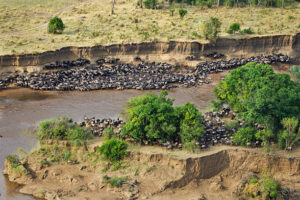
Wildebeest migration; Must-See and Visit Tourist Attractions in Kenya between July to early October
The Maasai Mara (topping tourist attractions in Kenya) is home to the “Big Five”—lion, leopard, African bush elephant, African buffalo, and the black rhinoceros. While the reserve is famous for its high density of large carnivores, including lions, cheetahs, and spotted hyenas, it also serves as a critical refuge for the critically endangered black rhinoceros. Conservation efforts, such as those by the Mara Predator Conservation Programme and the Mara Elephant Project, are vital in mitigating human-wildlife conflict and protecting these species from poaching and habitat loss. The reserve also hosts over 500 species of birds, making it a globally recognized Important Bird Area.
Administration of the Greater Mara ecosystem is divided between the Narok County Government, which manages the National Reserve, and the Mara Conservancy, which oversees the Mara Triangle. Additionally, numerous private conservancies—managed in partnership with local Maasai communities—provide a more exclusive safari experience that allows for off-road driving and walking safaris, which are generally restricted within the main National Reserve. Self-driving is prohibited within the reserve, requiring visitors to utilize licensed safari operators to navigate the park.
2. An Overview of Amboseli National Park
Amboseli National Park, the second top safari tourist attractions in Kenya, situated in the Kajiado County of southern Kenya, stands as one of the most iconic and ecologically significant protected areas in East Africa. Spanning approximately 392 square kilometers, the park serves as the core of a vast 8,000-square-kilometer ecosystem that straddles the border between Kenya and Tanzania. The park is renowned globally for its dramatic vistas, particularly the breathtaking views of Mount Kilimanjaro, which rises to 5,895 meters (19,341 feet) just across the border. The name “Amboseli” is derived from the Maa word Empusel, meaning “salty, dusty place,” a term that aptly describes the arid, ancient lakebed that forms the heart of the park.
The geography of Amboseli is a study in contrasts. While much of the park consists of dry, semi-arid plains and remnants of a Pleistocene lake, it is punctuated by lush, swampy oases fed by underground springs originating from the melting glaciers of Mount Kilimanjaro. These wetlands are critical to the park’s biodiversity, providing a permanent water source that sustains a high concentration of wildlife even during the driest months.
The park’s unique environment supports a diverse array of fauna, including the “Big Five” (though rhinos and leopards are rare or absent), and it is particularly famous for its large, free-ranging herds of African bush elephants. These elephants have been the subject of intensive scientific study since 1972, most notably by the Amboseli Trust for Elephants, providing researchers with unparalleled insights into elephant social structures and intelligence.
The history of the region is deeply intertwined with the Maasai people, who have traditionally inhabited the area. In 1883, the explorer Joseph Thomson became the first European to document the region, expressing astonishment at the sheer density of wildlife. The area was designated as a Southern Reserve for the Maasai in 1906, transitioned to a game reserve in 1948, and was officially gazetted as a national park in 1974. In 1991, it was recognized as a UNESCO site, underscoring its global importance for conservation. Today, the park remains a premier destination for wildlife enthusiasts and photographers, offering a unique opportunity to witness large mammals against the backdrop of Africa’s highest peak.
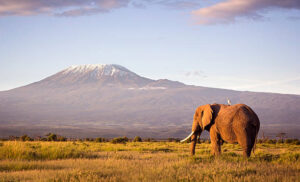
Tourist attractions in Kenya: Classic safari scene of a large bull elephant against a Kilimanjaro backdrop at sunrise. Cattle egret visible perched on the elephants back. Amboseli national park, Kenya.
For those planning a visit, the best time for game viewing is during the dry season from June to October, when animals congregate near the remaining water sources. The “Green Season” (November to May) offers lush, scenic landscapes and is ideal for birdwatchers, as the park hosts over 400 species of birds, including various raptors and water birds. Visitors are encouraged to prioritize early morning game drives, as the summit of Mount Kilimanjaro is most frequently visible at dawn before the clouds gather
3. The Samburu National Reserve
Situated in the arid northern reaches of Kenya, represents one of the most ecologically distinct and culturally significant wilderness areas in East Africa. Spanning approximately 165 square kilometers, the reserve is defined by the life-giving Ewaso Ng’iro River, which serves as a vital artery through the semi-arid scrubland, providing a sanctuary for wildlife that has uniquely adapted to the harsh, rocky terrain. Unlike the more famous southern parks such as the Masai Mara or Amboseli, Samburu offers a more remote, “off-the-beaten-path” experience, characterized by lower visitor density and a sophisticated, understated atmosphere.
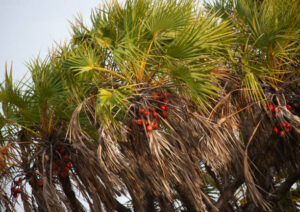
Tourist attractions in Kenya: Doum palm with fruits
The landscape is a dramatic mosaic of acacia woodlands, doum palms, rugged mountains, and volcanic outcrops, creating a habitat that supports a specialized suite of fauna known as the “Samburu Special 5.” This unique collection of species includes the Reticulated Giraffe, with its distinct liver-colored rosettes; the Grevy’s Zebra, the largest and most endangered of the zebra species; the Beisa Oryx, known for its striking facial markings and scimitar-like horns; the Gerenuk, or “giraffe gazelle,” which possesses the remarkable ability to stand on its hind legs to browse high-foliage; and the Somali Ostrich, easily identified by the blue-grey skin of its neck and legs.
The reserve is also a haven for large mammals, including a significant population of elephants that frequent the Ewaso Ng’iro riverbanks to bathe and socialize. Predators such as lions, leopards, and cheetahs are well-represented, and the reserve is frequently cited as one of the premier locations in Kenya for leopard sightings. Bird enthusiasts are equally well-served, with over 450 species recorded, including the Vulturine Guineafowl and the Taita Falcon.
Culturally, the reserve is inextricably linked to the Samburu people, a semi-nomadic pastoralist group whose traditional lifestyle remains deeply connected to the land. Visitors to the region often engage in cultural tours to learn about the Samburu’s intricate beadwork, cattle-herding practices, and their traditional manyatta settlements. The integration of community-led conservation efforts, such as those found in the neighboring Sera Conservancy—which hosts a pioneering rhino tracking project—highlights the symbiotic relationship between the local communities and the wildlife they protect.
The climate of Samburu is semi-arid, with two primary rainy seasons: the “long rains” from late March to May and the “short rains” in November and December. The dry season, spanning from June to October and January to early March, is widely considered the optimal time for wildlife viewing, as animals congregate near the Ewaso Ng’iro River, making them easier to track and observe. Because of its proximity to the equator and minimal light pollution, the reserve also offers world-class stargazing, allowing visitors to view constellations from both the Northern and Southern Hemispheres simultaneously.
4. The Ol Pejeta Conservancy: A Paradigm of Modern Conservation
The Ol Pejeta Conservancy, located on the Laikipia Plateau in central Kenya, stands as a premier example of integrated land management, blending wildlife conservation, commercial livestock production, and community development. Situated on the equator between the foothills of the Aberdare Range and Mount Kenya, this 360-square-kilometer (approximately 90,000-acre) not-for-profit conservancy has evolved from a colonial-era cattle ranch into a globally recognized sanctuary for endangered species.
Its operational model is unique, as it sustains its core conservation activities through a combination of wildlife tourism and sustainable agriculture, effectively demonstrating that conservation can be economically self-sufficient.
The history of Ol Pejeta is deeply rooted in the agricultural development of the Laikipia region. During the mid-20th century, the land was managed as a large-scale cattle ranch, with notable figures such as John and Jane Kenyon and Lord Delamere overseeing its expansion. However, as the profitability of traditional cattle ranching declined and the region saw an influx of elephants migrating between the northern plains and the mountain forests, the land-use strategy shifted.
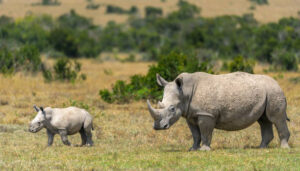
Tourist attractions in Kenya: Mom and baby take a walk through the Ol Pejeta Savanna in Kenya.
In 2004, the property was acquired by the UK-based conservation organization Fauna and Flora International (FFI), with significant financial backing from the Arcus Foundation, to establish a national land trust. This transition allowed for the protection of the “Big Five” (lion, leopard, elephant, buffalo, and rhinoceros) and the establishment of a dedicated sanctuary for the critically endangered black rhinoceros.
The conservancy is perhaps most famous for its role in the survival of the rhinoceros. It hosts the largest population of eastern black rhinos in East Africa, achieving a milestone of over 100 individuals in 2013. Furthermore, Ol Pejeta gained international attention as the final refuge for the last known northern white rhinos on Earth. Following the deaths of the last male, Sudan, in 2018, and other individuals, the conservancy continues to participate in cutting-edge scientific research, including attempts to preserve the species’ genetics through advanced reproductive technologies.
To protect these vulnerable populations, the conservancy employs a sophisticated security infrastructure, including armed patrol teams, specialized canine units, and the use of drone technology for surveillance. The cost of securing this habitat is substantial, estimated at approximately $70 per acre annually, a figure that highlights the intensive resources required to combat poaching.Beyond its role as a rhino sanctuary, Ol Pejeta operates the Sweetwaters Chimpanzee Sanctuary, the only facility of its kind in Kenya.
Established in 1993 in partnership with the Jane Goodall Institute, the sanctuary provides a permanent home for orphaned and rescued chimpanzees from across Africa. The conservancy also serves as a living laboratory for scientific research, including the BONES (Bones of Ol Pejeta, Neotaphonomic and Ecological Study) project, which examines bone communities to interpret past ecologies and mammal dynamics in the fossil record.
The conservancy’s community engagement model is central to its mission. By partnering with approximately 45,000 people across 21 designated communities, Ol Pejeta ensures that the benefits of conservation—such as improved healthcare, education, and infrastructure—are shared with local populations. This participatory approach is reinforced by a livestock integration program, where a herd of over 6,000 Boran cattle is managed alongside wildlife.
The cattle serve as an ecological tool, grazing the rangelands to create nutrient-rich “hotspots” that benefit wild herbivores, while simultaneously providing revenue to support the conservancy’s operational costs. This multifaceted approach has earned Ol Pejeta prestigious recognition, including the IUCN Green List status, which acknowledges its commitment to fair governance and effective management in the 21st century.
5. An Overview of Nairobi National Park
Nairobi National Park stands as a singular phenomenon in the world of conservation leading in list of top tourist attractions in Kenya, representing the only protected wildlife area in the world situated in such close proximity to a major capital city. Established in 1946, it covers approximately 117 square kilometers (roughly 28,963 acres) of diverse habitat, ranging from open grass plains and scattered acacia bush to riverine forests and deep, rocky gorges. The park is famously characterized by the dramatic visual contrast of wild African fauna, including lions and rhinos, roaming against a backdrop of Nairobi’s modern skyscrapers.
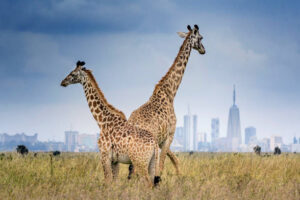
Tourist attractions in Kenya: Beautiful scenic view of giraffe posing in front of the iconic backdrop of the skyline of Nairobi taken from Nairobi National Park, Kenya.
The history of the park is deeply intertwined with the development of Nairobi as a colonial center. By the early 20th century, as the city’s population expanded, conflicts between human residents and local wildlife became frequent, leading to the designation of the area as a game reserve. Conservationist Mervyn Cowie, who served as the park’s first director, was instrumental in its formal establishment, driven by his alarm at the rapid disappearance of game on the Athi plains.
The park was the first of its kind in Kenya, and its creation necessitated the removal of Maasai pastoralists from their traditional lands, a point of significant historical and social contention.
Geographically, the park is unique because it is only fenced on three sides—the north, east, and west—while the southern boundary remains open along the Mbagathi River. This open boundary allows for the seasonal migration of large ungulates, such as wildebeest and zebra, between the park and the adjacent Kitengela Conservation Area and the broader Athi-Kapiti ecosystem. This migration is vital for the survival of these species, as they disperse across the plains during the wet season and retreat to the park’s water-rich dams during the dry season.
The park is home to an impressive array of biodiversity, hosting over 100 mammal species and approximately 500 bird species. It is particularly renowned as a “Kifaru Ark” (Rhinoceros Sanctuary), playing a critical role in the protection of the critically endangered black rhinoceros. Beyond its role in conservation, the park serves as a hub for environmental education, housing the David Sheldrick Wildlife Trust’s orphanage for elephant and rhino calves, as well as the Nairobi Safari Walk.
Despite the pressures of urban encroachment, pollution, and the need for land, the park remains a symbol of the global challenge to balance rapid urban development with the preservation of natural heritage.
6. Lake Nakuru National Park: A Jewel of the Great Rift Valley
Sixth on the list of tourist attractions in Kenya is Lake Nakuru National Park, situated in the heart of Kenya’s Great Rift Valley, stands as one of the most ecologically significant and visually arresting protected areas in East Africa. Located approximately 160 kilometers northwest of Nairobi, the park encompasses an area of roughly 188 square kilometers, characterized by a shallow, alkaline soda lake surrounded by a diverse mosaic of euphorbia forests, acacia woodlands, and savannah grasslands.
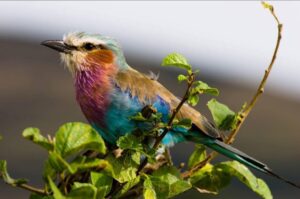
Lilac breasted roller, Kenya official bird; a Kenya tourist attractions in Kenya
The park is globally recognized for its role as a critical sanctuary for endangered species, most notably the black and white rhinoceros. Unlike many other African parks where rhinos may be difficult to track, Lake Nakuru’s fenced, compact environment allows for highly reliable sightings, making it a premier destination for conservation-focused tourism. Furthermore, the park serves as a vital stronghold for the rare Rothschild’s giraffe, which was successfully reintroduced to the area to aid in the species’ recovery.
Historically, the park was world-renowned for its massive concentrations of greater and lesser flamingos, which at times numbered over 1.5 million, creating a vibrant pink fringe along the lake’s edge. These birds are drawn to the lake’s high alkalinity, which supports the growth of cyanobacteria—their primary food source.
While recent environmental shifts, including rising water levels due to increased rainfall, have altered the lake’s chemistry and caused the flamingo populations to fluctuate and occasionally disperse to other Rift Valley lakes like Lake Bogoria, the park remains a premier birdwatching destination. With over 450 recorded bird species, including great white pelicans, African fish eagles, and various herons, it is designated as an Important Bird Area (IBA) and a Ramsar site of international importance.
The landscape of Lake Nakuru is as dramatic as its wildlife. Key geographical features include the Baboon Cliff, which offers panoramic views of the lake and surrounding escarpments, and the Makalia Falls, a seasonal waterfall that provides a scenic backdrop for visitors. The park’s diverse habitats—ranging from the dense acacia forests where leopards are frequently spotted to the open grasslands where buffalo and zebra graze—ensure that a single game drive can yield a high density of wildlife encounters.
For the modern traveler, the park offers a sophisticated infrastructure, including eco-conscious lodges such as the Lake Nakuru Lodge and Sarova Lion Hill Lodge, which allow guests to remain immersed in the wilderness. As a UNESCO World Heritage site, the park is managed by the Kenya Wildlife Service (KWS), which balances the demands of high-volume tourism with the rigorous requirements of anti-poaching operations and habitat management. Whether one is interested in the “Big Five”—of which the rhino and leopard are the most elusive—or the intricate social structures of the resident olive baboon troops, Lake Nakuru remains a cornerstone of the Kenyan safari experience.
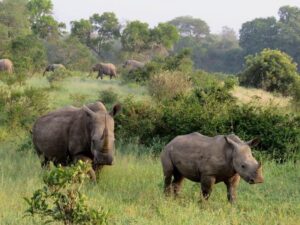
Rhino, among the big 5 which tops Tourist attractions Kenya
7. Naboisho Conservancy:
The Mara Naboisho Conservancy represents a landmark achievement in community-based conservation, established in 2010 through a collaborative agreement between approximately 500 Maasai landowners and tourism partners. Located in the Greater Mara ecosystem, bordering the Masai Mara National Reserve to the southwest, the conservancy encompasses 145 square kilometers of vital wilderness. The term “Naboisho” originates from the Maa language, translating to “coming together,” which reflects the foundational philosophy of the project: uniting fragmented land parcels to restore ecological integrity while securing sustainable livelihoods for the local Maasai community.A model of community-led conservation offering intimate walking safaris and night game drives.
Before the conservancy’s formation, the region faced significant environmental degradation due to the privatization of land, which led to overgrazing, habitat fragmentation, and the decline of traditional pastoralist lifestyles. The transition to a conservancy model involved the implementation of a structured land-use plan that demarcated specific zones for tourism, conservation, and rotational cattle grazing. By removing human settlements from core wildlife areas and managing livestock impact, the ecosystem experienced a rapid recovery, attracting diverse wildlife populations back to the landscape.
The conservancy is widely recognized for its high density of predators, particularly lions, with an estimated population of 70 to 100 individuals residing in or near the area. This “Big Cat Country” also supports a significant number of leopards and cheetahs, alongside large herds of elephants, giraffes, and various plains game. Unlike the neighboring national reserve, Naboisho operates under a strict code of conduct that limits the number of vehicles at sightings and mandates minimum distances from wildlife, ensuring a high-quality, low-impact experience for visitors. Furthermore, the conservancy allows for specialized activities such as guided walking safaris and night game drives, which are generally prohibited within the national reserve.
The socio-economic impact of the Mara Naboisho Conservancy is profound. Landowners receive annual rental fees, and the tourism operations—limited to only nine camps and lodges—provide direct employment and support community initiatives, including access to clean water, renewable energy, and education programs. These efforts have fostered a symbiotic relationship where the community recognizes the intrinsic value of protecting the landscape and its wildlife, significantly reducing human-wildlife conflict.
The conservancy also serves as a hub for research and education, hosting projects like the Maasai Mara Big Cat Monitoring and Wildlife Conservation Project, which utilizes volunteer data collection to inform conservation strategies. Through this model, Naboisho demonstrates that responsible, community-led tourism can effectively balance the needs of local populations with the imperative of preserving biodiversity for future generations.
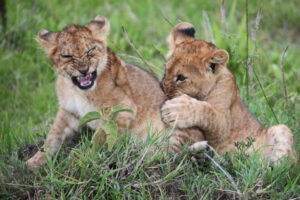
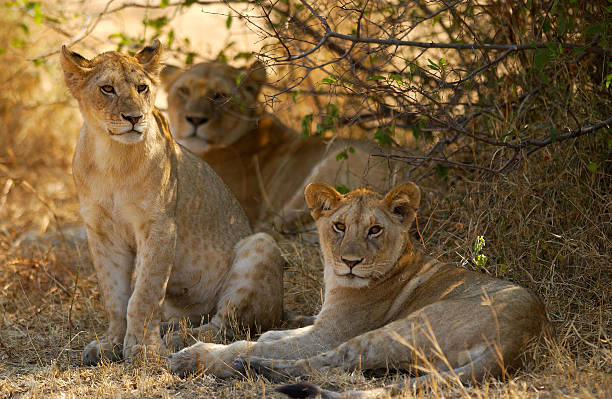
Tourist attractions in Kenya: A lion family with one male, 2 female and about 4 cabs in Masai Mara
8. The Tsavo Ecosystem: A Comprehensive Overview of Kenya’s Wilderness Giants
Tsavo, encompassing both Tsavo East and Tsavo West National Parks, represents one of the largest and most ecologically significant protected areas in the world. Established in 1948, the combined area covers approximately 22,000 square kilometers, accounting for nearly 4% of Kenya’s total landmass. The region is divided by the Nairobi-Mombasa railway and the A109 road, creating two distinct landscapes that serve as a vital refuge for biodiversity, including the famous “Red Elephants” of Tsavo, so named for their habit of dusting themselves with the region’s characteristic iron-rich volcanic soil.
Tsavo East: The Theater of the Wild
Tsavo East is the larger of the two parks, characterized by vast, semi-arid plains and the meandering Galana River, which serves as the lifeblood of the ecosystem. The landscape is dominated by the Yatta Plateau, the world’s longest lava flow, stretching over 300 kilometers. The park is renowned for its rugged beauty and the Lugard Falls, where the Galana River narrows into a series of dramatic rapids and rock formations. Historically, Tsavo East gained notoriety in the late 19th century due to the “Man-Eaters of Tsavo,” a pair of lions that terrorized workers building the Uganda Railway, a story famously documented by Colonel J.H. Patterson.
Tsavo West: Volcanic Landscapes and Springs
Tsavo West offers a stark contrast to the open plains of its eastern counterpart. It is defined by a more mountainous and volcanic terrain, featuring the Chyulu Hills and the Mzima Springs. Mzima Springs is a geological marvel where millions of gallons of crystal-clear water gush daily from beneath the lava rocks, providing a sanctuary for hippos and crocodiles that can be viewed from an underwater observation chamber. The park’s volcanic history is evident in the Shetani Lava Flow, a vast expanse of jagged black rock that appears as if it were still molten, reflecting the intense geological activity that shaped the region.
Biodiversity and Conservation
The Tsavo ecosystem is a critical stronghold for the African elephant (Loxodonta africana). Despite historical challenges with poaching, the park remains a primary focus for conservation efforts. The area also hosts the “Big Five”—lion, leopard, elephant, buffalo, and rhino—alongside diverse species such as the fringe-eared oryx, gerenuk, and a prolific bird population exceeding 500 species. The interaction between the diverse habitats, ranging from riverine forests to open savannah and volcanic scrub, allows for a complex trophic structure. The population density of large mammals can be modeled by the carrying capacity of the environment, often expressed in ecological studies as a function of available biomass
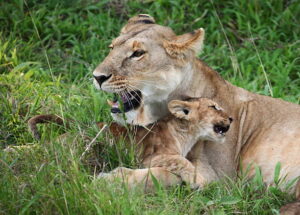
Tourist Attractions in Kenya: A lion family with one male, 2 female and about 4 cabs in Masai Mara National Reserve Nairobi, Kenya. Named of the local ethnic group massai, its a nature reseve north of the serengeti on a above sea level of 1500-2150m.
Mountains and Rugged Landscapes
- Mount Kenya: Africa’s second-highest mountain, offering world-class trekking through diverse ecosystems ranging from bamboo forests to alpine meadows.
- Matthews Range: A remote, forested mountain range in Samburu, ideal for adventurous hikers seeking serene trails and icy rock pools.
- Lake Turkana: Known as the “Jade Sea,” this massive desert lake is a site of immense archaeological importance, including the “Turkana Boy” fossil site.
- Central Island National Park: Located within Lake Turkana, this volcanic island features three crater lakes and is a haven for Nile crocodiles.
- Chalbi Desert: A vast, starkly beautiful desert region featuring salt pans and shifting sand dunes.
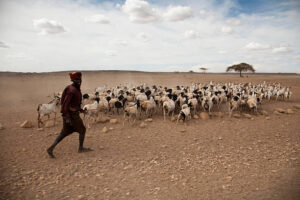
Tourist Attractions in Kenya: A man, belonging to the Gabbra tribe, directing his herd of goats in search of food in the barren Chalbi Desert, Marsabit County, Kenya
Coastal and Marine Wonders
- Diani Beach: A world-famous stretch of white sand and turquoise water, perfect for kite surfing, diving, and relaxation.
- Lamu Island: A UNESCO World Heritage site, this ancient Swahili settlement is characterized by narrow, car-free streets and traditional dhow sailing.
- Watamu: A marine paradise known for its coral reefs, snorkeling, and the seasonal migration of humpback whales.
- Kiunga Marine National Reserve: An archipelago ideal for deep-sea fishing and exploring untouched coral gardens.
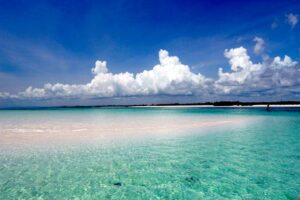
Tourist Attractions in Kenya: Marine park Malindi. Kenya
Cultural and Urban Experiences as a tourist attractions in Kenya
Kenya offers a profound tapestry of cultural and urban experiences that extend far beyond its world-renowned wildlife safaris. The nation’s identity is a complex synthesis of indigenous tribal heritage, colonial history, and the cosmopolitan evolution of its major urban centers.
The cultural landscape of Kenya is defined by the diverse traditions of its ethnic groups, such as the Maasai, Samburu, Luo, and the Swahili people of the coast. The Maasai, historically renowned as pastoralist warriors, maintain a distinct cultural heritage characterized by their vibrant beadwork, traditional shukas, and nomadic lifestyle centered around cattle. Visitors often engage with these communities through visits to manyattas (traditional homesteads), where they can observe traditional dance, listen to oral histories, and participate in daily pastoral activities. Similarly, the Samburu, who share linguistic and cultural roots with the Maasai, offer deep insights into resilient pastoralist traditions in the arid northern regions.
Urban experiences in Kenya are anchored by Nairobi and Mombasa, both of which serve as gateways to the country’s broader cultural narrative. Nairobi, a sprawling metropolis of over four million people, functions as a hub of modern African commerce and history. The city provides unique opportunities to engage with history through the Karen Blixen Museum, which preserves the home of the author of Out of Africa, and the National Museums of Kenya, which house extensive ethnographic collections. Furthermore, the Bomas of Kenya serves as a vital cultural center, offering a curated experience of the traditional architecture, music, and dance of various Kenyan tribes in a single location.
Coastal culture, particularly in Lamu and Mombasa, reflects a distinct blend of African, Arab, and Persian influences that have developed over centuries of Indian Ocean trade. Lamu, a UNESCO World Heritage site, is celebrated for its well-preserved Swahili architecture, narrow stone streets, and the continued use of traditional dhows. In Mombasa, the historical significance of the Portuguese-built Fort Jesus highlights the strategic importance of the coast in global maritime history.
Beyond these landmarks, the “Tembea Kenya” initiative has encouraged a growing domestic tourism movement, fostering a deeper appreciation among Kenyans for their own heritage. Whether through the exploration of sacred Mijikenda Kaya forests or the vibrant culinary scene in Nairobi, the intersection of urban development and traditional preservation continues to define the Kenyan tourist experience.
- Nairobi (City Center): The vibrant capital, home to the David Sheldrick Wildlife Trust, the Giraffe Centre, and the Karen Blixen Museum.
- Kisumu: A gateway to Lake Victoria, offering rich Luo culture, fresh tilapia, and spectacular sunsets over the water.
- Maasai Cultural Villages: Opportunities to engage with the Maasai people to learn about their history, traditional dance, and conservation efforts.
- Kazuri Beads Factory: A social enterprise in Nairobi providing employment to local women through the creation of handmade ceramic beads.
- Kit-Mikayi: A legendary rock formation near Kisumu, steeped in local folklore and offering stunning panoramic views.
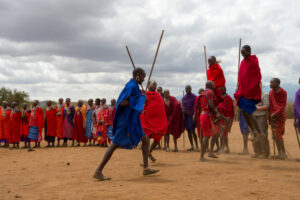
Tourist Attractions in Kenya: Masai men performing a traditional dance in a Masai village outside Amboseli National Park in Kenya.
Conclusion: The Enduring Allure of Kenya’s Landscapes and Heritage; Must-see tourist attractions in Kenya
In summary, Kenya stands as a peerless destination that offers a profound synthesis of ecological diversity, historical depth, and cultural vibrancy. From the vast, golden savannahs of the Maasai Mara, where the rhythmic cycle of the Great Migration dictates the pulse of the wild, to the sun-drenched, coral-fringed shores of the Indian Ocean, the country presents a mosaic of experiences that cater to both the adventurous spirit and the seeker of tranquility.
As documented in authoritative geographical and travel literature, the nation’s commitment to conservation—exemplified by its extensive network of national parks and reserves—ensures that visitors are not merely observers of nature, but participants in a delicate, protected ecosystem that remains one of the world’s most significant natural treasures.Beyond its natural splendor, Kenya serves as a living chronicle of human history. The archaeological significance of the Great Rift Valley, often cited as the “cradle of mankind,” provides a humbling perspective on our collective origins, while the architectural remnants of the Swahili Coast, particularly in Lamu and Mombasa, reflect a rich tapestry of trade, religion, and cross-cultural exchange that has shaped East Africa for centuries.
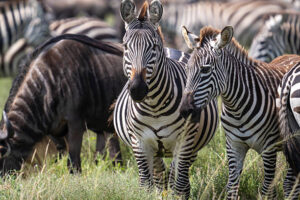
Must-see Tourist attractions in Kenya: Herd of Plains zebras in the savanna. Maasai Mara, Kenya.
The synthesis of these elements—the untamed wilderness, the ancient heritage, and the warm, welcoming spirit of its diverse ethnic communities—creates a travel experience that is both educational and transformative. Ultimately, a journey through Kenya is more than a vacation; it is an immersion into a landscape that challenges, inspires, and leaves an indelible mark on the traveler, reinforcing the importance of preserving such unique global heritage for generations to come.
Leave a comment:
You must be logged in to post a comment.

Comment 01
Astute Africa Safaris,
06 June, 2026REF: Crafting Your Bespoke African Safari Experience with Astute Africa Safaris
Jambo,
Thank you for your interest in exploring the wonders of Africa with Astute Africa Safaris. We pride ourselves on creating immersive, tailor-made journeys that align perfectly with your personal interests, pace, and travel aspirations.
Because every safari is a unique narrative, we do not believe in “one-size-fits-all” pricing. To ensure we provide you with an accurate and competitive quotation that reflects the specific lodges, wildlife experiences, and logistical arrangements you desire, we invite you to connect with our team for a personalized consultation.
Please contact us at info@astuteafricasafaris.com, Whatsapp +254762663272 or fill the inquiry form with a few details regarding your preferred travel dates, group size, and specific interests (e.g., photography, luxury relaxation, or adventure trekking). Once we have these details, we will curate a comprehensive proposal designed specifically for you.
We look forward to the possibility of helping you plan an unforgettable journey.
Warm regards,
Team Astute Africa Safaris