

- 1.9k Views
- 7 Min Read
- (1) Comment
The Anatomy of the Ultimate Best Africa Safari Vehicle
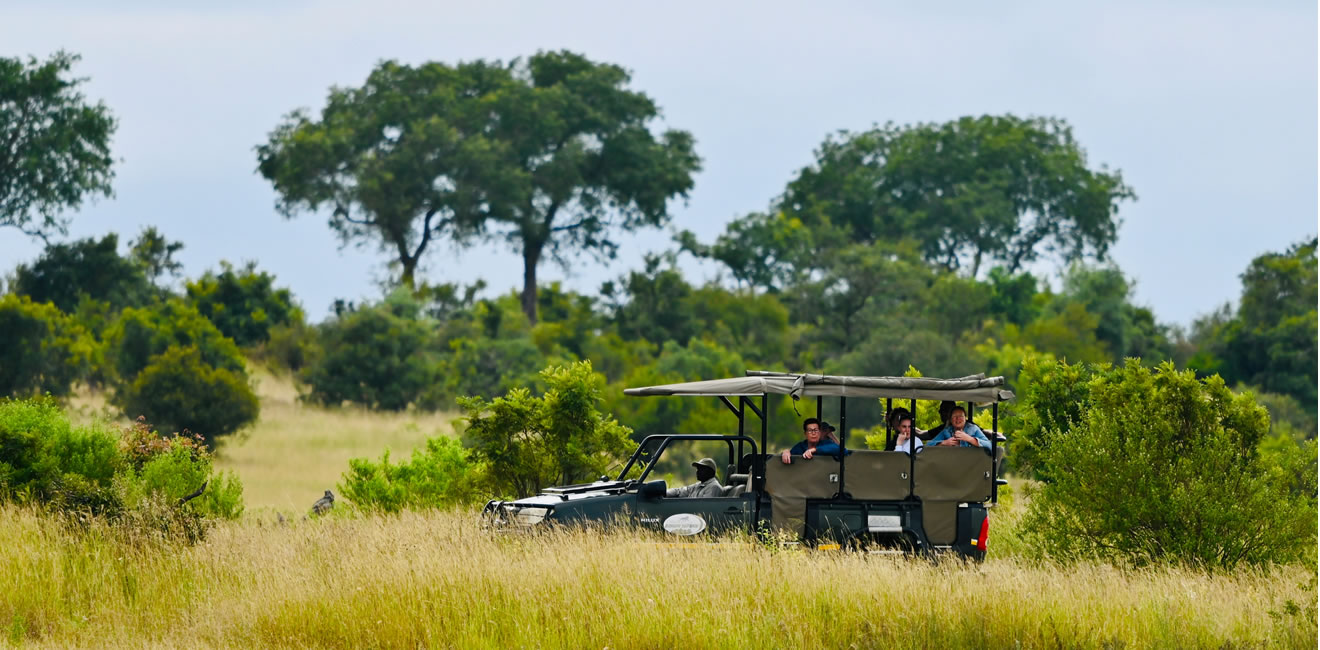
The selection of a safari vehicle is a critical component of the African wildlife experience, as the vehicle serves as both a mobile observation platform and a sanctuary against the elements. Historically, the evolution of safari transport has transitioned from the rugged, converted military trucks used by early explorers to the highly specialized, custom-engineered machines seen today. Accordingly, the best Africa safari vehicle is not a singular model but rather a design optimized for the specific terrain, whether it be the dense bushveld of the Maasai Mara or the vast, open plains of the Serengeti.
Design Specifications and Operational Requirements
The most effective safari vehicles, often based on robust chassis like the Toyota Land Cruiser 70-series or the Land Rover Defender, are engineered for extreme durability. In my experience the primary requirement for any safari vehicle is high ground clearance and a heavy-duty suspension system capable of navigating deep ruts, riverbeds, and termite mounds without compromising passenger safety or comfort. These vehicles are typically modified with raised seating tiers, ensuring that even passengers in the back rows have an unobstructed 360-degree view of the horizon.
Open-Air vs. Closed-Body Configurations
The choice between an open-air vehicle and a closed-body vehicle is dictated by the environment and the nature of the safari. Open-air vehicles, which lack windows and sometimes even side doors, are the gold standard for private game reserves. As highlighted in industry guides, these vehicles allow for a sensory immersion in the environment, enabling guests to hear the calls of birds and smell the approaching rain, which is essential for tracking predators. Conversely, in national parks where off-roading is prohibited and distances between sightings are vast, closed-body vehicles—often equipped with pop-up roofs and sliding windows—are preferred. These provide necessary protection from dust, insects, and the intense equatorial sun during long transit periods.
Best Africa Safari vehicle; Wildebeest herd waiting to cross the Mara River in the Maasai Mara.
The Role of Private Reserves in Vehicle Utility
Private game reserves offer a distinct advantage in vehicle utility due to their flexible operational rules. Unlike national parks, which mandate that vehicles remain on designated tracks, private reserves allow for off-road driving. This capability requires vehicles to be fitted with specialized all-terrain tires and high-torque engines to handle off-camber terrain. The exclusivity of these reserves also means that vehicles are often limited to a maximum of two or three at a single wildlife sighting, ensuring that the engine noise and presence of the vehicle do not disrupt the natural behavior of the animals.
Technical Considerations for Wildlife Photography
For the serious wildlife photographer, the “best” vehicle is one that provides stability and low-angle shooting opportunities. Many professional-grade safari vehicles are now equipped with custom-welded camera mounts and beanbag rests on the door frames. The vibration-dampening qualities of the vehicle’s suspension are paramount, as even minor tremors can ruin long-exposure shots or high-magnification telephoto imagery. The integration of power inverters for charging camera batteries and laptops has also become a standard feature in high-end safari fleets, reflecting the modern traveler’s need for connectivity in the wild.
How do different safari vehicles compare in terms of comfort and visibility?
The design and utility of safari vehicles are fundamentally dictated by the logistical requirements of the African wilderness, balancing the competing needs of passenger comfort during transit and optimal visibility during wildlife observation. According to authoritative texts on wildlife tourism and field operations, the evolution of these vehicles has been driven by the necessity to navigate rugged terrain while providing a platform for photography and observation.
Comparative Analysis of Best Africa Safari Vehicle Configurations
Safari vehicles are generally classified into two primary configurations: closed-sided and open-sided. The choice between these is often determined by the logistics of the safari, specifically whether guests “fly in” to a remote airstrip or “drive in” from a major hub.
Comfort and Transit Closed-sided vehicles, often based on modified 4×4 chassis such as the Toyota Land Cruiser or Land Rover, are the industry standard for long-distance transfers. In regions where travel between camps involves hours of driving over corrugated dirt roads, these vehicles provide a necessary buffer against the elements, including dust, wind, and extreme temperatures. They frequently feature amenities such as air conditioning and fixed windows, which significantly reduce physical fatigue during transit.
Visibility and Wildlife Observation Visibility is the primary metric by which the quality of a game drive is measured. Open-sided vehicles are widely considered superior for wildlife viewing because they eliminate the physical barriers between the observer and the environment. Without windows or door frames, the field of vision is effectively 360 degrees, allowing for unobstructed photography and a more immersive sensory experience.
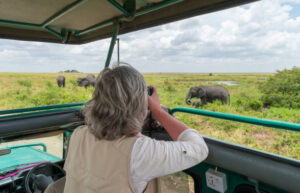
Best Africa Safari Vehicle; Woman in safari jeep taking picture of elephants, Africa, Serengeti national park. Camera on bean bag.
In contrast, closed-sided vehicles—even those equipped with “pop-top” roofs—present logistical challenges during sightings. When a significant wildlife event occurs, passengers in a closed vehicle must often maneuver within a confined space to utilize the roof hatch or windows. This can lead to restricted angles and potential crowding, which may impede the ability to track fast-moving subjects or capture high-quality images.
Operational Trade-offs The decision-making process for vehicle selection involves a trade-off between the “hard” comfort of a closed cabin and the “soft” experience of being physically integrated into the landscape. While closed vehicles offer protection from the harsh African sun and dust, open-sided vehicles facilitate a deeper connection to the environment, allowing for the sounds and scents of the bush to be fully experienced. For specialized photographic safaris, the open-sided vehicle is almost universally preferred by professionals due to the lack of glass reflections and the ability to shoot from a lower, more natural eye level.
Safari Landcruiser or Jeep Description
Make, Model, and Year of Vehicles
Different parks and terrains requires different type of vehicle. Hence the best Africa safari vehicles are typically modified versions of popular off-road models. Common makes include Toyota Land Cruiser, Land Rover Defender, and Jeep Wrangler. The specific model and year can vary based on the safari operator and the region. For instance, many operators use 2020 or newer models to ensure reliability and comfort during tours.
Cooler
Most safari vehicles are equipped with a cooler to keep drinks cold during the trip. This is particularly important in hot climates where hydration is essential for guest comfort.
Power Supply for Charging Batteries
Many safari vehicles come with power supply options such as USB ports or 12V outlets to allow guests to charge their electronic devices, including cameras and phones. This feature is crucial for travelers who wish to capture their experiences without worrying about battery life.
Pop Top
A pop-top roof is a common feature in safari vehicles, allowing passengers to stand up while observing wildlife. This design enhances visibility and provides an open-air experience that is integral to the safari adventure.
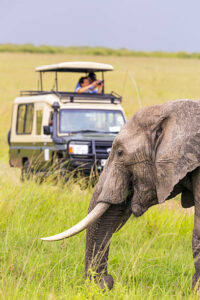
Best Africa Safari vehicle; Tourists on a safari viewing an elephant at maasai mara
Number of Seats is key to deciding the Best Africa Safari vehicle
The number of seats in a safari jeep can vary but typically ranges from 6 to 10 seats. This configuration allows for comfortable seating while ensuring that each passenger has a good view of the surroundings.
Guidebooks Provided in Vehicle
Many safari operators provide guidebooks or field guides within the vehicle. These resources help guests identify wildlife species they may encounter during their tour and enhance their overall experience by providing educational context.
Beanbags Provided for Telephoto Lenses
For photography enthusiasts, some safari vehicles offer beanbags designed for stabilizing telephoto lenses. These beanbags provide a stable platform for photographers to capture high-quality images of wildlife without camera shake.
For Group Tours—Does Everyone Get a Window Seat?
In group tours, it is common practice for each participant to have access to a window seat. Safari operators strive to ensure that all guests have an unobstructed view of wildlife, making it a priority during seating arrangements.
Leave a comment:
You must be logged in to post a comment.
Comment 01
Astute Africa Safaris,
05 May, 2026REF: Crafting Your Bespoke African Safari Experience with Astute Africa Safaris
Jambo,
Thank you for your interest in exploring the wonders of Africa with Astute Africa Safaris. We pride ourselves on creating immersive, tailor-made journeys that align perfectly with your personal interests, pace, and travel aspirations.
Because every safari is a unique narrative, we do not believe in “one-size-fits-all” pricing. To ensure we provide you with an accurate and competitive quotation that reflects the specific lodges, wildlife experiences, and logistical arrangements you desire, we invite you to connect with our team for a personalized consultation.
Please contact us at info@astuteafricasafaris.com, Whatsapp +254762663272 or fill the inquiry form with a few details regarding your preferred travel dates, group size, and specific interests (e.g., photography, luxury relaxation, or adventure trekking). Once we have these details, we will curate a comprehensive proposal designed specifically for you.
We look forward to the possibility of helping you plan an unforgettable journey.
Warm regards,
Team Astute Africa Safaris