

- 1.5k Views
- 40 Min Read
- (1) Comment
Discover the best birdwatching in East Africa
Kenya is one of Africa’s most rewarding destinations for birdwatching, offering an extraordinary variety of habitats within a single country. From freshwater lakes and alkaline Rift Valley lakes to tropical forests, dry acacia woodlands, open savannah, mountain slopes, river systems and the Indian Ocean coastline, Kenya offers opportunities to observe an impressive range of resident and migratory birds.
Kenya is leading in best safari and birdwatching in East Africa can be designed for almost any level of experience. First-time birdwatchers may enjoy colourful kingfishers, weavers, hornbills, bee-eaters, ostriches and spectacular birds of prey alongside Kenya’s famous mammals. Experienced birders can concentrate on specialised habitats, regional endemics, difficult-to-find species, seasonal migrants and carefully planned routes that maximise the number of species encountered.
For photographers, Kenya presents opportunities to capture birds in flight, feeding flocks, courtship displays, wetland reflections, dramatic raptors and colourful forest species. For travellers who enjoy nature without wanting an intensely technical birding expedition, the country combines excellent birdwatching with traditional wildlife safaris, cultural experiences and beach holidays.
At Astute Africa Safaris, the ideal birdwatching itinerary should be built around the traveller’s interests, available time, preferred accommodation, target species and budget. Some visitors will be best served by a relaxed five-day safari around Nairobi and the Rift Valley. Others may benefit from a two-week expedition covering wetlands, forests, coastal habitats and dry-country ecosystems.
The most important planning principle is to choose habitats and target species before choosing the route. The best birdwatching safari is not necessarily the one that visits the most national parks. It is the one that provides the right combination of locations, timing, knowledgeable guiding and sufficient time in the field.
Quick guide: where to go birdwatching in Kenya
| Destination | Main habitat | Best suited to | Suggested stay |
|---|---|---|---|
| Nairobi National Park | Grassland, riverine woodland and wetlands | First-time birders, raptors and savannah species | Half to 1 day |
| Lake Nakuru National Park | Lake, woodland and grassland | Waterbirds, pelicans and mixed wildlife viewing | 1–2 days |
| Lake Naivasha | Freshwater lake and acacia woodland | Waterbirds, kingfishers and relaxed birding | 1–2 days |
| Lake Baringo | Dry scrub, cliffs and lakeshore | Dry-country species, hornbills and nightjars | 1–2 days |
| Kakamega Forest | Tropical rainforest | Forest specialists and specialist birders | 2–3 days |
| Arabuko-Sokoke Forest | Coastal forest | Rare and localised coastal-forest species | 2–3 days |
| Taita Hills | Montane forest fragments | Threatened and highly localised forest birds | 2–3 days |
| Samburu and Buffalo Springs | Arid bushland and riverine habitat | Northern dry-country species | 2–3 days |
| Tsavo East and Tsavo West | Semi-arid bushland, woodland and rocky terrain | Dry-country birds, raptors and mixed wildlife | 2–4 days |
| Maasai Mara | Open savannah, rivers and seasonal wetlands | Grassland birds, raptors and wildlife photography | 2–4 days |
These are indicative planning durations, not guarantees of sightings. Specialist expeditions may need longer stays, particularly for difficult-to-find forest birds.
1. The best birdwatching destinations in Kenya
Kenya’s birding destinations are best understood by habitat. Wetlands attract waterbirds and waders, tropical forests support specialised forest species, dry-country reserves harbour birds adapted to arid conditions, and coastal forests and tidal creeks offer distinctive coastal and migratory birdlife.
A well-designed safari combines complementary habitats rather than spending the entire trip in similar landscapes.
Nairobi National Park: the ideal starting point

Ostrich and other savannah birds in Nairobi National Park, Kenya.
Nairobi National Park is an excellent first stop for visitors arriving in Kenya’s capital. Its open grasslands, seasonal wetlands, wooded areas and riverine vegetation support a wide range of birds while also providing opportunities to see mammals.
Birders can look for secretary birds, ostriches, crowned cranes, bustards, storks, eagles, vultures, hornbills and numerous smaller grassland species, depending on the habitat and season.
-
Best for: first-time birdwatchers, short trips, raptors, grassland species and combining birding with a conventional wildlife safari.
-
Suggested stay: half a day to one full day; allow longer for specialist photography.
-
Best approach: start at dawn, focus on different habitats and allow time to stop for distant birds.
-
Accommodation: Nairobi hotels and lodges, with options ranging from practical city stays to luxury properties.
Nairobi is also a convenient base for travellers who want to begin with birdwatching before continuing to the Rift Valley, western Kenya or the coast.
Lake Nakuru National Park: waterbirds and Rift Valley scenery

Pelicans, flamingos and other waterbirds along the shores of Lake Nakuru, Kenya.
Lake Nakuru is one of Kenya’s best-known destinations for combining birdwatching with wildlife viewing. The lake and its surrounding grassland, woodland and scrub create several habitats within one protected area.
Depending on water levels and food availability, visitors may see flamingos, pelicans, cormorants, herons, egrets, storks, waders and other water-associated birds. Raptors and terrestrial species add variety away from the lakeshore.
Flamingo numbers can fluctuate substantially. Water chemistry, lake depth, food availability and movements between Rift Valley lakes all influence their distribution, so a large flock should never be guaranteed.
-
Best for: waterbirds, pelicans, mixed bird photography and travellers who also want to see rhinos, giraffes and other wildlife.
-
Suggested stay: one or two nights.
-
Ideal combination: Lake Naivasha, Lake Elementaita and other suitable Rift Valley birding locations.
Allow sufficient time to explore more than one habitat. Birding around the lake margins can be productive, but woodland and open-country sections deserve attention too.
Lake Naivasha: freshwater birdwatching

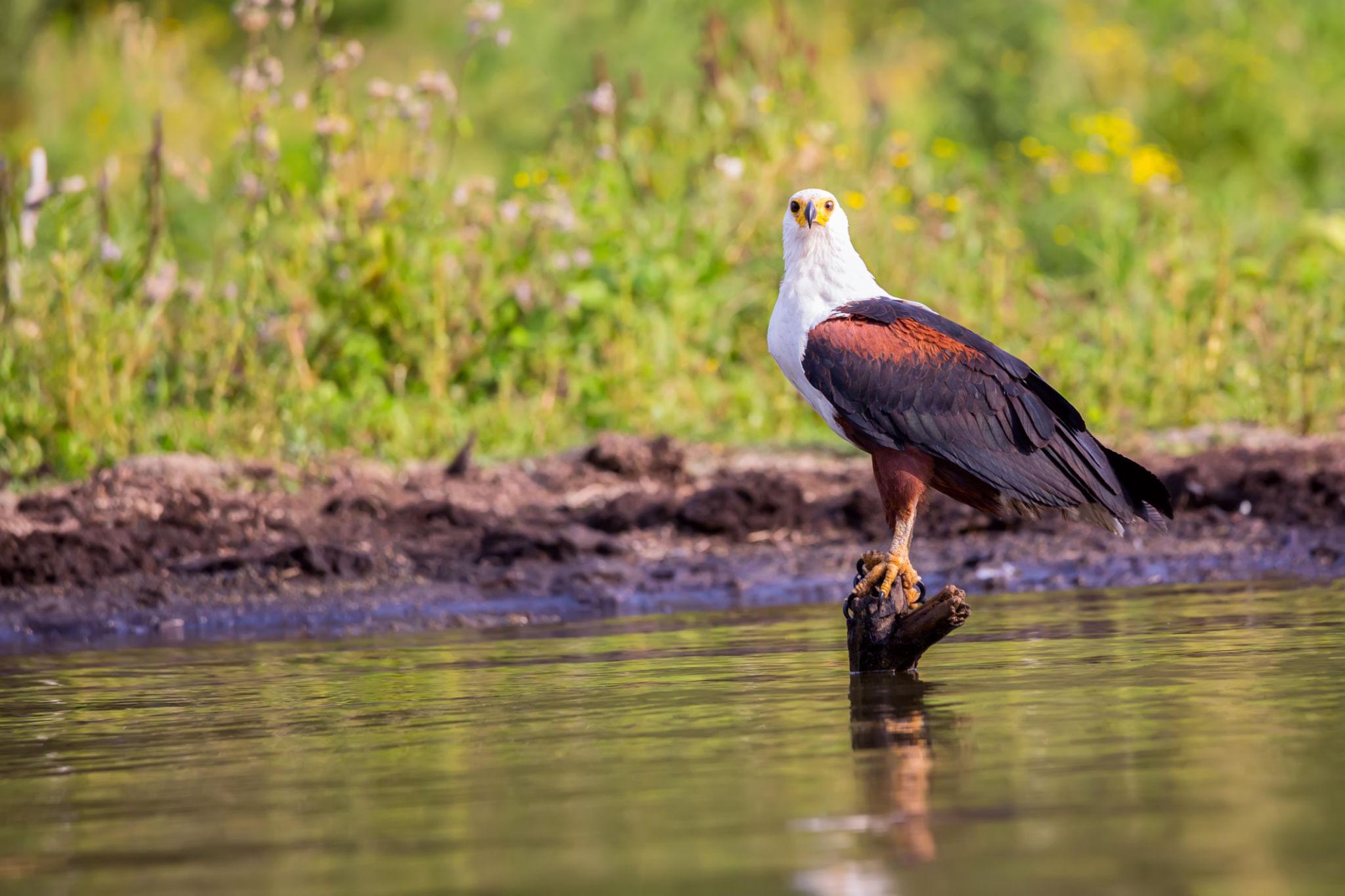
African fish eagle beside Lake Naivasha, a freshwater birdwatching destination in Kenya.
Lake Naivasha is particularly appealing to visitors who enjoy relaxed birding in a scenic freshwater environment. Its lake margins, papyrus and other wetland vegetation, acacia woodland and surrounding countryside support a diverse bird community.
Possible sightings include African fish eagles, kingfishers, herons, egrets, pelicans, cormorants, jacanas, weavers and seasonal waders.
A boat excursion with an authorised operator may provide different viewing angles for waterbirds and fish eagles. Birders should follow local rules, avoid disturbing nesting sites and maintain appropriate distances from wildlife.
-
Best for: beginners, bird photographers, families and travellers combining birdwatching with a relaxing lakeside stay.
-
Suggested stay: one or two nights.
-
Ideal combination: Lake Nakuru, Lake Elementaita or a longer Rift Valley circuit.
For serious birders, use the lake as a base for targeted morning sessions rather than relying exclusively on a boat ride.
Lake Baringo: dry-country birds, cliffs and riverine habitats

Hornbill in the dry-country habitat around Lake Baringo, Kenya.
Lake Baringo is an important stop for birders seeking species associated with dry scrub, rocky escarpments, acacia woodland and lakeshore vegetation. It offers a different experience from the more familiar flamingo lakes of the Rift Valley.
Birds to look for include hornbills, kingfishers, bee-eaters, herons, African fish eagles and other species associated with arid and semi-arid environments. Depending on the exact site and season, specialist birders may target particular hornbills and other regional specialties.
-
Best for: experienced birders, dry-country species, hornbills and close-range photography with a knowledgeable local guide.
-
Suggested stay: one or two nights.
-
Ideal combination: Lake Nakuru and Lake Naivasha, or a longer northern Kenya circuit.
Early mornings are especially useful. The combination of open habitats and established local birding knowledge can make Lake Baringo a valuable stop on a species-focused itinerary.
Kakamega Forest: Kenya’s rainforest birding experience

Great Blue Turaco in the tropical forest habitat of Kakamega Forest, western Kenya.
Kakamega Forest is a priority destination for birders interested in tropical forest ecology. Kenya Wildlife Service describes it as the country’s surviving remnant of the once-vast Central African tropical rainforest and recognises its importance for bird diversity.
The forest supports species that are less likely to be encountered on conventional savannah safaris. Great Blue Turaco, Black-and-white-casqued Hornbill, colourful turacos, forest barbets, greenbuls, sunbirds and flycatchers are among the birds that may feature in a forest birding list, depending on location and conditions.
Forest birding is different from watching birds in open grassland. Many species call from the canopy or move through dense undergrowth, so listening carefully and working with an experienced guide can be more productive than walking quickly along trails.
-
Best for: specialist birders, forest enthusiasts, nature photographers and travellers seeking a habitat very different from the savannah.
-
Suggested stay: two to three nights, with additional nights for demanding target lists.
-
Practical consideration: allow for humid conditions, forest trails, changing light and occasional rain.
Kakamega is particularly valuable when the aim is to add forest specialists to a bird list rather than simply observe a large number of conspicuous species.
Arabuko-Sokoke Forest and Mida Creek: coastal forest and migrant shorebirds

Forest habitat in Arabuko-Sokoke, a key destination for specialised coastal-forest birding.
Arabuko-Sokoke Forest, near Kenya’s north coast, is one of the country’s most important birding destinations for people interested in specialised coastal-forest species. Kenya Forest Service reports more than 270 recorded bird species in the forest and identifies globally threatened and highly localised birds associated with its different forest types.
Specialist birders may seek species such as Sokoke Scops Owl, Sokoke Pipit, East Coast Akalat, Amani Sunbird and Clarke’s Weaver. Their presence, accessibility and detectability vary, so sightings should be treated as possibilities rather than promises.
Nearby Mida Creek provides a contrasting habitat of mangroves, tidal mudflats and shallow water. It can be productive for migratory shorebirds and other coastal species, including sandpipers, plovers and other waders when conditions are suitable.
-
Best for: specialist birders, coastal-forest species, shorebirds and travellers combining birdwatching with a beach holiday.
-
Suggested stay: two to three nights for forest birding, with additional time for coastal habitats.
-
Ideal combination: Watamu, Malindi or a longer Kenya coast itinerary.
Dawn is often the most productive period for forest birding. If coastal birds are a priority, schedule outings around suitable tidal conditions as well as daylight.
Taita Hills: a priority for localised forest birds

Montane forest habitat in the Taita Hills of southeastern Kenya.
The Taita Hills are particularly important for birders seeking highly localised forest species. Their remaining forest fragments support threatened birds that cannot simply be substituted by visiting another Kenyan forest.
Possible target species include the Taita Apalis, Taita Thrush and Taita White-eye. Sightings depend on the precise forest location, conditions, guide expertise and the status of the target species at the time of travel.
-
Best for: specialist birders, conservation-minded travellers and photographers with a focused species list.
-
Suggested stay: two to three nights, subject to the target species and access arrangements.
-
Planning priority: organise the visit with local expertise and verify access to the appropriate forest sites before confirming the itinerary.
This is a destination where a carefully planned expedition is usually more valuable than a quick sightseeing stop.
Samburu and Buffalo Springs: northern Kenya’s dry-country birdlife

Vulturine guineafowl in the arid landscapes of northern Kenya.
Samburu and neighbouring conservation areas provide a contrasting birding experience, with dry scrub, thornbush, rocky ground and riverine vegetation supporting northern and arid-zone species.
Birders may look for Vulturine Guineafowl, Somali Ostrich, Golden-breasted Starling, Somali Bee-eater, hornbills, raptors and other species associated with northern Kenya. Mammals such as Grevy’s zebra, reticulated giraffe and gerenuk can make the experience particularly rewarding for travellers who want birds and larger wildlife together.
-
Best for: dry-country specialties, mixed bird and mammal photography, and travellers seeking a northern Kenya safari.
-
Suggested stay: two to three nights.
-
Ideal combination: Samburu, Buffalo Springs and selected central Kenya birding locations.
The Ewaso Nyiro river system and its surrounding vegetation provide a useful contrast to the arid landscape. Give the guide time to work both the riverine and open habitats.
Tsavo East and Tsavo West: vast wilderness and varied bird habitats

Lilac-breasted roller in the savannah landscape of Tsavo, Kenya.
Tsavo East and Tsavo West cover extensive areas of southeastern Kenya and offer opportunities to combine birding with a classic wilderness safari.
Tsavo East is associated with expansive, semi-arid landscapes, open bushland and riverine habitats. Tsavo West adds rocky terrain, hills, springs and varied woodland. Together, they offer a broader habitat mix than a single short visit can fully explore.
Depending on location and season, birders may encounter hornbills, rollers, bee-eaters, raptors, starlings, bustards, sandgrouse and other dry-country or savannah species.
-
Best for: birding combined with elephants and other large mammals, scenic landscapes, and travellers heading between inland Kenya and the coast.
-
Suggested stay: two to four nights across one or both parks.
-
Ideal combination: a coastal holiday in Diani, Mombasa, Malindi or Watamu.
The parks are extensive, so plan realistic driving times and avoid promising too many birding stops in a single day.
Maasai Mara: grassland birds, raptors and iconic wildlife

Secretary bird walking through the grasslands of the Maasai Mara, Kenya.
The Maasai Mara is widely associated with big cats and the Great Wildebeest Migration, but it also offers excellent birdwatching across open grassland, river corridors, woodland edges and seasonal wetlands.
Possible sightings include secretary birds, bustards, vultures, eagles, storks, ground hornbills and numerous smaller grassland species. Migratory birds can add further variety during the northern winter.
-
Best for: birders who also want a major wildlife safari, raptor enthusiasts and photographers interested in both birds and mammals.
-
Suggested stay: two to four nights, with longer stays for dedicated birding.
-
Ideal combination: Lake Naivasha, Lake Nakuru or a wider Kenya wildlife circuit.
If birds are the primary objective, ask for game drives that incorporate regular birding stops rather than focusing exclusively on large mammals.
Other worthwhile Kenyan birding locations
The best route depends on the species sought, and several other destinations can improve a specialised birding itinerary.

Lake Elementaita
A useful Rift Valley stop for waterbirds, waders and wetland habitat, often combined with Lake Nakuru and Lake Naivasha.

Saiwa Swamp National Park
A smaller western Kenya destination worth assessing for wetland and forest-edge birding. Check current access and target-species information before including it.

Meru National Park
Offers riverine woodland, bushland and varied wilderness habitats for travellers seeking a less conventional wildlife circuit.

Mida Creek and other suitable coastal wetlands
Useful for tidal mudflat species, shorebirds and a birding itinerary that also includes Kenya’s Indian Ocean beaches.
For a full overview of possible Kenyan routes, link to Kenya Tourist Circuits.
2. Birds to look for on a Kenya birdwatching safari
Kenya’s birdlife is best explored by combining broad bird groups with a shortlist of target species. A beginner might enjoy identifying familiar families and photographing colourful birds. An experienced birder may plan the entire route around a few difficult-to-find species.
The examples below are intended to guide planning. They are not a guaranteed checklist for every destination.
Waterbirds and wetland species

Wetlands and lakes can support a diverse selection of water-associated birds, including:
-
African fish eagle
-
Great white pelican
-
Grey heron and other herons
-
Egrets and cormorants
-
African jacana
-
Kingfishers
-
Flamingos where lake conditions are suitable
-
Seasonal waders, plovers and sandpipers
Where to focus: Lake Naivasha, Lake Nakuru, Lake Elementaita, Lake Baringo and suitable coastal wetlands.
Wetland birding is especially rewarding for photographers because birds may feed, fish, preen or interact in relatively open surroundings. Nevertheless, water levels and vegetation can affect both the species present and viewing opportunities.
Raptors and birds of prey

Kenya’s open landscapes provide opportunities to observe eagles, vultures, falcons, buzzards and other raptors.
Potential targets include:
-
Bateleur
-
Martial Eagle
-
African Fish Eagle
-
Tawny Eagle
-
Augur Buzzard
-
Lanner Falcon
-
Secretary Bird
-
Various vultures
Where to focus: Maasai Mara, Samburu, Tsavo, Nairobi National Park and other suitable savannah and dry-country habitats.
For raptors, scan carefully across distant trees, rocky outcrops, open plains and the sky. A spotting scope can be especially valuable when birds are perched far away.
Forest birds and colourful specialists

Forest birding is one of the strongest reasons to build a dedicated specialist itinerary rather than a conventional game-drive safari.
Possible target groups include turacos, hornbills, greenbuls, barbets, sunbirds, flycatchers and forest-dwelling thrushes. Kakamega Forest, Arabuko-Sokoke and the Taita Hills each offer different opportunities, so they should not be treated as interchangeable.
A good forest guide will help identify calls, interpret movement in the canopy and distinguish similar species. Patience matters: a short walk may produce fewer obvious sightings than a savannah game drive, yet still be highly valuable for a serious birder.
Dry-country birds and northern specialties

Northern and semi-arid Kenya offer a distinct collection of birds adapted to dry environments.
Potential targets include Vulturine Guineafowl, Golden-breasted Starling, Somali Ostrich, hornbills, bee-eaters, sandgrouse and various arid-zone larks and raptors.
Where to focus: Samburu and neighbouring reserves, Lake Baringo, Tsavo and other suitable dry-country habitats.
A northern Kenya itinerary can be particularly attractive to repeat visitors who have already experienced the Maasai Mara and Rift Valley lakes.
Coastal birds and migratory visitors

Kenya’s coast adds a new dimension to a birdwatching safari. Mangroves, tidal mudflats, lagoons, beaches and coastal forest attract different birds from those found in the country’s inland parks.
Possible targets include sandpipers, plovers, terns, herons and other shorebirds, alongside forest species in locations such as Arabuko-Sokoke.
For the best results, coordinate the forest sessions with the tide-dependent coastal outings. A two- or three-night coastal birding stay is generally more useful than trying to fit every habitat into a single day.
Resident birds, migrants and locally restricted species
A birding itinerary should distinguish three useful categories:
-
Resident species: birds that remain in the region throughout the year, although their visibility and behaviour may change with the season.
-
Migratory species: birds that visit Kenya seasonally, increasing the variety available to observe during particular months.
-
Localised or specialist species: birds associated with particular forests, mountains, wetlands or ecological regions.
Kenya has a particularly strong appeal for visitors who want all three categories in one trip. The best combination, however, depends on the season and the habitats selected.
For experienced birders, prepare a target list before booking. For first-time visitors, a broader checklist with a mixture of conspicuous, colourful and ecologically interesting birds will usually create a more relaxed experience.
3. The best time for a birdwatching safari in Kenya
Kenya offers birdwatching opportunities throughout the year, but the best travel period depends on whether you prioritise migratory species, breeding behaviour, forest specialties, waterbirds, photography or a wider wildlife holiday.
November to April is often particularly attractive for birders interested in northern migrants, while the drier months can offer easier travel and good visibility in many open habitats. These are broad seasonal patterns, not guarantees for every species or location.

Seasonal birdwatching in Kenya, with birds using a productive wetland habitat.
Kenya birding calendar at a glance
| Period | What to consider | Best planning approach |
|---|---|---|
| January–February | Migratory birds, resident species, potential breeding activity and generally favourable conditions in many areas | Strong option for a mixed birding and wildlife safari |
| March–May | Changing weather, lush habitats and seasonal breeding activity | Allow flexible driving times and build in extra nights |
| June–August | Drier conditions in many regions and good visibility in open habitats | Suitable for savannah birding and combined wildlife trips |
| September–October | Transition toward the main northern migration period | Consider a mixed itinerary and verify seasonal targets |
| November–December | Migratory birds, greener landscapes and possible breeding activity | Good for wetland, woodland and mixed-habitat birding, subject to rain and road conditions |
January and February: a strong all-round choice
These months can suit travellers who want to combine resident birds, northern migrants and conventional wildlife viewing. They may be especially attractive for a first specialist safari because several habitats can be visited without making the entire itinerary dependent on a single seasonal event.
Consider a route through Nairobi National Park, Lake Naivasha, Lake Nakuru and the Maasai Mara, or substitute a specialist location if there are particular species on your list.
March to May: seasonal bird activity and greener landscapes
The long rains generally affect many parts of Kenya during this period, although timing and intensity vary geographically.
Seasonal rainfall can stimulate breeding behaviour and increase food availability. The disadvantages may include muddy roads, wet trails, reduced visibility through vegetation and occasional changes to planned activities.
For serious birders, the potential rewards can justify the additional logistical planning. Choose accommodation and transport with the conditions in mind, and avoid building an itinerary around unrealistically long daily transfers.
June to October: drier conditions and open-country birding
The generally drier conditions in many regions can be useful for savannah birding, photography and combining birdwatching with Kenya’s better-known wildlife experiences.
This period may suit visitors who want birds alongside elephants, giraffes, big cats and other mammals. However, some northern migrants will be absent, so it may not be the best choice for every specialist species list.
November and December: migrants and the green season
Northern migrants begin arriving in many parts of East Africa, and seasonal rains can make landscapes greener. Wetlands, woodland edges and coastal habitats may offer rewarding birding opportunities.
If you are targeting migratory species, plan around the likely arrival period but check recent observations before departure. For coastal birding, combine the seasonal calendar with tidal conditions.
Our recommendation: if the primary goal is a broad bird list, start by considering January or February, or another period when your target species are expected. If the goal is dry-season wildlife viewing with good birding, June to October may be more appropriate. A specialist itinerary should always be timed around its target species, not a generic claim that one month is best for all birds.
For wider travel planning, see Astute’s guide to the Best Time to Visit Africa.
4. Sample Kenya birdwatching safari itineraries
The following examples are starting points for tailor-made trips. They illustrate how to combine habitats, but actual routing should account for road conditions, flight schedules, park access, target species and accommodation availability.

4–5 days: Kenya birdwatching introduction
First-time birders
Nairobi National Park, Lake Naivasha and Lake Nakuru. This itinerary introduces savannah, freshwater and lake habitats without attempting to cover the whole country.

7 days: Rift Valley birding circuit
Habitat variety
Nairobi, Lake Naivasha, Lake Nakuru and Lake Baringo. A good balance of wetland birding, open-country species and dry-country specialties.

10 days: Kenya bird diversity safari
Mixed habitats
Nairobi, the Rift Valley lakes, Kakamega Forest and a final savannah destination selected to suit the traveller’s interests.

14 days: Specialist Kenya birding expedition
Experienced birders
Combine the Rift Valley, Lake Baringo, Kakamega Forest and selected coastal or Taita Hills habitats. This allows more time to search for specialised species.

18–21 days: Extended East African birding expedition
Multi-country
Begin with a comprehensive Kenya circuit, then extend to northern Tanzania, Uganda or Rwanda according to the target list. Zanzibar can be added for a coastal holiday.
Itinerary A: 4–5 days in Kenya for first-time birdwatchers
Best for: travellers with limited time, first-time visitors to Africa, couples and families who want a short nature-focused holiday.

Day 1 — Nairobi National Park
Start with an early-morning birding drive. Explore open grassland, wetlands and suitable wooded areas before continuing to your Nairobi accommodation.

Days 2–3 — Lake Naivasha
Travel to the Rift Valley for lakeside birding, with a guided boat excursion if appropriate. Allow time for surrounding woodland and wetland habitats.

Days 4–5 — Lake Nakuru and departure
Explore the lake, woodland and open habitats before returning to Nairobi or continuing to another destination if flight times permit.
For a four-day trip, shorten the overnight arrangements or omit one destination. A five-day itinerary is generally more comfortable if the traveller wants dedicated morning birding sessions.
Itinerary B: 7 days in Kenya for varied bird habitats
Best for: visitors who want a stronger species list without committing to a full specialist expedition.
-
Day 1: Nairobi arrival and, if timing allows, a short birding session.
-
Day 2: Nairobi National Park.
-
Day 3: Lake Naivasha, with freshwater birding and surrounding habitat exploration.
-
Day 4: Lake Nakuru, focusing on waterbirds, woodland and grassland.
-
Day 5: Travel toward Lake Baringo, allowing time for the journey.
-
Day 6: A full birding day around Lake Baringo with a knowledgeable local guide.
-
Day 7: Return toward Nairobi or continue to another region if transport arrangements allow.
This itinerary covers several complementary habitats. If a particular rare species is the main priority, replace a general wildlife stop with additional time at its most suitable location.
Itinerary C: 10 days for a broader Kenya birdwatching safari
Best for: photographers, repeat visitors and birders who want a more varied habitat list.
-
Days 1–2: Nairobi and Nairobi National Park.
-
Days 3–4: Lake Naivasha and Lake Nakuru.
-
Days 5–6: Lake Baringo and selected dry-country habitats.
-
Days 7–9: Kakamega Forest, allowing several early-morning forest sessions.
-
Day 10: Departure arrangements or a suitable additional stop based on the flight schedule.
This itinerary provides a strong contrast between wetlands, open-country habitats and tropical forest. Because the western Kenya transfer takes time, the final route should be designed around realistic travel durations rather than trying to add too many extra parks.
Itinerary D: 14 days for serious birders
Best for: birders with a substantial target list, wildlife photographers and travellers who prefer dedicated birding over a general game-drive safari.
-
Days 1–2: Nairobi National Park and nearby suitable habitats.
-
Days 3–4: Lake Naivasha and Lake Nakuru.
-
Days 5–6: Lake Baringo, focusing on dry-country birds and selected target species.
-
Days 7–9: Kakamega Forest for specialist forest birding.
-
Days 10–12: Taita Hills or Arabuko-Sokoke, selected according to the priority species and feasible transport.
-
Days 13–14: Coastal wetlands, additional birding or a return to Nairobi.
Taita Hills and Arabuko-Sokoke represent different geographic directions and should not automatically both be added to a rushed route. If both are priorities, additional days may be necessary.
Itinerary E: 18–21 days for an extended East African birding expedition
Best for: experienced birders who want multiple ecosystems and a wider regional species list.
A possible structure is:
-
Days 1–9: Kenya’s Nairobi, Rift Valley and selected specialist habitats.
-
Days 10–14: Northern Tanzania for savannah, woodland and wetland birding.
-
Days 15–19: Uganda or Rwanda for forest species and, where suitable, Albertine Rift specialties.
-
Remaining days: Additional birding at the highest-priority site, or a beach extension in Zanzibar if the schedule and flights permit.
This is a framework rather than a fixed route. Combining every destination may require more time than three weeks, particularly if specialist birding, gorilla trekking or several internal flights are involved. Serious birders should prioritise target species and travel efficiency over the number of countries visited.
5. Optional East African birdwatching extensions
Kenya should remain the core of this article. However, travellers who have more time can extend their trip to other East African destinations with complementary habitats and birding opportunities.
The key is to give each country a clear role instead of presenting every destination as interchangeable.

Kenya + Tanzania
High priority
Best for travellers seeking a longer savannah and wetland expedition. Possible additions include the Serengeti, Ngorongoro, Tarangire and Lake Manyara, chosen according to target species and route efficiency.

Kenya + Uganda
High priority
Particularly attractive to birders interested in the shoebill, forest birds and Albertine Rift endemics. Potential destinations include Murchison Falls, Bwindi, Mgahinga and Semuliki.

Kenya + Rwanda
Best for montane forest birding, Albertine Rift endemics and wetland species. Nyungwe is particularly relevant for forest birds, while Akagera adds savannah and wetland habitats.

Kenya + Zanzibar
Best for a birdwatching safari followed by a beach holiday. Coastal birding can be included where suitable, but Zanzibar should be marketed primarily as a relaxing extension unless the traveller has specific island-birding objectives.
Kenya and Tanzania: an extended savannah and wetland safari
Tanzania is the most natural first extension for travellers who want to expand a Kenya birding circuit while retaining a strong focus on savannah ecosystems, lakes and woodland.
A route might begin in Nairobi, continue through Kenya’s Rift Valley or the Maasai Mara, and then proceed to northern Tanzania. The Serengeti, Ngorongoro, Tarangire and Lake Manyara offer different habitat combinations; the final selection should depend on season, target species and available time.
For a dedicated birding trip, avoid treating the Great Migration as the main attraction unless it also matters to the traveller. A species-focused route may favour particular woodland, wetland or highland sites instead.
Read Astute’s Best Tanzania Safari and Tour Itineraries for potential Tanzania extensions.
Kenya and Uganda: shoebills and forest specialties
Uganda is a particularly compelling extension when the traveller’s target list includes the shoebill, forest specialists or Albertine Rift endemics.
The Uganda Wildlife Authority highlights Murchison Falls for diverse birdlife, Bwindi and Mgahinga for Albertine Rift endemics, and Semuliki for species associated with the Guinea-Congo region. It also notes that seasonal rain affects road and trail conditions.
A practical itinerary may combine Kenya’s wetlands and savannah with a dedicated Uganda birding circuit. However, the shoebill is a target species, not a guaranteed sighting, and forest endemics may require several sessions with a specialist guide.
Allow enough time for flights, transfers, accommodation and site-specific activities. Gorilla trekking can be added if desired, but it involves separate permits, costs and planning.
Kenya and Rwanda: montane forests and Albertine Rift endemics
Rwanda can be a valuable addition for birders interested in montane forest species and the Albertine Rift.
Nyungwe Forest National Park offers forest birding, while Akagera provides a different combination of savannah, woodland and wetland habitats. Visit Rwanda lists more than 310 bird species in Nyungwe and highlights several forest and Albertine Rift species.
The strongest route will depend on the bird list. A birder primarily interested in forest specialists may need more time in Nyungwe than in a general sightseeing itinerary, while a traveller seeking broad habitat variety may combine forest and savannah.
Kenya and Zanzibar: birding followed by the beach
Zanzibar is part of Tanzania, not a separate country. For most travellers, it is best positioned as a beach extension after the main birding expedition.
Depending on the traveller’s interests, local excursions may include coastal habitats and appropriate birding locations. However, a dedicated island-birding itinerary should be planned separately from a standard beach holiday.
Flight connections, baggage arrangements, departure times and transfers need to be checked before finalising the route. If the Kenya birding programme ends far from the most convenient departure airport, the additional journey may require an extra night.
Which combination should you choose?
| Route | Recommended role | Suggested planning priority |
|---|---|---|
| Kenya only | Main birdwatching safari | Best for 4–14 days, depending on target list |
| Kenya + Tanzania | Major multi-country birding extension | High priority for longer savannah-focused trips |
| Kenya + Uganda | Shoebill and forest-bird extension | High priority for specialist birders |
| Kenya + Rwanda | Montane forest and Albertine Rift extension | Best for specific forest targets |
| Kenya + Zanzibar | Birding followed by a beach holiday | Best for mixed-interest holidays |
| Kenya + Tanzania + Uganda or Rwanda | Extended specialist expedition | Best with additional time and a defined target list |
For general safari planning, explore Kenya Safari Packages and How to Plan an African Safari.
6. Birdwatching safari costs in Kenya
The cost of a birdwatching safari depends on more than the number of days. Accommodation, transport, park fees, guide expertise, group size, specialist excursions and the distance between habitats all affect the final price.
A general wildlife safari and a dedicated birding expedition may have very different requirements. Specialist birders may need a private vehicle, an experienced bird guide, longer stays at individual sites and more flexible daily schedules.
Rather than publishing one fixed price for every trip, Astute Africa Safaris should offer a clear explanation of the cost factors and provide a personalised quotation based on the traveller’s objectives.
What determines the price?
| Cost component | What affects the price |
|---|---|
| Accommodation | Campsites, budget lodges, comfortable lodges or luxury tented camps |
| Transport | Shared safari vehicle, private 4×4, road transfers or domestic flights |
| Guide services | General safari guiding, specialist birding expertise or additional local guides |
| Park and reserve fees | The sites visited, visitor category and applicable entry charges |
| Duration | Number of days, overnight stays and time spent at specialist locations |
| Group size | Whether vehicle and guide costs are shared among travellers |
| Specialist activities | Boat trips, permitted guided walks, photography arrangements or other excursions |
| Season | Accommodation demand, availability and seasonal pricing |
| Multi-country routing | Flights, border crossings, transfers and additional logistics |
Budget, mid-range and luxury birding safaris

Budget birdwatching safari
Suitable for travellers who value time in the field over premium accommodation. A practical itinerary may use simple lodges or camps, road transport and a carefully selected set of destinations.
Best for: students, independent-minded travellers and birding groups with flexible requirements.

Mid-range birdwatching safari
Combines comfortable accommodation with private or suitably arranged transport, guided birding and a balanced route.
Best for: couples, families with older children and most visitors seeking comfort without an ultra-luxury budget.

Luxury birdwatching safari
Prioritises high-comfort accommodation, flexible scheduling, private transport and, where available, experienced specialist guides. Fly-in connections may reduce long drives but can add significant cost.
Best for: dedicated photographers, private expeditions, premium holidays and travellers with a specific target list.
How to obtain an accurate birding safari quotation
To prepare a useful quotation, provide:
-
Preferred travel dates and trip duration.
-
Number of adults and children, including children’s ages.
-
Target birds, habitats or a bird checklist, if available.
-
Preferred accommodation standard.
-
Whether you want a private safari or are open to shared arrangements.
-
Your approximate budget per person.
-
Whether you want to add Tanzania, Uganda, Rwanda or Zanzibar.
A written quotation should clearly list accommodation, meals, transport, guiding, park fees, included activities and exclusions. It should also explain payment terms and the applicable cancellation conditions.
See Kenya Safari Packages for general safari planning options.
7. Choosing accommodation for a birdwatching safari
Accommodation should be selected according to the route and birding objectives, not solely its star rating.
A comfortable lodge near a productive habitat may be more useful than a luxurious property that requires lengthy transfers to reach the target birding sites.
What should birders look for?
-
Proximity to habitats: choose a base that reduces unnecessary driving before dawn.
-
Early departures: confirm whether breakfast arrangements and packed meals are available for early starts.
-
Quiet surroundings: natural vegetation and suitable water sources can provide additional birdwatching opportunities around the property.
-
Comfort between sessions: rest matters during itineraries with several consecutive early mornings.
-
Practical storage: photographers may need space for cameras, lenses, batteries and cleaning equipment.
-
Accessibility: ask about terrain, steps, bathroom facilities and transfer requirements if mobility is a concern.
For a specialist forest expedition, simple accommodation near the correct forest entrance may be preferable to a distant luxury lodge. On a family trip, a property with comfortable rooms, suitable meals and a swimming pool may be more appropriate.
Budgeting for a specialist guide
Not every driver-guide has the same level of ornithological experience. A general wildlife guide may be excellent at locating large mammals but less familiar with subtle calls, similar-looking species or specialised forest birds.
For serious birders, ask whether the guide:
-
Has practical experience with your target species and the relevant habitats.
-
Can identify birds by sight and sound.
-
Understands local seasonal movements and recent sightings.
-
Can use a spotting scope where appropriate.
-
Has experience guiding bird photographers.
-
Can work with a checklist or coordinate with local specialists.
For difficult target species, it may be worth arranging a local specialist in addition to the main safari guide.
8. Birdwatching safaris for photographers

A bird photography safari requires a slightly different approach from a conventional birding expedition. Identifying as many species as possible may be the main goal for one traveller, while another may prefer to spend an hour waiting for a single bird in the right light.
The route, guide and vehicle arrangements should reflect these priorities.
Best Kenyan destinations by photography objective
| Photography objective | Destinations to consider |
|---|---|
| Waterbirds and lakeside reflections | Lake Naivasha, Lake Nakuru and suitable wetlands |
| Raptors in open landscapes | Maasai Mara, Samburu and Nairobi National Park |
| Forest birds | Kakamega Forest and Arabuko-Sokoke |
| Highly localised forest species | Taita Hills, with expert local planning |
| Dry-country birds | Samburu and Lake Baringo |
| Coastal birds and shorebirds | Mida Creek and suitable coastal wetlands |
| Birds and large mammals | Maasai Mara, Tsavo and Samburu |
| Broad habitat variety | A longer itinerary combining wetlands, forests and savannah |
Photography equipment
A practical equipment list includes:
-
A camera with a suitable telephoto lens.
-
Spare batteries and sufficient memory cards.
-
Binoculars for finding birds before attempting photographs.
-
A beanbag or other stable support suitable for vehicle photography.
-
Lens-cleaning materials and protection from dust or rain.
-
A lightweight rain cover for equipment.
-
A field notebook or digital checklist.
-
A spotting scope if the itinerary and target species justify it.
A long lens is useful, but it cannot replace good fieldcraft, patience and ethical distances. Do not ask a guide to approach too closely or disturb a bird merely to obtain a better photograph.
How to improve photography opportunities
Schedule early-morning sessions when bird activity and light may be favourable. Allow time to return to productive sites, and avoid packing the itinerary with long transfers every day.
For forest photography, expect more challenging light and partial views. For wetland photography, water levels, wind, reflections and the position of the sun can influence the results.
If photography is your main purpose, tell Astute Africa Safaris whether you prefer action shots, portraits, environmental images, rare species or a broad photographic record. These preferences can materially change the itinerary.
9. Birdwatching with families and children
A birdwatching safari can be a rewarding family experience, particularly when children enjoy nature, animals and outdoor exploration. The key is to choose an itinerary that allows discovery without requiring young travellers to remain silent and stationary for hours.
Planning a family birding trip
-
Choose a manageable number of destinations.
-
Keep driving days realistic and include breaks.
-
Combine birdwatching with wildlife drives, nature walks where permitted and other age-appropriate activities.
-
Use simple identification challenges, bird checklists and binoculars suited to the child.
-
Select accommodation with appropriate family rooms and meal arrangements.
-
Confirm age restrictions and supervision requirements for guided activities.
-
Avoid assuming that all lodges, boats or walking routes are suitable for toddlers.
A five- to seven-day itinerary focused on accessible locations around Nairobi and the Rift Valley may be a more comfortable introduction than a demanding forest expedition.
Older children and teenagers with a strong interest in nature may enjoy a longer trip, especially if they can contribute to a shared checklist or photography project.
For more family planning guidance, see Astute’s family safari guide.
10. What to pack for a Kenya birdwatching safari

Binoculars, field notebook and camera equipment prepared for an African birdwatching safari.
Packing requirements depend on the season, elevation and habitats. A trip to a warm coastal forest may require different clothing from an early-morning excursion in the Rift Valley highlands.
Essential birdwatching equipment
-
Binoculars appropriate for your experience and eyesight.
-
A regional field guide or reliable bird identification app.
-
A notebook or digital checklist.
-
A camera and telephoto lens if photography is important.
-
A spotting scope and tripod for specialist use where practical.
-
A charged phone, spare batteries and power bank.
-
A headlamp for early starts.
-
A small daypack and reusable water bottle.
Clothing and personal items
-
Lightweight, breathable clothing in natural or muted colours.
-
Comfortable walking shoes with suitable grip.
-
A light waterproof jacket and rain protection during wetter periods.
-
A warm layer for cool mornings and higher elevations.
-
A sun hat, sunglasses and sunscreen.
-
Insect repellent suitable for your circumstances.
-
Personal medication and basic first-aid supplies.
-
Waterproof bags or protective covers for electronics.
For forest birding, long trousers and sturdy footwear can help protect against vegetation and insects. For coastal birding, sun protection and footwear suitable for the terrain are important.
Check airline baggage limits before bringing bulky camera equipment or a spotting scope on domestic flights.
11. Responsible birdwatching and conservation

Birdwatcher observing birds quietly from a respectful distance in a natural habitat.
A responsible birdwatching safari should benefit the traveller while minimising disturbance to wildlife and supporting the places and communities that make birding possible.
Follow ethical birdwatching practices
-
Keep a respectful distance. Never pursue or crowd a bird for a photograph.
-
Avoid disturbing nests. Do not approach nesting birds, chicks or breeding colonies in ways that may cause stress.
-
Use calls and playback cautiously. Follow local guidance and avoid repeatedly playing bird calls, particularly around territorial or breeding birds.
-
Stay on permitted routes. Follow park rules, guide instructions and site-specific restrictions.
-
Leave no waste. Carry rubbish out and avoid damaging vegetation.
-
Respect local communities. Ask permission before photographing people and respect local customs.
-
Choose responsible operators. Ask how guides, accommodation providers and local conservation initiatives are involved in the itinerary.
How birding supports conservation
Birdwatching can create economic reasons to protect forests, wetlands and other habitats. Visitors may contribute through park fees, locally guided excursions, accommodation and other services that depend on healthy ecosystems.
However, the conservation benefit depends on how tourism is managed. A responsible safari should not make unsupported claims about conservation donations or community benefits. Ask operators how their activities support local livelihoods and habitat protection, and look for transparent information about any specific contributions.
12. How to plan and book your birdwatching safari
A successful birding expedition starts with a clear brief. You do not need to be an expert to request a tailor-made safari, but the more you can explain about your interests, the easier it is to design the right route.
Step 1: Decide what you want to see
Are you interested in colourful common birds, waterbirds, raptors, forest specialists, migratory species or a particular list of rare birds?
If you have a checklist, share it before the route is designed.
Step 2: Choose the right season
Work backwards from the target species. Check the expected seasonal presence, weather, habitat conditions and accessibility of the locations involved.
Step 3: Select realistic destinations
Choose habitats that complement one another. Avoid including several distant destinations simply because each has an impressive bird list.
Step 4: Set your budget and comfort level
Decide whether you prefer budget, mid-range or luxury accommodation and whether private transport is important. Discuss the cost implications of specialist guiding and domestic flights.
Step 5: Confirm the guide and itinerary
Ask for a written itinerary that identifies the planned birding areas, accommodation, transport, guide arrangements, included activities and any important limitations.
Step 6: Review the booking terms
Before paying, check the total cost, payment schedule, cancellation policy, inclusions and exclusions. Confirm the payment details through official channels and keep your booking documents.
Step 7: Prepare a target list and packing plan
Bring your preferred field guide, checklist and equipment. Review the likely weather and ask the operator about any site-specific clothing or equipment requirements.
Plan your birdwatching safari with Astute Africa Safaris
Astute Africa Safaris is a locally owned safari company based in Nairobi, Kenya. We plan personalised safari experiences around travellers’ interests, schedules, preferred accommodation and budgets.
Whether you are planning your first birdwatching trip, a photography-focused safari, a specialist forest expedition or a longer East African journey, the itinerary should be shaped by the birds and habitats you want to experience.
Explore our Kenya Safari Packages or read our guide to planning an African safari.
13. Frequently asked questions about birdwatching safaris in Kenya
1. Is Kenya good for birdwatching?
Yes. Kenya offers a wide range of birding habitats, including lakes, wetlands, tropical forests, savannah, dry-country bushland and coastal ecosystems. This diversity makes it suitable for both first-time birdwatchers and experienced birders seeking specialised species.
2. What is the best place for birdwatching in Kenya?
There is no single best destination for every birder. Lake Naivasha and Lake Nakuru are good starting points for waterbirds, Kakamega Forest is important for rainforest species, Arabuko-Sokoke is a priority for coastal-forest birds, and Samburu offers northern dry-country specialties.
The right destination depends on your target list and travel dates.
3. What is the best month for birdwatching in Kenya?
January and February can be excellent all-round options. November to April is often attractive for migratory birds, while the drier months can offer favourable conditions for open-country birding. The best month for a particular species may differ from these general recommendations.
4. How many days do I need for a Kenya birdwatching safari?
Four to five days can provide a useful introduction to a few accessible habitats. Seven to ten days allow greater variety, while 12–14 days or longer are more appropriate for specialist trips covering several distinct ecosystems.
Travellers targeting rare or highly localised species may need additional time.
5. Can beginners enjoy a birdwatching safari?
Absolutely. You do not need to know bird names or carry professional equipment. A knowledgeable guide can help you identify birds, understand their behaviour and learn how habitats differ. Combining birdwatching with conventional wildlife drives is an excellent way to begin.
6. Do I need a specialist birding guide?
For general birdwatching, an experienced wildlife guide with strong bird identification skills may be sufficient. For rare forest birds, localised species, ornithological trips or photography expeditions, a dedicated birding guide is often worthwhile.
Always check the guide’s experience against your particular target list.
7. Can I combine birdwatching with a Big Five safari?
Yes. The Maasai Mara, Samburu, Tsavo and other wildlife destinations offer opportunities to combine birds with mammals. The itinerary should allocate enough time to both interests rather than allowing game drives to crowd out dedicated birding sessions.
8. Can I combine Kenya birdwatching with Tanzania?
Yes. Northern Tanzania can extend a Kenya itinerary with additional savannah, woodland, wetland and highland habitats. The Serengeti, Tarangire, Ngorongoro and Lake Manyara are potential additions, depending on the target species and available time.
See the Best Tanzania Safari and Tour Itineraries.
9. Is Uganda or Rwanda worth adding to a Kenya birding trip?
Both can be worthwhile for travellers seeking forest birds and Albertine Rift endemics. Uganda is particularly attractive for a combination of shoebill and forest birding, while Rwanda offers valuable montane forest opportunities, especially in Nyungwe.
Choose the country based on your target species, not simply the number of birds listed for each destination.
10. Can I add Zanzibar to a birdwatching safari?
Yes. Zanzibar is part of Tanzania and can provide a relaxing beach extension after the main safari. Coastal birdwatching may be included where appropriate, but a dedicated birding programme and a standard beach holiday should be planned as distinct experiences.
11. Is Kenya suitable for bird photography?
Yes. Wetlands, open savannah, forests and coastal habitats offer varied photography opportunities. A photography-focused safari should allow extra time at productive sites, flexible morning schedules and a guide familiar with the photographer’s objectives.
12. How much does a Kenya birdwatching safari cost?
There is no single fixed price. Costs depend on trip length, accommodation, group size, transport, park fees, guide expertise and whether specialist activities or domestic flights are included. Request a personalised quotation with clear inclusions and exclusions.
13. Can children join a birdwatching safari?
Yes, if the itinerary is designed around their ages, interests and stamina. Shorter outings, comfortable accommodation and a mixture of birds and larger wildlife can make the experience more enjoyable for families.
14. What should I bring on a birdwatching safari?
Binoculars, a field guide or bird identification app, comfortable walking shoes, suitable clothing, sun protection, rain protection and drinking water are useful essentials. Photographers should also bring suitable lenses, spare batteries and memory cards.
15. How far in advance should I book?
Book as early as practical if you require specialist guides, particular accommodation, peak-season travel or a multi-country itinerary. Rare-species trips can require more advance coordination than general wildlife safaris. Confirm actual availability before making non-refundable arrangements.
16. Can Astute Africa Safaris arrange a tailor-made birdwatching safari?
Astute Africa Safaris can help plan a safari around your requested destinations, dates, budget and travel preferences. Share your target species and preferred habitats so that the proposed itinerary can be assessed against your objectives.
Start planning your birdwatching in East Africa

Kenya offers an exceptional range of birdwatching experiences, from the lakes of the Rift Valley to tropical forests, northern dry-country habitats and the Indian Ocean coast. The most rewarding itinerary is one that gives you time to explore the right habitats at the right season, with suitable guiding and realistic travel arrangements.
Whether you are a first-time birdwatcher, a dedicated photographer or an experienced birder building a regional checklist, your safari can be tailored to the experience you want.
Ready to plan your birdwatching safari?
Contact Astute Africa Safaris with your preferred travel dates, group size, target birds, accommodation preferences and approximate budget. We can help you explore a suitable Kenya itinerary and, where appropriate, consider extensions to Tanzania, Uganda, Rwanda or Zanzibar.
Explore: East Africa Visa Requirements
Explore: Booking Terms and Conditions
Leave a comment:
You must be logged in to post a comment.
Comment 01
Astute Africa Safaris,
09 September, 2026REF: Crafting Your Bespoke African Safari Experience with Astute Africa Safaris
Jambo,
Thank you for your interest in exploring the wonders of Africa with Astute Africa Safaris. We pride ourselves on creating immersive, tailor-made journeys that align perfectly with your personal interests, pace, and travel aspirations.
Because every safari is a unique narrative, we do not believe in “one-size-fits-all” pricing. To ensure we provide you with an accurate and competitive quotation that reflects the specific lodges, wildlife experiences, and logistical arrangements you desire, we invite you to connect with our team for a personalized consultation.
Please contact us at info@astuteafricasafaris.com, Whatsapp +254762663272 or fill the inquiry form with a few details regarding your preferred travel dates, group size, and specific interests (e.g., photography, luxury relaxation, or adventure trekking). Once we have these details, we will curate a comprehensive proposal designed specifically for you.
We look forward to the possibility of helping you plan an unforgettable journey.
Warm regards,
Team Astute Africa Safaris