
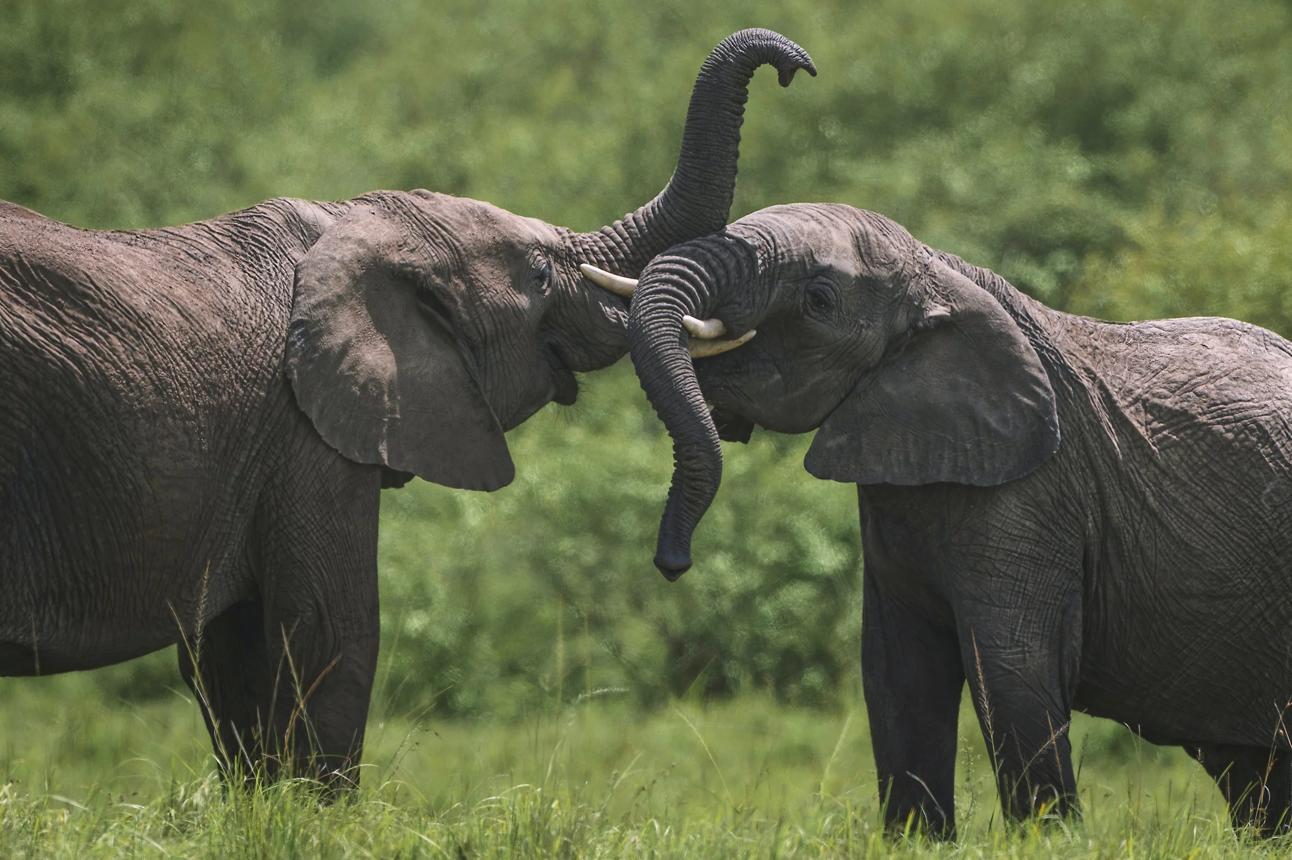

- 605 Views
- 32 Min Read
- (1) Comment
If you have ever dreamt of packing your bags and heading out on an early-morning game drive across the golden savannah, you have likely heard of Africa’s legendary African Big Five: the majestic African Elephant, the powerful Lion, the elusive Leopard, the armored Rhinoceros, and the unpredictable Cape Buffalo!
When people go on an African safari, they often look at an elephant’s enormous ears, a lion’s impressive mane, a rhino’s horn or a leopard’s beautifully patterned coat and simply admire their appearance.
But in the African wilderness, these features are much more than decoration.
An elephant’s trunk is a highly sophisticated tool for feeding, drinking, smelling, touching and social interaction. Its tail helps remove insects and can also be involved in social signaling. A rhino’s horn is used in defence and social competition. A male lion’s mane communicates information about sex and may provide signals related to condition. A leopard’s tail helps with movement, balance and communication, while a cheetah’s long tail acts almost like a steering mechanism during high-speed chases.
These remarkable adaptations become even more fascinating when we look beyond individual body parts and examine how each animal lives within its family or social group.
The African elephant lives in complex matriarchal societies. Lions form prides and male coalitions. Leopards are predominantly solitary. Cheetahs have a mixture of solitary females and male coalitions. Rhinos are generally much less social, although social organization varies considerably between species.
Understanding these differences can make a safari experience much more meaningful.
1. Elephant Trunk – The Ultimate Multi-Purpose Tool

The African elephant is one of Africa’s most recognisable animals and one of the most impressive sights on safari.
With its enormous ears, long trunk, powerful tusks and immense body, an elephant can dominate the landscape simply by walking through it.
African elephants are highly intelligent and social animals. They commonly live in family groups led by experienced females, while adult males may spend considerable periods alone or in smaller bachelor groups.
Why are elephants part of the Big Five?
Elephants were among the animals considered extremely challenging and dangerous to hunt on foot because of their enormous size, strength and defensive capabilities.
Today, however, safari visitors admire elephants primarily through photography and responsible wildlife observation.
Fascinating elephant facts
- The trunk combines the functions of the nose and upper lip.
- Elephants use their trunks for feeding, drinking, touching and communication.
- Their large ears help them regulate body temperature.
- Family groups are generally led by older females.
- Elephants play an important role in shaping their ecosystems by influencing vegetation and creating pathways and water access.
Where can you see elephants?
Some famous elephant destinations include:
Kenya: Amboseli National Park, Tsavo East, Tsavo West, Samburu and Maasai Mara.
Tanzania: Serengeti, Tarangire and Ngorongoro.
Uganda: Queen Elizabeth National Park, Murchison Falls and other protected areas.
Few structures in the animal kingdom are as extraordinary as the elephant’s trunk.
The trunk is essentially an elongated combination of the nose and upper lip. It contains thousands of muscles and gives the elephant an extraordinary range of movement and control.
What does an elephant use its trunk for?
An elephant uses its trunk to:
- Pick grass and leaves.
- Pull branches from trees.
- Collect fruit.
- Drink water.
- Spray water over its body.
- Smell potential food, predators and other elephants.
- Touch and greet family members.
- Investigate unfamiliar objects.
- Help calves.
- Produce and modify vocal sounds.
- Communicate through physical contact.
The trunk is therefore both a survival tool and a social instrument.
Research on African elephants has found that trunk contact forms part of greeting and social interactions, while elephant rumbles can carry information between animals over considerable distances.
The elephant trunk and family relationships
Elephants are among Africa’s most socially complex mammals.
African savanna elephants generally live in matriarchal, fission-fusion societies. This means families may come together, separate and regroup depending on resources and circumstances.
The family unit normally consists of related females and their young.
An experienced older female—the matriarch—can play an important role in movement and decision-making.
The trunk helps maintain these relationships through:
- Touching.
- Greeting.
- Calming frightened individuals.
- Helping calves.
- Investigating other elephants.
- Maintaining physical contact within the group.
Young elephants learn many behaviors by observing and interacting with older members of the family.
Elephant tail – the forgotten communication tool
The elephant tail is often overlooked.
Its most obvious purpose is insect control. Elephants use their tails to swat flies, ticks and other irritating insects.
But tail movement can also have social functions.
Elephant behavioral observations describe tail-swatting as occurring in contexts including movement, leadership, calf protection, social play, courtship and maintaining personal space.
A gentle tail movement can also help an elephant monitor what is behind it, including a calf.
This makes the elephant tail more than a simple fly-swatter.
Elephant migration and seasonal movement
Elephants do not undertake a single universal migration like the wildebeest migration.
Instead, their movements vary according to:
- Rainfall.
- Water availability.
- Food.
- Habitat conditions.
- Human activity.
- Seasonal changes.
Some populations travel considerable distances between seasonal ranges, while others remain relatively close to permanent water sources.
In East Africa, elephants may move between different habitats as food and water availability change.
Elephant gestation period
Elephants have one of the longest gestation periods of any land mammal.
African elephant gestation: approximately 22 months.
Research indicates that the long pregnancy allows advanced fetal development, helping calves to be relatively well developed when born.
Elephant family protection
Elephant calves benefit enormously from living within a family.
Adults may surround vulnerable young when danger is detected. Older females can contribute to protecting and guiding calves.
This is one reason why elephant social groups are so important to survival.
Economic value of elephants
An elephant’s trunk or tail has no legitimate commercial value as a wildlife commodity.
The enormous economic importance of elephants comes primarily from the living animal and the ecosystems and tourism experiences associated with them.
In Kenya, wildlife is an important component of the tourism economy. The Kenya Ministry of Tourism describes tourism as a major socioeconomic sector, while KWS has documented the substantial contribution of wildlife to tourism earnings.
A living elephant can therefore have enormous value to:
- Safari operators.
- Tour guides.
- Hotels and camps.
- Conservation areas.
- Local communities.
- National economies.
- Researchers.
- Photographers.
The greatest economic value of an elephant is therefore the value of keeping the elephant alive and in a functioning ecosystem.
2. Rhino Horn – A Weapon, Status Signal and Survival Tool

The rhinoceros, commonly called the rhino, is another legendary member of Africa’s Big Five.
With its thick skin, powerful body and characteristic horn, the rhino is one of the most distinctive animals in Africa.
Africa is home to two rhino species: the black rhinoceros and the white rhinoceros.
Despite their names, the difference between black and white rhinos is not simply the colour of their skin.
Why is the rhino part of the Big Five?
Rhinos were historically considered dangerous and challenging animals to pursue on foot because of their size, strength, speed and defensive behaviour.
Today, rhinos are especially important from a conservation perspective. Black rhinoceroses remain critically endangered, and rhino populations continue to face threats including poaching and habitat loss.
Black rhino vs. white rhino
One of the easiest ways to distinguish the two is their feeding behaviour.
Black rhinos are primarily browsers, feeding on leaves, shoots and branches.
White rhinos are primarily grazers, feeding on grasses.
White rhinos also tend to have a broader, more square-shaped mouth suited to grazing.
Fascinating rhino facts
- Rhinos have thick protective skin.
- They have an excellent sense of smell.
- Their horns are made primarily of keratin.
- Rhinos play an important role in their ecosystems.
- Conservation programmes have helped protect important rhino populations in several African countries.
Where can you see rhinos?
In Kenya, notable destinations include:
- Lewa Wildlife Conservancy
- Ol Pejeta Conservancy
- Lake Nakuru National Park
- Nairobi National Park
- Maasai Mara and selected conservancies
Tanzania and Uganda also offer opportunities to see rhinos in protected areas and specialised conservation destinations.
The rhino horn is one of the most recognizable features of African wildlife.
But contrary to a common misconception, a rhino horn is not made of bone.
It is composed primarily of keratin—the same structural protein found in human hair and fingernails.
What does a rhino use its horn for?
Depending on the species, rhino horns can play roles in:
- Defence.
- Fighting between males.
- Threat displays.
- Competition for territory.
- Protection of calves.
- Moving vegetation.
- Social signaling.
African rhinos can use their horns during confrontations with rivals and in territorial disputes.
Rhino social structure
Rhinos are generally less socially complex than elephants or lions.
However, their social systems vary by species.
White rhinos are comparatively social and may form groups containing females, calves and younger animals. Adult territorial bulls are more solitary and defend territories.
Black rhinos are generally more solitary, with females and calves forming the most important long-term social association.
The social relationship between a mother and calf is particularly important.
Rhino territorial behaviour
A dominant male may establish a territory and communicate its ownership through:
- Urine spraying.
- Dung.
- Dung middens.
- Foot scraping.
- Physical displays.
- Horn displays.
- Confrontations with rival males.
Rhino dung middens can function almost like a communication board.
Other rhinos can obtain information from scent left at these locations.
San Diego Zoo describes rhino dung middens as important communication points, while white-rhino research documents territorial marking and ritualized encounters between males.
Rhino gestation
For the African white rhino, gestation is approximately:
15–16 months.
The calf is generally born as a single offspring.
The mother and calf form an important social unit, with the mother providing protection and guidance during the early stages of life.
Do rhinos migrate?
Most African rhinos are not long-distance migrants like wildebeest.
Instead, they generally maintain home ranges and make local or seasonal movements depending on:
- Water.
- Food.
- Vegetation.
- Temperature.
- Habitat conditions.
White rhinos are described as relatively sedentary, although their ranges can vary with habitat and resources.
The economic value of rhino horn
This subject needs particular care.
Rhino horn has no legitimate conservation-based economic value as a trade commodity in Kenya and international commercial trade in rhino horn is heavily restricted/prohibited under applicable wildlife and international regulations.
However, illegal demand has created an extremely high black-market incentive, contributing to poaching.
Scientific literature has documented the relationship between demand for rhino horn and poaching pressure.
This creates an important distinction:
The illegal market value of a rhino horn is not the same thing as legitimate economic value.
For conservation and tourism, the greatest economic value comes from a living rhino.
A living rhino contributes to:
- Wildlife tourism.
- Safari employment.
- Conservation financing.
- Local community benefits.
- Research.
- Ecosystem protection.
3. Lion Mane – The Crown of Africa’s Great Predator

The African lion is perhaps the most famous member of the Big Five.
Known for its powerful build, distinctive mane and impressive roar, the lion is one of Africa’s most important apex predators.
Unlike most big cats, lions are highly social. They commonly live in family groups called prides, consisting of females, cubs and one or more males.
Lions spend much of the day resting, particularly during hot periods, and often become more active during the cooler hours of the morning and evening.
Why is the lion part of the Big Five?
Lions were included in the original Big Five because of their strength, predatory abilities and the danger they presented to hunters pursuing them on foot.
Today, the lion represents the drama and excitement of the African wilderness and is one of the animals safari travellers most hope to photograph.
Fascinating lion facts
- Lions are the only truly social members of the big cat family.
- Females commonly do much of the hunting for the pride.
- Cubs depend heavily on adults for protection and food.
- Lions communicate through vocalisations, body language and scent marking.
- A lion’s roar can carry considerable distances across open landscapes.
Where can you see lions?
Excellent lion-viewing destinations include:
Kenya: Maasai Mara, Tsavo and Amboseli.
Tanzania: Serengeti and Ngorongoro Crater.
Uganda: Queen Elizabeth National Park and Murchison Falls National Park.
Few sights are more iconic on an African safari than a mature male lion standing on a rock with its mane blowing in the wind.
The mane is strongly associated with the adult male lion.
But why does a lion have a mane?
The lion mane as a social signal
The mane provides visual information.
It helps distinguish an adult male from a female and younger lions.
Research indicates that mane development is influenced by testosterone and that the mane may communicate information about the male’s sex and condition.
The mane therefore plays a role in the social lives of lions.
Does the mane protect a lion during fights?
A common explanation is that the mane protects the neck.
There may be some protective value, but scientists have also examined other functions, particularly sexual selection and social signaling.
The exact importance of individual mane characteristics can vary with age, climate and population.
Lion social structure
Lions are unique among African big cats because they form highly organized social groups known as prides.
A pride may include:
- Related adult females.
- Cubs.
- Subadult lions.
- One or more adult males or a male coalition.
Recent research emphasizes the importance of long-term female matrilines and male partnerships in lion social organization.
Female relatives may remain associated for years or generations.
Lion family life
Lionesses cooperate in:
- Hunting.
- Protecting cubs.
- Nursing.
- Defending territory.
- Caring for young.
Cubs may suckle from more than one lactating female in a pride.
This cooperative system can provide advantages that solitary predators do not enjoy.
Lion territory
Lions defend territories using several forms of communication:
- Roaring.
- Urine marking.
- Scraping.
- Scent.
- Physical confrontation.
A male’s roar can communicate across considerable distances.
Roaring can announce the presence of a pride, advertise territory and communicate with pride members.
Research in the Serengeti has also shown that territorial competition affects reproductive success and access to habitat, while larger prides can have advantages in maintaining contested areas.
Lion gestation
Lion gestation is approximately:
110 days.
A lioness normally gives birth to a litter of several cubs, although litter size varies.
She usually gives birth in a secluded location before gradually introducing the cubs to the pride.
Do lions migrate?
Lions generally do not undertake predictable long-distance seasonal migrations like wildebeest.
Instead, prides and male coalitions move through their home ranges according to:
- Prey availability.
- Water.
- Territorial pressure.
- Reproductive needs.
- Competition with other lions.
- Environmental conditions.
Young males frequently disperse from their natal pride and may travel substantial distances before joining or forming coalitions.
Economic value of lions
There is no legitimate commercial value in selling a lion’s mane as a wildlife commodity.
The economic importance of lions comes primarily from wildlife tourism.
Visitors travel to Kenya, Tanzania, Uganda and other African destinations specifically hoping to see lions.
A lion sighting can therefore contribute indirectly to:
- Safari bookings.
- Accommodation.
- Guiding jobs.
- Conservation areas.
- Transport.
- Local communities.
- National tourism revenue.
4. Leopard Tail – The Silent Messenger

The leopard is one of Africa’s most elusive predators.
Unlike lions, leopards usually live solitary lives.
That makes communication especially important.
What does the leopard tail do?
A leopard’s tail helps with:
- Balance.
- Climbing.
- Navigating trees.
- Sudden changes of direction.
- Communication.
When a leopard moves along a narrow branch or climbs down a tree, its tail acts as a balancing aid.
The white tip of the leopard’s tail
One of the fascinating aspects of the leopard tail is its contrasting tip.
Field observations have documented situations where a mother leopard’s white-tipped tail can help cubs follow her through vegetation.
It may also provide a visual signal telling cubs where their mother is.
SANBI reports that females can use the white-tipped tail to provide direction to cubs and signal them to remain quiet during hunting.
This is an excellent example of how a seemingly simple physical characteristic can have a social function.
Leopard tail communication
Leopards can communicate using:
- Tail movements.
- Vocalizations.
- Scent.
- Urine.
- Faeces.
- Scraping.
- Facial and body movements.
Tail flicking can indicate excitement or arousal.
Leopard territorial behaviour
Leopards are strongly territorial.
They mark their territories through:
- Urine.
- Faeces.
- Scraping.
- Scent marking.
- Rubbing against trees.
- Vocalizations.
A leopard’s rasping or coughing call can announce its presence to other leopards.
Leopard social structure
Leopards are predominantly solitary.
The strongest social relationship is normally between:
Mother + cubs.
The mother teaches cubs:
- How to stalk.
- How to hunt.
- How to climb.
- How to avoid danger.
- How to use cover.
- How to recognize threats.
Once cubs become independent, they eventually establish their own home ranges.
Leopard gestation
African leopards generally have a gestation period of approximately:
90–106 days.
Litters commonly contain one to three cubs.
Leopard movement and migration
Leopards are not migratory animals in the traditional sense.
They maintain home ranges and move through them according to:
- Prey availability.
- Water.
- Breeding opportunities.
- Human disturbance.
- Competition.
Young leopards may disperse from their mother’s range when they become independent.
Economic value
Like the other species discussed here, a leopard’s tail has no legitimate commercial value as a wildlife product.
The living leopard, however, has substantial value to safari tourism.
Leopards are among the most sought-after sightings because their secretive nature makes a successful sighting particularly memorable.
5. Buffalo
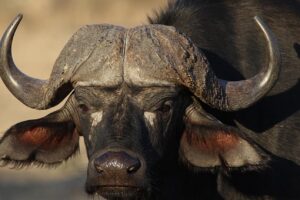
why is African big five in the list of big five
The African buffalo is sometimes overlooked by visitors who are more excited about lions, elephants and leopards. However, buffalo are one of the most impressive members of the Big Five.
They are powerful, heavily built animals and commonly live in herds.
Large buffalo herds moving across an open plain can create one of the most spectacular sights of an African safari.
Why is the buffalo part of the Big Five?
The African buffalo gained its reputation among hunters because of its strength, defensive behaviour and unpredictability when threatened or wounded.
Its reputation made it one of the five animals included in the original Big Five list.
Fascinating buffalo facts
- Buffalo can form very large herds.
- Their curved horns provide an important defence.
- They are powerful grazers.
- Older males may sometimes be seen away from the main herd.
- Buffalo can appear calm but should always be treated as wild and potentially dangerous animals.
Where can you see buffalo?
Buffalo are widespread in many African wildlife areas.
In East Africa, good destinations include:
Kenya: Maasai Mara, Tsavo, Amboseli and Lake Nakuru.
Tanzania: Serengeti, Ngorongoro and other major wildlife areas.
Uganda: Queen Elizabeth National Park and Murchison Falls National Park.
Why Is the Cheetah Not Among Africa’s Big Five?
When travelers dream of an African safari, one of the most common goals is to see the Big Five: lion, leopard, elephant, rhinoceros, and Cape buffalo. But there is often one surprising question from safari enthusiasts:
Why isn’t the cheetah among Africa’s Big Five?
The cheetah is one of Africa’s most fascinating animals. It is the world’s fastest land animal, famous for its incredible acceleration, slender body, distinctive black “tear marks,” and remarkable hunting skills. Yet, despite being one of Africa’s most iconic predators, the cheetah is not officially part of the Big Five.
The answer has much more to do with the history of hunting in Africa than with which animals are the most impressive or dangerous today.
What Are the African Big Five?
The term “Big Five” originally referred to five African animals considered particularly challenging and dangerous to hunt on foot.
The traditional Big Five are:
- 🦁 Lion
- 🐆 Leopard
- 🐘 African elephant
- 🦏 Rhinoceros
- 🐃 Cape buffalo
The term was created during the era of big-game hunting and was used by hunters to describe the five animals considered among the most difficult and dangerous to pursue on foot.
It was not originally a list of Africa’s five largest animals, nor was it a ranking of Africa’s most beautiful or important wildlife.
That historical meaning explains why several spectacular animals—including the cheetah—are not included.

So, Why Isn’t the Cheetah One of the Big Five?
1. The Big Five Were Based on Hunting, Not Popularity
The biggest misconception is that the Big Five represent the five most famous African animals.
They don’t.
The term developed in the context of big-game hunting, particularly because these animals were regarded as difficult and potentially dangerous quarry.
Cheetahs did not fit this category in the same way.
Although cheetahs are predators and highly skilled hunters, they are generally much less confrontational toward humans than animals such as buffalo, elephant, rhinoceros and lion.
The Big Five designation was therefore never intended to include every major African predator.
2. Cheetahs Are Built for Speed, Not Fighting
A cheetah’s entire body is designed around one extraordinary ability:
speed.
Cheetahs have lightweight bodies, long legs, flexible spines, large nasal passages and a long tail that helps them maintain balance and change direction during high-speed chases.
Their hunting strategy is very different from that of a lion or buffalo.
Rather than confronting prey through brute force, a cheetah relies on:
stealth → acceleration → pursuit → capture.
This makes the cheetah an exceptional hunter, but it does not make it one of the traditional Big Five.
3. Cheetahs Are Relatively Vulnerable Compared With Other Large Predators
Cheetahs may look intimidating, but they are comparatively vulnerable in the African wilderness.
They can lose their kills to stronger predators such as lions, hyenas and leopards.
Cheetahs also tend to avoid direct confrontation whenever possible.
Their lightweight build is an advantage when chasing prey but is not ideal for prolonged physical fights.
This is another major difference between cheetahs and animals historically associated with the Big Five.
4. The Cheetah Was Never Part of the Original Big Five List
Another important point is that there isn’t a process where animals were selected for the Big Five and the cheetah was somehow rejected.
The traditional five were already established as a hunting category.
Therefore, the question is better understood as:
Why were these five animals historically grouped together?
rather than:
Why was the cheetah left out?
The cheetah simply wasn’t part of the original category.
Is the Cheetah More Dangerous Than the Big Five?
No.
Cheetahs are wild predators and should always be treated with respect, but they generally do not have the same reputation for dangerous encounters with people as some members of the Big Five.
For example, an African buffalo can be extremely unpredictable and powerful. Elephants and rhinoceroses are enormous animals capable of causing serious injury. Lions and leopards are large carnivorous predators.
Cheetahs, by contrast, generally prefer to avoid confrontation.
This illustrates why “Big Five” does not mean “five most dangerous animals in Africa.”
But Isn’t the Cheetah One of Africa’s Most Important Safari Animals?
Absolutely.
Not being a member of the Big Five does not make the cheetah less valuable or less spectacular.
For many safari travelers, seeing a cheetah in the wild can be one of the most memorable experiences of an African safari.
Watching a cheetah scan the plains from a termite mound, stalk a group of gazelles, or suddenly explode into a high-speed chase is an extraordinary wildlife experience.
In fact, a safari focused only on finding the Big Five can cause travelers to overlook many other remarkable species.
What Makes the Cheetah So Special?
The World’s Fastest Land Animal
The cheetah is famous for its extraordinary speed and can reach approximately 100 km/h or more during short bursts, depending on the conditions and source.
However, speed isn’t its only advantage.
Its acceleration is particularly impressive.
A cheetah can rapidly accelerate from a standing start while pursuing prey such as gazelles.
Its Famous Tear Marks
Look closely at a cheetah’s face and you will notice two dark lines running from the inner corners of its eyes toward its mouth.
These are commonly called tear marks.
They are thought to help reduce glare from the sun, although their exact evolutionary functions are still discussed by researchers.
They also give the cheetah its unmistakable appearance.
Cheetahs Have a Unique Hunting Style
Unlike lions, which can work cooperatively to bring down prey, cheetahs generally rely on their own speed and agility.
A typical hunt involves carefully approaching prey before launching a rapid chase.
The chase is usually short because sprinting at extreme speeds requires enormous energy.
Cheetahs Are Excellent Mothers
Female cheetahs usually raise their cubs alone.
Cubs remain dependent on their mother for an extended period while learning important survival skills.
Young cheetahs face many dangers, particularly from lions and hyenas.
This makes successful adulthood a remarkable achievement.
Where Can You See Cheetahs on Safari in Africa?
Cheetahs can be found in several African countries, although their populations are fragmented and their distribution is much more limited than it once was.
Some of the best-known safari destinations for cheetah sightings include:
Kenya
Kenya is one of the most popular destinations for travelers hoping to see cheetahs.
The Maasai Mara National Reserve is particularly famous for its open grasslands and abundant prey.
The landscape provides excellent conditions for observing cheetahs hunting and raising cubs.
Other Kenyan conservation areas can also offer cheetah sightings.
Tanzania
Tanzania is another outstanding destination for cheetah encounters.
The Serengeti ecosystem provides extensive open plains and large populations of prey species.
Cheetahs are particularly well suited to these open landscapes because they can use their speed to pursue prey.
The Ngorongoro Conservation Area can also provide opportunities to see them.
Namibia
Namibia is famous for dramatic landscapes and remarkable wildlife conservation.
Cheetahs can be encountered in several parts of the country, including private conservation areas and some national parks.
Namibia is also home to important cheetah conservation initiatives.
Botswana
Botswana offers excellent wildlife experiences, including opportunities to encounter cheetahs in areas such as the Okavango region and other wildlife-rich landscapes.
The combination of abundant prey and relatively low human population density creates important habitat for predators.
Big Five vs. Cheetah: What’s the Difference?
| Animal | Traditional Big Five? | Main Characteristic |
|---|---|---|
| Lion | ✅ Yes | Powerful social predator |
| Leopard | ✅ Yes | Stealthy and adaptable predator |
| Elephant | ✅ Yes | Largest land animal |
| Rhinoceros | ✅ Yes | Powerful herbivore |
| Cape buffalo | ✅ Yes | Large, powerful herd animal |
| Cheetah | ❌ No | Exceptional speed and acceleration |
The table demonstrates an important point:
The Big Five are a historical category, while the cheetah is a completely different kind of safari icon.
Don’t Judge Your Safari by the Big Five Alone
One of the best ways to experience an African safari is to look beyond a checklist.
Yes, seeing a lion, leopard, elephant, rhinoceros and buffalo can be incredibly exciting.
But Africa’s wildlife story is much bigger.
A safari can also introduce you to:
- Cheetahs
- African wild dogs
- Giraffes
- Hippos
- Zebras
- Wildebeest
- Gazelles
- Warthogs
- Hyenas
- Gorillas
- Chimpanzees
- Flamingos
- Ostriches
- Hundreds of bird species
Every species plays a role in the ecosystem.
Cheetah vs. Leopard: Why One Is a Big Five Animal and the Other Isn’t
This is another question frequently asked by safari travelers.
Both the cheetah and leopard are spotted cats, but they are very different animals.
Cheetahs are built primarily for speed. They tend to hunt during the day and chase prey across open ground.
Leopards are powerful, stealthy ambush predators. They are capable climbers and are famous for dragging prey into trees.
The leopard was historically included among the Big Five because of its reputation as a challenging and dangerous animal to hunt.
The cheetah was not.
What About the “Big Five” Today?
Today, the meaning of the Big Five has changed dramatically.
For most modern safari travelers, the term refers to wildlife viewing rather than hunting.
Seeing the Big Five has become a popular safari goal and an important part of Africa’s tourism industry.
Modern photographic safaris allow visitors to appreciate these animals without pursuing them as hunting trophies.
This also makes the cheetah’s absence from the list less significant.
A wildlife enthusiast doesn’t need to limit their safari experience to the Big Five.
The Cheetah Deserves Its Own Spotlight
The cheetah may not carry the “Big Five” label, but it has something that none of the traditional Big Five possess:
extraordinary speed.
Seeing a cheetah in the wild is a completely different experience from watching an elephant herd, observing a lion pride or finding a leopard resting in a tree.
A cheetah sprinting across the African plains is one of nature’s most spectacular displays.
So, the next time someone asks:
“Why isn’t the cheetah among the Big Five?”
the simple answer is:
Because the Big Five is a historical hunting term, not a list of Africa’s five most impressive animals.
The cheetah wasn’t excluded because it is unimportant. It simply belonged to a different category.
And for anyone planning an African safari, that is good news.
You don’t need the Big Five to have an unforgettable safari. Sometimes, the sight of a cheetah racing across the savannah can be the moment you remember for the rest of your life.
Experience the Cheetah and Africa’s Wildlife With Astute Africa Safaris
From the sweeping plains of Kenya’s Maasai Mara to the legendary Serengeti of Tanzania and Uganda’s exceptional wildlife destinations, an African safari offers far more than simply searching for the Big Five.
Plan your next wildlife adventure with Astute Africa Safaris and discover the predators, landscapes, cultures and wildlife that make East Africa extraordinary.
Ready to see a cheetah in the wild? Start planning your Kenya, Tanzania or Uganda safari today.
Cheetah Tail – The Steering Wheel of the World’s Fastest Land Animal

A cheetah can accelerate rapidly and change direction at astonishing speed.
To accomplish this, it needs exceptional control over its body.
That is where its long tail becomes extremely important.
The cheetah tail as a steering system
During a chase, a cheetah may make rapid turns as prey attempts to escape.
Its long tail helps provide:
- Balance.
- Steering.
- Stability.
- Rapid directional control.
The tail effectively works with the cheetah’s flexible spine, long legs and specialized body structure.
Without this control, speed alone would not be enough to catch highly maneuverable prey.
Cheetah social structure
Cheetahs have one of the most interesting social systems among African cats.
Adult females are generally solitary except when raising cubs.
Male cheetahs may form coalitions, often consisting of brothers from the same litter.
The Smithsonian National Zoo notes that male coalitions can remain together for life and defend territories together.
Cheetah mothers and cubs
The mother is responsible for raising the cubs.
Cubs remain with their mother for an extended period while learning:
- Hunting.
- Stalking.
- Avoiding predators.
- Selecting prey.
- Using cover.
- Surviving independently.
Young cheetahs therefore spend a significant portion of their early lives in an intensive learning environment.
Cheetah gestation
Cheetah gestation lasts approximately:
90–95 days.
Litters can contain several cubs.
Cheetah territories
Male coalitions commonly establish territories.
Females are much less territorial in the same way and may occupy very large home ranges.
Female movements can be strongly influenced by prey distribution.
The Smithsonian notes that female home ranges can be very large and that they may follow migratory gazelle herds.
Do cheetahs migrate?
Cheetahs do not undertake a fixed migration comparable with the wildebeest migration.
Instead:
Male coalitions tend to defend territories, while females can be highly mobile and may move over large areas following prey.
This difference between male and female movement is an important part of cheetah ecology.
Cheetah economic value
The cheetah’s tail itself has no legitimate commercial wildlife value.
The living animal has value through:
- Safari tourism.
- Conservation.
- Research.
- Photography.
- Education.
- Protected-area employment.
The Amazing Comparison: Six Body Parts, Six Different Functions
| Animal | Feature | Main function | Social significance | Movement pattern |
|---|---|---|---|---|
| Elephant | Trunk | Feeding, drinking, smelling, touching and communication | Extremely important in family interaction | Seasonal/local movements; some populations travel long distances |
| Elephant | Tail | Insect control, touch and social signaling | Can help maintain spacing and monitor calves | Moves with family group |
| Rhino | Horn | Defence, fighting and displays | Important in male competition and territorial interactions | Generally sedentary with local/seasonal movements |
| Lion | Mane | Visual/social signal; possible protective role | Signals male identity and may convey condition | Home-range movements rather than migration |
| Leopard | Tail | Balance, climbing and communication | Helps mothers communicate with cubs | Solitary home-range movements |
| Cheetah | Tail | Steering, balance and rapid turning | Important indirectly during hunting and survival | Males territorial; females highly mobile |
How These Animals Protect Their Families
One of the most interesting differences between these six features is that their importance cannot be separated from the animal’s social structure.
Elephants: the extended family
Elephant society is strongly family-oriented.
Older females can provide knowledge and leadership, while younger elephants benefit from protection and social learning.
The trunk and tail help maintain physical and social contact.
Rhinos: mother and calf
Rhinos have a much less elaborate social system.
The strongest family relationship is generally between mother and calf.
The mother provides protection until the young animal becomes increasingly independent.
Adult males are often more concerned with territorial competition than family-group living.
Lions: the cooperative family
Lions are perhaps the clearest example of cooperative social living among African predators.
Related lionesses may remain together and cooperate in:
- Raising cubs.
- Hunting.
- Defending territory.
- Protecting resources.
Male coalitions provide another layer of social organization.
Leopards: a mother teaching a solitary lifestyle
The leopard’s social system is almost the opposite of the lion’s.
A mother raises her cubs, but eventually the young leopards become independent.
The mother therefore has to teach them everything they need to know before they begin living alone.
Cheetahs: maternal education and male coalitions
Cheetahs combine two very different social systems.
Females are generally solitary, while males may form long-lasting coalitions.
The mother-cub relationship is especially important because young cheetahs must learn how to hunt and survive without the protection of a permanent pride.
How Territory Is Communicated in the African Wilderness
Territorial communication is one of the most important aspects of wildlife behaviour.
Animals cannot constantly fight every rival that enters their range.
Instead, they use signals.
Elephants
Elephants communicate through:
- Vocalizations.
- Rumbles.
- Touch.
- Body posture.
- Chemical information.
- Movement.
Long-distance low-frequency calls can help elephants remain connected when separated.
Rhinos
Rhinos rely heavily on:
- Dung.
- Urine.
- Scent.
- Scraping.
- Horn displays.
Lions
Lions use:
- Roaring.
- Urine.
- Scraping.
- Scent.
- Physical displays.
Leopards
Leopards use:
- Urine.
- Faeces.
- Scrapes.
- Tree rubbing.
- Vocalizations.
Cheetahs
Cheetahs use:
- Urine.
- Faeces.
- Scrapes.
- Vocalizations.
- Territorial encounters.
This means that the African wilderness is filled with information that humans cannot easily see or smell.
Which Animal Has the Most Complex Social Family?
There is no scientifically meaningful single “winner,” because the species have evolved different social systems for different ecological conditions.
However, their structures are remarkably different.
Elephant
Matriarchal extended family
Related females and young form the core social unit.
Lion
Pride-based cooperative society
Related females, offspring and male coalitions cooperate.
Rhino
Mostly solitary social structure
Mother-calf relationships are important, while territorial males often live alone.
Leopard
Solitary predator
Mother and cubs form the principal prolonged family relationship.
Cheetah
Solitary females + male coalitions
A particularly unusual combination of social strategies.
Do These Body Parts Have Economic Value?
This is an important question for conservation.
The body parts themselves
Elephant tails, elephant trunks, lion manes, leopard tails and cheetah tails should not be regarded as legitimate wildlife commodities.
Their greatest economic importance comes from the living animal.
Rhino horn is different because of illegal demand
Rhino horn has been targeted by illegal wildlife trafficking because of demand associated with cultural and medicinal beliefs in some markets. Research has documented the very high illegal-market incentives created by this demand.
But an illegal price should not be confused with a legitimate economic value.
The real economic value: wildlife tourism
For Kenya and other African safari destinations, the economic model that supports long-term conservation is primarily based on keeping wildlife alive in functioning ecosystems.
Kenya’s tourism authorities describe tourism as a major socioeconomic sector, while KWS has highlighted wildlife’s significant contribution to tourism.
A tourist paying for a safari to see:
- An elephant family,
- A rhino,
- A pride of lions,
- A leopard in a tree,
- Or a cheetah hunting,
is creating economic value without requiring the animal to be killed.
That is the fundamental principle behind wildlife tourism.
Why These Features Matter to Safari Travelers
Understanding animal anatomy changes the way you experience a safari.
When you see an elephant waving its trunk, you are not simply watching an animal pick grass.
You may be watching it:
- Smell another elephant.
- Investigate danger.
- Communicate with a calf.
- Drink.
- Feed.
- Touch another family member.
When you see a lion, the mane is not simply a beautiful photographic feature.
It is part of the animal’s visual identity and social biology.
When you see a leopard’s tail moving through the grass, it may be contributing to balance or communicating information.
When a cheetah suddenly turns during a chase, its tail is helping control one of the fastest predators on Earth.
And when you see a rhino, its horn is not merely a tourist attraction—it is part of a sophisticated system of defence and social competition.
The Conservation Lesson Behind These Six Body Parts
The most important lesson is that every part of a wild animal has a purpose.
Removing an animal from the ecosystem removes much more than a single body part.
It removes:
- Genetic diversity.
- Family relationships.
- Learned knowledge.
- Territorial systems.
- Predator-prey relationships.
- Ecological functions.
- Tourism opportunities.
- Future generations.
A mature elephant carries decades of social knowledge.
A lion pride contains generations of relationships.
A leopard mother transfers hunting skills to her cubs.
A cheetah mother teaches young animals how to survive.
A rhino calf learns its environment from its mother.
These relationships are impossible to replace simply by replacing one individual animal.
Final Thoughts: Nature’s Body Parts Are Communication Tools, Survival Tools and Social Tools
The elephant trunk, elephant tail, rhino horn, lion mane, leopard tail and cheetah tail may appear to be completely different structures.
Yet they share one fascinating characteristic:
They have evolved to help animals survive in demanding environments.
The elephant uses its trunk for feeding, communication and social contact.
The elephant tail helps with insect control and can participate in social interactions.
The rhino’s horn helps with defence and territorial competition.
The lion’s mane communicates information about the adult male and forms part of its striking social identity.
The leopard’s tail contributes to balance and communication between mothers and cubs.
The cheetah’s tail gives it extraordinary control while pursuing prey at high speed.
Together, these features reveal something remarkable about Africa’s wildlife:
Survival is not just about strength or speed. It is about communication, family, territory, cooperation, learning and adaptation.
That is what makes watching the African Big Five in their natural environment such a powerful safari experience.
Leave a comment:
You must be logged in to post a comment.


Comment 01
Astute Africa Safaris,
10 October, 2026REF: Crafting Your Bespoke African Safari Experience with Astute Africa Safaris
Jambo,
Thank you for your interest in exploring the wonders of Africa with Astute Africa Safaris. We pride ourselves on creating immersive, tailor-made journeys that align perfectly with your personal interests, pace, and travel aspirations.
Because every safari is a unique narrative, we do not believe in “one-size-fits-all” pricing. To ensure we provide you with an accurate and competitive quotation that reflects the specific lodges, wildlife experiences, and logistical arrangements you desire, we invite you to connect with our team for a personalized consultation.
Please contact us at info@astuteafricasafaris.com, Whatsapp +254762663272 or fill the inquiry form with a few details regarding your preferred travel dates, group size, and specific interests (e.g., photography, luxury relaxation, or adventure trekking). Once we have these details, we will curate a comprehensive proposal designed specifically for you.
We look forward to the possibility of helping you plan an unforgettable journey.
Warm regards,
Team Astute Africa Safaris