
- 1.4k Views
- 28 Min Read
- (1) Comment
The Mount Kilimanjaro and Mount Kenya; Two iconic African mountains. Different challenges, unforgettable landscapes and rewarding summit experiences. Discover which climb best matches your fitness, experience, travel plans and adventure goals.
Africa offers some of the world’s most memorable mountain adventures, and two of its most remarkable peaks stand in East Africa: Mount Kilimanjaro in Tanzania and Mount Kenya in Kenya.
Both mountains take you through changing landscapes, from forested lower slopes to high-altitude terrain where temperatures fall, the air becomes thinner and every step demands determination. Yet the experience of climbing them is not the same.
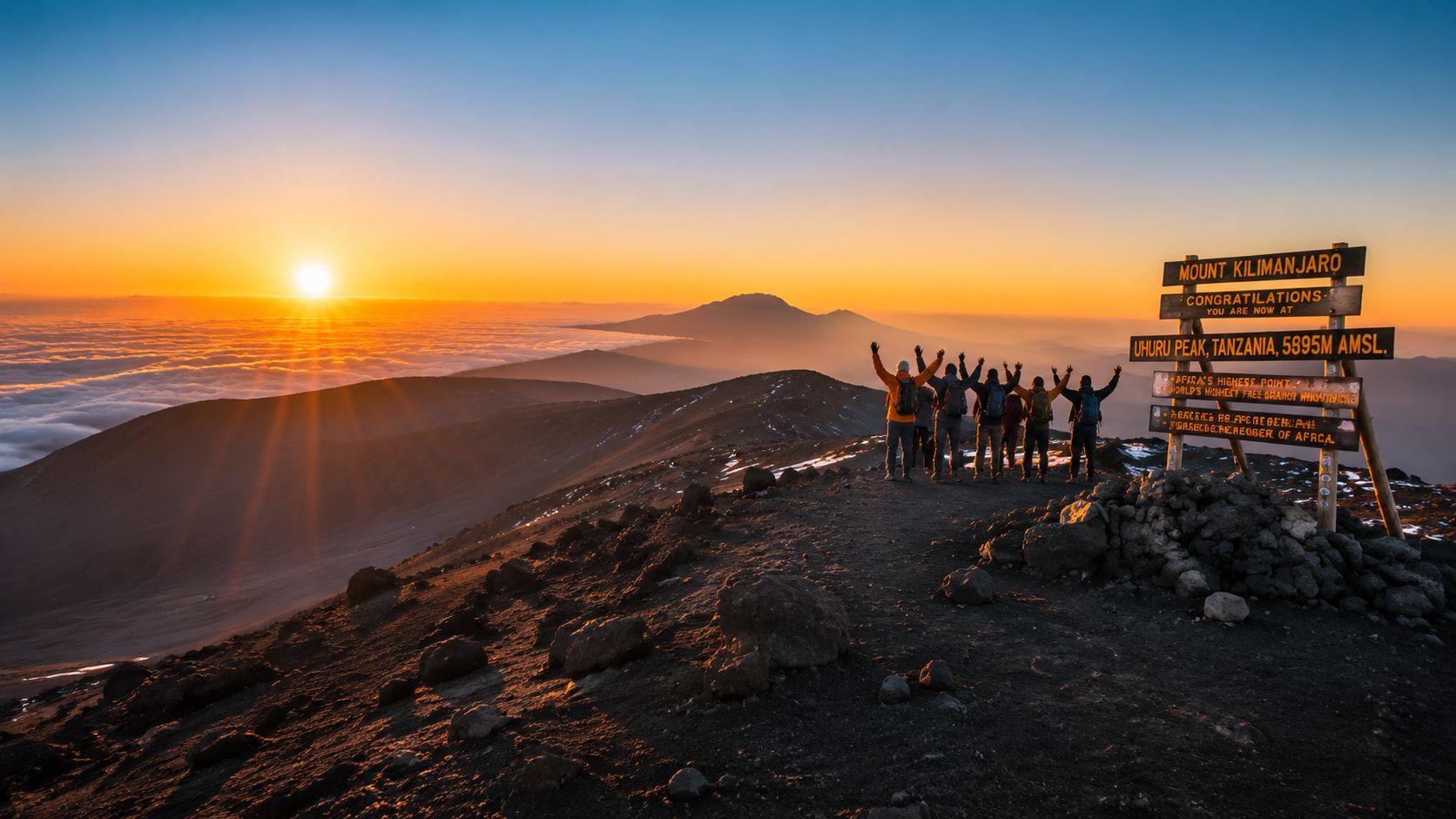
Mount Kilimanjaro is famous for being Africa’s highest mountain and for its non-technical trekking route to Uhuru Peak. Mount Kenya offers a different kind of adventure: a challenging trek to Point Lenana or, for suitably experienced technical mountaineers, rock-climbing expeditions to Batian and Nelion.
So, which mountain should you choose?
Choose Kilimanjaro if your main ambition is to reach Africa’s highest point. Choose Mount Kenya if you want a dramatic alpine trekking experience, a Kenyan mountain holiday or a technical climbing objective. If you have enough time and a suitable budget, climbing both can create an exceptional East African adventure.
At Astute Africa Safaris, a well-planned climbing holiday should begin with your personal goal, not simply a mountain name. The right itinerary considers your experience, fitness, acclimatisation needs, available days, preferred accommodation and plans for a safari or beach extension.
1. Mount Kilimanjaro vs Mount Kenya at a glance
Use this comparison to shortlist the mountain that best fits your plans before exploring the routes and itineraries in detail.
| Factor | Mount Kilimanjaro | Mount Kenya |
|---|---|---|
| Country | Tanzania | Kenya |
| Highest summit | Uhuru Peak, 5,895 m | Batian, 5,199 m |
| Main trekking summit | Uhuru Peak | Point Lenana, approximately 4,985 m |
| Other major summit | Mawenzi Peak, 5,149 m | Nelion, 5,188 m |
| Standard summit experience | High-altitude trekking | High-altitude trekking to Point Lenana |
| Technical climbing | Not normally required on the standard Uhuru Peak routes | Required for Batian and Nelion |
| Typical trekking duration | Approximately 6–9 days on the mountain, depending on route | Approximately 4–6 days for many Point Lenana itineraries |
| Main challenge | Altitude, endurance and the long summit night | Altitude, rugged terrain and sustained trekking |
| Technical climbing challenge | Not applicable to standard trekking routes | Significant for Batian and Nelion |
| Landscapes | Forest, moorland, alpine desert and volcanic summit terrain | Forest, moorland, alpine valleys, tarns and rocky peaks |
| Accommodation | Camping on most routes; huts on Marangu | Mountain huts, camps and designated camping arrangements, depending on route |
| Common starting points | Moshi and Arusha, Tanzania | Nairobi, Nanyuki and Naro Moru, Kenya |
| Holiday extensions | Tanzania safari, Serengeti, Ngorongoro or Zanzibar | Kenya safari, Mount Kenya region or the Kenyan coast |
The summit elevations and principal access information are consistent with the official destination information from Tanzania National Parks and Kenya Wildlife Service.
Important: The durations above are planning ranges rather than guarantees. The itinerary should allow adequate acclimatisation and account for weather, route conditions and individual performance.
Which mountain is right for you?

Choose Mount Kilimanjaro if you want to:
-
Reach Africa’s highest summit.
-
Complete a major high-altitude trekking challenge without technical rock climbing on the standard routes.
-
Choose between several established trekking routes.
-
Combine a mountain expedition with a Tanzania safari or Zanzibar beach holiday.

Choose Mount Kenya if you want to:
-
Experience a rugged mountain landscape in Kenya.
-
Trek to Point Lenana through alpine valleys and distinctive vegetation zones.
-
Explore a shorter mountain itinerary, where suitable acclimatisation and conditions permit.
-
Pursue technical rock climbing on Batian or Nelion if you have the required experience.

Consider climbing both if you want to:
-
Explore two contrasting mountain environments.
-
Experience both Kenya and Tanzania in one extended holiday.
-
Add wildlife viewing, cultural experiences or a beach stay.
-
Build a multi-stage adventure around your fitness, schedule and recovery needs.
2. What is the difference between trekking and technical mountaineering?
Before comparing difficulty, it is essential to understand that the two mountains offer different summit objectives.
Mount Kilimanjaro: trekking to Uhuru Peak

The standard routes to Uhuru Peak are strenuous high-altitude treks. They involve sustained walking, substantial elevation gain, cold temperatures and a demanding final ascent, but they do not normally require rock-climbing ropes or technical mountaineering skills.
This makes Kilimanjaro attractive to prepared hikers who have never undertaken a technical climbing expedition. However, a non-technical route is not an easy walk. The altitude can affect even fit and experienced hikers, and summit night is physically demanding.
The objective is to reach Uhuru Peak at 5,895 metres and descend safely. Success depends on more than determination: appropriate pacing, acclimatisation, weather, health and the guide team’s decisions all matter.
Mount Kenya: Point Lenana versus Batian and Nelion

Mount Kenya has three principal summit objectives:
-
Batian — 5,199 metres: the mountain’s highest summit, requiring technical climbing on established climbing routes.
-
Nelion — 5,188 metres: another technical summit requiring rock-climbing ability and specialist expedition arrangements.
-
Point Lenana — approximately 4,985 metres: the main summit objective for most trekking visitors.
Kenya Wildlife Service identifies these three principal peaks and their elevations.
A guided Point Lenana trek does not normally require technical rock-climbing proficiency on the standard trekking route, although steep ground, scrambling, cold and altitude make it demanding.
Batian and Nelion are entirely different undertakings. They require suitable climbing experience, technical equipment, specialist guiding, route planning and a careful assessment of weather and objective hazards.
If you are new to mountaineering, do not book a technical summit simply because you are physically fit. Discuss your previous climbing experience honestly with a specialist operator.
3. Which mountain is harder: Kilimanjaro or Mount Kenya?
There is no single answer because difficulty depends on which summit you are attempting and how the expedition is organised.
Kilimanjaro’s main challenges
-
Altitude: Uhuru Peak is 5,895 metres above sea level.
-
Endurance: You may walk for several consecutive days before facing a long summit ascent and descent.
-
Summit night: Many itineraries involve starting in darkness, walking in freezing conditions and climbing slowly over steep volcanic terrain.
-
Acclimatisation: Your body needs time to adjust to decreasing oxygen availability.
-
Weather: Conditions change with elevation and season, from warm lower slopes to cold, windy summit terrain.
Mount Kenya’s main challenges
-
Altitude: Point Lenana approaches 5,000 metres, where altitude illness is a genuine concern.
-
Terrain: Depending on the route, expect forest paths, boggy ground, steep slopes, scree and rocky sections.
-
Summit approach: The early-morning ascent can be cold and strenuous.
-
Technical difficulty: Batian and Nelion require climbing skills and equipment beyond those needed for ordinary trekking.
-
Route and weather management: Rain, mist, cold and changing mountain conditions can affect progress.
Which is harder for beginners?
For a fit beginner choosing a guided, non-technical summit, both mountains can be considered, provided the itinerary is appropriate and the climber understands the risks of high altitude.
Kilimanjaro is higher and typically requires a longer trekking commitment. Mount Kenya’s Point Lenana trek may fit into a shorter holiday, but a rushed itinerary can reduce acclimatisation time. Neither mountain should be treated as an effortless beginner hike.
For a technical mountaineer, Batian and Nelion require a different assessment based on climbing grade, previous experience, equipment and the conditions expected on the chosen route.
The best measure of difficulty is not simply summit height. Consider altitude, daily walking time, elevation gain, terrain, acclimatisation and your own experience together.
4. How long does it take to climb each mountain?
The number of days affects your travel budget, physical preparation and ability to acclimatise. Include travel, pre-climb rest and a recovery buffer when planning the whole holiday.
| Expedition | Illustrative planning range | Planning considerations |
|---|---|---|
| Kilimanjaro | 6–9 days on the mountain | Route, acclimatisation schedule and summit attempt |
| Mount Kenya to Point Lenana | 4–6 days | Route, ascent and descent combination, pace and acclimatisation |
| Mount Kenya technical ascent | A separate specialist itinerary | Climbing objective, approach, technical route and descent |
| Both mountains | Commonly around 12–16 or more days for a trekking-focused holiday | Transfers, acclimatisation, rest, weather buffers and chosen routes |
These are broad planning estimates, not prescribed minimums. A technical ascent of Mount Kenya may require a substantially different schedule from a Point Lenana trek.
Example: an eight-day Kilimanjaro climbing itinerary

This is an illustrative seven-night/eight-day climbing framework. The exact camp sequence depends on the selected route.
| Day | Activity |
|---|---|
| Day 1 | Arrive in Tanzania, transfer to your pre-climb hotel and attend a briefing. |
| Day 2 | Transfer to the trailhead and begin trekking through the lower mountain vegetation zone. |
| Day 3 | Continue the ascent and adjust to increasing elevation. |
| Day 4 | Trek through higher moorland or alpine terrain, with an acclimatisation plan appropriate to the route. |
| Day 5 | Continue to a higher camp and prepare for the summit attempt. |
| Day 6 | Attempt Uhuru Peak according to the route schedule, then descend to an appropriate lower camp. |
| Day 7 | Continue descending through the mountain’s vegetation zones. |
| Day 8 | Complete the descent, transfer to your hotel or onward destination, and allow for recovery. |
This is a planning illustration rather than a fixed itinerary: an eight-day schedule may place different camps and acclimatisation activities on different days. For some climbers, a longer route offers a more suitable ascent profile.
Example: a five-day Mount Kenya trek to Point Lenana

A five-day trek can provide a more gradual framework than a rushed ascent. One possible approach is to ascend via Sirimon and descend via Chogoria, subject to access, conditions and operator arrangements.
| Day | Activity |
|---|---|
| Day 1 | Travel from Nairobi to the Mount Kenya region, complete preparations and begin the approach if the schedule allows. |
| Day 2 | Continue through forest and heath into the higher mountain zone. |
| Day 3 | Trek towards a high camp, allowing time for rest and acclimatisation. |
| Day 4 | Make the early-morning attempt on Point Lenana, then descend according to conditions and the agreed route plan. |
| Day 5 | Continue the descent and transfer back towards Nairobi or your onward destination. |
Actual camp locations and elevation profiles vary. The operator should set the schedule around a suitable acclimatisation strategy, not force the summit attempt into a fixed deadline.
5. Best Mount Kilimanjaro routes: which should you choose?

Kilimanjaro offers several established routes, each with different scenery, logistics, accommodation and ascent profiles. Your choice should depend on the time available, budget, preferred camping experience and the importance of acclimatisation.
Machame Route
Machame is a popular camping route with varied scenery. It passes through forest, moorland and high-altitude terrain and is often selected by trekkers who want a scenic, active itinerary.
-
Best for: Fit hikers who enjoy camping and a varied trail.
-
Typical duration: Around 6–7 days on the mountain.
-
Considerations: The shorter versions can feel demanding; a longer itinerary may allow more time for acclimatisation.
Lemosho Route
Lemosho approaches from the west and is known for expansive landscapes and a longer approach across the mountain.
-
Best for: Climbers who can dedicate more time to the expedition.
-
Typical duration: Around 7–8 days.
-
Considerations: The longer schedule can provide more opportunities for acclimatisation, although no itinerary eliminates altitude risk.
Marangu Route
Marangu uses mountain huts rather than the tented camps typical of most other Kilimanjaro routes.
-
Best for: Trekkers who prefer hut accommodation.
-
Typical duration: Around 5–6 days, depending on itinerary.
-
Considerations: A shorter ascent may provide less acclimatisation time. Hut accommodation does not make the climb easy.
Rongai Route
Rongai approaches from the northern side of Kilimanjaro, near the Kenyan border.
-
Best for: Travellers seeking a different approach and a quieter trail experience at some times.
-
Typical duration: Around 6–7 days.
-
Considerations: Conditions and scenery differ from the western and southern approaches; the itinerary still needs adequate acclimatisation.
Northern Circuit
The Northern Circuit takes a longer approach around the mountain and can provide an extended acclimatisation schedule.
-
Best for: Climbers with sufficient time who prioritise a gradual itinerary.
-
Typical duration: Around 8–9 days.
-
Considerations: The longer schedule usually increases the overall trip cost.
Tanzania National Parks identifies the principal Kilimanjaro access points and confirms that route arrangements and accommodation vary.
Astute planning recommendation: Do not choose a Kilimanjaro route on price alone. Compare the number of days, daily altitude profile, included services, camping or hut arrangements and the operator’s response to altitude-related problems.
6. Best Mount Kenya routes: Sirimon, Chogoria and Naro Moru

Mount Kenya’s main trekking approaches offer different scenery and terrain. Many itineraries use one route for ascent and another for descent to experience more of the mountain.
Sirimon Route
Sirimon is often chosen for its scenic approach and relatively gradual initial ascent.
-
Best for: Trekkers seeking a classic approach with opportunities to manage the pace.
-
Scenery: Forest, moorland and expansive high-altitude landscapes.
-
Planning note: Camp locations and daily elevations should be chosen to support acclimatisation.
Chogoria Route
Chogoria is celebrated for its dramatic valleys, rugged scenery, lakes and distinctive mountain landscapes.
-
Best for: Trekkers who value scenery and can accommodate the route’s logistics.
-
Scenery: Forest, alpine valleys, cliffs, tarns and open mountain terrain.
-
Planning note: Transfers and the descent arrangement should be confirmed before booking.
Naro Moru Route
Naro Moru is a well-known approach that can be relatively direct, but some sections are steep or boggy.
-
Best for: Trekkers whose itinerary and fitness suit the route.
-
Scenery: Forest, moorland and high-altitude slopes.
-
Planning note: A faster approach should not be confused with an easier overall expedition.
Kenya Wildlife Service identifies Sirimon, Naro Moru and Chogoria among Mount Kenya’s principal access routes.
Which Mount Kenya route is best?
There is no universally best route. A Sirimon ascent combined with a Chogoria descent is worth considering for travellers who want varied scenery and have enough time and budget. Naro Moru may suit certain shorter itineraries, but the ascent profile and terrain should be considered carefully.
For any route, confirm the actual trailhead, overnight camps, transfer arrangements, expected daily walking time and plan for altitude symptoms.
7. When is the best time to climb Kilimanjaro and Mount Kenya?

Both mountains can experience rapidly changing weather. Seasonal patterns help with planning, but they cannot guarantee clear skies, dry trails or a successful summit.
Best time for Kilimanjaro
The generally preferred climbing periods are the drier seasons, commonly:
-
January to early March.
-
June to October.
These periods often offer favourable trekking conditions, but temperatures, cloud cover, wind and precipitation vary by altitude and year. Busy periods may also affect the experience on popular routes.
Best time for Mount Kenya
Mount Kenya’s commonly preferred trekking periods are also associated with relatively drier conditions, often around:
-
January to February.
-
July to September, with conditions varying across the mountain.
Technical climbing objectives may require more specific seasonal planning based on the face, route and current conditions.
Should you avoid the rainy seasons?
Not necessarily, but wet conditions can make paths slippery, increase discomfort and reduce visibility. For a first high-altitude trek, many travellers prefer a season with a more favourable general weather pattern.
The most suitable dates also depend on your leave arrangements, preferred crowd levels, budget and willingness to accept weather uncertainty. Ask your operator about recent trail conditions rather than relying on a calendar alone.
8. How fit do you need to be?
You do not need to be an elite athlete to attempt a standard trekking route, but you should be able to sustain physical effort over consecutive days and recover sufficiently for the next stage.
A person who exercises occasionally but has never completed a long hike should prepare differently from someone who regularly walks hills, carries a daypack and has previous experience at altitude.
A practical 12-week preparation plan
1–4
Weeks
Build your aerobic base
Start with regular brisk walking, easy hiking, cycling or similar cardiovascular activity. Build consistency before adding intensity.
5–8
Weeks
Develop endurance and strength
Include longer hikes, hills or stair sessions, leg-strength exercises and practice with the daypack you expect to carry.
9–12
Weeks
Practise expedition conditions
Complete progressively longer hikes on consecutive days where possible, test footwear and layers, and reduce training intensity as departure approaches.
Adjust this schedule to your current fitness, age, training history and any health considerations. Seek professional medical advice if you have concerns about your suitability for high-altitude activity.
Training activities worth including
-
Regular walking and cardiovascular exercise.
-
Hill walking or stair climbing.
-
Leg, hip and core strengthening.
-
Longer hikes with a suitable daypack.
-
Practising with your intended hiking boots and socks.
-
Learning how to manage layers, hydration and food while walking.
Fitness and acclimatisation are not interchangeable. Strong legs and excellent cardiovascular endurance do not prevent altitude sickness. Allow adequate time on the mountain and follow your guide’s instructions.
9. How much does it cost to climb Mount Kilimanjaro or Mount Kenya?
The total cost depends on the route, number of days, park charges, accommodation, support team, transport, group size and level of service.
Rather than quoting a price without knowing your itinerary, compare the complete package and identify what is included.
| Cost component | Kilimanjaro | Mount Kenya |
|---|---|---|
| Park and conservation charges | Route- and duration-dependent | Depends on applicable park fees and arrangements |
| Guide and support team | Guided expedition support | Guide and support arrangements according to route and service |
| Porters and camp support | Usually relevant to camping routes | Depends on the itinerary and support arrangement |
| Accommodation | Pre/post-climb hotel and mountain camping or huts | Pre/post-climb accommodation and mountain huts or camps |
| Food and drinking water arrangements | Confirm what is supplied during the climb | Confirm meals, water treatment and camp provisions |
| Ground transfers | Airport, hotel and mountain-gate transfers | Nairobi or regional transfers and mountain-gate transport |
| Personal equipment | Boots, layers, sleeping equipment where applicable and accessories | Boots, layers, sleeping equipment where applicable and accessories |
| Insurance and evacuation cover | Must be checked for altitude and activity | Must be checked for altitude and activity |
| Optional extensions | Tanzania safari or Zanzibar | Kenya safari or coast holiday |
Official park charges can change and may depend on nationality or residency category, trip duration and the applicable fee schedule. Check current charges before paying a deposit. TANAPA’s Kilimanjaro visitor guide outlines relevant fee categories and arrangements.
Is Kilimanjaro more expensive than Mount Kenya?
It may be, but it is not a universal rule. Kilimanjaro itineraries often involve more mountain days and substantial park and expedition support costs. A shorter Mount Kenya trekking itinerary may have a lower total price, while a technical Batian or Nelion expedition can involve specialist guides, climbing equipment and additional logistics.
To compare quotes fairly, ask for:
-
The exact route and number of days.
-
All applicable park and conservation charges.
-
Accommodation before, during and after the climb.
-
Guide, porter and support-team arrangements.
-
Meals, water provisions and equipment supplied.
-
Transfers and airport pickup arrangements.
-
Emergency procedures and what rescue-related costs are covered.
-
Exclusions, cancellation terms, payment schedule and tipping guidance.
10. What should you pack for a mountain-climbing holiday?

Packing correctly helps you stay warm, dry, comfortable and prepared for changing conditions. The exact list depends on the mountain, route, season and equipment supplied by your operator.
Clothing
-
Moisture-wicking base layers.
-
Warm mid-layers such as fleece or insulated clothing.
-
A waterproof and wind-resistant outer shell.
-
Insulated jacket suitable for summit temperatures.
-
Trekking trousers and comfortable walking clothes.
-
Warm hat, neck covering and gloves.
-
Spare socks and suitable underlayers.
Footwear
-
Properly fitted trekking boots with suitable grip.
-
Hiking socks that work well with your boots.
-
Camp shoes or sandals for evenings, where useful.
-
Blister-care supplies.
Break in new boots before departure rather than wearing them for the first time on the mountain.
Personal equipment
-
Daypack and rain protection.
-
Headlamp with spare batteries.
-
Reusable water bottles or a hydration system.
-
Sun protection, sunglasses and high-altitude sunscreen.
-
Personal medication and a compact first-aid kit.
-
Trekking poles if helpful for your balance and knees.
-
Toiletries, hand sanitiser and personal documents.
-
Appropriate sleeping bag and mat if these are not supplied.
Special equipment for technical climbing
Batian and Nelion require a separate equipment plan. Depending on the route and conditions, technical equipment may include a climbing harness, helmet, ropes, suitable climbing footwear and protection systems.
Do not assume technical equipment is included in a standard Mount Kenya trekking package. Ask a specialist operator to confirm the equipment list, who supplies it and what experience is required.
11. Altitude sickness, mountain safety and guide support

Safety should be central to your choice of mountain and operator. Both expeditions reach elevations where altitude illness can occur, and no amount of physical training guarantees that you will acclimatise successfully.
What is altitude sickness?
At high altitude, reduced atmospheric pressure means less oxygen is available with each breath. Some people develop symptoms as they ascend, particularly when they climb too quickly.
Symptoms can include:
-
Headache.
-
Nausea or reduced appetite.
-
Dizziness.
-
Unusual fatigue or weakness.
-
Difficulty sleeping.
More serious warning signs include confusion, loss of coordination, breathlessness at rest or a worsening cough. These can indicate a medical emergency.
If you develop symptoms, tell your guide immediately. Do not hide symptoms to protect your chance of reaching the summit. Severe or worsening symptoms require urgent assessment and descent according to the expedition’s emergency procedures.
How can altitude risks be reduced?
-
Choose an itinerary with appropriate acclimatisation time.
-
Ascend at the pace advised by your guide.
-
Report symptoms promptly.
-
Follow guidance about hydration, nutrition and rest.
-
Discuss preventive medication with a qualified clinician before travelling.
-
Understand how the team will respond if you cannot continue.
-
Carry travel insurance that explicitly covers the planned altitude, activity and evacuation requirements.
No route, medication or guide can guarantee that altitude sickness will not occur.
What should you ask your operator about safety?
Before booking, ask:
-
Who leads the climb, and what qualifications and experience do they have?
-
How are altitude symptoms monitored?
-
What happens if a climber needs to descend early?
-
Is there an emergency communication plan?
-
What evacuation options are available, and what do they cost?
-
What happens if severe weather prevents a summit attempt?
-
What insurance must each climber arrange?
-
How are guides and porters equipped and supported?
Tanzania National Parks specifically advises climbers to acclimatise, carry appropriate gear and follow guide and ranger instructions.
12. Where do you arrive, and how do you reach each mountain?
Planning transport and accommodation before and after the climb makes the expedition smoother and reduces the pressure of tight connections.
Getting to Mount Kilimanjaro
Most international visitors arrange travel through Kilimanjaro International Airport or another suitable regional gateway, then transfer to accommodation in Moshi or the Arusha area, depending on the itinerary.
The precise arrival plan depends on the route and the operator’s arrangements. Allow time for equipment checks, a briefing, rest and any unexpected travel delays before starting the climb.
TANAPA identifies Kilimanjaro International Airport and regional access through Moshi and Arusha among the principal arrangements for visitors.
Getting to Mount Kenya
Mount Kenya itineraries commonly start from Nairobi or the mountain region around Nanyuki and Naro Moru. Transfers then continue to the relevant park gate, such as Sirimon, Naro Moru or Chogoria.
Kenya Wildlife Service lists the main park access points and road approaches from Nairobi.
Why include a buffer day?
Flights can be delayed, luggage can arrive late, weather can affect travel, and your body may need time to rest after a long journey.
Where practical, arrive before the climb rather than scheduling your international arrival and mountain departure on the same day. Also consider a recovery day after the expedition, especially if you intend to continue on safari or catch an international flight.
13. Can you climb Mount Kilimanjaro and Mount Kenya in one holiday?
Yes, a combined holiday is possible for travellers with enough time, suitable fitness and a realistic recovery plan. It requires careful coordination because the mountains are in different countries and involve separate park entry arrangements and ground logistics.

Sample combined mountain holiday: approximately 15 days
This is an illustrative framework for two non-technical trekking objectives, not a fixed or guaranteed itinerary.
| Day | Suggested arrangement |
|---|---|
| 1 | Arrive in Kenya, rest and prepare for Mount Kenya. |
| 2 | Transfer to the Mount Kenya region and complete the pre-climb briefing. |
| 3–6 | Trek Mount Kenya to Point Lenana using a suitable multi-day itinerary. |
| 7 | Recover and travel towards the next gateway or take a rest day as logistics require. |
| 8 | Travel to Tanzania and settle into pre-climb accommodation. |
| 9–14 | Complete an appropriately paced Kilimanjaro itinerary, selected according to route and acclimatisation needs. |
| 15 | Transfer to onward accommodation or begin the next leg of the journey, if timing permits. |
This outline may need additional days for a longer Kilimanjaro route, transport, recovery or delays. A technical Mount Kenya ascent would require a separate assessment and likely a different schedule.
Is it better to climb Mount Kenya first or Kilimanjaro first?
The order should depend on your chosen routes, fitness, acclimatisation, travel arrangements and recovery needs. Climbing one mountain does not guarantee successful acclimatisation on the other, particularly if there is limited recovery time or a rapid change in elevation.
Discuss the sequence with your operator before booking. The plan should make room for rest rather than treating two summit attempts as a race against the calendar.
14. Extend your mountain climb with an African safari or beach holiday
One of the advantages of planning a mountain expedition in East Africa is the opportunity to combine physical adventure with wildlife, culture and relaxation.
Mount Kenya plus a Kenyan safari

After a Mount Kenya trek, you could consider a wildlife safari in a destination such as Ol Pejeta Conservancy, the Aberdares or Samburu, subject to travel time and your interests.
A safari extension offers a contrasting experience: after several days of walking, you can explore landscapes and wildlife from a safari vehicle, with opportunities to photograph elephants, giraffes, zebras and other animals where present.
For a coastal finish, consider Kenya’s Indian Ocean coast, including Diani, Watamu or Malindi. Allow time to recover from the climb before planning strenuous excursions.
Kilimanjaro plus a Tanzania safari

A Kilimanjaro expedition can be combined with a Tanzania wildlife safari, with options that may include Serengeti National Park and the Ngorongoro Conservation Area.
The best extension depends on your total holiday length, the season, the wildlife experience you want and your departure airport. A longer safari may require additional travel days, so avoid scheduling too many activities immediately after the summit.
Kilimanjaro plus Zanzibar

Zanzibar can provide a relaxing conclusion to a mountain holiday, with beach time, local culture, historic Stone Town and optional ocean activities.
If you prefer an adventure followed by rest, ask about a route that leaves enough time for transfers and recovery before your beach stay.
Which combination suits you?
-
Mountain and wildlife: Mount Kenya plus a Kenya safari, or Kilimanjaro plus a Tanzania safari.
-
Mountain and beach: Kilimanjaro plus Zanzibar, or Mount Kenya plus the Kenyan coast.
-
Two mountains: Mount Kenya and Kilimanjaro on an extended, carefully paced itinerary.
-
Private adventure: A tailor-made schedule with private transfers, accommodation preferences and a suitable support team.
For more holiday ideas, explore Astute Africa Safaris’ Kenya safari and beach holiday options and Kenya and Tanzania safari holidays.
15. How to choose a trustworthy mountain-climbing operator
The operator you select can influence your preparation, logistical experience and response to problems on the mountain. Price is important, but it should not be the only deciding factor.
Before paying a deposit, verify the following.
Guiding experience and qualifications
Ask who will lead the expedition and whether their experience matches your intended summit. A standard trekking itinerary and a technical rock-climbing expedition have different requirements.
Clear itinerary
Your quote should state the route, daily schedule, overnight stops, expected walking times and arrangements if weather or altitude symptoms prevent the planned ascent.
Transparent inclusions
Confirm park fees, transfers, meals, accommodation, equipment, support-team arrangements, tips and exclusions. Ask whether the quote is based on a private departure or shared group.
Emergency planning
Understand the communication arrangements, descent procedures, evacuation options and insurance requirements before departure.
Responsible treatment of support teams
Ask about appropriate porter loads, suitable equipment, meals, accommodation and fair working conditions. Responsible mountain tourism should respect the people who make an expedition possible.
Written booking conditions
Review the payment schedule, cancellation policy, changes caused by weather, refund conditions and what happens if you cannot proceed with the climb.
16. Frequently asked questions about climbing Kilimanjaro and Mount Kenya
1. Is Mount Kilimanjaro harder than Mount Kenya?
Kilimanjaro is higher and usually requires a longer trekking commitment. Mount Kenya’s Point Lenana trek can be shorter, but its terrain and altitude can still make it demanding. Batian and Nelion are technical climbing objectives and should not be compared directly with ordinary trekking routes.
2. Can a beginner climb Mount Kilimanjaro?
A beginner with suitable fitness, preparation and an appropriate guided itinerary may attempt the standard trekking routes. Prior mountaineering experience is not normally required, but climbers must understand altitude risks and follow their guide’s advice.
3. Can beginners climb Mount Kenya?
Fit, prepared beginners can consider a guided trek to Point Lenana. A suitable multi-day itinerary, adequate acclimatisation and appropriate equipment are important. Batian and Nelion require technical climbing skills and are not beginner trekking objectives.
4. Do you need ropes to climb Kilimanjaro?
Ropes and technical rock-climbing equipment are not normally required on the standard trekking routes to Uhuru Peak. Conditions can still be challenging, and the climb requires proper preparation and guided support.
5. Do you need ropes to climb Mount Kenya?
The standard trek to Point Lenana does not normally require technical rock-climbing equipment. Batian and Nelion are technical peaks that require ropes, suitable equipment and specialist climbing expertise.
6. How many days should I allow for Kilimanjaro?
Many guided itineraries take approximately 6–9 days on the mountain, depending on the route. Allow additional time for arrival, briefing, recovery and potential travel delays.
7. How many days do I need for Mount Kenya?
Many Point Lenana itineraries take around 4–6 days. The right duration depends on the route, acclimatisation profile and your walking experience. Technical climbing requires a separate itinerary.
8. Which mountain is cheaper to climb?
The answer depends on the route, number of days, park fees, accommodation, support team and transport. Compare fully itemised quotations rather than choosing solely by the headline price.
9. Can I climb either mountain alone?
Independent arrangements are subject to the regulations governing each park and activity. Kilimanjaro requires a licensed operator and guided climb. For Mount Kenya, confirm current park entry and guiding requirements with Kenya Wildlife Service and your operator. Travelling alone does not mean you should attempt a high-altitude route without appropriate support.
10. Can I climb either mountain if I am afraid of heights?
It depends on the nature and severity of your fear, the route and your response to exposed terrain. Discuss this with your operator before booking. Technical routes on Batian and Nelion are particularly unsuitable for people who cannot safely manage exposure and climbing demands.
11. Is altitude sickness possible even if I am fit?
Yes. Fitness does not eliminate altitude sickness risk. Symptoms can affect experienced athletes as well as beginners, so acclimatisation, monitoring and a willingness to descend when necessary are essential.
12. Can I combine a climb with a safari or beach holiday?
Yes. Kilimanjaro can be combined with a Tanzania safari or Zanzibar, while Mount Kenya can be combined with a Kenyan wildlife safari or the coast. The itinerary should allow for transfers and recovery.
13. What happens if I cannot reach the summit?
Your guide should prioritise your safety and arrange an appropriate descent if you become unwell or conditions make continuing unsafe. Ask about the operator’s emergency procedures, alternative arrangements and refund terms before booking. Summit success should never be guaranteed.
14. How far in advance should I book?
Book early enough to secure your preferred dates, route, accommodation and support team, particularly during popular travel periods. Your preparation time, permit arrangements, international flights and any safari or beach extension should all be considered together.
17. Plan your Mount Kilimanjaro or Mount Kenya climbing holiday with Astute Africa Safaris

Choosing a mountain is the beginning of your adventure. The next step is to build an itinerary that reflects your ambitions, fitness, travel dates and the experience you want from East Africa.
Whether you are preparing for your first high-altitude trek, planning a private climbing holiday with friends or looking to combine a mountain expedition with wildlife and beach experiences, your itinerary should be built around realistic daily objectives, appropriate acclimatisation and clear arrangements.
What to tell us when requesting a climbing quote
-
Which mountain interests you: Kilimanjaro, Mount Kenya or both?
-
Your preferred travel dates and total number of holiday days.
-
Your previous hiking, trekking or technical climbing experience.
-
Your group size and whether you prefer a private or shared departure.
-
Your preferred accommodation and approximate budget.
-
Whether you would like to add a safari, Zanzibar or a Kenyan beach stay.
The more detail you provide, the easier it is to assess a suitable itinerary rather than send you a generic package.
Let’s plan your mountain adventure
Share a few details to start a personalised enquiry. Your preferences help define the proposal; the final route and itinerary must be confirmed before booking.
Visit Astute Africa Safaris contact page
Your mountain holiday should be more than a race to the summit. With a suitable route, thoughtful preparation, qualified support and time to enjoy the journey, climbing Kilimanjaro or Mount Kenya can become one of the most rewarding experiences of your African travels.
Which mountain will you choose? Start planning with Astute Africa Safaris and build your adventure around the summit, landscapes and holiday experiences that matter most to you.
Explore: East Africa Visa Requirements
Explore: Booking Terms and Conditions
Leave a comment:
You must be logged in to post a comment.
Comment 01
Astute Africa Safaris,
05 May, 2026REF: Crafting Your Bespoke African Safari Experience with Astute Africa Safaris
Jambo,
Thank you for your interest in exploring the wonders of Africa with Astute Africa Safaris. We pride ourselves on creating immersive, tailor-made journeys that align perfectly with your personal interests, pace, and travel aspirations.
Because every safari is a unique narrative, we do not believe in “one-size-fits-all” pricing. To ensure we provide you with an accurate and competitive quotation that reflects the specific lodges, wildlife experiences, and logistical arrangements you desire, we invite you to connect with our team for a personalized consultation.
Please contact us at info@astuteafricasafaris.com, Whatsapp +254762663272 or fill the inquiry form with a few details regarding your preferred travel dates, group size, and specific interests (e.g., photography, luxury relaxation, or adventure trekking). Once we have these details, we will curate a comprehensive proposal designed specifically for you.
We look forward to the possibility of helping you plan an unforgettable journey.
Warm regards,
Team Astute Africa Safaris