


- 116 Views
- 8 Min Read
- (1) Comment
Kenya’s tourism landscape is shifting from traditional, large-scale safari models toward community-led tourism in Kenya initiatives that prioritize local empowerment, cultural preservation, and environmental stewardship. For the modern traveler, engaging with these grassroots projects offers a profound connection to the land and its people, ensuring that tourism revenue directly supports the livelihoods of local communities. By choosing community-based tourism (CBT), visitors move beyond the role of a spectator, becoming active participants in the sustainable development of Kenya’s diverse regions.
One of the most impactful ways to experience this is through community-owned conservancies, particularly in the Maasai Mara region. Unlike state-run parks, these conservancies are managed by local landowners who lease their land for conservation, ensuring that grazing rights and wildlife protection coexist. Travelers can stay in community-run eco-lodges where the staff are recruited from local villages, and a significant portion of the profits is reinvested into local schools and healthcare facilities. Engaging in guided bush walks led by Maasai warriors provides an intimate look at traditional ecological knowledge—an experience that is both educational and deeply respectful of indigenous heritage.
Beyond the savannah, the coastal regions offer unique community-led experiences, such as the Arabuko Sokoke Forest projects. Here, local community groups manage butterfly farming and honey production, providing sustainable alternatives to logging. Tourists can visit these projects to learn about the intricate balance of the ecosystem and purchase locally produced goods, directly supporting the families involved. Similarly, in the northern regions, the Samburu people have pioneered cultural tourism initiatives that allow visitors to learn about their pastoralist lifestyle, beadwork, and traditional medicine in a non-exploitative, community-governed environment.

community-led tourism in Kenya; Group of African children, from Samburu tribe, using laptop in the village, Kenya, East Africa. The Samburu tribe is one of the more dominating tribes of north-central Kenya
Authentic Kenya: The Rise of Community-Led Tourism
Kenya is globally renowned for its vast savannahs and iconic wildlife, yet the most profound travel experiences are increasingly found within the intimate, community-led tours in Kenya initiatives that prioritize local empowerment and cultural preservation. Moving beyond the traditional “safari bubble,” travelers are now seeking deeper engagement through grassroots tourism—a model that ensures economic benefits remain directly within the hands of the communities hosting them. By participating in these curated experiences, visitors not only gain a more authentic understanding of Kenyan heritage but also contribute to the sustainable development of rural and urban neighborhoods alike.
Community-led tourism in Kenya is defined by local ownership and the active participation of residents in the design and delivery of tourism products. Whether it is a walking tour through the historic streets of Mombasa’s Old Town, a visit to a community-managed wildlife conservancy in the Laikipia region, or an immersive cultural exchange in a Maasai manyatta, these experiences are designed to foster mutual respect. Unlike mass-market tourism, which often relies on international intermediaries, community-led tours ensure that revenue supports local schools, healthcare, and conservation efforts, effectively turning tourism into a tool for poverty alleviation.
Recommended Community-Led Experiences
To make your stay in Kenya truly memorable, consider engaging in the following types of community-led tourism in Kenya and activities:
- Urban Heritage Walking Tours: In cities like Nairobi and Mombasa, local guides offer walking tours that delve into the architectural history, street food culture, and social dynamics of the city. These tours provide a human-centric view of urban life that is often missed by those traveling solely by vehicle.
- Community Conservancies: In regions like the Mara and Laikipia, local communities have set aside land for wildlife conservation. By staying in community-owned lodges or hiring local guides for game drives, you directly support the coexistence of pastoralist livelihoods and biodiversity protection.
- Artisan and Craft Workshops: Engaging with local women’s cooperatives—such as those producing traditional beadwork or sustainable pottery—allows travelers to learn about the intricate symbolism behind Kenyan crafts while providing direct income to the artisans.

Community-led tourism in Kenya benefits to locals earning them revenues
What are some unique local community-led tourism in Kenya and activities in that enhance tourist experiences?
Kenya offers a diverse array of unique, culturally immersive, and ecologically significant activities that transcend the traditional safari experience. Beyond the iconic wildlife migrations, visitors can engage in deeply rooted local traditions and explore unique geographical landscapes that define the Kenyan identity.
One of the most profound experiences is participating in the “Manyatta” visits within Maasai or Samburu communities. As documented in ethnographic studies of East African pastoralists, these visits provide an authentic look into the semi-nomadic lifestyle, beadwork craftsmanship, and traditional warrior dances that have persisted for centuries. Travelers often find that engaging in these community-led tours offers a perspective on land stewardship and social structures that are rarely captured in standard travel brochures.
For those interested in maritime history and coastal culture, exploring the Lamu Archipelago is essential. Lamu Old Town, a UNESCO World Heritage site, is the oldest and best-preserved Swahili settlement in East Africa. Unlike modern cities, Lamu relies on donkeys and dhows for transportation, allowing tourists to experience a “living museum” where the architecture reflects a unique fusion of Arab, Persian, Indian, and European influences. Sailing on a traditional wooden dhow at sunset, guided by local captains who share oral histories of the Indian Ocean trade routes, is a quintessential Kenyan experience that connects the visitor to the Swahili coast’s rich maritime heritage.
In the central highlands, the tea plantation tours around Kericho offer a different pace of life. Kenya is one of the world’s leading exporters of black tea, and walking through the sprawling, emerald-green estates provides insight into the agricultural backbone of the nation. Many of these estates now offer “farm-to-cup” experiences where tourists can participate in the plucking process and learn about the intricate fermentation methods that produce high-quality Kenyan tea.
Furthermore, the urban landscape of Nairobi provides unique opportunities, such as visiting the Kazuri Beads Factory. This social enterprise employs single mothers from disadvantaged backgrounds, teaching them to craft handmade ceramic beads. This activity not only supports local livelihoods but also allows tourists to witness the intersection of traditional artistry and modern economic empowerment. Finally, for the adventurous, hiking the jagged peaks of Mount Kenya or exploring the prehistoric sites at Koobi Fora in the Turkana Basin offers a journey into the very origins of humanity, as these regions are central to the study of human evolution.
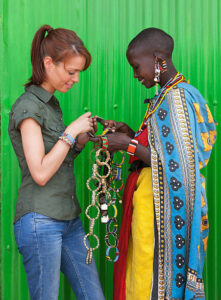
Community-led tourism in Kenya; Tourist learning buying bead from a local maasai woman at Maasai Mara
What are some traditional Kenyan festivals that tourists can attend?
Kenya is a nation defined by its profound cultural diversity, boasting over 40 distinct ethnic groups, each maintaining unique traditions, rituals, and celebratory festivals. For the international traveler, these festivals offer an unparalleled window into the social fabric of East Africa, ranging from high-energy musical showcases to solemn, ancestral rites of passage.
The Lamu Cultural Festival
Held annually in the UNESCO World Heritage site of Lamu Old Town, this festival is perhaps the most significant celebration of Swahili culture. As documented in authoritative travel and cultural guides, the festival highlights the maritime history of the archipelago through dhow races, traditional Swahili poetry recitals, and intricate henna painting demonstrations. The event serves as a bridge between the ancient traditions of the Indian Ocean trade routes and contemporary Kenyan life, attracting visitors who wish to experience the unique blend of Arab, African, and Indian influences that define the Swahili coast.
The Lake Turkana Cultural Festival
Located in the remote northern reaches of Kenya, this festival is a vibrant gathering of the region’s diverse tribes, including the El Molo, Rendille, Samburu, and Turkana people. According to ethnographic studies of Kenyan regional customs, this festival was established to foster peace and cultural exchange among nomadic communities. Tourists who make the journey to Loiyangalani are treated to traditional dances, unique culinary experiences, and displays of indigenous craftsmanship that have remained largely unchanged for centuries.
The Rhino Charge and Safari Rally
While not “traditional” in an ethnic sense, these events have become deeply embedded in the Kenyan national calendar. The Rhino Charge is an annual off-road competition that raises funds for the conservation of Kenya’s mountain bongo and black rhino populations. It represents a modern Kenyan tradition of environmental stewardship, drawing thousands of spectators to the rugged wilderness areas where the event is hosted. Similarly, the Safari Rally, a legendary leg of the World Rally Championship, is a massive cultural phenomenon that showcases the Kenyan spirit of resilience and hospitality.
The Maralal International Camel Derby
Held in the semi-arid landscapes of Samburu County, the Camel Derby is a unique sporting event that has gained international acclaim. It brings together local pastoralist communities and international competitors. As noted in regional cultural surveys, the event is not merely a race but a celebration of the camel’s role in the survival and economy of the northern Kenyan tribes.
Why This Matters for the Traveler
Engaging in these tours (community-led tourism in Kenya) transforms the traveler from a passive observer into an active participant in the local economy. It fosters a deeper emotional connection to the destination, as you are learning the history and aspirations of the people directly from them. As noted in studies on sustainable tourism, the “multiplier effect” of spending money within a community is significantly higher when the service is locally owned, ensuring that your visit leaves a positive, lasting footprint.
Leave a comment:
You must be logged in to post a comment.



Comment 01
Astute Africa Safaris,
05 May, 2026REF: Crafting Your Bespoke African Safari Experience with Astute Africa Safaris
Jambo,
Thank you for your interest in exploring the wonders of Africa with Astute Africa Safaris. We pride ourselves on creating immersive, tailor-made journeys that align perfectly with your personal interests, pace, and travel aspirations.
Because every safari is a unique narrative, we do not believe in “one-size-fits-all” pricing. To ensure we provide you with an accurate and competitive quotation that reflects the specific lodges, wildlife experiences, and logistical arrangements you desire, we invite you to connect with our team for a personalized consultation.
Please contact us at info@astuteafricasafaris.com, Whatsapp +254762663272 or fill the inquiry form with a few details regarding your preferred travel dates, group size, and specific interests (e.g., photography, luxury relaxation, or adventure trekking). Once we have these details, we will curate a comprehensive proposal designed specifically for you.
We look forward to the possibility of helping you plan an unforgettable journey.
Warm regards,
Team Astute Africa Safaris