

- 1.7k Views
- 30 Min Read
- (1) Comment
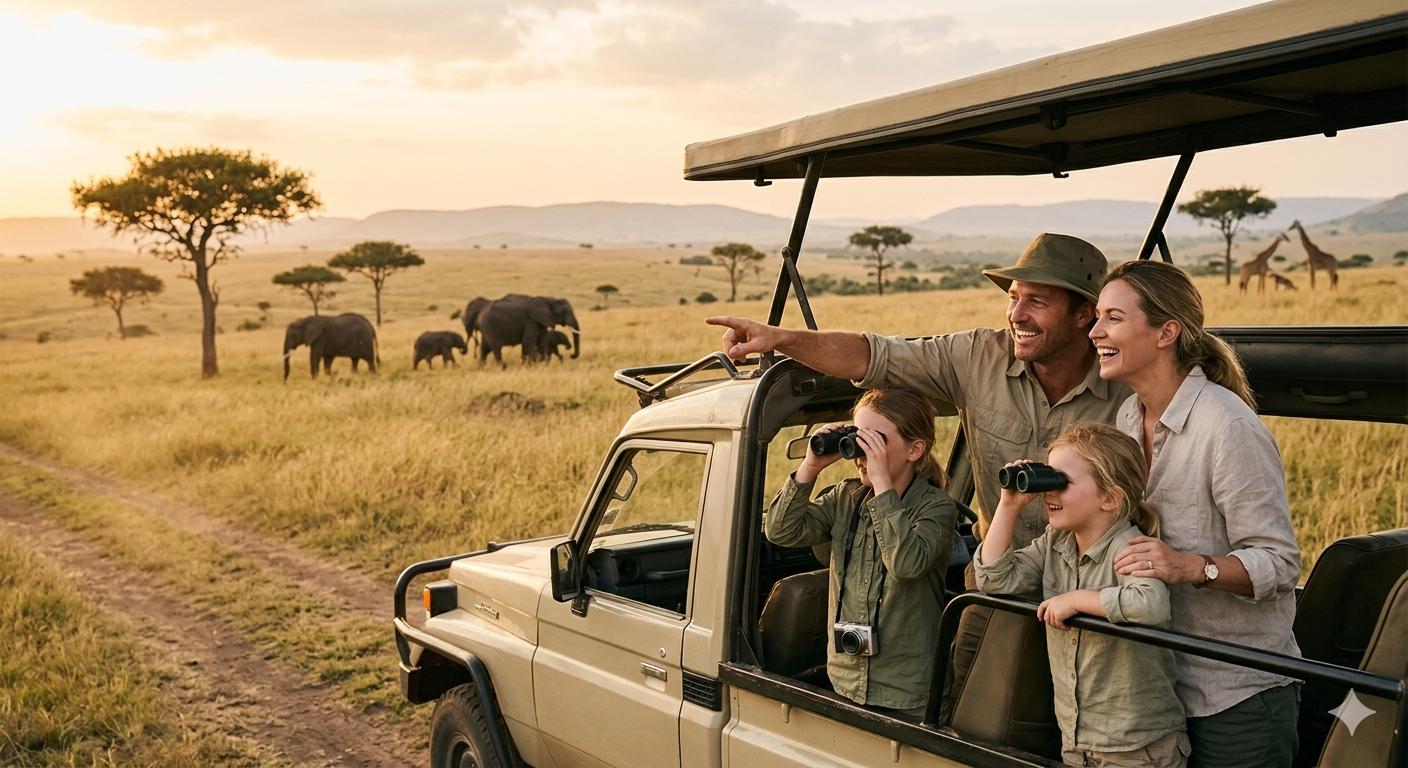
An African family holiday can be much more than a break from school and everyday routines. It can become an extraordinary learning adventure in which children watch elephants roaming freely, discover how giraffes survive in the savannah, learn about ancient cultures, explore tropical forests, paddle along beautiful coastlines where permitted, and understand why protecting the natural world matters.
From the wildlife-rich plains of Kenya’s Maasai Mara to Tanzania’s Serengeti, Uganda’s forests and Rwanda’s remarkable conservation landscapes, Africa offers families opportunities to share meaningful experiences across generations.
However, travelling with children requires thoughtful planning. Parents need to consider their children’s ages, interests, health, comfort, attention spans, accommodation requirements, transport, safety and budget. They also need to choose activities that balance adventure with relaxation.
At Astute Africa Safaris, we believe the most rewarding family journeys begin by understanding what every family member hopes to experience. Whether you are planning a first safari with young children, an educational school-holiday trip, a wildlife adventure with teenagers, or a safari followed by a relaxing beach escape, the itinerary should be designed around your family’s needs.
This guide explains how to plan memorable family safari holidays in Africa, where to go, what children can learn, which activities to consider, how to prepare and how to turn a family holiday into an experience your children will remember for years.
1. Why choose Africa for a family holiday?

Africa offers a combination of wildlife, landscapes, cultural encounters, outdoor activities and beach experiences that makes it particularly rewarding for families who enjoy discovering the world together.
Wildlife encounters that bring learning to life
Seeing animals in their natural habitats helps children understand subjects they may previously have encountered only in books, documentaries or school lessons.
A guided game drive can introduce children to animal behaviour, predator-prey relationships, food chains, migration, habitats and biodiversity. A knowledgeable guide can explain why elephants travel in family groups, how lions hunt, why zebras have stripes and how seasonal rainfall influences the movement of wildlife.
These experiences can encourage children to ask questions, develop observation skills and appreciate the importance of protecting wildlife.
Opportunities to explore different cultures
Africa is home to extraordinary cultural diversity. Depending on the destination and the experience selected, families can learn about local languages, music, food, architecture, traditional crafts, farming practices and contemporary community life.
Respectfully organised cultural experiences can help children appreciate that communities are not simply attractions for visitors. They are living societies with their own histories, values, knowledge and aspirations.
Outdoor adventures for different ages
A family holiday can include game drives, guided nature activities, birdwatching, suitable boat trips, forest experiences, beach walks, snorkelling for confident swimmers where appropriate, and visits to conservation or educational centres.
Not every activity suits every age. The best itinerary combines exciting experiences with enough time for rest, play and unstructured exploration.
Quality time away from everyday routines
Travelling together offers parents and children an opportunity to share discoveries without the usual demands of school, work and household schedules.
Watching the sunrise over the savannah, identifying birds from a lodge veranda or talking about the day’s wildlife sightings over dinner can become treasured family memories.
Learning about conservation and responsibility
Children can learn that wildlife conservation involves protecting habitats, managing human-wildlife conflict, supporting local livelihoods and making responsible tourism choices.
When an experience is age-appropriate and well explained, children can begin to understand how tourism, conservation and communities are connected.
2. Where are the best destinations in Africa for a family holiday?
The best destination depends on your children’s ages, your family’s interests, the time available, your budget and whether you prefer wildlife, culture, adventure or beaches.
For families considering East Africa, Kenya, Tanzania, Uganda, Rwanda and Zanzibar offer different experiences that can be combined into a tailor-made itinerary.

Kenya: A classic family safari destination
Kenya combines famous wildlife reserves, diverse landscapes, cultural experiences and Indian Ocean beaches. Families can explore the Maasai Mara, Amboseli, Lake Nakuru, Samburu or selected conservancies, depending on their interests and travel time.
Best for: First-time African safaris, wildlife photography, elephant viewing, nature education and safari-and-beach combinations.
Family learning: Animal tracking, bird identification, wildlife habitats, conservation and geography.
Read more: East Africa Safari Vacations and Kenya Tourist Circuits.

Tanzania: Wildlife, landscapes and migration
Tanzania offers the Serengeti, Ngorongoro Conservation Area, Tarangire and other distinctive destinations. Families can learn about large mammal movements, volcanic landscapes, ecosystems and the relationship between wildlife and seasonal rainfall.
Best for: Longer wildlife adventures, nature-loving families and families seeking to combine a safari with Zanzibar.
Family learning: Migration, ecosystems, geology, animal adaptations and marine environments.
Read more: East Africa Safari Vacations and Best Time to Visit Africa.

Uganda: Wildlife, forests and nature discovery
Uganda combines savannah wildlife with forests, lakes, wetlands and river landscapes. Depending on children’s ages and the itinerary, families may enjoy game drives, birdwatching, boat safaris and guided nature experiences.
Best for: Families interested in biodiversity, birds, primates and varied landscapes.
Family learning: Rainforest ecology, primate behaviour, freshwater habitats and conservation.
Important: Gorilla and chimpanzee activities have specific permit, health and minimum-age requirements. Gorilla trekking in Uganda is generally restricted to visitors aged 15 and older; confirm the applicable rules before booking.

Rwanda: Conservation and remarkable landscapes
Rwanda offers opportunities to explore Akagera National Park, learn about conservation and experience the country’s hills, lakes and cultural heritage. Some families may also be interested in its famous mountain gorillas, subject to age restrictions.
Best for: Nature-focused families, conservation education and carefully planned short or multi-day journeys.
Family learning: Habitat restoration, biodiversity, community conservation and mountain ecosystems.
Important: Mountain gorilla trekking in Rwanda is generally restricted to visitors aged 15 and older.
Explore destination ideas through East Africa Safari Vacations.

Zanzibar: A relaxing beach extension
Zanzibar is an appealing way to slow down after a safari. Families can enjoy suitable beach activities, learn about Swahili culture, explore historic Stone Town with a guide and discover coastal ecosystems.
Best for: Families who want a safari followed by rest, swimming in suitable conditions and cultural discovery.
Family learning: Marine conservation, tides, coastal habitats, history and cultural exchange.
Planning tip: Check tides, currents, swimming conditions, sun exposure and age suitability before arranging marine activities.
Which destination should you choose?
|
Your family’s priority |
Destinations to consider |
|---|---|
|
First African safari |
Kenya |
|
Elephants and spectacular scenery |
Amboseli, Kenya |
|
Great Migration and expansive plains |
Serengeti, Tanzania; Maasai Mara, Kenya, season dependent |
|
Wildlife and beach relaxation |
Kenya’s coast or Tanzania and Zanzibar |
|
Birds and varied habitats |
Kenya, Uganda or Tanzania |
|
Forests and primates |
Uganda, subject to activity and age rules |
|
Gorilla trekking with eligible teenagers |
Uganda or Rwanda |
|
Conservation-focused experiences |
Selected reserves and conservation areas across East Africa |
These are starting points rather than guarantees. Wildlife sightings, seasonal conditions, road journeys and activity restrictions differ between destinations.
3. How to choose activities that suit your children’s ages

Children experience travel differently at different developmental stages. Choosing age-appropriate activities makes a holiday more comfortable, enjoyable and educational.
Babies and toddlers: Comfort comes first
For very young children, focus on a relaxed itinerary, reliable accommodation, familiar routines and short transfers wherever possible.
Consider:
-
Short, flexible game drives where permitted.
-
Family accommodation with suitable sleeping arrangements.
-
Time to nap, play and eat at familiar times.
-
Shaded outdoor areas and suitable swimming facilities with close adult supervision.
-
Gentle nature observation from a safe lodge environment.
-
Short beach visits when weather and sea conditions permit.
Do not assume every camp accepts infants or permits toddlers on shared game drives. Confirm age policies, child restraints, medical access and supervision arrangements in advance.
Children aged 4–7: Discovery through play
Young school-age children often respond best to short activities with simple goals and plenty of breaks.
Try:
-
Spotting elephants, giraffes, zebras and birds.
-
Using animal picture cards to identify wildlife.
-
Drawing animals seen during a game drive.
-
Creating a collection of sketches rather than collecting natural objects.
-
Listening to wildlife stories before a safari.
-
Learning a few respectful greetings in a local language.
A private vehicle can be especially helpful if it allows the family to return to the lodge when children become tired.
Children aged 8–12: Nature detectives
Older children can take a more active role in exploring the natural world.
Ideas include:
-
Keeping a wildlife observation journal.
-
Identifying animal tracks with a qualified guide.
-
Recording bird sightings.
-
Learning about habitats, food chains and adaptation.
-
Photographing landscapes and wildlife responsibly.
-
Comparing ecosystems across parks.
-
Participating in an approved junior ranger or conservation activity.
Teenagers: Deeper adventure and responsibility
Teenagers may enjoy more challenging experiences and opportunities to understand conservation in greater depth.
Depending on age restrictions and operator rules, consider:
-
Wildlife photography.
-
Guided birdwatching.
-
Conservation education experiences.
-
Suitable kayaking, snorkelling or other supervised marine activities.
-
Cultural and historical excursions.
-
Responsible community-led tourism experiences.
-
Gorilla trekking for eligible teenagers aged 15 or older in Uganda or Rwanda.
Walking safaris, night drives, water activities and other adventure experiences have specific age, safety and operator restrictions. Confirm them for each accommodation and activity rather than assuming teenagers can participate in everything.
4. How to keep children engaged and educated during an African holiday
This is the central idea of the original article, expanded into practical activities that connect learning with a real African holiday.

Turn every game drive into a wildlife discovery challenge
Rather than asking children simply to sit quietly and look for animals, give them an observation mission.
For example:
-
Can you spot three different kinds of antelope?
-
Which animals have horns, and which have tusks?
-
Can you find an animal feeding, resting and moving?
-
Which birds are walking on the ground, and which are perched in trees?
-
Can you identify an animal that blends into its surroundings?
-
What changes when the sun rises or the temperature increases?
Encourage children to ask questions and let the guide explain the answers. Avoid promising that a particular animal will appear; wildlife viewing is unpredictable, and searching is part of the adventure.
Create a family wildlife checklist
Prepare a checklist before leaving home. Include animals, birds, habitats and natural features that might be seen along your chosen route.
A sample checklist might include:
Our African safari discovery list
0 of 8 discoveries completed
Make the activity about curiosity rather than competition. If a sighting does not happen, children can learn about that animal later using a field guide or educational resource.
Keep a family safari journal
A simple notebook can become one of the most meaningful souvenirs of the holiday.
Encourage each child to record:
-
The date and place visited.
-
Three things they observed.
-
A new word or fact they learned.
-
A question they want to investigate.
-
A sketch or photograph.
-
Their favourite moment of the day.
Younger children can draw or dictate their observations to an adult. Older children can write short descriptions, create maps or compare the wildlife seen in different destinations.
Use photography to develop observation skills
Give older children a camera or a suitable device and invite them to build a wildlife photo diary.
Teach them to photograph animals from a safe, approved position, avoid distracting wildlife and follow their guide’s instructions. They can later caption their pictures with the animal’s name, habitat and one interesting fact.
This combines creativity, technology, science and storytelling without requiring children to spend the entire holiday on screens.
Bring nature into everyday conversations
Learning does not have to feel like a classroom lesson.
While watching elephants, ask how their trunks help them feed, drink and communicate. When observing zebras, discuss camouflage and group behaviour. At a beach, talk about tides, coral reefs and the importance of reducing plastic waste.
Follow the child’s interests. A question that begins with curiosity is often more memorable than a long explanation delivered without context.
Balance educational activities with free play
Children need opportunities to relax. Alternate structured activities with swimming where safe, reading, drawing, board games, quiet time and unhurried meals.
A family holiday should not become an exhausting series of educational tasks. The best learning often happens naturally between planned activities.
5. Educational experiences families can include in an African itinerary

A safari is only one part of Africa’s educational appeal. Depending on your destination, you can add experiences that connect wildlife with history, science, culture and environmental responsibility.
Wildlife conservation centres and sanctuaries
Some conservation centres provide guided learning about endangered species, habitat protection, veterinary care or wildlife rehabilitation. Choose reputable facilities that explain their conservation work transparently and prioritise animal welfare.
Before booking, confirm what visitors will see, whether the activity is suitable for children and whether direct animal contact is involved. Avoid experiences that encourage unsafe handling or unnatural interactions with wild animals.
Guided nature walks
Where an operator permits children to participate, a guided walk can reveal details that are easily missed during a game drive: insects, seeds, tracks, plants, bird calls and the relationships between species.
Only participate in designated areas with an appropriately qualified guide, and follow all safety instructions. Walking safaris in wildlife areas often have minimum-age restrictions.
Birdwatching
Birdwatching is a rewarding activity for children because it encourages patience and close observation.
Bring binoculars suitable for your child’s age, a bird identification guide and a notebook. Rather than attempting to identify every species, choose a few common birds and learn about their colours, beaks, calls, feeding habits and habitats.
Local food and cooking experiences
Food can introduce children to geography, agriculture, culture and everyday life.
Depending on the host and experience, families may explore local ingredients, learn how traditional dishes are prepared or visit a market with a knowledgeable guide.
Ask permission before photographing people, respect cultural expectations and explain that food traditions vary within communities.
Historical and cultural excursions
Historic towns, museums, heritage sites and community-led cultural experiences can help older children connect places they visit with broader questions about history and society.
Choose reputable guides who present local perspectives respectfully and accurately. Make sure the length and subject matter are appropriate for the children’s ages.
Marine and coastal learning
A beach extension can introduce children to coral reefs, mangroves, marine animals, tides and coastal conservation.
Depending on local conditions, activities might include a guided coastal nature walk, supervised snorkelling, an educational marine visit or a boat excursion with an appropriate operator.
Never allow children to swim unsupervised, touch coral or disturb marine wildlife. Check weather, tides, currents and equipment suitability before participating.
6. How to prepare children before travelling to Africa
Preparation helps children feel involved and gives them a basic understanding of what to expect.

Read books and watch age-appropriate wildlife documentaries
Choose books and documentaries about the animals, habitats and destinations on your itinerary.
If you plan to visit the Maasai Mara, for example, introduce children to savannah ecosystems and the seasonal movement of wildlife. For a forest destination, focus on primates, birds, plants and the importance of healthy forests.
Use the material as an introduction, not as a promise of what you will see in person.
Involve children in planning
Give each child a manageable role.
A younger child might choose three animals to learn about. An older child might research a national park, prepare a packing checklist or choose a wildlife-journal format.
Letting children contribute helps them feel invested in the holiday.
Explain safari rules before arrival
Children should understand that wild animals are not pets. They must remain in the vehicle or designated safe areas when instructed, keep their voices controlled around wildlife and follow the guide’s directions.
Explain that they should never feed, approach or attempt to touch wild animals. These rules protect both visitors and wildlife.
Prepare them for early starts and long drives
Some safaris begin early to take advantage of wildlife activity and cooler temperatures. Road journeys may take longer than expected because of road conditions, traffic, weather or wildlife stops.
Explain the daily routine in advance. Bring water, suitable snacks where permitted, entertainment and comfort items, and schedule breaks whenever practical.
7. How many days should a family spend on an African holiday?
There is no single ideal duration. The right length depends on your arrival and departure arrangements, children’s ages, travel pace, number of destinations and whether you want a beach extension.
|
Holiday length |
Suggested focus |
|---|---|
|
3–4 days |
One safari destination with a relaxed schedule |
|
5–7 days |
One or two safari areas, depending on transfer times |
|
8–10 days |
A more varied safari with time for nature or cultural activities |
|
10–14 days |
A multi-region holiday or safari combined with a beach stay |
|
14+ days |
A slower-paced multi-country itinerary, if travel time and budget allow |
For young children, fewer hotel changes and longer stays in each location can be more enjoyable than visiting many parks in quick succession.
For teenagers, a longer itinerary may allow more variety, including photography, conservation experiences and additional landscapes.
Remember that the first and last days can be affected by international flights. Do not plan a demanding game drive or an important timed activity immediately after a long-haul arrival.
8. Sample family safari itineraries in East Africa
These are planning examples rather than fixed packages. The actual route, accommodation, prices and activities should be adjusted for the family’s travel dates, ages and budget.

Itinerary 1: A gentle 4-day Kenya family safari
Best for first-time visitors or families with limited time
Day 1: Arrive in Nairobi, transfer to family accommodation and rest. If arrival time permits, enjoy a short, age-appropriate local excursion.
Day 2: Travel to Amboseli or another suitable safari destination, depending on flight times and the preferred route. Introduce children to the landscape and wildlife.
Day 3: Enjoy game drives at a child-friendly pace, with time for rest and wildlife journaling.
Day 4: Return to Nairobi or connect to the next destination, allowing adequate transfer time.
Learning focus: Wildlife identification, elephant behaviour, geography and observation skills.

Itinerary 2: A 7-day Kenya wildlife and learning holiday
Best for school-age children and wildlife enthusiasts
Day 1: Arrive in Nairobi and settle in.
Day 2: Travel to Lake Nakuru or a suitable alternative, with wildlife observation and a relaxed evening.
Days 3–5: Continue to the Maasai Mara for game drives, birdwatching and guided wildlife learning.
Day 6: Enjoy a final morning activity if timings permit, then travel towards Nairobi or an appropriate overnight stop.
Day 7: Depart or continue to another destination.
Learning focus: Food chains, animal adaptations, birdlife, habitats and conservation.
Planning note: Driving times depend on the selected accommodation, route and road conditions. A flight-based itinerary may offer a more comfortable alternative for some families.

Itinerary 3: A 10-day Kenya and Tanzania family safari
Best for families seeking a wider East African experience
Days 1–2: Arrive in Kenya, rest and begin with a manageable wildlife or cultural experience.
Days 3–5: Explore a selected Kenya safari destination, with time for game drives and educational activities.
Days 6–8: Continue to Tanzania, subject to the chosen border crossing or flight arrangements, and explore an appropriate wildlife area.
Day 9: Enjoy a final wildlife activity or a restful overnight stay.
Day 10: Depart from the most practical airport for the international flight.
Learning focus: Comparing ecosystems, migration, geography, culture and conservation across countries.
Planning note: Cross-border travel can consume substantial time. Select the parks and transfer arrangements before finalising the number of nights.

Itinerary 4: A 10–12-day safari and beach holiday
Best for families wanting adventure and relaxation
Days 1–2: Arrive in Kenya or Tanzania and rest.
Days 3–6: Enjoy a safari in one or two carefully selected wildlife areas.
Day 7: Travel to the coast or Zanzibar using an appropriate flight or transfer.
Days 8–10: Enjoy beach time, suitable marine activities, cultural excursions and unstructured family time.
Days 11–12: Add extra beach days or allow time for departure connections, depending on the international flight schedule.
Learning focus: Comparing savannah and marine ecosystems, coastal culture, tides and conservation.
Planning note: Allow enough time between domestic and international flights, and confirm baggage allowances for any light aircraft transfers.
Explore existing itinerary inspiration on Astute Africa Safaris:
These itineraries may need modification for children’s ages, activity restrictions and the family’s preferred pace.
9. How much does a family safari in Africa cost?
The cost of a family safari varies considerably. There is no reliable single price for every family because accommodation, destination, season, transportation, children’s ages and the number of travellers all influence the total.
What affects the price?
Accommodation: Budget lodges, mid-range tented camps and luxury safari properties have different rates, facilities and family arrangements.
Travel season: Rates and availability can change during school holidays, popular wildlife periods and peak travel months.
Transport: Private road transfers, domestic flights and light aircraft transfers have different costs. A private safari vehicle may cost more upfront but can offer families flexibility around meal times, rest breaks and game-drive duration.
Park and conservation fees: These vary by destination, visitor category, age, season and the specific protected area.
Children’s rates: Some properties and tour providers offer child rates or family packages; others charge according to different age bands or accommodation arrangements. Always request the actual family total.
Additional activities: Special excursions, boat trips, cultural experiences, photography activities and other optional services may increase the cost.
International travel: Flights to and from Africa, visas or entry authorisations where required, travel insurance, vaccinations or medical advice, and personal spending should be budgeted separately unless explicitly included.
How can families manage their budget?
-
Travel outside the busiest periods if the dates suit your family and the wildlife experiences you want.
-
Select fewer destinations and spend more time in each.
-
Compare the total cost of road and flight-based itineraries, not just the individual transfer price.
-
Request family rooms or interconnecting accommodation where available.
-
Ask whether meals, park fees, transfers and activities are included in the quotation.
-
Compare the full family cost rather than focusing only on a headline price per person.
-
Consider combining a shorter safari with several relaxing beach days rather than adding many expensive destinations.
For a tailored estimate, Astute Africa Safaris can plan a route around your preferred dates, number of adults and children, children’s ages, accommodation level and overall budget.
10. How to choose family-friendly safari accommodation

Accommodation affects the entire family experience. A beautiful lodge is not automatically suitable for every child, so check the practical details before confirming your booking.
What should parents look for?
-
Suitable room arrangements: Family rooms, interconnecting rooms or family tents that accommodate everyone comfortably.
-
Child policies: Minimum ages for accommodation, shared game drives, walking activities and children’s programmes.
-
Meals: Children’s menus, dietary accommodations and flexibility around meal times.
-
Safety: Secure grounds, clear walking routes, safe balcony or veranda arrangements and appropriate pool supervision.
-
Rest facilities: Shaded spaces, comfortable beds, quiet areas and room for children to relax between activities.
-
Activities: Age-appropriate nature experiences, educational sessions and play opportunities where offered.
-
Medical access: The nearest appropriate medical facility, emergency procedures and communication arrangements.
-
Transport: Practical access from the airport or preceding destination, including any light aircraft baggage limits.
Are safari lodges safe for children?
Many safari lodges welcome families, but wildlife areas require a different level of awareness from ordinary hotels.
Some camps are unfenced, and wild animals may move through the surrounding area. Children should never walk around independently where staff require an escort. Follow all lodge instructions, keep children close and confirm the property’s specific safety arrangements before booking.
Ask the operator to confirm suitability in writing rather than relying on photographs or general descriptions.
11. Health, safety and travel preparation for children
Family safari planning should include health precautions and practical arrangements before departure.
Speak to a qualified travel-health professional
Arrange a medical consultation well before travelling, particularly if you are travelling with infants, have underlying health concerns or plan to visit remote areas.
Ask about destination-specific vaccination recommendations, malaria prevention, insect-bite precautions, food and water safety, and any medicines appropriate for your children.
Malaria risk differs by destination and itinerary. Do not assume that every safari area is malaria-free, and do not select or reject a destination solely on a broad country-level description. Obtain individual medical advice based on the places and dates you plan to visit.
Prepare a family medical kit
Ask your clinician what to bring. Depending on your family’s needs, this may include prescribed medicines, suitable fever or pain relief, oral rehydration products, plasters, antiseptic supplies and insect repellent appropriate for each child’s age.
Carry essential medicines in their original packaging and keep them accessible during transfers.
Protect children from the sun and heat
Bring sun hats, suitable lightweight clothing, sunscreen, reusable water bottles and comfortable footwear.
Encourage regular drinking and breaks in shade. Early-morning and late-afternoon activities may be more comfortable than prolonged exposure during the hottest part of the day.
Use safe transport arrangements
Confirm suitable child restraints for road transfers where required and available. Discuss seat arrangements with your safari operator, especially for young children.
For light aircraft transfers, check baggage weight limits, luggage requirements and whether child seats or other equipment can be accommodated.
Check travel documents and entry requirements
Every child should have the required travel documentation. Depending on nationality and the countries visited, this may include a passport, visa or electronic travel authorisation, parental consent documents, and other border-entry paperwork.
Check official requirements for every destination and transit country before departure. Requirements can change.
Keep children safe around wildlife and water
Never permit children to approach, feed or touch wild animals. Follow guide instructions during game drives and all wildlife activities.
At beaches, rivers, pools and lakes, use suitable supervision and approved flotation equipment where appropriate. Check currents, tides, water quality and local safety guidance before swimming or participating in water sports.
Consider travel insurance
Choose a policy that covers the activities and destinations on your itinerary. Review medical treatment, emergency evacuation, trip interruption, baggage and pre-existing-condition provisions, where relevant.
For remote safari areas, confirm how emergency assistance is accessed and what services the policy actually covers.
12. What should you pack for a family safari in Africa?
Packing needs vary with the country, season, accommodation and activities. Aim for practical, comfortable clothing rather than a different outfit for every occasion.

Clothing and footwear
-
Lightweight, breathable clothing.
-
A warm layer for chilly mornings and evenings.
-
Comfortable closed shoes for appropriate walking activities.
-
Sandals or other suitable footwear for the beach or lodge.
-
Sun hats and swimwear where appropriate.
-
Rain protection during wetter periods.
Learning and entertainment
-
Wildlife identification books or cards.
-
A small notebook and pencils.
-
Binoculars suitable for the child’s age.
-
A camera or device for photography.
-
Audiobooks, offline games and downloaded educational material.
-
A favourite comfort item for younger children.
Health and personal essentials
-
Prescribed medication and any clinician-recommended supplies.
-
Sunscreen and age-appropriate insect repellent.
-
Reusable water bottles.
-
Hand hygiene supplies.
-
Necessary travel documents and insurance details.
-
Suitable child restraints or other equipment, where applicable and arranged in advance.
For flights in small safari aircraft, check the operator’s luggage restrictions before packing. Soft-sided luggage may be required, and weight limits can be strict.
13. What is the best time for a family safari in Africa?
There is no single best month for every African family holiday. The ideal period depends on the country, wildlife priorities, weather, school holidays and budget.
In parts of East Africa, drier periods can make wildlife easier to spot in some habitats, while greener seasons can offer beautiful scenery, fewer visitors at certain locations and excellent birdwatching. Rainfall patterns and wildlife movements vary from region to region.
Consider these questions when choosing your dates:
-
Do you want to focus on a particular wildlife migration?
-
Are you travelling during fixed school holidays?
-
Will young children be comfortable with early starts and changing weather?
-
Do you want to add beach time, and what are the conditions at your chosen coast?
-
Would you prefer peak-season wildlife viewing or more flexibility around cost and availability?
For more detailed seasonal guidance, read Astute’s Best Time to Visit Africa.
14. How can families make their African holiday responsible and sustainable?
A family safari can be an opportunity to teach children about respect for nature and the people who live in wildlife areas.
Choose responsible wildlife experiences
Prioritise operators and activities that respect wildlife, follow protected-area rules and avoid unnecessary disturbance.
Avoid feeding wild animals, handling wildlife for photographs or supporting experiences that encourage harmful interactions.
Respect local communities
Choose cultural experiences that are organised respectfully and, where possible, led by local people who benefit from visitor participation.
Ask before photographing people, respect local customs and encourage children to approach cultural differences with curiosity rather than judgement.
Reduce waste
Carry reusable bottles where safe water is available, minimise single-use plastics where practical and dispose of waste properly. Never leave rubbish in wildlife areas or on beaches.
Help children understand conservation
Discuss how habitat loss, poaching, pollution, climate change and human-wildlife conflict can affect animals and communities.
Encourage children to think about how responsible tourism, conservation work and local livelihoods can contribute to protecting natural areas.
The objective is not to make children feel responsible for solving every environmental challenge. It is to help them understand the value of nature and the importance of thoughtful choices.
15. Common mistakes to avoid when travelling with children in Africa
Even a wonderful destination can feel stressful if the itinerary is not designed for the family.
Planning too many destinations. Excessive transfers reduce time for wildlife viewing and rest. Select fewer locations and enjoy them more fully.
Expecting children to manage adult-length game drives. Young children may need shorter outings, private transport and flexible return times.
Choosing accommodation without checking child policies. Confirm minimum ages, room layouts, pool arrangements, escort requirements and activity restrictions before paying.
Assuming every day will include major wildlife sightings. Animals move freely, and sightings can never be guaranteed. Encourage children to appreciate landscapes, smaller animals and the process of searching.
Ignoring health preparations. Consult a qualified health professional and plan for destination-specific risks before travelling.
Leaving no time for rest. Build in naps, swimming where safe, reading, play and quiet evenings.
Booking activities without checking age restrictions. Gorilla trekking, walking safaris and some adventure activities have firm requirements. Confirm all applicable rules before making payment.
Focusing only on price. A low headline rate may exclude park fees, meals, transfers or essential services. Compare complete quotations.
Trying to make the whole holiday educational. Allow children to relax and enjoy the experience in their own way. Learning is more effective when curiosity leads.
16. Frequently asked questions about family safari holidays in Africa
Is Africa a good destination for a family holiday?
Yes. Many African destinations offer wildlife viewing, beaches, nature activities, cultural experiences and family-friendly accommodation. The best choice depends on your children’s ages, health considerations, interests, travel dates and the quality of the itinerary.
What is the best African country to visit with children?
Kenya is an excellent starting point for many families because it offers classic wildlife safaris, diverse parks and options to combine a safari with the coast. Tanzania is another strong choice, while Uganda and Rwanda suit particular nature and primate interests when age requirements are met. There is no single best country for every family.
What age is suitable for a family safari?
There is no universal minimum age for every safari. Some accommodation welcomes babies and toddlers, while certain activities and shared game drives have minimum-age rules. A private vehicle and a flexible itinerary can make travel easier with younger children.
Can I take a baby or toddler on safari?
Yes, some properties and itineraries can accommodate very young children. Choose accommodation carefully, discuss health risks with a qualified clinician and confirm vehicle arrangements, sleeping facilities, child supervision and the property’s wildlife-safety policies before booking.
Are African safaris educational for children?
Absolutely. Wildlife observation can introduce children to animal behaviour, ecosystems, food chains, geography, biodiversity and conservation. Cultural and historical visits can also encourage curiosity about the people and places they encounter.
How long should a family safari last?
A short safari may last three or four days, while a broader family holiday might take seven to fourteen days or longer. Choose the duration according to your children’s ages, travel time, budget and the number of destinations you want to visit.
Are family safaris expensive?
Costs range from more modest road-based holidays to premium lodge and fly-in safaris. Accommodation, travel season, park fees, transport, children’s rates and the length of the itinerary all affect the total. Request an itemised quotation based on your family size and preferences.
Can we combine a safari with a beach holiday?
Yes. Kenya’s coast and Tanzania’s Zanzibar are popular extensions for families who want to balance wildlife adventures with relaxation. Plan suitable transfers and allow time to rest between activities.
Can children go gorilla trekking in Uganda or Rwanda?
Gorilla trekking in both Uganda and Rwanda is generally restricted to people aged 15 and older. Confirm current official requirements, permit arrangements and any additional rules before booking.
Is malaria a concern for children on safari?
Malaria risk depends on the precise destination and itinerary. Consult a qualified travel-health professional about prevention and suitable destinations for your family, particularly if travelling with infants or young children. Use recommended bite-prevention measures and follow medical advice.
What can children do during long game drives?
Wildlife checklists, drawing, binoculars, photography, nature questions and short observation challenges can help keep children engaged. Bring suitable snacks and entertainment where permitted, and choose a schedule with practical breaks.
How far in advance should we book?
Earlier planning is helpful for peak school holidays, popular camps, larger families and specialised activities with limited availability. The right lead time depends on dates, destination and accommodation availability. Confirm age policies and family room arrangements before paying a deposit.
What should I tell a safari operator when requesting a family itinerary?
Provide your travel dates, children’s ages, number of adults and children, preferred destinations, accommodation level, dietary or accessibility needs, activity interests and approximate budget. Also explain whether you prefer road transfers, flights or a combination.
17. Plan a family holiday that grows with your children’s curiosity

A well-planned African family holiday offers much more than a checklist of places to visit. It gives children the chance to observe wildlife, ask questions, understand different environments, experience new cultures and spend meaningful time with the people they love.
The secret is to choose destinations that suit your family, allow enough time to enjoy each place, use knowledgeable guides and balance adventure with rest. A successful family safari does not have to be the longest, most luxurious or most ambitious trip. It needs to be the right trip for your children and your family’s priorities.
At Astute Africa Safaris, we can help you explore tailor-made journeys across Kenya, Tanzania, Uganda, Rwanda and Zanzibar, with options ranging from classic wildlife safaris to educational nature experiences and safari-and-beach holidays.
Whether you are planning your child’s first safari, a school-holiday adventure, a family celebration or a multi-generational journey, start with the experiences that matter most to you.
Ready to plan your family safari holiday in Africa?
Share your travel dates, children’s ages, preferred destinations, accommodation preferences and budget with Astute Africa Safaris. We can help you shape a practical itinerary that balances wildlife, education, comfort and family time.
Let’s plan your family’s African adventure
Tell us what your family would love to discover, and start planning a personalised safari and holiday experience.
Explore Astute Africa Safaris Explore East Africa Safari Vacations
Leave a comment:
You must be logged in to post a comment.


Comment 01
Astute Africa Safaris,
05 May, 2026REF: Crafting Your Bespoke African Safari Experience with Astute Africa Safaris
Jambo,
Thank you for your interest in exploring the wonders of Africa with Astute Africa Safaris. We pride ourselves on creating immersive, tailor-made journeys that align perfectly with your personal interests, pace, and travel aspirations.
Because every safari is a unique narrative, we do not believe in “one-size-fits-all” pricing. To ensure we provide you with an accurate and competitive quotation that reflects the specific lodges, wildlife experiences, and logistical arrangements you desire, we invite you to connect with our team for a personalized consultation.
Please contact us at info@astuteafricasafaris.com, Whatsapp +254762663272 or fill the inquiry form with a few details regarding your preferred travel dates, group size, and specific interests (e.g., photography, luxury relaxation, or adventure trekking). Once we have these details, we will curate a comprehensive proposal designed specifically for you.
We look forward to the possibility of helping you plan an unforgettable journey.
Warm regards,
Team Astute Africa Safaris