

- 189 Views
- 16 Min Read
- (1) Comment
Africa is a colossal, diverse continent encompassing 54 distinct countries, each offering unique ecosystems, cultures, and wildlife spectacles. When travelers seek the ultimate wildlife journey, identifying the best africa safari destinations requires looking at the premier national parks, game reserves, and private concessions that define the continent’s wild heart. From the endless rolling plains of East Africa to the lush water channels of Southern Africa, every safari destination provides a completely different experience, distinct accommodations, and singular natural phenomena.
Choosing the right and best africa safari destinations depends entirely on what you wish to see, the landscape you prefer, and the style of accommodation you desire. Because the continent is so vast and ecologically varied, understanding the distinct characteristics of its top safari regions ensures a once-in-a-lifetime adventure.
Comprehensive Overview of Africa’s Premier Safari Regions
1. Kruger National Park, South Africa
Spanning over 7,500 square miles, Kruger National Park is South Africa’s premier game park and a masterpiece of conservation history, established in 1926.
- What Makes It Unique & Different: Kruger offers incredible biodiversity paired with exceptional infrastructure, making it ideal for both first-time safari-goers and seasoned veterans. The landscape features flat terrain interspersed with thorny acacia trees, red-bush willows, and dense riverine vegetation.
- What to See & Expect: Visitors can expect comprehensive sightings of the Big Five (lion, leopard, elephant, buffalo, and rhino), alongside hyenas, giraffes, and rare packs of African wild dogs.
- Accommodation Options: For ultimate luxury, guests can stay in private concessions like Jock Safari Lodge, featuring exclusive mini-villas and off-road driving privileges. Mid-luxury and self-driving options include various SANParks rest camps and fenced chalets within the park.
2. Serengeti National Park, Tanzania
The Serengeti represents the quintessential, archetypal African safari experience, translating from the local Maasai language as the “endless plain.”
- What Makes It Unique & Different: Dominated by vast, open grass plains broken only by rocky outcrops called kopjes, the Serengeti is globally renowned as the stage for the Great Migration, where millions of wildebeest and zebra traverse the landscape.
- What to See & Expect: Expect dramatic predator-prey interactions, massive herds, exceptional bird watching, and the unique spectacle of calving season in the southern plains during January and February.
- Accommodation Options: Luxury seekers can indulge in high-end properties like Melia Serengeti Lodge, Kiota Camp, and Serengeti Serena Safari Lodge, while mid-luxury travelers can choose from a range of comfortable tented camps and public campsites.
3. Ngorongoro Crater, Tanzania
Formed millions of years ago by a massive volcanic explosion, the Ngorongoro Crater is the world’s largest inactive, intact volcanic caldera, plunging 2,000 feet deep and spanning 100 square miles.
- What Makes It Unique & Different: Because the crater walls act as a natural enclosure, a vast majority of the resident wildlife never leaves the caldera floor, creating a self-sustaining ecosystem where an entire safari can be conducted in a single day.
- What to See & Expect: Expect dense concentrations of lions, cheetahs, jackals, hippos, and a critically important population of endangered black rhinos. Notably, giraffes are absent here due to the steep, impassable crater slopes.
- Accommodation Options: Premium luxury is found along the rim at properties like andBeyond Ngorongoro Crater Lodge and Neptune Ngorongoro Luxury Lodge, complemented by public and private campsites nearby.
4. Maasai Mara National Reserve, Kenya
The Maasai Mara National Reserve, located in Narok County, Kenya, stands as one of the most magnificent and ecologically significant wildlife conservation areas on the African continent. Directly continuous with the Serengeti National Park across the Tanzanian border, this expansive savanna forms the northernmost sector of the legendary Mara-Serengeti ecosystem. Named in honor of the ancestral Maasai people and described by them as “Mara” (meaning “spotted” due to the short bushy acacia trees dotting the landscape), the reserve is globally renowned for its high density of resident wildlife and its deep cultural heritage.
The unique character of the Maasai Mara is defined by its gently rolling hills, open grasslands, and seasonal riverlets that drain into the prominent Mara, Sand, and Talek rivers. This diverse geography creates a mosaic of habitats capable of supporting an extraordinary abundance of fauna. The reserve is internationally famous for hosting the Great Wildebeest Migration, during which more than 1.3 million blue wildebeest, alongside hundreds of thousands of zebras and gazelles, traverse the treacherous waters of the Mara River amid lurking Nile crocodiles and vigilant big cats.
Beyond this seasonal spectacle, the Maasai Mara provides a permanent home to the “Big Five”—lion, leopard, African bush elephant, African buffalo, and black rhinoceros—alongside over 470 recorded species of birds. Furthermore, the reserve offers visitors a deeply immersive cultural experience through authentic interactions with local Maasai communities, whose traditional pastoralist lifestyle remains intrinsically linked to the surrounding landscape.
To accommodate travelers seeking to experience this iconic ecosystem, the Maasai Mara features a diverse range of accommodations tailored to different budgets and preferences. High-end travelers can indulge in exclusive luxury tented camps such as Little Governor’s Camp, Kandili Camp, and the ultra-luxurious Olarro, which offer intimate wilderness access, exceptional service, and guided game drives. For mid-range adventurers and community-oriented travelers, options like Mara Explorers Camp provide comfortable, immersive stays while supporting regional conservation and community initiatives. Whether staying within the government-managed national reserve, the Mara Conservancy-managed Mara Triangle, or the surrounding private Maasai-owned conservancies, visitors are guaranteed an unforgettable encounter with the authentic wilderness of East Africa
- What Makes It Unique & Different: The landscape is characterized by gently rolling hills and dotted acacia trees, intersecting with the Mara River where the dramatic river crossings of the Great Migration take place. Furthermore, it allows visitors to blend wildlife viewing with authentic cultural interactions alongside local Maasai communities.
- What to See & Expect: Expect abundant big cats, massive herds of wildebeest and zebras, Nile crocodiles, and over 470 species of birds.
- Accommodation Options: High-end travelers can stay in exclusive luxury tented camps such as Little Governor’s Camp, Kandili Camp, and the ultra-luxurious Olarro, while mid-range adventurers can enjoy community-oriented camps like Mara Explorers Camp.
5. Chobe National Park, Botswana
Located in northern Botswana, Chobe National Park covers 4,500 square miles and is celebrated as a sanctuary for megafauna.
- What Makes It Unique & Different: Chobe shifts the traditional safari paradigm by offering extensive water-based wildlife viewing via boat safaris along the Chobe River, alongside traditional vehicle-based game drives.
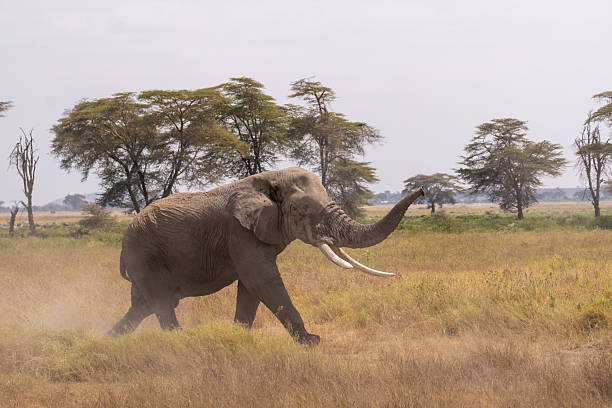
- What to See & Expect: Expect the largest elephant population on the African continent, estimated at around 50,000 individuals. A unique highlight is watching elephants swim, submerge, and use their trunks as snorkels.
- Accommodation Options: Botswana specializes in elite tourism; luxury visitors frequent properties like Ghoha Hills Savuti and Ngoma Safari Lodge, while mid-range travelers utilize well-appointed river lodges near Kasane such as Thebe River Lodge.
Other Best Africa Safari Destinations
6. Amboseli National Park (Kenya)
Renowned for its iconic views of the snow-capped Mount Kilimanjaro, Amboseli National Park provides travelers with unforgettable landscape photography opportunities featuring massive herds of free-roaming elephants against an alpine backdrop.
The defining visual characteristic of Amboseli National Park is the majestic backdrop of Mount Kilimanjaro, the highest free-standing mountain in the world, which looms directly over the park’s dusty plains and marshlands. This dramatic geographical setting creates an ecosystem where large herds of free-roaming African elephants can be observed navigating an untamed wilderness against an alpine backdrop.
Geography, Climate, and Ecosystems
The name “Amboseli” originates from the local Maasai word Empusel, which translates to “salty dust,” an apt description for the hyper-arid lake basin that forms the core of the park. The region features a mosaic of diverse habitats, ranging from dried-up Pleistocene lake beds and open savannah grasslands to dense acacia woodlands and permanent sulphur springs-fed swamps.
These permanent swamps, including the Enkongo Narok and Ol Tukai swamps, act as life-sustaining oases during the dry seasons. Fed by underground meltwaters from Mount Kilimanjaro, these aquatic habitats support an immense abundance of biodiversity, drawing wildlife from miles around. The climate is generally hot and dry, receiving minimal rainfall primarily concentrated during the long and short rainy seasons, making the dry months between January–February and June–October the optimal periods for wildlife viewing.
Wildlife and Biodiversity
Amboseli is internationally famed as the home of the African elephant, boasting dense populations of free-roaming pachyderms that often travel in large, cohesive family groups led by powerful matriarchs. Because the elephants of Amboseli have enjoyed relative protection and long-term behavioral research—exemplified by the pioneering work of the Amboseli Elephant Research Project—they are remarkably relaxed around safari vehicles, providing researchers and photographers with unparalleled viewing opportunities. Many of these elephants are celebrated “big tuskers,” possessing magnificent ivory that sweeps near to the ground.
Beyond elephants, the park hosts a rich array of large mammals and predators. Visitors frequently encounter Cape buffaloes, blue wildebeests, zebras, giraffes, and impalas roaming the open plains, while predators such as lions, cheetahs, and spotted hyenas traverse the landscape in search of prey. The park is also a premier birdwatching destination, with over 400 recorded avian species. The shallows of Lake Amboseli and the surrounding marshes attract massive flocks of lesser and greater flamingos, pelicans, kingfishers, and the iconic grey crowned crane.
Luxury and Mid-Luxury Lodges and Camps
To accommodate travelers seeking immersive yet comfortable wilderness experiences, Amboseli National Park and its surrounding private conservancies offer a curated selection of premier luxury and mid-luxury lodges and tented camps. These accommodations are strategically positioned to provide front-row seats to Mount Kilimanjaro and the migratory paths of the local wildlife.
Ol Tukai Lodge
Nestled right in the heart of Amboseli National Park, Ol Tukai Lodge is widely considered one of the finest spots for wildlife viewing and photography. The lodge overlooks the permanent swamps where elephants frequently gather, and every room or terrace frames the imposing mass of Mount Kilimanjaro. It combines luxury amenities with an eco-conscious design, offering spacious chalet-style rooms, a swimming pool, and expert-led safari excursions.
Kibo Safari Camp
Located just outside the Kimana Gate on the eastern boundary of the park, Kibo Safari Camp provides an authentic yet luxurious tented safari experience. Guests stay in well-appointed, permanent luxury tents equipped with modern en-suite bathrooms and private verandas. The camp is surrounded by indigenous trees and wildlife paths, allowing visitors to fall asleep to the nocturnal chorus of hyenas, cicadas, and distant predators while enjoying top-tier hospitality and local cuisine.
Tortilis Camp
Situated in a private conservancy adjacent to the national park, Tortilis Camp is an eco-luxury award-winner named after the flat-topped Acacia tortilis trees that dot the landscape. The camp features elegant main-canvas structures and spacious makuti-roofed tents, all oriented toward Mount Kilimanjaro. By operating within a community-owned conservancy, Tortilis allows guests to engage in guided walking safaris and off-road driving—activities strictly regulated within the national park proper—while directly contributing to local Maasai conservation initiatives.
Conservation and Community Integration
The long-term survival of Amboseli’s delicate ecosystem depends heavily on transboundary conservation and community partnerships. Organizations like the International Fund for Animal Welfare (IFAW) and the African Wildlife Foundation (AWF) work alongside the Kenya Wildlife Service (KWS) to secure crucial wildlife corridors stretching between Amboseli and Kilimanjaro National Parks. Through innovative community land-lease programs, local Maasai landowners are financially compensated for setting aside acreage as dedicated wildlife habitats rather than converting them into agricultural plots. This holistic approach ensures that human-wildlife conflict is mitigated, local communities benefit directly from sustainable ecotourism, and the majestic giants of Amboseli retain their ancient room to roam.
7. Tsavo East National Park (Kenya)
As one of the oldest and largest parks in Kenya, Tsavo East National Park is characterized by its vast, arid Yatta Plateau and red-dust elephants, offering a raw and remote wilderness experience.
8. Tsavo West National Park (Kenya)
Differentiated from its eastern counterpart by its diverse topography, Tsavo West National Park features volcanic outcrops, lush natural springs such as Mzima Springs, and rich tracking opportunities for rhinos and leopards.
9. Lake Nakuru National Park (Kenya)
Famous historically for its shimmering pink expanses of lesser flamingos, Lake Nakuru National Park serves as an exceptional protected sanctuary for both black and white rhinoceroses.
10. Samburu National Reserve (Kenya)
Located in Kenya’s arid northern frontier, Samburu National Reserve is celebrated for its unique wildlife species adapted to dry conditions, known locally as the Samburu Special Five.
11. Tarangire National Park (Tanzania)
Defined by ancient giant baobab trees and large winding river systems, Tarangire National Park is renowned for hosting massive elephant herds during the dry season and offering a quieter alternative to the northern circuit.
12. Lake Manyara National Park (Tanzania)
Nestled beneath the steep western escarpment of the Great Rift Valley, Lake Manyara National Park provides a lush groundwater forest habitat famous for its elusive tree-climbing lions and massive flocks of pelicans and flamingos.
Southern Africa: Diverse Landscapes, Waterways, and Private Concessions
Southern Africa offers a sophisticated safari infrastructure characterized by vast national parks, private game lodges, luxury rail journeys, and unique water-based wildlife viewing opportunities.
13. Kruger National Park (South Africa)
Covering more than 7,500 square miles, Kruger National Park is one of Africa’s largest and most accessible game reserves, offering diverse ecosystems ranging from dense bushveld to open savannah and premier luxury private concessions. It was established as South Africa’s first national park in 1926.
14. Okavango Delta (Botswana)
A unique inland delta that floods seasonally, the Okavango Delta is a UNESCO World Heritage site where visitors can silently glide through labyrinthine waterways in a traditional mokoro to observe hippos, crocodiles, and abundant birdlife.
15. Chobe National Park (Botswana)
Bordering the magnificent Chobe River, Chobe National Park is globally celebrated for hosting the largest elephant population on the African continent, alongside incredible boat safaris where pachyderms can be seen swimming.
16. Etosha National Park (Namibia)
Centered around a massive, blindingly white salt pan that can even be seen from space, Etosha National Park attracts extraordinary concentrations of desert-adapted wildlife that congregate around active waterholes during the dry season.
17. Hwange National Park (Zimbabwe)
As Zimbabwe’s premier wildlife sanctuary, Hwange National Park is celebrated for its thriving elephant populations, exceptional bird-watching opportunities, and warm hospitality from local guides and conservationists.
18. Sabi Sands Game Reserve (South Africa)
Sharing an unfenced border with Kruger National Park, the Sabi Sands Game Reserve is world-renowned for offering the most intimate, high-end leopard sightings and exclusive off-road driving experiences in Africa.
19. Madikwe Game Reserve (South Africa)
Situated in the malaria-free North West Province of South Africa, Madikwe Game Reserve is a premier conservation success story offering exceptional sightings of wild dogs, the Big Five, and luxury family-friendly lodges.
20. Hluhluwe-iMfolozi Park (South Africa)
As the oldest-declared nature reserve in Africa, Hluhluwe-iMfolozi Park in KwaZulu-Natal played a monumental historical role in saving the southern white rhinoceros from near-extinction.
21. Mana Pools National Park (Zimbabwe)
Bordering the Zambezi River, Mana Pools National Park offers a wild, untamed walking safari paradise where elephants famously rise on their hind legs to reach nutritious winterthorn pods.
22. South Luangwa National Park (Zambia)
Widely recognized as the birthplace of the walking safari, South Luangwa National Park boasts pristine riverine forests, exceptional leopard densities, and prolific populations of Thornicroft’s giraffe.
23. Lower Zambezi National Park (Zambia)
Situated opposite Zimbabwe’s Mana Pools, Lower Zambezi National Park combines stunning river channels with dramatic escarpments, offering world-class tiger fishing, canoeing, and game viewing.
24. Makgadikgadi Pans National Park (Botswana)
Characterized by vast, desolate salt flats that transform into lush feeding grounds during the rainy season, Makgadikgadi Pans National Park provides a surreal landscape for tracking meerkats and witnessing zebra migrations.
25. Namib-Naukluft National Park (Namibia)
Encompassing the monumental red sand dunes of Sossusvlei, Namib-Naukluft National Park showcases ancient desert landscapes where resilient gemsbok and ostriches survive hyper-arid conditions.
26. Skeleton Coast National Park (Namibia)
Where the freezing Atlantic Ocean crashes against desolate fog-shrouded shores, Skeleton Coast National Park offers a hauntingly beautiful wilderness where brown hyenas and cape fur colonies thrive.
27. Kafue National Park (Zambia)
As one of the oldest and largest national parks in Africa, Kafue National Park remains a remote, off-the-beaten-path wilderness defined by the sprawling Busanga Plains and diverse antelope species.
Central, West, and North Africa: Specialized Wilderness and Desert Frontiers
Beyond the traditional safari hubs, Africa’s diverse geography includes dense equatorial rainforests and dramatic desert mountain ranges.
28. Volcanoes National Park (Rwanda)
Climbing high into the mist-shrouded Virunga Mountains, Volcanoes National Park provides a transformative, once-in-a-lifetime opportunity to track endangered mountain gorillas in their natural bamboo forest habitat.
29. Bwindi Impenetrable National Park (Uganda)
A biologically diverse ancient rainforest, Bwindi Impenetrable National Park serves as a crucial global sanctuary for half of the world’s remaining mountain gorilla population.
30. Queen Elizabeth National Park (Uganda)
Straddling the equator, Queen Elizabeth National Park features classic savannahs, deep crater lakes, and the famous tree-climbing lions of the Ishasha sector.
31. Nouabalé-Ndoki National Park (Republic of the Congo)
Deep within the Congo Basin, Nouabalé-Ndoki National Park protects pristine lowland tropical rainforests harboring forest elephants, western lowland gorillas, and chimpanzees.
32. Toubkal National Park (Morocco)
Rising high into the Atlas Mountains of North Africa, Toubkal National Park offers rugged hiking safaris and stunning alpine vistas, harboring unique endemic species such as Barbary macaques and mountain hyraxes.
Summary on The Best Africa Safari Destinations
An African safari represents one of the world’s most transformative travel experiences, offering an unparalleled immersion into diverse ecosystems, magnificent landscapes, and rich wildlife habitats. From the sweeping savannahs of East Africa to the lush wetlands and arid expanses of Southern Africa, the continent features premier destinations tailored to every style of explorer.
The ultimate guide to exploring Africa’s premier wildlife reserves highlights several legendary regions renowned for their biodiversity and conservation efforts. In East Africa, the Masai Mara National Reserve in Kenya and Serengeti National Park in Tanzania serve as the stage for the awe-inspiring Great Migration, where millions of wildebeest and zebras traverse vast plains alongside dense populations of apex predators like lions, cheetahs, and leopards. Adjacent to the Serengeti lies the Ngorongoro Crater, a natural volcanic enclosure that harbors the famous Big Five: lion, leopard, elephant, rhinoceros, and Cape buffalo.
Meanwhile, Southern Africa offers equally compelling alternatives, headlined by South Africa’s Kruger National Park and its exclusive private game reserves like Sabi Sands, which provide world-class luxury lodges, malaria-free options, and exceptional, crowd-free wildlife viewing. Additional premier highlights include Botswana’s Okavango Delta, famous for its labyrinthine waterways explored via mokoro canoes, and Namibia’s Etosha National Park, characterized by expansive salt pans where wildlife gathers dramatically around waterholes.
Planning a successful safari requires careful consideration of the best time to visit—typically the dry season for optimal game viewing or the green season for lush scenery and newborns—alongside a commitment to responsible tourism that directly supports local communities and habitat conservation.
What specific African safari destination or wildlife reserve would you like to explore in greater detail? Contact us!
Leave a comment:
You must be logged in to post a comment.
Comment 01
Astute Africa Safaris,
07 July, 2026REF: Crafting Your Bespoke African Safari Experience with Astute Africa Safaris
Jambo,
Thank you for your interest in exploring the wonders of Africa with Astute Africa Safaris. We pride ourselves on creating immersive, tailor-made journeys that align perfectly with your personal interests, pace, and travel aspirations.
Because every safari is a unique narrative, we do not believe in “one-size-fits-all” pricing. To ensure we provide you with an accurate and competitive quotation that reflects the specific lodges, wildlife experiences, and logistical arrangements you desire, we invite you to connect with our team for a personalized consultation.
Please contact us at info@astuteafricasafaris.com, Whatsapp +254762663272 or fill the inquiry form with a few details regarding your preferred travel dates, group size, and specific interests (e.g., photography, luxury relaxation, or adventure trekking). Once we have these details, we will curate a comprehensive proposal designed specifically for you.
We look forward to the possibility of helping you plan an unforgettable journey.
Warm regards,
Team Astute Africa Safaris