

- 412 Views
- 38 Min Read
- (1) Comment
Tanzania is one of Africa’s most extraordinary holiday destinations, offering a remarkable combination of wildlife encounters, spectacular landscapes, fascinating cultures, adventure activities and beautiful tropical islands. From watching thousands of wildebeest cross the legendary Serengeti plains to climbing Africa’s highest mountain, exploring ancient Swahili settlements and relaxing on Zanzibar’s white-sand beaches, Tanzania offers experiences that can transform an ordinary holiday into an unforgettable African adventure.
For many travellers, Tanzania is synonymous with the Great Wildebeest Migration, the Serengeti National Park and the magnificent Ngorongoro Crater. However, there is considerably more to discover beyond these internationally recognised attractions. The country also offers remote wilderness areas, chimpanzee trekking in tropical forests, traditional coffee experiences around Mount Kilimanjaro, flamingo-filled lakes, historical coastal towns, local food adventures and secluded Indian Ocean islands.
Tanzania is particularly appealing because different experiences can be combined into one personalised holiday. You could begin with a wildlife safari in Tarangire, continue to the Serengeti for spectacular game viewing, explore the Ngorongoro Conservation Area, and finish your holiday relaxing in Zanzibar. More adventurous travellers can explore southern Tanzania, trek through mountain forests, discover remote lakes or experience traditional communities with knowledgeable local guides.
At Astute Africa Safaris, we believe that the best African holidays are designed around the interests of the traveller. Whether you are planning a luxury safari, a family holiday, a honeymoon, a cultural adventure, a mountain expedition or a safari-and-beach escape, Tanzania offers remarkable opportunities to create a journey that reflects your expectations.
This guide explores 25 unique things to do in Tanzania, including famous attractions, lesser-known destinations, cultural encounters, outdoor adventures and experiences worth including in a personalised Tanzania holiday.
Why Visit Tanzania? What Makes It Such a Unique African Destination?
Tanzania stands out as a destination because of the extraordinary diversity of experiences available within its borders.
The country combines some of Africa’s most celebrated wildlife destinations with tropical islands, mountain environments, ancient heritage sites and distinctive cultural traditions.
Here are some of the reasons Tanzania deserves a place on your African travel list.
- Exceptional wildlife experiences: Explore the Serengeti, Ngorongoro, Tarangire, Ruaha and Nyerere national parks.
- The Great Wildebeest Migration: Witness one of nature’s most remarkable wildlife movements across the Serengeti ecosystem.
- Mount Kilimanjaro: Challenge yourself to climb Africa’s highest mountain.
- Beautiful Indian Ocean islands: Discover Zanzibar, Pemba and Mafia Island.
- Unique cultural encounters: Learn about Maasai, Chagga, Hadzabe, Datoga and Swahili traditions through respectful, community-led experiences.
- Chimpanzee trekking: Explore the forests of Gombe and Mahale Mountains.
- Historical attractions: Discover Stone Town, Bagamoyo, Kilwa Kisiwani and the Kondoa rock-art sites.
- Adventure opportunities: Enjoy mountain trekking, kayaking, snorkelling, diving, walking safaris and scenic excursions.
- Different safari environments: Experience everything from open grasslands and baobab-dotted landscapes to tropical forests and remote wilderness.
Tanzania also offers accommodation for different budgets, ranging from comfortable safari lodges and mid-range tented camps to exclusive luxury properties and private island retreats.
The best way to experience the country is to select destinations that complement one another instead of trying to cover too much ground in a limited period.
25 Unique Things to Do in Tanzania
1. Witness the Great Wildebeest Migration in the Serengeti 
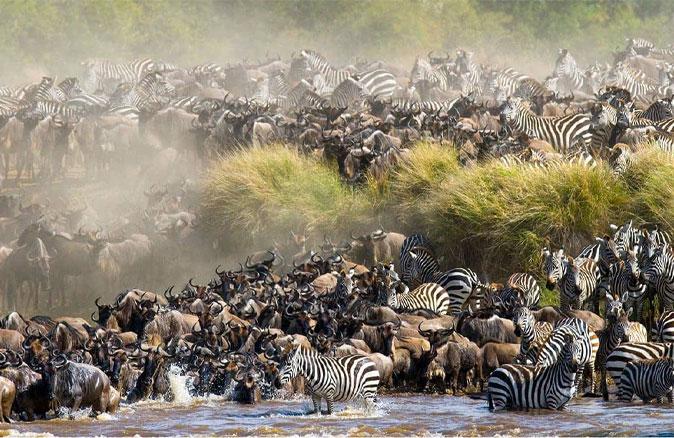
The Great Wildebeest Migration is arguably one of the most extraordinary wildlife spectacles in the world. Every year, vast numbers of wildebeest, accompanied by zebras and gazelles, move across the greater Serengeti-Mara ecosystem in search of fresh grazing and water.
Tanzania’s Serengeti National Park provides some of the most remarkable opportunities to witness this natural movement.
The migration is not a single event taking place at one location. It is a continuous seasonal movement influenced by rainfall, grazing conditions and the availability of water.
Depending on the time of year, visitors may witness large herds moving across the southern Serengeti and Ndutu plains, travelling through the central Serengeti or gathering around the northern Serengeti and Mara River.
River crossings can be particularly dramatic. Wildebeest gather along riverbanks before attempting to cross waters where crocodiles may be present. However, crossings are unpredictable and cannot be guaranteed on specific dates.
How to experience the Great Migration:
- Visit the southern Serengeti and Ndutu area during the calving season, generally around January to March, depending on rainfall.
- Explore the central Serengeti for resident wildlife and seasonal migration movements.
- Consider the northern Serengeti when planning around the anticipated Mara River crossing season, generally during the middle and later parts of the year.
- Spend several nights in the relevant migration region rather than changing camps every day.
- Consider a hot-air-balloon safari for a spectacular aerial perspective, subject to weather and availability.
The Serengeti is also an outstanding destination for spotting lions, leopards, cheetahs, elephants, buffalo, hyenas, giraffes and numerous bird species.
Best for: Wildlife enthusiasts, first-time safari visitors, honeymooners, photographers and luxury safari travellers.
2. Descend into the Magnificent Ngorongoro Crater 
The Ngorongoro Crater is one of Tanzania’s most remarkable natural attractions and a highlight of the northern safari circuit.
This enormous volcanic caldera creates a spectacular natural environment where grasslands, woodland, wetlands and a soda lake support an impressive concentration of wildlife.
Descending into the crater offers visitors an opportunity to experience a remarkably diverse wildlife environment within a relatively compact geographical area.
You may encounter lions, elephants, buffalo, zebras, wildebeest, hippos, hyenas and numerous bird species. The crater is also one of the important places to search for the endangered black rhinoceros, although sightings are never guaranteed.
The scenery is equally impressive. The crater rim provides dramatic panoramic views, while the crater floor reveals a combination of open grasslands, woodland patches and wetlands.
Unique experiences at Ngorongoro include:
- Enjoying a full or extended half-day crater game drive.
- Searching for black rhinos with an experienced guide.
- Photographing the crater’s remarkable landscapes.
- Visiting selected Maasai cultural areas through authorised arrangements.
- Exploring the wider Ngorongoro Conservation Area, including Olduvai Gorge and the Ndutu region.
The crater is particularly rewarding for travellers who want varied wildlife encounters without spending several days driving between different habitats.
Best for: First-time safari travellers, families, photographers, wildlife enthusiasts and couples.
3. Climb Mount Kilimanjaro, Africa’s Highest Mountain 
For adventure enthusiasts, climbing Mount Kilimanjaro is one of the most rewarding experiences in Tanzania.
Rising approximately 5,895 metres above sea level, Kilimanjaro is the highest mountain in Africa and one of the world’s most recognisable free-standing mountains.
Unlike many major mountain expeditions, climbing Kilimanjaro does not require technical mountaineering skills on its standard trekking routes. However, it is a demanding high-altitude adventure that requires proper preparation, acclimatisation and professional support.
The mountain features several ecological zones, including cultivated lower slopes, rainforest, heathland, alpine desert and the high-altitude summit environment.
Popular climbing routes include:
- Machame Route: A scenic route popular with trekkers and known for its varied landscapes.
- Lemosho Route: Offers a longer approach and additional time for acclimatisation.
- Marangu Route: A well-established route with hut accommodation.
- Rongai Route: Approaches the mountain from the northern side.
- Northern Circuit: A longer route that provides an extended acclimatisation opportunity.
- Umbwe Route: A steeper and more demanding option for experienced trekkers.
The final summit attempt usually begins during the night, allowing climbers to reach Uhuru Peak around sunrise when conditions permit.
Important preparation: Choose a reputable mountain operator, allow adequate acclimatisation time, use suitable equipment and follow your mountain team’s advice about altitude sickness.
Best for: Adventure seekers, physically prepared travellers, mountain enthusiasts and people looking for a major personal achievement.
4. Explore the Elephant Kingdom of Tarangire National Park 
Tarangire National Park is one of Tanzania’s most rewarding wildlife destinations and an excellent addition to a northern circuit safari.
The park is particularly famous for its large elephant populations, ancient baobab trees and seasonal wildlife concentrations around the Tarangire River.
During the dry season, animals from surrounding areas gather around available water sources, creating excellent game-viewing opportunities.
The park offers a distinctive safari landscape compared with the open plains of the Serengeti.
Visitors may encounter elephants, lions, leopards, giraffes, zebras, wildebeest, buffalo, various antelope species and an impressive diversity of birds.
The giant baobab trees provide a beautiful photographic backdrop and contribute to the park’s distinctive identity.
Unique Tarangire experiences include:
- Watching elephant herds moving between ancient baobab trees.
- Enjoying morning and afternoon game drives.
- Photographing seasonal wildlife concentrations.
- Exploring riverine habitats and open savannah.
- Enjoying a quieter safari atmosphere in suitable areas and seasons.
Tarangire can be combined with Lake Manyara, Ngorongoro and Serengeti to create a rewarding northern Tanzania safari.
Best for: Elephant lovers, wildlife photographers, families and safari enthusiasts.
5. Experience a Hot-Air Balloon Safari over the Serengeti
A hot-air balloon safari offers a completely different perspective of Tanzania’s wilderness.
Imagine floating quietly above the Serengeti as the early morning sun illuminates the endless plains, winding rivers and scattered acacia trees.
From the air, you may observe herds of wildebeest, zebras, giraffes and elephants moving through their natural environment.
The experience usually begins before sunrise with a transfer to the launch site and a safety briefing. After the flight, many operators arrange a special breakfast in the bush, subject to the package and location.
Balloon safaris are particularly popular during the Great Migration, although they can also be enjoyed outside the migration season.
Why include this experience?
- Enjoy exceptional aerial photography.
- Appreciate the scale of the Serengeti ecosystem.
- Experience a peaceful sunrise over the wilderness.
- Celebrate a honeymoon, anniversary or special occasion.
- Add a memorable luxury experience to a conventional game-drive safari.
Balloon flights are weather-dependent and attract an additional charge. Confirm the launch location, transfer arrangements, flight duration and inclusions before booking.
Best for: Honeymooners, luxury travellers, photographers and visitors celebrating special occasions.
6. Discover the Flamingos and Extraordinary Landscapes of Lake Natron 
Lake Natron is one of Tanzania’s most unusual natural attractions.
Located in northern Tanzania, near the Kenyan border, the lake is famous for its striking alkaline waters, volcanic surroundings and importance as a breeding habitat for lesser flamingos.
The shallow lake, changing colours and dramatic surrounding landscapes create a distinctive environment unlike the conventional safari scenery of the Serengeti.
Large concentrations of lesser flamingos use the wider Lake Natron area for breeding when environmental conditions are suitable.
Visitors can enjoy:
- Scenic exploration of the lake and surrounding landscapes.
- Birdwatching and flamingo photography.
- Guided walks to selected waterfalls.
- Views of the dramatic volcanic terrain.
- Cultural experiences with local communities, where appropriately organised.
- Photography of Ol Doinyo Lengai, the remarkable active volcano overlooking the region.
Lake Natron is also associated with Ol Doinyo Lengai, whose name is commonly translated as Mountain of God in the Maasai language.
The area is remote and can be challenging to access. Visitors should use experienced local guides, suitable vehicles and carefully planned accommodation arrangements.
Best for: Birdwatchers, photographers, adventure travellers and visitors interested in unusual natural environments.
7. Explore the Historic Streets of Stone Town, Zanzibar 
Stone Town is one of East Africa’s most fascinating historic destinations and a highlight of a Zanzibar holiday.
Its narrow streets, historic buildings, carved wooden doors and distinctive Swahili architecture reflect centuries of interaction between African, Arab, Persian, Indian and European trading communities.
Walking through Stone Town is like exploring a living historical museum.
You can discover:
- The Old Fort and its surrounding cultural spaces.
- The House of Wonders area, subject to current access arrangements.
- The former slave market and Anglican Cathedral historical site.
- The Sultan’s Palace Museum, subject to opening arrangements.
- Traditional carved wooden doors and historic merchant houses.
- Darajani Market and local trading streets.
- Forodhani Gardens and its famous evening food atmosphere.
Stone Town’s history is complex and includes the Indian Ocean slave trade. A guided heritage walk can help visitors understand this difficult history alongside Zanzibar’s maritime trade, architecture and cultural development.
UNESCO recognises Stone Town as a World Heritage Site because of its distinctive historic urban character and cultural significance.
Best for: History enthusiasts, cultural travellers, photographers, couples and first-time Zanzibar visitors.
8. Explore Zanzibar’s Spice Plantations and Discover the Spice Islands 
Zanzibar is widely associated with cloves, cinnamon, nutmeg, black pepper, vanilla and other aromatic spices.
A guided spice farm visit offers an opportunity to discover the agricultural traditions that helped shape Zanzibar’s international reputation as the Spice Islands.
During a typical excursion, visitors can learn how spices grow, smell and taste selected fresh ingredients, and discover how they are used in Swahili cooking and traditional household practices.
You may encounter:
- Clove trees.
- Cinnamon bark.
- Fresh vanilla pods.
- Nutmeg.
- Black pepper.
- Cardamom.
- Turmeric.
- Tropical fruits and medicinal plants.
The experience often includes explanations of traditional food preparation and the importance of agriculture in Zanzibar’s history.
A spice tour is especially rewarding when combined with Stone Town sightseeing and a beach holiday.
Best for: Food lovers, families, cultural travellers and anyone interested in the history of Zanzibar.
9. Swim, Snorkel and Explore the Marine World Around Zanzibar
Zanzibar’s coastline is among Tanzania’s most attractive holiday environments.
The island’s turquoise waters, coral reefs, white-sand beaches and traditional fishing communities create opportunities for a variety of marine activities.
Depending on location, weather, tides and operator arrangements, visitors can enjoy:
- Snorkelling around suitable coral reef areas.
- Scuba diving with qualified dive operators.
- Traditional dhow excursions.
- Kayaking and selected water sports.
- Sandbank excursions at suitable tides.
- Sunset sailing.
- Marine conservation and educational experiences.
Mnemba Atoll is particularly well known for marine excursions and diving opportunities.
Other coastal areas also offer beautiful swimming and snorkelling environments.
Responsible marine tourism is important. Choose operators who follow appropriate wildlife-viewing practices, avoid damaging coral and do not encourage visitors to touch or feed marine animals.
Best for: Beach lovers, honeymooners, divers, snorkellers and families.
10. Visit Mafia Island and Experience Its Remarkable Marine Life 
For travellers looking beyond Zanzibar, Mafia Island offers a quieter and distinctive Indian Ocean experience.
Located south of Zanzibar, Mafia Island is known for its marine environments, diving opportunities, relaxed atmosphere and Mafia Island Marine Park.
The island is particularly famous for seasonal opportunities to encounter whale sharks in the surrounding waters.
Whale sharks are gentle filter-feeding fish, not whales. Encounters depend on seasonal conditions and animal movements, and sightings cannot be guaranteed.
Other experiences include:
- Snorkelling and diving.
- Exploring coral reefs.
- Boat trips around the island.
- Discovering coastal villages.
- Enjoying secluded beaches.
- Learning about marine conservation.
- Exploring the surrounding archipelago.
Mafia is especially appealing to visitors who prefer a quieter island holiday rather than the busier atmosphere of some Zanzibar beach destinations.
Best for: Divers, marine enthusiasts, couples, photographers and travellers seeking tranquillity.
11. Discover the Chimpanzees of Gombe Stream National Park 
Gombe Stream National Park is one of Tanzania’s most fascinating wildlife destinations.
Situated along the shores of Lake Tanganyika, Gombe is internationally recognised for its chimpanzee research history and remarkable forest ecosystem.
The park became particularly famous through the pioneering work of Dr Jane Goodall, whose long-term observations transformed scientific understanding of wild chimpanzees.
Today, visitors can participate in guided chimpanzee trekking experiences, subject to park rules, permits and current conditions.
Walking through the forest with an experienced ranger offers an opportunity to observe chimpanzees in their natural environment.
You may also encounter other primates, forest birds, butterflies and spectacular lakeside scenery.
What makes Gombe unique?
- Guided chimpanzee tracking.
- Forest hiking and nature photography.
- Opportunities to learn about primate research and conservation.
- Scenic views across Lake Tanganyika.
- Exploration of forest streams and waterfalls.
Chimpanzee trekking requires patience and suitable physical preparation. Wildlife sightings are not guaranteed, and visitors must follow ranger instructions and viewing-distance requirements.
Best for: Wildlife enthusiasts, primate lovers, researchers, photographers and adventurous travellers.
12. Experience Chimpanzee Trekking in Mahale Mountains National Park 
Mahale Mountains National Park is another extraordinary destination for travellers interested in chimpanzees and remote wilderness.
Located on the shores of Lake Tanganyika in western Tanzania, Mahale combines forested mountains, beautiful beaches and a rich variety of wildlife.
The park is famous for its habituated chimpanzee communities and guided trekking opportunities.
The experience involves walking through tropical forest with trained park guides to locate chimpanzee groups.
Unlike a conventional savannah safari, chimpanzee trekking offers a more immersive forest adventure.
Other activities include:
- Forest hiking.
- Birdwatching.
- Lakeside relaxation.
- Kayaking and boat excursions where available.
- Snorkelling under suitable conditions.
- Exploring scenic forest trails.
- Photography of the mountain and lake landscapes.
Mahale is relatively remote, and reaching it generally requires careful flight and boat-transfer arrangements.
It is best suited to travellers who want a specialist wildlife experience rather than a short addition to an ordinary northern circuit safari.
Best for: Primate enthusiasts, nature lovers, luxury adventure travellers and experienced safari visitors.
13. Discover the Ancient History of Olduvai Gorge
Olduvai Gorge is one of the world’s most important archaeological and palaeoanthropological sites.
Located within the wider Ngorongoro Conservation Area, it is particularly significant for discoveries that have helped researchers understand early human evolution and prehistoric environments.
The area has produced important fossil and archaeological evidence, making it a fascinating destination for visitors interested in science, anthropology and African history.
A visit can include:
- Exploring the museum and interpretation displays.
- Learning about significant fossil discoveries.
- Understanding the work of researchers who studied the region.
- Discovering the relationship between ancient landscapes and human evolution.
- Viewing the dramatic gorge scenery.
Olduvai Gorge can be incorporated into a northern Tanzania safari, particularly when travelling between Ngorongoro and the Serengeti.
Best for: History enthusiasts, educational travellers, families with older children and anyone interested in human origins.
14. Experience Traditional Maasai Culture and Community Life 
Tanzania offers opportunities to learn about the Maasai, one of East Africa’s best-known pastoral communities.
Maasai communities live across parts of northern Tanzania and southern Kenya, with traditions connected to cattle keeping, pastoral livelihoods, beadwork, music, dance and community identity.
A respectful cultural visit can provide insights into:
- Traditional pastoral lifestyles.
- Maasai beadwork and craftsmanship.
- Cultural music and dance.
- Traditional housing and settlement organisation.
- The importance of cattle in pastoral livelihoods.
- Contemporary challenges involving education, land, conservation and changing livelihoods.
Cultural visits should be organised with participating communities rather than treating local people as tourist attractions.
Before visiting, ask about photography permissions, community arrangements and how the activity benefits local participants.
It is also important to understand that Maasai communities are not all identical. Traditions and daily life vary, and communities continue to adapt to modern circumstances.
Best for: Cultural travellers, families, responsible tourism enthusiasts and visitors seeking a deeper understanding of Tanzania.
15. Visit a Chagga Coffee Farm and Waterfall Around Mount Kilimanjaro 
The foothills of Mount Kilimanjaro offer a beautiful opportunity to explore Chagga culture, local agriculture and traditional coffee production.
The Chagga people have a long association with the mountain’s fertile slopes, where coffee, bananas and other crops form part of local farming systems.
A guided village experience around Moshi or the mountain foothills can introduce visitors to:
- Traditional coffee cultivation.
- Coffee harvesting and processing.
- Roasting and preparing local coffee.
- Banana farming.
- Traditional foods.
- Local village life.
- Waterfall walks in suitable areas.
Some excursions combine coffee experiences with visits to waterfalls, forest environments and viewpoints around Kilimanjaro.
This is an excellent way to explore Tanzania beyond its wildlife parks.
Best for: Food enthusiasts, cultural travellers, families, photographers and travellers preparing for a Kilimanjaro trek.
16. Explore the Remote Wilderness of Ruaha National Park
Ruaha National Park is one of Tanzania’s most rewarding destinations for travellers seeking a more remote safari experience.
Located in southern Tanzania, the park is known for its expansive wilderness, rugged landscapes, baobab trees and significant wildlife populations.
Ruaha offers a different atmosphere from the busier northern safari circuit.
The Great Ruaha River and its associated habitats are particularly important during the dry season, when wildlife gathers around available water.
Possible sightings include:
- Elephants.
- Lions.
- Leopards.
- African wild dogs.
- Giraffes.
- Zebras.
- Buffalo.
- Various antelope species.
- Numerous birds.
The park is especially attractive to experienced safari visitors and photographers looking for expansive landscapes and opportunities to explore a less conventional safari destination.
Best for: Wildlife enthusiasts, photographers, experienced safari travellers and visitors seeking remote luxury camps.
17. Explore Nyerere National Park and Enjoy a Boat Safari

The river and its associated lakes, channels and wetlands create opportunities for safari activities that differ from conventional vehicle-based game drives.
One of the most distinctive experiences is a boat safari.
From the water, visitors can observe hippos, crocodiles, waterbirds and other wildlife along the riverbanks.
Depending on camp location and park regulations, other experiences may include:
- Guided boat excursions.
- Game drives.
- Selected walking safaris.
- Birdwatching.
- Photography.
- Exploring the park’s riverine environments.
Nyerere is an excellent option for travellers who want a safari experience combining different ways of exploring the wilderness.
Best for: Adventure travellers, wildlife photographers, couples and safari enthusiasts seeking variety.
18. Discover the Ancient Baobab Landscapes and Wildlife of Mikumi National Park
Mikumi National Park is another rewarding southern Tanzania destination.
Its open grasslands, wooded areas and distinctive baobab trees create a landscape that is particularly attractive for wildlife photography.
The park is often considered for travellers who want a more accessible southern safari experience, especially when planning journeys from Dar es Salaam.
Visitors may encounter elephants, giraffes, zebras, buffalo, lions and various antelope species.
Mikumi can also form part of a longer itinerary incorporating Udzungwa Mountains National Park or Ruaha.
The park offers an opportunity to explore Tanzania’s wildlife beyond the most famous northern destinations.
Best for: First-time southern circuit visitors, families, photographers and travellers combining wildlife with road trips.
19. Trek Through the Forests and Waterfalls of Udzungwa Mountains 
Udzungwa Mountains National Park is an excellent destination for travellers who enjoy hiking, tropical forests and biodiversity.
The park is part of the Eastern Arc mountain region and is known for its rich forest ecosystems and important primate diversity.
Unlike conventional wildlife parks where game drives dominate, Udzungwa offers a more active exploration experience.
Visitors can enjoy:
- Guided forest hikes.
- Waterfall excursions.
- Birdwatching.
- Scenic viewpoints.
- Nature photography.
- Opportunities to look for endemic and forest-dwelling wildlife.
The Sanje Waterfalls are among the park’s most recognised attractions, offering a rewarding trekking experience for appropriately prepared visitors.
Hiking routes vary in difficulty. Use qualified guides, carry suitable footwear and water, and consider weather conditions before selecting an excursion.
Best for: Hikers, nature lovers, birdwatchers, photographers and active travellers.
20. Explore the Historical Coastal Town of Bagamoyo
Bagamoyo is a historic coastal town north of Dar es Salaam with a fascinating and complex history.
The town was an important centre of Indian Ocean commerce and East African caravan routes. Its history is also closely connected to the nineteenth-century slave trade, colonial-era activities and missionary movements.
A guided historical tour can introduce visitors to:
- Historic buildings.
- Old trading areas.
- Coastal heritage.
- Mission-related historical sites.
- Traditional Swahili architecture.
- Local artistic and cultural activities.
Bagamoyo offers a different type of experience from Tanzania’s wildlife destinations and can be considered as part of a coastal cultural itinerary.
A visit should acknowledge the difficult history associated with the region rather than focusing only on its picturesque streets and architecture.
Best for: History enthusiasts, cultural travellers, photographers and visitors interested in the Swahili coast.
21. Discover the UNESCO Heritage Ruins of Kilwa Kisiwani
For travellers interested in Tanzania’s maritime history, Kilwa Kisiwani is one of the country’s most fascinating heritage destinations.
The island contains archaeological remains of a historic Swahili trading settlement that was once an important centre of Indian Ocean commerce.
The ruins reflect the historical connections between East Africa, Arabia, Persia and wider trading networks.
Visitors can explore remains of historic structures, mosques and other archaeological features through appropriate guided arrangements.
Kilwa Kisiwani is recognised alongside the nearby ruins of Songo Mnara as a UNESCO World Heritage property.
Its relatively remote location makes it particularly appealing to travellers who want to explore lesser-visited historical attractions.
Best for: Heritage enthusiasts, historians, cultural travellers and adventurous visitors.
22. Discover the Ancient Rock Art of Kondoa
The Kondoa Rock-Art Sites offer a fascinating glimpse into the artistic and cultural history of communities that inhabited the region over many centuries.
Located in central Tanzania, the area contains numerous rock shelters with ancient paintings depicting animals, human figures, hunting activities and other aspects of earlier ways of life.
These paintings are historically significant and provide valuable insights into changing social and cultural environments.
A guided visit can help travellers understand the importance of the paintings, their historical context and the need to protect these fragile sites.
Kondoa is particularly rewarding for visitors who want to explore Tanzania’s heritage beyond the famous safari circuit.
Best for: Archaeology enthusiasts, history lovers, cultural travellers and educational groups.
23. Explore Zanzibar’s Beautiful Beaches and Traditional Fishing Villages
Zanzibar’s beaches are among the most attractive in the Indian Ocean.
The island offers a variety of coastal environments, from lively beach destinations to quieter areas where visitors can enjoy a slower pace of life.
Popular beach destinations include:
- Nungwi: Known for its beautiful beaches, restaurants and sunset experiences.
- Kendwa: Popular for its sandy coastline and swimming opportunities.
- Paje: Particularly attractive to kiteboarding enthusiasts and active beach travellers.
- Jambiani: Offers a relaxed atmosphere and opportunities to experience coastal village life.
- Matemwe: Known for its beautiful coastline and proximity to Mnemba Atoll.
- Kiwengwa: Offers a range of beachfront accommodation and resort experiences.
One important consideration is the tide. Some east-coast beaches experience substantial tidal changes that influence swimming and water activities.
A good beach holiday should therefore be planned around the type of experience you prefer, not just the appearance of a beach in photographs.
You can also explore local fishing activities, traditional dhow culture and coastal food experiences through suitable community-led arrangements.
Best for: Honeymooners, families, couples, beach enthusiasts and luxury holiday travellers.
24. Explore Pemba Island and Discover a Quieter Indian Ocean Paradise
Pemba Island is an excellent choice for travellers seeking an alternative to Zanzibar’s more established beach destinations.
Located north of Unguja, the main island of the Zanzibar Archipelago, Pemba is known for its lush vegetation, traditional fishing communities, spice farming and marine environments.
It offers a quieter holiday atmosphere, particularly appealing to travellers who enjoy nature and relaxation.
Experiences can include:
- Scuba diving.
- Snorkelling in suitable reef environments.
- Boat excursions.
- Exploring traditional villages.
- Discovering spice plantations.
- Relaxing at secluded coastal accommodation.
- Exploring the island’s mangroves and natural landscapes.
Pemba can be especially rewarding for couples and travellers looking for a slower-paced island escape.
Best for: Couples, divers, honeymooners, nature lovers and travellers seeking less commercialised coastal experiences.
25. Discover Tanzania’s Local Food, Traditional Markets and Swahili Cuisine
One of the most enjoyable ways to understand Tanzania is through its food.
The country’s cuisine reflects a fascinating combination of African culinary traditions, Indian Ocean trade influences, agricultural practices and regional ingredients.
Tanzania’s food culture varies significantly between inland communities, coastal settlements, major cities and islands.
Some dishes and food experiences worth exploring include:
Ugali: A staple maize-based accompaniment served with vegetables, meat, fish and sauces.
Nyama choma: Grilled meat commonly enjoyed in social settings.
Pilau: Fragrant rice prepared with spices and often served with meat or other accompaniments.
Wali wa nazi: Rice cooked with coconut milk, particularly associated with coastal food traditions.
Zanzibar pizza: A popular street-food speciality prepared with a variety of savoury or sweet fillings.
Mishkaki: Grilled meat skewers commonly sold by street-food vendors.
Chipsi mayai: A popular combination of chips and eggs.
Urojo: A distinctive Zanzibar street-food soup with a mixture of ingredients and flavours.
Octopus curry: A coastal speciality found in parts of Zanzibar.
Mandazi: A popular fried dough snack enjoyed with tea or coffee.
Fresh tropical fruits: Mangoes, pineapples, coconuts, bananas and other seasonal fruits are widely enjoyed.
Food experiences can include market visits, cooking demonstrations, traditional restaurants and guided culinary walks.
Visitors should choose hygienic food establishments, check ingredients when they have allergies and follow appropriate food-safety advice.
Best for: Food lovers, cultural travellers, families and visitors who enjoy exploring local lifestyles.
Other Special Experiences Worth Adding to Your Tanzania Holiday 
Beyond these 25 main attractions, Tanzania has additional experiences that may appeal to travellers with particular interests.
Visit Arusha National Park
Arusha National Park offers a combination of forest, crater landscapes, lakes and views of Mount Meru.
Depending on park regulations and the chosen activity, visitors can enjoy game drives, guided walking safaris, birdwatching and canoe excursions.
It is a useful addition to a northern Tanzania itinerary, particularly for visitors staying in Arusha before or after a longer safari.
Explore Mount Meru
Mount Meru provides a rewarding trekking experience for travellers who want a mountain adventure beyond Kilimanjaro.
The mountain is located within Arusha National Park and offers forest scenery, dramatic ridges and opportunities to observe wildlife during parts of the trek.
Discover Lake Victoria
Lake Victoria is Africa’s largest lake by surface area and offers a different side of Tanzania.
Travellers can explore lakeside communities, local fishing traditions and selected island destinations, depending on their route and available transport.
Experience Traditional Hadzabe Cultural Encounters
The Hadzabe are among Tanzania’s distinctive hunter-gatherer communities, traditionally associated with the Lake Eyasi region.
A carefully organised cultural experience can introduce visitors to aspects of traditional knowledge, hunting and gathering practices, and relationships with the surrounding environment.
These visits should be community-led and respectful of people’s privacy and contemporary lives. They should not encourage visitors to treat a living community as a staged attraction.
Explore Lake Eyasi and the Datoga Community
Lake Eyasi is an interesting destination for travellers looking to understand the cultural diversity of northern Tanzania.
The surrounding region offers opportunities to learn about local livelihoods, traditional crafts and community histories through appropriate guided visits.
Enjoy Birdwatching Across Tanzania
Tanzania is a rewarding destination for birdwatchers because of its varied ecosystems, including wetlands, lakes, grasslands, mountains and tropical forests.
Birdwatching opportunities can be incorporated into Serengeti, Tarangire, Lake Manyara, Ngorongoro, Lake Natron, Ruaha and coastal itineraries.
Specialist birding holidays can be designed around target species, migration periods and preferred habitats.
Read More: East Africa Bird Watching Ideal Itineraries
How to Combine Unique Experiences into a Tanzania Holiday
One of Tanzania’s greatest strengths is the opportunity to combine wildlife, culture, adventure and beach experiences in one holiday.
However, the country is large, and travel between distant destinations can take considerable time. A well-designed itinerary should consider geography, road conditions, domestic flight connections, seasonality and the number of nights available.
Here are some example approaches.
For Luxury Safari Travellers
Combine the Serengeti, Ngorongoro and Tarangire with carefully selected luxury tented camps or lodges.
Consider private game drives where available, fly-in connections, a balloon safari and a Zanzibar beach extension.
Suggested duration: 8–12 days or longer.
For Honeymooners
A Tanzania honeymoon can combine the romance of a luxury safari with the relaxation of an Indian Ocean island.
Consider:
- Three nights in the Serengeti.
- Two nights around Ngorongoro.
- Four or five nights in Zanzibar.
- Private dining or other special experiences offered by your accommodation.
Suggested duration: 9–12 days.
Read: Africa Safari Honeymoon Ideas
For Family Holidays
Families can enjoy Tanzania through carefully selected wildlife destinations, comfortable accommodation and activities appropriate to children’s ages.
Consider Tarangire, Ngorongoro and selected Serengeti areas, followed by a relaxing beach stay.
Check accommodation age restrictions, family-room arrangements, road-transfer durations and activity requirements before confirming.
Suggested duration: 8–12 days.
For Adventure Travellers
Combine a Kilimanjaro trek with a few days exploring Tanzania’s natural landscapes.
Other possibilities include Mount Meru, Udzungwa Mountains, Lake Natron and selected walking experiences in suitable safari areas.
Suggested duration: 10–16 days or longer.
For Culture and History Enthusiasts
Explore Stone Town, spice plantations, Bagamoyo, Kilwa Kisiwani, Kondoa and selected community-led experiences.
A cultural holiday can also include traditional food, coffee farming and local craft experiences.
Suggested duration: 7–12 days, depending on the locations selected.
For Wildlife Photographers
Prioritise longer stays in wildlife-rich areas instead of travelling between several parks every day.
Consider the Serengeti, Ngorongoro, Tarangire, Ruaha and Nyerere, depending on your target species and preferred photographic environment.
Discuss vehicle arrangements, photography equipment, camp location and seasonal wildlife movements before booking.
Suggested duration: 10–14 days or longer.
Suggested Tanzania Holiday and Safari Itineraries
The following are sample routes that can be customised according to your arrival airport, departure airport, travel dates, interests and budget.
Itinerary 1: 5-Day Tanzania Northern Safari Adventure
Day 1: Arrive in Arusha
Arrive in Tanzania and transfer to your accommodation in Arusha. Depending on your arrival time, enjoy a relaxed introduction to the town.
Day 2: Tarangire National Park
Travel to Tarangire for a wildlife safari among its baobab trees, open grasslands and elephant-rich environments.
Day 3: Ngorongoro Conservation Area
Continue towards the Ngorongoro highlands and enjoy the spectacular scenery along the way.
Day 4: Ngorongoro Crater
Descend into the crater for a memorable game drive in one of Africa’s most remarkable wildlife environments.
Day 5: Departure
Return to Arusha or connect to your departure airport, allowing sufficient time for transfers.
This itinerary offers a rewarding introduction to Tanzania, although adding the Serengeti would require more time.
Itinerary 2: 7-Day Serengeti and Ngorongoro Safari
Day 1: Arrive in Arusha.
Day 2: Travel to Tarangire National Park for game viewing.
Day 3: Continue towards the Serengeti through the Ngorongoro Conservation Area.
Day 4: Enjoy morning and afternoon game drives in the Serengeti.
Day 5: Explore another part of the Serengeti according to wildlife movements and your preferred accommodation location.
Day 6: Visit Ngorongoro Crater for an extended game drive.
Day 7: Return to Arusha for departure.
This route is particularly suitable for travellers interested in Tanzania’s classic wildlife destinations.
Explore Detailed: Serengeti-Ngorongoro- Lake Manyara Safaris
Itinerary 3: 10-Day Tanzania Safari and Zanzibar Beach Holiday
Day 1: Arrive in Arusha.
Day 2: Explore Tarangire National Park.
Day 3: Travel towards the Serengeti.
Days 4–5: Enjoy game drives in the Serengeti, with the location selected according to seasonal wildlife movements.
Day 6: Explore Ngorongoro Crater.
Day 7: Connect to Zanzibar by an appropriate flight arrangement.
Day 8: Discover Stone Town and Zanzibar’s spice heritage.
Day 9: Relax on the beach or enjoy an optional marine excursion.
Day 10: Transfer to the airport for departure.
This is an excellent example for travellers who want to experience Tanzania’s wildlife and coastal attractions within one holiday.
Itinerary 4: 12-Day Tanzania Wildlife, Culture and Adventure Holiday
Days 1–2: Arrive in Arusha and explore selected local cultural experiences.
Days 3–4: Enjoy Tarangire and Ngorongoro.
Days 5–7: Explore the Serengeti and its wildlife.
Day 8: Connect to Zanzibar.
Days 9–10: Explore Stone Town, spice plantations and local food experiences.
Day 11: Enjoy a beach or marine activity.
Day 12: Departure.
This itinerary balances wildlife, history, food and coastal relaxation.
Itinerary 5: 14-Day Tanzania Off-the-Beaten-Path Adventure
For returning visitors and travellers seeking something different, consider a southern and western Tanzania itinerary.
Days 1–2: Arrive in Dar es Salaam and connect to the southern safari circuit.
Days 3–5: Explore Nyerere National Park, including suitable boat and vehicle safaris.
Days 6–8: Continue to Ruaha National Park for wildlife exploration.
Days 9–10: Explore Udzungwa Mountains, subject to route logistics.
Days 11–12: Connect towards the coast or another suitable destination.
Days 13–14: Enjoy a coastal extension or return to Dar es Salaam for departure.
This is an illustrative route requiring careful logistical planning. Western Tanzania and destinations such as Gombe and Mahale are better treated as separate specialist extensions because of their remote locations.
Expore: The Best 10 Tanzania Safari Itineraries
When Is the Best Time to Visit Tanzania?
Tanzania is a year-round destination, but the best time to visit depends on the experience you want.
Different regions have different seasonal conditions, and the timing of wildlife movements, rainfall and coastal activities can influence the ideal travel period.
| Period | What to expect |
|---|---|
| January–March | Calving season in the southern Serengeti and Ndutu region is generally associated with this period. |
| April–May | Long rains affect many destinations. Landscapes become green, but some roads and travel arrangements can be challenging. |
| June–October | Generally popular for classic wildlife safaris in many northern and southern destinations, with relatively dry conditions in several regions. |
| November–December | Short rains may occur, with seasonal changes in wildlife distribution and greener landscapes in many areas. |
For the Great Wildebeest Migration: Plan according to the expected location of the herds rather than assuming the migration takes place at one fixed point. River crossings are unpredictable.
For Mount Kilimanjaro: Drier climbing periods are commonly preferred, although mountain weather can change quickly and conditions vary by route and altitude.
For Zanzibar: Beach conditions, rainfall, wind and tides should influence your choice of travel dates and activities.
For whale sharks around Mafia Island: Sightings are seasonal and dependent on marine conditions and animal movements. Confirm current local guidance before planning a dedicated encounter.
For a successful holiday, choose the season according to your main priorities rather than relying on a single best-month recommendation.
How Much Does a Tanzania Holiday Cost?
The cost of a Tanzania holiday depends on several factors, including the destinations visited, accommodation category, length of stay, travel season, group size and transport arrangements.
A short safari using comfortable mid-range accommodation will have a different cost from a luxury fly-in safari combining exclusive Serengeti camps with a private Zanzibar beach retreat.
The main costs to consider include:
- International flights.
- Domestic flights and road transfers.
- Accommodation and meals.
- Safari vehicle and professional guide services.
- National park and conservation-area fees.
- Optional activities such as balloon safaris.
- Mountain climbing permits, guides and associated expedition costs.
- Marine excursions, diving and snorkelling.
- Travel insurance and relevant entry requirements.
- Personal expenses and tips.
When comparing Tanzania safari quotations, check whether park fees, accommodation, meals, transfers and domestic flights are included.
Do not compare packages based on the headline price alone.
For a more detailed cost breakdown, read our dedicated guide:
How Much Does a Tanzania Safari Cost?
https://astuteafricasafaris.com/tanzania-safari-cost/
Is Tanzania Suitable for Families, Couples, Honeymooners and Solo Travellers?
Yes. Tanzania offers different experiences for different types of travellers.
Families: Choose accommodation with appropriate family facilities, suitable activity policies and manageable transfer distances. Wildlife safaris and Zanzibar beach holidays can work particularly well together.
Honeymooners: Consider luxury tented camps, private safari experiences where available, scenic balloon flights and secluded island accommodation.
Solo travellers: Private tours offer flexibility, while suitable shared departures can help manage costs. Confirm the itinerary, accommodation arrangements and transport details.
Adventure travellers: Kilimanjaro, Mount Meru, Udzungwa, Lake Natron and selected walking experiences offer opportunities for active exploration.
Older travellers: Discuss driving distances, walking requirements, room accessibility, altitude considerations and transfer arrangements before booking.
Wildlife photographers: Allow enough time at priority destinations and discuss specialist vehicle requirements with your safari operator.
The most rewarding holiday is one that reflects the needs and interests of the people travelling.
Important Things to Know Before Travelling to Tanzania
Before confirming your Tanzania holiday, consider the following practical issues.
1. Entry requirements
Check the latest visa and entry requirements for your nationality through official Tanzanian immigration channels. Requirements may vary according to nationality and travel circumstances.
2. Travel insurance
Arrange suitable travel insurance covering the activities you intend to undertake. Mountain climbing, remote-area travel and specialist adventure activities may require additional coverage.
3. Health preparation
Consult a qualified travel-health professional before travelling. Ask about appropriate vaccinations, malaria prevention and other precautions relevant to your destinations.
4. Local currency and payments
The Tanzanian shilling is the local currency. Confirm which payment methods are accepted by your accommodation, tour operator and activity providers.
5. Clothing
Pack comfortable safari clothing, suitable walking shoes, sun protection and warmer layers for highland and early-morning safari conditions.
For Zanzibar and other coastal destinations, modest clothing is appropriate when visiting towns and local communities.
6. Photography and cultural respect
Always seek permission before photographing people, particularly in villages and culturally significant areas.
7. Wildlife safety
Follow your guide’s instructions, maintain safe distances from animals and respect all park regulations.
8. Safari booking arrangements
Choose a properly established tour operator, request a written itinerary and quotation, check what is included and excluded, and read the booking terms before paying a deposit.
Frequently Asked Questions About Unique Things to Do in Tanzania
1. What are the most unique things to do in Tanzania?
Some of the most memorable experiences include witnessing the Great Wildebeest Migration, climbing Mount Kilimanjaro, exploring Ngorongoro Crater, enjoying a balloon safari in the Serengeti, discovering Zanzibar’s historic Stone Town, visiting Lake Natron, trekking with chimpanzees in Mahale or Gombe, and experiencing Tanzania’s traditional cultures.
2. Is Tanzania worth visiting beyond the Serengeti?
Absolutely. Tanzania has much more to offer than the Serengeti. Visitors can explore Zanzibar, Mafia Island, Pemba, Mount Kilimanjaro, Ruaha, Nyerere, Lake Natron, Bagamoyo, Kilwa and numerous cultural and historical attractions.
3. How many days are enough to explore Tanzania?
Seven to ten days can provide a rewarding introduction to the northern safari circuit. Ten to fourteen days allow more time for wildlife, culture and beach experiences. Longer holidays are recommended for specialist mountain treks, remote western Tanzania and southern circuit adventures.
4. Can I combine a Tanzania safari with Zanzibar?
Yes. A Tanzania safari and Zanzibar beach holiday is one of the most popular ways to experience the country. You can combine the Serengeti, Ngorongoro or Tarangire with Stone Town and Zanzibar’s beaches.
5. What is the best month to visit Tanzania?
The best month depends on your interests. June to October is popular for many classic wildlife safaris, January to March is associated with the southern Serengeti calving season, and different periods offer suitable conditions for mountain trekking and beach holidays.
6. Is Tanzania suitable for a first-time African safari?
Yes. Tanzania offers well-established safari destinations, experienced guides, a range of accommodation and different transport options. The northern circuit is a popular starting point for first-time visitors.
7. Is Tanzania expensive to visit?
Tanzania can accommodate different travel budgets. The final cost depends on accommodation, park fees, transportation, activities, season and length of stay. A carefully planned mid-range safari can provide a rewarding experience without requiring an ultra-luxury budget.
8. What is the difference between a Kenya safari and a Tanzania safari?
Both countries offer exceptional East African wildlife experiences and share the greater Serengeti-Mara ecosystem.
Kenya is particularly attractive for combining the Maasai Mara, Amboseli, Samburu, Laikipia and the Indian Ocean coast. Tanzania offers the Serengeti, Ngorongoro Crater, Tarangire, Kilimanjaro, extensive southern wilderness areas and Zanzibar.
The best choice depends on your interests, available time, budget and preferred destinations. Combining both countries can also create an exceptional multi-country East African holiday.
9. Can I visit Tanzania and Kenya on the same holiday?
Yes. Tanzania and Kenya can be combined into one East African safari. Popular combinations include the Maasai Mara and Serengeti, Amboseli and Kilimanjaro views, or a longer journey incorporating northern Tanzania and Kenya’s Indian Ocean coast.
Cross-border travel arrangements, immigration requirements and transport logistics should be planned in advance.
10. Is Zanzibar part of Tanzania?
Yes. Zanzibar is a semi-autonomous part of the United Republic of Tanzania. It consists of the main islands of Unguja and Pemba and several smaller islands.
11. What are the best unusual places to visit in Tanzania?
Lake Natron, Mahale Mountains, Gombe Stream, Udzungwa Mountains, Kondoa Rock-Art Sites, Kilwa Kisiwani and Pemba Island are excellent options for travellers seeking experiences beyond the conventional northern safari circuit.
12. Can I climb Mount Kilimanjaro and enjoy a safari on the same holiday?
Yes. A Kilimanjaro expedition can be combined with a safari in Tarangire, Serengeti or Ngorongoro. However, allow sufficient time for the climb, recovery and travel between destinations.
13. Is Tanzania good for a honeymoon?
Tanzania is an excellent honeymoon destination because it combines luxury wildlife camps, spectacular landscapes, private experiences where available and beautiful Indian Ocean beaches.
A safari followed by Zanzibar is particularly appealing for couples.
14. Can I arrange a personalised Tanzania holiday?
Yes. A personalised holiday can be designed around your travel dates, group size, preferred experiences, accommodation category and budget. You can combine wildlife, adventure, cultural activities and beach relaxation in one itinerary.
Plan Your Unique Tanzania Holiday with Astute Africa Safaris
Tanzania is a destination where extraordinary experiences come together. From the wildlife-rich plains of the Serengeti to the breathtaking Ngorongoro Crater, the towering peaks of Kilimanjaro, the forests of Mahale and the tropical beaches of Zanzibar, every region offers something different.
You can spend your mornings watching elephants move across the savannah, discover the traditions of local communities in the afternoon and end your holiday enjoying the warm waters of the Indian Ocean.
You do not need to visit every destination in one trip. The secret to a rewarding Tanzania holiday is selecting the experiences that matter most to you and allowing enough time to enjoy them.
At Astute Africa Safaris, we help travellers explore personalised safari and holiday experiences across Tanzania and East Africa.
Whether you are interested in:
- A classic Serengeti and Ngorongoro safari.
- A luxury Tanzania wildlife holiday.
- A Great Wildebeest Migration safari.
- A Tanzania safari and Zanzibar beach combination.
- A family-friendly Tanzania holiday.
- A Mount Kilimanjaro climbing adventure.
- A cultural and historical Tanzania experience.
- A multi-country Kenya and Tanzania safari.
We can help you explore suitable destinations, accommodation options, travel arrangements and itinerary ideas.
Our approach begins with understanding what you want from your holiday. We then work towards designing an itinerary around your interests, available time and preferred budget.
Start Planning Your Tanzania Adventure
Your African holiday should be more than a list of places visited. It should be a collection of meaningful experiences, extraordinary landscapes, wildlife encounters and memories that remain with you long after your journey ends.
Explore Tanzania and East Africa with Astute Africa Safaris.
Read: Safari Booking and Cancellation Policy
Email: bookings@astuteafricasafaris.com
Explore: East Africa Visa Requirements
WhatsApp: +254 762 663 272
Request a personalised Tanzania safari and holiday quotation.
Share your intended travel dates, number of travellers, preferred experiences and accommodation budget. Let us help you explore a Tanzania holiday designed around the journey you want to experience.
Leave a comment:
You must be logged in to post a comment.

Comment 01
Astute Africa Safaris,
11 November, 2026REF: Crafting Your Bespoke African Safari Experience with Astute Africa Safaris
Jambo,
Thank you for your interest in exploring the wonders of Africa with Astute Africa Safaris. We pride ourselves on creating immersive, tailor-made journeys that align perfectly with your personal interests, pace, and travel aspirations.
Because every safari is a unique narrative, we do not believe in “one-size-fits-all” pricing. To ensure we provide you with an accurate and competitive quotation that reflects the specific lodges, wildlife experiences, and logistical arrangements you desire, we invite you to connect with our team for a personalized consultation.
Please contact us at info@astuteafricasafaris.com, Whatsapp +254762663272 or fill the inquiry form with a few details regarding your preferred travel dates, group size, and specific interests (e.g., photography, luxury relaxation, or adventure trekking). Once we have these details, we will curate a comprehensive proposal designed specifically for you.
We look forward to the possibility of helping you plan an unforgettable journey.
Warm regards,
Team Astute Africa Safaris