
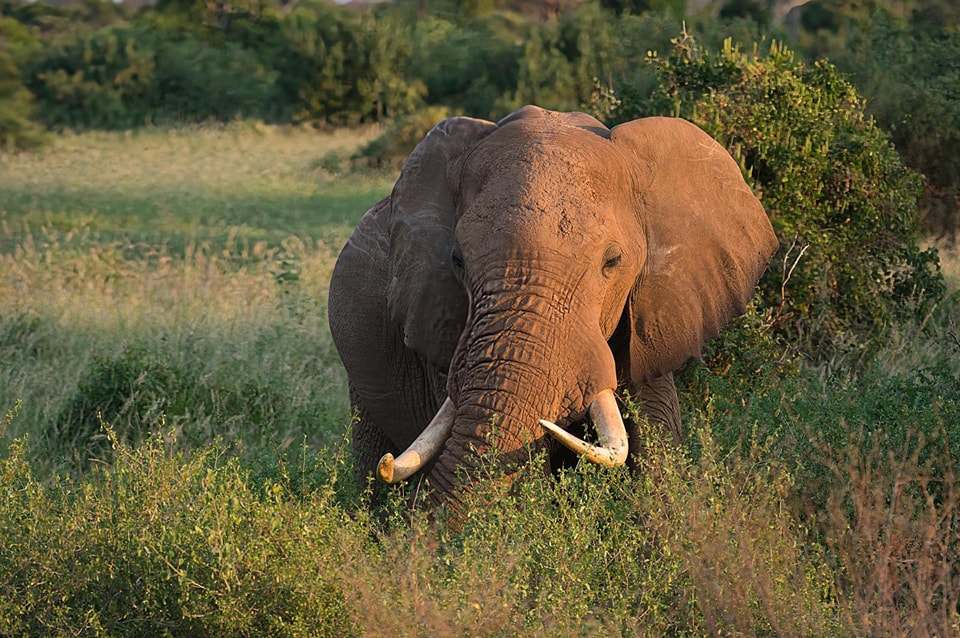

- 632 Views
- 4 Min Read
- (2) Comments
The transition from the turquoise waters of the Indian Ocean to the rust-red dust of the African savannah is one of the most iconic travel experiences in Kenya. For travelers stationed at the coastal hubs of Mombasa, Diani, Malindi, or Watamu, a safari to Tsavo from Mombasa represents the most accessible and profound encounter with Africa’s “Big Five.” Spanning over 22,000 square kilometers, the Tsavo ecosystem is divided into Tsavo East and Tsavo West by the A109 highway and the Standard Gauge Railway (SGR). A safari to Tsavo from Mombasa (the Kenyan coast) is the premier wildlife excursion for coastal tourists, offering a seamless blend of beach relaxation and high-octane wilderness exploration through the largest protected area in Kenya.
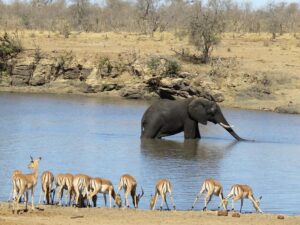
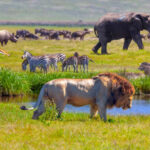
Elephant at Aruba Dam as often spotted while on safari to Tsavo from Mombasa
The Geography of Tsavo: East vs. West
When planning a safari from the coast, understanding the distinction between the two parks is vital. Tsavo East is characterized by flat, semi-arid plains and the Yatta Plateau, the world’s longest lava flow. It is famous for its “red elephants,” which gain their color from dusting themselves in the park’s volcanic soil. Conversely, Tsavo West is a more mountainous and diverse landscape, featuring the Mzima Springs, ancient lava flows like the Shetani Flow, and dense woodlands.
The distance from the coast varies depending on your starting point:
- From Mombasa/Diani: Access is typically through the Bachuma Gate for Tsavo East (approx. 2-3 hours) or Mtito Andei for Tsavo West.
- From Malindi/Watamu: Access is often via the Sala Gate, which provides a direct route into the heart of Tsavo East (approx. 2 hours).
Logistics and Transportation on safari to Tsavo from Mombasa: The SGR Revolution
The Standard Gauge Railway (SGR) remains the most efficient way to bridge the gap between the coast and the wild. The “Madaraka Express” connects Mombasa to Voi (the gateway to Tsavo East) and Mtito Andei (the gateway to Tsavo West).
The probability P of spotting a specific predator can be modeled by the density of prey and the time spent on game drives. If D is the density of animals per square kilometer and T is the duration of the safari in hours, the encounter rate E can be simplified as: E=∫0T(D⋅v)dt where v is the average velocity of the safari vehicle. This mathematical approach highlights why longer stays (3 days vs. 1 day) significantly increase the likelihood of rare sightings.
Safari to Tsavo from Mombasa; Itineraries from Diani and Mombasa (inquire)
Diani Beach, located south of Mombasa, is a primary starting point for multi-day excursions. Most operators offer 2-day/1-night or 3-day/2-night packages.
- Day 1: The Departure: Early morning pickup (around 05:00 AM) to beat the Mombasa traffic. Entry into Tsavo East via Bachuma Gate. Mid-morning game drive followed by lunch at a lodge like Ashnil Aruba or Voi Safari Lodge.
- Day 2: Tsavo West Transition: A drive toward Tsavo West, visiting the Rhino Sanctuary. The sanctuary is a fenced area dedicated to the protection of the endangered black rhino.
- Day 3: Mzima Springs and Return: A visit to Mzima Springs, where millions of gallons of crystal-clear water emerge from the ground, filtered through volcanic rock. You can view hippos and crocodiles from an underwater glass tank.
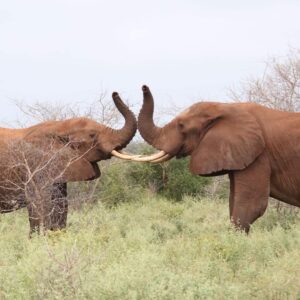
Safari to Tsavo from Mombasa is popular for the Red elephants at Tsavo East
The Malindi and Watamu Connection
For those staying in the northern coastal towns of Malindi and Watamu, the Sala Gate entrance offers a unique advantage. The road from Malindi to Tsavo East has been significantly improved, allowing for “Day Trip” safaris, though overnight stays are highly recommended to experience the “Golden Hour” of wildlife activity.
Wildlife Highlights: The Big Five and Beyond
Tsavo is home to all of the “Big Five”: Lion, Leopard, Elephant, Buffalo, and Rhino. However, it is also a haven for specialized northern species like the Somali Ostrich, Gerenuk, and Hirola. The birdlife is equally spectacular, with over 500 recorded species, making it a paradise for ornithologists during the migratory season (November to April).
Accommodation Options in 2026
The lodging landscape in Tsavo has evolved to include ultra-luxury eco-camps and budget-friendly campsites.
- Luxury: Finch Hattons (Tsavo West) offers a colonial-style elegance with views of Mt. Kilimanjaro.
- Mid-Range: Satao Camp (Tsavo East) provides an authentic “under canvas” experience overlooking a busy watering hole.
- Budget: KWS (Kenya Wildlife Service) bandas offer clean, self-catering options for the adventurous traveler.
Essential Travel Tips for 2026
- Park Fees: As of 2026, KWS has implemented a cashless payment system via the eCitizen portal. Ensure your tour operator has pre-cleared these fees.
- Packing: Light cotton clothing, a wide-brimmed hat, high-SPF sunscreen, and binoculars are essential. The temperature in Tsavo can reach 35∘C (95∘F) during the day.
- Best Time to Visit: The dry seasons (June to October and January to February) are best for wildlife viewing as animals congregate around water sources.
Conservation and Sustainability
Visitors on safari to Tsavo from Mombasa are encouraged to support “Low Impact” tourism. The Tsavo Trust and the Sheldrick Wildlife Trust operate extensively in this region, focusing on anti-poaching and the rehabilitation of orphaned elephants. Many lodges now incorporate solar power and water recycling systems to minimize their ecological footprint in this fragile environment.
Leave a comment:
You must be logged in to post a comment.

Comments (2)
Tsavo National Park Safari: Kenya’s Largest Wilderness Adventure - Astute Africa Safaris,
04 April, 2026[…] a Tsavo East safari requires an appreciation for the “wild” aspect of the wilderness. Because the park is […]
Astute Africa Safaris,
05 May, 2026REF: Crafting Your Bespoke African Safari Experience with Astute Africa Safaris
Jambo,
Thank you for your interest in exploring the wonders of Africa with Astute Africa Safaris. We pride ourselves on creating immersive, tailor-made journeys that align perfectly with your personal interests, pace, and travel aspirations.
Because every safari is a unique narrative, we do not believe in “one-size-fits-all” pricing. To ensure we provide you with an accurate and competitive quotation that reflects the specific lodges, wildlife experiences, and logistical arrangements you desire, we invite you to connect with our team for a personalized consultation.
Please contact us at info@astuteafricasafaris.com, Whatsapp +254762663272 or fill the inquiry form with a few details regarding your preferred travel dates, group size, and specific interests (e.g., photography, luxury relaxation, or adventure trekking). Once we have these details, we will curate a comprehensive proposal designed specifically for you.
We look forward to the possibility of helping you plan an unforgettable journey.
Warm regards,
Team Astute Africa Safaris