

- 1.0k Views
- 13 Min Read
- (2) Comments
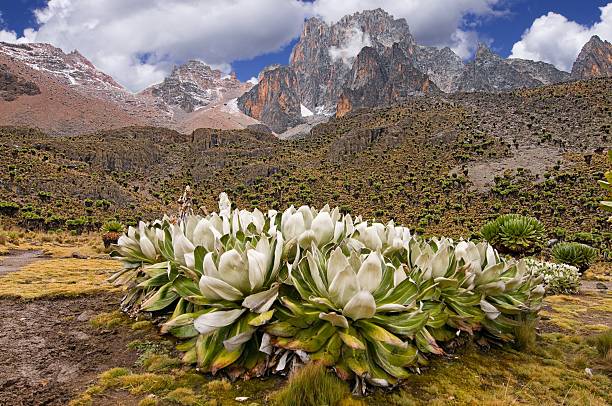
Kenya remains the quintessential destination for the classic African safari, offering a tapestry of ecosystems ranging from the savannahs of the Great Rift Valley to the snow-capped peaks of Mount Kenya. Planning a seven-day expedition (7-Day Kenya Safari Tour Itinerary) requires a strategic balance between travel time and wildlife immersion. From experience, the key to a successful safari is minimizing transit time to maximize game-viewing opportunities. (Get your customized itinerary)
Top Attractions for a 7-Day Kenya Safari tour Itinerary
Designing a seven-day safari in Kenya requires a strategic balance between iconic wildlife reserves, cultural immersion, and logistical efficiency. The most compelling itineraries prioritize the Maasai Mara National Reserve, which remains the crown jewel of East African wildlife viewing. Renowned for its high density of predators and the spectacular annual wildebeest migration, the Mara offers an unparalleled safari experience that serves as the cornerstone of any Kenyan journey.
Nairobi: The Gateway and Conservation Hub
A well-structured seven-day trip typically begins in Nairobi. Authoritative travel texts emphasize that Nairobi is not merely a transit point but a destination in its own right, offering unique conservation experiences such as the Sheldrick Wildlife Trust, where orphaned elephants are rehabilitated, and the Giraffe Centre. These sites provide critical context regarding Kenya’s commitment to wildlife preservation before travelers head into the bush.
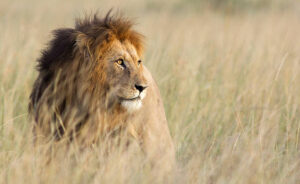
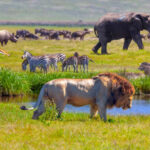
A large lion in high grass at Masai Mara, Kenya during a 7-Day Kenya Safari Tour Itinerary
The Maasai Mara National Reserve
The Maasai Mara is essential for any seven-day itinerary. As noted in comprehensive wildlife guides, the reserve’s rolling grasslands provide the quintessential backdrop for viewing the “Big Five”—lion, leopard, elephant, buffalo, and rhinoceros. Visitors should allocate at least three days here to maximize the probability of witnessing predator-prey interactions, particularly along the Mara River, which serves as a dramatic focal point during the migration season.
Integrating Regional Diversity
For those looking to expand their itinerary beyond Kenya, the proximity of the Serengeti in Tanzania allows for a combined experience within a seven-day window, provided there is careful planning. However, for a Kenya-focused trip, many experts suggest substituting the Serengeti with Amboseli National Park. Amboseli is world-famous for its spectacular views of Mount Kilimanjaro and its large herds of free-ranging elephants, offering a distinct ecological contrast to the savannah of the Mara.
Lake Nakuru and the Great Rift Valley
To round out a seven-day itinerary, including a stop at Lake Nakuru National Park is highly recommended. Located within the Great Rift Valley, this park is celebrated for its birdlife, particularly the flamingos that once turned the lake pink, and as a sanctuary for both black and white rhinoceros. The dramatic escarpments of the Rift Valley provide a scenic transition between the highland forests and the lowland plains, ensuring a diverse photographic portfolio for the traveler.
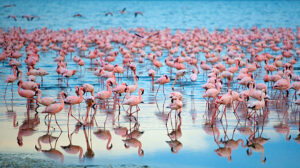
late evening flamingoes feeding near shore Lake Nakuru, Kenya spotted during a 7-Day Kenya Safari Tour Itinerary
Customizing Your 7-Day Kenya Safari Tour Itinerary
Customizing a 7-day Kenya safari tour itinerary requires a strategic balance between travel logistics and the specific wildlife or cultural experiences you prioritize. Because Kenya’s geography is vast, the most authoritative travel literature suggests that for a trip of only one week, you must prioritize depth over breadth to avoid spending your entire vacation in transit. To create a truly unique experience, you should move beyond the standard “circuit” by integrating specialized activities such as walking safaris, community-led conservation visits, or private conservancy stays, which offer a more intimate connection to the landscape than the high-traffic areas of the Maasai Mara National Reserve.
Strategic Planning for a 7-Day Kenya Safari Tour Itinerary
When planning a short-duration safari, the “Golden Rule” of East African travel is to minimize internal travel time. According to experts in African travel logistics, focusing on two distinct ecosystems—such as the Laikipia Plateau and the Maasai Mara—allows for a deeper immersion than attempting to visit four or five parks in seven days. By choosing private conservancies, you gain the flexibility to engage in activities prohibited in national parks, such as night game drives to view nocturnal predators, off-road driving for closer wildlife photography, and guided bush walks with local trackers.
Incorporating Specialized Activities
To elevate your seven-day tour, consider the following customization options:
- Conservation Engagement: Dedicate a portion of your trip to visiting a rhino sanctuary or a community-run conservancy. This provides a unique perspective on the human-wildlife conflict and the efforts to mitigate it, which is a central theme in modern conservation literature.
- Cultural Immersion: Rather than a brief “village visit,” look for opportunities to spend time with local pastoralist communities in a way that respects their autonomy and daily routines. This is often best facilitated by high-end operators who maintain long-standing relationships with local elders.
- Alternative Transport: For a unique perspective, incorporate a helicopter transfer or a horseback safari in the northern regions. These methods allow you to access remote areas that are otherwise inaccessible, providing a sense of exclusivity and “sheer luxury” that defines high-end Kenyan travel.
Logistics and Service
For a 7-day Kenya safari tour itinerary or trip, the quality of your guide is the single most important factor in your experience. A highly-credentialed Safari Director can adjust your daily schedule in real-time based on wildlife sightings, weather patterns, and your personal energy levels. When customizing, ensure your itinerary includes a mix of “active” days—such as hiking in cloud forests or tracking wildlife on foot—and “passive” days where you can enjoy the serenity of a private villa or lodge. By focusing on these bespoke elements, you transform a standard tour into a personalized expedition that reflects your specific interests in ecology, photography, or cultural history.
What are the pros and cons of different 7 day Kenya safari Tour Itinerary or routes in Kenya?
The country’s road infrastructure can be challenging, the primary “pro” of a well-planned seven-day route is the ability to focus on high-yield wildlife areas, while the “con” is the inevitable trade-off of missing remote regions due to time constraints.
The Maasai Mara and Rift Valley Route
The most popular seven-day itinerary typically focuses on the Maasai Mara National Reserve and the Great Rift Valley lakes, such as Lake Nakuru or Lake Naivasha.
Pros: The Maasai Mara is arguably the most iconic safari destination in the world, offering the highest probability of witnessing the “Big Five” (lion, leopard, elephant, buffalo, and rhinoceros) and the Great Migration if timed correctly. Including the Rift Valley lakes provides a necessary break from the savannah, offering birdwatching opportunities and a chance to see flamingos and rhinos in a different ecosystem. This route is highly efficient for first-time visitors who want maximum wildlife exposure with relatively manageable transit times between locations.
Cons: The primary disadvantage of this route is the high volume of tourists. During peak seasons, the Mara can become crowded, which may detract from the sense of wilderness solitude. Furthermore, the drive from Nairobi to the Mara can take 5–6 hours on roads that vary in quality, consuming a significant portion of a seven-day window.
The Amboseli and Tsavo Circuit
An alternative 7-day Kenya safari tour itinerary route heads southeast toward Amboseli National Park and Tsavo East/West.
Pros: Amboseli is world-renowned for its spectacular views of Mount Kilimanjaro and its massive elephant herds, which are often easier to photograph against the mountain backdrop than in the dense brush of other parks. Tsavo offers a “wilder,” more rugged experience with vast, less-trafficked landscapes. This route is often preferred by photographers and those who have already visited the Mara and are looking for a different aesthetic experience.
Cons: The wildlife in Tsavo is often more dispersed and harder to spot compared to the concentrated plains of the Mara. Additionally, the heat in the lower-altitude regions of Tsavo can be intense, and the infrastructure for luxury tourism is less concentrated than in the Mara-Nakuru circuit, which may impact the level of comfort for some travelers.
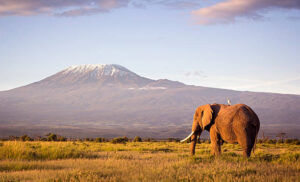
Classic safari scene of a large bull elephant against a Kilimanjaro backdrop at sunrise. Cattle egret visible perched on the elephants back as seen during a 7-Day Kenya Safari Tour Itinerary at Amboseli national park, Kenya.
Best 7 Day Kenya Safari Tour Itinerary
A seven-day safari in Kenya is widely considered the “gold standard” for travelers seeking to witness the sheer density of East African wildlife while balancing travel logistics with immersive wilderness experiences
Option 1: The “Big Five” Classic Circuit (Maasai Mara & Lake Nakuru)
This itinerary focuses on the high-density wildlife areas. You spend three days in the Maasai Mara and two days in Lake Nakuru National Park, with the remainder for transit and Nairobi exploration.
- Why it’s best: It offers the highest probability of seeing the “Big Five” (lion, leopard, elephant, buffalo, and rhino) in a short timeframe.
- What to expect: Vast open plains and the famous rhino sanctuary in Nakuru.
- What you miss: The dramatic elephant-against-mountain photography found in Amboseli and the coastal cultural history of the Swahili coast.
Option 2: The “Elephant & Mountain” Scenic Route (Amboseli & Tsavo)
This route heads south from Nairobi toward the border of Tanzania. You spend three days in Amboseli National Park and three days in Tsavo West.
- Why it’s best: It provides the most iconic photographic backdrops in Africa, specifically the sight of elephants roaming beneath Mount Kilimanjaro.
- What to expect: Red-dust elephants, volcanic landscapes, and the Mzima Springs.
- What you miss: The sheer volume of big cat sightings that the Maasai Mara provides during the migration season.
Option 3: The “Great Rift Valley” Adventure (Samburu & Lake Naivasha)
This northern circuit takes you into the arid, rugged landscapes of Samburu and the lush, bird-rich shores of Lake Naivasha.
- Why it’s best: It offers unique wildlife species not found elsewhere, such as the Reticulated Giraffe, Grevy’s Zebra, and the Somali Ostrich.
- What to expect: A more remote, off-the-beaten-path experience with dramatic riverine forests.
- What you miss: The classic “endless plains” aesthetic of the Mara and the high-density elephant herds of the south.
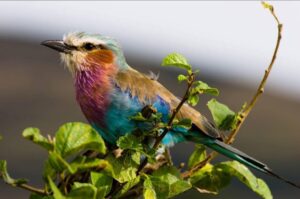
Lilac (Kenya official bird) as seen at Maasai Mara during a 7-Day Kenya Safari Tour Itinerary
Recommended Accommodations for a 7-Day Kenya Safari
Planning a 7-day Kenya safari tour itinerary through the Maasai Mara, Lake Nakuru, Amboseli, and Tsavo requires a strategic selection of lodges and camps that balance proximity to wildlife with the desired level of comfort. Kenya’s tourism infrastructure is well-documented in authoritative travel literature, which categorizes stays into high-end luxury retreats and value-oriented budget options.
Maasai Mara National Reserve
The Maasai Mara is the crown jewel of Kenyan safaris. For luxury, Governor’s Camp remains a classic, offering an authentic tented experience with high-end service located directly in the heart of the reserve. For a more modern luxury aesthetic, Angama Mara provides unparalleled views of the Rift Valley. On the budget end, Manyatta Camp or Rhino Tourist Camp offer comfortable, semi-permanent tented structures that provide essential amenities without the premium price tag associated with internal reserve lodges.
Lake Nakuru National Park
Lake Nakuru is famous for its flamingo populations and rhino sanctuaries. The Sarova Lion Hill Game Lodge is widely regarded as a premier luxury choice, perched on a hill overlooking the lake. For budget travelers, Lake Nakuru Lodge provides a mid-range to budget-friendly experience that keeps visitors within the park boundaries, ensuring early morning access to game drives.
Amboseli National Park
Amboseli is renowned for its iconic views of Mount Kilimanjaro. Tortilis Camp is the gold standard for luxury, offering private conservancy access and exquisite service. For those seeking budget-friendly alternatives, AA Lodge Amboseli or Kibo Safari Camp are highly recommended. These establishments provide solid, reliable service and comfortable tented rooms that are well-suited for the standard 7-day itinerary.
Tsavo East and West National Parks
Tsavo offers vast, rugged landscapes. In Tsavo West, Finch Hattons is the quintessential luxury tented camp, known for its history and refined elegance. For budget travelers, Ngulia Safari Lodge offers a spectacular vantage point for viewing wildlife at the waterhole, providing a classic safari experience at a significantly lower cost than the boutique camps.
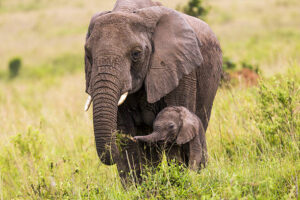
African Elephant and baby during a 7-Day Kenya Safari Tour Itinerary: Eating together in Masai Mara in Kenya. Mother elephant is giving grasses to its baby with its trunk.
What is the cost of 7 Day Kenya Safari Tour Itinerary for both luxury and budget
The cost of a 7-day safari in Kenya is highly variable, influenced by the choice of accommodation, the time of year, and the level of exclusivity desired. Historically, Kenya was considered a more affordable safari destination compared to its neighbors, but recent adjustments to park fees—specifically those implemented in July 2024—have standardized costs across the East African region.
Budget Safari Considerations
A budget-conscious 7-day safari typically relies on group joining tours or mid-range tented camps. In these scenarios, travelers share vehicles and costs, which significantly reduces the daily expenditure. As noted in industry guides, a baseline for a private safari starts at approximately $300 per person per day, though budget group tours can sometimes be found for slightly less by utilizing shared transport and more modest lodging. Over a 7-day period, a budget traveler should anticipate a total cost ranging from $1,800 to $2,500 per person, inclusive of park entry fees, which have risen significantly to support conservation efforts in reserves like the Maasai Mara and Amboseli.
Luxury Safari Considerations
Luxury safaris in Kenya are defined by fly-in packages, stays in high-end boutique lodges or exclusive conservancy camps, and private, customized itineraries. According to travel literature, luxury travelers often opt for internal bush flights to minimize travel time between parks, which adds a premium to the total cost. For a 7-day luxury itinerary, costs can easily escalate to $800 to $3,500+ per person per day. Consequently, a week-long luxury excursion often ranges between $5,600 and $10,500 per person. These packages typically include gourmet dining, private bush guides, and exclusive access to private conservancies that offer a more intimate wildlife viewing experience than the public national parks.
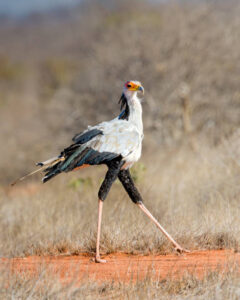
Cute Secretary bird strutting along the path at Tsavo East National Park, Kenya during a 7-Day Kenya Safari Tour Itinerary
Conclusion On Your 7-Day East African Safari Expedition
A 7-Day Kenya Safari Tour Itinerary through the heart of East Africa represents a condensed yet profoundly impactful immersion into one of the world’s most significant ecological theaters. By strategically balancing time between the Maasai Mara National Reserve in Kenya and the Serengeti National Park in Tanzania, travelers can witness the sheer scale of the Great Wildebeest Migration and the unparalleled predator density that defines this region. As noted in authoritative travel literature, the synergy between these two contiguous landscapes allows for a comprehensive wildlife experience that captures the essence of the African savanna, from the dramatic river crossings of the Mara to the vast, open plains of the Serengeti.
Whether you are exploring the cultural depth of Kenya’s diverse communities or focusing on the raw, untamed beauty of the wilderness, a one-week itinerary requires meticulous planning to maximize your exposure to the region’s biodiversity. The success of such a journey lies in the balance between transit and observation; by prioritizing key habitats and leveraging the expertise of local guides, visitors can transform a short timeframe into an iconic adventure. Ultimately, a seven-day tour serves as a powerful introduction to the conservation challenges and natural wonders of East Africa, leaving travelers with a deeper appreciation for the delicate balance of the ecosystem and the vibrant heritage of the people who call these lands home.
Leave a comment:
You must be logged in to post a comment.

Comments (2)
Defining the Safari Experience: Budget vs. Luxury in Kenya - Astute Africa Safaris,
04 April, 2026[…] economic disparity between and defining the Safari Experience Budget vs. Luxury in Kenya these two tiers has widened recently due to shifts in government park […]
Astute Africa Safaris,
05 May, 2026REF: Crafting Your Bespoke African Safari Experience with Astute Africa Safaris
Jambo,
Thank you for your interest in exploring the wonders of Africa with Astute Africa Safaris. We pride ourselves on creating immersive, tailor-made journeys that align perfectly with your personal interests, pace, and travel aspirations.
Because every safari is a unique narrative, we do not believe in “one-size-fits-all” pricing. To ensure we provide you with an accurate and competitive quotation that reflects the specific lodges, wildlife experiences, and logistical arrangements you desire, we invite you to connect with our team for a personalized consultation.
Please contact us at info@astuteafricasafaris.com, Whatsapp +254762663272 or fill the inquiry form with a few details regarding your preferred travel dates, group size, and specific interests (e.g., photography, luxury relaxation, or adventure trekking). Once we have these details, we will curate a comprehensive proposal designed specifically for you.
We look forward to the possibility of helping you plan an unforgettable journey.
Warm regards,
Team Astute Africa Safaris