

- 1.1k Views
- 35 Min Read
- (1) Comment
Planning an African safari often begins with one important question: Should you choose Kenya or Tanzania?
Both destinations offer exceptional wildlife encounters, the Big Five, extraordinary scenery, the Great Wildebeest Migration, beautiful safari lodges and unforgettable opportunities to experience African nature. Yet choosing between a Kenya and Tanzania Safari over the other can significantly affect your travel budget, the wildlife experiences you prioritise, the time spent travelling between parks, your accommodation options and the overall character of your holiday.
Kenya is particularly appealing to travellers who want an accessible safari with diverse landscapes, excellent big-cat viewing, a wide choice of accommodation and convenient connections from Nairobi or the Kenyan coast. Tanzania attracts travellers who dream of the immense Serengeti plains, the spectacular Ngorongoro Crater, elephant-rich Tarangire and the possibility of combining a wilderness adventure with a relaxing Zanzibar beach holiday.
Neither destination is automatically better for every traveller. The best choice depends on when you travel, how many days you have, what you want to see, your accommodation preferences and how much you want to spend.
This guide by Astute Africa Safaris compares Kenya and Tanzania in detail, explains when choosing one over the other makes a meaningful difference, recommends accommodation for different budgets and provides practical safari itineraries departing from Nairobi, Mombasa, Arusha and Dar es Salaam.
Whether you are planning your first African safari, a family holiday, a honeymoon, a photographic expedition or an ultra-luxury wilderness escape, this guide will help you make an informed decision.
Choosing Between a Kenya and Tanzania Safari: a quick comparison

| What matters most? | Kenya | Tanzania |
|---|---|---|
| Signature safari destinations | Maasai Mara, Amboseli, Samburu, Lake Nakuru, Tsavo and Laikipia | Serengeti, Ngorongoro Crater, Tarangire, Lake Manyara, Nyerere and Ruaha |
| Best-known wildlife experience | Big cats in the Maasai Mara; elephants beneath Kilimanjaro in Amboseli | The Great Migration across the Serengeti; dense wildlife in Ngorongoro Crater |
| Great Migration | Particularly famous for Mara River crossings, generally July–October | Important throughout the migration cycle, including southern Serengeti calving season, usually January–March |
| Short safari holidays | Excellent for focused 3–6 day trips from Nairobi or the coast | Excellent for selected fly-in trips; the classic northern circuit usually benefits from more time |
| Landscape variety | Savannah, Rift Valley lakes, mountains, forests, semi-arid northern reserves and Indian Ocean beaches | Vast plains, volcanic highlands, crater landscapes, baobab woodlands, remote wilderness and Indian Ocean islands |
| Safari activities | Game drives, hot-air ballooning, and walking or night drives in eligible conservancies | Game drives, ballooning in selected areas, and walking safaris in suitable locations |
| Budget flexibility | Strong selection from simple camps and shared safaris to exclusive private conservancies | Wide range of options, though northern-circuit park and crater costs can increase the overall price |
| Honeymoon potential | Private conservancy camps, fly-in safaris, scenic lodges and Diani Beach | Remote Serengeti camps, crater-rim lodges and Zanzibar beach retreats |
| Best beach extension | Diani, Watamu, Malindi or Lamu | Zanzibar, Mafia Island or Tanzania’s mainland coast |
| Best for combining countries | A natural starting point for Kenya–Tanzania trips | A natural extension for travellers wanting the Serengeti and Ngorongoro |
The essential difference is that Kenya can make it easier to build a compact, varied safari, while Tanzania excels when you want to explore its enormous wilderness areas, experience Ngorongoro Crater and follow the migration through different seasons. These are broad tendencies, not guarantees: the right location, camp and season can matter more than the country itself.
1. Why choose Kenya over Tanzania?

Kenya is an outstanding choice for travellers who want a classic African safari without necessarily committing to a long, multi-park expedition. Its main safari circuits can be organised around Nairobi, and its wildlife destinations offer a compelling combination of open savannah, large mammals, birdlife, cultural experiences and beach holidays.
1.1 The Maasai Mara: big cats and the Great Migration
The Maasai Mara National Reserve is one of Africa’s most celebrated wildlife destinations. Its grasslands support lions, cheetahs, leopards, elephants, buffalo, giraffes, zebras, wildebeest and many other species.
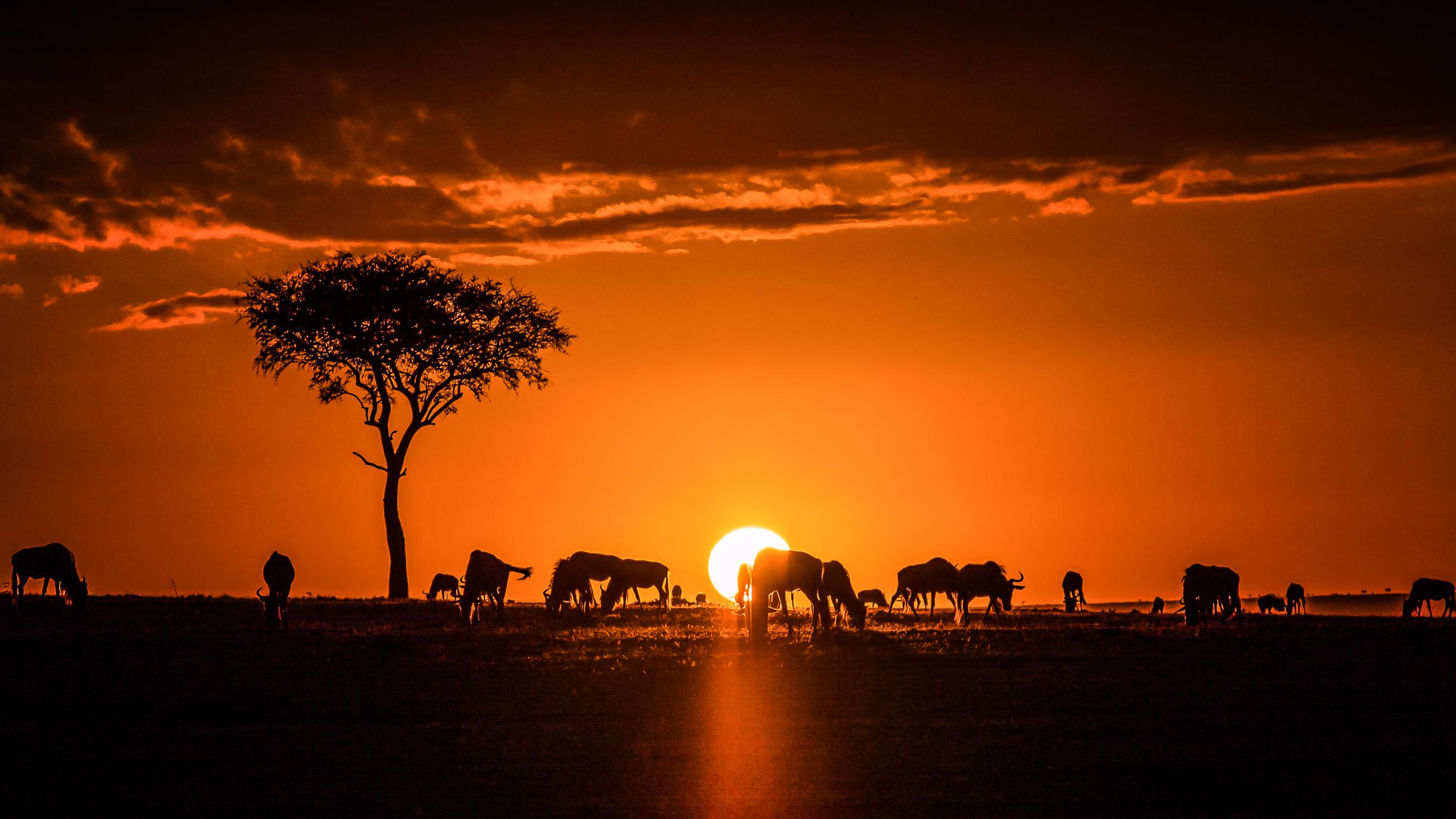
During the Great Migration, enormous herds of wildebeest and zebra move between Tanzania’s Serengeti and Kenya’s Mara ecosystem in search of grazing. River crossings are among the most dramatic events, but their timing depends on rainfall, grazing conditions and herd movements.
Why choose Kenya: If seeing the famous Mara River crossings is your principal goal, staying in a strategically located camp in the Mara or Mara Triangle during the appropriate season can make sense.
The choice of accommodation location matters. A well-positioned camp may reduce the time needed to reach wildlife activity, whereas a cheaper property farther away can mean longer drives.
Explore Astute Africa Safaris’ detailed guide to the Maasai Mara safari experience and its guide to Maasai Mara safari lodges and camps.
1.2 Amboseli: elephants with Mount Kilimanjaro as a backdrop

Amboseli National Park offers one of East Africa’s most recognisable safari scenes: elephant families crossing open plains with Mount Kilimanjaro rising behind them when the mountain is visible.
The park is particularly attractive to photographers, elephant enthusiasts, couples and families seeking a safari with a distinctive landscape.
Amboseli also works well with other destinations. Travellers arriving in Nairobi can combine it with the Maasai Mara, while visitors on Kenya’s coast can plan a fly-in safari or a longer overland journey.
Why choose Kenya: Amboseli gives you a landscape and wildlife combination that is difficult to replicate elsewhere. Tanzania has Kilimanjaro, but the classic elephant-and-mountain safari experience is associated with Amboseli.
1.3 More ways to customise a safari
Kenya provides several different safari environments within a single trip:
-
Lake Nakuru: a convenient Rift Valley stop known for rhinos, birdlife and scenic lake landscapes.
-
Samburu National Reserve: dry-country scenery and wildlife often called the Samburu Special Five: Grevy’s zebra, reticulated giraffe, gerenuk, Beisa oryx and Somali ostrich.
-
Ol Pejeta Conservancy: a strong option for travellers interested in rhino conservation and wildlife protection.
-
Tsavo East and Tsavo West: extensive landscapes, elephants, varied terrain and a practical connection with the Kenyan coast.
-
Laikipia: private conservancies, distinctive wildlife experiences and high-end, conservation-focused stays.
These destinations help Kenya appeal to both first-time visitors and travellers returning for a less conventional safari.
1.4 Why Kenya can be better for shorter holidays
Nairobi is a major gateway for international arrivals and domestic safari connections. Several popular parks can be combined in a relatively short holiday, although driving times and road conditions should always be considered.
For example, a traveller with five days might spend two nights in Amboseli and two nights in the Maasai Mara using domestic flights or carefully planned transfers. A traveller with only three days could instead focus on the Maasai Mara alone.
The benefit is not simply visiting more parks. It is having enough time to enjoy game drives without spending the majority of the holiday travelling.
1.5 Why Kenya can be the better value choice
Kenya has a broad accommodation market, ranging from basic campsites and guesthouses to luxury tented camps and exclusive conservancy lodges. Shared safari vehicles and road-based itineraries can also help manage costs.
However, Kenya is not always cheaper than Tanzania. Peak-season Maasai Mara accommodation, private conservancy fees, charter flights and exclusive-use vehicles can make a Kenyan safari extremely expensive.
The sensible comparison is the total cost of the holiday, including park fees, accommodation, transport, meals, flights, activities and beach stays—not just the nightly room rate.
2. Why choose Tanzania over Kenya?

Tanzania is ideal for travellers drawn to enormous wilderness areas, spectacular geological scenery, extended wildlife circuits and the possibility of combining a safari with Zanzibar.
Its Northern Circuit is particularly rewarding because several exceptional destinations can be combined: Tarangire, the Serengeti, Ngorongoro Conservation Area and, when appropriate, Lake Manyara.
2.1 Serengeti National Park: scale and migration
Serengeti National Park is famous for its expansive grasslands, wildlife populations and role in the Great Migration.

The Serengeti’s great advantage is that it supports different stages of the migration across a large geographical area. Southern areas are particularly associated with calving, generally around January to March, while the western and northern sectors can become important at different times of the year.
This has an important consequence for itinerary planning: choosing Tanzania does not automatically mean you will see the migration. You must choose the right Serengeti region for your dates.
A camp in the central Serengeti may be suitable for year-round wildlife viewing, while a mobile or strategically located camp may be more appropriate for travellers whose primary aim is to follow the herds.
2.2 Ngorongoro Crater: an extraordinary wildlife setting

The Ngorongoro Crater is one of Tanzania’s most distinctive safari attractions. Its volcanic caldera encloses grassland, woodland, marshes and a soda lake, creating a remarkable concentration of wildlife within a dramatic natural setting.
Visitors may encounter lions, elephants, buffalo, zebras, wildebeest, hyenas and, with luck, the endangered black rhino.
Why is it so important when comparing the countries? Kenya has excellent wildlife reserves, but it does not have an equivalent to the Ngorongoro Crater’s particular combination of caldera scenery and concentrated wildlife.
The crater is especially rewarding for first-time visitors who want to experience a distinctive landscape and see a wide range of animals within a relatively focused game-viewing area.
Planning consideration: Staying on or near the crater rim can provide a convenient early start, but accommodation and crater-related charges can increase the cost. A lodge farther away may be less expensive but involve an earlier departure.
2.3 Tarangire: elephants, baobabs and a quieter atmosphere

Tarangire National Park is particularly attractive for its elephants, baobab trees, riverine habitats and dry-season wildlife concentrations.
It is an excellent addition to a northern Tanzania itinerary, especially for photographers and travellers who want more than the Serengeti and Ngorongoro.
Tarangire also makes a good first stop when travelling from Arusha, allowing a safari to build gradually towards the more distant Serengeti.
2.4 Tanzania for travellers who want a longer wilderness journey
Tanzania’s larger park system can reward travellers who have more time and want to explore beyond the best-known northern destinations.
Depending on the season and travel style, alternatives include:
-
Nyerere National Park: extensive southern wilderness, with selected boat-based wildlife experiences and walking safaris available through suitable operators.
-
Ruaha National Park: remote landscapes, large elephant populations and rewarding predator viewing.
-
Lake Manyara National Park: forest, escarpment scenery and varied habitats that complement a northern circuit.
These parks require different logistics from the classic northern circuit. Travellers may need additional domestic flights, more nights and careful coordination of transfers.
2.5 Tanzania and Zanzibar: an excellent safari-and-beach combination

For honeymooners, couples and families, a safari followed by a few relaxing days on Zanzibar can create a satisfying contrast between wildlife adventures and beach relaxation.
A typical combination might include:
-
Two nights in Tarangire or the Ngorongoro area.
-
Three nights in the Serengeti.
-
One night in Arusha, depending on flight schedules.
-
Three or four nights in Zanzibar.
Travellers can also connect from the safari to Zanzibar by suitable domestic flights, subject to seasonal schedules and availability.
Explore Astute Africa Safaris’ combined Kenya and Tanzania safari holidays if you would prefer to experience both countries instead of choosing just one.
3. What choosing one country over the other means for your holiday
The decision can affect more than which animals you see. It can determine the type of accommodation available, how much time you spend on the road, the number of parks you can visit and whether you finish with a beach holiday.
| If you choose… | What you gain | What you may give up |
|---|---|---|
| Kenya only | Easier short circuits from Nairobi, diverse park options, conservancy experiences and a choice of Indian Ocean beaches | The Ngorongoro Crater and the experience of exploring the Serengeti within Tanzania |
| Tanzania only | Serengeti’s immense scale, Ngorongoro, Tarangire and straightforward safari-to-Zanzibar planning | Amboseli’s classic Kilimanjaro backdrop, Kenya’s particular conservancy experiences and some convenient short Nairobi-based circuits |
| Both countries | A wider range of landscapes and the opportunity to explore different parts of the Serengeti–Mara ecosystem | More complex logistics, additional transfers, border arrangements and potentially higher overall costs |
When choosing Kenya makes the most sense
Choose Kenya if you have approximately three to six safari days, want to prioritise the Maasai Mara or Amboseli, need a wide range of accommodation choices, or are starting a holiday in Nairobi or Mombasa.
It is also an excellent option if you want to include a safari without turning the whole holiday into a long expedition.
When choosing Tanzania makes the most sense
Choose Tanzania if you have seven to ten or more days, want to combine the Serengeti with Ngorongoro Crater, are travelling during the southern Serengeti calving season, or want to finish your safari in Zanzibar.
It can be particularly rewarding for travellers who value large landscapes and are happy to spend more time moving between remote destinations.
When combining Kenya and Tanzania makes the most sense
If you have around 10–14 days, combining the two countries may offer the most varied experience.
You could explore Amboseli, the Maasai Mara, the Serengeti and Ngorongoro Crater in one carefully planned trip. However, cross-border vehicle arrangements, flights, immigration requirements and park fees need to be planned properly.
For a shorter holiday, one country done well will often provide a more relaxed and satisfying safari than trying to cover both.
4. Best time to visit Kenya or Tanzania for a safari
The best destination depends partly on the season and partly on the particular experience you want.

| Travel period | Kenya | Tanzania |
|---|---|---|
| January–March | Good wildlife viewing in many parks; Amboseli is often attractive for elephant photography | Southern Serengeti is particularly important for wildebeest calving |
| April–May | Green landscapes, fewer visitors in some areas and potentially attractive accommodation offers; some roads can be challenging | Green-season scenery, with some camps or routes affected by rain |
| June–July | Excellent period for many wildlife circuits; migration herds may begin reaching the Mara | Strong period for parts of the Serengeti and western migration routes, depending on conditions |
| August–October | Popular period for the Maasai Mara and potential river crossings | Northern Serengeti can be rewarding for migration viewing; the precise timing varies |
| November–December | Green-season landscapes develop as the short rains arrive; conditions vary | Excellent possibilities across selected areas, with migration movements responding to rainfall |
These are seasonal guidelines, not fixed wildlife schedules. Rainfall, local conditions and herd movements vary from year to year.
For more detailed seasonal planning, read Astute Africa Safaris’ best time to visit Africa guide.
Our recommendation: Choose the destination and region according to your travel dates before selecting a lodge. A beautiful luxury camp in the wrong migration area may be less suitable than a simpler camp in the right location.
5. Best accommodation in Kenya: budget, mid-luxury and ultra-luxury
Kenya offers everything from simple safari accommodation and practical town hotels to luxury lodges and exclusive tented camps in private conservancies.
The following are accommodation suggestions to consider when designing your itinerary. They are examples, not a guarantee of current availability or fixed prices. Categories can overlap, and rates vary considerably with season, room type, meal plan and inclusions.
5.1 Maasai Mara: where to stay

Budget and practical accommodation
-
Miti Mingi Eco Camp: a commonly considered budget-oriented tented-camp option in the wider Mara area.
-
Enkorok Mara Camp: a practical tented-camp option to investigate for value-focused trips.
Best for travellers prioritising wildlife drives and keeping accommodation costs controlled. Confirm the exact property location and the transfer time to your preferred game-viewing area.

Mid-luxury and comfortable stays
-
Mara Serena Safari Lodge: a permanent lodge with sweeping views and a strong safari atmosphere.
-
Ashnil Mara Camp: a tented camp option worth comparing for location, comfort and package inclusions.
Best for couples, families and travellers who want comfortable rooms or tents, good dining facilities and an established safari-lodge experience.

Ultra-luxury and exclusive experiences
-
Angama Mara: celebrated for its dramatic escarpment setting and contemporary luxury.
-
Mahali Mzuri: an exclusive luxury tented camp in the Olare Motorogi Conservancy.
-
Mara Plains Camp: an intimate, high-end conservancy experience.
Best for honeymooners, discerning photographers and travellers seeking highly personalised guiding, distinctive suites and premium service.
Where should you stay? If the Great Migration is your priority, choose the Mara area that best fits the expected location of the herds. If you prefer a quieter safari, investigate conservancy camps and compare their activities and access rules with those of the national reserve.
See Astute Africa Safaris’ full Maasai Mara lodges and camps guide for more options and a more detailed location-based comparison.
5.2 Amboseli: accommodation for different budgets

| Budget level | Accommodation to investigate | Why consider it? |
|---|---|---|
| Budget | Kibo Safari Camp | Tented-camp atmosphere and a practical base for exploring Amboseli |
| Mid-luxury | Amboseli Serena Safari Lodge | Established lodge facilities, a strong safari setting and family appeal |
| Ultra-luxury | Tawi Lodge | An upscale private-lodge experience near Amboseli with views of Kilimanjaro when conditions permit |
When comparing Amboseli properties, check whether your selected accommodation is inside or outside the park, the gate access involved and the time needed to reach the areas you want to explore.
Travellers who want elephants and Kilimanjaro photography may prefer to spend at least two nights in Amboseli rather than rushing through on a single overnight stop.
5.3 Lake Nakuru and the Rift Valley
Lake Nakuru is an excellent addition to a Kenya road safari, especially for travellers moving between Nairobi and the Maasai Mara.
-
Budget: simple hotels and guesthouses in Nakuru town, or value-oriented accommodation around the park.
-
Mid-luxury: Lake Nakuru Sopa Lodge is worth considering for a lodge-based safari.
-
Ultra-luxury: consider a high-end private lodge elsewhere in the Rift Valley or Laikipia if you prefer exclusivity and are willing to adjust the route.
Not every destination has an equivalent ultra-luxury lodge within the park boundary. Sometimes the best solution is to choose a premium property in a nearby wildlife area rather than pay for an unnecessarily long transfer.
5.4 Tsavo and the Kenyan coast

Tsavo is especially useful for travellers staying in Mombasa, Diani or other coastal destinations.
| Budget level | Example accommodation | Suggested use |
|---|---|---|
| Budget | Voi Safari Lodge | A practical base for exploring Tsavo East |
| Mid-luxury | Kilaguni Serena Safari Lodge | A scenic lodge option in Tsavo West |
| Ultra-luxury | Finch Hattons Luxury Tented Camp | An upscale tented-camp experience in Tsavo West |
A Tsavo safari can be an excellent alternative to travelling all the way to the Maasai Mara from the coast. It offers different scenery and wildlife experiences, and it can fit more naturally into a beach holiday.
6. Best accommodation in Tanzania: budget, mid-luxury and ultra-luxury
Tanzania’s accommodation choices range from public campsites and simple lodges to intimate tented camps and high-end properties positioned for wildlife viewing.
The most important consideration is not simply the quality of the room. In a large ecosystem like the Serengeti, your camp’s location can have a significant effect on the wildlife experience.
6.1 Serengeti National Park: where to stay

Budget
-
Public campsites within the Serengeti: potentially the most economical way to sleep in the park, generally with simpler facilities and more independent or camping-oriented arrangements.
-
Budget lodges or tented camps around Karatu or the wider safari circuit: alternatives when you are willing to travel farther to reach certain wildlife areas.
Best for travellers who prefer to spend on game drives rather than accommodation. Camping arrangements, fees, facilities and transport should be confirmed before booking.

Mid-luxury
-
Serengeti Serena Safari Lodge: established lodge accommodation with panoramic views and permanent facilities.
-
Kubu Kubu Tented Lodge: a tented-lodge option for travellers seeking comfort and a classic safari atmosphere.
Best for travellers wanting good facilities without necessarily choosing an exclusive private camp. Compare the exact location with the wildlife area you intend to visit.

Ultra-luxury
-
Four Seasons Safari Lodge Serengeti: premium facilities, a striking setting and opportunities to observe wildlife around the lodge.
-
Singita Sasakwa Lodge: an exclusive high-end option in the Grumeti Reserve area.
-
Singita Faru Faru Lodge: another luxury choice in the Grumeti area, subject to your itinerary and budget.
Best for travellers seeking exceptional service, private experiences, high-end dining and a more exclusive style of safari.
Important: The Serengeti is enormous. A luxury lodge in the central region may be well suited to year-round wildlife viewing but not necessarily ideal for travellers whose principal aim is to follow herds in the far north during a particular month.
6.2 Ngorongoro: rim views and convenient crater access

| Budget level | Accommodation to investigate | Best suited to |
|---|---|---|
| Budget | Simple guesthouses and lodges around Karatu | Travellers prioritising value and willing to drive to the conservation area |
| Mid-luxury | Ngorongoro Serena Safari Lodge | A dramatic crater-rim setting and convenient access for a crater visit |
| Ultra-luxury | &Beyond Ngorongoro Crater Lodge | Travellers seeking a highly distinctive, premium crater-rim experience |
For a one-day crater descent, the balance between price, location and departure time is important. A property in Karatu may be more economical, while a crater-rim lodge can offer a different atmosphere and a convenient early start.
Crater visits are subject to applicable fees, rules and operating arrangements. Confirm what your safari quotation includes.
6.3 Tarangire: baobabs and elephants

Tarangire works well at the beginning or end of a northern Tanzania safari, especially when combined with Ngorongoro and the Serengeti.
-
Budget: simple lodges and camps around Mto wa Mbu, Karatu or the wider Tarangire area, depending on the route.
-
Mid-luxury: Tarangire Sopa Lodge, an established lodge option.
-
Ultra-luxury: Chem Chem Lodge or another suitable high-end property in the Tarangire ecosystem, depending on your preferred activities and location.
The trade-off is straightforward: staying closer to your intended game-viewing area can reduce unnecessary driving, while an accommodation choice farther away may offer better rates.
6.4 Zanzibar: the beach after the safari

| Budget level | Accommodation approach | Suggested experience |
|---|---|---|
| Budget | Guesthouses and smaller hotels in areas such as Paje or Jambiani | Beach time, local restaurants and independent exploration |
| Mid-luxury | Established beachfront hotels in Nungwi, Kendwa or the east coast | Comfortable beach relaxation, dining and selected water activities |
| Ultra-luxury | Zuri Zanzibar or &Beyond Mnemba Island, subject to availability and suitability | Premium beach service, privacy and a high-end safari-and-beach finish |
Mnemba Island is particularly exclusive and operates differently from a conventional mainland hotel, so its pricing and minimum-stay conditions should be checked carefully.
For honeymooners, a safari followed by three or four nights on Zanzibar can provide an excellent balance between adventure and relaxation.
7. Best Kenya safari itineraries departing from Nairobi
Nairobi is Kenya’s principal international gateway and a convenient starting point for a wide range of safari circuits.
The itineraries below are proposed routes, not confirmed tour departures. Accommodation, rates, flight schedules and park access must be checked for your dates.
Itinerary A: 3-day Maasai Mara safari

Best for a short safari
Route: Nairobi → Maasai Mara → Nairobi
| Day | Suggested experience | Overnight |
|---|---|---|
| Day 1 | Travel from Nairobi by road or suitable flight; afternoon game drive | Maasai Mara |
| Day 2 | Early-morning and afternoon game drives, with time to explore different habitats | Maasai Mara |
| Day 3 | Morning game drive if logistics permit; return to Nairobi | Nairobi or onward departure |
Accommodation options:
-
Budget: Miti Mingi Eco Camp or another suitable value-oriented camp.
-
Mid-luxury: Mara Serena Safari Lodge or Ashnil Mara Camp.
-
Ultra-luxury: Angama Mara, Mahali Mzuri or another suitable exclusive camp.
This itinerary suits first-time visitors, short-stay international travellers and people who want to add a safari to a longer Kenya holiday.
It is also a good option for families, although road journeys, flight restrictions and camp age policies should be considered when travelling with children.
Itinerary B: 5-day Kenya wildlife circuit

Route: Nairobi → Lake Nakuru → Maasai Mara → Nairobi
| Day | Suggested experience | Overnight |
|---|---|---|
| Day 1 | Travel to Lake Nakuru and enjoy an afternoon game drive if time permits | Lake Nakuru |
| Day 2 | Morning wildlife viewing, then continue to the Maasai Mara | Maasai Mara |
| Day 3 | Full day of game drives | Maasai Mara |
| Day 4 | Another full or flexible game-viewing day | Maasai Mara |
| Day 5 | Morning activity if practical, then return to Nairobi | Nairobi or onward departure |
This route gives you two different wildlife environments without stretching the trip too far.
Budget travellers can select practical lodges and road transport; mid-luxury travellers can choose established lodges; luxury travellers can consider a premium Mara camp and a more comfortable first-night stay.
Itinerary C: 7-day Kenya safari and beach holiday

Route: Nairobi → Amboseli → Maasai Mara → Diani Beach
This is a particularly appealing itinerary for couples, families and travellers who want both wildlife and relaxation.
| Day | Suggested experience | Overnight |
|---|---|---|
| Day 1 | Arrive in Nairobi and transfer to Amboseli, or take a suitable connecting flight | Amboseli |
| Day 2 | Game drives with opportunities for elephant and mountain photography | Amboseli |
| Day 3 | Transfer or fly towards the Maasai Mara, according to the selected itinerary | Maasai Mara |
| Day 4 | Full day of wildlife viewing | Maasai Mara |
| Day 5 | Morning safari and transfer towards the coast, potentially using domestic flights | Diani or nearby coast |
| Day 6 | Beach relaxation or selected water activities | Diani |
| Day 7 | Beach time and onward departure, depending on flight schedules | Departure |
For a comfortable trip, we would normally recommend adding another night if you want more time in both the Mara and on the coast. Seven days can work, but it requires careful coordination.
Suggested accommodation style:
-
Budget: value-oriented camps in Amboseli and the Mara, followed by a guesthouse or simple beach hotel.
-
Mid-luxury: Amboseli Serena Safari Lodge, a comfortable Mara lodge and a quality Diani beachfront hotel.
-
Ultra-luxury: Tawi Lodge, an exclusive Mara camp and a high-end Diani beach resort.
For travellers who want to start in Nairobi and end at the coast, a fly-in safari can reduce road time substantially.
8. Best Kenya safari itineraries departing from Mombasa
Mombasa and the Kenyan coast are excellent starting points for travellers who want to combine a beach holiday with a wildlife experience.
The most practical safari depends on whether you want a short road trip into Tsavo or a longer excursion to Amboseli or the Maasai Mara.
Itinerary D: 3-day Tsavo East and Tsavo West safari

Route: Mombasa → Tsavo East → Tsavo West → Mombasa
| Day | Suggested experience | Overnight |
|---|---|---|
| Day 1 | Depart Mombasa and explore Tsavo East | Tsavo East |
| Day 2 | Continue to Tsavo West, with game drives en route | Tsavo West |
| Day 3 | Morning wildlife viewing, then return to Mombasa | Mombasa |
Suggested accommodation:
-
Budget: a suitable budget lodge or camp near the relevant park gates.
-
Mid-luxury: Voi Safari Lodge and Kilaguni Serena Safari Lodge, according to the route.
-
Ultra-luxury: Finch Hattons Luxury Tented Camp, subject to a suitable Tsavo West itinerary and current rates.
This is a strong option for travellers who want to return to their coastal hotel without the expense and additional travel time of a distant safari circuit.
Itinerary E: 4-day Amboseli safari from Mombasa

Route: Mombasa → Amboseli → Mombasa
| Day | Suggested experience | Overnight |
|---|---|---|
| Day 1 | Transfer to Amboseli by road or a suitable flight connection | Amboseli |
| Day 2 | Full day of game drives | Amboseli |
| Day 3 | More wildlife viewing and photography | Amboseli |
| Day 4 | Morning activity if practical, then return to Mombasa | Mombasa |
If you are already on the coast, Amboseli can provide a distinctive change of scenery, particularly for elephant photography.
However, road journeys from Mombasa can be lengthy. Compare the complete cost and timings of road transfers with flight options before deciding.
Itinerary F: 5–6-day fly-in Maasai Mara safari from the coast
For travellers who specifically want the Maasai Mara, a fly-in itinerary can be more efficient than driving from Mombasa.
A practical outline is:
-
Day 1: Connect from the coast through an available flight routing to the Mara.
-
Days 2–4: Enjoy morning and afternoon game drives.
-
Day 5: Return towards the coast, subject to flight connections.
-
Day 6: Optional extra beach night or buffer for international departures.
This option is especially appealing for honeymooners and travellers staying in Diani who want a premium safari without sacrificing several days to road travel.
9. Best Tanzania safari itineraries departing from Arusha
Arusha is the principal base for Tanzania’s classic Northern Circuit. It is convenient for starting trips to Tarangire, Lake Manyara, Ngorongoro and the Serengeti.
Itinerary G: 4-day Tanzania wildlife safari

Route: Arusha → Tarangire → Ngorongoro → Arusha
| Day | Suggested experience | Overnight |
|---|---|---|
| Day 1 | Travel to Tarangire for game viewing | Tarangire area |
| Day 2 | Morning wildlife viewing and continue towards Karatu or Ngorongoro | Karatu or crater area |
| Day 3 | Early crater descent and wildlife viewing | Karatu or Ngorongoro area |
| Day 4 | Return to Arusha | Arusha |
Accommodation:
-
Budget: simple lodges or guesthouses around Karatu and suitable budget camps on the circuit.
-
Mid-luxury: Tarangire Sopa Lodge and a comfortable lodge around Ngorongoro.
-
Ultra-luxury: a high-end Tarangire-area property and &Beyond Ngorongoro Crater Lodge.
This itinerary is well suited to travellers with limited time who want a taste of Tanzania’s distinctive landscapes. It does not include the Serengeti, so it is not the best choice if following the Great Migration is the main objective.
Itinerary H: 6-day Serengeti and Ngorongoro safari

Route: Arusha → Serengeti → Ngorongoro → Arusha
| Day | Suggested experience | Overnight |
|---|---|---|
| Day 1 | Travel from Arusha towards the Serengeti, with game viewing as practical | Serengeti |
| Day 2 | Full day of game drives in the selected Serengeti region | Serengeti |
| Day 3 | More wildlife viewing and exploration of the area | Serengeti |
| Day 4 | Travel towards the Ngorongoro area | Ngorongoro or Karatu |
| Day 5 | Crater descent and wildlife viewing | Ngorongoro or Karatu |
| Day 6 | Return to Arusha | Arusha |
Accommodation:
-
Budget: simple tented camps or basic lodges appropriate to the route.
-
Mid-luxury: Serengeti Serena Safari Lodge and Ngorongoro Serena Safari Lodge.
-
Ultra-luxury: Four Seasons Safari Lodge Serengeti and &Beyond Ngorongoro Crater Lodge, where the itinerary and budget permit.
The main advantage is the combination of two iconic destinations. The main trade-off is that a large part of the journey can involve transfers. If the budget permits, strategically chosen flights can increase time available for game viewing.
Itinerary I: 8-day Tanzania safari and Zanzibar

Route: Arusha → Tarangire → Serengeti → Ngorongoro → Zanzibar
| Day | Suggested experience | Overnight |
|---|---|---|
| Day 1 | Arrive in Arusha and prepare for the safari | Arusha |
| Day 2 | Tarangire game drives | Tarangire |
| Days 3–4 | Serengeti game drives in the most suitable region | Serengeti |
| Day 5 | Transfer towards Ngorongoro | Ngorongoro or Karatu |
| Day 6 | Crater visit, then connect towards Zanzibar if schedules allow | Zanzibar |
| Days 7–8 | Beach relaxation and departure planning | Zanzibar |
This itinerary is possible with carefully planned transport, but the transfer on Day 6 may be demanding. A nine- or ten-day version is more comfortable because it allows more time for the safari and the beach.
For honeymooners, we recommend a private guide or vehicle where practical, an accommodation choice suited to the desired level of privacy and enough beach time to avoid feeling rushed.
10. Best Tanzania safari itineraries departing from Dar es Salaam
Dar es Salaam serves as an important gateway for Tanzania’s coast and southern safari destinations. It is not the most convenient starting point for every Northern Circuit itinerary, so choosing the right safari region is particularly important.
Itinerary J: 4-day Nyerere National Park safari

Route: Dar es Salaam → Nyerere National Park → Dar es Salaam
| Day | Suggested experience | Overnight |
|---|---|---|
| Day 1 | Travel by a suitable road or flight arrangement into the park area | Nyerere area |
| Day 2 | Game drives and selected river-based wildlife activities where available | Nyerere area |
| Day 3 | Additional wildlife exploration or a guided walking activity with an authorised operator | Nyerere area |
| Day 4 | Return to Dar es Salaam | Dar es Salaam |
Accommodation:
-
Budget: simple lodges or camps suited to the selected route and transport.
-
Mid-luxury: established safari lodges or tented camps in the Nyerere area.
-
Ultra-luxury: high-end properties such as Beho Beho or Siwandu, subject to their locations, availability and itinerary requirements.
Nyerere is an excellent option for travellers seeking a different side of Tanzania, with river systems and expansive wilderness rather than the familiar Serengeti circuit.
Walking safaris and boat excursions depend on the camp, season, conditions and authorised activities. They should not be assumed to be included in every package.
Itinerary K: 5-day southern Tanzania safari
Route: Dar es Salaam → Nyerere → Ruaha → Dar es Salaam
This is a more ambitious safari concept for travellers who want to explore two southern wilderness areas. It usually works best with flights between the relevant destinations and sufficient flexibility for schedules.
| Day | Suggested experience | Overnight |
|---|---|---|
| Day 1 | Travel from Dar es Salaam to Nyerere | Nyerere |
| Day 2 | Game drives and selected river-based experiences | Nyerere |
| Day 3 | Fly or transfer towards Ruaha, according to the available routing | Ruaha |
| Day 4 | Full day of wildlife viewing | Ruaha |
| Day 5 | Return to Dar es Salaam | Departure or Dar es Salaam |
This route may be better suited to experienced safari travellers or those seeking a quieter, more remote experience than the Northern Circuit.
For a relaxed holiday, consider adding one or two nights. For travellers with a tighter budget, choosing just one park is usually more economical than trying to cover both.
Practical advice for Dar es Salaam departures: If your priority is the Serengeti and Ngorongoro, compare domestic flights from Dar es Salaam with connections through Arusha or Kilimanjaro. If your priority is a southern wilderness safari, Nyerere or Ruaha may be a more natural starting point.
11. What does a Kenya vs Tanzania safari cost?
The cost difference between Kenya and Tanzania depends on the season, accommodation, transport, park fees, group size and whether you choose a private or shared safari.
The following estimates are indicative planning budgets in US dollars per person sharing a room, not live quotations from individual properties. They are intended to help readers understand the likely scale of the investment.
| Safari style | Kenya | Tanzania |
|---|---|---|
| Budget road safari | $150–$300 per person/day | $200–$350 per person/day |
| Mid-luxury safari | $300–$650 per person/day | $350–$750 per person/day |
| Ultra-luxury safari | $800–$2,000+ per person/day | $900–$2,500+ per person/day |
These are broad indicative ranges, not guaranteed prices. Actual costs may fall outside them, especially during peak migration periods or when private flights and exclusive-use services are included. Clarify whether quoted rates include park fees, transfers, meals, activities and taxes.
Example: a 5-day safari for two people

Budget Kenya safari
$1,500–$3,000
For two people, estimated total
A practical road-based itinerary with simpler accommodation and shared or cost-conscious transport, depending on the package.

Mid-luxury Tanzania safari
$3,500–$7,500
For two people, estimated total
A comfortable safari with selected lodges or tented camps, game drives and a carefully planned route.

Ultra-luxury safari
$9,000–$25,000+
For two people, estimated total
A premium experience potentially involving exclusive camps, private guiding, domestic flights and upgraded services.
These examples illustrate how much the accommodation and transport choices can change the budget. They are not direct like-for-like quotations for the same five-day route.
For a more accurate comparison, ask Astute Africa Safaris to price the same travel dates, number of nights, accommodation standard and transport arrangements in both countries.
For additional planning, explore the Kenya and Tanzania safari comparison and the combined Kenya and Tanzania safari holidays guide.
12. Kenya vs Tanzania for families, couples and honeymooners

Best choice for families with children
Kenya is often the easier starting point for a shorter family safari because of its variety of wildlife circuits, accommodation options and transport arrangements from Nairobi.
Amboseli, the Maasai Mara and selected Rift Valley destinations can be combined into a family-friendly itinerary. Families should check minimum ages for walking safaris, balloon flights, child-minding and other activities.
Tanzania is also excellent for families, especially when a longer trip allows time in the Serengeti and Ngorongoro. The main consideration is managing travel distances and choosing family-friendly camps.
Read the East African family safari guide and the ultimate guide to an African safari with children.
Best choice for honeymooners
Both countries can provide exceptional honeymoon experiences.
Kenya offers private conservancy camps, secluded safari suites, fly-in experiences and the option of finishing at Diani Beach. Tanzania combines remote wilderness camps with Ngorongoro’s dramatic scenery and Zanzibar’s beaches.
A honeymoon should not be designed around accommodation alone. The best itinerary balances privacy, wildlife viewing, travel time and opportunities to relax.
Best choice for photographers
Kenya is particularly appealing for big-cat photography in the Maasai Mara and elephant photography in Amboseli. Private conservancies can offer specialist activities, subject to local rules.
Tanzania is outstanding for landscape photography, huge wildlife herds and the changing scenery of the Serengeti and Ngorongoro.
If photography is your priority, consider a longer stay in fewer places. More time at each location often produces a better experience than rushing between several parks.
13. Can you combine Kenya and Tanzania in one safari?
Yes. Combining both countries can create an extraordinary East African holiday, especially if you have around 10–14 days or more.

A possible 12-day itinerary is:
| Day | Destination | Main experience |
|---|---|---|
| 1 | Nairobi | Arrival and preparation |
| 2 | Amboseli | Elephants and Kilimanjaro views |
| 3–4 | Maasai Mara | Big cats and extensive game drives |
| 5 | Travel and border connection | Coordinated transfer towards Tanzania |
| 6–8 | Serengeti | Wildlife viewing in the region best suited to the season |
| 9 | Ngorongoro | Crater-area accommodation |
| 10 | Ngorongoro Crater | Full or carefully planned crater visit |
| 11–12 | Arusha or Zanzibar | Departure connection or optional beach extension |
This is a conceptual route rather than a guaranteed day-by-day operating schedule. The Maasai Mara–Serengeti connection requires particular attention to border procedures, vehicle arrangements, flights and the route selected. A Zanzibar extension may require additional nights.
For the strongest wildlife experience, it can be better to remove one destination than to sacrifice essential game-viewing time.
14. How to choose the right safari accommodation
The accommodation decision can influence your safari as much as the choice of country.
Before booking, consider these six factors:
-
Location: Is the property inside the park, in a private conservancy, or outside the main wildlife area?
-
Season: Will your accommodation be well placed for the wildlife or migration experience you want?
-
Transport: Are you travelling by road, domestic flight or a combination?
-
Activities: Are walking safaris, night drives, balloon flights or other experiences available and included?
-
Comfort: Do you prefer permanent lodges, canvas tents, private pools or intimate camps?
-
Total cost: Does the price include park fees, meals, game drives, transfers, taxes and applicable conservation or concession fees?
A lower nightly rate does not necessarily mean a cheaper safari overall. A property farther from the wildlife area may involve extra driving, while an expensive camp might include activities or transfers that would otherwise be charged separately.
Astute Africa Safaris can help compare accommodation on a like-for-like basis so that you understand what you are paying for before making a decision.
15. Frequently asked questions about Kenya vs Tanzania safaris
Is Kenya or Tanzania better for a first African safari?
Kenya is an excellent starting point if you have limited time and want to explore a few classic wildlife destinations. Tanzania is equally rewarding if the Serengeti and Ngorongoro Crater are central to your dream safari. The right choice depends on your dates, interests and budget.
Which country is better for the Great Migration?
Both are important. Tanzania is especially significant for the southern Serengeti calving season, usually January–March, and other phases of the migration. Kenya’s Maasai Mara is famous for river crossings, which are often sought from July to October. Neither sightings nor crossing dates can be guaranteed.
Is Tanzania more expensive than Kenya?
Tanzania can cost more for certain northern-circuit itineraries because of park and crater charges, longer distances and the use of domestic flights. However, luxury accommodation and private conservancy experiences can make Kenya equally expensive. Compare complete itineraries rather than relying on a general country-wide price ranking.
Which country is better for a luxury safari?
Both are excellent. Kenya offers exceptional private conservancy camps and high-end safari properties, while Tanzania offers exclusive Serengeti camps, dramatic crater-rim accommodation and remote wilderness experiences. The best luxury option is the property that matches your desired location, privacy and activities.
Can I start a safari in Mombasa?
Yes. Tsavo East, Tsavo West and Amboseli are practical options, depending on your time and transport. A Maasai Mara safari can also be arranged, but a suitable flight connection may be more efficient than a long overland journey.
Can I start a Tanzania safari in Dar es Salaam?
Yes. Dar es Salaam is useful for southern destinations such as Nyerere and for connections to other regions. For a classic Serengeti–Ngorongoro circuit, compare flight connections through Arusha or Kilimanjaro with the time and cost of your proposed itinerary.
Should I choose a budget, mid-luxury or ultra-luxury safari?
Choose based on the overall experience you want rather than the room category alone. Budget trips can deliver excellent wildlife encounters, mid-luxury trips balance comfort and value, and ultra-luxury trips can offer exclusivity, personalised service and additional experiences. None guarantees particular wildlife sightings.
Is it better to visit both countries?
If you have sufficient time and budget, combining them offers more variety. With fewer than eight days, however, a well-planned single-country safari is often more relaxing. A combined itinerary is particularly attractive when you have 10–14 days and want to explore both the Maasai Mara and the Serengeti.
16. Plan your Kenya or Tanzania safari with Astute Africa Safaris

Choosing between Kenya and Tanzania should not come down to which destination is more famous. It should come down to which experience is right for you.
Choose Kenya for a flexible, wildlife-rich safari with outstanding big-cat viewing, elephant encounters, varied landscapes and convenient options from Nairobi or the coast.
Choose Tanzania for the vast Serengeti, Ngorongoro Crater, Tarangire’s distinctive scenery and the opportunity to combine a safari with Zanzibar.
Choose both if you have the time to explore the two countries without rushing.
At Astute Africa Safaris, we help travellers compare destinations, accommodation standards, safari routes and transport arrangements to design journeys around their priorities. Whether you want a value-focused road safari, a comfortable family holiday, a romantic safari-and-beach escape or an ultra-luxury wildlife experience, the aim is to make the itinerary work for you.
Explore our Kenya and Tanzania safari holidays or visit our 10-day Kenya and Tanzania safari for further inspiration.
Ready to plan your safari? Contact Astute Africa Safaris with your preferred travel dates, number of travellers, departure city, accommodation budget and must-see wildlife experiences. We can then help you compare the most suitable Kenya and Tanzania itineraries.
Leave a comment:
You must be logged in to post a comment.
Comment 01
Astute Africa Safaris,
05 May, 2026REF: Crafting Your Bespoke African Safari Experience with Astute Africa Safaris
Jambo,
Thank you for your interest in exploring the wonders of Africa with Astute Africa Safaris. We pride ourselves on creating immersive, tailor-made journeys that align perfectly with your personal interests, pace, and travel aspirations.
Because every safari is a unique narrative, we do not believe in “one-size-fits-all” pricing. To ensure we provide you with an accurate and competitive quotation that reflects the specific lodges, wildlife experiences, and logistical arrangements you desire, we invite you to connect with our team for a personalized consultation.
Please contact us at info@astuteafricasafaris.com, Whatsapp +254762663272 or fill the inquiry form with a few details regarding your preferred travel dates, group size, and specific interests (e.g., photography, luxury relaxation, or adventure trekking). Once we have these details, we will curate a comprehensive proposal designed specifically for you.
We look forward to the possibility of helping you plan an unforgettable journey.
Warm regards,
Team Astute Africa Safaris