

- 1.2k Views
- 46 Min Read
- (1) Comment
East Africa is a region of extraordinary cultural diversity, ancient traditions, historic religious institutions and places of profound spiritual significance. Beyond its famous wildlife reserves, spectacular landscapes, tropical islands and traditional communities, the region offers travellers an opportunity to discover a different dimension of Africa through religious tourism, spiritual journeys and cultural heritage exploration.
From the historic Christian pilgrimage grounds of Uganda to the Marian sanctuary of Kibeho in Rwanda, the peaceful religious environment of Kenya’s Subukia National Shrine, the historic Christian missions of Tanzania and the centuries-old Islamic heritage of Zanzibar, East Africa offers a remarkable collection of places where faith, history, architecture and living cultural traditions come together.
Religious tourism in East Africa is not limited to one religion or denomination. The region has long been influenced by Christianity, Islam, African traditional spiritual practices, Hinduism, Sikhism and the Bahá’í Faith. These religious traditions have shaped communities, architecture, education, cultural celebrations, music, historic settlements and the development of many towns and cities.
For Christian pilgrims, the region provides opportunities to visit important shrines, cathedrals, churches and locations associated with historic religious events. Muslim travellers can explore the historic mosques and Islamic heritage of Zanzibar and the Swahili Coast. Travellers interested in broader spirituality and cultural history can discover traditional sacred landscapes, religious architecture and the relationship between faith and local communities.
Religious journeys can also become part of a wider African holiday. Visitors can combine pilgrimage experiences with wildlife safaris, cultural excursions, historical exploration, mountain landscapes, beautiful beaches and relaxation along the Indian Ocean.
At Astute Africa Safaris, we believe that travelling through Africa should be about understanding the experiences that matter to each traveller. For those interested in faith, spirituality, culture and history, East Africa provides an opportunity to create meaningful journeys that go beyond conventional sightseeing.
This comprehensive guide explores the most important religious and spiritual destinations in Kenya, Uganda, Tanzania, Rwanda and Zanzibar, the experiences available, suggested itineraries, practical travel considerations and ways to combine religious heritage exploration with other East African holidays.

1. Understanding religious tourism in East Africa
Religious tourism involves travelling to places associated with faith, worship, spirituality, religious history and cultural traditions. It can include organised pilgrimages, visits to sacred sites, attendance at religious celebrations, exploration of historic religious buildings and participation in spiritual retreats.
In East Africa, religious tourism has several important dimensions.
Christian pilgrimage tourism
Christian pilgrims travel to shrines, churches, cathedrals and locations associated with saints, martyrs, religious apparitions and important events in Christian history.
Uganda and Rwanda are particularly significant for Catholic pilgrimage experiences, while Kenya and Tanzania also have important Christian religious institutions and historic sites.
Islamic heritage tourism
Islam has influenced East African coastal communities for centuries. Zanzibar, particularly Stone Town, is an important destination for travellers interested in historic mosques, Islamic architecture, Swahili traditions and the history of Indian Ocean trade.
African traditional spirituality
Long before the arrival of Christianity and Islam, African communities maintained complex spiritual traditions connected to ancestors, sacred landscapes, nature, community identity and traditional leadership.
These traditions remain important in different forms across the region. Travellers interested in this heritage should approach it through knowledgeable cultural guides and with respect for community protocols.
Interfaith and religious architecture tourism
East Africa also offers opportunities to explore different religious traditions through their buildings, places of worship, historic neighbourhoods and cultural institutions.
These include Christian cathedrals, Islamic mosques, Hindu temples, Sikh gurdwaras and the Bahá’í House of Worship in Kampala.
Spiritual retreats and reflection journeys
Some visitors seek quiet environments where they can pray, meditate, reflect or participate in organised religious retreats. Mountain landscapes, forested environments, lakeside locations and established religious centres can provide suitable settings, subject to the facilities and arrangements available at each destination.
Religious tourism therefore offers a broad range of experiences, from highly organised pilgrimage programmes to independent cultural exploration.
2. Uganda: One of East Africa’s most important Christian pilgrimage destinations 
Uganda holds a particularly important place in East African Christian history. Its religious heritage includes the Uganda Martyrs, historic Catholic and Anglican institutions, significant pilgrimage shrines, mosques and the African Bahá’í House of Worship.
The country’s religious tourism opportunities are particularly attractive to Catholic and Anglican pilgrims, Christian history enthusiasts, international church groups and travellers interested in understanding the historical development of Christianity in East Africa.
2.1 Namugongo Martyrs Shrine: A major Christian pilgrimage destination
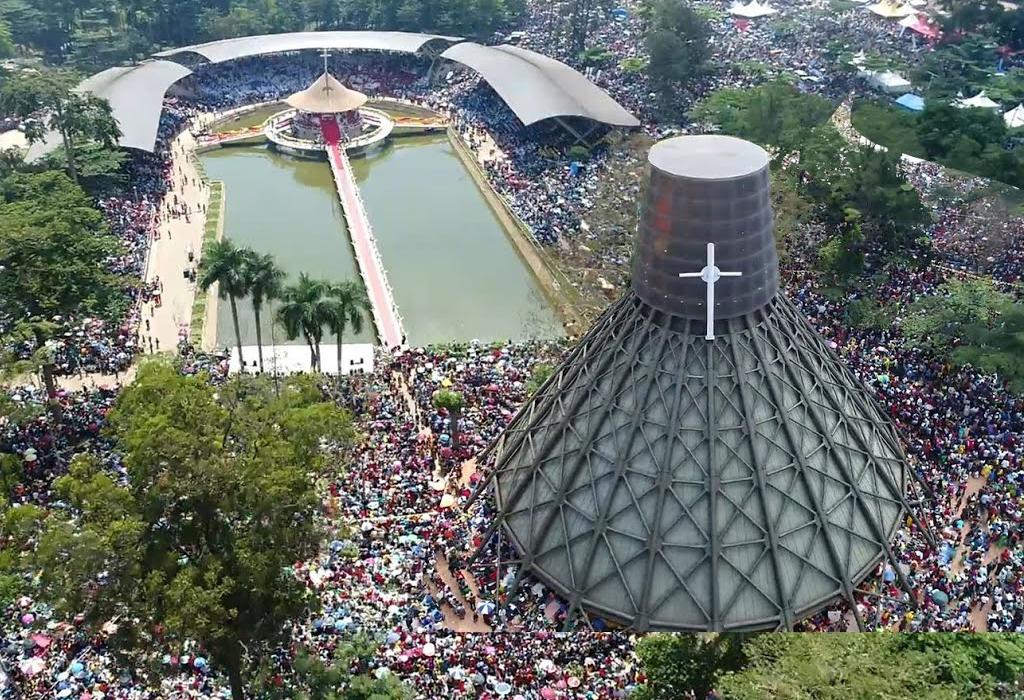
The Namugongo Martyrs Shrine is among the most significant Christian pilgrimage destinations in Africa.
Located near Kampala, the shrine commemorates the Uganda Martyrs, a group of Christian converts who were executed in the Kingdom of Buganda during the late nineteenth century.
The events are associated with the reign of Kabaka Mwanga II. Between 1885 and 1887, several Christian converts were killed because of their faith. The Catholic and Anglican traditions commemorate these martyrs, whose stories became central to the development of Christianity in Uganda.
The Catholic shrine is particularly recognisable for its distinctive circular architecture, reflecting traditional Baganda architectural influences.

Uganda Martyrs Day – 3 June
Every year on 3 June, Uganda celebrates Uganda Martyrs Day, attracting pilgrims from across the country and internationally.
The celebrations include:
-
Catholic and Anglican religious services.
-
Pilgrimage processions.
-
Prayer and worship.
-
Commemorative ceremonies.
-
Religious music and spiritual reflection.
-
Participation by church representatives and international delegations.
The scale of the event demonstrates the importance of religious tourism in Uganda.
According to reporting on Uganda’s 2025 visitor survey, approximately 813,945 people visited the Namugongo pilgrimage sites and surrounding areas during the celebrations. This included visitors to both the Catholic and Protestant shrines and roadside visitors.
For international visitors, attending the celebrations can provide an opportunity to witness one of East Africa’s most significant annual Christian gatherings.
What visitors can experience at Namugongo
-
Explore the Catholic shrine and its architectural features.
-
Learn about the history of the Uganda Martyrs.
-
Visit the commemorative areas and religious monuments.
-
Participate in scheduled worship where appropriate.
-
Experience the atmosphere surrounding the annual June pilgrimage.
-
Explore nearby religious and historical attractions.
Travellers planning to visit on 3 June should arrange accommodation and transport well in advance because visitor numbers can be exceptionally high.
2.2 Munyonyo Martyrs Shrine: Where the Uganda Martyrs’ story began 
Another important destination is the Munyonyo Martyrs Shrine.
Situated near Lake Victoria in Kampala, Munyonyo is associated with the early events leading to the persecution and execution of the Uganda Martyrs.
The shrine commemorates individuals whose stories are closely connected with the history of Christianity in the Kingdom of Buganda.
It has developed into an important Catholic pilgrimage and worship centre, with a basilica, chapels and spaces for prayer and religious reflection.
Visitors can explore the shrine, learn about the martyrs’ history and experience its peaceful religious atmosphere.
Munyonyo is also relevant to organised pilgrimage journeys because it can be incorporated into a wider historical route connecting important religious locations in Kampala and Namugongo.
Suggested experience: A guided Uganda Christian heritage tour connecting Munyonyo, Namugongo and historic Kampala cathedrals.
2.3 Rubaga Cathedral: An important landmark in Uganda’s Catholic history 
The St Mary’s Cathedral Rubaga is one of Kampala’s most recognisable religious landmarks.
Also known as Rubaga Cathedral, it is the principal Catholic cathedral of the Archdiocese of Kampala.
Situated on Rubaga Hill, the cathedral is associated with the growth of Catholicism in Uganda and the development of the country’s historic Catholic institutions.
Its elevated position provides beautiful views across parts of Kampala.
Visitors interested in religious architecture, Christian history and the development of religious institutions in Uganda can include the cathedral in a city heritage excursion.
2.4 Namirembe Cathedral: Anglican heritage in Uganda 
The Namirembe Cathedral is an important landmark in Uganda’s Anglican Christian history.
Situated on Namirembe Hill, the cathedral is associated with the establishment and development of Anglican Christianity in the country.
The building is notable for its architecture, elevated location and historical importance.
Visiting Namirembe Cathedral alongside Rubaga Cathedral offers an opportunity to understand the development of two major Christian traditions in Uganda and their influence on education, social institutions and community life.
2.5 The Bahá’í House of Worship: An interfaith spiritual landmark 
Uganda also offers a distinctive spiritual experience through the Bahá’í House of Worship.
Located on Kikaaya Hill in Kampala, this temple is an important landmark of the Bahá’í Faith.
Completed in 1961, it is recognised as the first Bahá’í House of Worship in Africa.
The temple’s distinctive domed architecture, landscaped grounds and peaceful surroundings make it an interesting destination for visitors from different religious backgrounds.
Unlike a pilgrimage dedicated to a single Christian denomination, the Bahá’í House of Worship provides an opportunity to understand a different faith tradition and its emphasis on spiritual unity.
Visitors should observe the temple’s guidelines, including modest dress and restrictions on photography inside the auditorium.
2.6 Other religious heritage experiences in Uganda
Beyond Kampala’s major religious landmarks, visitors can discover other churches, cathedrals, mosques and community religious institutions throughout Uganda.
Possible additions include:
-
Historic Catholic and Anglican churches in central Uganda.
-
Religious heritage in Jinja.
-
Historic mosques in Kampala.
-
Religious institutions associated with Uganda’s diverse communities.
-
Local cultural experiences that explain the relationship between traditional beliefs and contemporary religious practices.
Why include Uganda in a religious tourism itinerary?
Uganda is particularly suitable for:
-
Catholic pilgrimage groups.
-
Anglican Christian heritage travellers.
-
International church delegations.
-
Religious history enthusiasts.
-
Interfaith cultural travellers.
-
Visitors combining spiritual journeys with nature and wildlife experiences.
Uganda’s religious heritage can also be combined with a wider safari holiday featuring Bwindi Impenetrable National Park, Queen Elizabeth National Park, Kibale Forest and the Nile region.
Explore Astute Africa Safaris’ East Africa safari holidays for inspiration on combining Uganda’s natural attractions with a wider regional holiday.
3. Rwanda: Kibeho and the Marian pilgrimage experience 
Rwanda has an important place in contemporary Catholic pilgrimage tourism because of Kibeho, a destination associated with reported Marian apparitions and an established tradition of religious devotion.
Located in the southern part of the country, Kibeho attracts Catholic pilgrims from Rwanda, neighbouring countries and international destinations.
Its importance extends beyond religious tourism into the broader cultural and historical story of Rwanda.
3.1 Kibeho: The Shrine of Our Lady of Kibeho
The Shrine of Our Lady of Kibeho is one of the most recognised Catholic pilgrimage destinations in East Africa.
The history of Kibeho’s reported Marian apparitions dates to 28 November 1981, when a student named Alphonsine Mumureke reported seeing an apparition of the Virgin Mary at her school.
Further reported apparitions followed, involving other students.
The Catholic Church subsequently recognised the authenticity of the apparitions involving three visionaries: Alphonsine Mumureke, Nathalie Mukamazimpaka and Marie-Claire Mukangango.
The devotion associated with Kibeho is commonly known as Our Lady of Kibeho, or Nyina wa Jambo, meaning Mother of the Word.
The messages associated with the apparitions emphasised prayer, conversion, faith and reconciliation.

What makes Kibeho significant?
Kibeho is particularly important to Catholic pilgrims because of:
-
Its association with the Marian apparitions.
-
The Shrine of Our Lady of Kibeho.
-
Opportunities for prayer and reflection.
-
Marian devotion and religious celebrations.
-
The international pilgrimage community.
-
Its wider historical and spiritual significance to Rwanda.
Visitors can explore the shrine, attend religious services where permitted, spend time in prayer and learn about the history of the reported apparitions.
For Catholic pilgrimage groups, Kibeho can form the centrepiece of a Rwanda religious heritage journey.
3.2 Religious pilgrimage and reconciliation in Rwanda
Rwanda’s modern history has been profoundly shaped by the 1994 Genocide against the Tutsi.
For visitors interested in the relationship between faith, history, forgiveness and reconciliation, Rwanda offers opportunities to understand how religious institutions and communities have engaged with the country’s difficult history.
The Kigali Genocide Memorial is an important memorial and educational institution.
Although it is not a religious pilgrimage site, it can be included in a wider cultural and historical itinerary for visitors seeking to understand Rwanda’s past and its journey towards rebuilding communities.
Visits should be approached with sensitivity, respect and an understanding that the memorial commemorates victims and survivors of genocide.
Religious tourism in Rwanda should therefore be presented not only through places of worship but also through a thoughtful understanding of the country’s history, community resilience and contemporary identity.
3.3 Churches and religious heritage in Kigali 
Kigali has a variety of Christian institutions, churches and places of worship representing different denominations.
Travellers interested in religious architecture and contemporary Christian life can include selected churches in a guided city excursion.
Other experiences may include:
-
Learning about the development of Christianity in Rwanda.
-
Visiting historic religious institutions.
-
Exploring the relationship between religion and community development.
-
Understanding the role of faith-based organisations in education and social support.
Visits to churches should be arranged respectfully and, where necessary, with permission from the relevant institution.
3.4 Combining Kibeho with Rwanda’s wildlife and cultural experiences
One of Rwanda’s advantages is the opportunity to combine a spiritual journey with other distinctive experiences.
A visit to Kibeho can be incorporated into a longer holiday featuring:
-
Kigali’s cultural and historical attractions.
-
Nyungwe Forest National Park.
-
Lake Kivu.
-
Akagera National Park.
-
Volcanoes National Park and the surrounding mountain region.

For travellers interested in both spirituality and nature, this creates an opportunity to experience Rwanda beyond its principal pilgrimage destination.
Who should consider a Kibeho pilgrimage?
-
Catholic pilgrims.
-
Marian devotion groups.
-
Church organisations.
-
Christian history enthusiasts.
-
International travellers interested in Rwanda’s religious heritage.
-
Visitors looking for a spiritual journey combined with cultural exploration.
A well-planned Kibeho experience should allow adequate time for the religious visit rather than treating the shrine as a brief sightseeing stop.
4. Kenya: Sacred places, Christian heritage and spiritual retreats 
Kenya has a rich religious heritage shaped by Christianity, Islam, African traditional spiritual practices, Hinduism, Sikhism and other religious traditions.
Its religious landscape reflects the country’s cultural diversity and the historical development of communities across the highlands, central regions, western Kenya, the Rift Valley and the Indian Ocean coast.
For religious travellers, Kenya offers opportunities to visit established Catholic shrines, historic churches, cathedrals, mosques, temples and places associated with different cultural and spiritual traditions.
It is also an attractive destination for visitors seeking peaceful retreats, prayer experiences and religious journeys combined with wildlife and cultural exploration.
4.1 Subukia National Marian Shrine: Kenya’s important Catholic pilgrimage centre
The Subukia National Marian Shrine is among Kenya’s most recognised Catholic pilgrimage destinations.
Located approximately 40 kilometres from Nakuru, the shrine is associated with Marian devotion and provides an environment for prayer, meditation, spiritual reflection and religious gatherings.
The shrine is also known as the Village of Mary, Mother of God.
Its peaceful surroundings, religious structures, prayer areas and Way of the Cross make it an important destination for Catholic pilgrims.
Experiences at Subukia National Shrine include:
-
Visiting the main shrine church.
-
Spending time in prayer and meditation.
-
Walking the Way of the Cross.
-
Visiting the grotto chapel.
-
Participating in organised pilgrimages.
-
Enjoying the peaceful natural surroundings.
The shrine’s official information describes it as a place of prayer, reconciliation, peace and rest.
to God be the glory
For international visitors, Subukia offers an opportunity to experience a significant Kenyan Catholic pilgrimage centre while exploring the Rift Valley region.
4.2 The Basilica of the Holy Family, Nairobi 
The Basilica of the Holy Family is one of the most important Catholic religious landmarks in Kenya.
Situated in central Nairobi, the basilica is associated with the Archdiocese of Nairobi and serves as an important place of worship.
Its location makes it particularly convenient for international visitors arriving in the Kenyan capital.
Travellers can include a visit to the basilica as part of a wider Nairobi city and cultural heritage excursion.
The experience can also be combined with Nairobi’s museums, historical attractions, markets and other cultural destinations.
4.3 All Saints Cathedral, Nairobi 
The All Saints Cathedral is an important Anglican institution in the Kenyan capital.
It provides an opportunity to explore the development of Anglican Christianity in Kenya and the role of religious institutions in the country’s social and historical development.
Visitors interested in Christian architecture and religious history can include it alongside other Nairobi landmarks.
4.4 Lamu: Islamic heritage and Swahili religious traditions 
The historic island town of Lamu is one of Kenya’s most interesting destinations for Islamic and Swahili cultural heritage.
Lamu has a long history of Indian Ocean trade and cultural interaction, with Islamic traditions playing an important role in the development of the settlement.
Its historic buildings, mosques, traditional houses, narrow streets and coastal lifestyle reflect centuries of Swahili cultural development.
Visitors can explore:
-
Historic mosques and religious neighbourhoods.
-
Traditional Swahili architecture.
-
Islamic cultural traditions.
-
Historic waterfront settlements.
-
Local cuisine and traditional coastal lifestyles.
-
The relationship between religion, trade and community life.
Lamu is particularly suitable for travellers who want to understand the Islamic heritage of the East African coast.
Visits to mosques and religious institutions should be arranged respectfully, with appropriate dress and permission where required.
4.5 Religious diversity in Nairobi and other Kenyan cities
Kenya’s religious heritage is not limited to Christian and Islamic institutions.
Nairobi and other major towns have established Hindu temples, Sikh gurdwaras and other places of worship reflecting the country’s diverse communities.

These institutions provide an opportunity for visitors to understand the contributions of different communities to Kenya’s history, architecture, commerce and cultural life.
A well-designed religious heritage excursion can introduce visitors to different traditions without suggesting that all communities have the same religious practices or beliefs.
4.6 Traditional sacred landscapes and African spiritual heritage in Kenya
Kenya’s indigenous spiritual heritage is another important part of its cultural identity.
Different communities maintain traditions connected to ancestors, land, mountains, forests, sacred trees, rivers and other natural features.
For example, Mount Kenya has deep cultural and spiritual significance in the traditional beliefs of some communities, particularly the Kikuyu, Embu and Meru.

These relationships between people, land and spirituality provide an important context for understanding Kenya’s cultural heritage.
Travellers interested in this dimension of religious tourism should engage knowledgeable local cultural guides and respect community decisions about which places can be visited or photographed.
Not every sacred location is a tourist attraction, and some are private or governed by traditional protocols.
Why include Kenya in a religious tourism itinerary?
Kenya is suitable for:
-
Catholic pilgrimage groups.
-
Anglican Christian heritage travellers.
-
Islamic and Swahili heritage enthusiasts.
-
Interfaith cultural travellers.
-
Visitors interested in African traditional spirituality.
-
Spiritual retreat and reflection holidays.
Kenya also offers an excellent opportunity to combine religious heritage exploration with the Maasai Mara, Amboseli, Lake Nakuru, Mount Kenya, the Rift Valley and the Indian Ocean coast.
Explore the best African holiday destinations for more ideas on combining Kenya’s heritage, wildlife and coastal experiences.
5. Tanzania: Historic Christian missions, Islamic heritage and religious history 
Tanzania has a fascinating religious history shaped by Christianity, Islam and indigenous African spiritual traditions.
Its religious heritage reflects centuries of interaction between local communities, Indian Ocean traders, missionaries and different cultural influences.
For travellers interested in religious tourism, Tanzania offers historic churches, mission settlements, mosques, religious institutions and coastal heritage destinations.
Two areas are particularly interesting: Bagamoyo on the mainland and the historic coastal settlements of the Swahili region.
5.1 Bagamoyo: An important centre of Christian mission history
The historic town of Bagamoyo is one of Tanzania’s most significant destinations for travellers interested in religious and cultural history.
Located north of Dar es Salaam along the Indian Ocean coast, Bagamoyo has an important place in the history of East African trade, missionary activity and the abolition of slavery.
The town became a significant centre for Christian missionary work during the nineteenth century.

The Holy Ghost Mission
The Holy Ghost Mission is one of the principal religious heritage attractions in Bagamoyo.
Its history is associated with Catholic missionary activity, the establishment of religious institutions and the development of educational and social initiatives.
The mission complex includes historic church buildings, missionary residences, a cemetery and other structures associated with the development of Christianity in the area.
The original Holy Ghost Church was built in 1872, while other mission structures developed during subsequent years.
The nearby Cross by the Sea commemorates the establishment of the first Roman Catholic church in East Africa in 1868.
These locations are valuable for understanding the relationship between missionary activity, local communities and the wider history of the East African coast.
What visitors can explore in Bagamoyo
-
The historic Holy Ghost Mission.
-
The Catholic Museum.
-
Historic churches and missionary buildings.
-
The Cross by the Sea.
-
Missionary cemeteries and memorial sites.
-
The history of Christian missions in East Africa.
-
The wider history of slavery, trade and emancipation.
Bagamoyo is particularly suitable for travellers who want a deeper understanding of the historical relationship between religion and social change in East Africa.
5.2 Kaole Ruins: Ancient Islamic heritage in Tanzania 
South of Bagamoyo lies the historic archaeological site of Kaole Ruins.
The site provides important evidence of the historical development of coastal settlements and Islamic influence in East Africa.
The ruins include the remains of two mosques and historic tombs, reflecting the area’s connections with early Swahili coastal communities and Indian Ocean trading networks.
Kaole is particularly interesting because it demonstrates that Islamic religious and cultural influences on the East African mainland developed centuries before many of the later colonial-era institutions.
Visitors interested in Islamic heritage, archaeology and coastal history can combine Kaole with a visit to Bagamoyo.
This combination creates a more complete picture of the region’s religious history, encompassing both Christian missionary heritage and earlier Islamic influences.
5.3 Historic churches and Christian heritage in Tanzania 
Tanzania has numerous churches and religious institutions associated with the development of Christianity in different regions.
These include Catholic, Lutheran, Anglican and other Christian traditions.
Travellers interested in Christian heritage can explore selected religious landmarks in:
-
Dar es Salaam.
-
Bagamoyo.
-
Moshi.
-
Arusha.
-
Tanga.
-
Zanzibar.
Some churches are closely associated with the historical development of education, healthcare and community institutions.
When planning visits, it is advisable to arrange access through the relevant church or local guide, particularly where the buildings remain active places of worship.
5.4 Religious heritage and traditional spirituality in Tanzania
Tanzania’s cultural diversity includes numerous ethnic communities with distinct spiritual traditions.
These traditions are connected to community identity, ancestral relationships, natural landscapes and traditional practices.
Some communities maintain cultural traditions associated with mountains, forests, rivers and other significant natural environments.
For visitors interested in African traditional spirituality, cultural experiences should be organised through respectful engagement with local communities.
The objective should be cultural understanding rather than treating sacred practices as entertainment.
Why visit Tanzania for religious tourism?
Tanzania is particularly suitable for:
-
Christian history enthusiasts.
-
Catholic pilgrimage and mission heritage groups.
-
Islamic history and archaeology enthusiasts.
-
Cultural heritage travellers.
-
Visitors interested in Swahili history.
-
Travellers combining historical exploration with wildlife safaris and coastal holidays.
Bagamoyo is especially attractive for a combined historical and cultural excursion from Dar es Salaam.
6. Zanzibar: Islamic heritage, historic mosques and Swahili spiritual traditions 
Zanzibar is one of the most fascinating destinations in East Africa for religious and cultural heritage tourism.
Its location along the Indian Ocean made it an important centre of maritime trade and cultural interaction for centuries.
Arab, African, Persian, Indian and European influences contributed to the development of Zanzibar’s distinctive Swahili culture.
Islam has had a particularly important influence on the island’s religious identity, architecture, traditions and everyday community life.
For visitors, Zanzibar offers an opportunity to explore historic mosques, Islamic architecture, traditional neighbourhoods, historic buildings and the relationship between religion and coastal culture.
6.1 Stone Town: A historic centre of Islamic and Swahili heritage
The Stone Town of Zanzibar is a UNESCO World Heritage Site and one of the most important cultural destinations along the East African coast.

Its architecture reflects a long history of interaction between African, Arab, Indian and European cultures.
Historic mosques, traditional Swahili houses, carved wooden doors, merchant buildings and narrow streets create an environment that reveals the island’s multicultural history.
UNESCO identifies several important religious and historic buildings within Stone Town, including St Joseph’s Roman Catholic Cathedral, Christ Church Anglican Cathedral, Malindi Bamnara Mosque and the Jamat Khan.
A guided walking tour can help visitors understand how religious institutions influenced the growth and development of the settlement.
6.2 Historic mosques in Zanzibar 
Zanzibar has a long-established Islamic heritage, visible in its mosques, religious schools, community traditions and historic neighbourhoods.
The Malindi Bamnara Mosque is among the notable historic mosques identified within Stone Town.
Other mosques throughout the island remain active centres of worship and community life.
Visitors interested in Islamic heritage can learn about:
-
The historical spread of Islam along the Swahili Coast.
-
The relationship between Indian Ocean trade and religious development.
-
Traditional mosque architecture.
-
Islamic celebrations and community traditions.
-
The role of religious institutions in local society.
Visits to active mosques should be arranged with appropriate guidance and permission.
6.3 St Joseph’s Roman Catholic Cathedral 
The St Joseph’s Roman Catholic Cathedral is another important religious landmark.
Its architecture reflects European influences and the historical development of Catholic institutions along the East African coast.
The cathedral is a reminder that Zanzibar’s religious heritage is not exclusively Islamic.
Christian communities also contributed to the island’s history, architecture and cultural development.
6.4 Christ Church Anglican Cathedral and the history of slavery 
The Christ Church Anglican Cathedral is one of the most historically significant religious buildings in Zanzibar.
It stands on the site associated with the former slave market and commemorates the history of slavery and its abolition.
The cathedral and its surrounding memorial areas provide an opportunity to understand the difficult history of the slave trade in East Africa and the role of religious and humanitarian movements in campaigns against it.
This experience is particularly important for visitors interested in African history, human rights, Christian missionary activity and the development of modern coastal societies.
A guided visit should approach the history with sensitivity, recognising the suffering of enslaved people and the lasting effects of the slave trade.
6.5 Hindu and other religious heritage in Zanzibar 
Zanzibar’s historical connections with India also contributed to its religious diversity.
Indian merchant communities helped shape the island’s commercial and cultural development, with Hindu religious traditions forming part of the broader heritage of Stone Town.
For travellers interested in interfaith history, the opportunity to understand how different religious communities coexisted and contributed to the island’s identity is particularly valuable.
6.6 Combining religious heritage with Zanzibar’s beaches 
Zanzibar’s appeal extends well beyond its historic buildings.
Visitors can combine a religious heritage excursion with:
-
Beach relaxation in Nungwi and Kendwa.
-
Traditional dhow sailing.
-
Spice farm visits.
-
Swahili cooking experiences.
-
Snorkelling and marine activities.
-
Cultural exploration in local villages.
-
Indian Ocean sunset experiences.
This makes Zanzibar particularly attractive for couples, families, cultural travellers and international visitors seeking a combination of history, spirituality and relaxation.
Suggested Zanzibar religious heritage experience: A guided Stone Town cultural and religious heritage excursion followed by several days of relaxation on the island’s beaches.
7. African traditional spirituality and sacred cultural landscapes in East Africa 
Religious tourism in East Africa would be incomplete without recognising the region’s indigenous spiritual traditions.
Before Christianity and Islam became established in East Africa, communities maintained their own systems of belief, worship, spirituality and cultural identity.
These traditions were closely connected to ancestors, community leadership, nature, family relationships and the natural environment.
Although practices differ considerably between communities, spiritual traditions have historically influenced how people relate to land, mountains, forests, rivers and other natural features.
7.1 Sacred mountains and spiritual landscapes
Mountains have special cultural and spiritual significance in several East African communities.
Mount Kenya, for example, holds an important place in the traditional spiritual beliefs of some communities in central Kenya.

Other mountain landscapes throughout East Africa also have important cultural associations.
These environments offer opportunities to understand the relationship between nature, community traditions and spirituality.
However, sacred landscapes should not automatically be treated as open tourist attractions. Some places have restricted access or specific cultural protocols.
7.2 Sacred forests and traditional beliefs 
Kenya’s coastal Kaya forests provide an important example of the relationship between cultural heritage, traditional spirituality and environmental conservation.
The Kaya forests are associated with Mijikenda communities and have historical and cultural significance.
They are recognised as sacred cultural landscapes, not simply ordinary forests.
Visitors interested in these traditions should seek experiences led by authorised community representatives and follow the applicable cultural rules.
7.3 Ancestors, community identity and traditional ceremonies
Traditional spirituality in East Africa can also involve:
-
Ancestral remembrance.
-
Traditional blessings.
-
Community ceremonies.
-
Respect for elders and traditional leaders.
-
Cultural storytelling.
-
Rituals associated with significant life events.
These practices differ across communities and should not be presented as one uniform East African religion.
For international visitors, knowledgeable cultural guides can help explain the historical context and contemporary relevance of these traditions.
An important principle for responsible religious tourism: Respect community ownership of sacred knowledge. Photography, recording, participation and access to sacred places should only take place where permission has been granted.
8. Religious tourism beyond Christianity and Islam: East Africa’s interfaith heritage 
East Africa’s religious diversity provides an opportunity to create journeys that explore several faith traditions rather than focusing on only one religious community.
Christianity and Islam have played major roles in the region’s history, but Hinduism, Sikhism, the Bahá’í Faith and other religious traditions have also contributed to its cultural development.
For travellers interested in interfaith history, architecture and religious diversity, selected destinations in Kenya, Uganda, Tanzania and Zanzibar can provide an educational and meaningful experience.
Hindu religious heritage
Hindu communities have a long history in East Africa, particularly through Indian Ocean migration and trade.
Hindu temples in Nairobi, Mombasa, Dar es Salaam and Zanzibar reflect the cultural and religious contributions of these communities.
Their architecture, sculptures, religious celebrations and cultural practices offer interesting opportunities for visitors to learn about Hinduism in an East African context.
Sikh religious heritage
Sikh communities have also contributed significantly to East African history, particularly in Kenya, Uganda and Tanzania.
Gurdwaras provide places of worship and community service.
An important feature of Sikh religious tradition is the practice of langar, the community kitchen where meals are served to visitors regardless of background.
Where visits are permitted, these institutions can provide an opportunity to understand the Sikh values of service, equality and community.
The Bahá’í Faith
Uganda’s Bahá’í House of Worship in Kampala is an especially significant attraction for interfaith travellers.
Its architecture and religious philosophy provide a different perspective on spirituality and the relationship between religious communities.
Why interfaith heritage tours matter
Interfaith tours can help visitors understand:
-
How different religious traditions developed in East Africa.
-
The influence of migration and trade on religious diversity.
-
The role of religious institutions in education and community development.
-
The architectural heritage of different faiths.
-
The importance of religious tolerance and peaceful coexistence.
A thoughtfully designed interfaith excursion should provide accurate historical explanations and avoid treating religious beliefs as interchangeable.
9. The best religious tourism experiences in East Africa
The region offers several types of religious and spiritual experiences that can be incorporated into a tailor-made holiday.
| Experience | Recommended destination | What makes it special |
|---|---|---|
| Major Christian pilgrimage | Namugongo, Uganda | Commemoration of the Uganda Martyrs |
| Catholic pilgrimage | Munyonyo, Uganda | Historic association with the Uganda Martyrs |
| Marian pilgrimage | Kibeho, Rwanda | Shrine of Our Lady of Kibeho |
| Catholic spiritual retreat | Subukia, Kenya | Prayer, reflection and Way of the Cross |
| Anglican heritage | Namirembe, Uganda | Historic cathedral and Anglican traditions |
| Catholic heritage | Rubaga, Uganda | Important cathedral and religious history |
| Christian mission history | Bagamoyo, Tanzania | Historic Holy Ghost Mission |
| Islamic heritage | Stone Town, Zanzibar | Historic mosques and Swahili culture |
| Islamic archaeology | Kaole, Tanzania | Historic mosque ruins and tombs |
| Interfaith experience | Kampala, Uganda | Bahá’í House of Worship |
| Traditional sacred landscapes | Kenya and wider East Africa | Indigenous spiritual and cultural heritage |
These experiences can be organised individually or combined into longer regional journeys.
The best itinerary depends on the traveller’s religious interests, preferred destinations, available time, budget and practical travel arrangements.
10. Suggested religious pilgrimage and spiritual tourism itineraries in East Africa
One of the strongest opportunities for religious tourism in East Africa is the ability to combine important pilgrimage destinations across several countries.
Rather than visiting one shrine and returning home, international visitors can explore different religious traditions, historic sites and cultural environments through a carefully designed regional itinerary.
Astute Africa Safaris can position these experiences as personalised cultural and heritage holidays, with arrangements based on the traveller’s preferred religious interests and travel schedule.
The following itineraries are suggested travel concepts rather than fixed departure packages.
Itinerary 1: Uganda Christian Heritage and Martyrs Pilgrimage
Recommended for Christian pilgrimage groups 
Suggested duration: 5 days
| Day | Destination | Suggested activities |
|---|---|---|
| 1 | Entebbe – Kampala | Arrival, transfer and introduction to Uganda’s religious history |
| 2 | Munyonyo – Kampala | Visit Munyonyo Martyrs Shrine and explore its historical significance |
| 3 | Namugongo | Visit the Uganda Martyrs Shrine and learn about the martyrs |
| 4 | Rubaga – Namirembe | Explore important Catholic and Anglican cathedrals |
| 5 | Kampala – Entebbe | Final religious heritage experience and departure |
Special experience: Where travel dates permit, schedule the journey around Uganda Martyrs Day on 3 June.
This itinerary is particularly suitable for Catholic and Anglican church groups, international Christian organisations, religious history enthusiasts and individual pilgrims.
Itinerary 2: Rwanda Marian Pilgrimage and Cultural Discovery
Recommended for Catholic pilgrims 
Suggested duration: 5–6 days
| Day | Destination | Suggested activities |
|---|---|---|
| 1 | Kigali | Arrival and transfer to accommodation |
| 2 | Kigali | City heritage exploration and introduction to Rwanda’s history |
| 3 | Kigali – Kibeho | Travel to Kibeho and visit the Marian shrine |
| 4 | Kibeho | Prayer, reflection and pilgrimage activities |
| 5 | Kibeho – Kigali | Return journey with selected cultural stops |
| 6 | Kigali | Departure |
The itinerary can be extended to include Lake Kivu or other Rwandan nature destinations.
Itinerary 3: Kenya Catholic Pilgrimage and Spiritual Retreat 
Suggested duration: 5 days
| Day | Destination | Suggested activities |
|---|---|---|
| 1 | Nairobi | Arrival and accommodation |
| 2 | Nairobi | Visit the Basilica of the Holy Family and selected religious landmarks |
| 3 | Nairobi – Subukia | Travel to the National Marian Shrine |
| 4 | Subukia | Prayer, meditation and Way of the Cross |
| 5 | Subukia – Nairobi | Return to Nairobi and departure |
Depending on the interests of the group, the itinerary can also incorporate Nakuru and selected Rift Valley cultural attractions.
Itinerary 4: Tanzania Christian Mission Heritage and Islamic History 
Suggested duration: 4–5 days
| Day | Destination | Suggested activities |
|---|---|---|
| 1 | Dar es Salaam | Arrival and introduction to Tanzania’s cultural heritage |
| 2 | Bagamoyo | Visit the Holy Ghost Mission and historic Catholic institutions |
| 3 | Bagamoyo – Kaole | Explore Kaole Ruins and early Islamic heritage |
| 4 | Bagamoyo | Explore historic coastal sites and local cultural experiences |
| 5 | Dar es Salaam | Return and departure |
This itinerary is particularly suitable for travellers interested in African religious history, archaeology, missionary heritage and the historical development of Swahili coastal communities.
Itinerary 5: Zanzibar Islamic and Swahili Heritage Holiday 
Suggested duration: 5–6 days
| Day | Destination | Suggested activities |
|---|---|---|
| 1 | Zanzibar | Arrival and accommodation |
| 2 | Stone Town | Guided exploration of Islamic and Swahili heritage |
| 3 | Stone Town | Explore historic mosques, churches and cultural landmarks |
| 4 | Zanzibar countryside | Spice farm and local cultural experiences |
| 5 | Northern or eastern coast | Beach relaxation and marine activities |
| 6 | Zanzibar | Departure |
This experience is particularly attractive for Muslim heritage travellers, cultural enthusiasts, couples and visitors interested in the history of the Swahili Coast.
Itinerary 6: Uganda and Rwanda Christian Pilgrimage Journey
Recommended multi-country pilgrimage 
Suggested duration: 9–12 days
| Day | Destination | Suggested activities |
|---|---|---|
| 1 | Entebbe | Arrival in Uganda |
| 2 | Kampala | Explore historic Christian landmarks |
| 3 | Munyonyo | Visit Munyonyo Martyrs Shrine |
| 4 | Namugongo | Explore the Uganda Martyrs Shrine |
| 5 | Kampala | Visit selected cathedrals and religious institutions |
| 6 | Entebbe – Kigali | Transfer to Rwanda |
| 7 | Kigali | Explore selected cultural and historical attractions |
| 8 | Kigali – Kibeho | Travel to the Marian pilgrimage destination |
| 9 | Kibeho | Pilgrimage and reflection |
| 10 | Kibeho – Kigali | Return to Kigali |
| 11 | Kigali | Optional cultural exploration |
| 12 | Kigali | Departure |
This itinerary offers an opportunity to experience two of East Africa’s most important Christian pilgrimage destinations in one holiday.
International flights, road transfers and accommodation should be arranged according to the group’s departure point and preferences.
Itinerary 7: The Ultimate East Africa Religious and Cultural Heritage Journey
For extended regional holidays 
Suggested duration: 15–20 days
This is a more extensive itinerary for travellers who want to understand East Africa’s religious diversity and cultural heritage.
| Days | Destination | Main experience |
|---|---|---|
| 1–4 | Uganda | Namugongo, Munyonyo, Rubaga and Namirembe |
| 5–7 | Rwanda | Kibeho and selected Kigali heritage experiences |
| 8–11 | Kenya | Nairobi religious heritage and Subukia pilgrimage |
| 12–14 | Tanzania | Bagamoyo and Kaole historical exploration |
| 15–18 | Zanzibar | Islamic heritage, Stone Town and coastal culture |
| 19–20 | Departure | Final arrangements and international departure |
This itinerary should be adapted to flight availability, border arrangements and the amount of time the traveller wants to spend at each religious destination.
For some visitors, a shorter two-country pilgrimage will be more meaningful and practical than attempting to cover the entire region.
11. Combining religious tourism with African wildlife safaris
One of the most attractive opportunities for international travellers is the possibility of combining religious tourism with traditional African safari experiences.
East Africa is internationally recognised for its wildlife, national parks, mountain landscapes and conservation areas.
A visitor travelling to Uganda for the Martyrs Shrine, for example, may also wish to experience mountain gorillas in Bwindi Impenetrable National Park.
A traveller visiting Kenya for a religious retreat may want to extend the holiday to the Maasai Mara or Amboseli.
Similarly, visitors to Tanzania may combine Bagamoyo’s historic heritage with a Serengeti safari and a relaxing stay in Zanzibar.
This creates an opportunity for Astute Africa Safaris to introduce a distinctive holiday concept: Faith, Culture and Wildlife Experiences in East Africa.

Uganda: Christian pilgrimage and gorilla trekking
Suggested combination:
-
Kampala religious heritage.
-
Namugongo Martyrs Shrine.
-
Munyonyo Martyrs Shrine.
-
Bwindi Impenetrable National Park.
-
Optional Lake Bunyonyi relaxation.
Visitors can experience Uganda’s Christian history before continuing to its spectacular forest landscapes.
Mountain gorilla trekking requires advance permits and compliance with park regulations.
Rwanda: Kibeho pilgrimage and mountain gorillas
Suggested combination:
-
Kigali.
-
Kibeho.
-
Volcanoes National Park.
-
Lake Kivu.
This is particularly attractive for travellers seeking a combination of Marian pilgrimage, mountain scenery and wildlife experiences.
Kenya: Catholic pilgrimage and classic safari
Suggested combination:
-
Nairobi religious heritage.
-
Subukia National Shrine.
-
Lake Nakuru National Park.
-
Maasai Mara National Reserve.
This itinerary combines Kenya’s Christian pilgrimage heritage with wildlife viewing and the country’s famous savannah landscapes.
Tanzania: Bagamoyo heritage, safari and Zanzibar
Suggested combination:
-
Dar es Salaam.
-
Bagamoyo.
-
Serengeti National Park.
-
Ngorongoro Conservation Area.
-
Zanzibar.
The itinerary provides a combination of historical exploration, wildlife and Indian Ocean relaxation.
Zanzibar: Islamic heritage and a beach holiday
Suggested combination:
-
Stone Town.
-
Historic mosques.
-
Swahili cultural experiences.
-
Spice farms.
-
Northern or eastern Zanzibar beaches.
This is particularly suitable for travellers who want a cultural holiday without committing to an extensive wildlife safari.
Explore Astute Africa Safaris’ East Africa safari holidays for further inspiration.
12. Best time to visit East Africa for religious tourism
Religious tourism can take place throughout the year in East Africa. However, the best time depends on the destination, religious calendar, annual celebrations and other experiences planned during the holiday.
| Destination | Important period | Travel considerations |
|---|---|---|
| Namugongo, Uganda | 3 June annually | Book early for Uganda Martyrs Day |
| Munyonyo, Uganda | Throughout the year | Check religious service schedules |
| Kibeho, Rwanda | Throughout the year, with important Marian celebrations | Confirm pilgrimage and church event dates |
| Subukia, Kenya | Throughout the year | Check shrine activities and retreat arrangements |
| Bagamoyo, Tanzania | Throughout the year | Suitable for historical exploration |
| Stone Town, Zanzibar | Throughout the year | Consider Islamic religious calendars and local customs |
Uganda Martyrs Day
3 June is particularly important for visitors planning a Christian pilgrimage to Uganda.
The annual celebrations attract large numbers of pilgrims, so international travellers should arrange transport and accommodation early.
Marian celebrations in Rwanda
Kibeho has important religious commemorations associated with the reported apparitions.
The main annual Marian pilgrimage celebrations take place around 28 November, marking the date of the first reported apparition in 1981.
Visitors wishing to participate in special religious events should confirm the current programme with the shrine.
Ramadan and Islamic celebrations
Travellers visiting Zanzibar and other predominantly Muslim coastal communities should consider the Islamic calendar when planning their journey.
Ramadan is an important period of fasting, prayer and reflection.
It can offer a valuable opportunity to understand Islamic cultural traditions, although visitors should be sensitive to local practices, particularly when eating, drinking or dressing in public during daylight hours.
Eid celebrations also provide an opportunity to observe important Islamic cultural traditions.
Dates vary according to the Islamic lunar calendar.
General weather considerations
East Africa has different climatic conditions across its countries and regions.
For visitors combining religious heritage with wildlife safaris, the timing should also consider rainfall, road conditions, park seasons and accommodation availability.
For example, a journey involving Uganda’s forest destinations may require additional consideration of wet-weather trekking conditions, while a Kenya and Tanzania safari should be planned around the wildlife experiences desired.
13. Practical travel considerations when planning a religious tourism holiday
A successful religious journey requires more than selecting the destinations.
International visitors should consider the following issues when arranging their trip.
13.1 Respect religious customs and dress codes
Religious institutions have different requirements for visitors.
Travellers should:
-
Dress modestly when visiting churches, mosques, temples and shrines.
-
Remove shoes where required.
-
Avoid loud conversations during prayer.
-
Seek permission before taking photographs.
-
Respect religious services and ceremonies.
-
Follow instructions from religious representatives.
-
Avoid disturbing worshippers.
In Zanzibar, visitors should be particularly mindful of local Islamic cultural practices when exploring religious neighbourhoods.
13.2 Arrange visits to religious institutions in advance
Some places of worship are open to visitors, while others have restricted access.
International groups should contact the relevant institutions before arrival to confirm:
-
Opening times.
-
Service schedules.
-
Group visiting arrangements.
-
Photography policies.
-
Availability of religious guides.
-
Special pilgrimage programmes.
This is especially important for organised church groups and visitors planning to attend special religious events.
13.3 Understand regional entry and visa requirements
Travelling across Kenya, Uganda, Tanzania, Rwanda and Zanzibar requires careful attention to immigration regulations.
The East African Tourist Visa may be an option for eligible travellers visiting Kenya, Uganda and Rwanda under its applicable conditions. Tanzania is not included in that visa arrangement.
Travellers should confirm the relevant entry permissions for every country on their itinerary.
Explore Astute’s East Africa Safari Visa Requirements for additional travel-planning information.
Always verify current requirements with the relevant immigration authorities before departure.
13.4 Consider accommodation near pilgrimage destinations
Accommodation preferences vary considerably between religious travellers.
Some pilgrims prefer accommodation close to shrines and churches to make attending religious services easier.
Others may prefer comfortable hotels, boutique properties, luxury lodges or accommodation in peaceful natural environments.
For organised groups, the following should be considered:
-
Distance to religious institutions.
-
Group room arrangements.
-
Accessibility and mobility requirements.
-
Meal arrangements.
-
Transport availability.
-
Space for group gatherings.
-
Budget and preferred accommodation standard.
Accommodation should be selected according to the actual facilities available rather than assumptions about the needs of every pilgrim.
13.5 Transport and regional connections
East Africa offers different transport options depending on the destination.
These include:
-
Private safari vehicles.
-
Airport transfers.
-
Domestic flights.
-
Regional flights.
-
Private road transfers.
-
Scheduled transport services.
For multi-country pilgrimage journeys, it is important to consider border crossing times, flight schedules and the distance between religious destinations.
A practical itinerary should allow sufficient time for religious activities, meals, rest and unexpected travel delays.
13.6 Health, safety and travel insurance
International visitors should obtain appropriate travel insurance and consult qualified healthcare professionals about destination-specific travel health requirements.
Travellers should also check:
-
Recommended vaccinations.
-
Malaria prevention where applicable.
-
Personal medication arrangements.
-
Emergency contacts.
-
Local safety advice.
-
Medical facilities along the route.
Religious groups travelling with elderly pilgrims or people with mobility limitations should discuss the practical arrangements before booking.
14. Responsible and sustainable religious tourism in East Africa 
Religious tourism can contribute positively to the communities surrounding pilgrimage destinations and historic religious institutions.
However, tourism should be organised responsibly to ensure that the cultural, religious and environmental value of these places is respected.
Many religious sites are not simply tourist attractions. They are living institutions where people worship, celebrate, mourn, learn and maintain important community relationships.
Responsible religious tourism should therefore place respect and community benefit at the centre of the visitor experience.
Respect sacred places and local traditions
Visitors should understand that sacred sites may have specific rules regarding photography, dress, access and participation.
Local religious authorities and community representatives should guide the visitor experience.
Support local communities
Where appropriate, visitors can support local businesses through:
-
Purchasing locally made crafts.
-
Using qualified local guides.
-
Choosing locally owned accommodation.
-
Supporting community restaurants.
-
Engaging local transport providers.
-
Purchasing locally produced goods.
This helps distribute tourism benefits beyond major hotels and established tour operators.
Protect historic religious architecture
Historic churches, mosques, shrines and mission buildings require careful conservation.
Tourism should not contribute to damage, overcrowding or inappropriate alterations.
Visitors should follow conservation guidelines and avoid touching or disturbing historic structures.
Encourage cultural understanding
Religious tourism can help international visitors understand different beliefs and cultural traditions.
A well-informed guide can explain historical events, cultural practices and the significance of religious buildings without promoting one faith over another.
Connect conservation with cultural heritage
East Africa’s religious heritage can also be combined with nature-based tourism.
Travellers can support conservation initiatives while exploring sacred landscapes, forests, mountains and protected natural environments.
This approach is consistent with the wider principles of responsible tourism, where visitor experiences should respect local people, cultural identity and the natural environment.
Learn more about responsible travel through Astute’s Economic, Environmental and Social Responsibility Policy.
15. Who should consider religious tourism in East Africa?
Religious tourism is relevant to a broader audience than organised church groups alone.
The region offers experiences for several types of travellers.
| Traveller category | Recommended destinations | Suggested experience |
|---|---|---|
| Catholic pilgrims | Uganda, Rwanda, Kenya | Marian shrines and Christian pilgrimage |
| Anglican pilgrims | Uganda, Kenya, Tanzania | Historic cathedrals and church heritage |
| Christian history enthusiasts | Uganda, Tanzania, Zanzibar | Martyrs, missions and historic churches |
| Muslim travellers | Zanzibar, Tanzania, Kenya | Islamic heritage and Swahili culture |
| Hindu and Sikh heritage enthusiasts | Kenya, Uganda, Tanzania | Religious architecture and community heritage |
| Interfaith travellers | Uganda, Kenya, Zanzibar | Different faith traditions and religious history |
| Cultural travellers | All five destinations | Religious architecture and local traditions |
| Spiritual retreat travellers | Kenya, Uganda, Rwanda | Prayer, reflection and selected retreats |
| History enthusiasts | Bagamoyo, Stone Town, Kampala | Religious and historical exploration |
| International church groups | Uganda and Rwanda | Organised pilgrimage journeys |
| Families | Kenya, Tanzania, Uganda | Educational religious and cultural holidays |
| Nature and culture enthusiasts | All five destinations | Religious heritage combined with wildlife and landscapes |
This diversity creates an opportunity to develop journeys that are not restricted to traditional pilgrimage packages.
For some travellers, the main purpose may be prayer and worship. For others, it may be learning about African history, understanding different religions or experiencing cultural traditions.
The itinerary should be designed around the actual motivation for travel.
16. Why choose Astute Africa Safaris for religious tourism in East Africa? 
Planning a religious tourism holiday across East Africa requires an understanding of the destinations, regional travel arrangements, cultural expectations and the specific interests of the traveller.
At Astute Africa Safaris, our approach is based on listening to the traveller, understanding the journey they want and designing the itinerary around their preferred experience.
As a locally owned safari and tour operator based in Nairobi, Kenya, we offer personalised travel planning for visitors interested in discovering East Africa.
Our wider holiday offering covers Kenya, Tanzania, Uganda, Rwanda and Zanzibar.
For travellers interested in religious tourism, this creates opportunities to develop journeys combining sacred sites, cultural heritage, historical landmarks, nature experiences and beach holidays.
Personalised religious and cultural itineraries
Not every religious traveller has the same expectations.
A Catholic pilgrimage group visiting Uganda may have very different requirements from a Muslim family exploring Zanzibar or an international visitor interested in interfaith history.
We can help structure journeys around the destinations and experiences that matter most to the traveller.
Multi-country pilgrimage planning
East Africa’s religious heritage extends across national borders.
Travellers can explore Uganda and Rwanda together, combine Kenya and Tanzania, or develop longer regional itineraries incorporating Zanzibar.
We can assist with planning practical routes that account for travel time, accommodation and regional connections.
Religious heritage combined with safari holidays
A pilgrimage journey does not have to exclude the wildlife experiences for which East Africa is famous.
Travellers can combine religious visits with:
-
Kenya wildlife safaris.
-
Tanzania wildlife experiences.
-
Uganda gorilla trekking.
-
Rwanda nature and cultural experiences.
-
Zanzibar beach holidays.
Different accommodation and budget preferences
We recognise that travellers have different budgets and accommodation preferences.
Depending on availability and destination, itineraries can incorporate:
-
Budget-friendly accommodation.
-
Comfortable mid-range hotels.
-
Boutique properties.
-
Luxury hotels and lodges.
-
Private transport arrangements.
-
Group travel arrangements.
Personal travel support
Planning a multi-country journey can involve several practical considerations.
We can assist with itinerary development, accommodation selection, transport arrangements and coordinating the different experiences included in a holiday.
For religious activities requiring access permission or special arrangements, confirmation should be obtained from the relevant religious institution.
Our objective is to make the overall travel experience convenient, well organised and centred on the traveller’s expectations.
Plan your East African religious and cultural journey with Astute Africa Safaris.
Visit Astute Africa Safaris to explore our wider African safari and holiday experiences.
17. Frequently asked questions about religious tourism in East Africa
1. What is religious tourism in East Africa?
Religious tourism in East Africa involves travelling to destinations associated with Christianity, Islam, African traditional spirituality and other religious traditions.
It includes pilgrimages, visits to historic churches and mosques, religious celebrations, spiritual retreats, sacred landscapes and exploration of religious heritage.
Important destinations include Namugongo and Munyonyo in Uganda, Kibeho in Rwanda, Subukia in Kenya, Bagamoyo in Tanzania and Stone Town in Zanzibar.
2. Which East African country is best for Christian pilgrimage?
Uganda is particularly important for Christian pilgrimage because of the Namugongo and Munyonyo Martyrs Shrines.
Rwanda is also important for Catholic pilgrims because of the Shrine of Our Lady of Kibeho.
Kenya and Tanzania offer additional Christian pilgrimage and religious heritage experiences.
3. Where is Namugongo Martyrs Shrine located?
Namugongo Martyrs Shrine is located in Wakiso District, near Kampala, Uganda.
It commemorates the Uganda Martyrs, who were executed during the nineteenth century because of their Christian faith.
The site attracts large numbers of pilgrims, particularly during the annual Uganda Martyrs Day celebrations on 3 June.
4. When is Uganda Martyrs Day celebrated?
Uganda Martyrs Day is celebrated every year on 3 June.
It commemorates the Christian martyrs of Uganda and attracts pilgrims from Uganda and other countries.
Visitors intending to attend the celebrations should arrange accommodation and transportation well in advance.
5. Why is Kibeho important for Catholic pilgrims?
Kibeho in southern Rwanda is associated with reported Marian apparitions that began in November 1981.
The Catholic Church recognised the authenticity of the apparitions involving three visionaries.
The Shrine of Our Lady of Kibeho attracts Catholic pilgrims interested in Marian devotion, prayer and spiritual reflection.
6. Where is the Subukia National Shrine?
The Subukia National Marian Shrine is located in Subukia, Nakuru County, Kenya, approximately 40 kilometres from Nakuru.
It is an important Catholic pilgrimage destination offering prayer spaces, a grotto chapel and the Way of the Cross.
7. Is Zanzibar suitable for religious tourism?
Yes. Zanzibar is particularly interesting for visitors interested in Islamic heritage, historic mosques and Swahili culture.
Stone Town contains several historically significant religious buildings, including Malindi Bamnara Mosque, St Joseph’s Cathedral and Christ Church Anglican Cathedral.
8. Can Muslim travellers enjoy religious tourism in East Africa?
Yes. Zanzibar and the Swahili Coast offer important Islamic heritage experiences.
Travellers can explore historic mosques, Islamic architecture, traditional neighbourhoods and the historical development of Islam in East Africa.
Kenya and Tanzania also have significant Muslim communities and religious heritage sites.
9. Are there Hindu and Sikh religious sites in East Africa?
Yes. Kenya, Uganda and Tanzania have Hindu temples and Sikh gurdwaras associated with their respective communities.
Nairobi, Mombasa and Dar es Salaam offer opportunities to explore aspects of Hindu and Sikh heritage.
Visits should be arranged respectfully and with permission from the relevant institutions.
10. Can I combine religious tourism with an African safari?
Absolutely.
Travellers can combine Uganda’s Christian pilgrimage destinations with gorilla trekking, Rwanda’s Kibeho with nature experiences, Kenya’s Subukia with a Maasai Mara safari, or Tanzania’s Bagamoyo with a wildlife safari and Zanzibar beach holiday.
The best combination depends on available time, budget and travel interests.
11. What is the best time to visit East Africa for religious tourism?
Religious sites can generally be visited throughout the year, subject to their opening schedules.
For special experiences, consider:
-
3 June for Uganda Martyrs Day.
-
28 November for the annual commemoration associated with the first reported apparition at Kibeho.
-
The Islamic calendar for Ramadan and Eid celebrations in Zanzibar.
Weather conditions should also be considered when combining religious tourism with wildlife safaris and outdoor activities.
12. Can I organise a religious pilgrimage for a church group?
Yes. Group pilgrimage journeys can be organised around specific religious interests and destinations.
Uganda and Rwanda are particularly suitable for Christian pilgrimage groups, while Kenya and Tanzania offer additional religious heritage experiences.
Group arrangements should consider accommodation, transportation, religious service schedules, accessibility and the group’s preferred pace.
13. How many days are required for a religious tourism holiday in East Africa?
A single-country pilgrimage can take approximately 4–6 days, depending on the number of destinations.
A two-country journey may require 8–12 days, while a more comprehensive regional religious heritage holiday may require 15–20 days or longer.
These are suggested planning durations rather than fixed requirements.
14. Is religious tourism suitable for families?
Yes. Religious and cultural heritage journeys can be educational experiences for families interested in African history, architecture, different faith traditions and cultural diversity.
The itinerary should be adapted to the ages, interests and mobility requirements of family members.
15. Can I combine a religious pilgrimage with a luxury holiday?
Yes. Travellers can combine pilgrimage visits with premium hotels, private transfers, luxury safari lodges and beach resorts.
For example, a Uganda pilgrimage can be extended with a luxury gorilla trekking experience, while a Zanzibar religious heritage tour can be combined with a high-end beach holiday.
16. Does Astute Africa Safaris organise religious tourism in East Africa?
Astute Africa Safaris provides personalised travel planning across Kenya, Tanzania, Uganda, Rwanda and Zanzibar.
Travellers interested in religious heritage, cultural exploration, pilgrimage experiences and safari combinations can enquire about developing a suitable itinerary.
Specific shrine access, religious programmes and arrangements should be confirmed with the relevant institutions before travel.
18. Discover East Africa beyond conventional tourism
East Africa is a region where faith, history, culture and nature are closely connected.
Its religious heritage tells stories of historic Christian communities, the spread of Islam along the Indian Ocean coast, the development of different religious institutions and the continuing importance of traditional spiritual practices.
From the Uganda Martyrs Shrines and Rwanda’s Kibeho to Kenya’s Subukia National Shrine, Tanzania’s historic missions and Zanzibar’s Islamic heritage, the region offers travellers opportunities to discover places of profound cultural and spiritual significance.
These journeys can be deeply personal. Some visitors travel to pray, others to understand their religious heritage, and others to explore the historical relationship between faith and African societies.
Whatever the motivation, a meaningful journey begins with understanding the traveller’s interests and selecting experiences that respect the significance of each destination.
At Astute Africa Safaris, we believe in creating African holidays that reflect what travellers genuinely want to experience.
Whether you are planning a Christian pilgrimage, exploring Islamic heritage, discovering different religious traditions or combining spiritual exploration with an African safari and beach holiday, East Africa offers opportunities for a memorable and enriching journey.
Listen to the traveller. Understand the journey. Design the itinerary around the experience they want.
Plan your religious and cultural journey in East Africa 
Are you interested in exploring Uganda’s historic Martyrs Shrines, visiting the Marian sanctuary of Kibeho in Rwanda, discovering Kenya’s sacred heritage, exploring Tanzania’s historic religious sites or experiencing Zanzibar’s Islamic and Swahili culture?
Astute Africa Safaris can help you plan a personalised East African holiday around your interests, travel dates, accommodation preferences and budget.
Your journey can focus entirely on religious heritage or combine pilgrimage experiences with wildlife safaris, cultural excursions, scenic destinations and Indian Ocean beach holidays.
Start planning your journey today.
Visit Astute Africa Safaris and contact our team to discuss your preferred destinations and travel experiences.
Leave a comment:
You must be logged in to post a comment.



Comment 01
Astute Africa Safaris,
05 May, 2026REF: Crafting Your Bespoke African Safari Experience with Astute Africa Safaris
Jambo,
Thank you for your interest in exploring the wonders of Africa with Astute Africa Safaris. We pride ourselves on creating immersive, tailor-made journeys that align perfectly with your personal interests, pace, and travel aspirations.
Because every safari is a unique narrative, we do not believe in “one-size-fits-all” pricing. To ensure we provide you with an accurate and competitive quotation that reflects the specific lodges, wildlife experiences, and logistical arrangements you desire, we invite you to connect with our team for a personalized consultation.
Please contact us at info@astuteafricasafaris.com, Whatsapp +254762663272 or fill the inquiry form with a few details regarding your preferred travel dates, group size, and specific interests (e.g., photography, luxury relaxation, or adventure trekking). Once we have these details, we will curate a comprehensive proposal designed specifically for you.
We look forward to the possibility of helping you plan an unforgettable journey.
Warm regards,
Team Astute Africa Safaris