
- 1.5k Views
- 30 Min Read
- (2) Comments
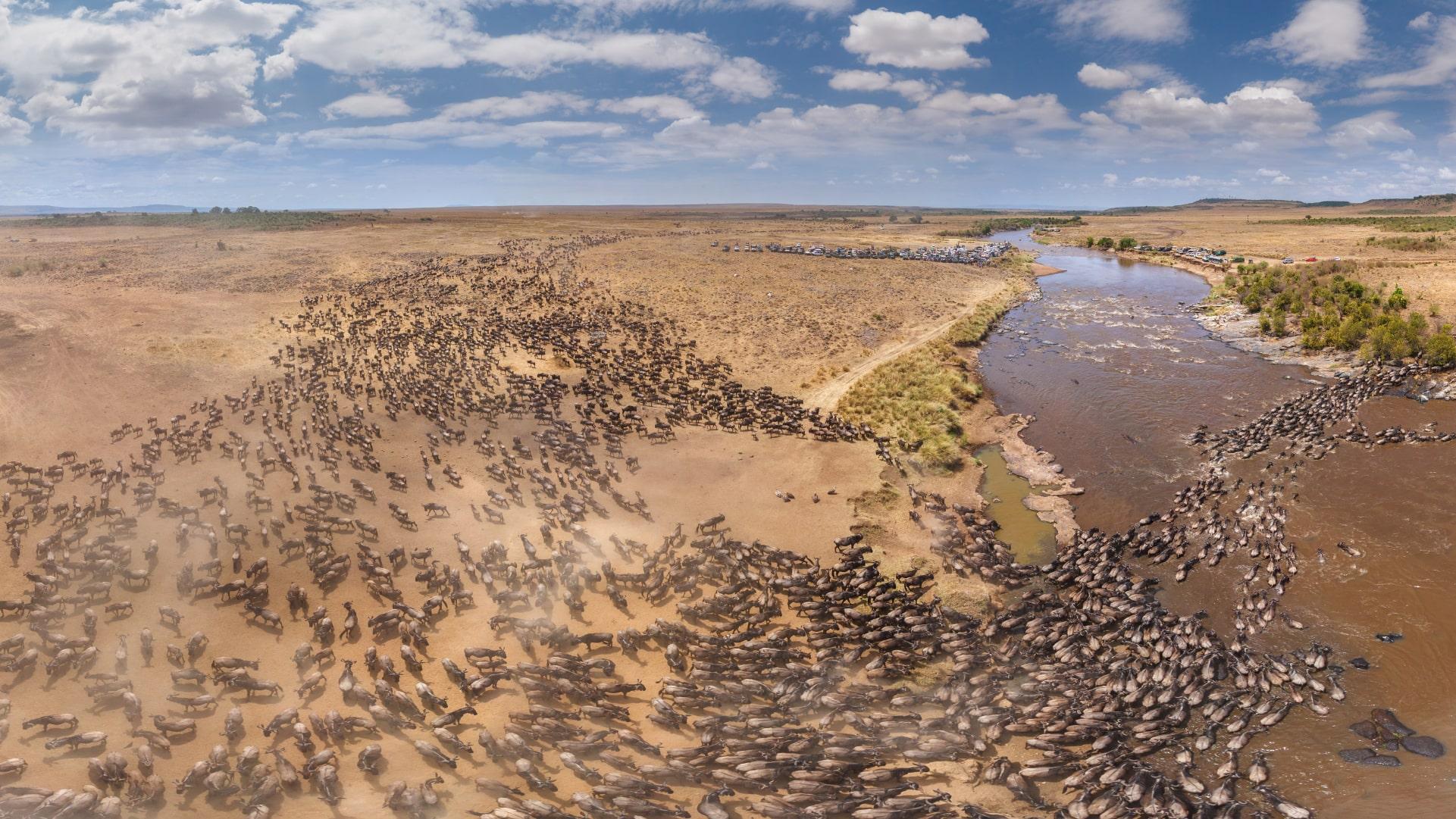
The Great Wildebeest Migration is one of Africa’s most extraordinary wildlife experiences. Across the vast plains of Tanzania’s Serengeti ecosystem and Kenya’s Maasai Mara, enormous herds of wildebeest move in search of fresh grazing and water, accompanied by zebras, gazelles and predators that depend on them for survival.
Yet planning a successful Great Migration safari involves more than choosing July, August or September and booking a lodge; thus this great wildebeest migration viewing guide is must-read!
The herds move in response to rainfall, grazing conditions and local weather. Calving takes place mainly on the southern plains, while the famous Mara River crossings are associated with the northern Serengeti and Maasai Mara. These experiences occur in different places and at different times, and none follows a guaranteed calendar.
This guide by Astute Africa Safaris helps you choose a migration safari based on the wildlife experience you most want to see, the time available, your budget, preferred accommodation and travel style.
Whether you dream of photographing thousands of wildebeest on open plains, watching newborn calves take their first steps, witnessing a river crossing or combining wildlife viewing with a luxury East African holiday, the right itinerary begins with understanding where the herds are likely to be.

The Great Wildebeest Migration transforms the Serengeti–Maasai Mara ecosystem throughout the year. Exact herd locations change with the seasons.
1. Quick answer: when and where should you see the Great Wildebeest Migration?
The best destination depends on the experience you want. Tanzania is especially important for southern-plains calving and the early stages of the northward movement, while northern Tanzania and Kenya offer opportunities to follow the herds around the Mara River during the northern migration season.

January–March: Calving season
Best for newborn calves
Focus on the southern Serengeti and the Ndutu area, including the adjoining Ngorongoro Conservation Area. Expect large herds, newborn calves, open plains and opportunities to observe predator behaviour.

April–June: Northward movement
Best for herds on the move
Consider the central and western Serengeti. Herds may spread over a wide area, with the Western Corridor and Grumeti region becoming important as the season progresses.

July–October: Northern migration and possible river crossings
Best for Mara River crossing opportunities
Choose the northern Serengeti or Maasai Mara according to your dates and the herd movements reported close to departure. River crossings are unpredictable and may not occur during your stay.

November–December: Return towards the southern plains
Best for changing landscapes
Consider the central and southern Serengeti as herds move south in response to the developing rains and fresh grazing.
These are broad seasonal patterns, not fixed dates. Some herds may arrive early, others late, and different groups can occupy different parts of the ecosystem simultaneously.
Our practical recommendation: if river crossings are your main priority, plan around the northern Serengeti or Maasai Mara and allow several nights in the appropriate region. If seeing newborn calves is more important, prioritise the southern Serengeti and Ndutu during the main calving period.
For broader seasonal advice, read our Best Time to Visit Africa guide.
2. Great Wildebeest Migration month-by-month calendar
The migration is a year-round ecological cycle rather than a short event that happens only in Kenya. Rainfall, grazing conditions and the location of the herds determine which area offers the best viewing opportunities at any particular time.
Use this calendar as a starting point for selecting your safari dates. It describes typical patterns, not a promise of where the animals will be on a specific day.
| Month | Where to consider staying | What you may experience |
|---|---|---|
| January | Southern Serengeti and Ndutu | Large herds gathering on the plains; calving activity may begin |
| February | Southern Serengeti and Ndutu | Peak calving period in many years, with newborn calves and predator activity |
| March | Southern Serengeti and central Serengeti | Calves growing, large herds and changing grazing conditions |
| April | Central and western Serengeti | Herds dispersing and moving as rainfall and grazing change |
| May | Central Serengeti and Western Corridor | Moving herds, seasonal landscapes and possible rutting activity |
| June | Western Corridor and central or northern Serengeti | Herd movement towards the north; possible Grumeti-area crossings |
| July | Northern Serengeti and Maasai Mara, depending on herd location | Increasing opportunities for Mara River crossing sightings in some years |
| August | Northern Serengeti and Maasai Mara | Strong opportunities to follow northern herds; crossings may occur |
| September | Northern Serengeti and Maasai Mara | Continued northern migration activity and possible river crossings |
| October | Maasai Mara, northern Serengeti or central Serengeti | Herds may remain in the north or begin moving south |
| November | Central and southern Serengeti | Southward movement as seasonal rains develop |
| December | Southern Serengeti and Ndutu | Herds may begin concentrating on the southern plains before calving |

How should you use this calendar when booking?
-
If travelling in January or February: prioritise accommodation in or near the southern plains. Being close to the calving area is generally more useful than staying in a distant part of the Serengeti.
-
If travelling in May or June: allow flexibility because the herds may be spread across central and western areas.
-
If travelling in July, August or September: compare the northern Serengeti and Maasai Mara based on recent herd reports, camp location and the number of nights available.
-
If travelling in October or November: do not assume the herds will have left Kenya or returned completely to the southern Serengeti. Movement depends on the rains.
-
If travelling in December: consider the southern plains, particularly for a trip that continues into January.
Before finalising your itinerary, ask your safari planner which areas are most appropriate for your specific dates, what current local reports indicate and whether the accommodation is positioned for your intended wildlife experience.
3. Kenya versus Tanzania: where should you stay?
Kenya and Tanzania share the Great Migration ecosystem, but they offer different ways to experience it. The right choice depends on the season, your preferred accommodation, the length of your holiday and whether you want to focus on river crossings, calving, broad landscapes or a multi-country safari.

Maasai Mara National Reserve, Kenya
The Mara is a strong option for travellers who want a Kenya-based migration safari, particularly during the northern season when herds may move between the reserve and the Serengeti.
Consider it for: classic open-plains game drives, big-cat viewing, a relatively focused Kenya safari and combinations with other Kenyan parks or the Indian Ocean coast.
Important consideration: the Mara offers excellent wildlife viewing beyond the migration season, but the location and density of migratory herds vary.

Mara Triangle, Kenya
The Mara Triangle is the western sector of the Maasai Mara ecosystem, with its own access arrangements and conservation management.
Consider it for: travellers who want to base themselves in a particular part of the Mara ecosystem and have their camp selected for practical access to likely wildlife-viewing areas.
Important consideration: the Mara Triangle does not guarantee a river crossing. The herd may be elsewhere, and crossings can happen at different points.

Northern Serengeti, Tanzania
Areas around Kogatende and Lamai are worth considering during the northern migration period. The right location can provide access to areas used by the herds before and during their movement around the Mara River.
Consider it for: travellers who want to explore Tanzania, stay in a migration-focused camp and potentially combine northern Serengeti viewing with other northern-circuit destinations.
Important consideration: a camp described as being in the northern Serengeti may still be a considerable drive from a particular crossing point.

Western Corridor and Grumeti, Tanzania
The Western Corridor becomes an important migration area as herds move north and northwest. The Grumeti River is one of the natural obstacles they may encounter.
Consider it for: travellers visiting Tanzania around the early to middle part of the northward migration, or those who prefer a longer Serengeti journey instead of focusing exclusively on the Mara River.
Important consideration: the timing of the herds and any river crossing varies between years.

Southern Serengeti and Ndutu, Tanzania
The southern plains are particularly important during calving season. Ndutu lies within the wider Serengeti–Ngorongoro ecosystem, with viewing areas spanning the Serengeti National Park and adjoining Ngorongoro Conservation Area.
Consider it for: newborn calves, large concentrations of wildebeest, predator activity and open landscapes well suited to wildlife photography.
Important consideration: confirm whether the camp lies within the national park or conservation area, as access rules, fees and driving arrangements may differ.
Which destination should you choose?
| Your priority | Best starting point |
|---|---|
| Newborn calves and calving-season wildlife | Southern Serengeti and Ndutu |
| Mara River crossing opportunities | Northern Serengeti or Maasai Mara |
| A shorter safari starting in Nairobi | Maasai Mara |
| A Tanzania-focused migration holiday | Serengeti, with the specific region selected for the season |
| A longer Kenya–Tanzania experience | Combine carefully selected areas according to dates and transfer times |
| More time for wildlife photography | A well-positioned camp with several nights in one region |
For a fuller comparison of destination logistics and safari styles, see Choosing Between the Serengeti and Maasai Mara.
4. River crossings versus calving season: which experience is right for you?
These are two very different migration experiences. Choosing between them is one of the most important decisions to make before requesting a quotation.

A. River crossings: dramatic wildlife behaviour
River crossings can involve hesitation at the bank, sudden movement into the water, struggling animals, strong currents and crocodiles. The drama lies partly in the uncertainty: a herd may gather for hours before crossing, change direction or disperse without crossing at all.
Best period to consider: generally July–October for northern migration and Mara River opportunities, with significant year-to-year variation.
Best approach: stay several nights in a well-positioned camp, use an experienced guide and remain patient. A crossing cannot be scheduled like a game drive.

B. Calving season: new life on the plains
During the calving period, the southern plains become an important nursery for the migrating herds. Newborn calves, maternal behaviour and predators moving through the grasslands create opportunities to observe a different side of the migration.
Best period to consider: usually January–March, with calving particularly concentrated around February in many years.
Best approach: choose accommodation near the likely calving grounds and allow time for slow, patient game drives across open plains.
What about large herds without a crossing?
Seeing a vast herd spread across the savannah can be an extraordinary experience in its own right. During some periods, the sheer scale of the migration, the movement of animals across the horizon and the presence of zebras and predators can provide rewarding sightings even when no river crossing occurs.
For many travellers, the better choice is not necessarily the event that looks most dramatic in photographs. It is the experience that matches their interests, expectations and available time.
A note on wildlife expectations: neither a crossing nor a predator hunt should be promised as a guaranteed part of a safari. Your itinerary can improve the opportunity to witness natural behaviour, but the animals determine what happens.
5. How many nights should you spend on a migration safari?
The number of nights you spend in the right region often matters more than trying to visit as many parks as possible.
A two-night safari may deliver a memorable wildlife experience, but it leaves less time to respond to changing herd locations or wait for a natural event. A longer stay gives you more opportunities, particularly if your main goal is to photograph a river crossing.
| Safari length | What it can realistically offer | Best suited to |
|---|---|---|
| 2–3 days | A focused stay in one migration destination with limited flexibility | Travellers with little time |
| 4 days | More time for repeated game drives and exploration of different areas within one region | First-time migration visitors |
| 5–6 days | A deeper wildlife experience, or a carefully planned combination of areas | Travellers prioritising the migration |
| 7 days | A focused regional safari or a well-paced multi-destination itinerary | Couples, families and photographers |
| 8–10 days | Greater scope to combine selected Kenya and Tanzania destinations where logistics allow | Travellers seeking a broader East African safari |
| 11–14 days | An immersive safari with additional wildlife regions, cultural experiences or a beach extension | Travellers with a flexible budget and more time |
These are planning guidelines rather than guarantees of sightings. Actual driving times, flight schedules, border arrangements and camp locations determine how much time is available for wildlife viewing.
Why three nights can be better than one night in several places
Moving camp every day may appear to maximise the number of destinations, but long transfers can reduce time in the field. Staying three or four nights in a suitable migration region allows your guide to revisit productive areas, respond to fresh information and plan game drives around local conditions.
For travellers seeking a river crossing, I would generally favour a longer stay in the most appropriate northern region over an itinerary that rushes through several parks. For calving season, a similar principle applies to accommodation close to the southern plains.
If your dates are fixed, build your route around those dates rather than assuming the herds will adjust to your itinerary.
6. Where should you stay? Choosing migration camps, lodges and conservancies
Accommodation is not just about the quality of your room. For a migration safari, the camp’s location, access routes, game-drive arrangements and seasonal operating dates can have a major effect on your experience.

Budget and value-focused accommodation
Budget-conscious travellers may consider simpler lodges, public campsites or budget tented camps, depending on the destination and season.
These options can help control accommodation costs, but the total safari price also depends on park fees, transport, meals, vehicle arrangements and the distance from the camp to the relevant wildlife-viewing area.
Before booking, check whether the accommodation is inside the park, in a nearby town or outside the main wildlife-viewing zone.
Mid-range lodges and tented camps
Mid-range accommodation can provide a good balance between comfort, location and cost. Depending on the property, you may have an en-suite tent or room, meals, shared or private game drives and convenient access to the park.
This category is worth considering for couples, families and first-time safari travellers who want comfort without selecting the most expensive properties.
Luxury migration camps and lodges
Luxury accommodation may offer spacious suites or tents, attentive service, quality dining, attractive locations and additional experiences such as private game drives or guided activities where permitted.
Some migration-focused camps operate seasonally or move between areas to remain relevant to the annual wildlife cycle. Confirm the actual operating location and dates before making a reservation.
Ultra-luxury and private safari experiences
High-end itineraries may include private vehicles, fly-in transfers, premium lodges, exclusive-use accommodation or private guiding arrangements.
These choices can improve comfort, privacy and flexibility. However, a more expensive room does not guarantee a river crossing or closer wildlife encounters. The camp’s location and the season remain crucial.
Should you stay in a conservancy or a national reserve?
In Kenya, some private conservancies adjoining the Maasai Mara offer different visitor numbers, accommodation styles and permitted activities from the main reserve. Their rules and access arrangements vary.
A conservancy may be attractive if you prefer a quieter setting or certain additional activities, but confirm where the migration herds are likely to be and whether the conservancy’s location suits your priorities.
In Tanzania, pay particular attention to whether your chosen camp is in the northern, central, western or southern Serengeti, or in the adjoining Ngorongoro Conservation Area. A camp advertised simply as a “Serengeti camp” may not be positioned for the experience you want.
What to ask before paying a deposit
-
Where exactly is the camp, and which park or conservation area is it in?
-
Is it operating on my travel dates?
-
How far is it from the likely migration-viewing area?
-
Are game drives shared or private?
-
Are park or conservation fees included in the quotation?
-
Are meals, drinking water and transfers included?
-
What happens if the herd moves to another area?
-
What are the cancellation and payment conditions?
Astute Africa Safaris can use these considerations to help match accommodation to your travel dates, preferred comfort level and wildlife priorities rather than selecting a camp based on photographs alone.
7. Getting there: road safari versus fly-in safari
Your starting point, the migration region and your budget will determine the most practical route.

Road safari
A road safari can be a good option for travellers who prefer overland travel, want to visit several destinations along the way or need to manage transport costs.
-
Particularly practical for selected Kenya itineraries departing from Nairobi.
-
Allows stops at additional destinations when the route and time available justify them.
-
Can involve long journeys on rough or slow roads, depending on the park.
-
Cross-border Kenya–Tanzania trips require careful planning of vehicle arrangements, border formalities and transfers.
Road travel is not always the most time-efficient way to reach a remote migration camp.

Fly-in safari
Fly-in safaris use scheduled or charter flights to reach suitable airstrips near safari areas, followed by a road transfer to the lodge or camp.
-
Useful for remote camps and travellers with limited time.
-
Can reduce lengthy road transfers.
-
Often costs more once flights, luggage restrictions and ground transfers are included.
-
Depends on available schedules, operating dates, weather and airstrip arrangements.
A fly-in itinerary should be built around the actual air service and camp location, not just the name of the national park.
Starting from Nairobi
For a Kenya-focused migration safari, Nairobi can be a practical starting point for travel to the Maasai Mara. You can compare road and fly-in options according to your budget, time and preferred accommodation.
Starting from Arusha or Kilimanjaro International Airport
For Tanzania, the most suitable arrival point depends on your international flight, your first destination and whether you plan to visit the southern, central or northern Serengeti. A safari may involve a combination of road transfers and domestic flights.
Combining Kenya and Tanzania
A cross-border migration itinerary can offer a broader experience of the ecosystem, but it needs realistic transfer planning. Do not assume you can simply drive between any two camps without considering the route, immigration procedures, vehicle restrictions, park access and the time required.
For a multi-country itinerary, review our Kenya and Tanzania Safari Packages and Kenya and Tanzania Safari Holidays.
8. Sample Great Wildebeest Migration safari itineraries
The itineraries below are planning frameworks, not fixed departures. The final routing should be matched to your travel dates, arrival airport, the current seasonal pattern and accommodation availability.

Option 1: Three-day Maasai Mara migration safari
Best for a short Kenya safari
Ideal for: travellers with limited time who want to focus on the Maasai Mara.
-
Day 1: Depart Nairobi by road or fly to the Maasai Mara, transfer to your camp and enjoy a game drive if arrival time permits.
-
Day 2: Enjoy morning and afternoon game drives, exploring areas selected by your guide according to wildlife activity and seasonal herd movements.
-
Day 3: Take a final game drive if time allows, then return to Nairobi by road or air.
What to expect: a focused wildlife experience with opportunities to see the Mara’s resident wildlife and, in the appropriate season, the migrating herds.
Limitation: this short itinerary offers little flexibility if the migration is concentrated in another part of the ecosystem. It should not be sold as a guaranteed river-crossing safari.
Option 2: Four-day northern Serengeti migration safari
Best for a focused Tanzania trip
Ideal for: travellers whose main goal is to explore the northern Serengeti during the northern migration period.
-
Day 1: Arrive in Tanzania and transfer or fly towards the northern Serengeti, according to your arrival arrangements.
-
Day 2: Spend the day exploring the northern Serengeti with a guide familiar with the area.
-
Day 3: Continue game drives, revisiting promising wildlife-viewing areas and river approaches where appropriate.
-
Day 4: Enjoy a final game drive if logistics permit, then transfer to the next destination or departure point.
What to expect: time to explore the northern ecosystem, with a chance of encountering migratory herds and possible river-crossing activity in the appropriate season.
Planning note: a four-day itinerary may require an additional arrival or departure night depending on international flights and domestic connections.
Option 3: Five-day Serengeti migration safari
Ideal for: travellers who want more time in Tanzania without rushing between too many parks.
-
Day 1: Arrive and transfer to the central Serengeti or another suitable starting region.
-
Day 2: Explore the selected Serengeti region with morning and afternoon game drives.
-
Day 3: Travel towards the migration area most appropriate for your dates, allowing for wildlife viewing along the way.
-
Day 4: Spend a full day exploring the chosen region.
-
Day 5: Enjoy a final game drive or transfer to your next destination, depending on your flight schedule.
What to expect: a more flexible Tanzania safari than a brief stop, with the precise route determined by the month and herd location.
Best use: this itinerary is particularly valuable when the selected region and transfer arrangements are aligned with the seasonal pattern.
Option 4: Seven-day Kenya and Tanzania safari
Ideal for: travellers seeking a wider East African experience.
One possible structure is:
-
Day 1: Arrive in Tanzania and travel to the central Serengeti or another appropriate starting region.
-
Day 2: Game drives in the Serengeti.
-
Day 3: Move towards the northern Serengeti or another region that matches the seasonal migration.
-
Day 4: Continue wildlife viewing in the selected region.
-
Day 5: Transfer towards Kenya using a carefully arranged cross-border or flight-and-transfer plan.
-
Day 6: Explore the Maasai Mara.
-
Day 7: Enjoy a final game drive and transfer to your departure point.
Important: this is an ambitious outline, not a universal seven-day route. Border logistics, road distances and air connections can consume valuable time. If your priority is maximising migration viewing, it may be better to spend the full week in one country or use additional days for the cross-border journey.
Option 5: Ten-day Kenya and Tanzania migration safari
Best for a broader wildlife journey
Ideal for: travellers who want to explore both countries with time for multiple landscapes and a more immersive safari.
-
Days 1–2: Arrive in Tanzania and explore the central Serengeti or another appropriate first region.
-
Days 3–5: Travel to the seasonal migration area, such as the northern Serengeti during the northern migration period or the southern plains during calving season.
-
Days 6–7: Continue wildlife viewing in the selected area, with time for patient game drives.
-
Day 8: Transfer towards Kenya, with the routing and border arrangements confirmed in advance.
-
Day 9: Explore the Maasai Mara if the itinerary, season and transfer arrangements support this.
-
Day 10: Enjoy a final game drive or transfer to your onward flight, depending on departure arrangements.
What to expect: a wider perspective on the Serengeti–Mara ecosystem and opportunities to see different landscapes and wildlife.
A better alternative in some seasons: if the herds are concentrated in one region, a ten-day itinerary focused on that region and nearby destinations may provide more time in the field than a cross-border route.
What about a calving-season itinerary?
For January–March, the routing should prioritise the southern Serengeti and Ndutu rather than automatically following a northern Serengeti–Maasai Mara plan.
A five- to seven-day safari can allow several days around the calving grounds, with additional destinations added only where driving time and seasonal conditions make sense.
For more itinerary ideas, explore our Kenya and Tanzania Safari Packages.
9. How much does a Great Wildebeest Migration safari cost?
There is no single price for a migration safari. The total depends on the country, season, accommodation, number of nights, transport, park fees, group size and whether you choose shared or private game drives.
Migration-season accommodation in a sought-after location may cost more than a comparable property elsewhere or outside peak dates. Fly-in arrangements and premium camps can also increase the overall budget.
Instead of advertising an unsupported universal price, Astute Africa Safaris should offer travellers a clear comparison of what different safari styles include.

Budget and value-focused safari
Suitable for cost-conscious travellers who are comfortable with simpler accommodation, shared services where available and a carefully managed itinerary.
Main cost considerations: park fees, road transport, basic accommodation and the number of safari days.

Mid-range safari
A balance between comfort, wildlife access and overall value, with suitable lodges or tented camps and a well-planned game-drive schedule.
Main cost considerations: camp location, room category, meals, vehicle arrangements and seasonal rates.

Luxury safari
For travellers who prioritise comfort, personalised service, attractive accommodation and potentially fly-in transfers or private game drives.
Main cost considerations: premium seasonal camps, flight connections, private guiding and additional experiences.

Ultra-luxury or exclusive safari
May include private-use accommodation, high-end lodges, charter flights, tailored guiding and additional privacy.
Main cost considerations: exclusive-use arrangements, charter costs, premium properties and bespoke experiences.
What determines the final quotation?
| Cost factor | Why it matters |
|---|---|
| Travel month | Seasonal rates and demand vary |
| Number of nights | Longer trips usually increase total expenditure but may reduce the pressure to rush |
| Camp location | A migration-focused camp may cost more than a property farther away |
| Accommodation category | Basic camps and premium lodges have different rates |
| Transport | Road safaris, scheduled flights and private charters have different cost structures |
| Group size | Private vehicle and guide costs can be shared among travellers |
| Park and conservation fees | These vary by destination, visitor category and applicable rules |
| Extras | Balloon safaris, private guides, drinks, tips and optional activities may cost extra |
How to request an accurate migration safari quotation
When contacting Astute Africa Safaris, provide:
-
Your intended travel dates and flexibility.
-
The number of adults and children travelling.
-
Your preferred country or countries.
-
Whether your priority is calving, large herds or river-crossing opportunities.
-
Your preferred accommodation level.
-
Whether you prefer road travel or fly-in transfers.
-
Any additional destinations, such as the Kenyan coast, that you would like to include.
Your quotation should clearly identify what is included, what is excluded, the payment schedule and the applicable cancellation terms.
For general budgeting guidance, read our Africa Safari Cost Guide.
10. What is included in a migration safari package?
Inclusions vary by operator and itinerary. Always check the written quotation instead of assuming every package covers the same services.
| Item | What to confirm |
|---|---|
| Accommodation | Number of nights, room or tent category and meal plan |
| Transport | Private or shared vehicle, road transfers and airport transfers |
| Game drives | Number of drives, vehicle type and whether a private guide is included |
| Park fees | Which park, reserve or conservation fees are included |
| Flights | Whether domestic flights, baggage allowances and transfers are covered |
| Meals and drinks | Included meals, drinking water and any beverage exclusions |
| Optional experiences | Balloon safaris, cultural activities and other paid extras |
| Taxes and levies | Any additional charges not already included |
| Insurance | Whether travel insurance is excluded and must be arranged independently |
| Booking conditions | Deposit, balance deadline, cancellation and amendment terms |
Booking early: what should you know?
Migration-season camps can have limited availability, particularly in locations sought after for river crossings or calving season. Booking early gives you more accommodation choices and more opportunity to secure a practical location for your dates.
However, booking early does not make the wildlife event predictable. It secures your travel arrangements, not a guaranteed crossing.
Before paying, read the operator’s terms, check the details of your package and make sure you understand what happens if flights, weather or other operational factors require changes.
11. What should you pack for a Great Migration safari?
The weather varies by region and season. Early mornings can be cool, afternoons warm, and conditions dusty or wet depending on the time of year.

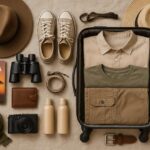
Essential packing checklist
-
Lightweight, breathable clothing in neutral colours.
-
A warm fleece or jacket for early morning game drives.
-
Comfortable closed shoes.
-
A sun hat, sunglasses and high-SPF sunscreen.
-
Insect repellent appropriate for your destination.
-
Binoculars for observing wildlife at a distance.
-
A camera, spare batteries and memory cards if you photograph wildlife.
-
Personal medication and basic toiletries.
-
A reusable water bottle where suitable.
-
A waterproof layer for possible rain.
-
A small day bag and any essential travel documents.
Photography tips for migration viewing
A telephoto lens is useful for distant wildlife, while a wider lens can capture the scale of a herd across the plains. Bring extra batteries and memory cards, and ask your guide about the best position for safe, respectful photography.
For river crossings, patience is essential. A herd may gather and retreat repeatedly. Avoid pressuring your guide to drive dangerously or move off permitted tracks to obtain a photograph.
For a more complete list, see our African Safari Packing List Guide.
Documents and practical preparations
Check your passport validity, entry requirements, visa or electronic travel authorisation requirements, vaccination advice and travel insurance for every country on your itinerary. Requirements can change, so confirm them through the relevant official authorities before departure.
If your safari combines Kenya and Tanzania, verify the entry arrangements for both countries and allow sufficient time for cross-border transfers.
Travel insurance should be appropriate for your activities and should address medical emergencies, evacuation, trip interruption and other risks relevant to your circumstances.
12. Responsible Great Migration viewing
The Great Migration is a natural event, not a wildlife performance. The herds decide when to move, where to graze and whether to cross a river. Responsible safari planning respects that reality.
The Tanzania National Parks Authority publishes guidance for Mara River crossings, and visitors should follow park management instructions and their guide’s directions.

How to observe wildlife responsibly
-
Respect the animals’ space. Never pursue, surround or deliberately frighten wildlife.
-
Keep clear of riverbanks and crossing routes when instructed. Do not block animals or obstruct other vehicles.
-
Remain on permitted roads and tracks. Off-road driving can damage sensitive habitats and disturb wildlife.
-
Keep noise low. Avoid shouting, unnecessary horn use or other disturbances.
-
Never feed wild animals. Human food can harm wildlife and alter natural behaviour.
-
Follow your guide and park authorities. Their instructions help protect both visitors and animals.
-
Choose operators who respect local communities and conservation rules. Ask how your trip supports responsible tourism and whether the proposed activities are permitted.
Why responsible viewing improves the experience
Patient observation often produces more meaningful encounters than chasing a dramatic moment. Watching herd behaviour, listening to the sounds of the plains and observing how animals interact with their environment can be just as rewarding as witnessing a river crossing.
A well-designed migration safari should prioritise wildlife welfare, visitor safety and the long-term protection of the ecosystem.
13. Frequently asked questions about the Great Wildebeest Migration
1. What is the best month to see the Great Wildebeest Migration?
It depends on the experience you want. January–March is generally best for calving in the southern Serengeti and Ndutu, while July–October is a common planning window for river-crossing opportunities in the northern Serengeti and Maasai Mara. Actual herd locations vary each year.
2. Is the Great Migration better in Kenya or Tanzania?
Neither country is universally better. Tanzania offers important calving grounds and extensive Serengeti viewing areas, while Kenya’s Maasai Mara is a major northern-season destination. Your dates and the location of the herds should determine the choice.
3. Can I guarantee seeing a wildebeest river crossing?
No. Crossings depend on animal behaviour, rainfall and river conditions. You can improve your chances by staying several nights in a suitable region during the appropriate season, but no ethical operator should guarantee a crossing.
4. How many days do I need for a Great Migration safari?
Three days can provide a useful introduction to a single destination. Four to six days allow more time for game drives and flexibility, while seven to ten days provide more scope for a broader safari or selected multi-country itinerary.
5. Is the migration visible throughout the year?
The migration is a year-round cycle, but the location and concentration of the herds change. Different months offer different experiences, and the best region should be selected for the expected seasonal pattern.
6. Can I see the Big Five during a migration safari?
The Serengeti and Maasai Mara support several iconic large mammals and predators. Sightings of individual species vary, and a migration safari is not a guarantee of seeing every member of the Big Five. If seeing specific species is a priority, discuss this when planning your itinerary.
7. Is a road safari or fly-in safari better?
A road safari can offer value and additional stops, while a fly-in safari can reduce long transfers to remote camps. The better option depends on your budget, travel dates, departure point and available flight connections.
8. Is a migration safari suitable for families with children?
Yes, with suitable planning. Consider the children’s ages, driving times, camp policies, family accommodation and the pace of game drives. Ask whether the camp accepts your children’s ages and whether private game drives are available.
9. Can I combine a migration safari with a beach holiday?
Yes. A Kenya safari can be combined with the Kenyan coast, including Diani, Watamu or Malindi, subject to flight schedules and your available time. Tanzania itineraries can also be combined with Zanzibar. Allow enough days to enjoy both the safari and the beach without rushing.
10. When should I book my migration safari?
Book as early as practical if you want a particular camp, a popular travel month or a family room. Early booking increases accommodation choices but does not guarantee a particular wildlife event.
11. Are the Mara River crossings in Kenya or Tanzania?
The Mara River flows through the wider Kenya–Tanzania ecosystem, and crossing opportunities may occur in the northern Serengeti as well as the Maasai Mara area. The most suitable base depends on where the herds are and which crossing areas are accessible during your visit.
12. Can I visit the Serengeti and Maasai Mara on the same safari?
Yes, provided your itinerary allows for realistic transfers, border formalities and sufficient wildlife-viewing time. A longer itinerary is generally easier to plan well than a rushed multi-country trip.
13. Will I see a river crossing if I stay near the Mara River?
Staying near a suitable river area may improve access to crossing opportunities, but herds can gather elsewhere or not cross during your stay. Camp location should be considered alongside seasonal herd movement and the length of your safari.
14. Is the migration worth seeing outside the peak months?
Absolutely. The migration includes calving, large herds moving across the plains and seasonal returns south. The Serengeti and Maasai Mara also support resident wildlife beyond the main migration concentrations, making them worthwhile safari destinations throughout much of the year.
14. Plan your Great Wildebeest Migration safari with Astute Africa Safaris
The best Great Migration safari is not necessarily the most expensive one or the itinerary that visits the greatest number of parks. It is the journey that matches your dates, interests, preferred accommodation and available time to the seasonal movement of the wildlife.
At Astute Africa Safaris, we can help you plan a personalised safari in Kenya or Tanzania, or explore a combined itinerary where the timing and logistics make sense.
Whether you are travelling as a couple, a family, a group of friends or a wildlife photographer, your itinerary can be designed around the experience you value most.

You have the idea now from “Great Wildebeest Migration Viewing Guide”; Tell us what your ideal migration safari looks like
Request a tailor-made migration safari
Share your preferences to help us plan a suitable itinerary and quotation.
Contact Astute Africa Safaris directly
info@astuteafricasafaris.com
Let us help you choose the right season, destination and accommodation for your Great Wildebeest Migration safari, with a realistic itinerary built around your priorities.
Leave a comment:
You must be logged in to post a comment.
Comments (2)
Astute Africa Safaris,
05 May, 2026REF: Crafting Your Bespoke African Safari Experience with Astute Africa Safaris
Jambo,
Thank you for your interest in exploring the wonders of Africa with Astute Africa Safaris. We pride ourselves on creating immersive, tailor-made journeys that align perfectly with your personal interests, pace, and travel aspirations.
Because every safari is a unique narrative, we do not believe in “one-size-fits-all” pricing. To ensure we provide you with an accurate and competitive quotation that reflects the specific lodges, wildlife experiences, and logistical arrangements you desire, we invite you to connect with our team for a personalized consultation.
Please contact us at info@astuteafricasafaris.com, Whatsapp +254762663272 or fill the inquiry form with a few details regarding your preferred travel dates, group size, and specific interests (e.g., photography, luxury relaxation, or adventure trekking). Once we have these details, we will curate a comprehensive proposal designed specifically for you.
We look forward to the possibility of helping you plan an unforgettable journey.
Warm regards,
Team Astute Africa Safaris
The Optimal Window: Why July, August, and September Define the Best time for Kenya safari - Astute Africa Safaris,
05 May, 2026[…] primary driver of this peak season is the Great Migration, a natural phenomenon of unparalleled scale. As millions of wildebeest, zebras, and gazelles move […]