

- 943 Views
- 37 Min Read
- (1) Comment
A 10-day Kenya safari gives you time to experience far more than a single wildlife destination. You could watch elephants walk beneath Mount Kilimanjaro, follow lions across the golden plains of the Maasai Mara, search for endangered rhinos in the Great Rift Valley, discover the distinctive wildlife of northern Kenya or finish your adventure with a few peaceful days beside the Indian Ocean.
The challenge is deciding how to combine these experiences without spending too much of your holiday travelling between destinations.
Kenya’s appeal lies in its remarkable variety. The Maasai Mara is celebrated for its big cats and open grasslands, Amboseli for its elephant herds and mountain scenery, Lake Nakuru for its rhino sanctuary and birdlife, and Samburu for wildlife adapted to the country’s drier northern landscapes.
This guide presents five different ways to spend 10 days in Kenya, from a classic first-time safari to a northern wilderness expedition and a wildlife-and-beach holiday. Each itinerary explains the recommended route, daily experiences, travel considerations, accommodation approach and the type of traveller it suits.
Whether you are planning a honeymoon, a family holiday, a photographic safari, a luxury escape or an adventure on a moderate budget, use these itineraries as starting points for a journey designed around your interests.

Maasai Mara, Amboseli and the Kenyan coast.
Which 10-day Kenya safari is right for you?
| Safari style | Suggested route | Best for |
|---|---|---|
| 1. Classic wildlife safari | Nairobi – Lake Nakuru – Maasai Mara – Amboseli – Nairobi | First-time visitors and Big Five enthusiasts |
| 2. Northern wilderness safari | Nairobi – Ol Pejeta – Samburu – Laikipia – Nairobi | Conservation, rare species and quieter landscapes |
| 3. Big cats and photography | Nairobi – Maasai Mara – private Mara conservancy – Nairobi | Photographers and serious wildlife enthusiasts |
| 4. Safari and beach escape | Nairobi – Amboseli – Tsavo – Diani Beach | Couples, families and relaxation seekers |
| 5. Family-friendly safari | Nairobi – Lake Naivasha – Maasai Mara – Nairobi | Families and travellers seeking varied activities |
These are proposed routes, not fixed departures. Exact overnight stops, park entry arrangements, accommodation and transfers should be confirmed when the safari is quoted. A fly-in version may be appropriate when maximising time in the wilderness matters more than travelling overland.
A useful planning principle: Ten days is enough for a rich Kenya safari, but not enough to visit every major park comfortably. Choose two or three principal wildlife regions, or combine a shorter safari with a beach stay, rather than trying to cover the whole country.
Itinerary 1: The classic 10-day Kenya safari — Maasai Mara, Lake Nakuru and Amboseli

Best for: first-time African safari travellers, Big Five enthusiasts, couples and travellers who want Kenya’s best-known landscapes.
This route brings together three contrasting wildlife destinations: the open plains of the Maasai Mara, the lakeside and woodland habitats of the Great Rift Valley, and the elephant-rich plains of Amboseli. It offers a broad introduction to Kenya without attempting to include too many distant regions.
At a glance
-
Days 1–2: Nairobi and an introduction to Kenya
-
Days 3–5: Maasai Mara National Reserve
-
Days 6–7: Lake Nakuru National Park
-
Days 8–9: Amboseli National Park
-
Day 10: Return to Nairobi and departure
This sequence is best suited to travellers comfortable with a safari involving several road transfers. If you prefer to spend less time on the road, ask about flying between selected destinations and adjusting the number of nights in each park.
Day 1: Arrive in Nairobi
Arrive at Jomo Kenyatta International Airport, where your arrival arrangements can be coordinated with your accommodation and onward safari plans.
Depending on your arrival time, settle into your hotel, enjoy a relaxed meal and recover from your international flight. If you arrive early enough, you might add a city excursion or visit an attraction such as the Giraffe Centre, subject to opening hours and advance booking requirements.
Avoid overloading the first day with activities. A rested start makes early-morning game drives more enjoyable.
Overnight: Nairobi hotel selected to suit your budget and preferred comfort level.
Day 2: Nairobi to the Maasai Mara

After breakfast, travel towards the Maasai Mara, either by road or by scheduled or chartered flight where available.
A road journey provides changing views of the Kenyan countryside and the Great Rift Valley region, but travel time varies with the route, weather, traffic and road conditions. A flight can reduce transit time and give you more time at camp.
After arriving and checking in, enjoy an afternoon game drive if your arrival time and park access arrangements permit.
The Mara’s open grasslands are home to lions, cheetahs, leopards, elephants, buffalo, giraffes, zebras and many other species. Wildlife sightings are never guaranteed, but spending several nights in the ecosystem gives your guide more opportunities to locate animals and interpret their behaviour.
Overnight: Maasai Mara lodge or tented camp.
Day 3: Full-day wildlife safari in the Maasai Mara

Begin with an early-morning game drive, when the cooler conditions can make wildlife activity easier to observe.
Depending on animal movements and your interests, your guide may search for lion prides, leopards resting in trees, cheetahs on open plains, elephants moving between feeding grounds or large herds of grazing herbivores.
You can return to camp for breakfast and relaxation, or arrange a longer game drive with a packed lunch, depending on the camp’s location and your preferred pace.
The afternoon offers another opportunity to explore. Rather than measuring success by the number of animals photographed, take time to appreciate behaviour: a herd protecting its young, a predator stalking prey, or giraffes browsing among scattered acacias.
Overnight: Maasai Mara.
Day 4: Another day in the Maasai Mara
Use your second full day to explore different parts of the reserve or, if your accommodation is located in a private conservancy, enjoy activities permitted by that conservancy.
Your guide can tailor the day to your priorities, whether those are big cats, birdlife, photography, landscapes or learning how wildlife interacts with livestock and local communities.
If witnessing the Great Wildebeest Migration is a major objective, explain this before booking. The herds move seasonally, and river crossings are unpredictable; no responsible operator should promise a particular crossing on a particular day.
Overnight: Maasai Mara.
Day 5: Maasai Mara to Lake Nakuru

After breakfast, depart for Lake Nakuru National Park in the Great Rift Valley.
The journey takes a substantial part of the day, depending on your exact camp, road conditions and route. Plan the afternoon realistically rather than assuming a full game drive will always be possible after arrival.
Lake Nakuru is especially appealing to travellers interested in rhinos, diverse birdlife and a different landscape from the Mara’s open plains. The park’s habitats include lakeshore, woodland and grassland.
Overnight: Lodge near or within the park, subject to availability and access arrangements.
Day 6: Explore Lake Nakuru National Park
Spend the morning and, if practical, the afternoon on game drives.
Look for black and white rhinos, giraffes, buffalo, water-associated birds and other wildlife supported by the park’s varied habitats. Flamingo numbers change with water conditions and food availability, so the lake should not be booked on the assumption that it will always be covered in pink birds.
The combination of scenic viewpoints, wildlife and birding makes this a rewarding stop for photographers and nature lovers.
Overnight: Lake Nakuru area.
Day 7: Lake Nakuru to Amboseli National Park

After breakfast, travel south towards Amboseli. This is another significant transfer, so consider a fly-in alternative if your budget permits and the available connections suit the itinerary.
Amboseli is known for its elephant herds and expansive views towards Mount Kilimanjaro across the border in Tanzania. The mountain is often partly obscured by cloud, so the clearest photographic views cannot be guaranteed.
Arrive at your lodge, settle in and take an afternoon game drive if time allows.
Overnight: Amboseli lodge or tented camp.
Day 8: Full-day safari in Amboseli
Dedicate the day to exploring Amboseli’s changing habitats.
Elephants are a major attraction, and the park’s landscapes offer striking photographic compositions when the mountain is visible. You may also see buffalo, zebras, giraffes, antelope and a range of birds.
Ask your guide to allow time for observation and photography rather than rushing between sightings. Early mornings can offer softer light and a better chance of seeing the mountain before cloud builds, although conditions vary.
Overnight: Amboseli.
Day 9: Another day in Amboseli
Enjoy a final full or flexible safari day. You might take an early game drive, spend time at the lodge during the warmer part of the day and head out again in the afternoon.
A second full day provides breathing space in the itinerary and allows you to revisit promising areas rather than treating the park as a single stop.
Overnight: Amboseli.
Day 10: Amboseli to Nairobi
Enjoy breakfast before transferring to Nairobi by road or an available flight connection.
For international departures, the transfer should be planned around your flight time, check-in requirements and the possibility of delays. When the international flight leaves early, an overnight stay in Nairobi before departure may be the safer arrangement.
Why choose this itinerary? It offers a balanced first safari with three distinct destinations and good opportunities for varied wildlife photography. Its main trade-off is the time spent transferring between parks.
Itinerary 2: Northern Kenya wilderness — Ol Pejeta, Samburu and Laikipia

Best for: repeat safari travellers, conservation enthusiasts, birdwatchers, photographers and visitors who want landscapes beyond the classic southern circuit.
If your idea of an exceptional safari includes unusual wildlife, dramatic dry-country scenery and a deeper understanding of conservation, northern Kenya deserves serious consideration.
This itinerary explores the Laikipia region and Samburu’s distinctive ecosystems. Ol Pejeta is renowned for rhino conservation, while Samburu is associated with five distinctive dry-country species commonly called the Samburu Special Five: Grevy’s zebra, reticulated giraffe, gerenuk, beisa oryx and Somali ostrich.
The route is less about ticking off famous parks and more about discovering the ecological diversity of Kenya.
At a glance
-
Day 1: Arrive in Nairobi
-
Days 2–4: Ol Pejeta Conservancy
-
Days 5–7: Samburu National Reserve and surrounding conservancies
-
Days 8–9: Laikipia or Mount Kenya region
-
Day 10: Return to Nairobi
The itinerary can be rearranged to reduce backtracking, depending on accommodation availability, flight schedules and whether the final nights are spent in Samburu or the Mount Kenya region.
Day 1: Arrive in Nairobi
Arrive, transfer to your hotel and rest. If your arrival is early, you can explore a selected Nairobi attraction, but keep the schedule flexible.
This is also a good opportunity to discuss conservation interests with your safari planner, including whether you want to prioritise rhinos, dry-country wildlife, birding or community-led tourism.
Overnight: Nairobi.
Day 2: Nairobi to Ol Pejeta Conservancy

Travel north towards the foothills of Mount Kenya and the Ol Pejeta Conservancy.
After checking in, enjoy an afternoon game drive if time permits. Ol Pejeta combines wildlife tourism with conservation programmes, including the protection of endangered rhinos. Specific conservation experiences and visits to restricted areas must be arranged according to the conservancy’s current rules.
This is an excellent destination for travellers who want to learn about the challenges of protecting threatened species alongside the usual excitement of game viewing.
Overnight: Ol Pejeta.
Day 3: Wildlife and rhino conservation at Ol Pejeta
Spend the day exploring the conservancy with your guide.
Look for rhinos, elephants, lions, buffalo, giraffes and plains wildlife. Sightings vary, and the presence of a particular species should never be treated as guaranteed.
If available and appropriate for your booking, add an authorised conservation experience to understand monitoring, habitat protection and the work involved in safeguarding endangered animals.
Overnight: Ol Pejeta.
Day 4: Another day in Ol Pejeta or the Laikipia landscape
Choose between a further wildlife-focused day and a more varied experience around Laikipia.
Depending on the property, available activities may include guided nature walks, birdwatching, visits to authorised conservation facilities or learning about community conservation initiatives.
Discuss these activities before booking: they are not offered at every camp, and some have age, safety or additional-cost requirements.
Overnight: Ol Pejeta or Laikipia.
Day 5: Travel to Samburu National Reserve

Continue north into Samburu’s drier landscapes.
The scenery changes from the greener central highlands to open scrub, rocky hills and riverine vegetation. The Ewaso Ng’iro River is an important feature of the ecosystem, attracting wildlife to its surrounding habitats.
Arrive at your camp and take an afternoon game drive if time allows.
Overnight: Samburu region.
Day 6: Search for Samburu’s distinctive wildlife
Today is dedicated to finding the wildlife that makes this region different from the Maasai Mara.
Your guide may look for:
-
Reticulated giraffes, recognised by their striking geometric coat patterns.
-
Grevy’s zebras, with narrow stripes and large rounded ears.
-
Gerenuks, slender antelopes known for standing upright to browse.
-
Beisa oryx, adapted to arid conditions.
-
Somali ostriches, distinctive large birds of dry northern habitats.
You may also encounter elephants, crocodiles near suitable river habitats, big cats and many bird species.
The best approach is to travel slowly and let your guide interpret the landscape. Dry-country wildlife can be remarkably well adapted to its surroundings, and finding it rewards patience.
Overnight: Samburu.
Day 7: A second full day in Samburu
Spend another day on morning and afternoon game drives, or choose a different activity offered by your camp.
A second day improves your opportunity to search for elusive species, observe animal behaviour and photograph the landscape under changing light.
If cultural experiences interest you, arrange a respectful, locally organised visit through your operator. Confirm what the visit includes and how local hosts benefit, rather than assuming every camp offers the same programme.
Overnight: Samburu.
Day 8: Samburu to Laikipia or the Mount Kenya region

Travel south towards Laikipia or the Mount Kenya region.
This transition introduces a different landscape and can provide a gentler final stage after several days of game drives. Depending on your chosen accommodation, you may have opportunities for birdwatching, guided walks or simply enjoying the cooler highland surroundings.
Overnight: Laikipia or Mount Kenya region.
Day 9: Conservation, scenery and a slower pace
Use the day for an experience that complements your wildlife drives. Options depend on the property and may include nature walks with qualified guides, birding, community initiatives or relaxation with views of the surrounding countryside.
For families, this can be an opportunity to balance wildlife viewing with activities that do not require sitting in a vehicle for most of the day.
Overnight: Laikipia or Mount Kenya region.
Day 10: Return to Nairobi
After breakfast, transfer to Nairobi by road or a suitable flight connection. Allow sufficient time for the journey and your onward international departure.
Why choose this itinerary? It offers a more conservation-focused and geographically varied experience than a standard Mara-only safari. It is particularly suited to travellers who have visited East Africa before or who are keen to learn about lesser-known species and ecosystems.
Itinerary 3: The big-cat and photography safari — Maasai Mara and private conservancies

Best for: wildlife photographers, keen birders, couples seeking an immersive safari and travellers who prefer fewer hotel changes.
Some travellers want to see as many destinations as possible. Others would rather spend longer in one wildlife-rich area, following animal movements and learning from an experienced guide.
This itinerary is designed for the second type of traveller.
By concentrating most of the safari in the Maasai Mara ecosystem, you reduce the number of long transfers and create more opportunities for patient wildlife observation. You can also consider a private conservancy, where activities and vehicle rules differ from those in the main reserve.
At a glance
-
Day 1: Arrive in Nairobi
-
Day 2: Travel or fly to the Maasai Mara
-
Days 3–5: Wildlife viewing in the main reserve
-
Days 6–8: Private conservancy experience
-
Day 9: Final photography and wildlife day
-
Day 10: Return to Nairobi
The balance between the national reserve and a private conservancy should be agreed before booking. The two experiences complement one another, but their access arrangements and activities are not identical.
Day 1: Arrive in Nairobi
Settle into your hotel and discuss your photography or wildlife priorities with your safari planner.
If you are travelling with long camera lenses, binoculars or specialist equipment, allow time to organise and check your kit. Confirm luggage restrictions before booking any light-aircraft transfers.
Overnight: Nairobi.
Day 2: Fly or drive to the Maasai Mara

Travel to your selected Mara camp.
A flight can be particularly worthwhile for photographers because it may preserve more time for game drives. A road transfer can suit travellers who prefer overland travel or wish to manage costs more closely.
After arrival, enjoy a game drive if your schedule allows.
Overnight: Maasai Mara.
Day 3: Early-morning big-cat safari
Begin before sunrise, when permitted by park rules and your camp’s arrangements.
Your guide may search for lions near resting areas, cheetahs on open grasslands or leopards along wooded river corridors. The objective is to observe, not to pressure animals into a particular position for photographs.
Allow time to watch how the animals move and interact. A sequence of natural behaviours can tell a more compelling story than a single close-up image.
Return to camp for meals and a break before an afternoon drive.
Overnight: Maasai Mara.
Day 4: Full-day exploration of the reserve

Choose between separate morning and afternoon drives or a full-day outing with a packed lunch, depending on the camp’s location and your preferences.
Photographers should discuss vehicle arrangements in advance. A private vehicle can offer greater flexibility over positioning, waiting times and equipment, though it increases the cost.
Birdwatchers can ask the guide to include wetlands, riverine habitats and other suitable areas rather than focusing exclusively on large mammals.
Overnight: Maasai Mara.
Day 5: Wildlife behaviour and the Great Migration
Dedicate the day to following wildlife movements and, when seasonally relevant, looking for migrating wildebeest and zebras.
The Great Migration is a year-round movement through the wider Mara–Serengeti ecosystem, with different areas becoming important at different times. Herd locations and river crossings cannot be guaranteed, so itineraries should not depend on a promised spectacle.
If migration viewing is a priority, ask your planner to select the location and travel dates carefully, using seasonal patterns as a guide rather than a guarantee.
Overnight: Maasai Mara.
Day 6: Move to a private Mara conservancy

Transfer to a camp in a private conservancy, such as a suitable property in Naboisho or Ol Kinyei, subject to availability.
Private conservancies can offer a different safari atmosphere, often with fewer vehicles and additional activities permitted by local management rules. Depending on the conservancy, these may include guided walks or night drives.
Check the exact rules of the area before booking. Not every activity is available everywhere, and some require a qualified guide or incur additional fees.
Overnight: Private conservancy.
Day 7: Explore the conservancy at your own pace
Arrange game drives around your interests. You may wish to spend longer observing a single pride of lions, photograph birds and smaller animals, or enjoy a guided walk where permitted.
Conservancy tourism can contribute to wildlife protection and local landowner income. Ask the operator how the particular property works with local communities and what conservation or community contributions are included in the price.
Overnight: Private conservancy.
Day 8: A day dedicated to specialist interests
Use this day to pursue a more specific interest, such as:
-
Wildlife photography with a private vehicle and guide.
-
Birdwatching across different habitats.
-
Learning about the relationship between livestock, wildlife and local land use.
-
A locally organised cultural experience, if offered and booked with appropriate consent.
If you prefer a less structured holiday, spend more time relaxing at camp between drives.
Overnight: Private conservancy.
Day 9: Final game drives and memorable moments
Enjoy one last full or flexible day in the Mara ecosystem.
This is a valuable opportunity to revisit favourite areas, look for species you have not yet seen, or simply appreciate the sounds and changing light of the African bush.
A safari is a journey through a living ecosystem, not a checklist of guaranteed sightings. Keeping the final day flexible makes the experience more rewarding.
Overnight: Private conservancy or Maasai Mara camp.
Day 10: Return to Nairobi
Take your scheduled flight or road transfer back to Nairobi, allowing enough time for onward travel.
Why choose this itinerary? It is ideal for travellers who value time in the field over the number of destinations visited. It also provides a strong foundation for a specialised photography or wildlife-focused holiday.
Itinerary 4: The 10-day Kenya safari and beach holiday — Amboseli, Tsavo and Diani
Best for: honeymooners, couples, families, beach lovers and travellers who want both wildlife and relaxation.
Why choose between a wildlife adventure and a tropical beach holiday when you can combine the two?
This itinerary begins with safari landscapes and ends on Kenya’s Indian Ocean coast. Amboseli offers elephant viewing and mountain scenery, while Tsavo’s vast landscapes bring a different sense of wilderness. Diani Beach provides time to unwind after early starts and game drives.
The coast is not simply an extra at the end of the holiday. It changes the rhythm of the trip, allowing you to enjoy swimming, marine excursions, coastal cuisine and time away from the safari vehicle.
At a glance
-
Day 1: Arrive in Nairobi
-
Days 2–3: Amboseli National Park
-
Days 4–5: Tsavo West or Tsavo East, depending on the route
-
Days 6–9: Diani Beach
-
Day 10: Transfer towards your departure point
This itinerary works best when transfers are planned carefully. Depending on flight availability, your final departure may require a connection through Nairobi or another suitable airport.
Day 1: Arrive in Nairobi
Transfer to your hotel and rest after your flight. Keep the day relaxed, particularly if you have travelled overnight.
Overnight: Nairobi.
Day 2: Nairobi to Amboseli National Park

Travel to Amboseli by road or an available flight connection.
After checking in, enjoy an afternoon game drive if time permits. The park is particularly well known for elephants and views towards Mount Kilimanjaro, although weather and visibility determine whether the mountain appears clearly.
Overnight: Amboseli.
Day 3: Explore Amboseli
Spend the day observing wildlife across the park’s varied habitats.
Look for elephants, zebras, giraffes, buffalo and antelope. Birdlife can also be rewarding, particularly for travellers who want to broaden their interests beyond large mammals.
For couples and photographers, early morning may provide excellent light and, on a clear day, striking mountain backdrops. For families, the guide can adapt the pace and duration of drives to suit children’s ages and energy levels.
Overnight: Amboseli.
Day 4: Amboseli to Tsavo

Travel towards Tsavo, choosing Tsavo West or Tsavo East according to your preferred route, accommodation and travel arrangements.
Tsavo is a vast wilderness region, and each section has its own landscapes and wildlife-viewing opportunities. Tsavo West is associated with varied terrain, volcanic features and springs, while Tsavo East is known for its expansive, drier plains and red-earth scenery.
Allow time for the transfer and an afternoon game drive only if the arrival schedule permits.
Overnight: Tsavo region.
Day 5: Wildlife safari in Tsavo
Enjoy morning and afternoon game drives, with time for lunch and rest at your lodge.
Your guide can help you explore the habitats around your chosen accommodation, searching for elephants, giraffes, buffalo, antelope, predators and birdlife.
Do not attempt to cover both Tsavo East and Tsavo West in a rushed single day. Choose the section that fits your overall route, or arrange a carefully planned crossing if it genuinely improves the trip.
Overnight: Tsavo region.
Day 6: Transfer to Diani Beach

Leave the safari landscape and travel towards the coast. Depending on your chosen parks and transport arrangements, this may involve a road transfer, rail connection or flight.
Arrive at your beach accommodation and enjoy the remainder of the day at leisure.
The change of pace is part of the appeal: no need to set out before sunrise unless you choose to. Enjoy the ocean, a relaxed meal and the sound of the waves.
Overnight: Diani Beach.
Day 7: Relax on the Kenyan coast
Make this a restful day.
Swim where conditions are safe, relax on the beach, enjoy the resort facilities or arrange an optional coastal excursion.
If snorkelling or diving interests you, select a reputable local operator and confirm weather, sea conditions, equipment and experience requirements before departure.
Overnight: Diani Beach.
Day 8: Explore Diani and its surroundings

Choose an activity that suits your travel style. Possibilities include a guided marine excursion, kayaking, paddleboarding, a local food experience or simply another day by the sea.
Marine activities depend on tides, weather, seasonal conditions and operator availability. If travelling with children, confirm age restrictions and safety provisions before booking.
Overnight: Diani Beach.
Day 9: A final full day at the beach
Enjoy a leisurely breakfast and a final day at your preferred pace.
Couples may choose a special dinner, while families may prefer a relaxed day with beach time and activities arranged through their accommodation.
Leave enough time for packing and confirming the next day’s transfers.
Overnight: Diani Beach.
Day 10: Departure
Transfer to the appropriate departure airport or onward connection.
If you have an international flight from Nairobi, do not assume that a same-day transfer from the coast will always be risk-free. Depending on the flight schedule and available connections, a final overnight stay in Nairobi may be advisable.
Why choose this itinerary? It combines Kenya’s wildlife with the coast, offering a more varied holiday and a gentler finish. It is especially appealing to honeymooners and families who want time to relax after safari activities.
Itinerary 5: The family-friendly 10-day Kenya safari — Lake Naivasha and the Maasai Mara

Best for: families with children, multigenerational holidays, first-time safari visitors and travellers who enjoy combining wildlife with varied activities.
A successful family safari is not simply an adult itinerary with children added. It needs sensible driving distances, comfortable accommodation, meal arrangements that work for different ages and enough time to rest between activities.
This itinerary combines the Great Rift Valley’s lakeside scenery with the wildlife-rich Maasai Mara. Lake Naivasha provides a change of pace, while the Mara offers the classic safari experience many children dream of.
The route can be adjusted for toddlers, school-age children, teenagers and grandparents. Some activities have minimum-age restrictions, so confirm these with the individual property before booking.
At a glance
-
Day 1: Arrive in Nairobi
-
Days 2–3: Lake Naivasha and the Great Rift Valley
-
Days 4–7: Maasai Mara National Reserve or a suitable private conservancy
-
Day 8: Return towards the Great Rift Valley
-
Day 9: Nairobi and a family-friendly activity
-
Day 10: Departure
This is a deliberately gentler option than a route visiting four or five national parks. If your family prefers to spend more time with wildlife, reduce the return stops and allocate the extra nights to the Mara.
Day 1: Arrive in Nairobi and settle in
Arrive in Nairobi and transfer to a family-friendly hotel.
Allow children to recover from the journey, enjoy a meal and get a good night’s sleep. If your arrival time permits, choose one suitable activity rather than packing the day with sightseeing.
Discuss any dietary needs, child seats, room arrangements and the children’s ages with your safari planner in advance.
Overnight: Nairobi.
Day 2: Nairobi to Lake Naivasha

Travel into the Great Rift Valley towards Lake Naivasha.
After arrival, settle into your accommodation and enjoy the surrounding landscape. Depending on the property, you may have opportunities for birdwatching, guided nature activities or a boat excursion operated under appropriate safety conditions.
Lake Naivasha is an attractive stop for families because it offers a different experience from extended game drives. Wildlife and birdlife are present around the lake, but encounters depend on location and conditions.
Overnight: Lake Naivasha.
Day 3: Explore Lake Naivasha and the surrounding region
Choose an activity suitable for the family.
Possible options include a guided walk in an authorised area, birdwatching, a boat trip with an approved operator or a visit to another nearby attraction. Hell’s Gate National Park may be suitable for some families, but walking and cycling plans should take account of age, fitness, weather, wildlife guidance and the park’s current rules.
Keep the schedule flexible. A relaxed day can be more enjoyable than trying to fit several activities into a single morning.
Overnight: Lake Naivasha.
Day 4: Lake Naivasha to the Maasai Mara

Travel towards the Maasai Mara and check into your selected lodge or camp.
The journey may be long for younger children, so plan regular breaks where practical and carry water, snacks and any essential travel items.
If you prefer to minimise road time, consider flying to an appropriate Mara airstrip and arranging a transfer to your camp.
Enjoy an afternoon game drive if your arrival time permits.
Overnight: Maasai Mara.
Day 5: A family safari in the Maasai Mara
Begin with a morning game drive, adjusted to the family’s energy levels.
Children may enjoy learning to identify elephants, zebras, giraffes, antelope and birds. An experienced guide can turn sightings into an engaging learning experience, explaining tracks, feeding behaviour and the relationships between animals and their habitats.
Between drives, allow time for meals, rest and swimming if your accommodation offers suitable facilities.
Overnight: Maasai Mara.
Day 6: A second day of wildlife discovery

Spend another day exploring the reserve or conservancy.
A private vehicle may be particularly useful for families because it allows you to return to camp when children need a break. However, a shared vehicle can be a more affordable option when its schedule and seating arrangements suit your group.
Ask whether the accommodation provides family tents, connecting rooms, children’s menus or age-appropriate activities. These details can make a substantial difference to the experience.
Overnight: Maasai Mara.
Day 7: A flexible wildlife day
Use the day to enjoy another morning and afternoon drive, or arrange a slower day at camp.
If a cultural visit is of interest, choose one organised with local hosts who participate willingly and explain the experience respectfully. Confirm the duration, cost and whether photography is permitted.
For families, this day is also an opportunity to revisit favourite wildlife areas or simply enjoy the natural surroundings without rushing.
Overnight: Maasai Mara.
Day 8: Return towards the Great Rift Valley
After breakfast, begin the return journey towards the Naivasha or Nairobi area, depending on your flight schedule and preferred overnight arrangement.
A stop in Naivasha can break up the journey and give children time away from the vehicle. Alternatively, a flight from the Mara may be preferable if your budget allows and connections are practical.
Overnight: Lake Naivasha or Nairobi.
Day 9: Nairobi family experience

Enjoy a suitable activity in or around Nairobi, depending on your interests and the time available.
Options may include Nairobi National Park, a pre-arranged conservation-related visit, a cultural attraction or relaxed shopping for locally made souvenirs.
Nairobi National Park offers a distinctive opportunity to see wildlife against the backdrop of a modern city.
Keep the final afternoon flexible so the family can prepare for departure.
Overnight: Nairobi.
Day 10: Departure
Enjoy breakfast and transfer to the airport at the recommended time.
If travelling with children, allow additional time for packing, airport procedures and any last-minute requirements.
Why choose this itinerary? It prioritises comfort, variety and family pacing instead of squeezing in too many destinations. It is particularly useful for families who want meaningful wildlife experiences without making every day a long transfer.
How to choose the best 10-day Kenya safari route
The right itinerary depends on the wildlife you most want to see, your preferred level of comfort, your travel dates and how much time you want to spend travelling between parks.

Choose the classic wildlife circuit if…
This is your first safari, you want to experience several iconic Kenyan landscapes, and seeing a wide range of wildlife is your main priority.

Choose northern Kenya if…
You enjoy distinctive species, conservation stories, dry-country scenery and a safari that feels different from the usual southern circuit.

Choose the photography route if…
You prefer fewer transfers, longer time in the field, specialist guiding and the flexibility to observe wildlife patiently.

Choose safari and beach if…
You want to combine game drives with ocean views, swimming, relaxation and coastal experiences.

Choose the family route if…
Comfort, manageable travel days, age-appropriate activities and flexible schedules matter as much as wildlife viewing.
When is the best time to take a 10-day Kenya safari?

Kenya can offer rewarding wildlife experiences at different times of the year. The best month for your trip depends on your preferred destinations, wildlife interests, tolerance for rain, accommodation budget and whether you want to combine safari with the coast.
| Travel period | What to consider |
|---|---|
| January–February | Often a useful period for travellers seeking generally drier conditions in many safari regions, though local weather varies. |
| March–May | The long-rains period can bring greener landscapes and changing road conditions. Some properties offer seasonal rates, but confirm access and availability. |
| June–October | A popular period for many safari routes. The Great Migration may be in the Mara ecosystem during part of this window, but timing varies each year. |
| November–December | Short rains can produce fresh landscapes and changing wildlife conditions. Rainfall and travel conditions vary by region. |
These are broad seasonal guides, not guarantees. Kenya’s climate varies between regions, and the coast, central highlands, Mara and northern Kenya do not always experience identical conditions.
When should you visit the Maasai Mara for the Great Migration?
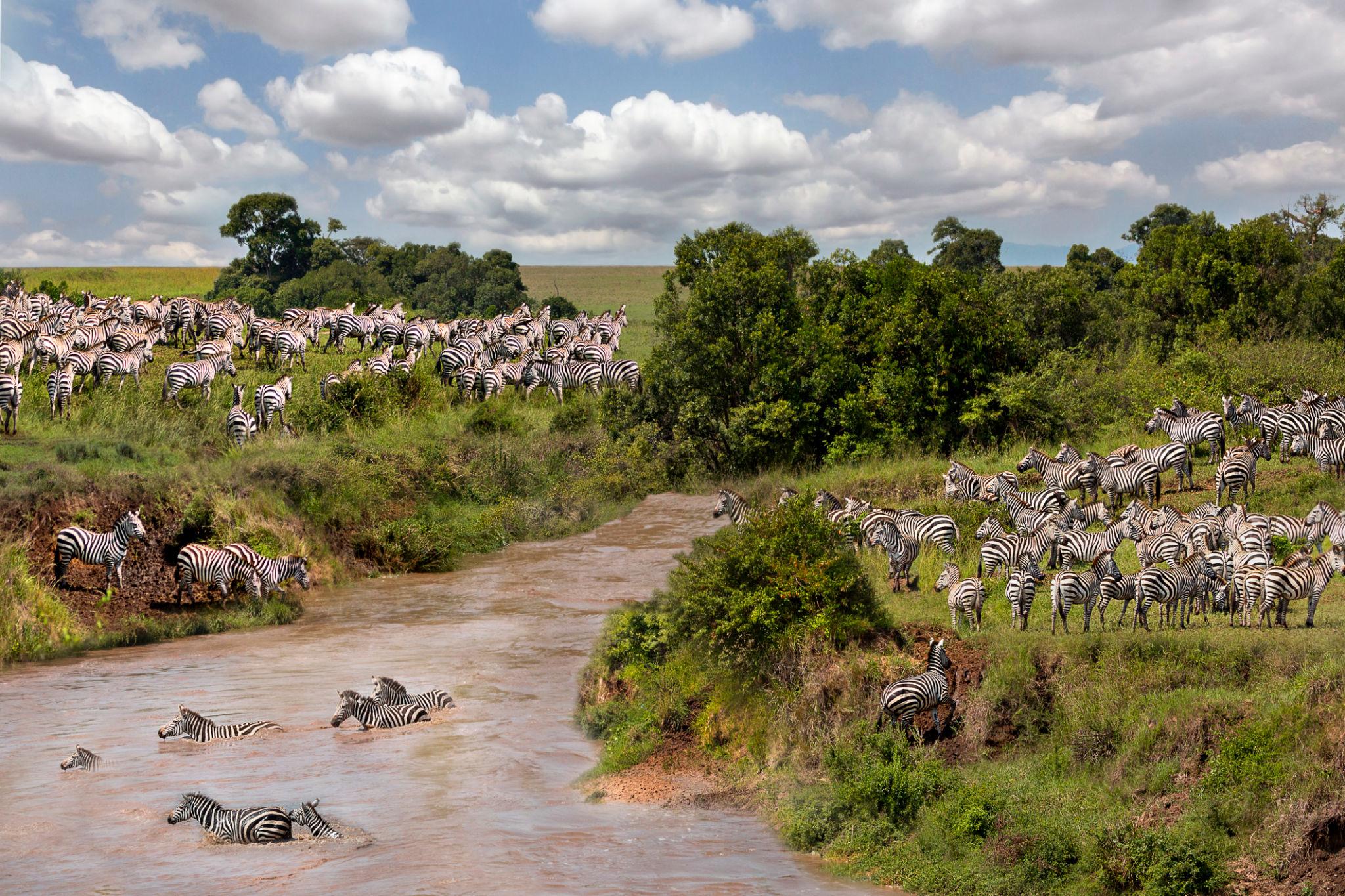
The Mara may host large numbers of migrating wildebeest and zebras during part of the year, but the herds move in response to rainfall and grazing conditions across the wider Serengeti–Mara ecosystem.
River crossings are especially unpredictable. If migration is your priority, consider allocating several nights to the Mara, choosing accommodation based on your dates and accepting that nature does not follow a fixed timetable.
Read our related guide to choosing between the Serengeti and the Maasai Mara if you are considering a cross-border safari instead.
Is a 10-day Kenya safari worthwhile outside the migration season?
Absolutely. Wildlife viewing in Kenya is not limited to the Great Migration.
The Maasai Mara supports resident wildlife, Amboseli is known for elephants and dramatic landscapes, and Lake Nakuru provides a different mix of birdlife and rhino conservation. Your route should be based on the experience you want rather than a single seasonal event.
How much does a 10-day Kenya safari cost?

There is no single price for a 10-day Kenya safari. Two travellers visiting the same parks can pay very different amounts depending on the accommodation, season, number of people sharing a vehicle, transport method and activities included.
The best way to budget is to compare complete itineraries rather than nightly accommodation rates alone.
What determines the total price?
| Cost factor | How it affects your safari |
|---|---|
| Accommodation | Basic camps, comfortable lodges and luxury tented camps have different rates and inclusions. |
| Season | Demand, availability and seasonal pricing can significantly affect the total. |
| Transport | A private 4×4 road safari, shared departure and fly-in safari have different costs. |
| Group size | Couples, families and larger groups distribute vehicle and guiding costs differently. |
| Park and conservancy fees | These depend on the destinations, applicable visitor categories and current rules. |
| Activities | Specialist guiding, private vehicles and optional experiences may add to the price. |
| Meals and drinks | Confirm which meals, beverages and extras are included in your quote. |
| International travel | Flights to Kenya, visas where applicable, travel insurance and other personal expenses may be additional. |
Can you do a 10-day Kenya safari on a moderate budget?
Yes. A carefully designed itinerary can offer excellent wildlife experiences without luxury accommodation at every stop.
Consider these practical ways to manage costs:
-
Choose two or three wildlife regions rather than covering the entire country.
-
Compare road transfers with available flights, including luggage restrictions and transfer costs.
-
Travel with friends or family if sharing a private vehicle suits your plans.
-
Consider comfortable mid-range lodges and camps rather than paying for premium accommodation every night.
-
Ask for a complete quotation showing park fees, meals, transport, accommodation and exclusions.
-
Compare the actual value of each itinerary rather than choosing solely on the lowest advertised price.
For more detailed planning, see our guide to booking an African safari tour.
Where should you stay during your 10-day Kenya safari?

Your accommodation is part of the safari experience, not merely somewhere to sleep. A well-positioned camp can reduce time spent travelling to wildlife areas, while a property with a swimming pool, family rooms or spacious communal areas may make a significant difference to your comfort.
Luxury safari lodges and camps
Best for honeymooners, special occasions and travellers who value personalised service, high levels of comfort and carefully planned experiences.
Depending on the property, benefits may include spacious suites or tents, excellent dining, private guiding and convenient access to wildlife areas. These features vary, so confirm the specific inclusions rather than assuming every luxury property provides the same services.
Mid-range lodges and tented camps
A strong option for travellers who want comfortable accommodation, good meals and guided wildlife experiences without making the most expensive properties the centre of the budget.
This category often works well for couples, families and first-time safari visitors. Location, guiding quality and the total package matter just as much as the room itself.
Budget camps and simpler accommodation
Suitable for travellers who prioritise wildlife and adventure over premium facilities.
Compare bathroom arrangements, room configuration, meal provisions, transport and the camp’s location before booking. A lower room rate may not produce a lower total safari cost if the property requires more complicated transfers.
Astute Africa Safaris recommendation: Choose accommodation based on your itinerary, not just its category. Spending an extra night in a wildlife-rich area can be more valuable than moving to another destination simply to stay in a different lodge.
Road safari or fly-in safari: which is better?

Road safari
More overland exploration
Suitable for travellers who enjoy changing landscapes and want to manage their budget carefully. The trade-off is that journeys between parks can take several hours and road conditions can affect travel times.

Fly-in safari
More time at destinations
Suitable for travellers who value convenience and want to reduce lengthy transfers. Flights add cost and involve luggage limits, airstrip transfers and schedules that need to fit the itinerary.
A mixed itinerary can be the best compromise. For example, travel by road through the Great Rift Valley, then fly to the Maasai Mara or return to Nairobi by air where practical.
Before booking, check the actual travel times, flight connections, baggage limits and transfer arrangements. Do not assume that every park has a convenient direct flight from every other destination.
What should you pack for a 10-day Kenya safari?

Pack for early mornings, warm afternoons, dusty roads and potentially cool evenings. Your needs will also depend on the month, altitude and whether your trip includes the coast.
Useful items include:
-
Lightweight, comfortable clothing in neutral colours.
-
A warm fleece or jacket for early game drives.
-
Comfortable walking shoes and sandals.
-
A wide-brimmed hat, sunglasses and sunscreen.
-
Insect repellent.
-
Binoculars and a camera with spare batteries if you enjoy wildlife photography.
-
Personal medication and a small daypack.
-
A reusable water bottle where suitable drinking-water arrangements are provided.
-
Swimwear if your accommodation has a pool or your itinerary includes the coast.
-
Travel documents, appropriate insurance and any required entry documentation.
If your itinerary includes light aircraft, confirm luggage dimensions, weight limits and whether soft-sided bags are required. Your operator should provide destination-specific packing advice before departure.
How to book a reliable 10-day Kenya safari
A good itinerary should be built around your travel dates, interests, budget and preferred pace. Before committing, make sure you understand exactly what you are paying for.
Use this checklist when comparing quotations:
At Astute Africa Safaris, the aim should be to listen to each traveller, understand the experience they want and design an itinerary around those priorities rather than forcing every visitor into the same package.
Review the Astute Africa Safaris terms and conditions before confirming your booking.
Frequently asked questions about a 10-day Kenya safari
1. Is 10 days enough for a Kenya safari?
Yes. Ten days allows you to explore two or three principal wildlife regions at a comfortable pace, or combine a shorter safari with a beach holiday. The best route depends on your priorities and the time you want to spend travelling.
2. What is the best 10-day Kenya safari itinerary for first-time visitors?
The classic route combining the Maasai Mara, Lake Nakuru and Amboseli is an excellent starting point. It offers different landscapes, opportunities to see a wide range of wildlife and a varied introduction to Kenya. The route should be adjusted to your arrival and departure times.
3. Can I see the Big Five in 10 days?
A 10-day itinerary visiting suitable wildlife areas can provide opportunities to see lions, leopards, elephants, buffalo and rhinos. However, no itinerary can guarantee all five animals. Sightings depend on animal movements, habitat, weather, time spent in each destination and the quality of wildlife guiding.
4. Can I combine a Kenya safari with Diani Beach in 10 days?
Yes. A safari in Amboseli and Tsavo followed by several nights at Diani Beach can create a rewarding wildlife-and-coast holiday. Plan the transfers carefully, especially if your international departure is from Nairobi.
5. Is a private Kenya safari better than a group safari?
A private safari offers more flexibility over your schedule, stops and interests. A shared safari can cost less and may be suitable for travellers comfortable with fixed departure dates and shared game drives. The right choice depends on your budget, group size and desired level of flexibility.
6. Is a 10-day Kenya safari suitable for children?
Yes, provided the route and activities suit their ages. Choose accommodation with appropriate family arrangements, avoid excessive driving and confirm any age restrictions for walking safaris, night drives and other activities. A private vehicle may provide additional flexibility.
7. Should I choose the Maasai Mara or Samburu?
Choose the Maasai Mara if you want its classic open plains, big-cat viewing and the possibility of seeing migrating herds during the relevant season. Choose Samburu if you are interested in dry-country species, distinctive landscapes and a different wildlife experience. Travellers with enough time and budget may be able to combine both.
8. Is a road safari or fly-in safari better for 10 days?
Road safaris can offer better value and a gradual introduction to Kenya’s landscapes. Fly-in safaris reduce some long transfers and can maximise time at the camps. A combination of both is often worth considering.
9. How far in advance should I book?
For peak travel periods, sought-after camps and specific family or honeymoon accommodation, booking well in advance improves your choice of availability. Earlier planning is particularly useful when flights, private conservancies and multiple destinations must fit together. Confirm the booking timeline directly with your operator.
10. Can Astute Africa Safaris customise these itineraries?
These five routes are planning templates. The actual itinerary can be adapted to your travel dates, accommodation preferences, group size, interests, budget and preferred transport arrangements. Ask for a quotation that specifies what is included and identifies any services that remain subject to availability.
Plan your perfect 10-day Kenya safari with Astute Africa Safaris

Your ideal Kenya safari is not necessarily the one that visits the most parks. It is the one that gives you the right balance of wildlife, scenery, comfort, discovery and time to enjoy the journey.
You might picture yourself watching elephants beneath Mount Kilimanjaro, photographing a lion pride in the Maasai Mara, discovering Samburu’s distinctive wildlife or ending your adventure on Diani’s white-sand beaches. With a thoughtfully designed route, ten days can bring these experiences within reach.
Astute Africa Safaris can use your priorities as the starting point for a tailor-made itinerary, helping you compare destinations, accommodation and transport options before you book.
Ready to plan your Kenya safari?
Tell us when you want to travel, how many people are travelling, which experiences matter most and the approximate budget you have in mind. We can then help you explore the most suitable route.
Design your 10-day Kenya safari
Start with a few details. Your itinerary can be refined around your preferred destinations and travel style.
Leave a comment:
You must be logged in to post a comment.
Comment 01
Astute Africa Safaris,
06 June, 2026REF: Crafting Your Bespoke African Safari Experience with Astute Africa Safaris
Jambo,
Thank you for your interest in exploring the wonders of Africa with Astute Africa Safaris. We pride ourselves on creating immersive, tailor-made journeys that align perfectly with your personal interests, pace, and travel aspirations.
Because every safari is a unique narrative, we do not believe in “one-size-fits-all” pricing. To ensure we provide you with an accurate and competitive quotation that reflects the specific lodges, wildlife experiences, and logistical arrangements you desire, we invite you to connect with our team for a personalized consultation.
Please contact us at info@astuteafricasafaris.com, Whatsapp +254762663272 or fill the inquiry form with a few details regarding your preferred travel dates, group size, and specific interests (e.g., photography, luxury relaxation, or adventure trekking). Once we have these details, we will curate a comprehensive proposal designed specifically for you.
We look forward to the possibility of helping you plan an unforgettable journey.
Warm regards,
Team Astute Africa Safaris