

- 841 Views
- 29 Min Read
- (1) Comment
Uganda, famously known as the Pearl of Africa, is one of East Africa’s most diverse and rewarding holiday destinations. From mist-covered rainforests sheltering endangered mountain gorillas to expansive savannah plains, spectacular waterfalls, freshwater lakes, snow-capped mountains and vibrant cultural communities, Uganda wildlife safaris offers an extraordinary variety of experiences within one relatively compact country.
Unlike destinations where a safari primarily revolves around traditional game drives, Uganda offers an opportunity to experience several different sides of Africa in one holiday. Visitors can encounter mountain gorillas in Bwindi Impenetrable National Park, track chimpanzees in Kibale Forest, watch elephants and lions across Queen Elizabeth National Park, cruise along the Nile in Murchison Falls National Park, explore the remote wilderness of Kidepo Valley and discover the cultural heritage of Uganda’s different communities.
The country is equally appealing to adventure travellers, birdwatchers, honeymooners, families, photographers and visitors seeking authentic cultural encounters. Its landscapes range from the shores of Lake Victoria to the dramatic Rwenzori Mountains, while its rivers, forests and wetlands support remarkable biodiversity.
At Astute Africa Safaris, we help travellers discover Uganda through thoughtfully planned safari holidays that can combine wildlife viewing, primate encounters, scenic journeys, cultural experiences and relaxation. Whether you are planning a dedicated gorilla trekking holiday or a longer East African adventure, Uganda offers plenty of possibilities.
Why Visit Uganda? What Makes the Pearl of Africa Special?
Uganda is different from many other African safari destinations because of the variety of experiences available within its borders.
The country offers a combination of tropical rainforests, open savannah, wetlands, mountains, crater lakes and major freshwater systems. These ecosystems support mountain gorillas, chimpanzees, golden monkeys, elephants, lions, leopards, buffaloes, giraffes, hippos, crocodiles and hundreds of bird species.
Some of the strongest reasons to visit Uganda include:
- Mountain gorilla trekking: Encounter endangered mountain gorillas in Bwindi Impenetrable National Park or Mgahinga Gorilla National Park.
- Chimpanzee tracking: Explore tropical forests such as Kibale in search of wild chimpanzee communities.
- Traditional wildlife safaris: Enjoy game drives in Queen Elizabeth, Murchison Falls, Kidepo Valley and other protected areas.
- Spectacular waterfalls: Experience the dramatic Murchison Falls, where the Nile forces its way through a narrow rocky gorge.
- Adventure holidays: Enjoy white-water rafting, hiking, mountain climbing, kayaking and nature walks.
- Birdwatching: Discover Uganda’s remarkable bird diversity, including opportunities to search for the elusive shoebill.
- Cultural experiences: Learn about traditional kingdoms, community life, music, dance, food and local heritage.
- Scenic relaxation: Enjoy Lake Bunyonyi, Lake Victoria, crater lakes and beautiful countryside.
Uganda is particularly attractive to travellers who want more than a conventional Big Five safari. It allows visitors to combine primate experiences, wildlife viewing and adventure in a single itinerary.
1. Mountain Gorilla Trekking: Uganda’s Most Iconic Wildlife Experience
Mountain gorilla trekking is arguably Uganda’s most internationally recognised tourism experience. The opportunity to encounter a family of endangered mountain gorillas in its natural forest habitat is one of the most memorable wildlife experiences in Africa.
Uganda protects a significant proportion of the world’s remaining mountain gorilla population, primarily in Bwindi Impenetrable National Park and Mgahinga Gorilla National Park.
Unlike traditional game drives, gorilla trekking involves walking through tropical rainforest accompanied by trained Uganda Wildlife Authority rangers and trackers. The gorillas move freely through their natural habitat, meaning the duration and difficulty of each trek can vary.
Bwindi Impenetrable National Park
Bwindi is a UNESCO World Heritage Site located in southwestern Uganda. Its ancient rainforest is internationally recognised for its mountain gorilla conservation and exceptional biodiversity.
The park is divided into four main trekking sectors:
- Buhoma
- Ruhija
- Rushaga
- Nkuringo
Each sector has its own habituated gorilla groups and accommodation options. Choosing the correct sector is important because it influences where visitors stay, the starting point of the trek and the logistics of travelling to other destinations.
A typical gorilla trekking experience begins early in the morning with registration and a briefing. Visitors are assigned to a gorilla family and accompanied by guides and trackers into the forest.
The hike can take several hours, depending on the location and movement of the gorillas. Once the family is located, visitors are normally allowed one hour to observe and photograph the gorillas under the applicable conservation rules.
The experience provides an opportunity to observe:
- Silverback males protecting and leading their families.
- Mothers caring for young gorillas.
- Juveniles playing and interacting.
- Gorillas feeding on leaves, stems and other forest vegetation.
- Social interactions between different members of the family.

Mgahinga Gorilla National Park
Mgahinga Gorilla National Park offers another opportunity to encounter mountain gorillas in Uganda.
Located within the Virunga Mountains, the park forms part of a transboundary conservation landscape shared by Uganda, Rwanda and the Democratic Republic of Congo.
The park is also home to golden monkeys, volcanic mountain scenery and opportunities for guided nature walks and mountain hiking.
Mgahinga is particularly attractive to visitors interested in combining gorilla trekking with scenic volcanic landscapes and other primate experiences.
Gorilla Trekking or Gorilla Habituation: Which Should You Choose?
Uganda offers different gorilla experiences.
| Experience | What it involves |
|---|---|
| Standard gorilla trekking | Guided search for a habituated gorilla family, followed by a regulated observation period. |
| Gorilla habituation experience | A longer experience with a gorilla group undergoing the habituation process, subject to permit availability and applicable rules. |
The habituation experience is generally more expensive and requires additional time in the forest.
Both activities are regulated by the Uganda Wildlife Authority. Permits are limited, and travellers should confirm availability, prices and current conditions before making their travel arrangements.
For more detailed information, read our dedicated guide to Uganda gorilla trekking, including preparation, permits, accommodation and the differences between trekking sectors.
2. Chimpanzee Trekking: Discover Uganda’s Tropical Rainforests
Uganda is one of Africa’s most rewarding destinations for observing wild chimpanzees.
Chimpanzees are among our closest living relatives and display fascinating social behaviour, intelligence, communication and family interactions.
Unlike mountain gorillas, which generally move in more cohesive family groups, chimpanzee communities can divide into smaller groups and travel through extensive forest territories.
Tracking them therefore offers a different experience.
Kibale Forest National Park
Kibale Forest National Park is one of Uganda’s leading destinations for chimpanzee tracking.
Its tropical rainforest supports chimpanzees alongside several other primate species, making it an important destination for wildlife enthusiasts, photographers and nature lovers.
Visitors participate in guided forest walks, following experienced trackers in search of chimpanzee communities.
Other primates that may be encountered include:
- Red-tailed monkeys.
- Black-and-white colobus monkeys.
- Red colobus monkeys.
- L’Hoest’s monkeys.
- Grey-cheeked mangabeys.
- Olive baboons.
Chimpanzee tracking is particularly rewarding for visitors interested in understanding primate behaviour and forest ecosystems.
Budongo Forest
Budongo Forest, near Murchison Falls National Park, provides another opportunity to experience chimpanzee tracking.
It is an excellent addition to a northern Uganda safari, particularly for travellers combining Murchison Falls with forest wildlife experiences.
Kyambura Gorge
Within Queen Elizabeth National Park, Kyambura Gorge offers a contrasting chimpanzee tracking environment.
The forested gorge is surrounded by savannah landscapes, creating a distinctive setting for guided walks in search of chimpanzees.
The experience may be more challenging because chimpanzees can move over considerable distances and are not guaranteed to be encountered.

Travellers interested in both mountain gorillas and chimpanzees should consider a multi-day Uganda primate safari.
3. Uganda’s Wildlife Safaris: Exploring the National Parks
Although gorilla trekking attracts considerable international attention, Uganda is also an excellent traditional wildlife safari destination.
Its national parks protect different habitats and wildlife populations, offering visitors a variety of game-viewing opportunities.
Murchison Falls National Park
Murchison Falls National Park is Uganda’s largest national park and one of the country’s most spectacular wildlife destinations.
The park is divided by the Victoria Nile, which flows through a narrow rocky gorge before plunging into the river below.
The resulting waterfall creates one of Uganda’s most dramatic natural spectacles.
The park offers several safari experiences:
Game drives
Visitors can explore the northern savannah plains in search of:
- African elephants.
- Rothschild’s giraffes.
- African buffaloes.
- Lions.
- Leopards.
- Jackson’s hartebeest.
- Uganda kob.
- Waterbucks.
- Warthogs.
Wildlife sightings vary depending on the season, location and prevailing conditions.
Nile boat cruises
A boat cruise along the Nile towards the base of Murchison Falls is one of the park’s highlights.
Visitors can observe hippos, Nile crocodiles, elephants and numerous waterbirds along the riverbanks.
Hiking to the top of Murchison Falls
For travellers who enjoy walking and photography, a guided visit to the top of the falls offers a closer look at the powerful flow of water through the gorge.
Birdwatching
The park’s combination of riverine vegetation, wetlands and savannah supports a remarkable variety of birdlife.

Queen Elizabeth National Park
Queen Elizabeth National Park is among Uganda’s most diverse wildlife destinations.
Located in western Uganda, the park contains savannah plains, crater lakes, wetlands, woodland and forest habitats.
Its main attractions include:
The Kazinga Channel
This natural waterway connects Lake Edward and Lake George.
A boat cruise provides excellent opportunities to observe hippos, Nile crocodiles, elephants, buffaloes and waterbirds.
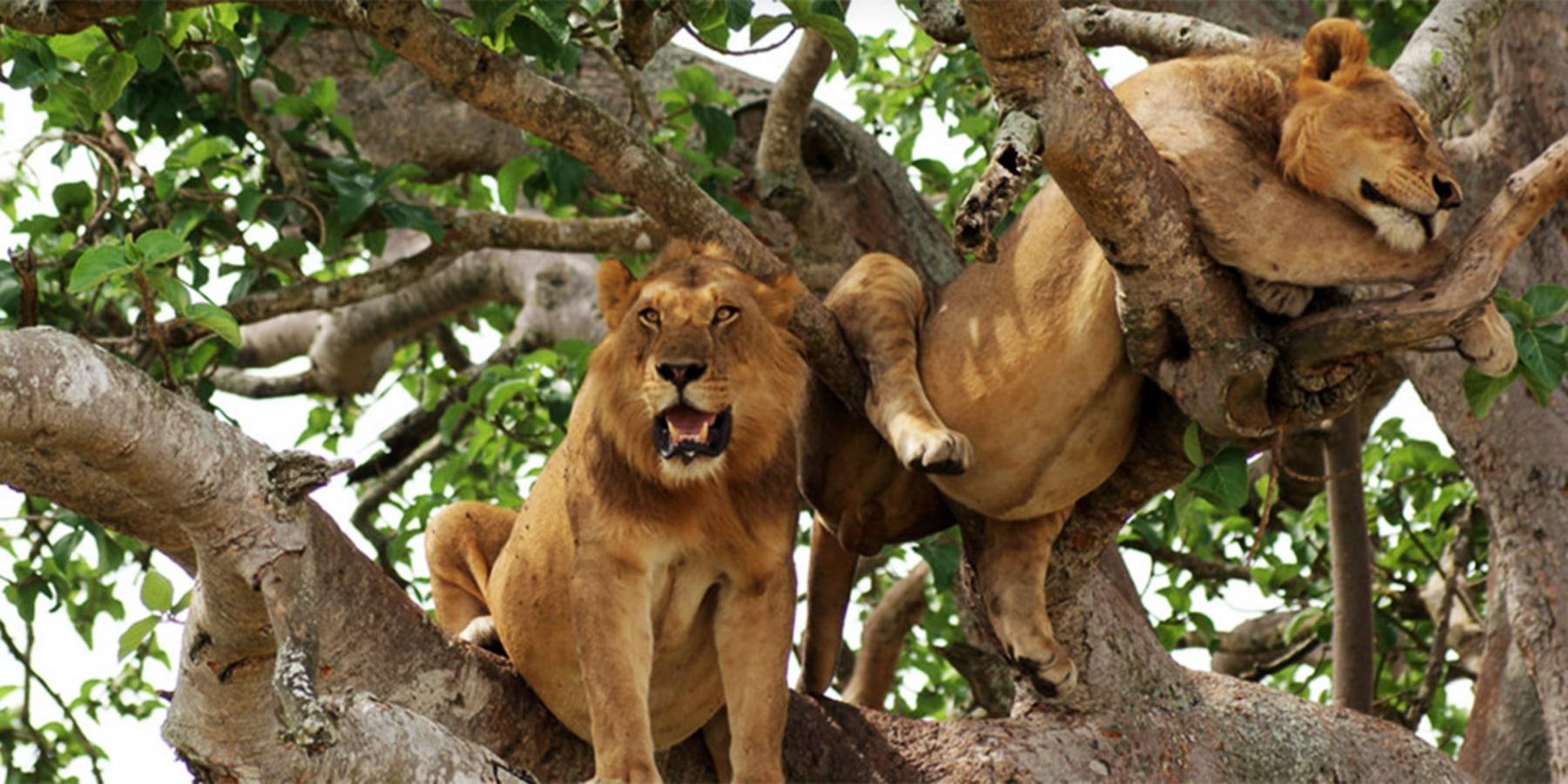
Ishasha sector and tree-climbing lions
The Ishasha sector is particularly famous for its tree-climbing lions.
These lions are sometimes seen resting in large fig trees, creating an unusual and memorable wildlife encounter.
Kasenyi Plains
The open grasslands of Kasenyi offer opportunities to see Uganda kob, buffaloes, elephants, lions and other savannah wildlife.
Crater lakes
The park and surrounding landscape contain beautiful volcanic crater lakes that add scenic diversity to the safari experience.

Kidepo Valley National Park
For travellers seeking a more remote and less frequently visited safari destination, Kidepo Valley National Park is an exceptional choice.
Located in northeastern Uganda, the park is characterised by rugged mountains, expansive valleys, seasonal rivers and open grasslands.
Its wildlife includes:
- Lions.
- Elephants.
- Buffaloes.
- Giraffes.
- Zebras.
- Ostriches.
- Cheetahs in suitable areas.
- Greater kudus.
- Jackson’s hartebeest.
Kidepo offers a different atmosphere from the more frequently visited western Uganda parks.
Its remote location means that visitors should allow sufficient travel time or consider domestic flights where available.

Lake Mburo National Park
Lake Mburo National Park is a convenient wildlife destination for visitors travelling between Kampala or Entebbe and southwestern Uganda.
It offers a different wildlife experience from Uganda’s larger savannah parks.
Visitors may encounter:
- Zebras.
- Impalas.
- Elands.
- Giraffes.
- Buffaloes.
- Warthogs.
- Waterbucks.
- Hippos.
The park is particularly attractive for guided nature walks, boat excursions and selected cycling experiences where permitted and appropriately guided.
Semuliki National Park
Semuliki National Park protects a tropical forest ecosystem in western Uganda.
It is especially interesting for birdwatchers and visitors seeking a forest environment with strong Central African ecological influences.
The park is also known for its hot springs at Sempaya.
Mount Elgon National Park
Mount Elgon offers opportunities for mountain hiking, forest exploration, waterfalls and spectacular highland scenery.
Its landscape includes montane forest, bamboo zones, moorlands and volcanic formations.
Visitors interested in hiking and outdoor exploration may find it a rewarding addition to a longer Uganda holiday.
4. Golden Monkey Tracking and Other Primate Experiences

The country supports an impressive variety of primates living in different forest ecosystems.
Golden monkey tracking is particularly popular in Mgahinga Gorilla National Park.
Golden monkeys are distinctive primates with golden-orange colouring and lively behaviour. They inhabit the bamboo forests of the Virunga region.
Other primates found in Uganda include:
- Blue monkeys.
- Red-tailed monkeys.
- Olive baboons.
- Black-and-white colobus monkeys.
- Red colobus monkeys.
- Vervet monkeys.
- L’Hoest’s monkeys.
Travellers interested in primates can create a holiday combining gorilla trekking, chimpanzee tracking and golden monkey experiences.
5. Birdwatching in Uganda: A Paradise for Bird Lovers

Uganda is one of Africa’s outstanding birdwatching destinations.
Its location within the Albertine Rift and the presence of tropical forests, wetlands, lakes, rivers and savannah habitats create opportunities to encounter an exceptional diversity of bird species.
More than 1,000 bird species have been recorded in the country.
Some notable species include:
- Shoebill.
- African fish eagle.
- Great blue turaco.
- Grey crowned crane.
- African jacana.
- Papyrus gonolek.
- Green-breasted pitta.
- African grey parrot.
- Various kingfishers, bee-eaters and hornbills.
Where Can You Go Birdwatching in Uganda?
Mabamba Swamp, near Lake Victoria, is one of the best-known places to search for the shoebill.
Guided canoe excursions through the wetland offer opportunities to observe wetland birds in their natural environment.
Murchison Falls National Park
The Nile River, riverbanks and surrounding savannah provide varied birdwatching opportunities.
Queen Elizabeth National Park
The Kazinga Channel, crater lakes and wetlands attract numerous waterbirds and other species.
Bwindi Impenetrable National Park
Bwindi is especially rewarding for forest birdwatching, including species associated with the Albertine Rift.
Kibale Forest
The forest supports several tropical forest birds and is a rewarding destination for visitors combining birdwatching with chimpanzee tracking.
Uganda is particularly suitable for travellers interested in combining specialist birdwatching with general wildlife experiences.
6. The Source of the Nile and Uganda’s Adventure Experiences
Uganda is not exclusively a wildlife destination. It is also one of East Africa’s leading destinations for outdoor adventure.
The Nile River, Lake Victoria, mountains, forests and scenic valleys create opportunities for activities that appeal to adventurous travellers.
Jinja and the Source of the Nile
Jinja is internationally recognised as an adventure tourism destination.
It is located near the outlet of Lake Victoria, where the White Nile begins its journey northwards.
Popular activities include:
- White-water rafting.
- Kayaking.
- Boat excursions.
- Paddleboarding.
- Horse riding.
- Bungee jumping at established operators.
- Riverside relaxation.
White-water rafting is particularly popular among visitors seeking an adventurous addition to their Uganda holiday.
The activities selected should be matched to each traveller’s age, experience, physical ability and comfort level.

Hiking the Rwenzori Mountains
The Rwenzori Mountains, also known as the Mountains of the Moon, form one of Africa’s most remarkable mountain landscapes.
The range includes Margherita Peak on Mount Stanley, one of Africa’s highest summits.
Hiking opportunities range from shorter nature walks to demanding multi-day mountaineering expeditions.
The mountains are known for their unusual vegetation, high-altitude ecosystems, glaciers and dramatic scenery.
A Rwenzori expedition requires careful preparation, appropriate equipment, suitable acclimatisation and experienced mountain guides.
Mount Elgon Hiking
Mount Elgon offers another excellent mountain adventure.
Visitors can explore its forests, waterfalls, caves, highland landscapes and extensive caldera.
Compared with a demanding Rwenzori expedition, selected Mount Elgon routes can offer a different style of mountain exploration.
7. Uganda’s Cultural Heritage: Discovering the People and Traditions

The country is home to numerous ethnic communities, languages, kingdoms, traditional institutions, music, dance and culinary traditions.
A cultural visit can help travellers understand the relationship between communities, their environment, history and everyday life.
The Buganda Kingdom
The Buganda Kingdom is one of Uganda’s most historically significant traditional kingdoms.
Its heritage is closely associated with the central region and the cultural history of the Baganda people.
Important cultural attractions include:
Kasubi Royal Tombs
The Kasubi Tombs are a UNESCO World Heritage Site and the burial place of several Buganda kings.
The site is significant for its traditional architecture, spiritual importance and connection to the kingdom’s history.
Visitors should check current access arrangements before travelling, as restoration and conservation activities can affect access.
Kabaka’s Palace
Located in Kampala, the palace area provides an opportunity to learn more about the Buganda monarchy and its historical role.
Ndere Cultural Centre
Ndere Cultural Centre provides opportunities to experience traditional music, dance and performances representing different Ugandan communities.
The Ankole Community
The Ankole region is associated with the Ankole cattle tradition and the long-horned Ankole cattle.
Cattle have historically played an important role in the region’s livelihoods, identity and cultural practices.
Visitors can learn about pastoral traditions, local food, cattle keeping and the cultural significance of these animals through respectful community-led experiences.
The Karamojong Community
Northeastern Uganda is home to the Karamojong, whose traditional livelihoods have historically been closely connected to pastoralism.
Cattle remain culturally important, although livelihoods and lifestyles are changing.
A responsible cultural visit should be arranged through appropriate local hosts and should respect community privacy, customs and consent.
The Batwa Community
The Batwa are Indigenous forest-associated communities historically connected to the forests of southwestern Uganda.
Some community-led cultural experiences provide visitors with an opportunity to learn about forest knowledge, traditional livelihoods, music and the challenges associated with conservation and changing access to ancestral lands.
These experiences should be approached sensitively.
Visitors should choose community-led programmes that respect local decision-making and ensure that communities benefit directly from tourism.
Traditional Ugandan Food
Food is another excellent way to discover Uganda’s culture.
Popular dishes include:
- Matooke: steamed green bananas, often served with meat or groundnut sauce.
- Luwombo: a traditional dish cooked in banana leaves.
- Rolex: a popular street food combining chapati and eggs.
- Posho: a maize-based staple.
- Groundnut sauce: commonly served with different traditional foods.
- Freshwater fish: particularly tilapia and Nile perch.
Visitors can explore local restaurants, food markets and cooking experiences to discover Uganda’s culinary traditions.
8. Uganda’s Lakes, Waterfalls and Beautiful Landscapes
Uganda’s natural beauty extends beyond its national parks.
The country’s lakes, rivers, highlands and scenic countryside make it an excellent destination for relaxation and photography.
Lake Bunyonyi
Lake Bunyonyi is one of Uganda’s most scenic destinations.
Located in the southwestern highlands, the lake is famous for its beautiful islands, surrounding terraced hills and peaceful atmosphere.
It is an excellent place to relax after gorilla trekking or a wildlife safari.
Popular experiences include:
- Canoeing.
- Boat excursions.
- Birdwatching.
- Photography.
- Scenic walks.
- Cultural visits.
- Relaxation at lakeside accommodation.

Lake Victoria
Lake Victoria is one of Africa’s most important freshwater lakes.
Visitors can enjoy boat excursions, lakeside accommodation, fishing-related experiences and visits to selected islands.
The Ssese Islands offer opportunities for relaxation and a different style of Ugandan holiday.
Sipi Falls

Activities include guided walks, photography, cultural experiences and coffee tours.
The Crater Lakes of Western Uganda
Western Uganda contains several beautiful volcanic crater lakes.
These lakes provide scenic opportunities for photography, nature walks and peaceful accommodation away from busy urban centres.
9. Uganda’s Cultural Cities and Historical Attractions
Uganda’s cities provide a different perspective on the country’s identity and history.
Kampala
Kampala is Uganda’s capital and a lively city with a mixture of traditional heritage, modern urban life, religious landmarks, markets and restaurants.
Attractions and experiences include:
- Uganda Museum.
- Kasubi Royal Tombs.
- Namugongo Martyrs Shrine.
- Bahá’í Temple.
- Kabaka’s Palace.
- Local craft markets.
- Traditional cultural performances.
A city tour is an excellent way to introduce visitors to Uganda before beginning a longer safari.
Entebbe
Entebbe is situated along the shores of Lake Victoria and is the main international arrival point for many visitors.
It offers a quieter atmosphere than Kampala and is suitable for an overnight stay before or after a safari.
Attractions include the Uganda Wildlife Conservation Education Centre, botanical gardens and Lake Victoria excursions.
10. When Is the Best Time to Visit Uganda?
Uganda is an all-year destination, although the best time depends on the activities and regions included in your itinerary.
The country experiences two main drier periods and two wetter periods.
| Period | General conditions | Suitable experiences |
|---|---|---|
| June–August | Generally drier | Gorilla trekking, wildlife safaris, hiking and photography. |
| December–February | Generally drier | Wildlife viewing, gorilla trekking and chimpanzee tracking. |
| March–May | Wetter in many areas | Birdwatching, lush landscapes and selected lower-season travel. |
| September–November | Variable rainfall | Forest experiences, birdwatching and selected safaris. |
Is Uganda Good for Gorilla Trekking During the Rainy Season?
Yes. Gorilla trekking continues throughout the year, subject to park conditions and permit availability.
However, forest trails can become muddy and slippery during periods of heavy rainfall.
Travellers visiting during wetter months should carry waterproof clothing, suitable hiking boots and protection for their cameras.
The advantage of travelling during less busy periods may include more accommodation choices and potentially better rates, depending on the property and booking dates.
The weather in tropical mountain forests is unpredictable, so visitors should not assume that dry-season travel guarantees completely dry trails.
11. How Many Days Do You Need for a Uganda Safari?
The ideal duration depends on the experiences you want to include.
Uganda’s attractions are spread across different regions, and road journeys can take longer than expected because of terrain, road conditions and stops along the way.
Here are some useful planning guidelines:
| Duration | Suggested experience |
|---|---|
| 3–4 days | Short gorilla trekking holiday or selected wildlife experience. |
| 5–6 days | Gorilla trekking combined with Queen Elizabeth National Park. |
| 7–8 days | Gorilla trekking, chimpanzee tracking and selected wildlife parks. |
| 9–10 days | Murchison Falls, Kibale, Queen Elizabeth and Bwindi. |
| 12–14 days | More comprehensive Uganda wildlife, primate and cultural holiday. |
| 15+ days | Extensive Uganda exploration with additional hiking, lakes, remote parks or adventure activities. |
These are planning suggestions rather than fixed itineraries.
For complete day-by-day routes, accommodation suggestions and safari combinations, see our dedicated guide to the 10 Best Uganda Safari and Tour Itineraries.
12. Can You Combine Uganda with Kenya, Tanzania or Rwanda?
Yes. Uganda is particularly suitable for multi-country East African holidays.
Travellers can combine its forest-based primate experiences with the savannah wildlife and coastal attractions of neighbouring countries.
Uganda and Kenya
A Kenya–Uganda holiday can combine:
- Gorilla trekking in Bwindi.
- Chimpanzee tracking in Kibale.
- Wildlife viewing in Queen Elizabeth National Park.
- The Maasai Mara’s Great Migration, depending on the season.
- Amboseli’s elephants and Mount Kilimanjaro scenery.
- Kenya’s Indian Ocean beaches.
This is an excellent combination for travellers seeking both traditional African wildlife safaris and rare primate encounters.
Uganda and Tanzania
A Uganda–Tanzania itinerary may combine:
- Gorilla trekking in Bwindi.
- Chimpanzee tracking.
- Serengeti wildlife safaris.
- Ngorongoro Crater.
- Tarangire National Park.
- Zanzibar beach holidays.
This combination is particularly appealing to travellers who want gorilla trekking followed by the classic East African savannah safari experience.
Uganda and Rwanda
Uganda and Rwanda can be combined for travellers interested in gorilla conservation, primates, scenic landscapes and cultural heritage.
Depending on permits, availability and route planning, visitors can compare gorilla trekking experiences in Bwindi, Mgahinga and Rwanda’s Volcanoes National Park.
It is important to understand that gorilla permits are destination-specific and cannot simply be transferred between countries.
Travellers should also confirm current border-crossing requirements, visa arrangements and transport logistics.
For detailed routes, read our guide to Combining Kenya, Tanzania and Uganda Safari: Best Itineraries, Costs and Lodges.
13. What Accommodation Can You Expect in Uganda?

The best choice depends on your budget, preferred comfort level, location and activities.
Budget accommodation
Suitable for travellers seeking practical and affordable accommodation while prioritising wildlife experiences.
Options may include simple safari lodges, guesthouses and selected camps.
Mid-range accommodation
Offers a balance between comfort, location, facilities and cost.
Many mid-range lodges provide ensuite rooms, restaurant facilities, scenic surroundings and convenient access to national parks.
Luxury accommodation
Uganda also offers high-end forest lodges and safari properties with exceptional locations, personalised services, beautiful views and carefully designed accommodation.
For gorilla trekking, location is particularly important. Staying close to your assigned trekking sector can reduce early-morning travel and make the experience more comfortable.
Astute Africa Safaris can help compare accommodation options according to your preferred standard and budget.
14. How Much Does a Uganda Safari Cost?
The cost of a Uganda safari depends on several factors.
There is no single price that applies to every traveller because itineraries, accommodation standards, transportation and activities vary considerably.
The main cost components include:
- Gorilla trekking permits, where applicable.
- Chimpanzee tracking permits and activity fees.
- National park entrance fees.
- Accommodation.
- Private safari vehicle and guide.
- Domestic flights, where required.
- Meals and drinks.
- Cultural visits and optional activities.
- International flights.
- Travel insurance and visa costs.
Gorilla trekking permits can represent a substantial part of the overall holiday budget.
Travellers should also understand whether the quotation includes permits, park fees, accommodation, transfers, meals and activities.
For a detailed comparison of safari costs, read our African Safari Cost Guide, which helps travellers understand the differences between budget, mid-range and luxury safari holidays.
15. Getting Around Uganda: Road Safaris or Domestic Flights?
The most suitable transportation method depends on the route, budget, available time and preferred travel experience.
Private Road Safaris
Private road safaris are popular because they allow travellers to explore Uganda at their own pace.
A suitable 4×4 safari vehicle is particularly important for journeys involving remote parks, forest roads and rural destinations.
Advantages include:
- Flexible departure times.
- Opportunities for photography and scenic stops.
- Direct transfers between accommodation properties.
- Game viewing along selected routes.
- Greater control over the pace of the holiday.
Domestic Flights
Domestic flights can reduce travel time between selected destinations.
They are particularly useful for travellers with limited time or those who prefer a fly-in safari.
However, flights depend on operating schedules, suitable airstrips, baggage restrictions and weather conditions.
Some journeys may still require road transfers between airstrips, national parks and accommodation.
A carefully planned combination of road transfers and domestic flights can provide a good balance between comfort and time.
16. What Should You Pack for a Uganda Safari?
Your packing list depends on whether you are planning gorilla trekking, wildlife game drives, mountain hiking or a combination of activities.
For most Uganda safari holidays, consider bringing:
- Lightweight neutral-coloured safari clothing.
- Comfortable walking trousers.
- Long-sleeved shirts.
- Waterproof jacket.
- Sturdy hiking boots.
- Comfortable walking socks.
- Gardening gloves for gorilla trekking in dense vegetation.
- Sun hat and sunglasses.
- Sunscreen.
- Insect repellent.
- Binoculars.
- Camera and spare batteries.
- Small daypack.
- Reusable water bottle.
- Personal medication.
- Travel documents.
For gorilla trekking, waterproof hiking boots, gloves and long trousers are particularly useful.
Travellers should pack according to their selected activities and check luggage restrictions when using domestic flights.
17. Uganda Travel Requirements: Visas, Health and Entry Information
Before travelling to Uganda, visitors should confirm the entry and health requirements applicable to their nationality, travel history and itinerary.
Uganda Visa
Uganda operates an electronic visa application system for travellers who require a visa.
Visitors should check the official immigration portal before travelling and ensure that their passport meets the applicable validity and documentation requirements.
Travellers combining Uganda with Kenya and Rwanda may also wish to investigate the East African Tourist Visa, subject to eligibility and the current rules governing participating countries.
Yellow Fever Requirements
Yellow fever vaccination documentation is an important travel consideration for Uganda.
Requirements depend on the traveller’s origin, transit history and applicable entry regulations.
Travellers should consult official health and immigration guidance before departure.
Travel Insurance
Comprehensive travel insurance is strongly recommended.
For gorilla trekking, mountain hiking and adventure activities, visitors should ensure that their policy specifically covers the activities they intend to undertake.
It is particularly important to understand medical evacuation provisions, especially when travelling to remote areas.
For more information, read our detailed East Africa Safari Visa Requirements guide.
18. Is Uganda Suitable for Families, Couples and Solo Travellers?
Uganda can accommodate different travel styles, provided the itinerary is planned around the travellers’ interests, ages and physical abilities.
Families
Families can enjoy wildlife game drives, boat cruises, cultural activities, scenic lakes and nature experiences.
However, gorilla and chimpanzee trekking have age restrictions. The minimum age for standard mountain gorilla trekking is generally 15 years, and other activities may have separate restrictions.
Families should confirm all current requirements before booking.
Honeymooners and couples
Uganda offers romantic forest lodges, scenic lake accommodation, private safari experiences and opportunities to combine gorilla trekking with wildlife safaris.
Solo travellers
Solo visitors can arrange private safaris or enquire about suitable shared arrangements where available.
Costs may be affected by single-room supplements and private vehicle arrangements.
Older travellers
Older travellers can enjoy Uganda through carefully selected accommodation, shorter driving days and appropriate activities.
Gorilla trekking is physically demanding and should be discussed honestly during the planning process.
19. Responsible Tourism and Conservation in Uganda
Uganda’s wildlife and natural heritage depend on long-term conservation efforts.
Tourism can contribute to protecting these resources while supporting communities living near protected areas.
Gorilla trekking, for example, is carefully regulated to reduce disturbance to endangered mountain gorillas.
Wildlife tourism also supports employment for guides, trackers, drivers, lodge employees, conservation workers and local suppliers.
Responsible travel choices can help strengthen these benefits.
Visitors can contribute by:
- Choosing licensed and responsible tourism operators.
- Following wildlife viewing regulations.
- Maintaining the required distance from animals.
- Never feeding wild animals.
- Respecting local traditions and community privacy.
- Supporting authentic community-led tourism initiatives.
- Purchasing locally made products.
- Minimising unnecessary waste.
- Following park rules and conservation guidance.
Uganda’s Batwa community experiences, cultural visits and locally operated tourism activities can provide meaningful opportunities for visitors to learn about community heritage when organised respectfully.
Read more about this subject in our article on the Impact of Safari Tourism in Africa: How Wildlife Tourism Supports Local Communities, Conservation and Economies.
20. Why Choose Astute Africa Safaris for Your Uganda Holiday?
Choosing the right safari operator is an important part of planning a successful Uganda holiday.
Uganda’s attractions are spread across different regions, and the logistics of combining gorilla trekking, chimpanzee tracking, wildlife safaris and cultural experiences require careful planning.
Astute Africa Safaris is a locally owned African safari company based in Nairobi, Kenya, specialising in personalised East African safari and holiday experiences.
We help travellers explore Uganda through tailor-made journeys designed around their interests, available time, preferred accommodation and budget.
Our Uganda safari planning can include:
- Gorilla trekking in Bwindi or Mgahinga.
- Chimpanzee tracking in Kibale and other suitable locations.
- Wildlife safaris in Queen Elizabeth and Murchison Falls.
- Cultural experiences and scenic excursions.
- Lake Bunyonyi relaxation.
- Adventure activities and hiking.
- Uganda combined with Kenya, Tanzania or Rwanda.
We cater for different travel preferences, from comfortable mid-range accommodation to luxury lodges and tented camps.
Our approach is simple: listen to the traveller, understand the journey and design the itinerary around the experience they want.
We also aim to provide clear quotations, practical travel advice and flexible planning arrangements.
Explore our 4-Day Uganda Wildlife and Gorilla Trekking Safari or browse our 10 Best Uganda Safari and Tour Itineraries for inspiration.
If you already know what you want to experience, you can also contact us for a tailor-made Uganda holiday proposal.
Frequently Asked Questions About Visiting Uganda
1. What is Uganda famous for?
Uganda is famous for mountain gorilla trekking, chimpanzee tracking, wildlife safaris, Murchison Falls, the Nile River, its beautiful lakes, birdwatching and diverse cultural heritage.
2. Is Uganda worth visiting for a safari?
Yes. Uganda offers a distinctive safari experience combining rainforest primates, savannah wildlife, waterfalls, birdwatching and cultural activities.
It is especially rewarding for travellers who want to experience both traditional wildlife safaris and primate encounters.
3. Can I see the Big Five in Uganda?
Uganda has populations of lions, leopards, elephants and buffaloes. White and black rhinoceroses are not generally encountered as free-ranging safari wildlife in its main national parks. Ziwa Rhino Sanctuary offers a managed rhino tracking experience.
Visitors can therefore combine four of the traditional Big Five in selected parks with a rhino experience at Ziwa.
4. Where is the best place to see gorillas in Uganda?
Bwindi Impenetrable National Park is Uganda’s principal mountain gorilla trekking destination. Mgahinga Gorilla National Park also offers gorilla trekking.
The best choice depends on permit availability, accommodation, itinerary and preferred trekking location.
5. Is gorilla trekking difficult?
Gorilla trekking can be physically demanding because it involves walking through steep, uneven and sometimes muddy forest terrain.
The duration varies according to the location of the gorilla family.
Travellers should assess their fitness, inform their tour operator of any mobility concerns and prepare appropriately.
6. How long should I spend in Uganda?
A short gorilla trekking holiday may take three to four days, while a more comprehensive wildlife and primate safari may require 10 to 14 days or longer.
The ideal duration depends on the destinations and activities included.
7. Can I combine gorilla trekking and chimpanzee tracking?
Yes. A Uganda safari can combine gorilla trekking in Bwindi or Mgahinga with chimpanzee tracking in Kibale Forest.
Queen Elizabeth National Park can also be included for game drives and a Kazinga Channel boat cruise.
8. Is Uganda safe for tourists?
Uganda welcomes international visitors, but travellers should review current official travel advisories, follow local guidance and use reputable transport and tourism providers.
Visitors should also follow wildlife safety instructions and normal precautions in towns and cities.
9. Can I visit Uganda throughout the year?
Yes. Uganda is an all-year destination.
The drier months are generally preferred for easier trekking and selected outdoor activities, but wildlife and primate experiences remain available during wetter periods, subject to conditions.
10. Is Uganda suitable for luxury safaris?
Yes. Uganda offers luxury accommodation, private safari vehicles, exclusive lodge experiences and selected domestic flight arrangements.
Travellers can enjoy luxury gorilla trekking holidays, private wildlife safaris and combinations with Kenya, Tanzania and Zanzibar.
11. Can I combine Uganda with a beach holiday?
Yes. Uganda can be combined with Zanzibar or Kenya’s Indian Ocean coast.
For example, visitors can enjoy gorilla trekking and wildlife viewing in Uganda before flying to Zanzibar for a beach holiday.
12. What makes Uganda different from Kenya and Tanzania?
Kenya and Tanzania are particularly famous for expansive savannah wildlife safaris, the Great Migration and iconic national parks.
Uganda offers these traditional wildlife experiences in selected parks, but is particularly distinctive for its mountain gorillas, chimpanzees, tropical rainforests, waterfalls and mountain landscapes.
The three countries can complement one another very well in a longer East African holiday.
13. How much does a gorilla trekking permit cost?
Permit prices depend on the visitor’s residency and nationality category and the applicable Uganda Wildlife Authority tariff.
Travellers should confirm the current price directly with the responsible authority or their safari operator before booking.
14. Can children go gorilla trekking?
The standard minimum age for mountain gorilla trekking in Uganda is generally 15 years.
Families should verify the current regulations and consider alternative activities for younger children.
15. Do I need to book gorilla permits in advance?
Advance booking is strongly recommended, particularly during busy travel periods.
Gorilla permits are limited, and availability determines which trekking dates and sectors can be included in an itinerary.
Discover the Pearl of Africa with a Tailor-Made Uganda Wildlife Safaris
Uganda offers an exceptional combination of wildlife, primates, adventure, scenery and cultural heritage.
From the mist-covered forests of Bwindi to the spectacular Nile at Murchison Falls, the savannah plains of Queen Elizabeth and the peaceful shores of Lake Bunyonyi, the country offers experiences that can be combined into an unforgettable African holiday.
Whether you are planning your first gorilla trekking experience, a family wildlife holiday, a birdwatching expedition, a luxury safari or a multi-country East African adventure, the key is to choose an itinerary that matches your interests, travel dates and budget.
At Astute Africa Safaris, we believe every journey should be personal.
Plan your Uganda safari with local knowledge and personalised travel support.
Contact Astute Africa Safaris to start planning your Uganda holiday.
Website: https://astuteafricasafaris.com/
Email: info@astuteafricasafaris.com
WhatsApp: +254 762 663 272
Your Uganda adventure begins with the right plan.
Explore: East Africa Visa Requirements
Explore: Booking Terms and Conditions
Leave a comment:
You must be logged in to post a comment.
Comment 01
Astute Africa Safaris,
05 May, 2026REF: Crafting Your Bespoke African Safari Experience with Astute Africa Safaris
Jambo,
Thank you for your interest in exploring the wonders of Africa with Astute Africa Safaris. We pride ourselves on creating immersive, tailor-made journeys that align perfectly with your personal interests, pace, and travel aspirations.
Because every safari is a unique narrative, we do not believe in “one-size-fits-all” pricing. To ensure we provide you with an accurate and competitive quotation that reflects the specific lodges, wildlife experiences, and logistical arrangements you desire, we invite you to connect with our team for a personalized consultation.
Please contact us at info@astuteafricasafaris.com, Whatsapp +254762663272 or fill the inquiry form with a few details regarding your preferred travel dates, group size, and specific interests (e.g., photography, luxury relaxation, or adventure trekking). Once we have these details, we will curate a comprehensive proposal designed specifically for you.
We look forward to the possibility of helping you plan an unforgettable journey.
Warm regards,
Team Astute Africa Safaris