

- 1.3k Views
- 25 Min Read
- (2) Comments
A Tsavo National Park safari offers a rewarding way to experience Kenya’s immense wilderness without necessarily travelling to the country’s more famous safari destinations. Located between Nairobi and the Indian Ocean coast, Tsavo combines expansive plains, red-earth landscapes, large elephant herds, dramatic volcanic scenery, natural springs and exceptional opportunities for wildlife photography.
For visitors staying in Mombasa, Diani Beach, Watamu or Malindi, Tsavo can be the perfect wildlife addition to a coastal holiday. Travellers arriving in Nairobi can explore Tsavo as part of a southern Kenya safari circuit, combining it with Amboseli National Park, the Maasai Mara, Lake Naivasha or a relaxing beach extension.
The right itinerary depends on where your journey begins, how many days you have, your preferred accommodation and whether you want to concentrate on one park or explore both Tsavo East and Tsavo West.
At Astute Africa Safaris, a well-designed itinerary should account for the actual distance between destinations, wildlife-viewing time, suitable lodge locations and the overall pace of the holiday—not simply the number of parks included.
Why choose Tsavo for your Kenya safari?
Tsavo is one of Kenya’s most significant protected wildlife landscapes. Tsavo East and Tsavo West together cover approximately 22,000 square kilometres, although the parks have distinctly different scenery and safari experiences.
The experience is defined by space and variety. Rather than expecting every wildlife encounter to happen immediately beside the road, visitors travel through broad landscapes where elephants, giraffes, zebras, buffaloes, antelopes and, with luck, lions and other predators may appear.
Reasons to include Tsavo in your itinerary include:
-
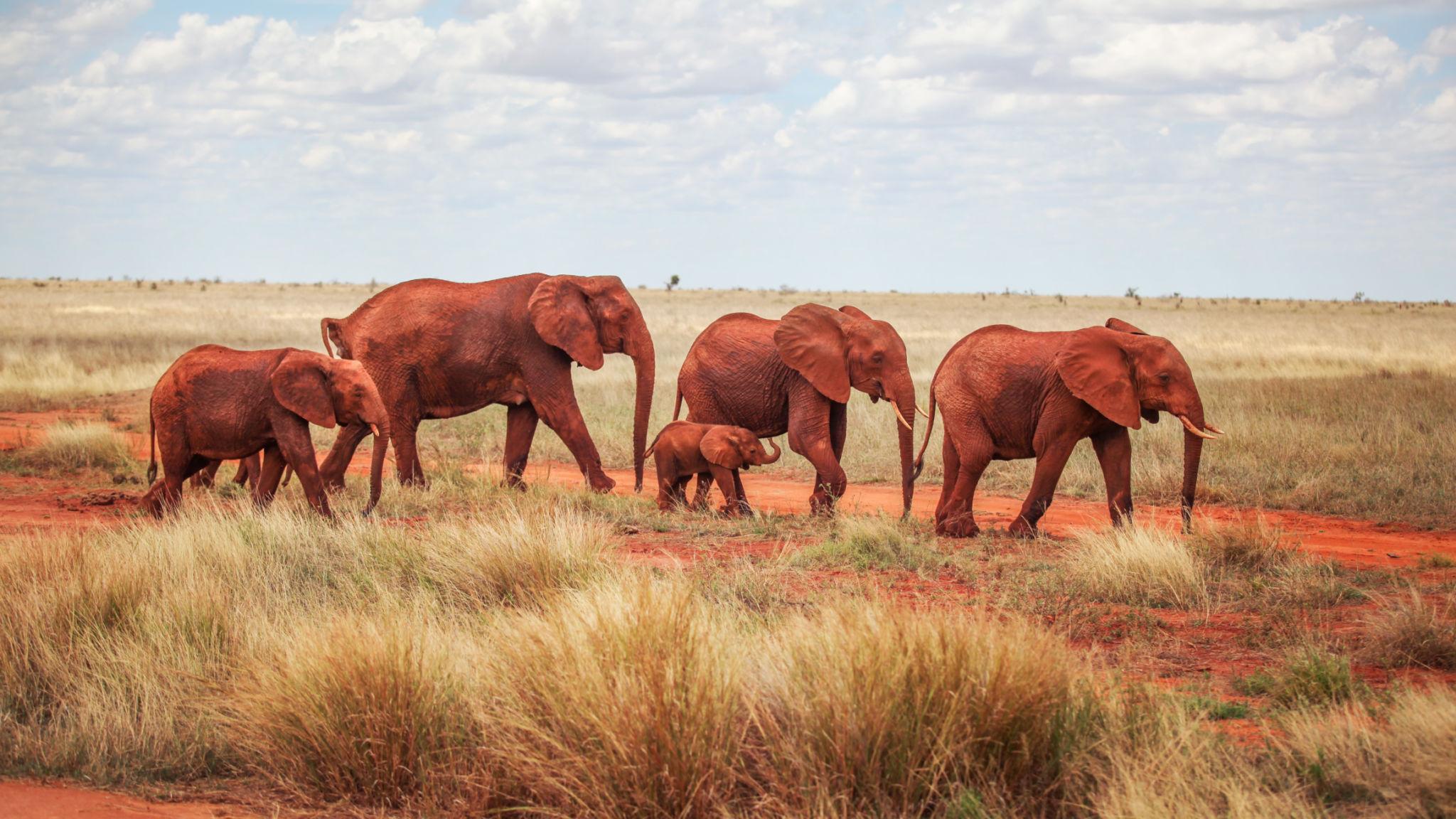
Elephant encounters: Tsavo is renowned for elephants that often appear red after dusting themselves with the region’s iron-rich soil.
-
Expansive wilderness: Its vast landscapes create a feeling of remoteness and space.
-
Distinctive scenery: Red-earth plains contrast with lava fields, hills, springs and river environments.
-
Coastal accessibility: Tsavo East is a particularly useful option for travellers holidaying along Kenya’s coast.
-
Flexible trip lengths: Depending on the starting point, you can plan a day excursion, a weekend safari or a longer circuit.
-
Safari and beach combinations: Wildlife experiences can be combined with Kenya’s Indian Ocean beaches.
Tsavo is especially suitable for travellers who want to move beyond a beach resort without committing to a long, multi-country journey.
Tsavo East or Tsavo West: which should you visit?

Tsavo East National Park
Best for coast-based wildlife excursions, red elephants, open landscapes and classic game drives.

Tsavo West National Park
Best for volcanic scenery, Mzima Springs, varied terrain, viewpoints and a more landscape-focused safari.
Tsavo East: expansive plains and elephant country
Tsavo East is the larger of the two parks. Its semi-arid plains, red soil, riverine vegetation and open horizons are central to its appeal. Key features include the Galana River, Aruba Dam, Mudanda Rock and Lugard’s Falls.
Wildlife viewing may include elephants, giraffes, zebras, buffaloes, antelopes and predators. Sightings depend on season, weather, animal movements and the areas explored by your guide.
Tsavo East is generally the first option to consider for:
-
One-day safaris from Mombasa and nearby coastal resorts.
-
Two-day or three-day wildlife breaks from the coast.
-
Travellers who want to focus on elephants and expansive savannah.
-
Safari extensions from Malindi and Watamu.
-
Visitors with limited time who prefer to avoid changing parks and lodges.
Tsavo West: volcanic landscapes and natural springs
Tsavo West has more varied terrain, including hills, volcanic features, rocky outcrops and pockets of lush vegetation. One of its best-known attractions is Mzima Springs, where clear water emerges through volcanic rock.
Other attractions include the Shetani Lava Flow, scenic viewpoints and the Ngulia Rhino Sanctuary. Rhino sightings are never guaranteed, and access to individual attractions depends on park conditions and arrangements.
Tsavo West is particularly appealing to landscape photographers, repeat safari travellers, birdwatchers and visitors seeking a more varied combination of scenery and wildlife.
Should you visit both parks?
For a short safari from the coast, Tsavo East alone may be the most practical choice. Two or three days can provide a rewarding introduction without spending too much time transferring between areas.
For a more complete Tsavo experience, allow approximately four to six days, depending on your chosen lodges and the attractions you want to visit. A carefully planned route can include both parks and, with sufficient time, continue towards Amboseli.
Do not try to cover both parks in one rushed day. The distance between wildlife-viewing areas, the size of the parks and the need to travel between gates make this an unrealistic way to enjoy Tsavo properly.
Where can you start a Tsavo safari?

The starting point affects your route, the park gate you should use, the time available for game drives and whether a day trip makes sense.
| Starting point | Best approach | Suggested duration |
|---|---|---|
| Mombasa | Tsavo East; add Tsavo West for longer trips | 1–5+ days |
| Diani Beach | Tsavo East or a multi-day Tsavo circuit | 1–6+ days |
| Watamu | Tsavo East, subject to route and gate conditions | 1–5+ days |
| Malindi | Tsavo East via an appropriate western access route | 1–5+ days |
| Lamu | Fly or transfer to a practical mainland starting point, then continue by road or air | 3–7+ days |
| Nairobi | Road or suitable flight arrangements, often combined with other parks | 2–7+ days |
These are planning ranges, not guaranteed journey times. Coastal hotel locations, traffic, road conditions, park gates and accommodation locations can change the practical duration.
Tsavo safari from Mombasa
Mombasa is one of the most convenient starting points for a short Tsavo East safari. Depending on the selected gate and wildlife-viewing area, the journey is usually manageable for a multi-day excursion and can also support a long day trip.
A one-day tour is best for visitors with limited time. Travellers who can stay overnight should consider two or three days, which allow for more relaxed game drives and less time travelling back to the coast.
For a longer holiday, start with Tsavo East, continue to Tsavo West, and then return to Mombasa or proceed towards Amboseli if your schedule permits.
Tsavo safari from Diani Beach
Diani is ideal for travellers who want to combine a beach holiday with a wildlife experience. Because the journey involves getting from the south coast to the mainland and then travelling inland, an early departure is important.
A day trip is possible, but two or three days generally create a better balance between road travel and game viewing. Four or more days can support a broader Tsavo circuit or a safari followed by additional destinations.
For travellers returning to Diani, the itinerary should be planned around the transfer back to the coast rather than assuming the last game drive can continue until sunset.
Tsavo safari from Watamu and Malindi
Watamu and Malindi are useful starting points for Tsavo East, but the best route depends on the property where you are staying and the selected entrance.
Malindi travellers may have access to western approaches towards Tsavo East, including the Sala area. The route should be checked carefully because road surfaces and conditions can vary.
For a one-day excursion, confirm the pickup time, gate, expected time inside the park and return arrangements before booking. For two to four days, staying near or within the appropriate safari area can make the journey substantially more comfortable.
Tsavo safari from Lamu
Lamu requires more careful planning because it is separated from the mainland by water and is not a practical starting point for a conventional same-day road safari.
A better option is to arrange a suitable flight or transfer to a mainland hub, then continue to Tsavo by road or a pre-arranged air connection. The appropriate plan depends on flight schedules, luggage limits, season and whether you want to return to Lamu or continue elsewhere.
For most Lamu visitors, a three- to seven-day safari and beach itinerary is more sensible than attempting Tsavo as a day excursion.
Tsavo safari from Nairobi
Nairobi is a practical starting point for longer Kenyan safari circuits. Tsavo can be reached by road, and certain itineraries may use suitable flights or rail connections with pre-arranged transfers. The best option depends on your park combination and the location of your accommodation.
For a short trip, concentrate on one Tsavo park or choose a well-planned two- or three-day safari. If you have four to seven days or more, you can explore both Tsavo East and Tsavo West and consider adding Amboseli or a coastal finish.
3. The best Tsavo safari itineraries: from one day to seven days and beyond
The following itineraries are proposed routes that can be adapted to a private safari, family holiday, couple’s trip or small group. Exact drive times and park entry arrangements should be confirmed for the selected dates and accommodation.

Option 1: One-day Tsavo East safari
Best for Mombasa, Diani, Watamu and Malindi visitors with limited time.
Suggested route: Coastal hotel → Tsavo East → coastal hotel.
-
Depart very early for the selected gate.
-
Enjoy a morning game drive through accessible wildlife-viewing areas.
-
Take lunch at a pre-arranged lodge or permitted picnic location.
-
Continue with an afternoon game drive before exiting the park.
Best for: First-time safari visitors, short-stay holidaymakers and travellers who cannot spend a night away from the beach.
Important: This is a long day, and the actual time available for game viewing depends on the starting resort and gate. It is not recommended from Lamu or as a standard Nairobi road day trip.

Option 2: Two-day Tsavo East safari
Best for a weekend escape from the coast.
Day 1: Travel from the coast, enter Tsavo East and enjoy an afternoon game drive. Overnight at a suitable lodge or tented camp.
Day 2: Early-morning game drive, breakfast, and a further wildlife-viewing circuit before returning to the coast.
Best for: Couples, families with older children, and travellers who want a proper overnight safari without an extended holiday.
Recommended improvement: Choose accommodation near the sector you intend to explore, rather than sacrificing valuable time on internal transfers.

Option 3: Three-day Tsavo East safari
Best for a relaxed coastal safari extension.
Day 1: Travel inland, enter the park and enjoy an afternoon game drive.
Day 2: Spend the day exploring wildlife-viewing areas, with opportunities to visit features such as Aruba Dam or the Galana River where the route and conditions permit.
Day 3: Enjoy an early game drive, then return to Mombasa, Diani, Watamu or Malindi.
Best for: Travellers who prefer more time searching for wildlife, photographers and people who want to avoid an overly rushed two-day schedule.

Option 4: Four-day Tsavo East and West safari
Best for experiencing the contrasting landscapes of both parks.
Day 1: Arrive in Tsavo East and enjoy an afternoon game drive.
Day 2: Explore Tsavo East, including selected river or viewpoint areas where practical.
Day 3: Transfer to Tsavo West using an appropriate route and gate. Enjoy an afternoon drive if time permits.
Day 4: Visit Mzima Springs or another accessible attraction, enjoy a final game drive, and transfer towards the coast or Nairobi.
Best for: Travellers seeking more than a single-park experience, wildlife photographers and visitors interested in both open savannah and volcanic scenery.
Planning note: Four days works best when lodge locations and park access are arranged to reduce backtracking.

Option 5: Five-day Tsavo and Amboseli safari
Best for a broader southern Kenya wildlife circuit.
Day 1: Arrive in Tsavo East and enjoy an afternoon game drive.
Day 2: Explore Tsavo East.
Day 3: Transfer to Tsavo West and visit selected scenery or wildlife-viewing areas.
Day 4: Continue towards Amboseli using a suitable route and accommodation plan.
Day 5: Enjoy an early Amboseli game drive, with opportunities for elephant sightings and views of Mount Kilimanjaro when weather conditions allow, before continuing to Nairobi or another agreed destination.
Best for: Wildlife enthusiasts, returning safari visitors and travellers who want to add Amboseli’s iconic mountain backdrop to their Tsavo experience.

Option 6: Six-day Tsavo safari with more time in each park
Best for travellers prioritising a slower pace and richer wildlife viewing.
Day 1: Travel from Nairobi or the coast to Tsavo East.
Day 2: Explore Tsavo East with morning and afternoon game drives.
Day 3: Continue wildlife viewing before transferring to Tsavo West.
Day 4: Explore Tsavo West, including Mzima Springs and selected volcanic attractions.
Day 5: Transfer towards Amboseli and enjoy an afternoon game drive if time allows.
Day 6: Early game drive in Amboseli, followed by onward travel to Nairobi or an agreed coastal destination.
Best for: Families with sufficient holiday time, photographers and travellers who want to enjoy several ecosystems without changing accommodation every day.
Alternative: Spend additional nights in Tsavo instead of adding Amboseli if your main interest is exploring the two Tsavo parks in greater depth.

Option 7: Seven-day southern and western Kenya safari
Best for travellers who want Tsavo, Amboseli and the Maasai Mara.
Day 1: Arrive in Tsavo East.
Day 2: Game drives in Tsavo East.
Day 3: Transfer to Tsavo West and explore selected attractions.
Day 4: Continue to Amboseli and enjoy a game drive if timing permits.
Day 5: Early game drive in Amboseli, then transfer or fly towards the Maasai Mara according to the chosen itinerary.
Day 6: Full day of wildlife viewing in the Maasai Mara.
Day 7: Morning game drive, followed by the appropriate flight or road transfer to Nairobi.
Best for: First-time visitors wanting a broader Kenya safari and travellers who value contrasting landscapes.
Important: This is an ambitious itinerary. For a more relaxed trip, allow eight to ten days or fly between suitable destinations where schedules, luggage restrictions and costs permit.
4. Longer Tsavo safari combinations: eight days or more
For travellers with additional time, Tsavo can become part of a more extensive Kenyan holiday rather than a standalone excursion.

Eight to nine days: Tsavo, Amboseli and the Great Rift Valley
Combine Tsavo East, Tsavo West, Amboseli and Lake Naivasha. This offers a mix of open savannah, volcanic scenery, mountain views, freshwater habitats and varied wildlife experiences. Depending on the exact route, additional nights may be needed to make the transfers comfortable.

Eight to ten days: Kenya safari and beach holiday
Explore Tsavo East, Tsavo West and Amboseli before finishing with two or three nights in Diani, Watamu or another suitable coastal destination. Alternatively, begin with a beach stay and move inland for the safari.

Ten to twelve days: Comprehensive Kenya wildlife safari
Combine Tsavo East, Tsavo West, Amboseli and the Maasai Mara, with optional Lake Naivasha. Allocate enough nights to each destination and consider a domestic flight to reduce long road transfers.

Twelve to fourteen days: Kenya safari, coast and Lamu
Begin with a southern Kenya safari, continue to a beach destination such as Diani or Watamu, and finish in Lamu for Swahili culture, dhow excursions and a slower island stay. Plan the domestic connections carefully; Lamu is not a straightforward overland extension from Tsavo.
These longer itineraries are examples, not fixed packages. A private itinerary should be adjusted for arrival and departure flights, travel pace, children’s ages, lodge preferences and the balance between wildlife viewing and relaxation.
5. The best Tsavo itinerary from each coastal destination
From Mombasa: one to four days
-
One day: Tsavo East with an early start and return to Mombasa.
-
Two days: One overnight in Tsavo East, with morning and afternoon game drives.
-
Three days: A more relaxed Tsavo East safari, or a carefully planned East–West combination.
-
Four days: Tsavo East and Tsavo West with suitable overnight stops.
For travellers who want the least complicated logistics, Tsavo East is normally the starting point to consider.
From Diani Beach: two to six days
-
Two days: Tsavo East overnight safari.
-
Three days: Tsavo East with extra wildlife-viewing time.
-
Four days: Tsavo East and Tsavo West.
-
Five days: Both parks and onward travel towards Amboseli.
-
Six days: Tsavo, Amboseli and an onward transfer to Nairobi, subject to a practical route.
If you have a longer beach holiday, consider scheduling the safari in the middle of your stay rather than arranging a rushed return on the final day before an international flight.
From Watamu: two to five days
-
Two days: Tsavo East overnight safari.
-
Three days: Tsavo East with more time for game drives.
-
Four days: Tsavo East and Tsavo West, with carefully selected gates and lodges.
-
Five days: A wider Tsavo circuit, or Tsavo followed by an onward journey towards Amboseli if logistics allow.
Watamu is also suitable for travellers who want to combine wildlife viewing with snorkelling, marine excursions or other coastal activities on separate days.
From Malindi: two to five days
-
Two days: A focused Tsavo East safari.
-
Three days: A relaxed Tsavo East trip with an overnight stay.
-
Four days: Both parks if road access and accommodation arrangements are suitable.
-
Five days: Tsavo East and West, with the option of continuing inland rather than returning to Malindi immediately.
The selected gate matters. Do not choose a lodge solely because it is described as being in Tsavo; confirm its position relative to your intended entrance and the wildlife areas you want to visit.
From Lamu: three to seven days
-
Three days: Transfer to the mainland, safari in Tsavo East and return or continue to another hub.
-
Four to five days: Tsavo East and West, with the transport connections arranged in advance.
-
Six to seven days: A broader safari combining Tsavo with Amboseli, or a safari and mainland beach combination.
A Lamu itinerary should be designed around confirmed flights or boat and road connections. Avoid selling a conventional Lamu-to-Tsavo day trip as if it were a short drive.
From Nairobi: two to seven days
-
Two days: Focus on one Tsavo park, ideally with transport and accommodation coordinated to maximise game-viewing time.
-
Three days: Tsavo East or West with more time to explore.
-
Four days: Both parks, with suitable transfer planning.
-
Five days: Tsavo and Amboseli.
-
Six days: Both Tsavo parks and Amboseli at a moderate pace.
-
Seven days: Add the Maasai Mara or plan a more leisurely circuit, depending on transport options.
For Nairobi departures, compare the total cost and time of driving against suitable flights or rail-and-road combinations. The cheapest transport option is not necessarily the best if it removes substantial wildlife-viewing time.
6. How to combine Tsavo with a Kenya beach holiday

One of the strongest selling points of a Tsavo safari is the opportunity to combine wildlife with the Indian Ocean coast. Instead of choosing between a beach holiday and a safari, visitors can experience both in a single itinerary.
| Beach destination | Suggested safari combination | Ideal holiday style |
|---|---|---|
| Diani Beach | Tsavo East, Tsavo West and optionally Amboseli | Beach relaxation and wildlife |
| Mombasa | One- to three-day Tsavo East safari | Short holiday or cruise-related extension |
| Watamu | Tsavo East with optional longer inland circuit | Marine experiences and wildlife |
| Malindi | Tsavo East, potentially combined with Tsavo West | Beach stay and safari |
| Lamu | Tsavo safari with pre-arranged mainland connections | Cultural island holiday and wildlife |
Example: 10-day Tsavo and Diani beach holiday

-
Days 1–2: Arrive on the coast and relax in Diani.
-
Days 3–4: Travel to Tsavo East for an overnight safari and game drives.
-
Days 5–6: Continue to Tsavo West for volcanic scenery, Mzima Springs and wildlife viewing.
-
Day 7: Transfer towards Amboseli if the route and schedule are practical, or return to the coast for a more relaxed holiday.
-
Days 8–9: Enjoy beach time, water activities or a cultural excursion.
-
Day 10: Transfer to the departure airport.
This is a flexible framework rather than a fixed route. A version including Amboseli should be planned around the actual transfer distances and departure airport.
7. Best time to visit Tsavo National Park
Tsavo can be visited throughout the year, but seasonal conditions influence road access, vegetation, photography and the ease of spotting animals.

Drier periods
Thinner vegetation and animals gathering around available water sources can make wildlife easier to spot in some areas. These conditions can be attractive for photographers and visitors prioritising game viewing.

Rainier periods
The landscape may become greener and more photogenic, with excellent opportunities for scenery and birdwatching. However, some roads can become difficult, and wildlife may be harder to see through thicker vegetation.
Rainfall patterns vary between years and locations. Rather than promising guaranteed sightings or fixed weather, tailor the itinerary to the traveller’s preferred experience and confirm local conditions close to departure.
For further planning advice, internally link this section to Astute Africa Safaris’ existing guide on the best time to visit Africa and, if relevant, the dedicated Kenya safari seasonal guide.
8. Where to stay during a Tsavo safari
Accommodation is a major factor in the quality and cost of a Tsavo safari. The best lodge is not necessarily the most luxurious or the least expensive; it is the one that suits the route, wildlife-viewing priorities and available budget.

Luxury safari lodges and tented camps
Best for travellers who value attentive service, spacious accommodation, scenic settings and a more personalised experience. Confirm whether meals, game drives, drinks, transfers and park fees are included in the quoted rate.

Mid-range lodges and tented camps
A practical balance for couples and families seeking comfortable accommodation without committing to the highest-priced properties. Compare location, meal plans, room configurations and included activities.

Budget accommodation and camping
Suitable for travellers who want to control costs and prioritise wildlife experiences. Confirm the facilities, meals, transport arrangements, campsite rules and whether specialist equipment is required.
When choosing accommodation, consider:
-
Proximity to the intended park gate and game-viewing areas.
-
Whether the property is inside or outside the park.
-
Meal arrangements and the timing of early departures.
-
Family rooms, child policies and suitable activities.
-
Road conditions and transfer requirements.
-
Whether game drives are included or charged separately.
Use accommodation recommendations as a starting point, then confirm current availability and terms before making a booking.
9. How much does a Tsavo safari cost?
There is no single price for a Tsavo National Park safari. The total depends on the number of travellers, travel dates, accommodation category, starting location, vehicle, park fees and whether the itinerary includes one or both parks.
The main cost components are:
| Cost component | What to check |
|---|---|
| Transport | Private safari vehicle, fuel, driver-guide and transfers |
| Park entry | Applicable rates for each traveller category and park |
| Accommodation | Number of nights, room type and meal plan |
| Game drives | Whether the vehicle and guiding are included |
| Meals and drinks | Included meals and any exclusions |
| Optional activities | Activities with separate charges or advance booking requirements |
| Flights or rail | Tickets, transfers, luggage restrictions and schedule suitability |
| Beach extension | Additional nights, transfers and activities |
For the most meaningful comparison, ask for a complete quotation rather than comparing accommodation prices alone.
A one-day excursion may have a lower total cost than a multi-day safari, but its cost per hour of wildlife viewing can be less attractive when long transfers are involved. For some travellers, one overnight stay provides substantially better value.
Current park fees should be checked with the Kenya Wildlife Service before publication or quotation.
10. What wildlife can you see in Tsavo?

Tsavo supports a wide range of wildlife, including:
-
Elephants: Among the region’s most recognisable animals.
-
Lions: Present in the ecosystem, although sightings are never guaranteed.
-
Leopards: Elusive cats that may be difficult to spot.
-
Buffaloes: Often found in herds, depending on local conditions.
-
Giraffes and zebras: Commonly associated with the open landscapes.
-
Antelopes and other herbivores: Species vary by habitat and location.
-
Birdlife: A diverse mix of resident and migratory species.
Tsavo West also offers important rhino conservation opportunities, particularly around its rhino sanctuary. The chance of seeing a specific species depends on the time of year, the area visited and animal movements.
A responsible safari should never promise a Big Five checklist or guarantee a predator sighting. The guide’s role is to interpret the landscape, search for wildlife respectfully and adapt the route to current conditions.
11. Family safaris, couples and photography trips
Family safaris
Tsavo can work well for families when the journey length, accommodation and game-drive schedule suit the children’s ages.
Consider a two- or three-day itinerary from the coast rather than a demanding day excursion. Ask about family rooms, child rates, meal arrangements and minimum age requirements for specific activities. Families with very young children may prefer shorter game drives and accommodation with suitable facilities.
For additional guidance, link to Astute’s existing family safari holidays in Africa article, provided its content remains aligned with the destination-specific advice here.
Couples and honeymooners
A Tsavo safari can add a memorable wildlife experience to a coastal honeymoon. Consider a private vehicle, a comfortable lodge, a flexible game-drive schedule and a few nights on the beach afterwards.
The itinerary should prioritise comfort and privacy without promising exclusive wildlife encounters.
Wildlife photographers and birdwatchers
Photographers may appreciate Tsavo East’s open landscapes and elephants, while Tsavo West offers volcanic formations, hills, springs and contrasting habitats.
For photography, allow multiple game drives instead of relying on one short excursion. Bring binoculars, suitable camera equipment, spare batteries and a lens appropriate for wildlife and landscapes.
Birdwatchers should communicate their target species and experience level in advance so that the route and time spent in suitable habitats can be planned accordingly.
12. Responsible tourism and conservation

Tsavo’s long-term value depends on protecting wildlife, habitats and the ecological connections that allow animals to move through the landscape.
Travellers can support responsible tourism by:
-
Using established roads and following park regulations.
-
Keeping a respectful distance from wildlife.
-
Avoiding litter and respecting restrictions on single-use plastics.
-
Never feeding wild animals or encouraging unsafe interactions.
-
Choosing operators who follow wildlife-viewing guidelines.
-
Respecting local communities and their livelihoods.
-
Asking questions about conservation practices and community benefits without assuming every lodge has the same programmes.
Tsavo’s landscapes are not simply a backdrop for tourism; they are important wildlife habitats. A well-planned safari should leave room for nature to set the pace.
13. Practical tips before booking your Tsavo safari
-
Choose the right park first. For a short coastal safari, consider Tsavo East; for volcanic scenery and springs, consider Tsavo West.
-
Be realistic about travel time. A long drive can significantly reduce the time available for game viewing.
-
Check the gate and lodge location. Tsavo is vast, so a property in the wrong sector can create unnecessary transfers.
-
Confirm what the quotation includes. Ask about park fees, meals, accommodation, transfers, guiding and optional activities.
-
Pack for varied conditions. Bring comfortable clothing, sun protection, insect repellent, binoculars and any essential medication.
-
Follow your guide’s safety instructions. Remain in the vehicle except in designated areas and never approach wildlife.
-
Keep departure logistics in mind. If you have an international flight, allow a sensible buffer after returning from the safari.
-
Confirm transport arrangements. Flights, rail connections, luggage rules and road conditions can affect the best route.
-
Plan for wildlife rather than guarantees. Flexible game drives are usually more rewarding than a rigid checklist.
-
Book suitable accommodation early. Availability can be limited during popular holiday periods.
14. Frequently asked questions about Tsavo National Park safaris
Is Tsavo National Park worth visiting?
Yes. Tsavo offers expansive wilderness, elephants, varied wildlife and landscapes that differ from those of many other Kenyan parks. It is particularly useful for travellers wanting to combine a safari with a coastal holiday.
Can I visit Tsavo in one day from Mombasa?
Yes, a one-day Tsavo East safari can be arranged from Mombasa, provided you start early and accept a long day. The actual game-viewing time depends on the route, park gate, traffic and conditions. A two-day trip is generally more relaxed.
Can I do a Tsavo safari from Diani Beach?
Yes. Tsavo East is a popular option for Diani-based travellers. One-day trips are possible, while two to four days allow more time for game drives and, depending on the itinerary, Tsavo West.
Is Tsavo accessible from Watamu and Malindi?
Yes. Both can serve as starting points for Tsavo safaris. The appropriate gate and route depend on your accommodation and road conditions. Multi-day trips offer more flexibility than day excursions.
Can I visit Tsavo from Lamu?
Yes, but it requires additional transport planning. Arrange a suitable connection to the mainland before continuing by road or air. A multi-day itinerary is much more practical than a day trip.
How many days should I spend in Tsavo?
One day is suitable for a brief introduction, particularly from the coast. Two or three days provide a better experience in one park. Four to six days can accommodate both Tsavo East and Tsavo West, potentially with an additional destination.
Can I combine Tsavo East and Tsavo West?
Yes. A four-day itinerary is a useful starting point for planning both parks, although the best duration depends on the selected lodges, gates and wildlife-viewing priorities.
Can I combine Tsavo with Amboseli and the Maasai Mara?
Yes. Tsavo, Amboseli and the Maasai Mara can form part of a longer Kenya safari. Seven days is possible for an ambitious circuit, but eight to twelve days usually offers more flexibility for travel and wildlife viewing.
Is Tsavo suitable for children?
Yes, if the itinerary and accommodation are appropriate for the children’s ages and needs. Confirm child policies, room arrangements and any age restrictions before booking.
What is the difference between Tsavo East and Tsavo West?
Tsavo East is generally more open and is known for red-earth plains and elephants. Tsavo West has more varied, rugged scenery, volcanic features and Mzima Springs. Both support diverse wildlife.
Can I combine Tsavo with a beach holiday?
Absolutely. Diani, Mombasa, Watamu and Malindi are particularly useful for safari-and-beach itineraries. Lamu is also possible with suitable mainland connections.
Does a Tsavo safari guarantee the Big Five?
No. Wildlife sightings are never guaranteed, and the species encountered depend on natural conditions and the areas visited.
15. Plan your Tsavo National Park safari with Astute Africa Safaris

The best Tsavo safari is one that fits your available time, starting point, interests and budget. Whether you have only one day in Mombasa, several nights on Diani Beach, a coastal holiday in Watamu or Malindi, or a longer trip beginning in Nairobi, the itinerary should make the most of your time without unnecessary driving.
Astute Africa Safaris can help you plan a tailor-made Kenya safari with suitable accommodation, wildlife-viewing opportunities and practical transport arrangements. Depending on your holiday, you can focus on Tsavo East, explore both Tsavo parks, add Amboseli and other Kenyan destinations, or finish with a relaxing Indian Ocean beach stay.
Ready to plan your Tsavo safari? Visit Astute Africa Safaris to enquire about a private itinerary tailored to your travel dates, group size, preferred accommodation and starting destination.
Leave a comment:
You must be logged in to post a comment.



Comments (2)
From Trophies to Treasures: How the Big Five Transformed African Ecotourism and Conservation Narratives - Astute Africa Safaris,
04 April, 2026[…] African elephant is the world’s largest land mammal. Historically, they roamed across most of sub-Saharan […]
Astute Africa Safaris,
05 May, 2026REF: Crafting Your Bespoke African Safari Experience with Astute Africa Safaris
Jambo,
Thank you for your interest in exploring the wonders of Africa with Astute Africa Safaris. We pride ourselves on creating immersive, tailor-made journeys that align perfectly with your personal interests, pace, and travel aspirations.
Because every safari is a unique narrative, we do not believe in “one-size-fits-all” pricing. To ensure we provide you with an accurate and competitive quotation that reflects the specific lodges, wildlife experiences, and logistical arrangements you desire, we invite you to connect with our team for a personalized consultation.
Please contact us at info@astuteafricasafaris.com, Whatsapp +254762663272 or fill the inquiry form with a few details regarding your preferred travel dates, group size, and specific interests (e.g., photography, luxury relaxation, or adventure trekking). Once we have these details, we will curate a comprehensive proposal designed specifically for you.
We look forward to the possibility of helping you plan an unforgettable journey.
Warm regards,
Team Astute Africa Safaris